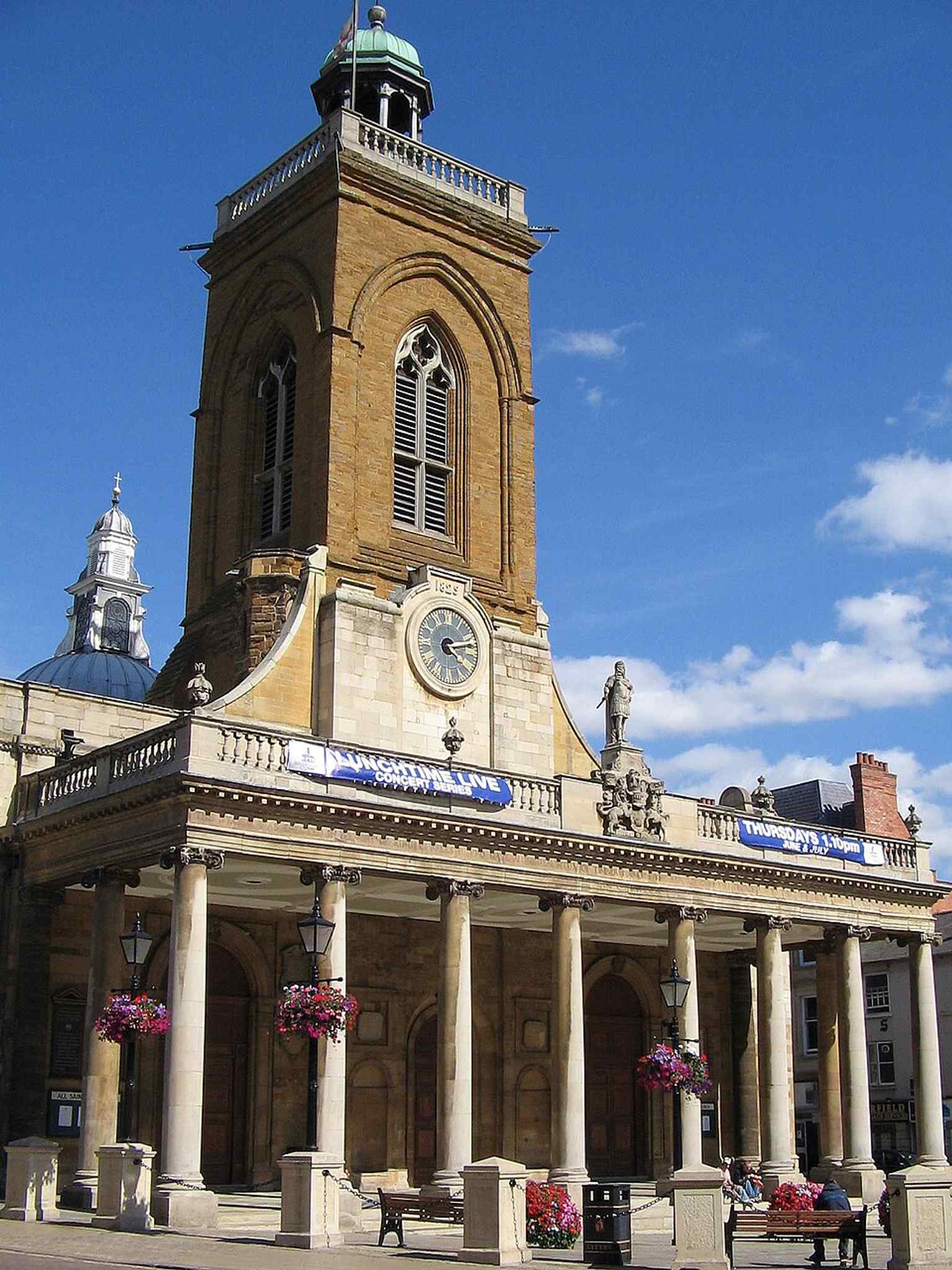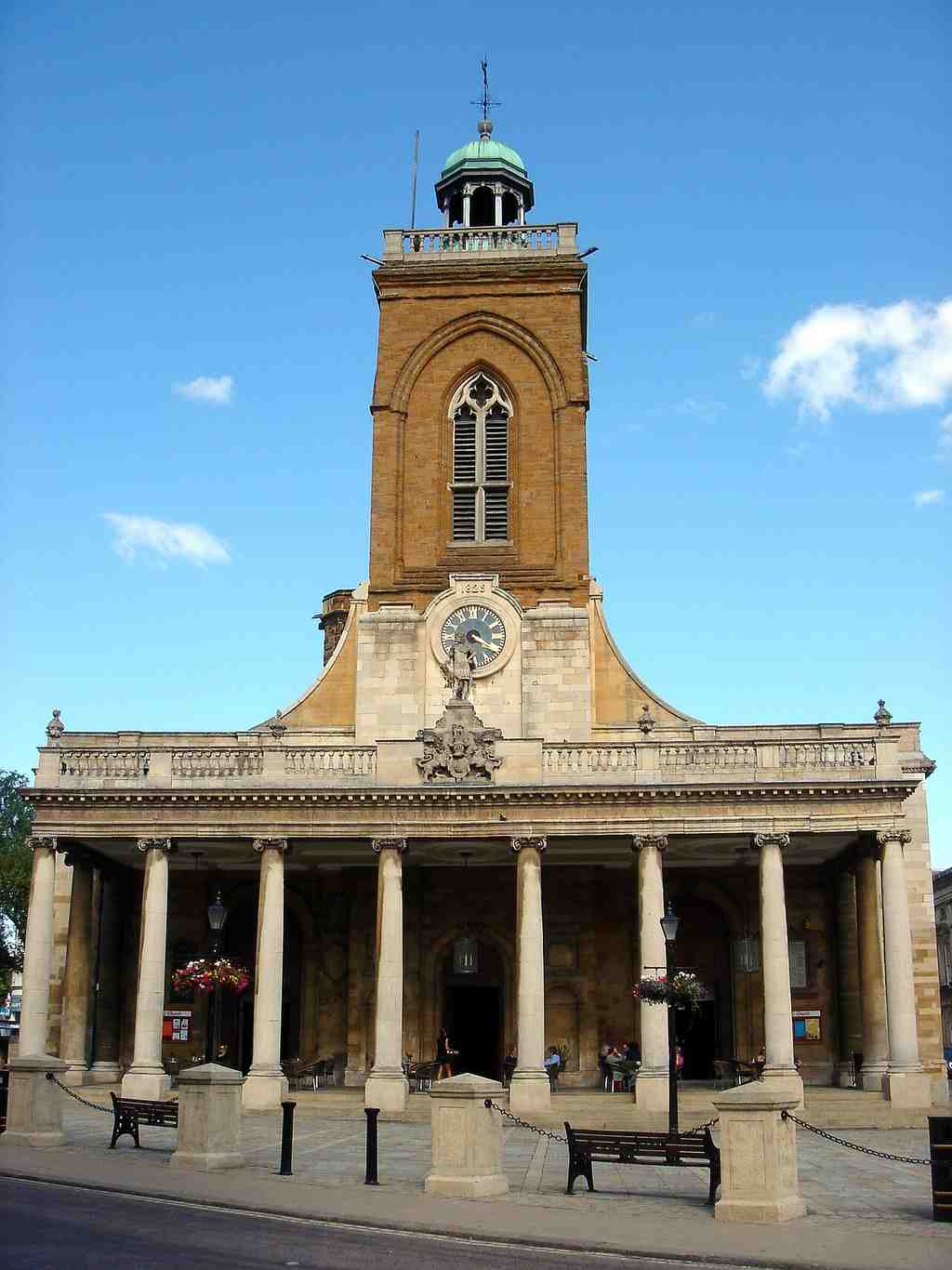
On your left, look for the pale stone church with a deep classical portico, a square tower rising behind it, and a statue of King Charles the Second in Roman dress standing above the front.
All Saints tells you something important about Northampton: here, the shoe trade did not just fill workshops and factories... it reached the altar. This church still holds a thanksgiving service every twenty-fifth of October for shoemakers, leatherworkers, and tanners, in honor of St Crispin and St Crispinian, patrons of shoemakers. Tradition remembers them as brothers associated with shoemaking, and as martyrs. Practical saints, you might say. Northampton liked that.
And this place needed saints with stamina. In September of sixteen seventy-five, the Great Fire tore through Northampton and destroyed about seven hundred of the town’s eight hundred and fifty buildings in roughly six hours. The old medieval church here, then called All Hallows, went down with the rest. Henry Bell of King’s Lynn took charge of the rebuilding and gave the town a church in the new London style, strongly echoing Sir Christopher Wren. So what you see is a piece of post-disaster confidence: orderly, classical, determined not to look beaten.
If you glance at the before-and-after image in the app, you can see how the grand west front holds its pose while the town around it keeps updating its wardrobe.
Now lift your eyes to that figure above the portico. That is Charles the Second, carved by the local sculptor John Hunt and dressed, with admirable royal modesty, as a Roman emperor. The statue commemorates a very real rescue package. The king gave Northampton a thousand tons of timber from royal forests and remitted seven years of chimney tax revenue to help the town rebuild. So this facade carries a thank-you note in stone... with a crown on top.
If you want a closer look at the royal thank-you, check the statue image on your screen.
But for working Northampton, the church mattered not only after catastrophe. It helped set the rhythm of ordinary life. St Crispin’s Day was the trade’s feast, a sanctioned burst of rest, worship, and merrymaking. And then there was Shoemaker’s Monday: the old custom, especially in the outwork system, where home-based or loosely supervised workers might lose Monday to drink, recovery, or general human weakness, then claw the hours back later in the week. Industrial discipline met craft independence... and craft independence often won.
So stand here for a second and think about that. When a town gives a trade its saints, its feast day, and even its own unofficial Monday, who is really keeping the calendar: the church, the employer, or the people with awls, waxed thread, and sore backs?
That is the feeling to carry onward from All Saints: not just religion, not just architecture, but ritual woven into labor... holiday, hangover, and holy day all sharing the same page. From here, continue toward Northampton Guildhall, about a two-minute walk away.