
50+ languages

 Tirana · Albania
 Tirana Audio Tours
Discover Tirana with self-guided audio walking tours
headphones
2 tours
pin_drop
20 landmarks
translate
Tirana tours
Pick a Tirana worth walking.
Self-guided audio tours written by people who actually live there.
2 tours
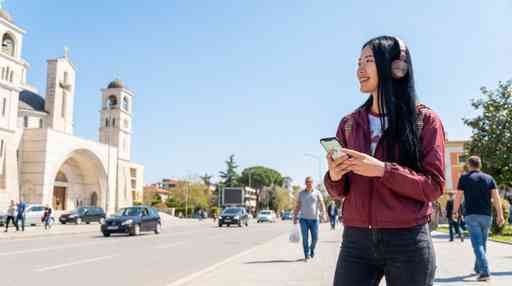
Tirana Highlights Audio Tour: Cultural Treasures and Historical Echoes
Beneath the vibrant colors of Tirana lies a landscape of bullet holes, secret bunkers, and the ghosts of a shattered regime. This city wears its history like a jagged scar, hiding stories of radical political shifts and forgotten rebellions behind every brutalist facade. Unlock these buried secrets with this immersive self-guided audio tour. Wander beyond the postcard landmarks to uncover the narratives that most travelers walk right past. Why was the Pyramid of Tirana once considered a tomb for a dictator? What dark purpose hides behind the stained glass of St. Paul’s Cathedral? Which bizarre item was found buried in Rinia Park during the height of the Cold War? Traverse the shifting layers of time as you move through concrete plazas and quiet lanes. Feel the weight of past defiance and leave with a transformed perspective on this resilient capital. Uncover the truth beneath the surface today.

Tirana Audio Tour: Art, Faith, and Revolution Unveiled
Explore the vibrant heart of Tirana on this captivating tour! Begin at the National Historical Museum, where Albania’s rich heritage comes to life through fascinating exhibits. Next, visit the stunning Et'hem Bey Mosque, a masterpiece of Ottoman architecture adorned with intricate frescoes. Finally, experience the electric atmosphere at Qemal Stafa Stadium, a hub of local sports and culture. This tour offers a perfect blend of history, art, and modern energy, leaving you with unforgettable memories of Albania’s dynamic capital!
Top landmarks
The Tirana everyone knows.
The landmarks in every guidebook — and the tours that tell you what guidebooks don't.
A few words on Tirana
Half a million bunkers and a future being painted on top.
Albania under Enver Hoxha built roughly 173,000 concrete bunkers between 1967 and 1986, one for every four citizens, a project of such paranoid scale that the landscape is still studded with them. Tirana has found uses for some, turning them into cafes, art studios, and storage rooms, which is both practical and a useful metaphor for what the city has been doing since 1991. After decades of the most isolated communist regime in Europe, Tirana opened to the world and did not stop. Mayor Edi Rama, himself an artist before becoming prime minister, spent the early 2000s covering the city's communist-era apartment blocks in vivid color, which remains one of the more cheerful urban policies in post-communist Europe.
Skanderbeg Square at the centre of the city is one of the largest pedestrian squares in the Balkans, recently redesigned and generally pleasant to sit in.
The National History Museum on the square's north end is worth a visit for its spectacular Soviet-style mosaic mural covering the entire facade. The Blloku neighborhood, once the exclusive residential area of the communist elite where ordinary citizens were forbidden to enter, is now the city's best area for cafes, bars, and restaurants. The National Gallery of Arts has an interesting collection that includes socialist realist works alongside contemporary Albanian art.
Tirana
Tirana FAQ
Before you walk.
Albania is one of the most affordable destinations in Europe. A good restaurant meal costs 8-15 euros, coffee is around one euro, and accommodation is a fraction of Western European prices. Tirana has seen prices rise over the past few years as it becomes more popular, but it remains very good value compared to its Balkan neighbours such as Montenegro or Croatia.
The central area around Skanderbeg Square, Blloku, and the National Museum is compact and walkable. The city has good pedestrian infrastructure near the centre. Taxis and ride-hailing apps are very cheap. Traffic is chaotic in central Tirana during peak hours and walking is often faster than driving for short distances.
Tave kosi, a baked lamb and rice dish with a yogurt and egg custard, is the national dish and excellent when done properly. Byrek, a filo pastry filled with spinach and cheese or meat, is the universal snack found at every bakery. Flia, a slow-cooked layered pastry with cream, is a northern Albanian specialty worth ordering if you see it. Albanian wine is improving rapidly and is very affordable.
Bunk'Art 1, inside a massive Cold War bunker complex at the foot of Mount Dajti, is 25 minutes by cable car from the city and is one of the most fascinating museum experiences in the Balkans, housing both the nuclear-era bunker itself and an exhibition on Albanian communist history. Bunk'Art 2 is in a smaller bunker near Skanderbeg Square. Both are worth visiting on the same day.
Every Tirana tour, in your language.
All 50+ languages, included with every booking.
🇬🇧 English🇫🇷 Français🇪🇸 Español🇩🇪 Deutsch🇮🇹 Italiano🇯🇵 日本語🇨🇳 中文🇰🇷 한국어+ 41 more
star AudaTours Unlimited
Visiting more than one city? Subscribe.
Unlock every Tirana tour — plus thousands more worldwide. Cancel any time.
$4.99/week · Cancel anytime

More in Albania
Explore Albania arrow_forwardOther cities to walk in Albania.



Loved by travellersThousands of tours started.
Thousands of tours started.
Plenty of opinions.
4.8 across the App Store and Google Play. Here's a few we keep coming back to.
starstarstarstarstar
This tour was such a great way to see the city. The stories were interesting without feeling too scripted, and I loved being able to explore at my own pace.

Jess
Tbilisi Tourstarstarstarstarstar
This was a solid way to get to know Brighton without feeling like a tourist. The narration had depth and context, but didn't overdo it.

Christoph
Brighton Tourstarstarstarstarstar
Started this tour with a croissant in one hand and zero expectations. The app just vibes with you, no pressure, just you, your headphones, and some cool stories.

John
Marseille Tourdownload Get the app Pop your headphones in.


Pop your headphones in.
Step outside.
Free to download. Tours in every city. Start in 60 seconds — no account, no card.

headphones
~ 4 min until your first tour starts
public
1,000+ cities worldwide
all_inclusive
AudaTours
Unlimited
Every tour. Every city. One subscription.
3097 tours2273 cities138 countries50+ languages
$39 /year
all_inclusive Explore Unlimited