
50+ languages

 Helsinki · Finland
 Helsinki Audio Tours
Discover Helsinki with self-guided audio walking tours
headphones
4 tours
pin_drop
20 landmarks
translate
Helsinki tours
Pick a Helsinki worth walking.
Self-guided audio tours written by people who actually live there.
4 tours

Helsinki Audio Tour: Nightlife, Legends & Landmarks Unveiled
In the heart of Helsinki, beneath the shifting northern sky, stories linger where marble and modernity collide. This self-guided audio tour leads straight into the shadows and spotlight of the city, uncovering sights and secrets hidden in plain view—beyond the surface of busy squares and silent statues. Why did a single speech at the Finnish National Theatre nearly spark outrage? Who watches over Elielinaukio’s restless crowds while midnight mysteries unfold? And what forgotten scandal haunts the stern gaze of the Aleksis Kivi Memorial Statue, its meaning lost to passing footsteps? Move from monument to market, feeling the pulse of revolutions and rebellions beneath your feet. Each stop peels back Helsinki’s elegant facade, revealing invisible battles, scandals, and revelations that shaped the city forever. Set your own pace and let curiosity guide you. The city’s secrets are waiting—will you hear them whisper where history sleeps?
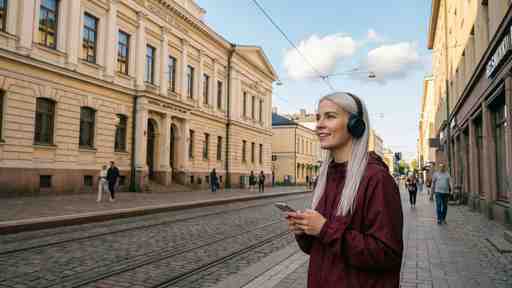
Helsinki Audio Tour: From Nobles to Notorious—A Stroll Through Power & Intrigue
Just outside Helsinki Cathedral, the echo of ancient footsteps still vibrates beneath your feet as secrets of power and rebellion slumber in plain sight. This self-guided audio tour opens doors into Helsinki’s storied past and elegant facades, guiding you to corners where the dramatic and the unexpected collide. Unlock tales and legends most travelers breeze past. Why did a single speech on Senate Square nearly topple the city’s leaders overnight? Who vanished behind the imposing doors of the Bank of Finland, leaving behind only scandal and rumor? What odd artifact is hidden in a forgotten niche outside Helsinki Cathedral, and who placed it there? Trace your own path across cobblestones that sparked revolutions. Wander through courtyards where conspiracies brewed and faded. Feel Helsinki’s true heartbeat as history and mystery spill into the present. Begin this journey now. See what lies beneath Helsinki’s beautiful surface.

Helsinki Audio Tour: Bridges, Markets & Modern Marvels
Beneath Helsinki’s cool northern light, century-old secrets simmer just beneath the surface—hidden messages in sculpture, silent prayers behind stone doors, and forgotten whispers in busy markets. This self-guided audio tour pulls you beyond the postcards, guiding each step through untold stories and places most travelers never find. Which political scandal once rattled Salem Congregation’s calm facade? What message for the future hides in the bronze curves of the World Peace statue? And could an odd flood of fish at Hakaniemi be more than just a trade accident? Trace the city’s pulse from sacred halls to bustling squares. Feel sweeping history come alive with every shift in the wind and glance at the skyline. Discover Helsinki’s secret drama, where art, faith, and revolution twist together on street corners and under painted ceilings. Start walking. Your path to Helsinki’s hidden depths begins with the next step.
Helsinki Audio Tour: Historic City Center
A sea nymph rises from Market Square, gleaming in bronze, while domes and spires watch over Helsinki like quiet witnesses to trouble. This self guided audio tour threads through the city from Havis Amanda to Uspenski Cathedral and Helsinki Cathedral, unlocking stories and corners most visitors rush past. Hear the politics, scandals, rebellions, and forgotten moments hiding in plain sight. What happened when tensions in the streets turned into a political battle that rattled the steps of Helsinki Cathedral? Which secret loyalties and shadowed mysteries linger beneath the red brick walls of Uspenski Cathedral? Why did a single statue at Havis Amanda become the oddly specific flashpoint for outrage, celebration, and late night mischief? Move from waterfront bustle to granite calm, climbing, circling, and slipping into backstories that reframe every postcard view. Expect drama, discovery, and sudden shifts in perspective. Press play and meet the nymph again, this time with the city speaking back.
Top landmarks
The Helsinki everyone knows.
The landmarks in every guidebook — and the tours that tell you what guidebooks don't.
A few words on Helsinki
Redesigned from scratch in 1812. Still getting it right.
Helsinki was founded in 1550 by Swedish King Gustav I as a small trading post but remained a backwater for over two centuries. In 1812, Russian Emperor Alexander I moved Finland's capital here from Turku and commissioned architect Carl Ludwig Engel to redesign the city center from the ground up. Engel built Senate Square, the Helsinki Cathedral, the University of Helsinki's main building, and the Government Palace in matching neoclassical white over three decades, creating a coherent ensemble that still functions as the civic heart of the city. The result earned Helsinki its nickname the White City of the North, and Senate Square remains one of the most architecturally unified public spaces in Northern Europe.
The city occupies a peninsula and 315 islands on the Gulf of Finland, and the islands matter.
Suomenlinna, a sea fortress begun in 1748 and now a UNESCO World Heritage Site, is reached by a short ferry from the Market Square and functions as an inhabited neighborhood year-round with residents, restaurants, a church, and a winter swimming club. The Helsinki Central Station, designed by Eliel Saarinen in National Romantic style and completed in 1919, is one of Finland's most recognized buildings, its granite facade rising from Kaivopuisto square with a deliberateness that says this is where things begin. The Temppeliaukio Church (1969), quarried directly into granite bedrock with a copper roof and natural light flooding through the dome, is another building that looks like nowhere else.
Helsinki
Helsinki FAQ
Before you walk.
Helsinki has an integrated transit network of trams, metro, buses, and ferries. Tram lines 2, 4, and 5 cover the main city center areas efficiently. The Market Square is the departure point for Suomenlinna ferry (runs frequently year-round). A HSL day ticket covers all transport. The city center from Senate Square to the Design District to the Market Square is very walkable.
Central Helsinki is largely flat and accessible. Senate Square, Esplanadi, and the Market Square waterfront are all step-free. The Suomenlinna ferry is accessible. Some of the older covered market buildings have uneven floors. The main museums, including the Ateneum and the National Museum, are accessible with advance checking for specific galleries.
The Market Square (Kauppatori) open-air market, operating in summer, sells salmon soup, reindeer sandwiches, and vendace fish from lakeside vendors. The Old Market Hall (Vanha Kauppahalli) nearby has been operating since 1889 and has independent food stalls with Finnish and Nordic specialties. Cinnamon rolls at nearly any cafe are reliably good. For a proper Finnish experience, salmon cooked on an open fire at a waterfront stall is genuine Helsinki.
Helsinki is extremely safe and consistently ranks among the world's most secure cities. Petty crime is rare. Walking with headphones is completely normal and unproblematic. The only practical caution is the cold: in winter, frozen pavements require attention underfoot, and ice can appear overnight even on main streets. The city maintains paths well but traction is worth thinking about in January and February.
Every Helsinki tour, in your language.
All 50+ languages, included with every booking.
🇬🇧 English🇫🇷 Français🇪🇸 Español🇩🇪 Deutsch🇮🇹 Italiano🇯🇵 日本語🇨🇳 中文🇰🇷 한국어+ 41 more
star AudaTours Unlimited
Visiting more than one city? Subscribe.
Unlock every Helsinki tour — plus thousands more worldwide. Cancel any time.
$4.99/week · Cancel anytime

More in Finland
Explore Finland arrow_forwardOther cities to walk in Finland.




Loved by travellersThousands of tours started.
Thousands of tours started.
Plenty of opinions.
4.8 across the App Store and Google Play. Here's a few we keep coming back to.
starstarstarstarstar
This tour was such a great way to see the city. The stories were interesting without feeling too scripted, and I loved being able to explore at my own pace.

Jess
Tbilisi Tourstarstarstarstarstar
This was a solid way to get to know Brighton without feeling like a tourist. The narration had depth and context, but didn't overdo it.

Christoph
Brighton Tourstarstarstarstarstar
Started this tour with a croissant in one hand and zero expectations. The app just vibes with you, no pressure, just you, your headphones, and some cool stories.

John
Marseille Tourdownload Get the app Pop your headphones in.


Pop your headphones in.
Step outside.
Free to download. Tours in every city. Start in 60 seconds — no account, no card.

headphones
~ 4 min until your first tour starts
public
1,000+ cities worldwide
all_inclusive
AudaTours
Unlimited
Every tour. Every city. One subscription.
3097 tours2273 cities138 countries50+ languages
$39 /year
all_inclusive Explore Unlimited