
50+ languages

 Luton · United Kingdom
 Luton Audio Tours
Discover Luton with self-guided audio walking tours
headphones
2 tours
pin_drop
20 landmarks
translate
Luton tours
Pick a Luton worth walking.
Self-guided audio tours written by people who actually live there.

Luton Audio Tour: Stories Weaved through Time and Tradition
Beneath Luton’s lively surface lie whispers of radio scandals and churchyard secrets, where town criers once clashed with rebels on cobblestoned streets. This self-guided audio tour leads you beyond the obvious, letting you unlock hidden stories and overlooked corners that most visitors stroll past. What sparked the radio drama inside the BBC Three Counties studio late one rainy night? Which ancient tomb in St Mary's Church holds a puzzle only historians dare to touch? And what odd object vanished from Luton Town Hall, sending city officials into panic? Stride through centuries of dramatic meetings and shadowy negotiations. Feel tension build under grand towers, hear echoes in quiet chapels, and see old Luton's heart come alive at every turn. The city transforms as secrets emerge beneath your feet. Ready to tune in to Luton's untold history? Start exploring before another secret slips away.
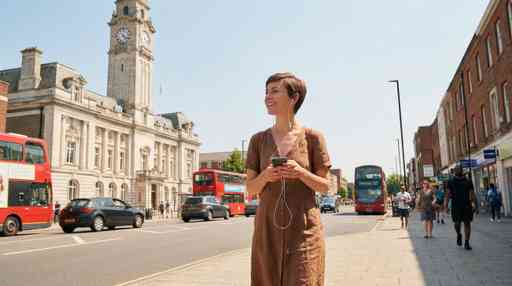
Luton Audio Tour: Urban Heritage
Luton hides a violent, fire-scarred history beneath its modern streets. Behind the peaceful greenery of Wardown Park lies a town forged in fierce political rebellion and forgotten scandals that once shook the foundations of England. Unlock these secrets with this immersive self-guided audio tour. Wander beyond the postcard views to unearth gripping tales and hidden corners that bypass the average tourist’s gaze. Why did a local uprising leave the Town Hall reduced to ash and rubble? What restless spirits still linger in the ancient silence of St Mary’s Church? And why was an entire industrial community once obsessed with the forbidden trade of secret hat smuggling? Trace the arc of past dramas as you traverse the city’s evolving landscape. Each step peels back layers of heritage, transforming silent stone into a vivid theater of human ambition. Press play to ignite your journey and finally uncover the truth behind Luton.
Top landmarks
The Luton everyone knows.
The landmarks in every guidebook — and the tours that tell you what guidebooks don't.
A few words on Luton
The hat capital of England, still wearing that identity.
For three hundred years, Luton made hats. The straw plait trade started in the seventeenth century, grew into a mechanised industry by the Victorian era, and by the 1930s the city was producing hats at a scale that put the word 'Luton' into every milliner's vocabulary across Europe. Luton Town FC adopted the 'Hatters' nickname as early as 1885, and it has never left. The industry is gone, Vauxhall Motors which replaced it has also largely gone after closing its manufacturing plant in 2002, but the hat identity has outlasted them both.
Wardown Park Museum on the northern edge of the town centre holds the most concentrated collection of Bedfordshire lace and hat-making artefacts in existence.
The house itself, a Victorian mansion beside the River Lea, was used as a military hospital in the First World War. Luton Hoo, a Grade I listed country house designed by Robert Adam in the eighteenth century, sits on the southern edge of the town. The grounds were landscaped by Capability Brown and the house has been used as a film location for everything from period dramas to spy films.
Luton
Luton FAQ
Before you walk.
Luton is about thirty-five minutes from London St Pancras by Thameslink. Luton Airport Parkway station connects the airport to the town centre by shuttle bus. From Luton station, the town centre is a five-minute walk. London Luton Airport is one of the UK's major budget airline hubs, so the town sees large numbers of transit visitors.
Wardown Park Museum is the main cultural attraction, with good collections on local hat-making, lace, and social history in a Victorian parkland setting. Stockwood Discovery Centre in Farley Hill has the Mossman Collection, one of the most significant collections of horse-drawn vehicles in the world, alongside period gardens. St Mary's Church dates to the twelfth century and is one of Bedfordshire's most substantial medieval buildings.
Luton town centre is generally safe during the day and early evening. The main shopping streets around the Mall and the Hat District near Chapel Street are well-frequented. As with any British town centre, standard awareness applies in the evening hours and around transport hubs at busy times.
The Hat District is a regeneration area in the centre of Luton built around the surviving Victorian and Edwardian hat factory buildings near Bute Street and Church Street. Several of the old warehouses have been converted to creative workspaces and event venues. The University of Bedfordshire campus is also nearby and contributes to a student population in the area.
Every Luton tour, in your language.
All 50+ languages, included with every booking.
🇬🇧 English🇫🇷 Français🇪🇸 Español🇩🇪 Deutsch🇮🇹 Italiano🇯🇵 日本語🇨🇳 中文🇰🇷 한국어+ 41 more
star AudaTours Unlimited
Visiting more than one city? Subscribe.
Unlock every Luton tour — plus thousands more worldwide. Cancel any time.
$4.99/week · Cancel anytime

More in United Kingdom
Explore United Kingdom arrow_forwardOther cities to walk in United Kingdom.






Loved by travellersThousands of tours started.
Thousands of tours started.
Plenty of opinions.
4.8 across the App Store and Google Play. Here's a few we keep coming back to.
starstarstarstarstar
This tour was such a great way to see the city. The stories were interesting without feeling too scripted, and I loved being able to explore at my own pace.

Jess
Tbilisi Tourstarstarstarstarstar
This was a solid way to get to know Brighton without feeling like a tourist. The narration had depth and context, but didn't overdo it.

Christoph
Brighton Tourstarstarstarstarstar
Started this tour with a croissant in one hand and zero expectations. The app just vibes with you, no pressure, just you, your headphones, and some cool stories.

John
Marseille Tourdownload Get the app Pop your headphones in.


Pop your headphones in.
Step outside.
Free to download. Tours in every city. Start in 60 seconds — no account, no card.

headphones
~ 4 min until your first tour starts
public
1,000+ cities worldwide
all_inclusive
AudaTours
Unlimited
Every tour. Every city. One subscription.
3097 tours2273 cities138 countries50+ languages
$39 /year
all_inclusive Explore Unlimited