
50+ languages

 Bangkok · Thailand
 Bangkok Audio Tours
Discover Bangkok with self-guided audio walking tours
headphones
1 tours
pin_drop
20 landmarks
translate
Bangkok tours
Pick a Bangkok worth walking.
Self-guided audio tours written by people who actually live there.
1 tours
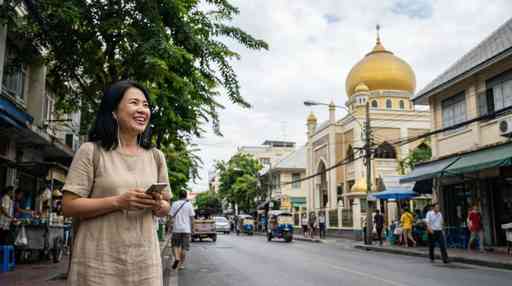
Top landmarks
The Bangkok everyone knows.
The landmarks in every guidebook — and the tours that tell you what guidebooks don't.
A few words on Bangkok
A city of nine million people and a name of 168 letters.
Bangkok's full ceremonial name is 168 letters long and holds the Guinness record for the longest place name in the world. A 1989 Thai pop song consists entirely of its recitation. Locals call the city Krung Thep, which means City of Angels, a condensation of the first part of the full name. The city was founded on April 21, 1782, when King Rama I moved the capital across the Chao Phraya from Thonburi to Rattanakosin Island, where the Grand Palace and Wat Phra Kaew still stand. The temple complex was built immediately after the city's founding and remains the country's most sacred site.
Parts of the city now sit a metre below sea level.
The ground has been subsiding since the mid-twentieth century due to groundwater extraction, and peak subsidence in 1981 reached 120 millimetres in a single year. The city has been called the 'Venice of the East' for its canal network, though most of the inner canals were filled in during twentieth-century road construction. The ones that remain, particularly Khlong Saen Saeb, still carry commuters in long-tail boats at speeds that make bus travel look meditative. The coexistence of ultramodern skyscrapers, 200-year-old temples, and covered wet markets on the same block is not a tourist talking point but simply how the city is arranged.
Bangkok
Bangkok FAQ
Before you walk.
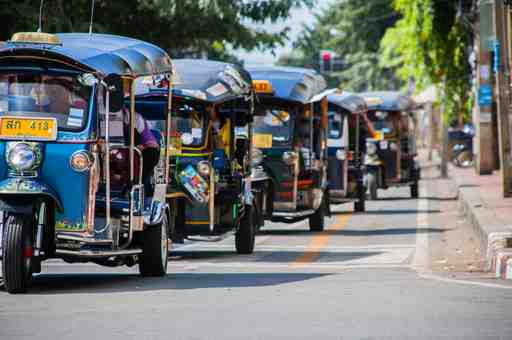
Bangkok's BTS Skytrain and MRT underground cover the main tourist and business districts efficiently. The BTS stops at Siam, Asok, and Saphan Taksin (for the river) are useful starting points. For areas like Rattanakosin, Chinatown, and the old town, public river ferries (Chao Phraya Express) and canal boats are faster than road traffic. Tuk-tuks are available but agree the price before boarding.
Yes. The Grand Palace, Wat Pho, Wat Arun, and all active temples require covered shoulders and knees for entry. Sarongs and lightweight cover-ups are sold at every temple entrance for a small fee if you arrive in shorts and a t-shirt. Shoes must be removed at all temple buildings. This applies regardless of the heat.
The main tourist areas including Rattanakosin, Silom, Sukhumvit, and Yaowarat are safe for walking with headphones during the day. Traffic noise and the density of pavement vendors mean you need to stay alert at intersections. Crossing roads requires caution as traffic patterns are unpredictable by European or Australian standards. Evening walking in tourist districts is generally fine.
Street food is the essential Bangkok experience. Pad kra pao (basil stir-fry with fried egg) and guay tiew (noodle soup) are the standard quick meals from pavement stalls. On Yaowarat Road in Chinatown, the roast duck and barbecue pork stalls that have been operating for generations are worth a detour. Mango sticky rice from a street cart in the late afternoon is the correct dessert. Eat where locals are eating and the food will be better and cheaper.
Every Bangkok tour, in your language.
All 50+ languages, included with every booking.
🇬🇧 English🇫🇷 Français🇪🇸 Español🇩🇪 Deutsch🇮🇹 Italiano🇯🇵 日本語🇨🇳 中文🇰🇷 한국어+ 41 more
star AudaTours Unlimited
Visiting more than one city? Subscribe.
Unlock every Bangkok tour — plus thousands more worldwide. Cancel any time.
$4.99/week · Cancel anytime

More in Thailand
Explore Thailand arrow_forwardOther cities to walk in Thailand.


Loved by travellersThousands of tours started.
Thousands of tours started.
Plenty of opinions.
4.8 across the App Store and Google Play. Here's a few we keep coming back to.
starstarstarstarstar
This tour was such a great way to see the city. The stories were interesting without feeling too scripted, and I loved being able to explore at my own pace.

Jess
Tbilisi Tourstarstarstarstarstar
This was a solid way to get to know Brighton without feeling like a tourist. The narration had depth and context, but didn't overdo it.

Christoph
Brighton Tourstarstarstarstarstar
Started this tour with a croissant in one hand and zero expectations. The app just vibes with you, no pressure, just you, your headphones, and some cool stories.

John
Marseille Tourdownload Get the app Pop your headphones in.


Pop your headphones in.
Step outside.
Free to download. Tours in every city. Start in 60 seconds — no account, no card.

headphones
~ 4 min until your first tour starts
public
1,000+ cities worldwide
all_inclusive
AudaTours
Unlimited
Every tour. Every city. One subscription.
3097 tours2273 cities138 countries50+ languages
$39 /year
all_inclusive Explore Unlimited