
50+ languages

 Bucharest · Romania
 Bucharest Audio Tours
Discover Bucharest with self-guided audio walking tours
headphones
4 tours
pin_drop
20 landmarks
translate
Bucharest tours
Pick a Bucharest worth walking.
Self-guided audio tours written by people who actually live there.
4 tours
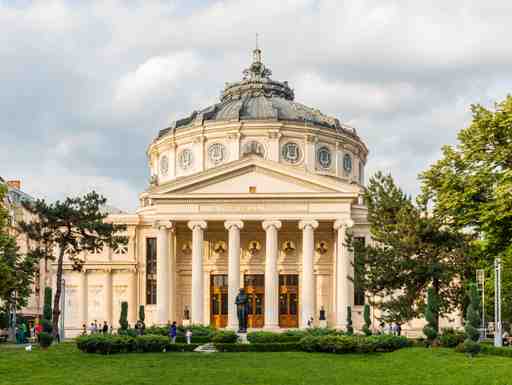
Bucharest Highlights Audio Tour: Historical Landmarks and Culture
Bullet holes still scar the neoclassical pillars of Bucharest, marking a city that has survived empires, dictators, and fire. Beneath the elegant facades of the Romanian Athenaeum and the Royal Palace, a volatile history of political betrayal and bloody rebellion pulses through the cobblestones. Unlock these secrets with this self-guided audio tour. Navigate the shadowed alleys and grand boulevards to uncover hidden narratives that remain invisible to the average traveler. Which secret room in the National Museum of Art hides a king’s lost fortune? Why did the serene Cișmigiu Gardens become the setting for a bizarre 19th-century murder plot? Can you spot the bullet still lodged in the stone from a forgotten standoff? Traverse the shifting layers of this capital, moving from regal opulence to the grit of revolution. Transform your perspective as you walk through history. Start your descent into the dark heart of the city today.
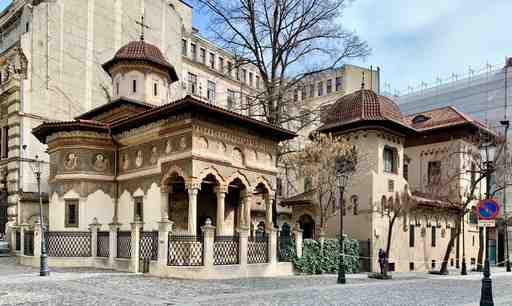
Bucharest Audio Tour: A Walk Through Bucharest's Essence
A bullet-scarred square marks the heart of Bucharest—a city where revolutions erupted and secrets linger in shadowed corners. Wander through these streets with a self-guided audio tour and unlock tales few travelers ever hear: scandals whispered behind stained-glass windows, vanished royals haunting gilded halls, heroes celebrated and forgotten. What hidden message is forever frozen in the abstract forms of the Memorial of Rebirth? Who risked everything within the candlelit sanctuary of Kretzulescu Church when freedom hung in the balance? What surprising link does a luxury hotel share with international espionage and Cold War drama? Trace a path from uprising to elegance, passing facades that watched history ignite. Feel tension, marvel at mystery, and glimpse beauty and betrayal etched into stone and spirit alike. This is Bucharest as only the curious ever find it. Press play to see the city’s hidden stories come alive where silence once ruled.
Bucharest Audio Tour: The Hidden Heartbeats of Bucharest
A city of elegant facades hides scars and secrets just beneath the surface—Bucharest whispers its true story through sacred stars, gilded arches, and walls that survived fire and fury. Let a self-guided audio tour guide you off the tourist grid, into the very heart of Romania’s Jewish quarter, where echoes of triumph and heartbreak still drift through the narrow streets. Who risked everything in the dead of night to save forbidden Torah scrolls? Why did angry flames roar through Templul Coral on the eve of hope? Which odd artifact in an unassuming museum once unraveled a family feud that shook half the city? Wander from opulent synagogues to solemn memorials, each step plunging you deeper into layers of rebellion, faith, scandal, and resilience. You’ll stride past centuries in minutes, discovering corners most will never see—and feeling Bucharest pulse with drama under your feet. Ready to walk where silent prayers met thundering history? Start listening and let Bucharest’s hidden soul reveal itself.
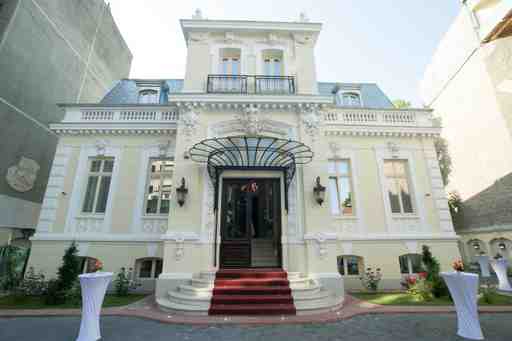
Bucharest Audio Tour: A Journey Through Sector 2's Hidden Gems
Beneath Bucharest’s modern glass towers, ancient ambitions and lost secrets flicker beneath the city lights. This self-guided audio tour weaves through backstreets and plazas, revealing stories most visitors miss and sights even locals overlook. What happened during the panicked minutes when fortunes shifted forever at the Bucharest Stock Exchange? Which forbidden romance lingers in whispers among the stained-glass shadows of the Armenian Church? Why do artists trace cryptic symbols near Grădina Icoanei that few notice, let alone understand? Stride from scandal to sanctuary, from echoing marble halls to secret gardens veiled by history’s twists. Each stop pulses with rivalry, drama, betrayal or quiet beauty—unlocked as you move at your own pace through the city’s beating heart. Press play and descend into the true Bucharest—the one hidden just beneath the surface, waiting for someone curious enough to find it.
Top landmarks
The Bucharest everyone knows.
The landmarks in every guidebook — and the tours that tell you what guidebooks don't.
A few words on Bucharest
The Paris of the East that went its own way.
Bucharest first appeared in documents in 1459, when Vlad Tepes issued a decree from the settlement on the Dambovita River, and grew into what 19th-century travelers called the Paris of the East. The comparison was not baseless: by the 1930s, Calea Victoriei, the main boulevard, was lined with neoclassical mansions, the Romanian Athenaeum concert hall rose in ornate grandeur, and the Arcul de Triumf stood in direct homage to its French equivalent. Then came the communist period, and then Nicolas Ceausescu, who in the 1980s demolished an entire quarter of historic Bucharest to build the Palace of Parliament, the second-largest administrative building in the world by floor area.
What survived the demolition is worth seeking.
The old Princely Court area and the merchant district of Lipscani contain streets barely changed since the 18th century, narrow lanes between painted facades with overhanging upper floors. Cismigiu Gardens, designed in 1847 by German landscape architect Carl F.W. Meyer, spread around a lake in the city center in a manner that still functions as the city's best park. The Vacaresti Lake nature park, southeast of the center, exists by accident: Ceausescu ordered a massive basin dug for a water feature, the project was abandoned after 1989, and nature colonized the excavation. It is now a 183-hectare urban wetland inside a capital city.
Bucharest
Bucharest FAQ
Before you walk.
Bucharest is among the safer European capitals and ranked in the global top 100 safest cities. Walking with headphones presents little concern. Normal urban awareness applies around Gara de Nord train station and in some late-night areas. The Old Town and main boulevards are safe and well-lit in the evenings.
Bucharest has a metro system with four lines covering key areas. The city center from Piata Unirii to Piata Universitatii to Piata Victoriei is walkable in about 25 minutes. Taxis and ride-hailing apps (Bolt is widely used here) are cheap by Western European standards. Most historic sights are concentrated in the center, making walking viable for most tour itineraries.
Bucharest is largely flat, sitting on the Wallachian Plain. The Lipscani historic district has slightly uneven cobblestones in places. Cismigiu Gardens and the Herastrau Park paths are smooth and accessible. There are no significant hills in the city center to contend with.
Romanian food is less internationally known than it deserves to be. Look for sarmale (cabbage rolls with meat and rice), mamaliga (polenta often served with sour cream and cheese), and mici (grilled meat rolls). The Obor market in the northeast and the smaller farmers markets around the city center sell local produce and prepared foods. Coffee culture is strong in Bucharest, and the cafe around Piata Unirii area will do well.
Every Bucharest tour, in your language.
All 50+ languages, included with every booking.
🇬🇧 English🇫🇷 Français🇪🇸 Español🇩🇪 Deutsch🇮🇹 Italiano🇯🇵 日本語🇨🇳 中文🇰🇷 한국어+ 41 more
star AudaTours Unlimited
Visiting more than one city? Subscribe.
Unlock every Bucharest tour — plus thousands more worldwide. Cancel any time.
$4.99/week · Cancel anytime



Loved by travellersThousands of tours started.
Thousands of tours started.
Plenty of opinions.
4.8 across the App Store and Google Play. Here's a few we keep coming back to.
starstarstarstarstar
This tour was such a great way to see the city. The stories were interesting without feeling too scripted, and I loved being able to explore at my own pace.

Jess
Tbilisi Tourstarstarstarstarstar
This was a solid way to get to know Brighton without feeling like a tourist. The narration had depth and context, but didn't overdo it.

Christoph
Brighton Tourstarstarstarstarstar
Started this tour with a croissant in one hand and zero expectations. The app just vibes with you, no pressure, just you, your headphones, and some cool stories.

John
Marseille Tourdownload Get the app Pop your headphones in.


Pop your headphones in.
Step outside.
Free to download. Tours in every city. Start in 60 seconds — no account, no card.

headphones
~ 4 min until your first tour starts
public
1,000+ cities worldwide
all_inclusive
AudaTours
Unlimited
Every tour. Every city. One subscription.
3097 tours2273 cities138 countries50+ languages
$39 /year
all_inclusive Explore Unlimited