
50+ languages

 Herne · Germany
 Herne Audio Tours
Discover Herne with self-guided audio walking tours
headphones
2 tours
pin_drop
20 landmarks
translate
Herne tours
Pick a Herne worth walking.
Self-guided audio tours written by people who actually live there.
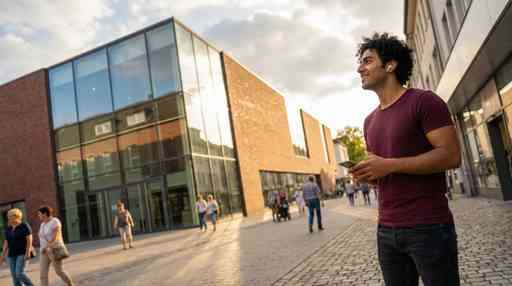
Herne Audio Tour: Cultural Gems
Beneath the modern streets of Herne lies a landscape scarred by industrial rebellion and the silent echoes of ancient civilizations. This is not just a city of coal and steel. It is a stage where political titans once clashed and secrets were buried deep within the earth. Unlock these layers with a self-guided audio tour designed to reveal the hidden history most visitors ignore. Wander past the LWL Museum and the Flottmann Halls to experience a side of the region stripped of its polite veneer. Why did a local uprising turn the town square into a violent battleground? What haunting artifact was unearthed near the Church of the Holy Cross that archaeologists refuse to discuss? Could the soot of the Flottmann Halls still hide the blueprints for a long forgotten scandal? Traverse the shifting shadows of Herne. Transform your perspective as you walk through this unfolding drama. Start your journey into the unknown now.
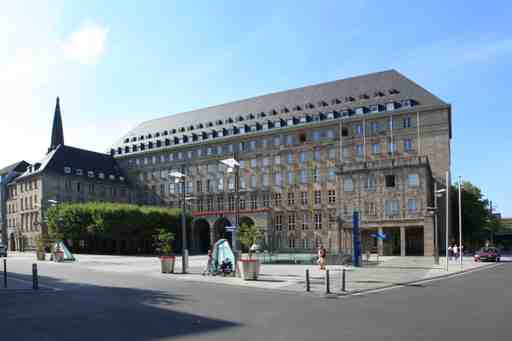
Bochum Audio Tour: Brews, Faith, and Factories Unveiled
A bell once tolled in Bochum’s heart to warn of riot and revolution—its echoes still haunt the streets beneath the towering Rathaus and the quiet vaults of Christuskirche. On this self-guided audio tour, step beyond the surface of Bochum to uncover clandestine meetings, city secrets, and the hidden currents shaping its steel and stone. Move at your own pace while tracing stories most visitors miss entirely. Which heated debate inside Bochum Town Hall led to a political showdown that shook the city? Why did a shadowy power outage at Stadtwerke Bochum spark wild conspiracy theories? And what hidden inscription in Christuskirche holds the key to a forgotten act of rebellion? Wind through avenues marked by conflict, hope, and the everyday drama of a resilient city. Let each step pull back the curtain on the untold—the histories that linger just behind each corner. Your journey through Bochum’s secret past begins now. Listen closely.
Top landmarks
The Herne everyone knows.
The landmarks in every guidebook — and the tours that tell you what guidebooks don't.
A few words on Herne
The Ruhr's horse fair grew into a four-million-visitor carnival.
Herne was a small agricultural settlement, barely a village, until coal mining started in 1860. Within thirty years the population had multiplied twentyfold, driven by shafts sinking into the thick seams of the Ruhr. The Rhine-Herne Canal cut through in 1914, connecting the city to the port system. By the mid-twentieth century, Herne was a dense industrial city of steel workers, miners, and their families, compressed between Bochum to the south and Gelsenkirchen to the north. Then the mines closed, the steelworks closed, and the city spent the late twentieth century working out what to be next.
Schloss Strunkede in the Baukau district is a moated castle first documented in the thirteenth century, now a local history museum surrounded by a park.
It survives as a reminder that Herne had a pre-industrial identity, however briefly remembered. The Rhine-Herne Canal still carries significant freight traffic, its banks used by cyclists and walkers on the industrial towpaths that were converted as part of the Ruhr's post-mining regeneration. Herne was known in the postwar years as 'Die Goldene Stadt,' the Golden City, because it escaped the worst bombing of the war relatively intact.
Herne
Herne FAQ
Before you walk.
Herne is served by the S-Bahn network connecting it to Dortmund, Essen, and Bochum, each about fifteen to twenty minutes away. Wanne-Eickel Hauptbahnhof is within the city's western area. Local buses and trams connect the station to the Crange district and the Schloss Strunkede park. The Ruhr region's public transport network covers the area comprehensively.
The Cranger Kirmes runs for ten days in August, typically starting in early August. It is held in the Crange district along the Rhine-Herne Canal and includes rides, market stalls, and food vendors of all kinds. Free to enter, it attracts visitors from across the Ruhr region and beyond. Public transport runs extended services during the event.
Herne is largely flat, which reflects its position in the low-lying Ruhr basin. The main central areas and the canal towpaths are accessible on foot. Schloss Strunkede is in a park with paths that are manageable for most walkers. The city has decent cycling infrastructure along the canal routes.
The Ruhr region's food culture is shaped by its working-class industrial history: heavy, filling, and unpretentious. Grilladen (street-grilled meats) are common at market stalls. During the Cranger Kirmes, the standard fair food applies: Bratwurst, candied almonds, Pfannkuchen (doughnuts), and an enormous quantity of beer. The city has a significant Turkish community and good Turkish restaurants around the central area.
Every Herne tour, in your language.
All 50+ languages, included with every booking.
🇬🇧 English🇫🇷 Français🇪🇸 Español🇩🇪 Deutsch🇮🇹 Italiano🇯🇵 日本語🇨🇳 中文🇰🇷 한국어+ 41 more
star AudaTours Unlimited
Visiting more than one city? Subscribe.
Unlock every Herne tour — plus thousands more worldwide. Cancel any time.
$4.99/week · Cancel anytime


Loved by travellersThousands of tours started.
Thousands of tours started.
Plenty of opinions.
4.8 across the App Store and Google Play. Here's a few we keep coming back to.
starstarstarstarstar
This tour was such a great way to see the city. The stories were interesting without feeling too scripted, and I loved being able to explore at my own pace.

Jess
Tbilisi Tourstarstarstarstarstar
This was a solid way to get to know Brighton without feeling like a tourist. The narration had depth and context, but didn't overdo it.

Christoph
Brighton Tourstarstarstarstarstar
Started this tour with a croissant in one hand and zero expectations. The app just vibes with you, no pressure, just you, your headphones, and some cool stories.

John
Marseille Tourdownload Get the app Pop your headphones in.


Pop your headphones in.
Step outside.
Free to download. Tours in every city. Start in 60 seconds — no account, no card.

headphones
~ 4 min until your first tour starts
public
1,000+ cities worldwide
all_inclusive
AudaTours
Unlimited
Every tour. Every city. One subscription.
3097 tours2273 cities138 countries50+ languages
$39 /year
all_inclusive Explore Unlimited