
50+ languages

 Lisbon · Portugal
 Lisbon Audio Tours
Discover Lisbon with self-guided audio walking tours
headphones
4 tours
pin_drop
20 landmarks
translate
Lisbon tours
Pick a Lisbon worth walking.
Self-guided audio tours written by people who actually live there.
4 tours
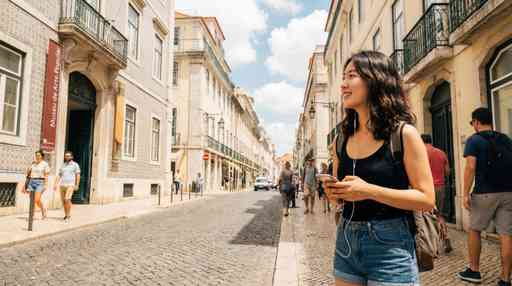
Lisbon Highlights Audio Tour: The Historic Heart
Beneath the glittering tiles of Lisbon lies a city scarred by divine wrath and human betrayal. While crowds gather at the Santa Justa Elevator, few hear the echoes of the cataclysm that leveled these streets and birthed a revolution. Uncover these ghosts through a self-guided audio tour designed to lead you beyond the postcard views. Trace the footsteps of forgotten rebels and uncover secrets hidden in plain sight. Why did the ground shatter the Carmo Convent during the holiest hour? What shadowy deal silenced the D. Pedro IV Square massacre? And why does a specific iron staircase in the city center hide a lethal political grudge? Navigate through layers of ruin and restoration where history breathes through stone. Experience the city as a living stage of drama and defiance. Download the guide now and peel back the golden facade to confront the true heart of Lisbon.

Lisbon Audio Tour: An Odyssey Through Santa Maria Maior
A thousand years ago, thunder shook the stones of Lisbon Cathedral and secrets echoed through hidden alleyways where empires rose and fell. Beneath the sunlit arches and tiled facades, scandals and revolts left invisible marks. This self-guided audio tour unlocks a trove of stories as you wander at your own pace. Trace whispered histories from Praça do Comércio to the dizzying heights of the Santa Justa Lift. Peel back layers that most visitors walk straight past. Why did fire sweep through Praça do Comércio, reshaping Lisbon’s fate in one terrifying hour? Who vanished within the shadows beneath Lisbon Cathedral and why does no one speak their name today? What curious obsession led a turn-of-the-century dreamer to build a lift straight into the sky? Stride through legends, upheaval, and intrigue with each step. Feel the pulse of forgotten rebellions guiding your journey. Ready to find what still lingers behind every stone? Press play and dive into Lisbon’s living mysteries.
Lisbon Audio Tour: Time Travel from Glória to Belém
Above Lisbon's seven hills, the Tagus shines like steel, and high above the alleys, Castelo de São Jorge watches over centuries of power, fear, and hope. This self-guided audio tour leads through the city, revealing voices, rumors, and details that often go unnoticed. Perfect for seeing Lisbon without just looking. Which decision at Castelo de São Jorge overturned a political power struggle and brought the city to the brink of rebellion. What does the Elevador de Santa Justa hide behind its elegant lattice, a technical marvel or a silent secret. Why did a specific stair step at sunset play a role in an embarrassing scandal. Each section moves on, from views to shadows, from stone to voices. Drama, discovery, and a new Lisbon with every step. Start now and listen to the hills.
Lisbon Audio Tour: A Multifaceted Journey through Santo António
Underneath Lisbon’s golden sunlight, secrets simmer behind grand façades and storied walls. This city hums with the thrill of football triumphs, whispered prayers in hidden sanctuaries, financial revolutions, and streets scarred by forgotten power struggles. This self-guided audio tour unlocks a side of Lisbon most visitors never see. Hear tales buried deep within the Portuguese Football Federation, the timeless halls of the Lisbon Synagogue, Euronext’s trading floor, and other remarkable corners. Why did a championship win ignite more than just joy for the nation? What mysteries linger behind the synagogue’s closed doors? Which peculiar incident at Euronext shifted European markets overnight? Let curiosity sweep you through cobbled alleys and marble avenues, past echoes of rebellion and elusive victories. Every stop crackles with tension and surprise. Rediscover Lisbon as a city of revelations rather than postcard views. Ready to step into Lisbon’s untold stories? Start your journey now.
Top landmarks
The Lisbon everyone knows.
The landmarks in every guidebook — and the tours that tell you what guidebooks don't.
A few words on Lisbon
The city that fell, was rebuilt, and never forgot the sea.
On the morning of November 1, 1755, while most of the city was in church for All Saints' Day, an earthquake estimated at magnitude 8.5 to 9.0 struck Lisbon. The tremors were followed by fires and then a tsunami that rolled up the Tagus River. In less than six minutes, between thirty and forty thousand people died and approximately eighty-five percent of the city's buildings were destroyed. The Prime Minister, the Marquis of Pombal, is reported to have responded with five words: 'Bury the dead, feed the living.' He then rebuilt the downtown Baixa district on a rational grid of streets with anti-seismic foundations, creating what is now one of the most elegant eighteenth-century urban plans in Europe.
Before the earthquake, Lisbon had been the centre of a different kind of world-making.
Vasco da Gama set sail from the waterfront at Belem in 1497 and returned eighteen months later having reached India by sea, opening the spice route that would finance the city's golden age. The Torre de Belem, built in Manueline style on the riverbank in the 1510s, is the monument to that moment. The Age of Discovery is also why Lisbon's neighbourhoods have the characters they do: the Alfama, the oldest district, survived the earthquake on its hillside and still holds its Moorish lane-pattern, named from the Arabic al-hamma, meaning the springs. Fado, the music of yearning and loss, was born somewhere in these streets.
Lisbon
Lisbon FAQ
Before you walk.
Lisbon has seven hills and walking between them is genuinely strenuous. The Alfama and Bairro Alto neighbourhoods involve significant climbs on cobblestone streets that can be slippery when wet. The city has several funiculars and elevators (the Elevador de Santa Justa is the most famous) that ease some of the gradients. Good walking shoes with grip are important; smooth-soled footwear is dangerous on wet calçada cobblestones.
Download your tour on Wi-Fi first and it will work fully offline. Mobile data coverage in Lisbon is strong throughout the city. EU roaming applies for European visitors, and Portugal has good 4G coverage in all central areas.
The metro connects the main areas efficiently and is the fastest way between Belem and the city centre. Trams and buses cover the central areas but are often slow in traffic. The Carris day pass covers all public transport modes and is good value if you plan to use multiple trams or the metro. Walking the Alfama itself is unavoidable and rewarding.
A pastel de nata, the custard tart, is the mandatory morning start; the originals at Pasteis de Belem in the waterfront neighbourhood have the longest queue but are worth it. For lunch, bifanas (pork sandwiches in crusty bread with mustard) are cheap and excellent from any tasca. Bacalhau, salt cod, comes in supposedly 365 different preparations; the battered and fried version (pataniscas) is a reliable lunch. The local wine to order is a cold glass of vinho verde.
Every Lisbon tour, in your language.
All 50+ languages, included with every booking.
🇬🇧 English🇫🇷 Français🇪🇸 Español🇩🇪 Deutsch🇮🇹 Italiano🇯🇵 日本語🇨🇳 中文🇰🇷 한국어+ 41 more
star AudaTours Unlimited
Visiting more than one city? Subscribe.
Unlock every Lisbon tour — plus thousands more worldwide. Cancel any time.
$4.99/week · Cancel anytime

More in Portugal
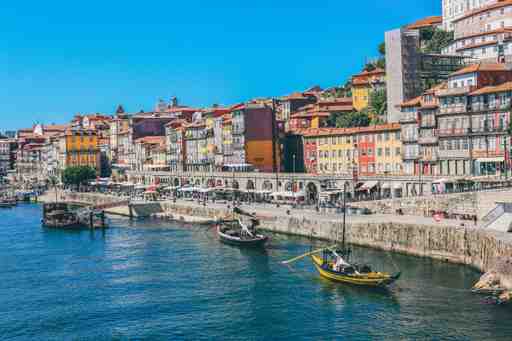
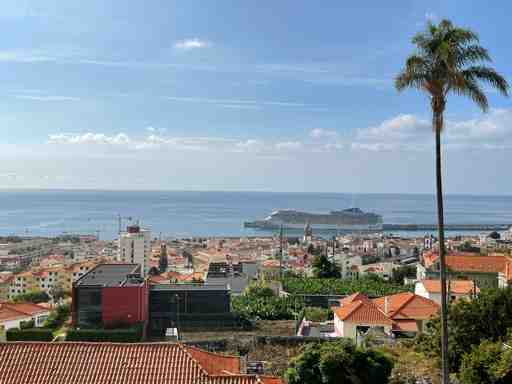
Explore Portugal arrow_forwardOther cities to walk in Portugal.



Loved by travellersThousands of tours started.
Thousands of tours started.
Plenty of opinions.
4.8 across the App Store and Google Play. Here's a few we keep coming back to.
starstarstarstarstar
This tour was such a great way to see the city. The stories were interesting without feeling too scripted, and I loved being able to explore at my own pace.

Jess
Tbilisi Tourstarstarstarstarstar
This was a solid way to get to know Brighton without feeling like a tourist. The narration had depth and context, but didn't overdo it.

Christoph
Brighton Tourstarstarstarstarstar
Started this tour with a croissant in one hand and zero expectations. The app just vibes with you, no pressure, just you, your headphones, and some cool stories.

John
Marseille Tourdownload Get the app Pop your headphones in.


Pop your headphones in.
Step outside.
Free to download. Tours in every city. Start in 60 seconds — no account, no card.

headphones
~ 4 min until your first tour starts
public
1,000+ cities worldwide
all_inclusive
AudaTours
Unlimited
Every tour. Every city. One subscription.
3097 tours2273 cities138 countries50+ languages
$39 /year
all_inclusive Explore Unlimited