
50+ languages

 Trier · Germany
 Trier Audio Tours
Discover Trier with self-guided audio walking tours
headphones
4 tours
pin_drop
20 landmarks
translate
Trier tours
Pick a Trier worth walking.
Self-guided audio tours written by people who actually live there.

Trier Audio Tour: Cathedrals, Markets & Ancient Stories of the Altstadt
A thousand years ago, the ringing of Trier’s cathedral bells meant more than prayer—they signaled power, peril, and shifting empires within these ancient stones. This self-guided audio tour winds you through the secrets of Altstadt, unlocking stories tucked into every echoing nave and shadowed square. Go deeper than guidebooks and let hidden legends reshape how you see the city. What happened the night a rebellious crowd stormed the Basilica of Constantine beneath the Emperor’s watchful gaze? Which saint’s tomb once drew secret midnight pilgrims into St. Gangolf’s candlelit silence? Why did a forgotten stone inscription in Trier Cathedral spark a centuries-old scandal? Stride through Roman halls and medieval alleys where drama clings to every corner. Trace footsteps of emperors, rebels, and visionaries as Trier’s past comes alive with every turn and whispered legend. The secrets of Altstadt await. Begin your journey now and ring in a new chapter of discovery.
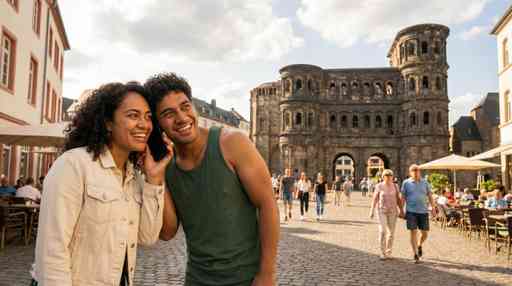
Trier Audio Tour: In the Footsteps of Marx, Myths, and the Stones of the Eternal City
Did you know that beneath Trier's cobblestones lie echoes of the Roman Empire and mysterious traces of ancient revolutions? Behind the monumental walls of Augusta Treverorum, a world of grand triumphs and quiet downfalls awaits. This self-guided audio tour invites you to discover a city where every glance around a corner can reveal a story others haven't heard. Experience Trier as guidebooks don't show it. Why did a stolen reliquary cause chaos in the shadow of Simeonstraße? What secrets are hidden in the archives of Stadtmuseum Simeonstift Trier, falling silent under thick walls after dark? Who left a mark on the cobblestone street during a mysterious night in the age of emperors? Let yourself be guided through a city that pulsates with legends. With every step, you'll uncover new layers of its past and secrets encoded in the heart of Europe. Begin your journey. Discover Trier, where history never sleeps.
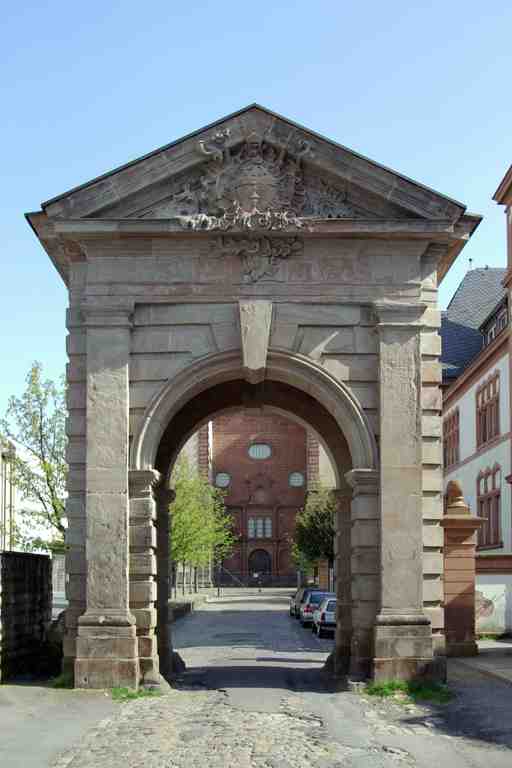
Trier Audio Tour: Mysteries and Marvels of Maximin’s Northern Mile
A hidden sanctuary lies behind Trier’s grandest façades, where centuries-old secrets echo beneath ancient vaulted ceilings and quiet cobbled lanes. This self-guided audio tour leads through Maximin’s tangled crossroads, from the haunting silence of St. Paulin to the leafy tranquility of Nordallee and the mysterious serenity of Maria Hilf Chapel—uncovering legends tourists rarely hear. Who risked everything in a forbidden miracle that shook the city’s rulers? What silent vow binds the crypt beneath St. Paulin to a lost rebellion? Why does a single stone in Nordallee mark a feud that split families for generations? Wander at your own pace through shadowed chapels and sunlit boulevards, piecing together forgotten political intrigue, spiritual mysteries, and fleeting scandals. Every turn promises a fresh revelation and connects Trier’s distant past to your next step. Start the journey now and unlock the hidden heart beating just beneath Trier’s ancient stones.
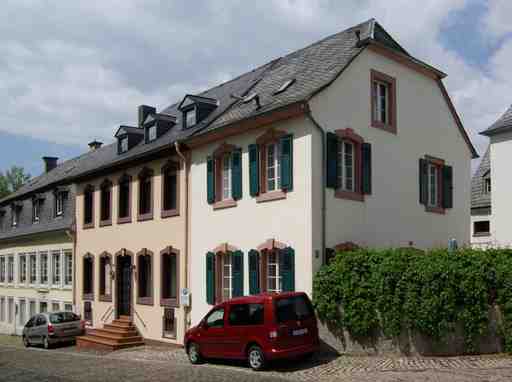
Trier Audio Tour: Echoes of Empire and Faith in Barbara’s Heart
Beneath the quiet streets of Barbara, ancient secrets simmer where steam once curled from imperial baths and flames have always danced too close for comfort. This self-guided audio tour invites you to walk roads carved by emperors and firefighters alike, uncovering stories that most visitors never even hear. Why did Roman rulers lavish such attention on the Barbara Baths, only for them to tumble into shadow? What unexplained midnight incident set the Trier Fire Brigade’s legend blazing? And who slipped through the hidden corners of Gilbertstraße on a rain-soaked evening, leaving whispers behind? Stride through echoes of political intrigue, everyday heroism, and curious disappearances. Each step promises a new layer peeled back, twisting familiar city views into a suspenseful tapestry of drama and forgotten moments. Barbara is waiting with smoldering secrets beneath its surface. Plug in and let the hidden stories rise up around you.
Top landmarks
The Trier everyone knows.
The landmarks in every guidebook — and the tours that tell you what guidebooks don't.
A few words on Trier
Germany's oldest city, where Karl Marx grew up and emperors wintered.
Trier was founded by the Romans around 16 BC as Augusta Treverorum and became, in the third and fourth centuries, one of four capitals of the Roman Empire. Emperors wintered here rather than Rome because the strategic position on the Moselle mattered. The Porta Nigra, the Black Gate, was built in the second century and is the best-preserved Roman city gate north of the Alps. The Aula Palatina, the throne hall of Constantine I, stands 67 metres long and has been in continuous use as a church since the Middle Ages. The Roman bridge across the Moselle, the Roemerbruecke, was built in the second century and still carries traffic.
Karl Marx was born at Bruckenstrasse 10 in Trier in 1818 and spent his early years here before the family moved to Bonn.
The Karl Marx House museum on the street of his birth is a thorough collection of his personal effects, manuscripts, and the history of socialist thought. The Archbishop of Trier was one of the seven Electors of the Holy Roman Empire, which made this small Moselle city one of the most politically significant places in medieval Germany. The Trier Dom, the Cathedral of Saint Peter, has been a place of worship since the fourth century and contains what is claimed to be the Holy Tunic, the seamless robe of Christ.
Trier
Trier FAQ
Before you walk.
Trier Hauptbahnhof has rail connections to Koblenz (about one hour), Saarbrucken (one hour), and Luxembourg City (fifty minutes). The station is about a ten-minute walk from the Porta Nigra, the main landmark and logical starting point for any tour. The city centre is compact and all major Roman sites are within thirty minutes walk of each other.
The six UNESCO World Heritage Sites include the Porta Nigra, the Aula Palatina (Constantine's Basilica), the Imperial Baths, the Barbara Baths, the Roman Bridge, and the Igel Column (about six kilometres outside town). A combined ticket covers most of the sites. The Roman Theatre on the hillside above the city is free to access. A full Roman tour takes the best part of a day.
The city centre is relatively flat near the river and the main pedestrian zone. The Roman Theatre and the Amphitheatre on the hillside involve uphill walking and steps. The Porta Nigra has internal stairs. The riverside walks along the Moselle are flat and paved.
Mosel Riesling is the essential local wine: dry versions (trocken) or off-dry (feinherb) suit most palates. The Riesling from slate soil vineyards around Trier has a minerality distinct from those further down the Moselle. Wine taverns along the Hauptmarkt and on the Olewigerstrasse serve local producers by the glass. The wine festival in August, held along the riverfront, is a good opportunity to try several estates.
Every Trier tour, in your language.
All 50+ languages, included with every booking.
🇬🇧 English🇫🇷 Français🇪🇸 Español🇩🇪 Deutsch🇮🇹 Italiano🇯🇵 日本語🇨🇳 中文🇰🇷 한국어+ 41 more
star AudaTours Unlimited
Visiting more than one city? Subscribe.
Unlock every Trier tour — plus thousands more worldwide. Cancel any time.
$4.99/week · Cancel anytime


Loved by travellersThousands of tours started.
Thousands of tours started.
Plenty of opinions.
4.8 across the App Store and Google Play. Here's a few we keep coming back to.
starstarstarstarstar
This tour was such a great way to see the city. The stories were interesting without feeling too scripted, and I loved being able to explore at my own pace.

Jess
Tbilisi Tourstarstarstarstarstar
This was a solid way to get to know Brighton without feeling like a tourist. The narration had depth and context, but didn't overdo it.

Christoph
Brighton Tourstarstarstarstarstar
Started this tour with a croissant in one hand and zero expectations. The app just vibes with you, no pressure, just you, your headphones, and some cool stories.

John
Marseille Tourdownload Get the app Pop your headphones in.


Pop your headphones in.
Step outside.
Free to download. Tours in every city. Start in 60 seconds — no account, no card.

headphones
~ 4 min until your first tour starts
public
1,000+ cities worldwide
all_inclusive
AudaTours
Unlimited
Every tour. Every city. One subscription.
3097 tours2273 cities138 countries50+ languages
$39 /year
all_inclusive Explore Unlimited