
50+ languages

 Colombo · Sri Lanka
 Colombo Audio Tours
Discover Colombo with self-guided audio walking tours
headphones
2 tours
pin_drop
20 landmarks
translate
Colombo tours
Pick a Colombo worth walking.
Self-guided audio tours written by people who actually live there.
2 tours
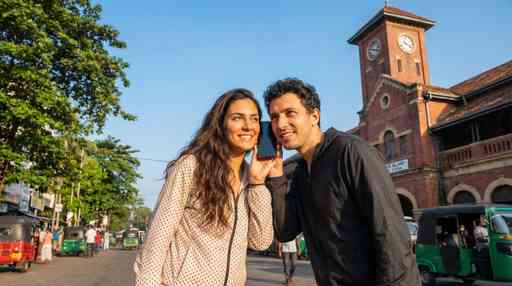
Colombo Highlights Audio Tour: Colonial Heritage and Vibrant Markets
Beneath the glittering silhouette of the Lotus Tower lies a Colombo built on colonial rebellion and shifting tides of power. This city is a kaleidoscope of forgotten secrets and bold architectural defiance. Experience a self-guided audio tour that peels back the layers of the urban sprawl. Uncover the scandals and hidden histories that casual tourists always overlook while walking the streets of this vibrant capital. Did a clandestine meeting once alter the trajectory of a national revolution? What shadow hangs over the candy-striped walls of the Jami Ul-Alfar Mosque after dusk? Why does the sea breeze at Galle Face Green carry the scent of a century-old mystery? Navigate through the pulse of Colombo as the city’s complex past rushes to meet your present. Feel the tension of political upheaval and the triumph of ancient resilience. Reconnect with the soul of the city and begin the journey now.

Colombo Audio Tour: Chronicles Through Cinnamon Gardens
A cricket ball once soared high above Colombo and landed not just in a stadium but deep within the city’s tangled web of history. Hidden stories still echo along these bustling roads for those who listen closely. Uncover a different side to Colombo with this self-guided audio tour. Each stop reveals secrets and sparks curiosity in places most visitors overlook. What scandal forced high-powered politicians into heated showdowns at the Sinhalese Sports Club? Why does the National Museum guard one room more carefully than all the others? What unlikely event at the Business Management Institute set tongues wagging across the nation? Move from shadowed gardens to grand colonial halls. Relive triumphs, heartbreak, and outrage swirling beneath the city’s modern pulse. With each step, Colombo changes before your eyes—alive with intrigue and wonder you never expected. Dare to chase these whispered legends. Press play and let Colombo surprise you.
Top landmarks
The Colombo everyone knows.
The landmarks in every guidebook — and the tours that tell you what guidebooks don't.
A few words on Colombo
The port that three empires needed. Still the heart of Sri Lanka.
Colombo has been a harbor since before its name was written down. The name itself derives from Kolon thota, meaning port on the Kelani River in classical Sinhala. The Portuguese built a fort here in 1505, the Dutch replaced them in 1656 and improved the fort's defenses, and the British took it in 1815 and made it the capital of Ceylon. Each colonial power left distinct traces: Portuguese-influenced Catholic churches in Kotahena, Dutch-era canal systems running through the commercial district, and Victorian administrative buildings around Fort and the Galle Face Green promenade, where the 1864 Galle Face Hotel still receives guests in grand if faded fashion beside the Indian Ocean.
The city divides into fifteen numbered postal districts that each function as separate quarters.
Fort (Colombo 1) holds the financial and government institutions in colonial buildings. Pettah (Colombo 11), immediately north, is an intense commercial quarter where streets specialize by product: First Cross Street for electronics, Second Cross Street for mobile phones, Sea Street as the country's primary gold market. Cinnamon Gardens (Colombo 7), where ministries sit amid large properties and Viharamahadevi Park spreads its colonial botanical grounds, is the most spacious and peaceful corner of central Colombo. In the evening, Galle Face Green, the long esplanade between the ocean and the old colonial buildings, fills with food carts, kite flyers, and families watching the sun go down over the water.
Colombo
Colombo FAQ
Before you walk.
Colombo is safe for walking and has improved significantly since the end of the civil war in 2009. The Fort, Pettah, and Galle Face areas are busy and safe throughout the day. Petty theft can occur in crowded markets like Pettah, so keep your bag in front and your phone secure. The city is generally very hospitable to visitors.
Colombo has tuk-tuks (three-wheelers) as the most practical short-distance transport, negotiated by meter or agreed price before you get in. Pickme and Uber operate ride-hailing services. The city center is walkable between Fort, Pettah, and the Galle Face Green, though the tropical heat makes long walks tiring. The Colombo Lotus Tower area requires a tuk-tuk from the main center.
Rice and curry at any local restaurant is the starting point, with multiple curries and sambals served with red or white rice. Hoppers (bowl-shaped rice flour crepes, eaten for breakfast or dinner) are a Sri Lankan staple. Kottu roti, shredded flatbread stir-fried with vegetables and egg on a griddle, is audible before you see it. Galle Face Green's street food vendors operate from late afternoon and serve isso vadai (prawn fritters) and grilled corn.
Buddhist temples, including Gangaramaya, require shoes to be removed at the entrance and shoulders and knees to be covered. A light sarong or shawl is easy to carry in a bag. The colonial Fort area and Galle Face Green have no dress restrictions. In mosques in the Muslim quarter, women should cover their hair in addition to the standard coverage requirements.
Every Colombo tour, in your language.
All 50+ languages, included with every booking.
🇬🇧 English🇫🇷 Français🇪🇸 Español🇩🇪 Deutsch🇮🇹 Italiano🇯🇵 日本語🇨🇳 中文🇰🇷 한국어+ 41 more
star AudaTours Unlimited
Visiting more than one city? Subscribe.
Unlock every Colombo tour — plus thousands more worldwide. Cancel any time.
$4.99/week · Cancel anytime

More in Sri Lanka
Explore Sri Lanka arrow_forwardOther cities to walk in Sri Lanka.


Loved by travellersThousands of tours started.
Thousands of tours started.
Plenty of opinions.
4.8 across the App Store and Google Play. Here's a few we keep coming back to.
starstarstarstarstar
This tour was such a great way to see the city. The stories were interesting without feeling too scripted, and I loved being able to explore at my own pace.

Jess
Tbilisi Tourstarstarstarstarstar
This was a solid way to get to know Brighton without feeling like a tourist. The narration had depth and context, but didn't overdo it.

Christoph
Brighton Tourstarstarstarstarstar
Started this tour with a croissant in one hand and zero expectations. The app just vibes with you, no pressure, just you, your headphones, and some cool stories.

John
Marseille Tourdownload Get the app Pop your headphones in.


Pop your headphones in.
Step outside.
Free to download. Tours in every city. Start in 60 seconds — no account, no card.

headphones
~ 4 min until your first tour starts
public
1,000+ cities worldwide
all_inclusive
AudaTours
Unlimited
Every tour. Every city. One subscription.
3097 tours2273 cities138 countries50+ languages
$39 /year
all_inclusive Explore Unlimited