
50+ languages

 Cordoba · Argentina
 Cordoba Audio Tours
Discover Cordoba with self-guided audio walking tours
headphones
2 tours
pin_drop
20 landmarks
translate
Cordoba tours
Pick a Cordoba worth walking.
Self-guided audio tours written by people who actually live there.
2 tours
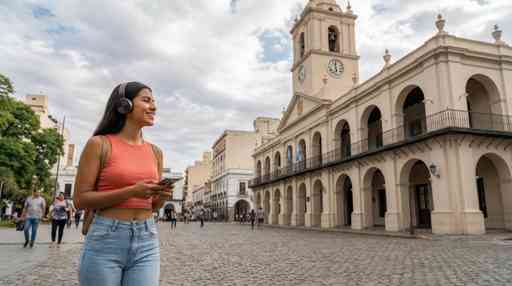
Cordoba Highlights Audio Tour: Jesuit Heritage and Colonial Landmarks
Beneath the polished limestone of Córdoba lie centuries of whispered conspiracies and shifting political tides. This city is not merely a collection of colonial architecture but a layered battlefield where power, faith, and rebellion collided. Unlock these secrets with a self guided audio tour designed to bypass the surface level guides. Traverse the corridors of the National College of Monserrat and the grand Libertador General San Martín Theater to find the forgotten moments most visitors walk right past. Which architect vanished after finishing his masterpiece? Why do the walls of the Jesuit Block still vibrate with the echoes of a forbidden midnight trial? Did the city truly survive the scandal that nearly dismantled its foundation? Walk through the shadows of history as the streets come alive with intensity. Experience the pulse of a city defined by intrigue and daring ambition. Start your journey now and unearth the truths hidden beneath the stone.
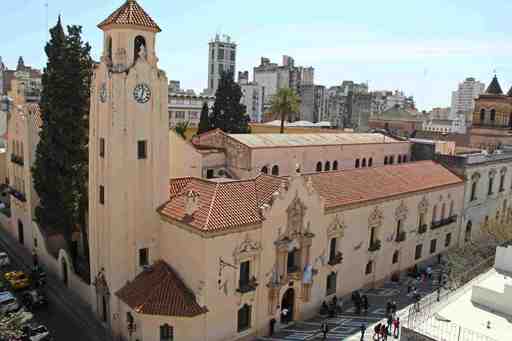
Cordoba Audio Tour: A Journey Through Córdoba's Architectural Gems
A bell once rang through Córdoba that silenced an uprising before dawn. Shadows flicker behind grand stone facades and every ornate balcony holds secrets traded in hushed voices. This is your self-guided audio journey. Wind through Córdoba’s heart, uncovering legends and hidden corners most travelers never even glimpse. Why did revolutionaries vanish under the arches of the National College of Monserrat? Who plotted a city-wide scandal in the private chambers of Córdoba City Council? What strange object was left atop the mysterious Angela Tower during a forgotten midnight ceremony? Stride along cobbled streets where history rebels and whispers in unexpected places. Sense the pulse of vanished rebellions and unravel layers of scandal, mystery, and memory at every turn. Each step reveals another twist in Córdoba’s dramatic past. Are you ready to unlock the city's deepest stories? Your adventure into the hidden side of Córdoba starts now.
Top landmarks
The Cordoba everyone knows.
The landmarks in every guidebook — and the tours that tell you what guidebooks don't.
A few words on Cordoba
Argentina's learned city, and it knows it.
Cordoba was founded in 1573 at the foot of the Sierras Chicas, about 700 kilometers northwest of Buenos Aires, and it has maintained a chip on its shoulder about the capital ever since. The Jesuits arrived in 1599 and established the National University of Cordoba in 1613, making it the fourth-oldest university in the Americas and the oldest in Argentina. The nickname La Docta, meaning the learned one, has stuck, and with 105,000 students still enrolled it is not an idle boast. The Jesuit Block at the city center, declared a UNESCO World Heritage Site in 2000, contains colonial buildings that have been in continuous educational use for four centuries.
The 1918 University Reform movement, which spread across Latin America and challenged the feudal structure of academic institutions, began right here when students occupied the university and demanded autonomy.
The Cordobazo of 1969, a violent uprising of workers and students that shook the military government, put the city on the map as a place that takes its politics as seriously as its learning. In between those moments, Cordoba has been building cars (Renault has had a factory here since 1955), developing aircraft (the state aerospace company FAMA was established in 1927), and lately producing software engineers and startup founders faster than Buenos Aires can absorb them.
Cordoba
Cordoba FAQ
Before you walk.
The city center around Plaza San Martin is easily reachable by taxi or rideshare from anywhere in the city. Cordoba has a bus network that covers the urban area, and the downtown is compact enough that once you arrive, the Jesuit Block, Cathedral, and historic streets are all within walking distance of each other.
Yes, and pleasantly so. The city center is largely flat, with wide pedestrian streets like Peatonal Rivera Indarte and 9 de Julio running through the commercial and historic core. The streets around the Jesuit Block are easy to navigate on foot, and the neighborhood grid is straightforward.
Cordoba is famous for its traditional Argentinian food with a local twist. Look for empanadas cordobesas, which are sweeter than the Buenos Aires version. The area around Nueva Cordoba and the student quarter has dozens of cafes, parrillas (grills), and sandwich spots at student-friendly prices.
The historic center and Nueva Cordoba neighborhood are safe for visitors during the day and into the evening. As in any city, be aware of your surroundings in busy market areas and keep your phone out of obvious sight. The university precinct is lively and well-populated throughout the day.
Every Cordoba tour, in your language.
All 50+ languages, included with every booking.
🇬🇧 English🇫🇷 Français🇪🇸 Español🇩🇪 Deutsch🇮🇹 Italiano🇯🇵 日本語🇨🇳 中文🇰🇷 한국어+ 41 more
star AudaTours Unlimited
Visiting more than one city? Subscribe.
Unlock every Cordoba tour — plus thousands more worldwide. Cancel any time.
$4.99/week · Cancel anytime

More in Argentina
Explore Argentina arrow_forwardOther cities to walk in Argentina.




Loved by travellersThousands of tours started.
Thousands of tours started.
Plenty of opinions.
4.8 across the App Store and Google Play. Here's a few we keep coming back to.
starstarstarstarstar
This tour was such a great way to see the city. The stories were interesting without feeling too scripted, and I loved being able to explore at my own pace.

Jess
Tbilisi Tourstarstarstarstarstar
This was a solid way to get to know Brighton without feeling like a tourist. The narration had depth and context, but didn't overdo it.

Christoph
Brighton Tourstarstarstarstarstar
Started this tour with a croissant in one hand and zero expectations. The app just vibes with you, no pressure, just you, your headphones, and some cool stories.

John
Marseille Tourdownload Get the app Pop your headphones in.


Pop your headphones in.
Step outside.
Free to download. Tours in every city. Start in 60 seconds — no account, no card.
headphones
~ 4 min until your first tour starts
public
1,000+ cities worldwide
all_inclusive
AudaTours
Unlimited
Every tour. Every city. One subscription.
3097 tours2273 cities138 countries50+ languages
$39 /year
all_inclusive Explore Unlimited