
50+ languages

 Yerevan · Armenia
 Yerevan Audio Tours
Discover Yerevan with self-guided audio walking tours
headphones
2 tours
pin_drop
20 landmarks
translate
Yerevan tours
Pick a Yerevan worth walking.
Self-guided audio tours written by people who actually live there.
2 tours
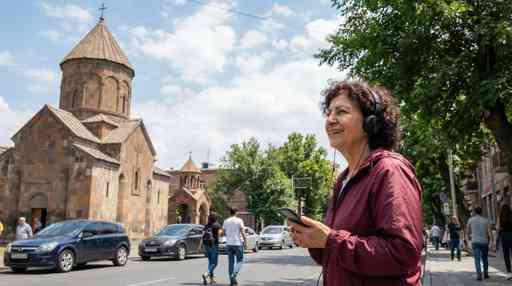
Yerevan Highlights Audio Tour: Cultural Treasures and Historical Landmarks
Beneath the pink volcanic stone of Yerevan lies a labyrinth of secrets where empires collapsed and silent whispers of rebellion still cling to the walls. This self guided audio tour pulls back the velvet curtain on the city. Move beyond the guidebooks to uncover forbidden political scandals and the lost tales of legends hidden in plain sight. Which ancient relic at Matenadaran was once used to smuggle messages past the eyes of secret police? What shadow haunts the back alleyways of Zoravor Surp Astvatsatsin Church? Why does the Yerevan Opera Theatre remain the city’s most dangerous stage? Traverse through centuries of drama, shifting from grand architectural beauty to the grit of forgotten history. Feel the pulse of a city that never stops reinventing itself. Plug in, press play, and start your descent into the heart of Yerevan’s true, untold story.
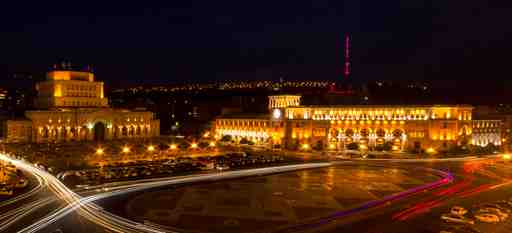
Yerevan Audio Tour: Yerevan’s Heartbeat Tour
Beneath the glowing stones of Yerevan’s Republic Square, revolutions have roared and secret alliances have sparked in the city’s shadows. This self-guided audio tour pulls back the elegant curtain to reveal stories and corners that tourists miss every day. What lost artwork once vanished from the National Gallery of Armenia under cover of night? Why did whispers behind the Blue Mosque’s ancient walls draw spies from three rival empires? And what connection does a hidden courtyard hold to a vanished poet whose words nearly toppled a regime? Wander through broad boulevards and twisting side streets where legends smolder just below modern life. Feel political tension, spiritual intrigue and unexpected beauty emerge with each step. Let the city’s layered past ignite your curiosity as never before. Unlock Yerevan’s secrets. Press play and set off into history, starting with the stones beneath your feet.
Top landmarks
The Yerevan everyone knows.
The landmarks in every guidebook — and the tours that tell you what guidebooks don't.
A few words on Yerevan
Pink city beneath an unreachable mountain.
Yerevan gets its nickname, the Pink City, from the rose-colored tuff stone that the Soviets used to rebuild it in the 1920s and 30s when architect Alexander Tamanian drew up an entirely new master plan on a radial-circular grid. But the city is older than any of that. The fortress of Erebuni was built on this hill in 782 BC by King Argishti I of Urartu, making Yerevan one of the oldest continuously inhabited cities in the world. It predates Rome by 29 years. From almost anywhere in the city, if the sky is clear, you can see Mount Ararat rising enormous and snowcapped to the southwest, sitting in Turkish territory since 1920, the sacred mountain of the Armenian people visible from their capital and permanently out of reach.
Republic Square at the center of the city is a good place to start.
The ensemble of Soviet neoclassical buildings surrounding the square, faced in pink and grey tuff, houses the National Museum of Armenia and the History Museum. The Cascade, a giant stepped monument climbing the hillside northwest of the center, integrates open-air sculpture, cafes, and galleries into its terraces and offers one of the best views of Ararat that the city provides. The Matenadaran, a research institute housing one of the world's largest collections of ancient manuscripts, sits at the top of Mesrop Mashtots Avenue and holds over 17,000 manuscripts dating back to the 5th century.
Yerevan
Yerevan FAQ
Before you walk.
Yerevan has a single metro line running north-south through the center, useful for reaching the main squares and the Cascade area. Minibuses (marshrutkas) and taxis cover the rest. The historic center around Republic Square and up to the Cascade is walkable, though the Cascade itself requires a climb up several hundred steps or an escalator inside the monument.
Yes, Yerevan is one of the safer capitals in the post-Soviet region. Crime rates against tourists are low, and Armenians are known for their hospitality toward visitors. The central areas including Republic Square, Northern Avenue, and the Cascade district are well-lit and populated into the evening. Standard city caution applies for late nights in quieter districts.
Khorovats (Armenian-style grilled meat, usually pork or lamb) is the essential experience. Dolma (grape leaves or vegetables stuffed with meat and rice), ghapama (stuffed pumpkin), and lavash flatbread baked in clay ovens are all worth seeking out. The Jermuk mineral water served everywhere, sweet Armenian apricots, and the local brandy round out the picture.
The memorial and museum are 15 minutes from the city center by taxi or bus and are deeply significant. The memorial flame burns continuously in the circular colonnade, and the museum below documents the 1915 Armenian Genocide with care and gravity. It is not a light visit, but it is central to understanding Yerevan and modern Armenia. Allow at least an hour.
Every Yerevan tour, in your language.
All 50+ languages, included with every booking.
🇬🇧 English🇫🇷 Français🇪🇸 Español🇩🇪 Deutsch🇮🇹 Italiano🇯🇵 日本語🇨🇳 中文🇰🇷 한국어+ 41 more
star AudaTours Unlimited
Visiting more than one city? Subscribe.
Unlock every Yerevan tour — plus thousands more worldwide. Cancel any time.
$4.99/week · Cancel anytime

More in Armenia
Explore Armenia arrow_forwardOther cities to walk in Armenia.

Loved by travellersThousands of tours started.
Thousands of tours started.
Plenty of opinions.
4.8 across the App Store and Google Play. Here's a few we keep coming back to.
starstarstarstarstar
This tour was such a great way to see the city. The stories were interesting without feeling too scripted, and I loved being able to explore at my own pace.

Jess
Tbilisi Tourstarstarstarstarstar
This was a solid way to get to know Brighton without feeling like a tourist. The narration had depth and context, but didn't overdo it.

Christoph
Brighton Tourstarstarstarstarstar
Started this tour with a croissant in one hand and zero expectations. The app just vibes with you, no pressure, just you, your headphones, and some cool stories.

John
Marseille Tourdownload Get the app Pop your headphones in.


Pop your headphones in.
Step outside.
Free to download. Tours in every city. Start in 60 seconds — no account, no card.

headphones
~ 4 min until your first tour starts
public
1,000+ cities worldwide
all_inclusive
AudaTours
Unlimited
Every tour. Every city. One subscription.
3097 tours2273 cities138 countries50+ languages
$39 /year
all_inclusive Explore Unlimited