50+ languages

 Sofia · Bulgaria
 Sofia Audio Tours
Discover Sofia with self-guided audio walking tours
headphones
2 tours
pin_drop
20 landmarks
translate
Sofia tours
Pick a Sofia worth walking.
Self-guided audio tours written by people who actually live there.
2 tours

Sofia Highlights Audio Tour: Cultural Treasures and Historical Landmarks
Beneath the modern asphalt of Sofia lies a graveyard of empires where ancient Thracian gold glitters just inches from the scars of twentieth century political betrayals. This self guided audio tour navigates the shifting layers of Bulgaria’s capital, revealing the scandalous secrets and forgotten rebellions that most tourists walk past without a glance. What drove a disgraced monarch to flee the gold gilded halls of the National Theatre in the dead of night? How did a hidden chamber beneath St. Alexander Nevsky survive the city’s most brutal aerial bombardment? Why does a single, misplaced artifact at the Archaeological Institute still baffle historians today? Pulse through the cobblestone streets as the echoes of past power struggles rise to meet you. Transform your visit from a simple walk into a high stakes exploration of shadows and glory. Press play now and uncover the hidden heart of Sofia.
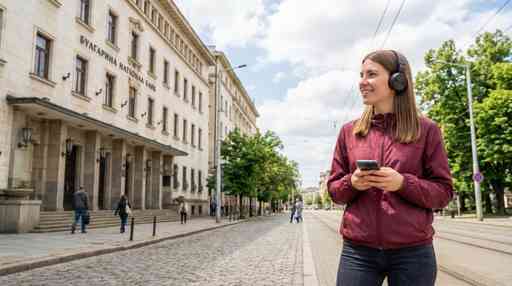
Sofia Audio Tour: Cathedrals, Czars, and Centuries Unveiled
Beneath Sofia’s modern pulse, ancient stones hide echoes of emperors, fiery revolutions and forbidden secrets. Centuries of intrigue lie etched into church walls and shrouded in silent monuments. Take this self-guided audio tour and unlock stories lurking behind the city’s most storied landmarks. Turn each corner chasing lost legends and uncovering the mysteries that ordinary strolls overlook. Who tried to assassinate a king near the grand Saint Nedelya Cathedral? What secret message is carved into the bricks of the Church of Saint George? Why did a bronze soldier at the Monument to the Soviet Army once wear a Pop Art disguise overnight? Trace the path of power, faith and rebellion as Sofia reveals its history not in textbooks but in every shadow and square. Expect drama and discovery at every step as the city’s heartbeat shifts beneath your feet. Begin now. The city’s secrets are waiting where you least expect them.
Top landmarks
The Sofia everyone knows.
The landmarks in every guidebook — and the tours that tell you what guidebooks don't.
A few words on Sofia
Roman ruins under the streets, mountains above the skyline.
Sofia has been inhabited for seven thousand years and built over four times. The Thracians were here first, then the Romans who called it Serdica and made it a provincial capital important enough that Emperor Constantine the Great was said to remark 'Serdica is my Rome.' The Roman street grid still shapes parts of the modern city center, and the metro construction in the early 2000s kept breaking into Roman ruins: the Serdica II station is essentially an underground museum where the platforms are ringed by exposed mosaic floors, column bases, and amphorae from the 4th century city. Walking Sofia is a continuous archaeological accident.
The Alexander Nevsky Cathedral was built between 1882 and 1912 to commemorate the Russian soldiers who died in the Russo-Turkish War that liberated Bulgaria from Ottoman rule in 1878.
Its gold-plated dome is visible from most of the city and its interior, which can hold 5,000 people, is one of the largest cathedral spaces in the Eastern Orthodox world. A few blocks away, the Russian Church of Saint Nicholas the Miracle-Maker has five vivid green domes and a mosaic facade that seem entirely transplanted from Moscow. The same neighborhood holds the former Communist Party headquarters, a concrete block that loomed over the city for 45 years and is now slowly being converted into government offices and apartments in a process that moves at the pace that all post-communist reckonings move: slowly, contentiously, and without clear resolution.
Sofia
Sofia FAQ
Before you walk.
The city center is very compact and walkable. The Alexander Nevsky Cathedral, the National Archaeological Museum, the Russian Church, Vitosha Boulevard pedestrian street, and the National Palace of Culture all fall within a 30-minute walk of each other. The central metro stations connect quickly to any area you cannot cover on foot.
Metro Line 1 runs directly from Sofia Airport Terminal 2 to the city center in about 20 minutes for a very low cost, making Sofia's airport-to-center connection one of the most convenient and cheapest in Europe. Taxis are available but metered cabs from the official stands are preferable to those soliciting inside the terminal.
Sofia is generally safe for walking with the usual urban awareness. The central pedestrian zones, Vitosha Boulevard, and the neighborhoods around the cathedral are relaxed and well-populated. Keep standard vigilance in the central market area and on crowded public transport.
Banitsa, a flaky pastry filled with cheese and egg, is the essential Sofia breakfast and can be bought from bakeries all over the city for very little money. Shopska salad (tomatoes, cucumbers, peppers, and grated sirene cheese) is the national salad served everywhere. The wine is excellent and very cheap by comparison to Western European cities.
Every Sofia tour, in your language.
All 50+ languages, included with every booking.
🇬🇧 English🇫🇷 Français🇪🇸 Español🇩🇪 Deutsch🇮🇹 Italiano🇯🇵 日本語🇨🇳 中文🇰🇷 한국어+ 41 more
star AudaTours Unlimited
Visiting more than one city? Subscribe.
Unlock every Sofia tour — plus thousands more worldwide. Cancel any time.
$4.99/week · Cancel anytime

More in Bulgaria
Explore Bulgaria arrow_forwardOther cities to walk in Bulgaria.

Loved by travellersThousands of tours started.
Thousands of tours started.
Plenty of opinions.
4.8 across the App Store and Google Play. Here's a few we keep coming back to.
starstarstarstarstar
This tour was such a great way to see the city. The stories were interesting without feeling too scripted, and I loved being able to explore at my own pace.

Jess
Tbilisi Tourstarstarstarstarstar
This was a solid way to get to know Brighton without feeling like a tourist. The narration had depth and context, but didn't overdo it.

Christoph
Brighton Tourstarstarstarstarstar
Started this tour with a croissant in one hand and zero expectations. The app just vibes with you, no pressure, just you, your headphones, and some cool stories.

John
Marseille Tourdownload Get the app Pop your headphones in.


Pop your headphones in.
Step outside.
Free to download. Tours in every city. Start in 60 seconds — no account, no card.

headphones
~ 4 min until your first tour starts
public
1,000+ cities worldwide
all_inclusive
AudaTours
Unlimited
Every tour. Every city. One subscription.
3097 tours2273 cities138 countries50+ languages
$39 /year
all_inclusive Explore Unlimited