
50+ languages

 Siem Reap · Cambodia
 Siem Reap Audio Tours
Discover Siem Reap with self-guided audio walking tours
headphones
1 tours
pin_drop
17 landmarks
translate
Siem Reap tours
Pick a Siem Reap worth walking.
Self-guided audio tours written by people who actually live there.
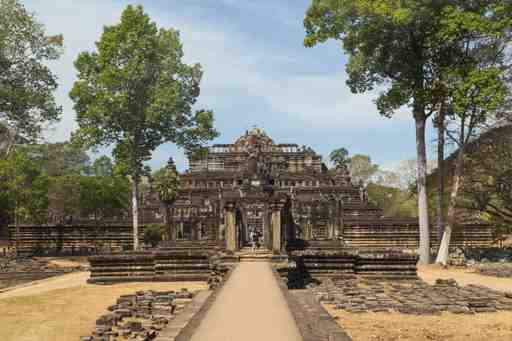
Top landmarks
The Siem Reap everyone knows.
The landmarks in every guidebook — and the tours that tell you what guidebooks don't.
A few words on Siem Reap
The small town that lives in Angkor's enormous shadow
Siem Reap is the gateway city to Angkor, the vast Khmer temple complex that remains the largest religious monument ever built. The name translates roughly as 'Siamese defeated,' a reference to a 17th-century Khmer victory, but today the city's identity is entirely shaped by the temples that lie a few kilometres to the north. Those temples, constructed between the 9th and 15th centuries at the height of the Khmer Empire, stretch across some 400 square kilometres and include Angkor Wat, whose five towers reflected in the morning moat are one of the most recognisable images on earth.
The city itself has grown rapidly around its role as a tourism hub, and the streets around Pub Street and the Old Market are busy with restaurants, bars, and guesthouses at every price point.
But Siem Reap rewards those who look beyond the obvious. The floating villages on Tonle Sap lake, Southeast Asia's largest freshwater lake, shift with the seasons as the lake swells and shrinks by an extraordinary factor of five between wet and dry season. Local Khmer cooking, which relies on lemongrass, galangal, and the fermented fish paste called prahok, is one of Asia's less celebrated but genuinely distinctive cuisines.
Siem Reap
Siem Reap FAQ
Before you walk.
A three-day temple pass gives you enough time to see the major sites including Angkor Wat, Angkor Thom, the Bayon, and Ta Prohm without rushing. One day is enough for a highlights circuit but leaves very little time for the quieter outer temples. Serious archaeology enthusiasts often spend five days or more. The three-day pass need not be used on consecutive days.
Sunrise at Angkor Wat is the classic experience, when the five towers reflect in the moat against an orange sky. To beat the largest crowds, arrive at least an hour before sunrise. Sunset from the hilltop temple of Phnom Bakheng or Pre Rup gives dramatic light across the jungle canopy. Midday is the hottest and most crowded time and is generally best used for resting or visiting less-visited temples.
The Tonle Sap floating village tours visit communities built on bamboo platforms that shift with the lake's extraordinary seasonal changes. Artisan Angkor workshops show traditional Khmer crafts including stone carving and silk weaving. The Siem Reap night market near Pub Street has crafts and local food stalls. The Phare Cambodian Circus, a social enterprise performance group, puts on acrobatic shows most evenings that are well worth attending.
Siem Reap is considered one of the safer cities in Southeast Asia for tourists and solo travellers. The tourist infrastructure around the Angkor complex is well developed, and tuk-tuk drivers are generally honest and experienced with international visitors. Standard precautions apply, particularly around the Pub Street bar area late at night. Landmines remain a risk in rural areas outside the main tourist zones, so stick to marked paths.
Every Siem Reap tour, in your language.
All 50+ languages, included with every booking.
🇬🇧 English🇫🇷 Français🇪🇸 Español🇩🇪 Deutsch🇮🇹 Italiano🇯🇵 日本語🇨🇳 中文🇰🇷 한국어+ 41 more
star AudaTours Unlimited
Visiting more than one city? Subscribe.
Unlock every Siem Reap tour — plus thousands more worldwide. Cancel any time.
$4.99/week · Cancel anytime

More in Cambodia
Explore Cambodia arrow_forwardOther cities to walk in Cambodia.

Loved by travellersThousands of tours started.
Thousands of tours started.
Plenty of opinions.
4.8 across the App Store and Google Play. Here's a few we keep coming back to.
starstarstarstarstar
This tour was such a great way to see the city. The stories were interesting without feeling too scripted, and I loved being able to explore at my own pace.

Jess
Tbilisi Tourstarstarstarstarstar
This was a solid way to get to know Brighton without feeling like a tourist. The narration had depth and context, but didn't overdo it.

Christoph
Brighton Tourstarstarstarstarstar
Started this tour with a croissant in one hand and zero expectations. The app just vibes with you, no pressure, just you, your headphones, and some cool stories.

John
Marseille Tourdownload Get the app Pop your headphones in.


Pop your headphones in.
Step outside.
Free to download. Tours in every city. Start in 60 seconds — no account, no card.

headphones
~ 4 min until your first tour starts
public
1,000+ cities worldwide
all_inclusive
AudaTours
Unlimited
Every tour. Every city. One subscription.
3097 tours2273 cities138 countries50+ languages
$39 /year
all_inclusive Explore Unlimited