
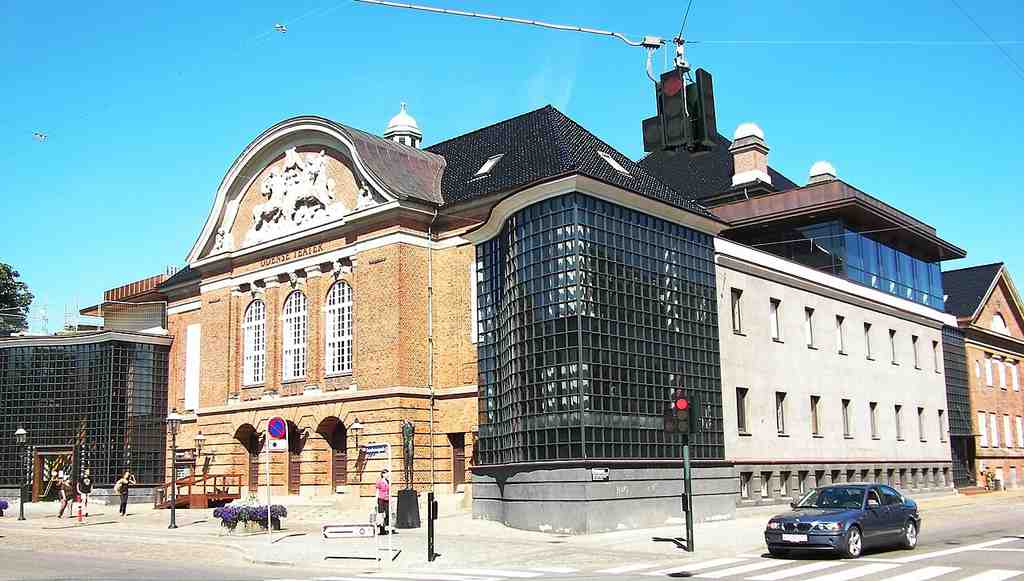
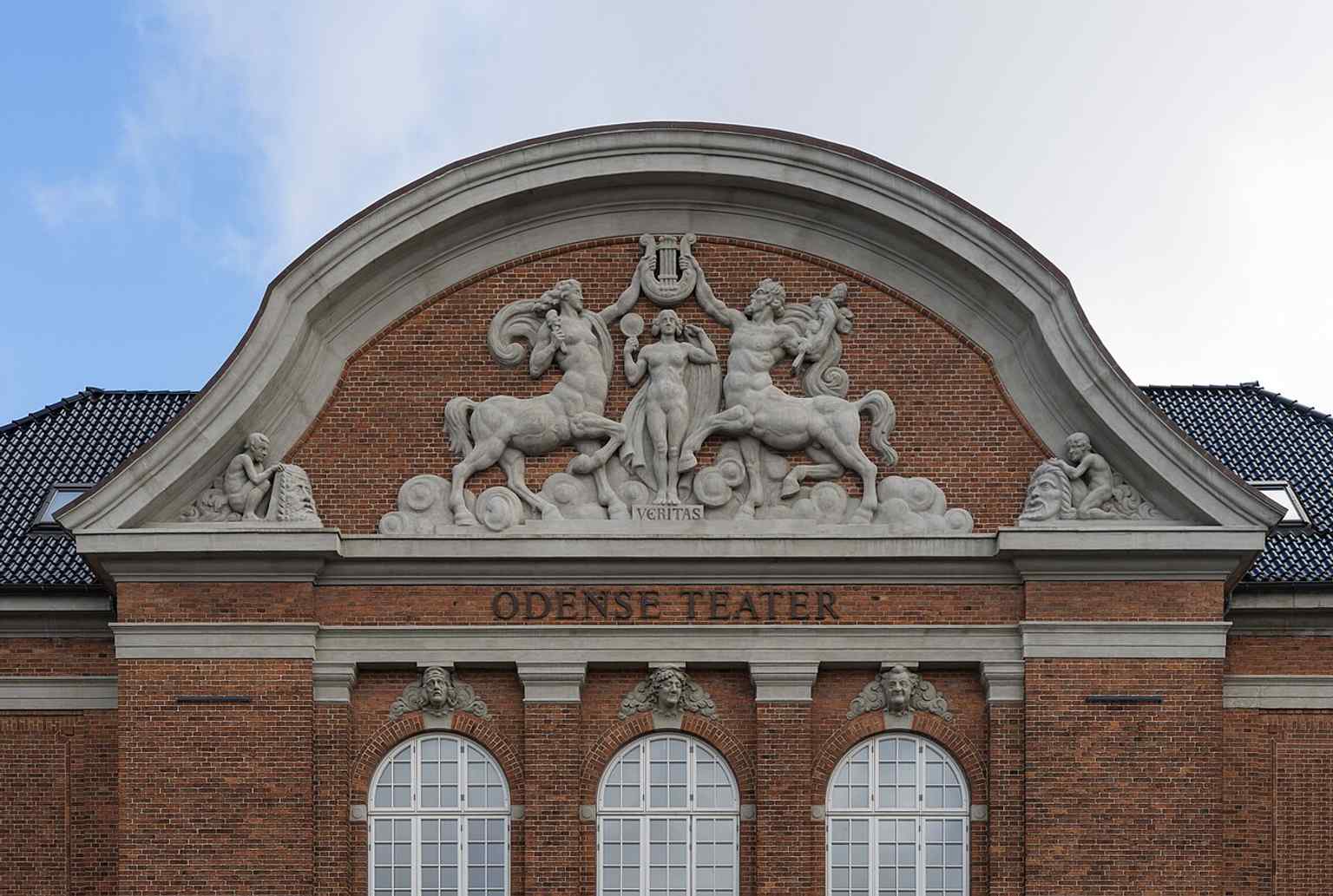
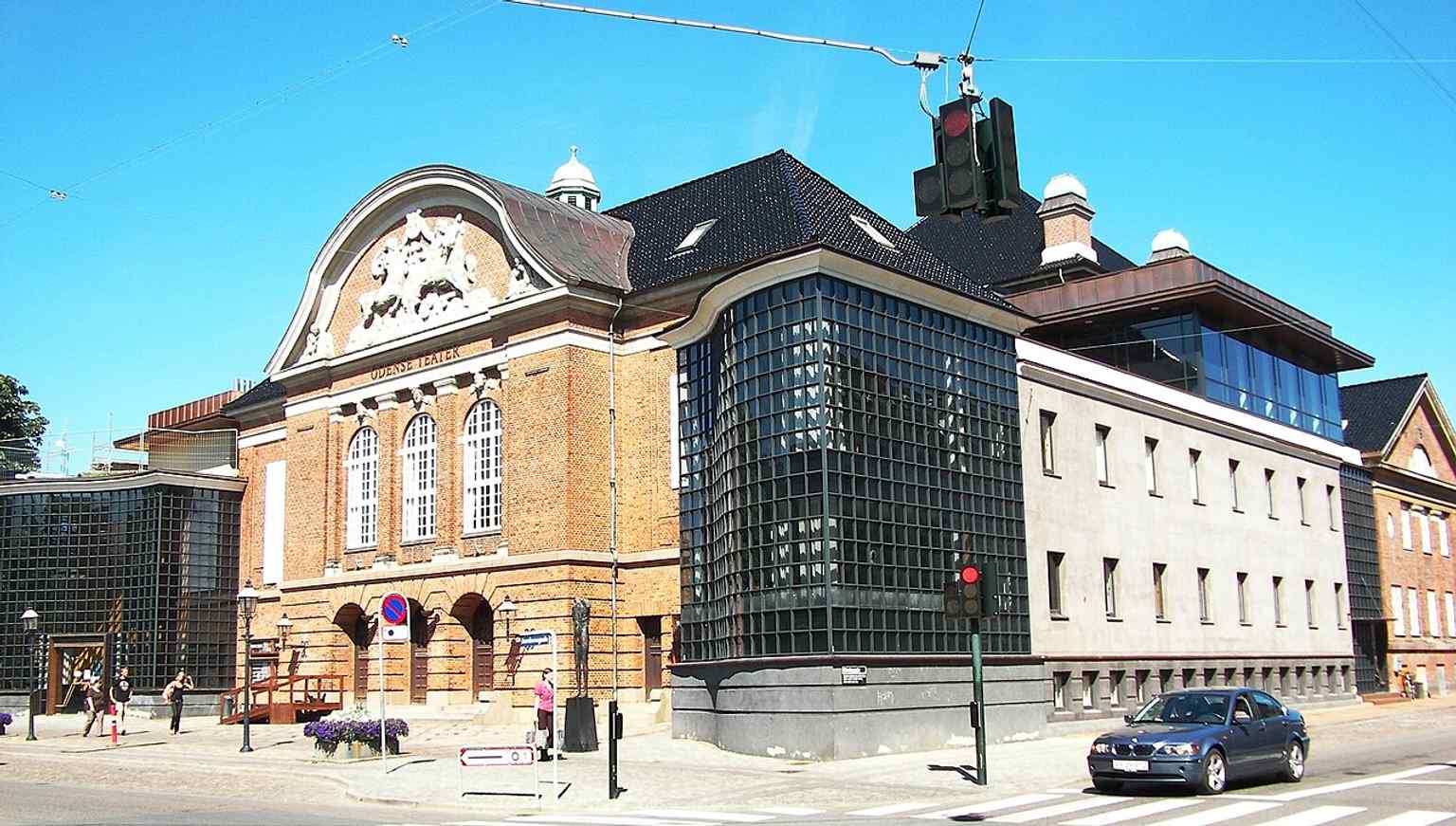
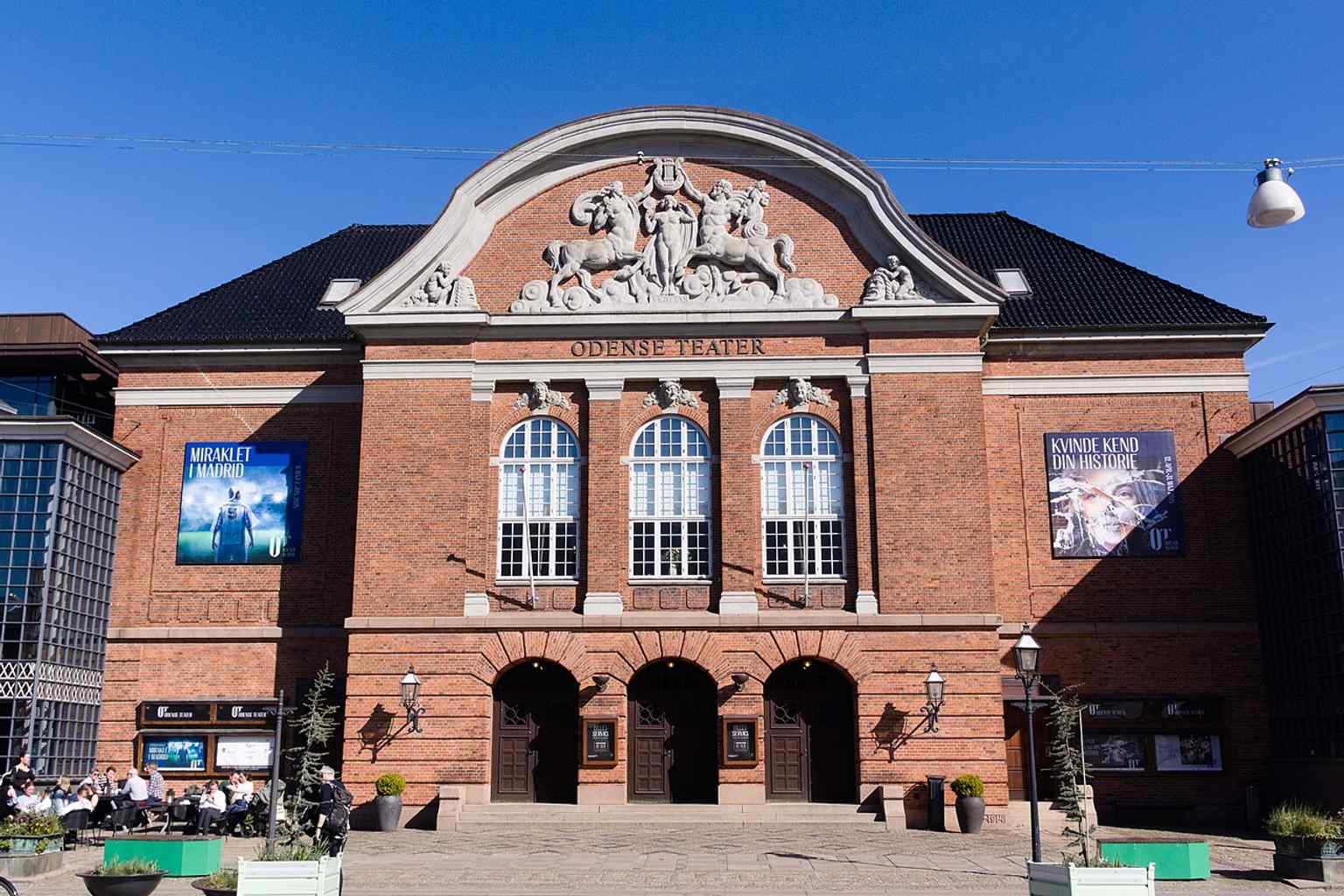
On your left, look for a pale stone-and-plaster façade with a broad symmetrical front, tall arched windows, and a sculpted pediment above the entrance.
This is Odense Teater, and it carries itself like someone who knows the spotlight suits it. Since nineteen fourteen, the company has lived here on Jernbanegade in a New Baroque building designed by Niels Jacobsen... New Baroque meaning a style that borrows the grand curves, ceremony, and confidence of older palace architecture. If you glance at the image in the app, that pediment detail shows the house dressing for the role beautifully.
But the most interesting thing about this theatre is that it has already changed costumes once. Its earlier home stood at Sortebrødre Torv, in the old Comediehus from seventeen ninety-five. That first address gave Odense an unusually early cultural life outside Copenhagen, and it drew everyone from local crowds to Crown Prince Frederik, the man who later became Frederik the Seventh. Then the theatre moved here, south of the King’s Garden, and the city restaged itself around it. That is reinvention of place in a nutshell: old stories in new rooms, a familiar institution learning a fresh posture, and a city discovering that moving a stage can move an identity too.
One young boy felt that pull especially hard. In eighteen twelve, Hans Christian Andersen appeared at the old theatre as an extra... not the star, not even close, just a body in the background. But sometimes that is how a life begins in public. He stood near the edge of the scene, looked toward the center, and never quite stopped doing that. Long before he became a writer known around the world, Odense gave him a rehearsal space for ambition.
This theatre also nudged European drama forward. On the fourteenth of November, eighteen seventy-seven, it hosted the world premiere of Henrik Ibsen’s Samfundets Støtter, or Pillars of Society, the play many people count as his first modern realistic drama. In plain terms, Odense got the premiere before Copenhagen did by a few days. The provincial town beat the capital to opening night... not bad.
Today, as one of Denmark’s three regional stages, Odense Teater still has a public duty to be wide-ranging: classics, new drama, children’s work, music, dance. It runs five stages, from the roughly five-hundred-seat Store Scene to smaller rooms of eighty and fifty seats, and one of its spaces now lives over at Odeon, which we’ll meet later. It even trained actors here for decades; under Helge Rungwald, the theatre founded the first acting school outside Copenhagen in nineteen forty-one.
So standing here, you are not just outside a theatre. You are outside a machine for trying on selves. In Odense, performance is rarely only entertainment... it is practice for becoming someone new. When you are ready, St. Hans Church is about a four-minute walk away, and it will show you another kind of stage altogether.






.jpg)
