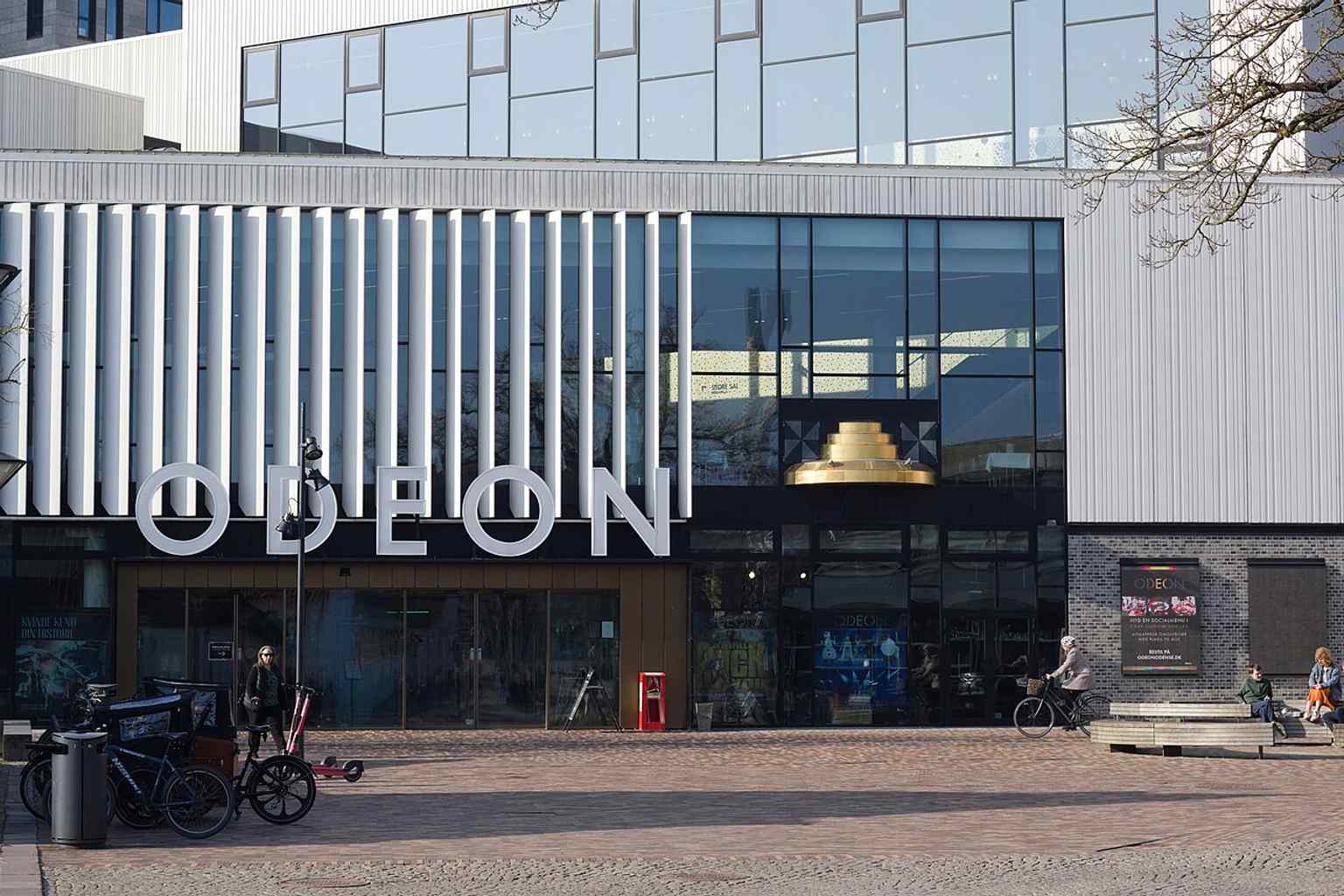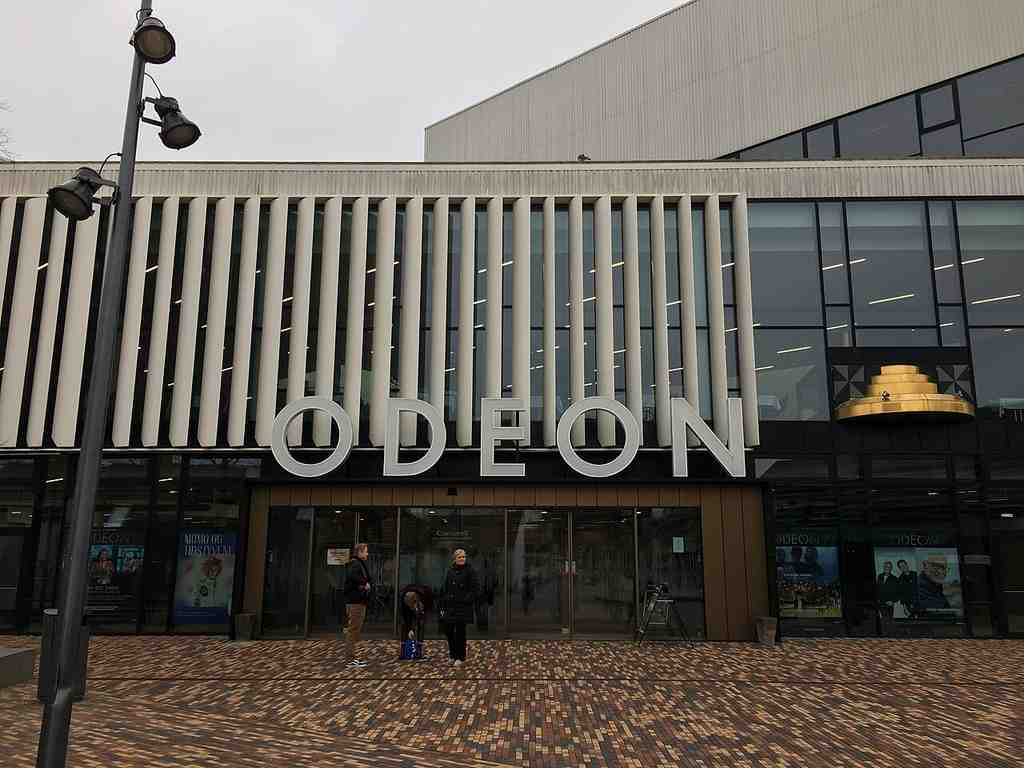
In front of you is a broad facade of pale brick and glass, shaped in sharp modern angles and stamped with the large ODEON sign.
This place tells you something important about Odense. Earlier in the walk, power gathered behind gates, church walls, and formal institutions. Here, the city takes that same energy and opens the doors wide... less throne room, more living room. Culture in Odense has been moving from something controlled by the few to something designed for the many to enter, use, study, and argue over a little in the café.
ODEON did not simply appear with a fancy name and a ribbon. Odense Kommune asked the public to help name it, collected more than six hundred suggestions, narrowed them to three, and then sent the final choice to a vote. Locals like that detail because it means this major building began as a public conversation, not a top-down decree. Even the name points back to Odense and works neatly in Danish and English... a tidy little civic handshake.
Architect C. F. Møller gave the city a building that could do several jobs at once. ODEON covers thirty-two thousand square meters, rises through nine levels including a two-level parking basement, and opened on the first of March, twenty seventeen after construction began in June twenty fourteen. Inside are twenty-nine meeting and conference rooms, a café, a restaurant, music training, acting training, and Odense Teater’s extra stage. Facing Hans Mules Gade, the complex even includes forty-two youth apartments, which feels very Odense to me: art house on one side, everyday life on the other.
If you check the image on your screen, you can see the foyer where public life really starts, with the open round stage called Byens Scene right in the middle of the ground floor. That stage is seven meters across and small enough for acoustic concerts, talks, mini-exhibitions, and the sort of performance that makes you stop for five minutes and somehow stay for forty.
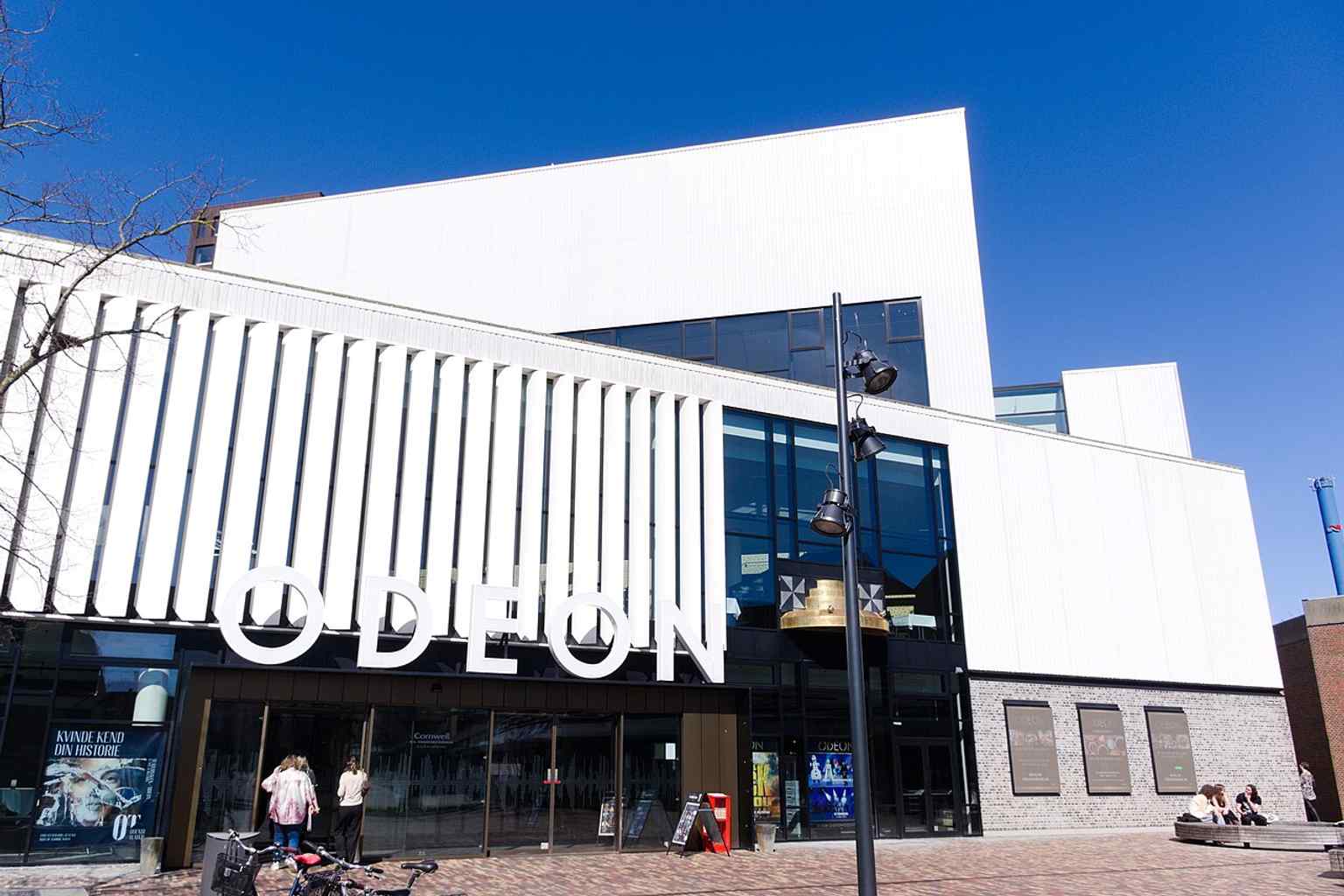
The big human moment came before the building even finished. During the topping-out in twenty fifteen, guitarist Steffen Schackinger played with the Odense Symphony Orchestra here for ODEON’s very first concert, turning a construction site into a temporary cultural arena. That is Odense in a nutshell: a place crossing from blueprint to performance without waiting for perfection. Artist Henrik Plenge Jakobsen added another signature at the opening by gifting ODEON its own carillon, a bell instrument, tying the building to contemporary art, not just stage machinery and conference schedules.
And ODEON has stayed flexible. The main hall seats one thousand seven hundred and forty in its green chairs, but staff can remove the rows and make room for two thousand five hundred standing guests. A black-box theater - meaning a simple, adaptable performance room - took over work once done at Sukkerkogeriet. In later years, ODEON hosted everything from a Jeff Beal concert of House of Cards music to the Reumert theater awards, and in twenty twenty-four it won regional honors for best cultural experience. Not bad for a building young enough to still smell new in city memory.
From here, Andersen’s old streets are right beside you, where lived memory starts to gather. ODEON is generally open Monday through Saturday from ten A-M to five P-M, and closed Sunday.