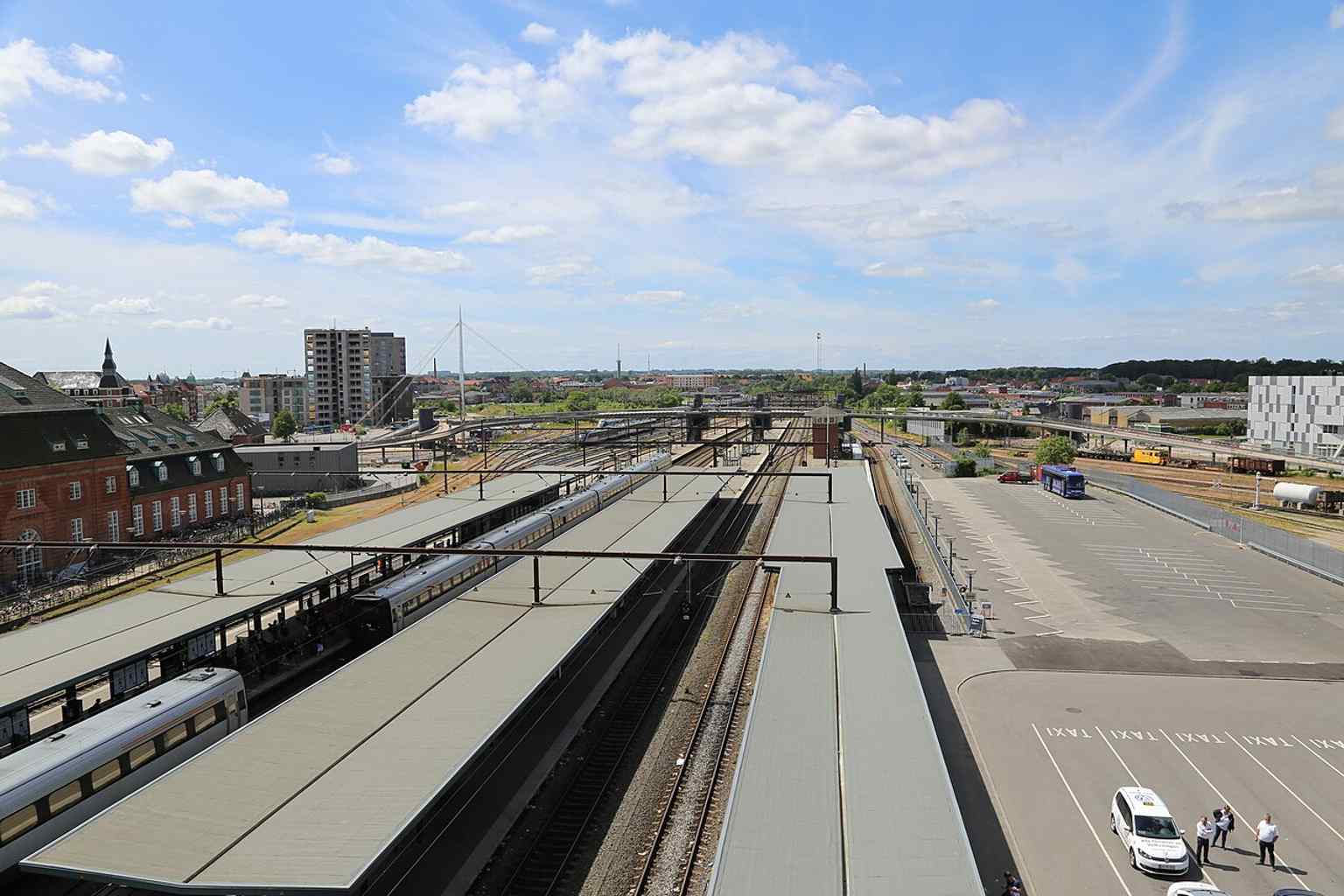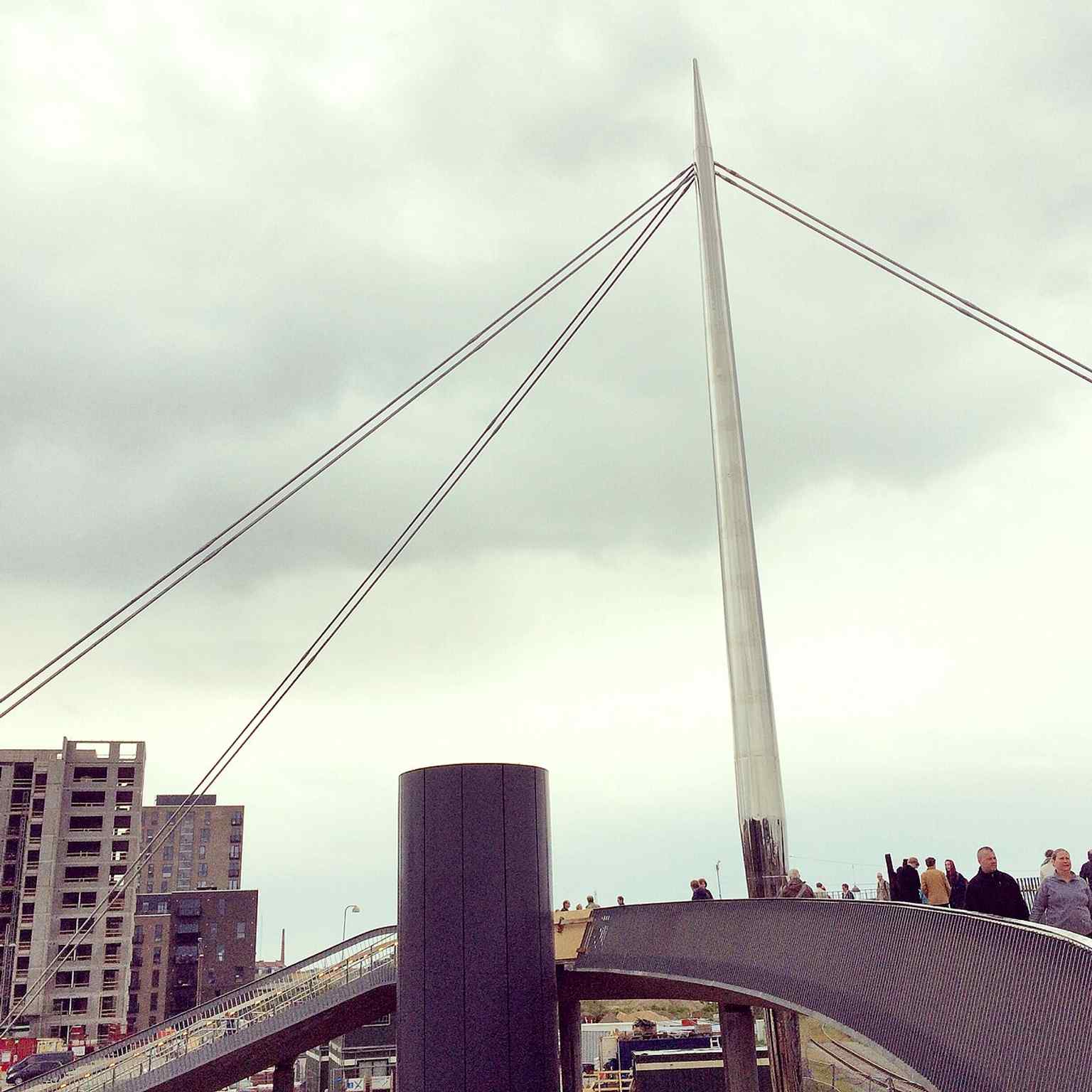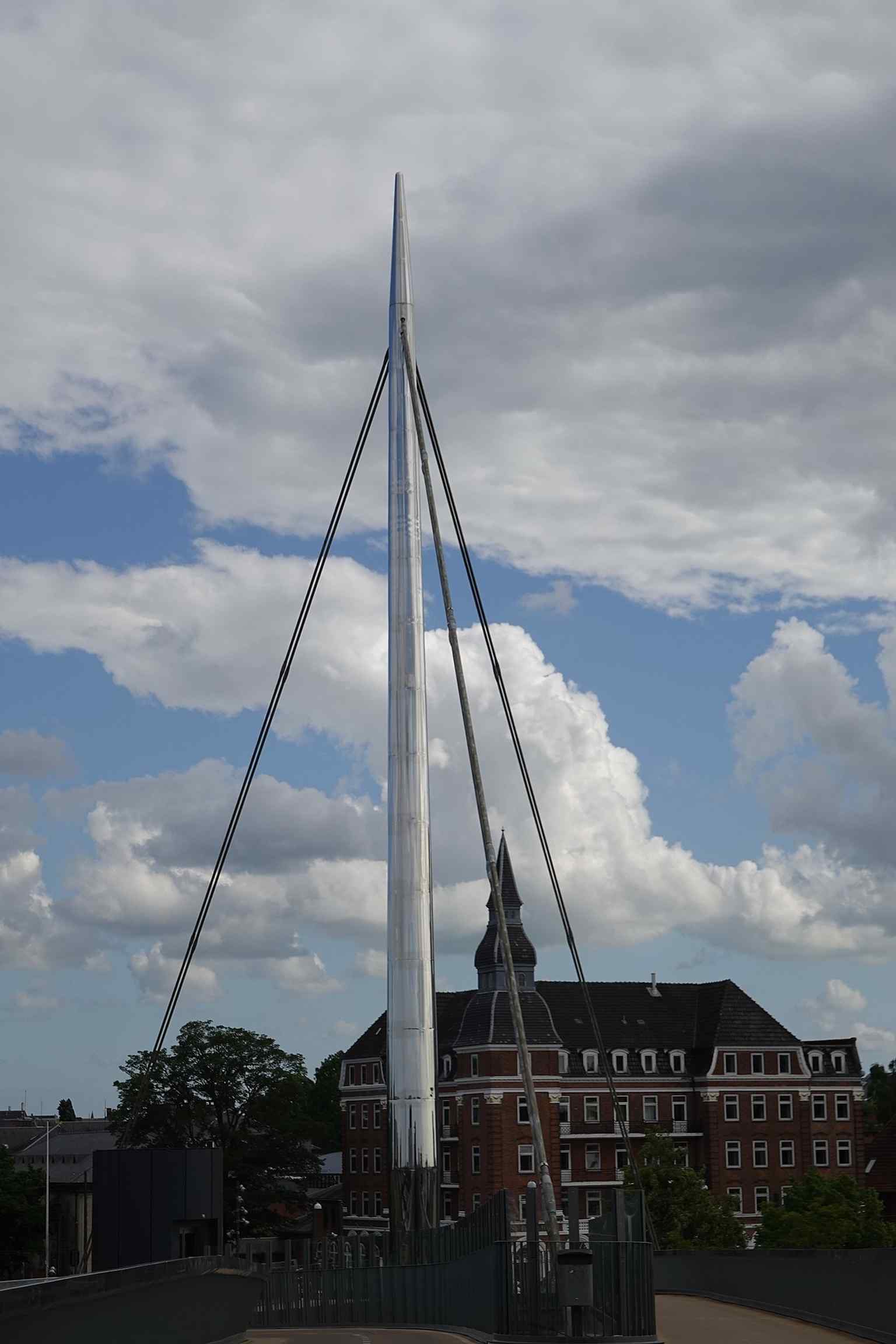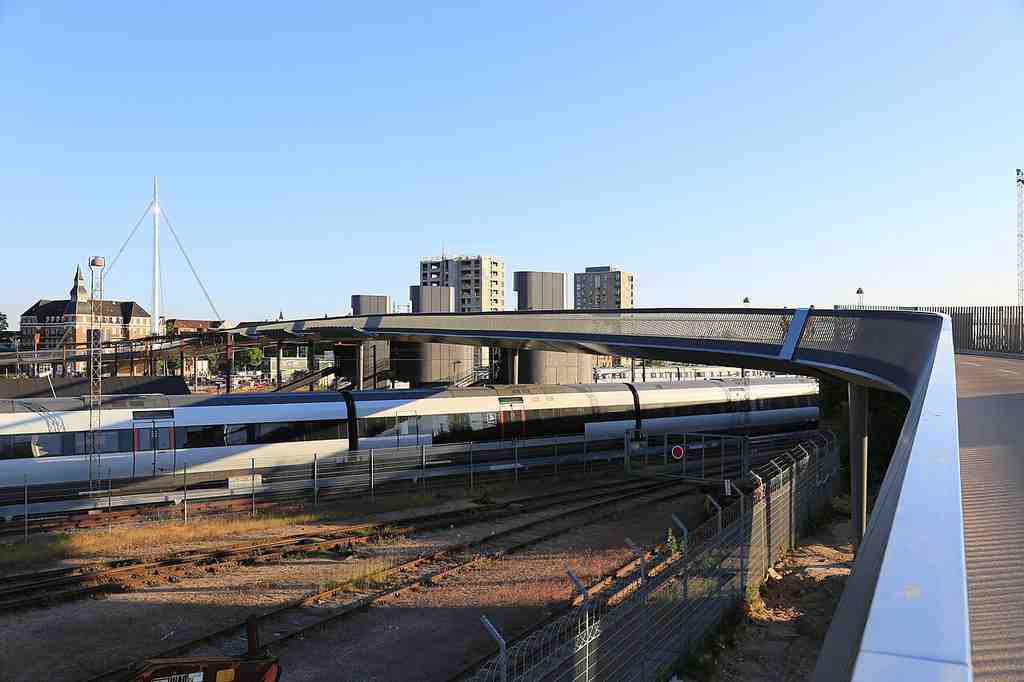
Look for a long steel bridge with a gently rising span, separate side-by-side paths, and a tall white pylon standing above the railway.
This is Byens Bro, the City Bridge, and it tells you something important about Odense right away... when the city meets a barrier, it tends to answer with a passage. Here, that passage changed what the station area could be. Instead of the rail yard splitting town from harbor, this bridge turned the gap into a hinge.
It opened on the twenty-ninth of May, twenty fifteen: one hundred thirty-five meters long, stretched across fifteen railway tracks, with stairs and elevators down to three platforms. Take a second and follow the bridge with your eyes... walkers on one side, cyclists on the other. It feels neatly choreographed, almost like Odense saying, “Sure, we can all get along if we keep our lanes.” If you want a clearer view of that layout, the image on your screen shows the parallel paths and the station towers well.
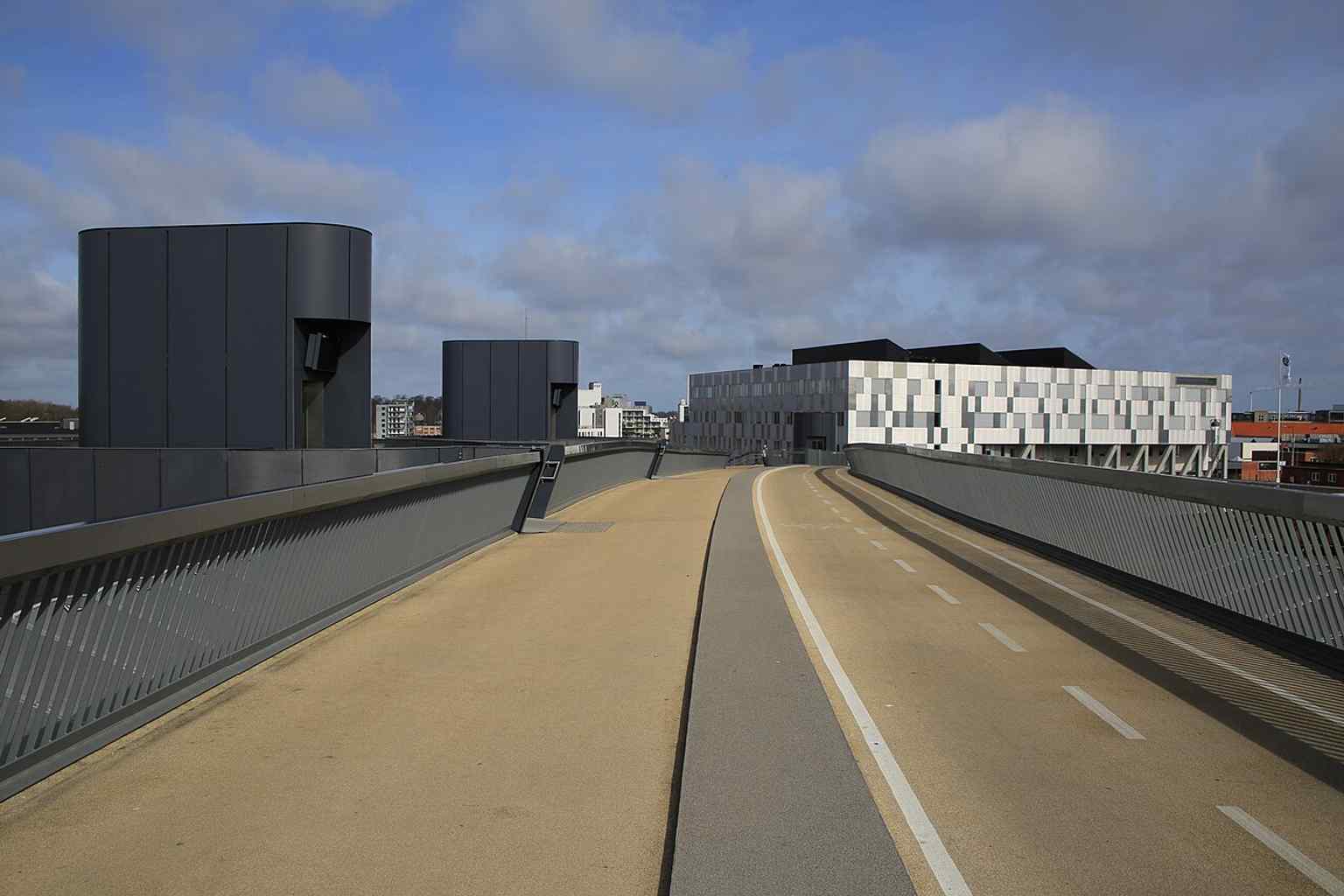
Project leader Poul-Ivan Ikkala said the real headache hid underneath that calm design. The hard part was not drawing the bridge. It was getting above fifteen active tracks without shutting down train traffic. So the city and D-S-B, the rail operator, only closed tracks when absolutely necessary. Meanwhile, builders from Bladt Industries poured about three thousand four hundred tons of concrete, set about four hundred thirty-five tons of steel, and raised that forty-meter pylon.
The architects, Gottlieb Paludan and Public Arkitekter, gave Odense the structure. Artist Anita Jørgensen gave it a pulse, folding in Auroraholes, a monumental light work, from the start rather than tacking art on later. Even the name came from locals: more than thirteen hundred people entered a contest, and Povl Edvard Hansen won it.
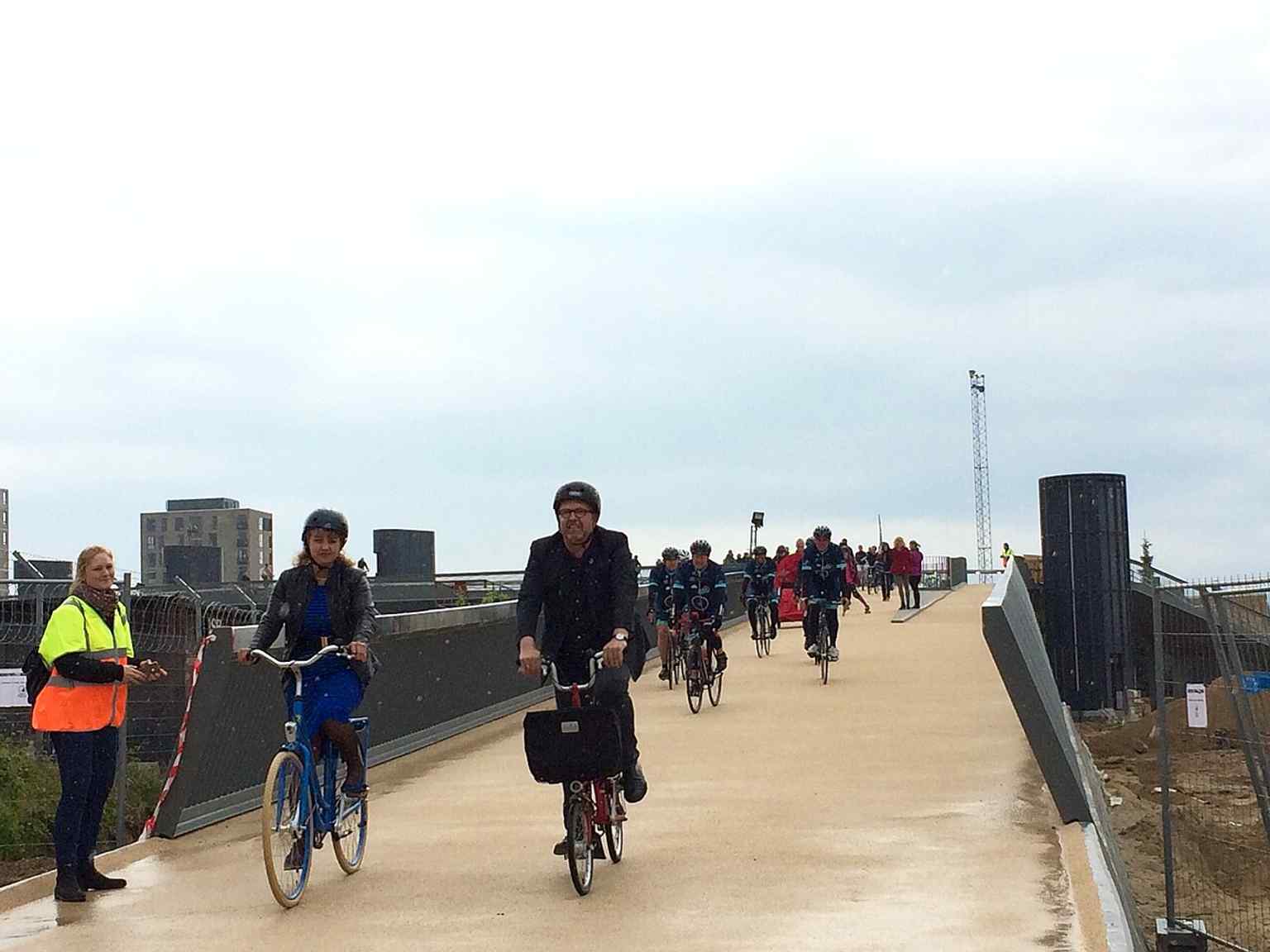
At the opening, Jane Jegind rode across with Klaus Bondam from the Cyclist Federation, even though some paving, elevators, and cycle parking still lagged behind. That feels very Odense to me... connection first, polish after.
Next, we trade rails for clipped paths and older ideas of order in the King’s Garden, about a five-minute walk away. And convenient little detail: this bridge stays open twenty-four hours a day.