
50+ languages

 Quito · Ecuador
 Quito Audio Tours
Discover Quito with self-guided audio walking tours
headphones
2 tours
pin_drop
20 landmarks
translate
Quito tours
Pick a Quito worth walking.
Self-guided audio tours written by people who actually live there.
2 tours
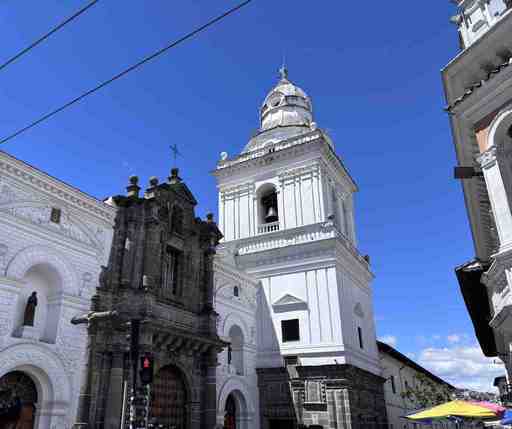
Quito Highlights Audio Tour: Colonial Treasures
Beneath the thin mountain air of Quito, the cobblestones hide secrets written in blood and shadow. This city is not merely a collection of stone; it is a layered battlefield of forgotten ghosts and shattered empires. Unlock these hidden histories with a self guided audio tour designed to reveal the corners most travelers walk past without a second glance. Why did the Basilica’s architect choose to hide stone creatures among the saints? What final, desperate pact was signed within the hushed walls of San Agustín? How did a single operatic performance at the Sucre National Theater trigger a citywide riot? Move through the labyrinthine streets, feeling the weight of political rebellions and private scandals beneath your feet. Transform your walk into a cinematic journey of discovery. Uncover the truth waiting in the silence. Press play and let the ancient walls start speaking.
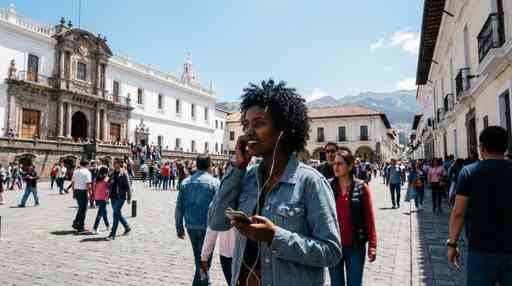
Quito Audio Tour: Echoes of Empires and Sacred Stones
Discover the vibrant heart of Quito on this captivating tour through its historic gems. Begin at the majestic Palacio de Carondelet, the seat of Ecuador’s government, where colonial architecture meets rich political history. Stroll to the awe-inspiring Church of the Company, renowned for its stunning gold-leaf interiors that sparkle with Baroque grandeur. Then, wander through the enchanting Church of San Francisco, one of the oldest and largest religious complexes in Latin America, filled with fascinating art and cultural stories. This tour immerses you in the essence of Quito’s colonial charm and vibrant heritage—an unforgettable journey through time and beauty.
Top landmarks
The Quito everyone knows.
The landmarks in every guidebook — and the tours that tell you what guidebooks don't.
A few words on Quito
UNESCO's first World Heritage City. The honor is deserved.
Quito was designated a UNESCO World Heritage Site in 1978 -- one of the first two sites ever named, alongside Krakow. The historic center preserves the largest and best-maintained collection of colonial architecture in the Americas: 320 hectares, 130 major monuments, and 5,000 registered heritage properties that were never fully dismantled or replaced. The city was founded by the Spanish in 1534 on the ruins of an Inca settlement, and the indigenous patterns of the original layout remain visible in the narrow, sloping streets of the old town.
Quito sits at 2,850 meters on the eastern slope of the Pichincha volcano, making it the second-highest national capital in the world and the closest to the equator.
The Church of La Compania de Jesus, whose interior is entirely covered in gold leaf applied over 160 years of construction (1605-1765), is one of the baroque extremes of Latin America -- genuinely disorienting to stand inside, as though the entire space has been turned to concentrated light. The equatorial line runs 35 kilometers north of the old town at the monument called La Mitad del Mundo, though GPS measurements reveal the actual equator is 240 meters further north than the monument marks it.
Quito
Quito FAQ
Before you walk.
At 2,850 meters, altitude effects are real. Take your first day slowly: avoid alcohol, stay hydrated, eat lightly, and don't tackle steep climbs immediately. Most visitors acclimatize within 24-48 hours. The climb to El Panecillo and the stairs inside the old-town churches are manageable once you've adjusted.
The old town is built on a hillside. Many streets slope significantly and cobblestones make the terrain uneven. Churches have steps at their entrances. The main plazas (Plaza de la Independencia, Plaza de San Francisco) are relatively flat, but the city is generally not accessible for mobility-limited visitors.
The historic center has improved significantly with tourist police and security cameras. Stay alert as you would in any major city, be careful in the crowded market areas, and avoid the old town after dark without a group or guide. La Mariscal, the international area, is generally safe and has the best concentration of restaurants and cafes.
Locro de papa -- a thick potato soup with cheese, avocado, and sometimes blood sausage -- is the Andean staple that warms the old city at every altitude. Fritada (fried pork with hominy corn and llapingachos, pan-fried potato cakes) is hearty Quiteño cooking. Ceviche in the Ecuadorian style, with tomato, onion, and citrus, is very different from the Peruvian version and worth trying.
Every Quito tour, in your language.
All 50+ languages, included with every booking.
🇬🇧 English🇫🇷 Français🇪🇸 Español🇩🇪 Deutsch🇮🇹 Italiano🇯🇵 日本語🇨🇳 中文🇰🇷 한국어+ 41 more
star AudaTours Unlimited
Visiting more than one city? Subscribe.
Unlock every Quito tour — plus thousands more worldwide. Cancel any time.
$4.99/week · Cancel anytime

More in Ecuador
Explore Ecuador arrow_forwardOther cities to walk in Ecuador.


Loved by travellersThousands of tours started.
Thousands of tours started.
Plenty of opinions.
4.8 across the App Store and Google Play. Here's a few we keep coming back to.
starstarstarstarstar
This tour was such a great way to see the city. The stories were interesting without feeling too scripted, and I loved being able to explore at my own pace.

Jess
Tbilisi Tourstarstarstarstarstar
This was a solid way to get to know Brighton without feeling like a tourist. The narration had depth and context, but didn't overdo it.

Christoph
Brighton Tourstarstarstarstarstar
Started this tour with a croissant in one hand and zero expectations. The app just vibes with you, no pressure, just you, your headphones, and some cool stories.

John
Marseille Tourdownload Get the app Pop your headphones in.


Pop your headphones in.
Step outside.
Free to download. Tours in every city. Start in 60 seconds — no account, no card.

headphones
~ 4 min until your first tour starts
public
1,000+ cities worldwide
all_inclusive
AudaTours
Unlimited
Every tour. Every city. One subscription.
3097 tours2273 cities138 countries50+ languages
$39 /year
all_inclusive Explore Unlimited