
50+ languages

 Szeged · Hungary
 Szeged Audio Tours
Discover Szeged with self-guided audio walking tours
headphones
2 tours
pin_drop
20 landmarks
translate
Szeged tours
Pick a Szeged worth walking.
Self-guided audio tours written by people who actually live there.
2 tours

Szeged Highlights Audio Tour: Historic Charm
Szeged was reborn from the ashes of a catastrophic flood, turning a muddy wasteland into an architectural masterpiece of brick and defiance. This self-guided audio tour navigates the city beyond the surface, revealing layers of political scandal and forgotten rebellion hidden in plain sight. Uncover the secrets buried behind the iconic facades of the University of Szeged and the majestic Votive Church. Why did the New Synagogue’s construction incite a local fury that almost burned the blueprints? What desperate sacrifice is permanently etched into the red brick walls of the city center? Which specific Hungarian legend whispers through the university halls at midnight? Feel the pulse of history beneath your feet as you weave through grand squares and shadowed alleyways. Transform your perspective on this resilient metropolis. Start the journey now and see if you can spot the hidden scars of a city that refused to vanish.
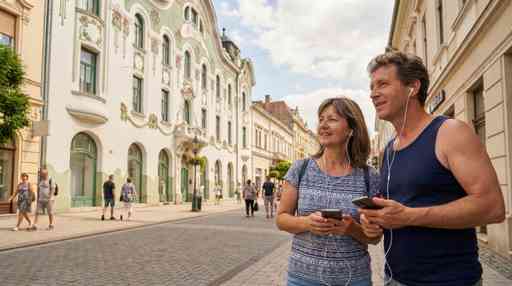
Szeged Audio Tour: A Symphonic Journey through History and Heritage
In Szeged, sunlight ignites the swirls of Art Nouveau on Reök Palace while echoes of revolution linger in the city squares. This self-guided audio tour invites you off the tourist track to discover lost intrigues and vivid stories stitched between the city’s facades. Who plotted secrets backstage at the National Theatre of Szeged during a night that changed local history forever? What shadow fell over Széchenyi Square when a vanished relic sent shockwaves through political circles? Why does one balcony hide a scandalous tale of forbidden love few locals dare to mention? Wander through grand halls and tree-lined plazas where rebellion, celebration and whispered betrayals still seem close enough to touch. Each step reveals a new layer beneath Szeged’s cheerful surface, turning familiar landmarks into portals to unexpected drama. Ready to unlock the hidden heartbeat pulsing beneath Szeged’s golden streets? Your journey begins now.
Top landmarks
The Szeged everyone knows.
The landmarks in every guidebook — and the tours that tell you what guidebooks don't.
A few words on Szeged
Rebuilt from flood, seasoned with paprika, bathed in sun
Szeged exists in its current form because of a catastrophe. On March 12, 1879, the Tisza River flooded and destroyed 95 percent of the city's buildings, killing 150 people. What followed was one of the most remarkable urban reconstruction projects in European history: funded by donations from across Europe and rebuilt under a coherent city plan, Szeged emerged from disaster as a well-ordered city of wide boulevards, ring roads, and a cluster of Art Nouveau and historicist buildings that give the center a handsome coherence it did not have before the flood.
Hungary's most celebrated spice comes from here.
Szeged paprika, ground from the capsicum peppers grown in the sandy plains surrounding the city for more than four centuries, carries a protected designation of origin from the European Union and is considered the finest in the world. Albert Szent-Gyorgyi, working at the University of Szeged in the 1930s, used paprika as his source for isolating Vitamin C in quantities sufficient for analysis, a discovery that earned him the Nobel Prize in Physiology in 1937. The connection between a city spice and a Nobel Prize in biochemistry is the kind of detail that Szeged wears with appropriate pride.
Szeged
Szeged FAQ
Before you walk.
Paprika shops line the old town market area and several producers sell directly in the central market hall near the waterfront. Look for the PDO (Protected Designation of Origin) label confirming it was grown and processed in the Szeged region. The Paprika Museum on Maros Street tells the full history of the spice from Ottoman-era introduction to Nobel Prize biochemistry.
The Votive Church, a twin-towered neo-Romanesque cathedral built after the 1879 flood as a thanksgiving monument, dominates Dome Square, which is surrounded by arcaded buildings housing the professors of the university. The New Synagogue from 1903, with its ceramic dome and Art Nouveau interior, is one of the finest synagogues in Hungary. The Mora Ferenc Museum has a strong collection on the history of the Great Plain.
Yes. The Szeged Bath and Spa complex draws on the geothermal waters beneath the Pannonian Basin and has been in operation since the 1920s. The outdoor thermal pools are open year-round. The Anna Baths, the original 1896 neo-baroque indoor pool, is one of the most beautiful bathing establishments in Hungary.
The Szeged Open-Air Festival takes place on Dome Square in late July and August, using the Votive Church facade as a backdrop for opera, musical theatre, and ballet. It has been running since 1931 and is one of the largest outdoor performing arts events in Hungary. Tickets should be booked well in advance for popular productions.
Every Szeged tour, in your language.
All 50+ languages, included with every booking.
🇬🇧 English🇫🇷 Français🇪🇸 Español🇩🇪 Deutsch🇮🇹 Italiano🇯🇵 日本語🇨🇳 中文🇰🇷 한국어+ 41 more
star AudaTours Unlimited
Visiting more than one city? Subscribe.
Unlock every Szeged tour — plus thousands more worldwide. Cancel any time.
$4.99/week · Cancel anytime

More in Hungary
Explore Hungary arrow_forwardOther cities to walk in Hungary.


Loved by travellersThousands of tours started.
Thousands of tours started.
Plenty of opinions.
4.8 across the App Store and Google Play. Here's a few we keep coming back to.
starstarstarstarstar
This tour was such a great way to see the city. The stories were interesting without feeling too scripted, and I loved being able to explore at my own pace.

Jess
Tbilisi Tourstarstarstarstarstar
This was a solid way to get to know Brighton without feeling like a tourist. The narration had depth and context, but didn't overdo it.

Christoph
Brighton Tourstarstarstarstarstar
Started this tour with a croissant in one hand and zero expectations. The app just vibes with you, no pressure, just you, your headphones, and some cool stories.

John
Marseille Tourdownload Get the app Pop your headphones in.


Pop your headphones in.
Step outside.
Free to download. Tours in every city. Start in 60 seconds — no account, no card.

headphones
~ 4 min until your first tour starts
public
1,000+ cities worldwide
all_inclusive
AudaTours
Unlimited
Every tour. Every city. One subscription.
3097 tours2273 cities138 countries50+ languages
$39 /year
all_inclusive Explore Unlimited