
50+ languages

 Windhoek · Namibia
 Windhoek Audio Tours
Discover Windhoek with self-guided audio walking tours
headphones
2 tours
pin_drop
20 landmarks
translate
Windhoek tours
Pick a Windhoek worth walking.
Self-guided audio tours written by people who actually live there.
2 tours
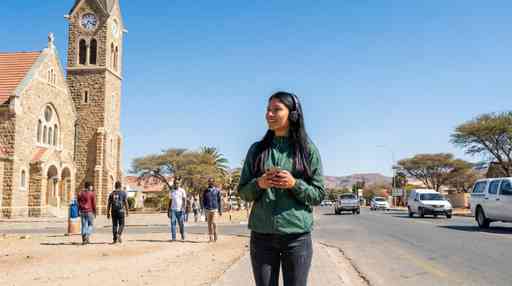
Windhoek Highlights Audio Tour: Cultural and Historical Landmarks
Beneath the sun-scorched spires of Windhoek, a violent history of colonial ambition and desperate rebellion lies buried in the red dust. Most travelers walk past the granite walls of the Alte Feste without ever feeling the echoes of the brutal sieges that shaped this nation. Unlock these secrets with this self-guided audio tour. Navigate the city streets to uncover hidden narratives, forgotten scandals, and the haunting truths behind every landmark. Why did the spire of Christ Church become a lightning rod for political firestorms? What spectral presence still lingers within the darkened pews of St. Mary’s Cathedral? Who exactly hid the incriminating files that vanished from the archives during the city’s most chaotic night? Trace the arc of power and pain through these urban landscapes. Let these stories transform your perspective as you walk through the heart of the desert capital. Start your exploration now.

Windhoek Audio Tour: Echoes of Faith, Art, and Colonial Footsteps
A brooding equestrian statue rises above Windhoek, watching the city’s tangled past flicker through sunlit streets and hidden courtyards. Every stone here hides a story of ambition and rebellion—some whispered, some thunderous. Take this self-guided audio tour to trace Windhoek’s tumultuous journey, unlocking secrets at your own pace. Find the stories that guidebooks gloss over and locals rarely reveal. Who plotted in shadowy corners of the Turnhalle to shape Namibia’s destiny? Which secrets linger beneath the aged walls of Alte Feste—echoes of betrayal, revolution, or defiance? Why does the Reiterdenkmal stir arguments and pride in equal measure, all these years later? Navigate cobbled lanes from monument to fortress and courtroom to square. Each step unravels a new layer, revealing the echo of gunfire, courtroom drama, and lost dreams beneath the city’s calm surface. Begin walking where statues watch—the city’s truth lies just behind their silent gaze.
Top landmarks
The Windhoek everyone knows.
The landmarks in every guidebook — and the tours that tell you what guidebooks don't.
A few words on Windhoek
German architecture, African sun, and one of the world's cleanest capitals.
Windhoek sits at 1,700 metres on the Khomas Highlands plateau, roughly in the geographic centre of Namibia, a position that gives it an expansive quality and a clarity of light that photographers notice immediately. The city developed around a hot spring where Jonker Afrikaner of the Orlam people settled in 1840, but the urban form it has today was largely laid down after 1890 when Imperial German Army Major Curt von Francois established a garrison here during German colonial rule, which ended only in 1915. The legacy is visible in several Wilhelmine buildings on Robert Mugabe Avenue and Leutwein Street, including the Christuskirche, a Lutheran church completed in 1910 in an idiosyncratic art nouveau blend that looks like nothing else in Southern Africa.
Namibia achieved independence in 1990 after a long struggle against South African administration, and Windhoek became the capital of one of the youngest nations in the world, a country of exceptional natural landscapes and only 2.
5 million people spread over a territory the size of Texas. The city is clean, well-organised, and has an unhurried quality that differs fundamentally from most African capitals. The National Museum at the Alte Feste, a German-era fort, provides the colonial and independence context. The Post Street Mall in the centre has craftwork and local art, and the evening braai culture in the suburb of Katutura, the township established under apartheid-era forced removals, reflects the African character that German architecture and colonial history sit on top of.
Windhoek
Windhoek FAQ
Before you walk.
The city centre around Independence Avenue is compact and walkable. For the suburban areas including Katutura and the German colonial neighborhoods, a car or taxi is more practical. Ride-hailing apps including Uber operate in Windhoek. Walking is safe in the main commercial areas during the day.
Citizens of many countries including the US, EU, UK, and Australia can enter Namibia visa-free for stays of 30 to 90 days. A valid passport is required. South African citizens and SADC member state citizens generally have favourable arrangements. Confirm current requirements before travel as policies can change.
Biltong, air-dried spiced meat, is the national snack and of a different quality here than the commercial versions sold abroad. Kapana, grilled meat sold by informal vendors at the Soweto Market in Katutura, is the authentic working-class food of Windhoek and excellent. Namibian craft beer is very good, particularly the Camelthorn Brewing Company's lager. Oryx steak appears on most restaurant menus and is lean, mild, and worth trying.
Yes. Etosha National Park is about 4.5 hours north by car and is one of Africa's great wildlife destinations. The Namib Desert and Sossusvlei dune fields are about 5 hours south. Most visitors to Namibia use Windhoek as their entry point and spend a day or two in the city before heading into the wider country, which is the sensible approach given the distances involved.
Every Windhoek tour, in your language.
All 50+ languages, included with every booking.
🇬🇧 English🇫🇷 Français🇪🇸 Español🇩🇪 Deutsch🇮🇹 Italiano🇯🇵 日本語🇨🇳 中文🇰🇷 한국어+ 41 more
star AudaTours Unlimited
Visiting more than one city? Subscribe.
Unlock every Windhoek tour — plus thousands more worldwide. Cancel any time.
$4.99/week · Cancel anytime

Loved by travellersThousands of tours started.
Thousands of tours started.
Plenty of opinions.
4.8 across the App Store and Google Play. Here's a few we keep coming back to.
starstarstarstarstar
This tour was such a great way to see the city. The stories were interesting without feeling too scripted, and I loved being able to explore at my own pace.

Jess
Tbilisi Tourstarstarstarstarstar
This was a solid way to get to know Brighton without feeling like a tourist. The narration had depth and context, but didn't overdo it.

Christoph
Brighton Tourstarstarstarstarstar
Started this tour with a croissant in one hand and zero expectations. The app just vibes with you, no pressure, just you, your headphones, and some cool stories.

John
Marseille Tourdownload Get the app Pop your headphones in.


Pop your headphones in.
Step outside.
Free to download. Tours in every city. Start in 60 seconds — no account, no card.

headphones
~ 4 min until your first tour starts
public
1,000+ cities worldwide
all_inclusive
AudaTours
Unlimited
Every tour. Every city. One subscription.
3097 tours2273 cities138 countries50+ languages
$39 /year
all_inclusive Explore Unlimited