
50+ languages

 Skopje · North Macedonia
 Skopje Audio Tours
Discover Skopje with self-guided audio walking tours
headphones
2 tours
pin_drop
20 landmarks
translate
Skopje tours
Pick a Skopje worth walking.
Self-guided audio tours written by people who actually live there.
2 tours
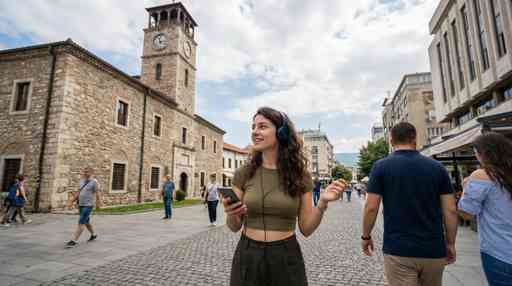
Skopje Highlights Audio Tour: A Journey Through History and Culture
Stone statues stand frozen in a city where layers of empires collide beneath your feet. Skopje is not just a capital. It is a battlefield of history hiding in plain sight. This self-guided audio tour reveals the secrets of Macedonia Square and the iconic Stone Bridge. Navigate past the towering Church of St. Clement of Ohrid while uncovering scandalous tales and forgotten rebellions that most travelers walk right past. Why did a massive earthquake silence the city in a single night? What dark political secret was buried under the plaza? Which local legend claims a hidden tunnel runs directly beneath the riverbed? Feel the pulse of a city defined by seismic shifts and iron-willed survival. Wander through narrow streets and grand boulevards to witness the dramatic transformation of a crumbling past into a bold, defiant future. Download the guide and start your descent into the shadows of Skopje.
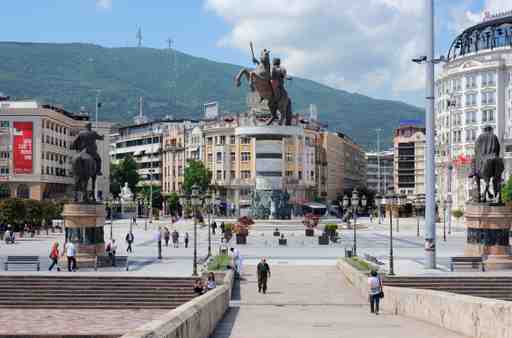
Skopje Audio Tour: Echoes of Stone, Scholars, and Spirit
A great bronze warrior rises above Macedonia Square as trams rattle past, but look closer—Skopje’s streets whisper tales of rebellion and renewal beneath the modern facade. This is a city shaped by earthquakes and debates, by ancient intrigue and ambitious visions. Slip on your headphones for a self-guided audio tour that uncovers the forgotten dramas hidden just steps from the Assembly. Roam through the Museum of the City of Skopje and uncover secrets other visitors never hear. Which heated debate inside the Assembly nearly changed North Macedonia’s fate overnight? Who vanished without a trace in the shadowy corners of the old train station? What scandal once turned Macedonia Square into a stage for protest and passion? Move through boulevards alive with past clashes and present dreams. Each corner brings a revelation and a different view of Skopje’s soul. Begin now—let the city’s untold stories leave their mark.
Top landmarks
The Skopje everyone knows.
The landmarks in every guidebook — and the tours that tell you what guidebooks don't.
A few words on Skopje
Rebuilt after an earthquake, rebranded after independence.
Skopje was almost completely destroyed by an earthquake on July 26, 1963, an event that killed over 1,000 people and left 200,000 homeless. The rebuilt city that emerged over the following decades was largely designed with international assistance, including a master plan by Japanese architect Kenzo Tange, giving it a mix of brutalist concrete and pedestrian-friendly planning that still characterizes the central district. Then, after independence in 1991, the government launched an ambitious and controversial project called Skopje 2014, filling the city centre with neoclassical statues, triumphal arches, and bronze fountains.
The result is a city centre that is genuinely unlike anything else in Europe, simultaneously earnest and over-the-top.
The enormous equestrian statue of Alexander the Great, officially labeled Warrior on a Horse to avoid diplomatic conflict with Greece, occupies the central bridge with several companion statues and fountains. The old Carsija bazaar, the Ottoman market district that survived the earthquake and predates the rest of the visible city by five centuries, is a genuinely ancient quarter of mosques, caravanserais, and craftsmen's workshops that provides an entirely different layer. Skopje holds contradictions with an energy that makes it more interesting than it might initially appear.
Skopje
Skopje FAQ
Before you walk.
The historic centre is compact and walkable. Macedonia Square, the Stone Bridge, and the Old Bazaar are all within easy walking distance of each other and from most central hotels. The Vardar River divides the newer downtown from the Ottoman Carsija quarter and the bridge crossing is a five-minute walk.
The Carsija, Skopje's Ottoman bazaar district, is the most atmospheric part of the city. Narrow lanes wind between mosques, hammams, and workshops where craftsmen still work in traditional trades. The 15th-century Mustafa Pasha Mosque and the Bezisten covered market are the architectural highlights. The bazaar is also full of good cheap restaurants serving Macedonian and Turkish food.
Skopje is generally a safe city with low violent crime against tourists. The main tourist areas including Macedonia Square, the Stone Bridge, and the Old Bazaar are well-patrolled and comfortable to walk at night. Standard petty theft awareness applies near busy areas.
Tavce gravce, white beans slow-cooked in clay pots with onion and paprika, is the national dish and is better than it sounds. Shopska salad, a mixture of tomatoes, cucumbers, onion, and white cheese, appears on every table. Ajvar, a roasted red pepper paste, accompanies almost every meal. The old bazaar has good cheap restaurants serving these dishes alongside baklava and Turkish coffee.
Every Skopje tour, in your language.
All 50+ languages, included with every booking.
🇬🇧 English🇫🇷 Français🇪🇸 Español🇩🇪 Deutsch🇮🇹 Italiano🇯🇵 日本語🇨🇳 中文🇰🇷 한국어+ 41 more
star AudaTours Unlimited
Visiting more than one city? Subscribe.
Unlock every Skopje tour — plus thousands more worldwide. Cancel any time.
$4.99/week · Cancel anytime

More in North Macedonia
Explore North Macedonia arrow_forwardOther cities to walk in North Macedonia.



Loved by travellersThousands of tours started.
Thousands of tours started.
Plenty of opinions.
4.8 across the App Store and Google Play. Here's a few we keep coming back to.
starstarstarstarstar
This tour was such a great way to see the city. The stories were interesting without feeling too scripted, and I loved being able to explore at my own pace.

Jess
Tbilisi Tourstarstarstarstarstar
This was a solid way to get to know Brighton without feeling like a tourist. The narration had depth and context, but didn't overdo it.

Christoph
Brighton Tourstarstarstarstarstar
Started this tour with a croissant in one hand and zero expectations. The app just vibes with you, no pressure, just you, your headphones, and some cool stories.

John
Marseille Tourdownload Get the app Pop your headphones in.


Pop your headphones in.
Step outside.
Free to download. Tours in every city. Start in 60 seconds — no account, no card.

headphones
~ 4 min until your first tour starts
public
1,000+ cities worldwide
all_inclusive
AudaTours
Unlimited
Every tour. Every city. One subscription.
3097 tours2273 cities138 countries50+ languages
$39 /year
all_inclusive Explore Unlimited