
50+ languages

 Quezon City · Philippines
 Quezon City Audio Tours
Discover Quezon City with self-guided audio walking tours
headphones
1 tours
pin_drop
20 landmarks
translate

Top landmarks
The Quezon City everyone knows.
The landmarks in every guidebook — and the tours that tell you what guidebooks don't.
A few words on Quezon City
Built to replace Manila. Still sorting out the plan.
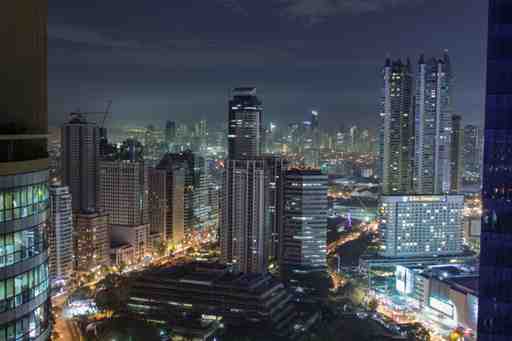
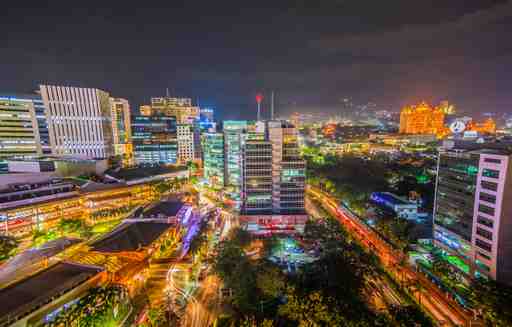
Quezon City was conceived in 1939 as a deliberate alternative to overcrowded Manila -- a planned capital where, as President Manuel Quezon put it, common Filipinos could actually live and thrive. Commonwealth Act 502 created it from eight vast estates, with wide streets, a university campus at Diliman, and genuine ambition. It became the national capital in 1948 and then lost that designation back to Manila in 1976, leaving a city of over three million that had reorganized itself around a function it no longer held.
What it kept was scale, diversity, and cultural weight.
The UP Diliman campus sprawls across 493 hectares in the center of the city, its Academic Oval lined with acacia trees and used by thousands of joggers and cyclists from before dawn. Cubao holds the massive Araneta Coliseum -- completed in 1960 and for decades the largest domed arena in Asia -- where Muhammad Ali fought Joe Frazier in what was billed as the Thrilla in Manila (though it was actually held here). EDSA, the long arterial highway, functioned as the spine of the 1986 People Power Revolution that ended the Marcos dictatorship.
Quezon City
Quezon City FAQ
Before you walk.
The MRT-3 line runs through EDSA and connects to Manila. Jeepneys cover most routes but require local knowledge of which routes go where. For longer distances, ride-hailing apps like Grab are the most practical option. Tricycles serve smaller streets within neighborhoods.
The food parks around the Maginhawa Street area in Teacher's Village are worth exploring for experimental local cooking. Sisig -- pork face and ears grilled, chopped, and served sizzling on an iron plate -- originated in nearby Pampanga and is everywhere here. Crispy pata (deep-fried pork knuckle) is the occasion food.
The Diliman campus and Cubao commercial district are good for walking during the day. Most areas frequented by visitors are safe in daylight. Avoid displaying expensive equipment in unfamiliar areas, particularly after dark, and use established transport rather than unmarked vehicles.
Download your tour content before setting out. Mobile data coverage is generally good across the city, but congestion in busy commercial areas can slow speeds. Free Wi-Fi is widely available in malls, cafes, and most fast-food outlets.
Every Quezon City tour, in your language.
All 50+ languages, included with every booking.
🇬🇧 English🇫🇷 Français🇪🇸 Español🇩🇪 Deutsch🇮🇹 Italiano🇯🇵 日本語🇨🇳 中文🇰🇷 한국어+ 41 more
star AudaTours Unlimited
Visiting more than one city? Subscribe.
Unlock every Quezon City tour — plus thousands more worldwide. Cancel any time.
$4.99/week · Cancel anytime

More in Philippines
Explore Philippines arrow_forwardOther cities to walk in Philippines.

Loved by travellersThousands of tours started.
Thousands of tours started.
Plenty of opinions.
4.8 across the App Store and Google Play. Here's a few we keep coming back to.
starstarstarstarstar
This tour was such a great way to see the city. The stories were interesting without feeling too scripted, and I loved being able to explore at my own pace.

Jess
Tbilisi Tourstarstarstarstarstar
This was a solid way to get to know Brighton without feeling like a tourist. The narration had depth and context, but didn't overdo it.

Christoph
Brighton Tourstarstarstarstarstar
Started this tour with a croissant in one hand and zero expectations. The app just vibes with you, no pressure, just you, your headphones, and some cool stories.

John
Marseille Tourdownload Get the app Pop your headphones in.


Pop your headphones in.
Step outside.
Free to download. Tours in every city. Start in 60 seconds — no account, no card.
headphones
~ 4 min until your first tour starts
public
1,000+ cities worldwide
all_inclusive
AudaTours
Unlimited
Every tour. Every city. One subscription.
3097 tours2273 cities138 countries50+ languages
$39 /year
all_inclusive Explore Unlimited