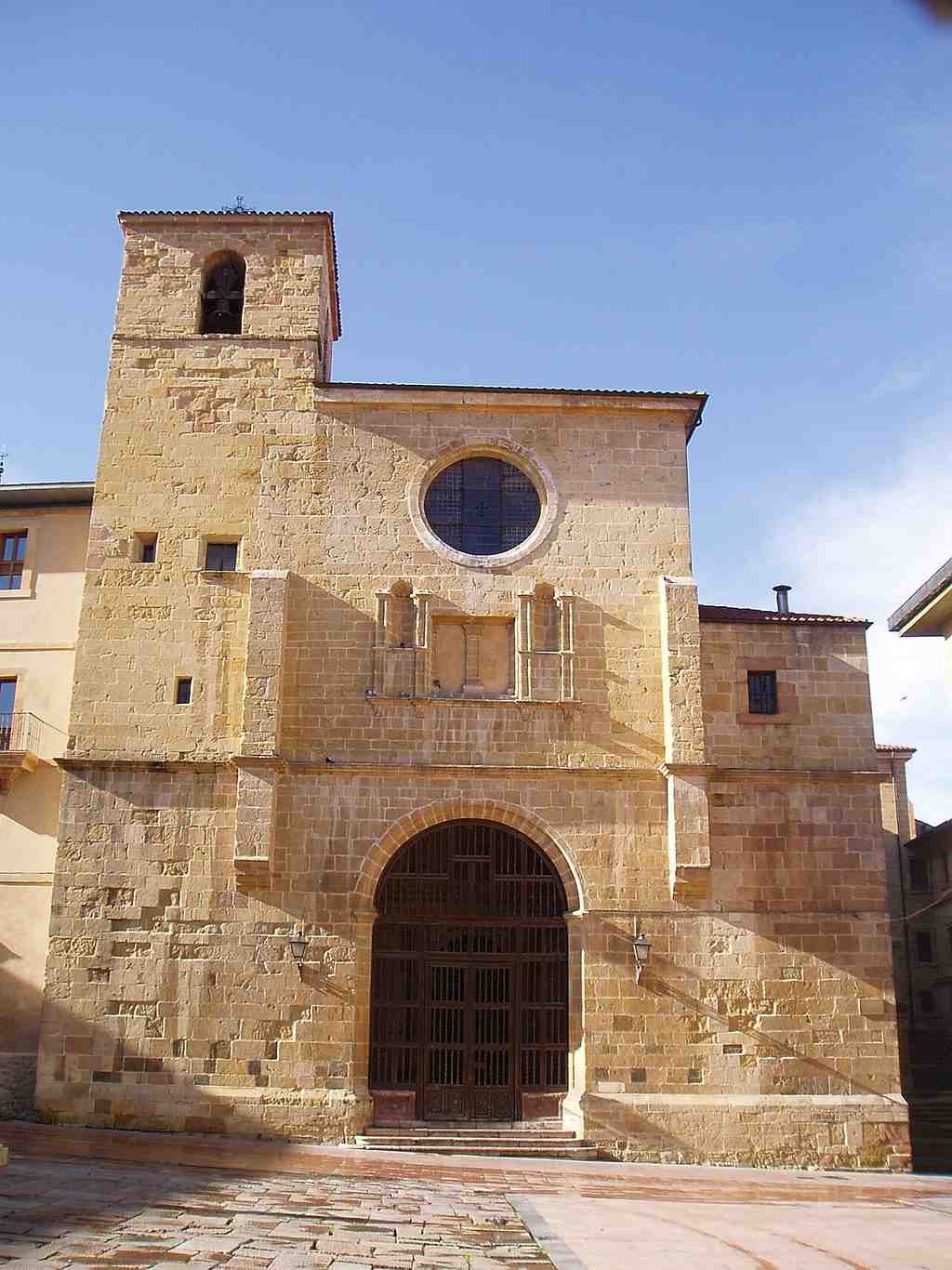
On your left is a pale stone church with an unfinished classical façade, one square tower, and a large round oculus set above the main arch.
Santa María la Real de la Corte makes a fitting final stop because it shows Oviedo doing what Oviedo does best: holding on, adapting, and carrying old habits into new times. This church stands tightly woven into the old sacred quarter, on the same historic block as the cloister of San Vicente and the Benedictine monastery of San Pelayo, as if the whole block learned centuries ago to live shoulder to shoulder.
Its story begins earlier than the seventeenth century. Go back to the mid-sixteenth century, when Juan de Cerecedo the Elder drew up plans to replace older Romanesque buildings here. After he died in fifteen sixty-eight, his nephew, Juan de Cerecedo the Younger, pushed the work forward between fifteen seventy and fifteen seventy-two. Then money ran short, which, as every city on earth knows, is one of history’s favorite plot twists. In fifteen eighty-seven, Juan del Ribero Rada took over and gave the church its firm classical character, all balance and restraint, and the building was consecrated in fifteen ninety-two.
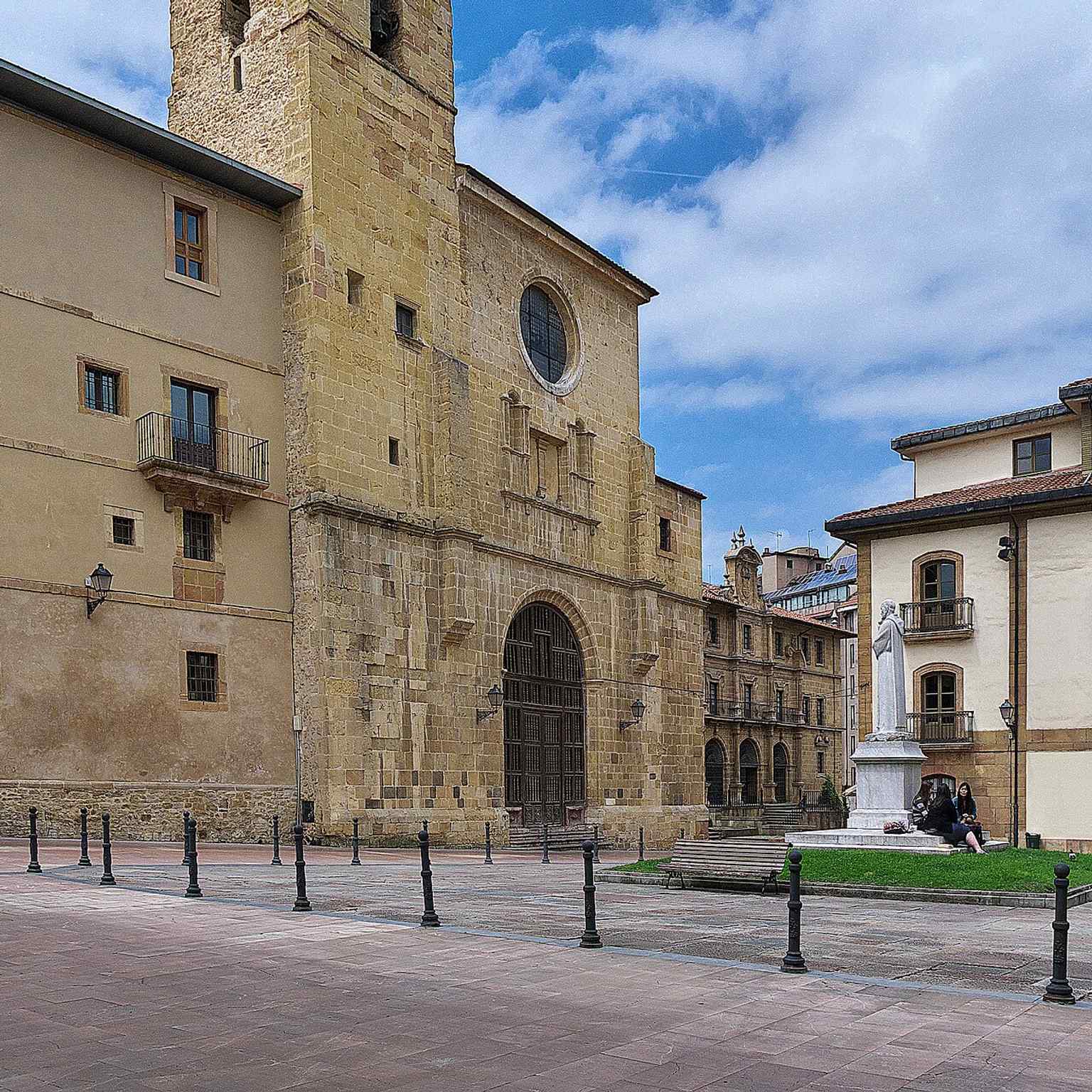
If you glance at the image on your screen, you can spot Ribero Rada’s crisp design clearly: a central front meant to be flanked by two towers, though only the left one ever rose. That unfinished face is part of the church’s charm now, with its broad round-arched doorway below and that big circular oculus above.
Inside, the plan is monastic and practical: one wide nave, meaning the main hall of the church, with side chapels tucked between the buttresses, the supporting outer walls. Ribero Rada organized the interior with restrained Ionic pilasters, barrel vaults overhead, and geometric decoration across the ceilings. The church also keeps one of Asturias’s finest treasures in working order: a baroque organ from seventeen oh five, repaired in modern times so it could keep speaking with its own old voice.
And then there is Benito Jerónimo Feijoo. He was a monk of San Vicente, an abbot, a teacher, and one of Spain’s great Enlightenment writers. He once heard Mass here from an upper gallery connected to his cell, a wonderfully efficient arrangement for a learned man. Today, inside the crossing, his grave lies beneath a red marble slab. So even here, reason and devotion do not cancel each other out; they share the same room.
The church changed again after the ecclesiastical confiscations of eighteen thirty-six. In eighteen forty-five, the parish of Santa María la Real de la Corte moved into this former monastic space, and in eighteen fifty-nine it gained ownership. That shift matters. A place once enclosed became a neighborhood church.
You can feel that most strongly in Holy Week. In nineteen forty-one, this church joined Oviedo’s general Santo Entierro procession with two pasos, or carried sculptural groups: Calvary and the Agony in the Garden. When that general procession ended in nineteen forty-five, this parish welcomed a new lay brotherhood, the Cofradía del Silencio. On Holy Thursday night they processed from here with drums, cornets, and the Oración en el Huerto. The brotherhood reorganized again in two thousand and one, proving the ritual was not a fossil in a case. It still had people willing to carry it.
That may be the best last picture of Oviedo: not a city preserving its past under glass, but one that keeps handing it from one generation to the next, like a candle passed carefully along a line.
If you want to return when the doors are open, the church usually welcomes visitors Monday from six to eight, Tuesday through Saturday from twelve to one and again from six to eight, and Sunday from eleven to one.