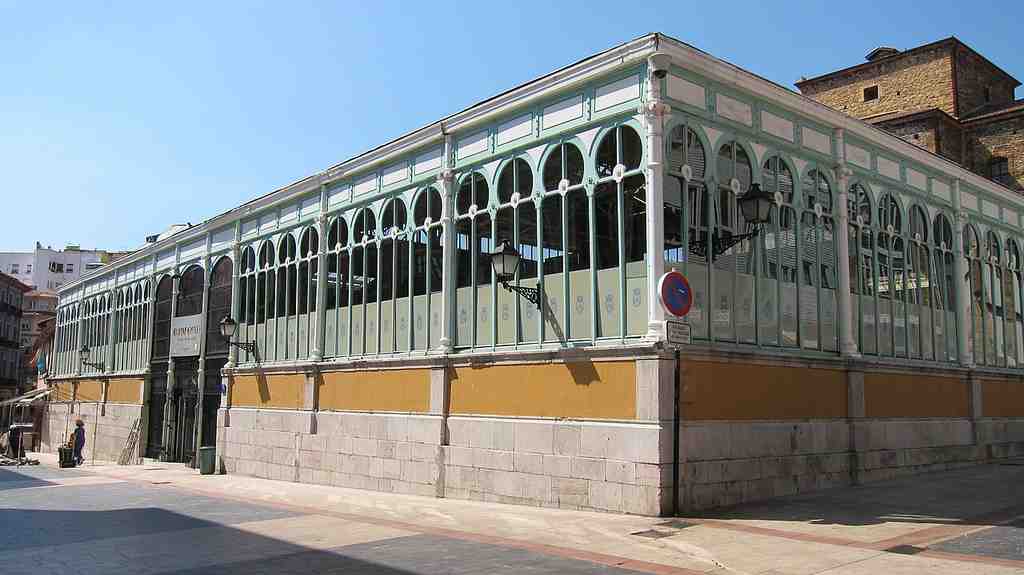
On your right is a low stone-and-iron market hall with repeated tall arched openings, a roof that steps up in sections, and one side tucked tightly against San Isidoro.
This is El Fontán, and locals use that name for more than a building. They mean a whole market world: the covered hall in front of you, the neighboring square, the open-air trading nearby, and the old habit of coming here to feed a household and catch up on the news.
Its story starts with disaster. On Christmas Eve in fifteen twenty-one, a huge fire tore through Oviedo. To help the city recover, Charles the Fifth granted a free market here, meaning traders could buy, sell, and barter with special privileges. That royal decision mattered because recovery did not happen in speeches... it happened in onions, bread, fish, beans, and hard bargaining. In Oviedo, rebuilding often begins at ground level.
The market you see now arrived much later, between eighteen eighty-two and eighteen eighty-five. Javier Aguirre Iturralde designed it on the site of the old Jesuit Colegio de San Matías. So here again, the city changed the use of its own skin: school ground turned public market, cloistered land turned everyday crossroads. Aguirre knew iron architecture well, and he gave Oviedo one of its signature urban structures.
Take a second and study the façade from where you stand. You can see the logic of it: a stone base, then regular bays with tall openings ending in horseshoe arches, framed by slender iron columns with Ionic capitals, those little curled tops borrowed from classical design. The roof rises in several levels, not just for show, but to bring in light and move air. Nineteenth-century planners cared deeply about that, because a healthy market needed ventilation as much as it needed customers. If you check the image on your screen, you can see especially clearly how oddly and neatly the market presses right up against the church beside it.
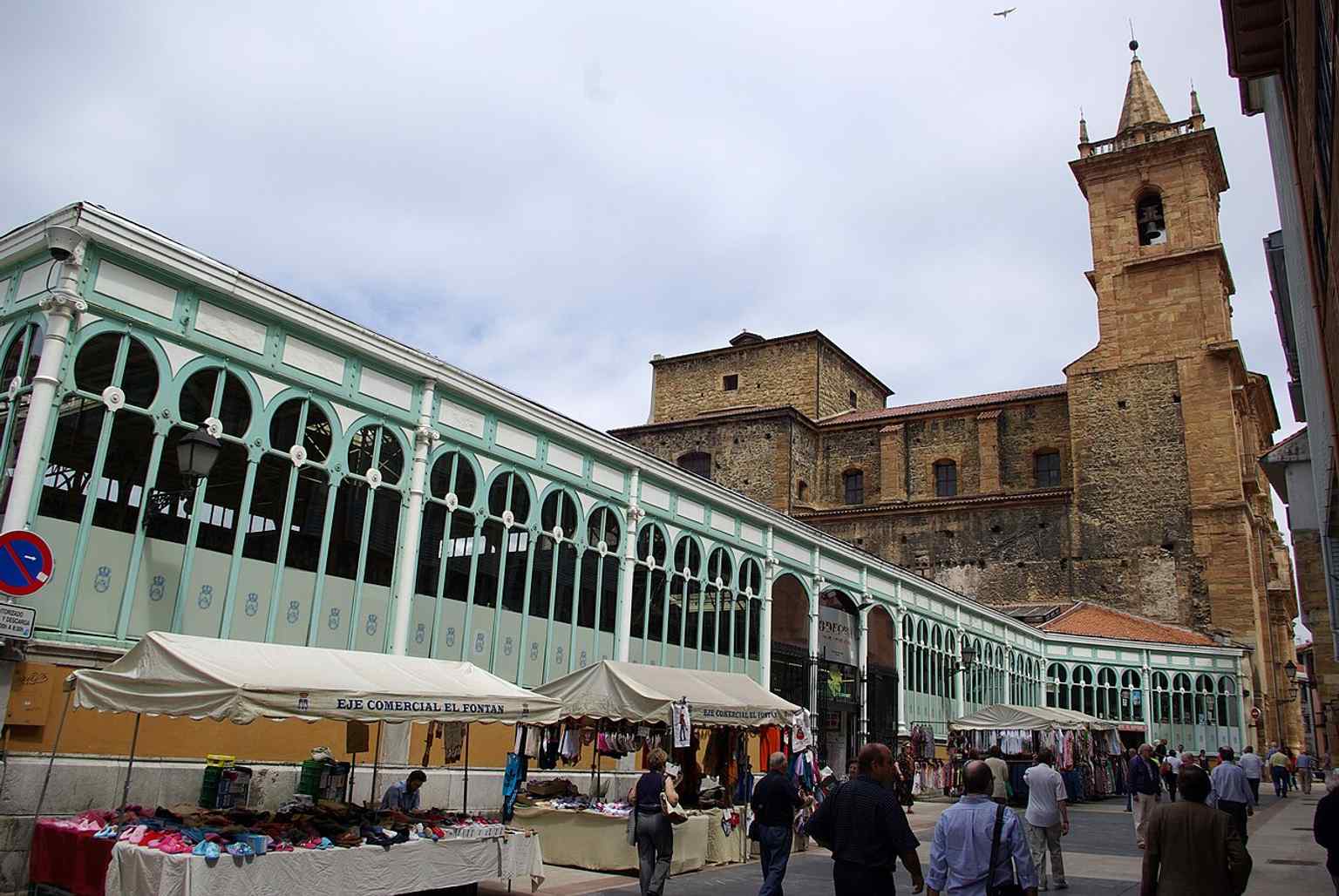
The building first took the name Mercado del Diecinueve de Octubre, after the square, and later borrowed the better-known name of El Fontán from the plaza next door, once home to a corral de comedias, an open-air theater courtyard, and the older traditional market. Oviedo likes reusing its stages; one century sells drama, the next sells dinner.
And this place still runs on routine, not nostalgia. Traders often begin arranging their goods around six in the morning so everything looks right when the doors open. On Thursdays and Saturdays, nearby streets fill with produce, flowers, and country goods, and the Sunday flea market keeps the older rhythm alive beyond the hall itself.
In nineteen ninety-four, the city restored El Fontán and gathered Oviedo’s separate municipal markets here, ending the old guild-by-guild split. That renovation also highlighted the iron frame and the covered-promenade feel of the place. More recently, in twenty twenty-four, a new renovation plan partly funded by European Next Generation money ran into fierce resistance from most traders, especially over a proposed hospitality zone. By early twenty twenty-five, city hall was still trying to find funding and common ground. Same market, new argument: how do you modernize without sanding off the soul?
That is El Fontán in a nutshell... proof that ordinary trade can shape a city just as firmly as a king’s decree or a church foundation. When you’re ready, continue about four minutes to the Museum of Fine Arts of Asturias; if you want to return inside El Fontán later, it generally opens Monday through Friday from eight to eight, Saturday from eight to three-thirty, and closes on Sunday.