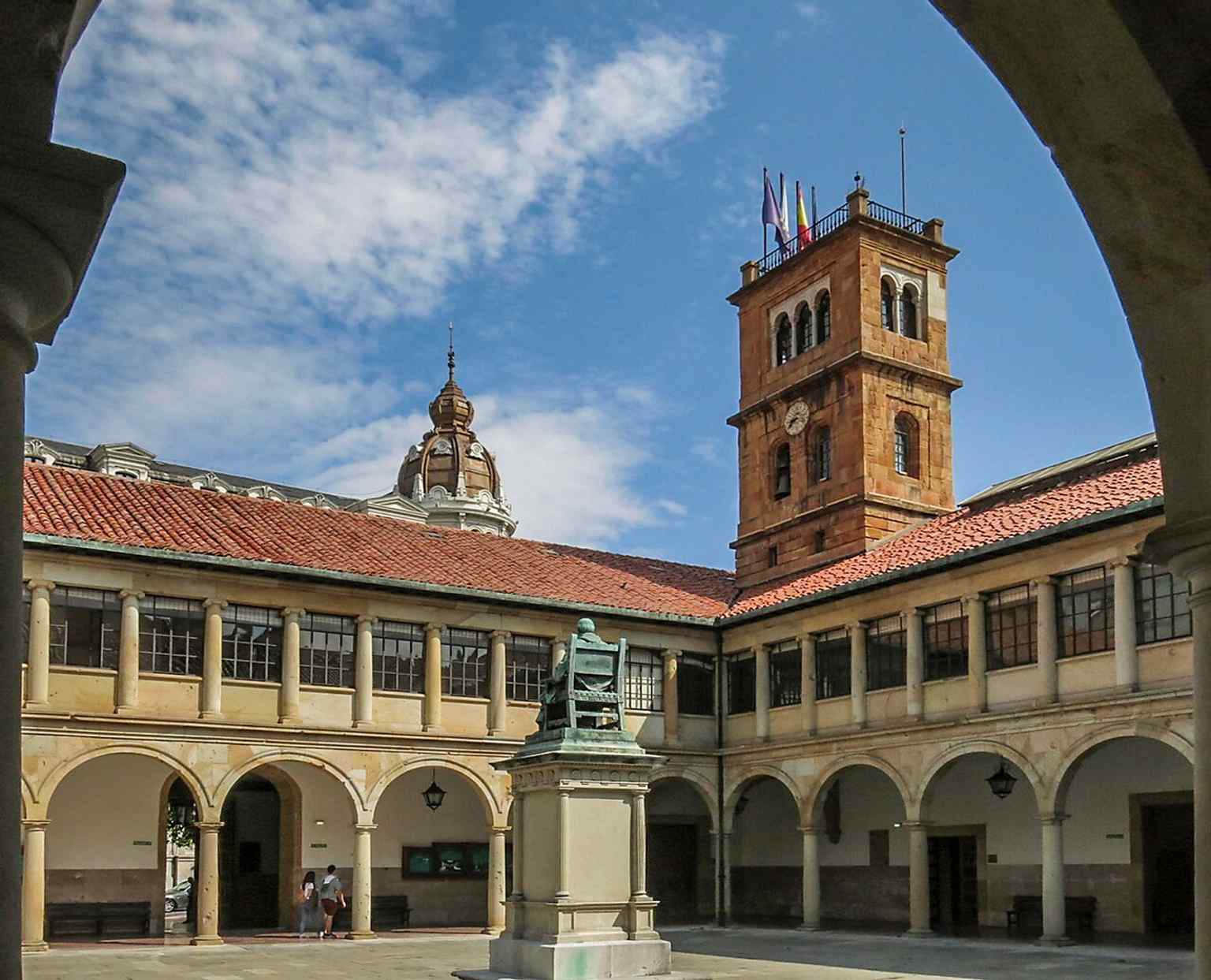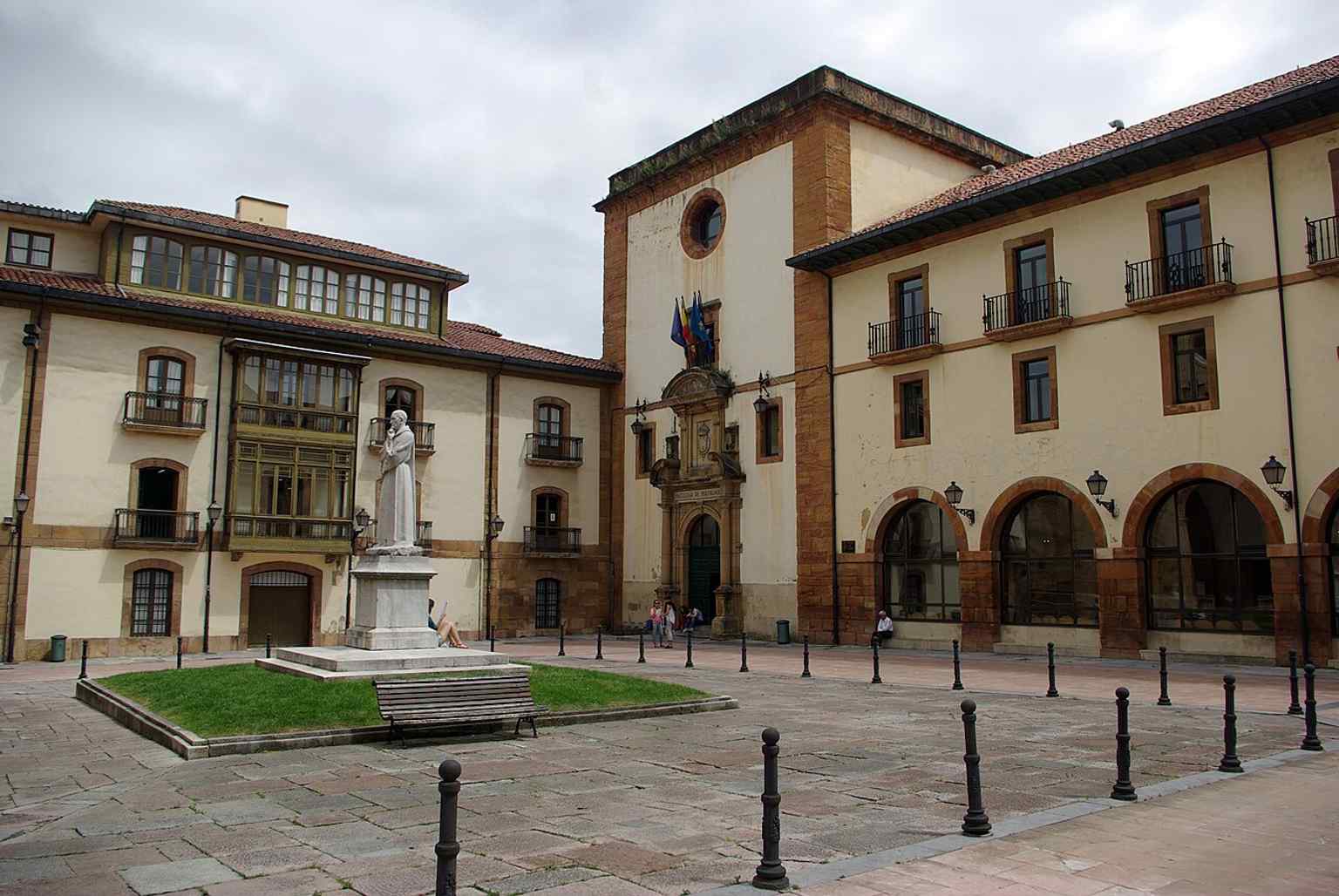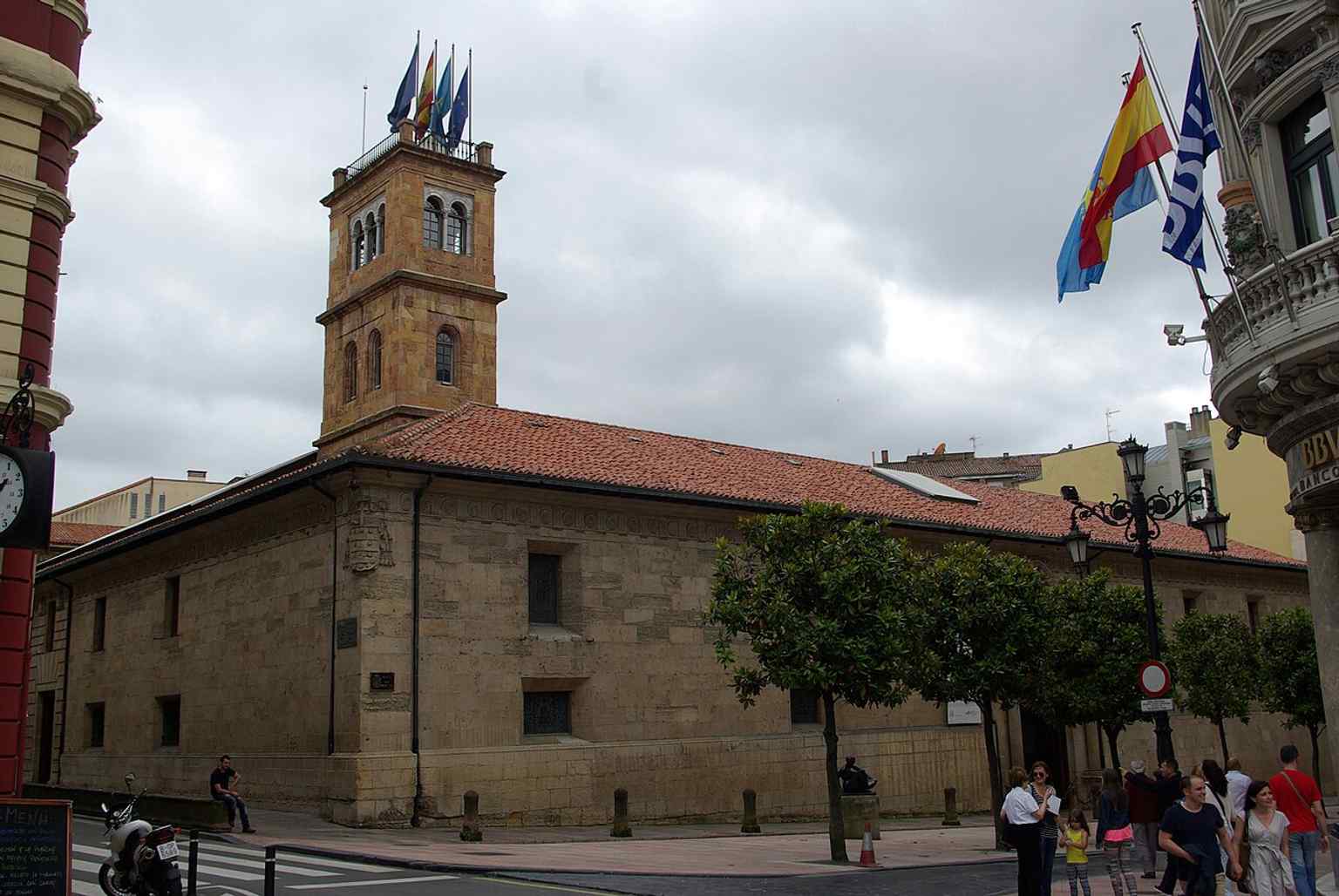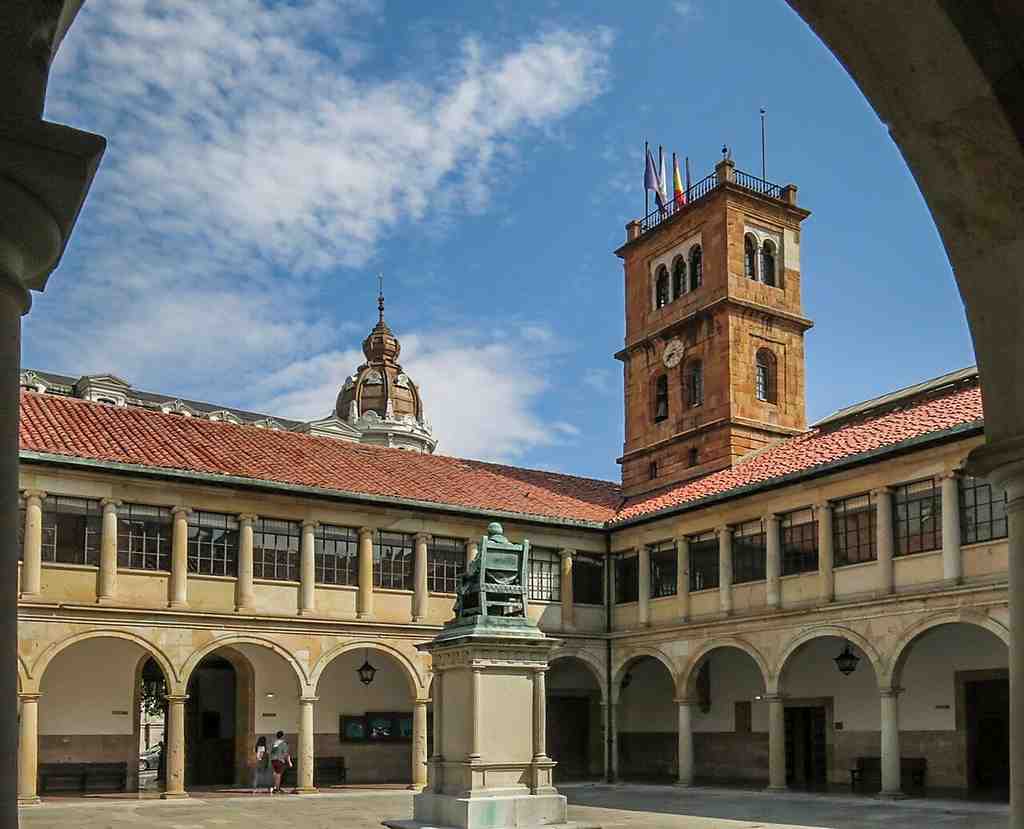
Look for the pale stone façade, the square tower above the roofline, and the carved coats of arms set into the long, orderly front of the old university building.
This is the historic heart of the University of Oviedo, the place where the city taught itself to think in public. Fernando Valdés Salas, an archbishop and powerful royal official, imagined this institution in the sixteen hundreds, and his plan finally took shape here in sixteen oh eight. That mattered enormously. At the time, Spain had only a small circle of universities, and Oviedo joined that club through his ambition. A town with churches and markets could now also claim a seat of learning... which is a fine way to make yourself harder to ignore.
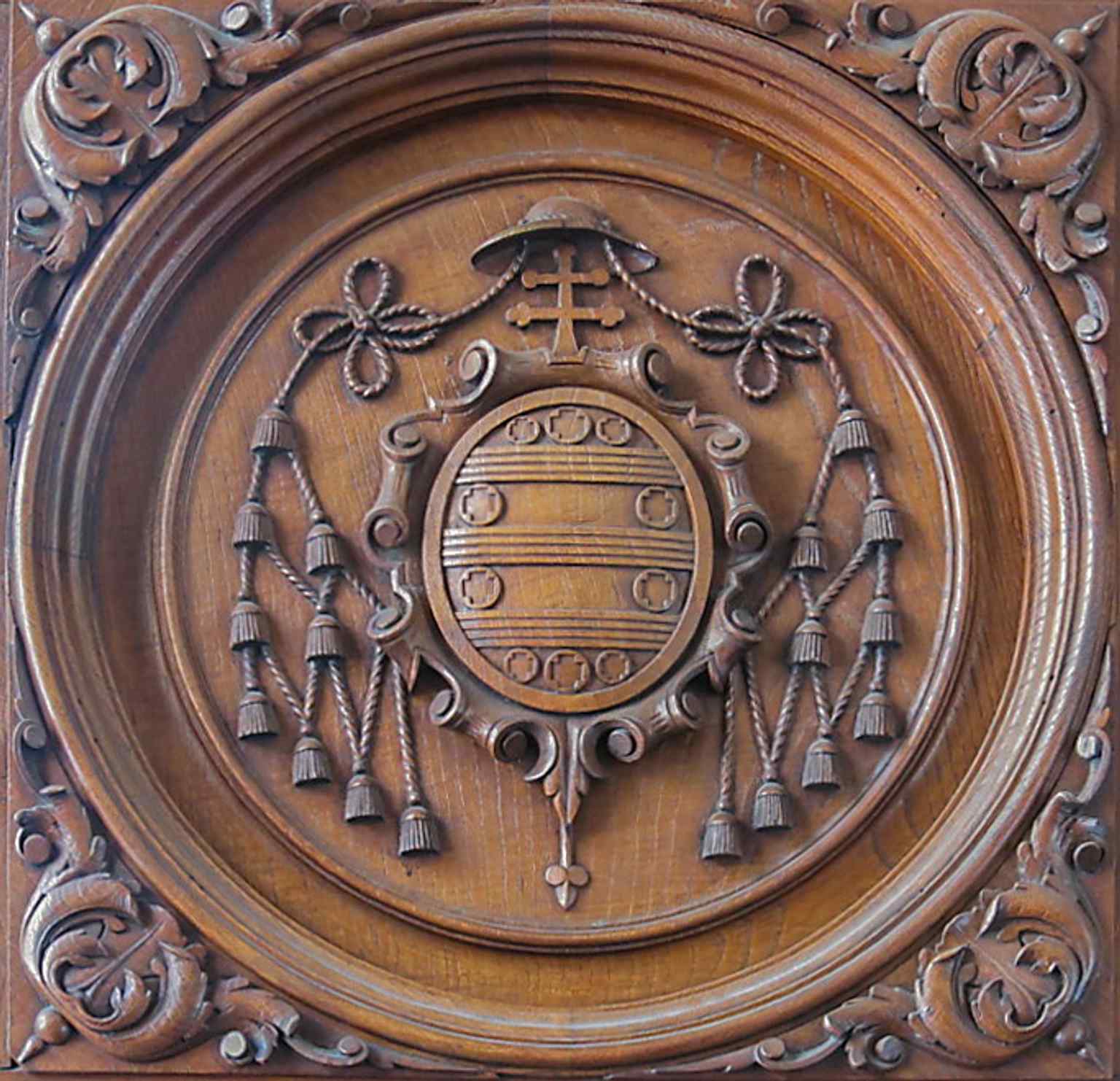
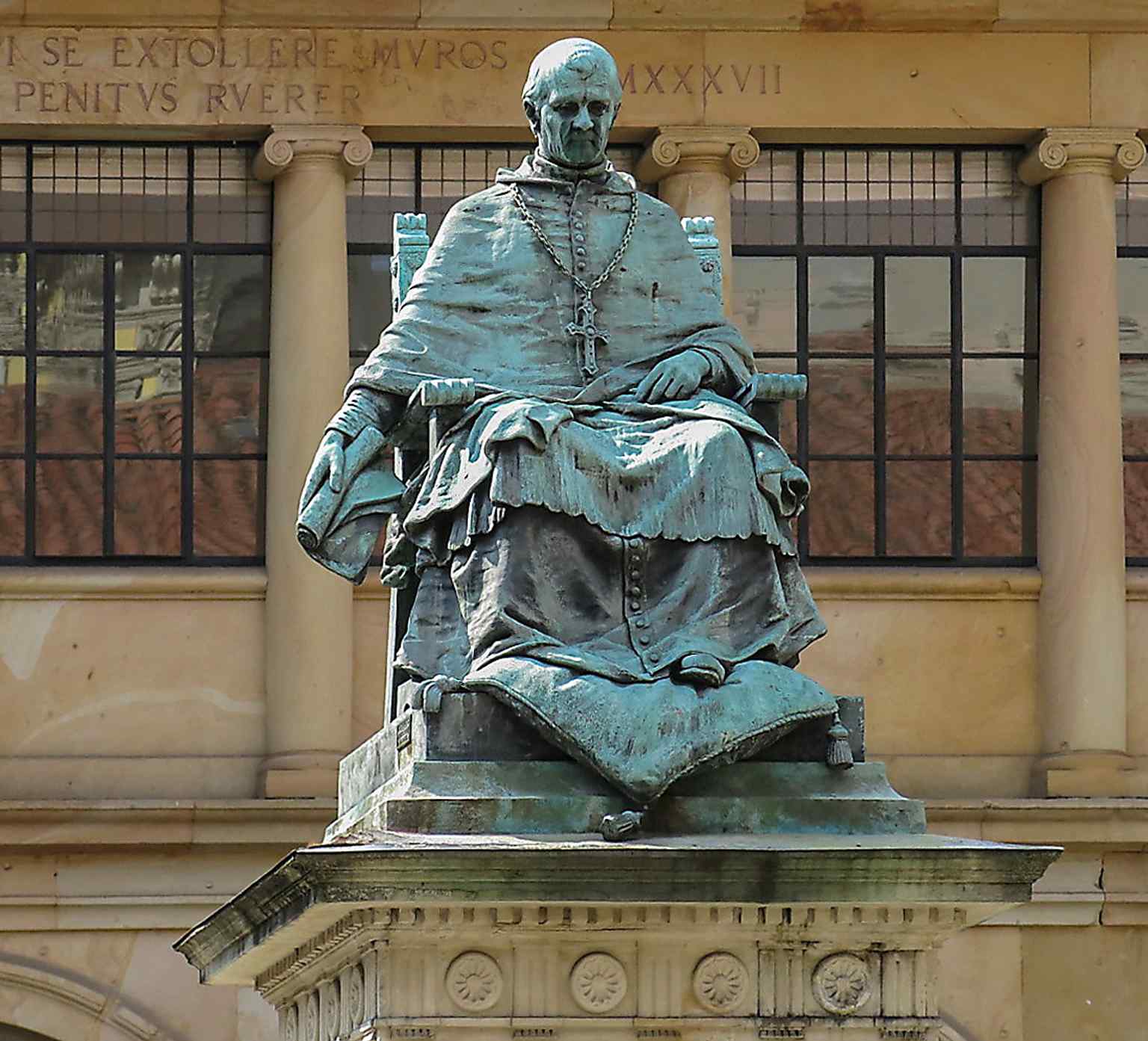
If you glance at the app, you can see the founder still holding the symbolic center of the place in a statue inside the old cloister, the arcaded interior courtyard. And if you look at the university’s coat of arms on your screen, that emblem comes from the personal arms of Valdés Salas himself, not just the family line in general. Around here, even the heraldry has had footnotes and arguments. Very university.
In its first two centuries, life inside ran on ceremony. Enrollment worked almost like an initiation. Classes followed strict formulas. Examinations did too. Even competitions for professorships - the permanent teaching chairs - unfolded by a carefully regulated script. At the Campoamor, performance happened onstage; here, performance happened in Latin phrases, formal disputes, and very serious exam rooms. Same city, different costumes.
The university did not glide forward on a velvet cushion. Money stayed tight for long stretches, so the early priority was not grandeur but survival: organize the teaching, hold the standards, keep the engine running. It taught arts, canon law, civil law, and theology at first, subjects that tied scholarship directly to church and state. That connection will matter again very soon.
And yet this place kept widening its reach. In the nineteenth century, Oviedo gained prestige through teachers linked to reformist ideas and public education, among them Leopoldo Alas, known as Clarín, Rafael Altamira, and Adolfo González Posada. They helped turn the university outward, not just inward, using lectures and public programs to shape civic life beyond these walls.
Then came the hardest blows. In the revolution of nineteen thirty-four, fire badly damaged this historic building. The library was completely destroyed, and part of the archive vanished with it. Reconstruction began quickly under the architect José Avelino Díaz y Fernández-Omaña, but the Civil War interrupted everything again. The university suspended classes, the building suffered more damage, and Rector Leopoldo García-Alas García-Argüelles - Clarín’s son - was executed in nineteen thirty-seven. His story gives this façade a different weight. It is not just old stone; it is a witness.
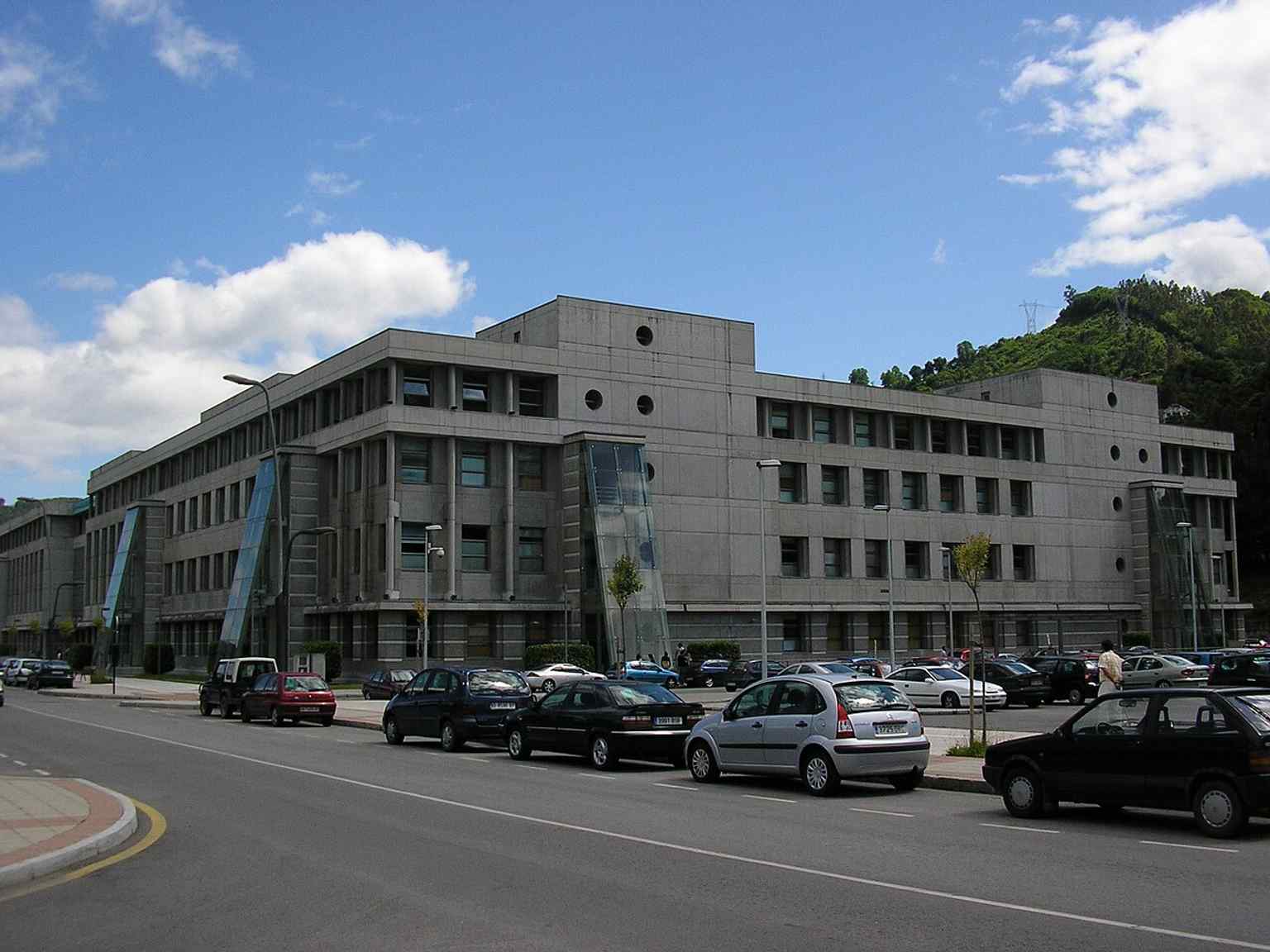
And still, the institution endured. After the war, people even considered moving the studies to Santander, which tells you how fragile things had become. But Oviedo held on. Today the university serves nearly twenty thousand students across campuses in Oviedo, Gijón, and Mieres, while this building remains the old nerve center.
For all its scholarship, this university never stood far from devotion. Its first faculties, its founder, and its rituals all grew beside sacred life... and our next stop makes that bond plain. Head on to the Church of San Isidoro, about four minutes away.