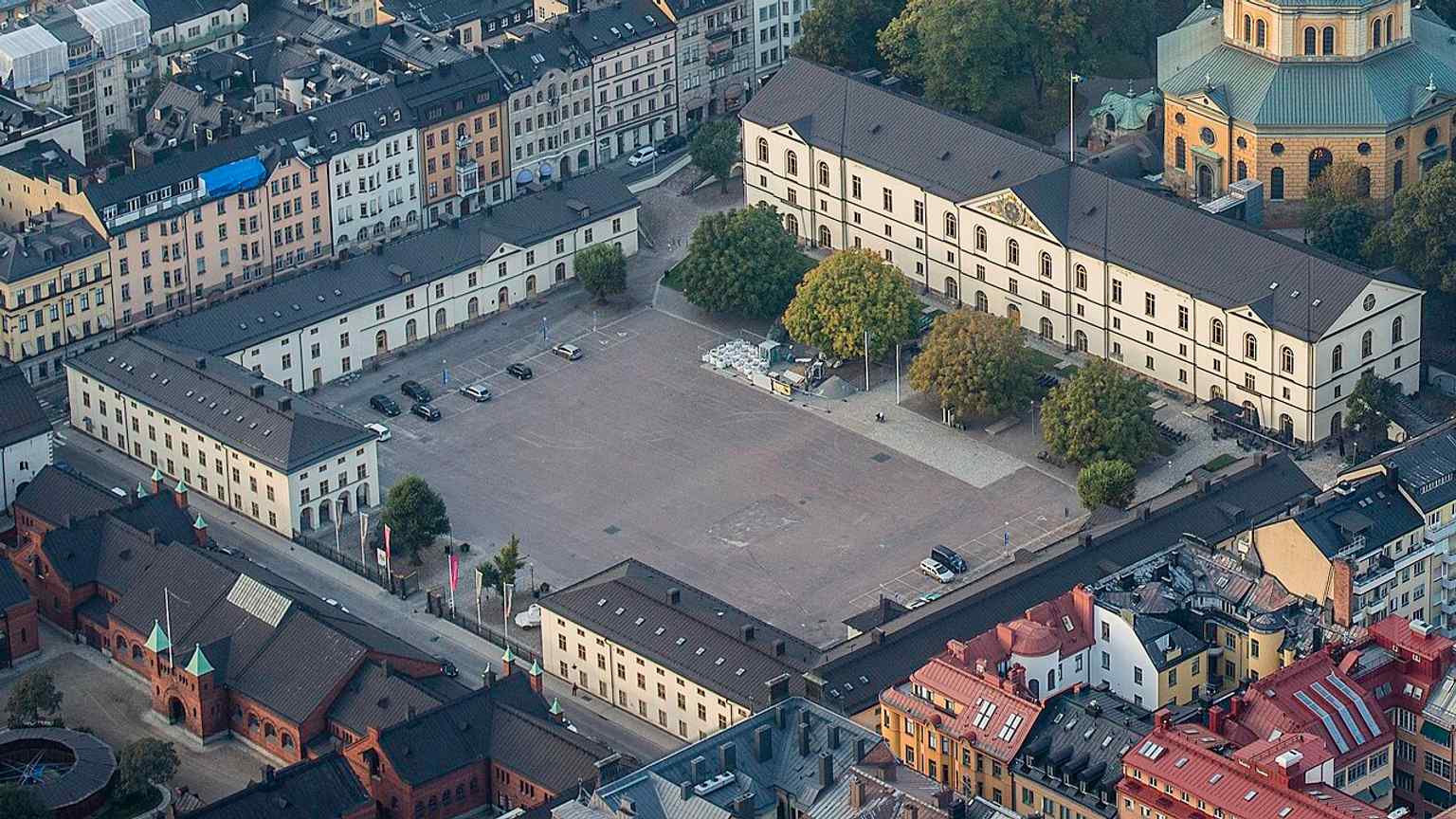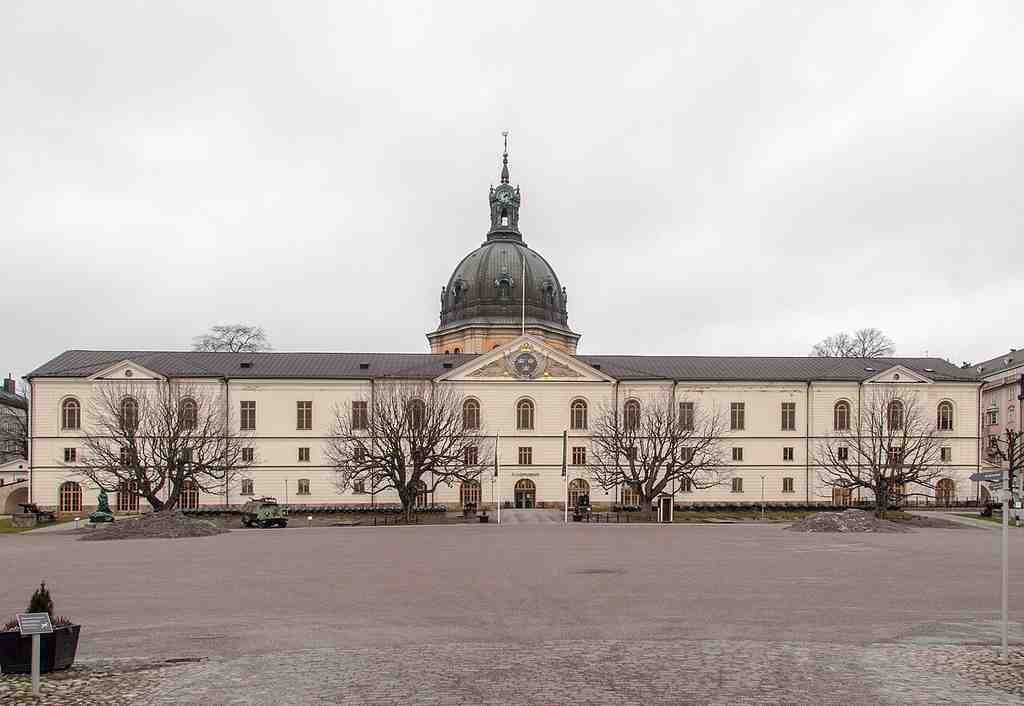
On your left, look for the long pale stone facade, the tall arched central entrance, and the small dark dome perched above the roofline.
This grand building began as pure military muscle, not as a museum at all. In seventeen sixty-two, architect Carl Johan Cronstedt designed it as a tyghus, an artillery storehouse and workshop, where the army kept and repaired weapons and equipment. Builders raised it between seventeen sixty-three and seventeen seventy, replacing an older wooden structure that had stood here since the mid-sixteen hundreds. From across the plaza, that long, orderly front still feels wonderfully disciplined... almost like architecture standing at attention. If you glance at your screen, the facade photo makes that original storehouse character easy to spot.
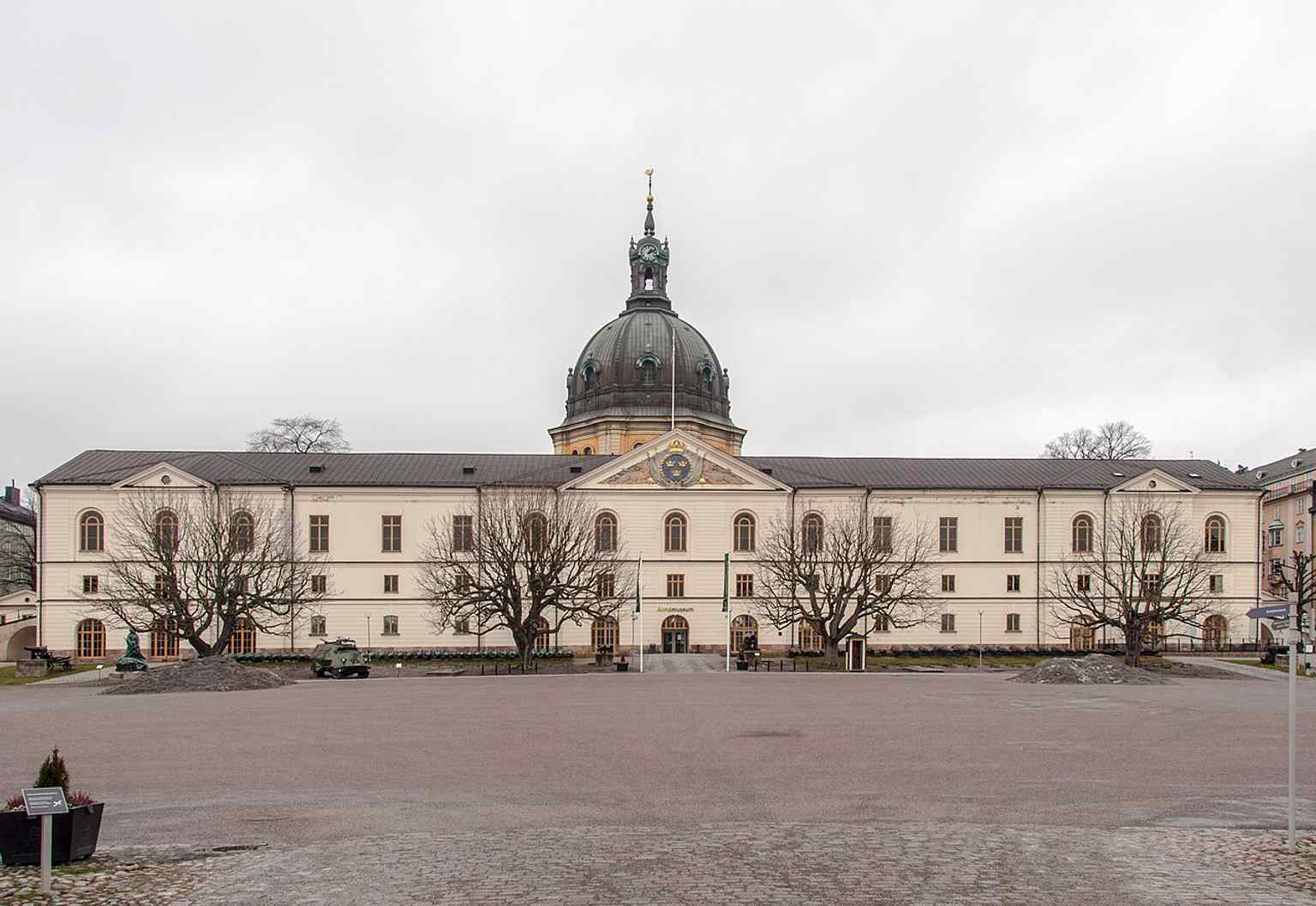
Then came a fascinating reinvention. In eighteen seventy-nine, people opened an Artillery Museum here. A few years later, they added two more floors, which gave the building much of its present height, and officers studied inside at the Artillery and Engineering College. After a major rebuild, the museum reopened in nineteen forty-three as the Army Museum, and by nineteen sixty-three it occupied the entire building.
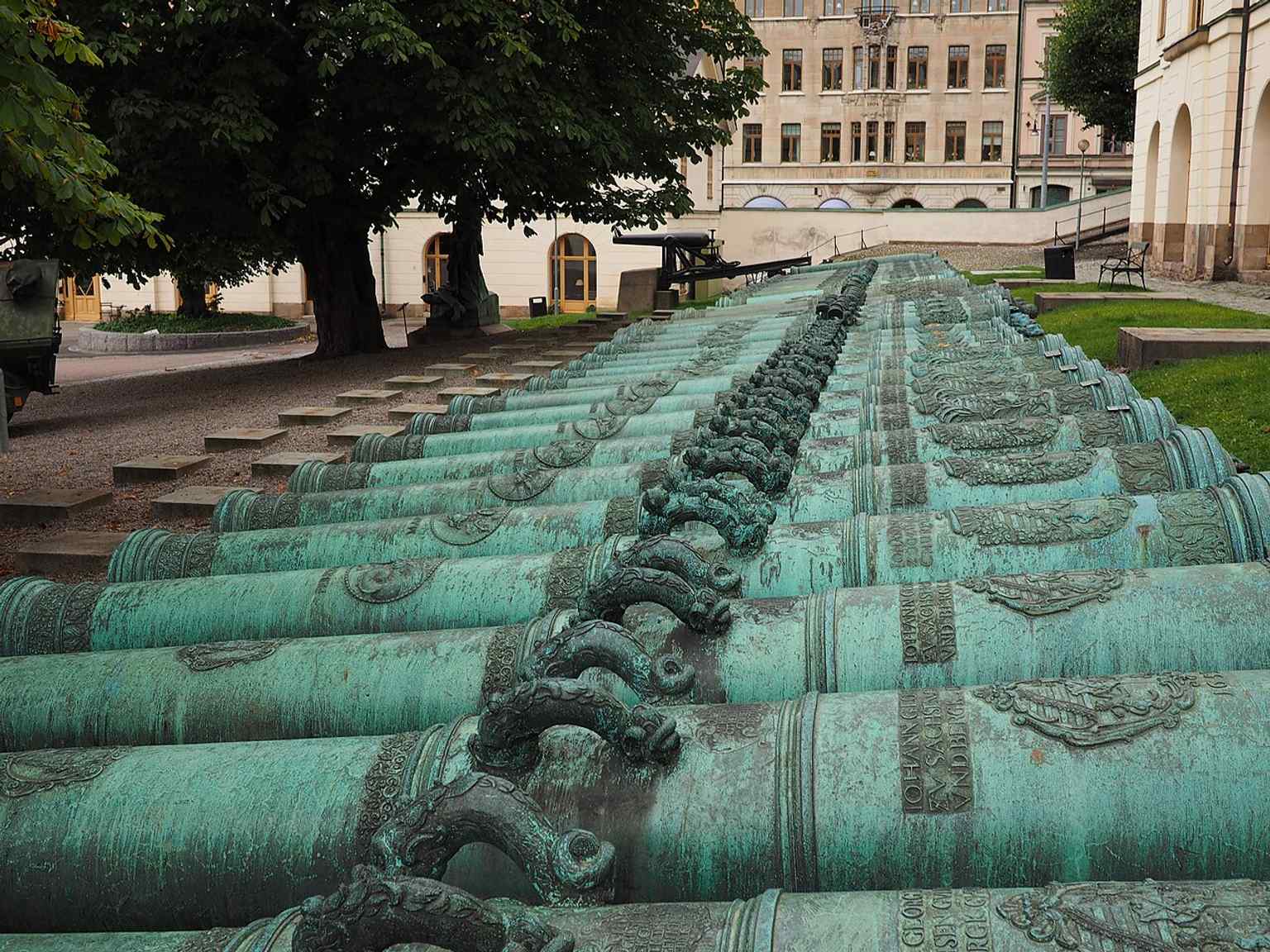
Inside, the collection stretches from the fifteen hundreds to the present: more than one hundred thousand objects, from tiny uniform buttons to modern command systems, plus around five thousand trophies, especially from the Thirty Years’ War. Under Artillerigården, there are even Second World War air-raid shelters, and one gallery honors Raoul Wallenberg’s rescue work in Budapest.
Open daily from ten in the morning to five in the afternoon, this place turns military history into a deeply human story. When you’re ready, continue on to the next stop.