
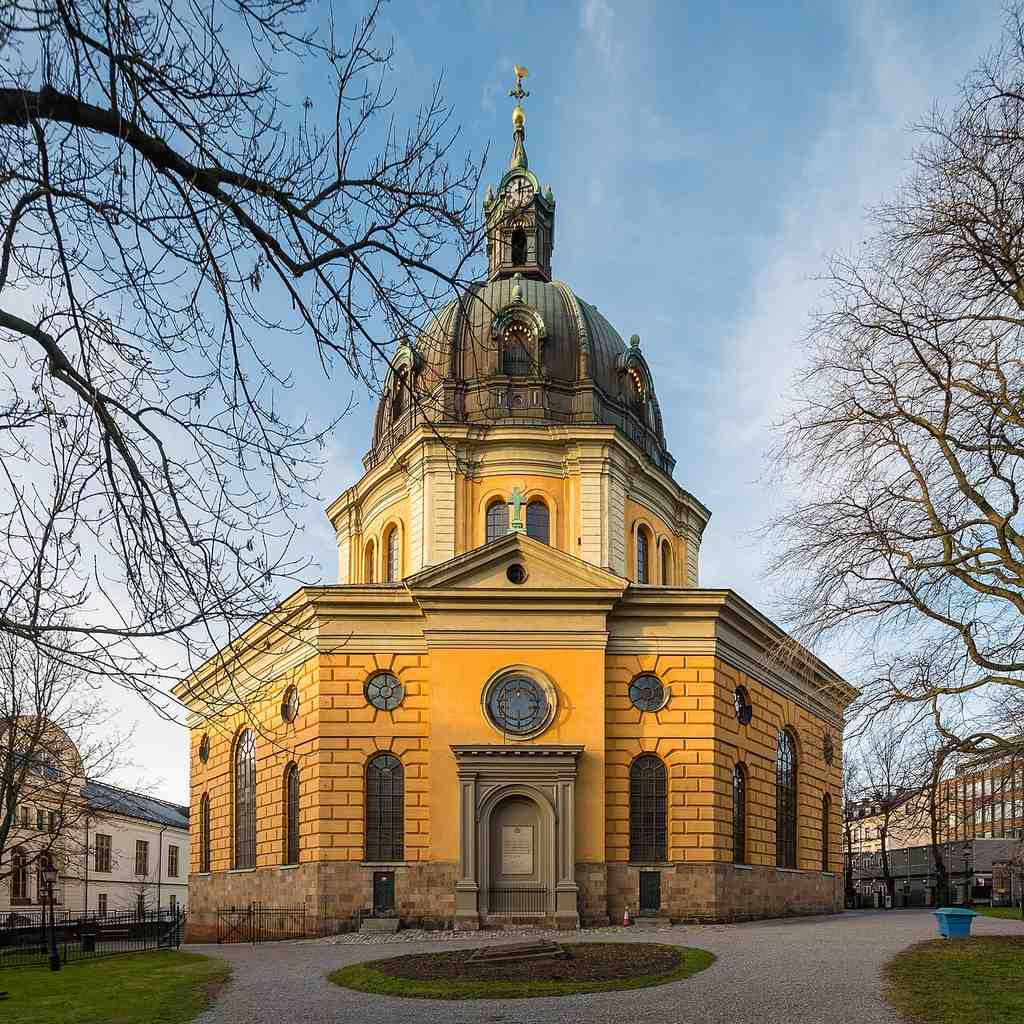
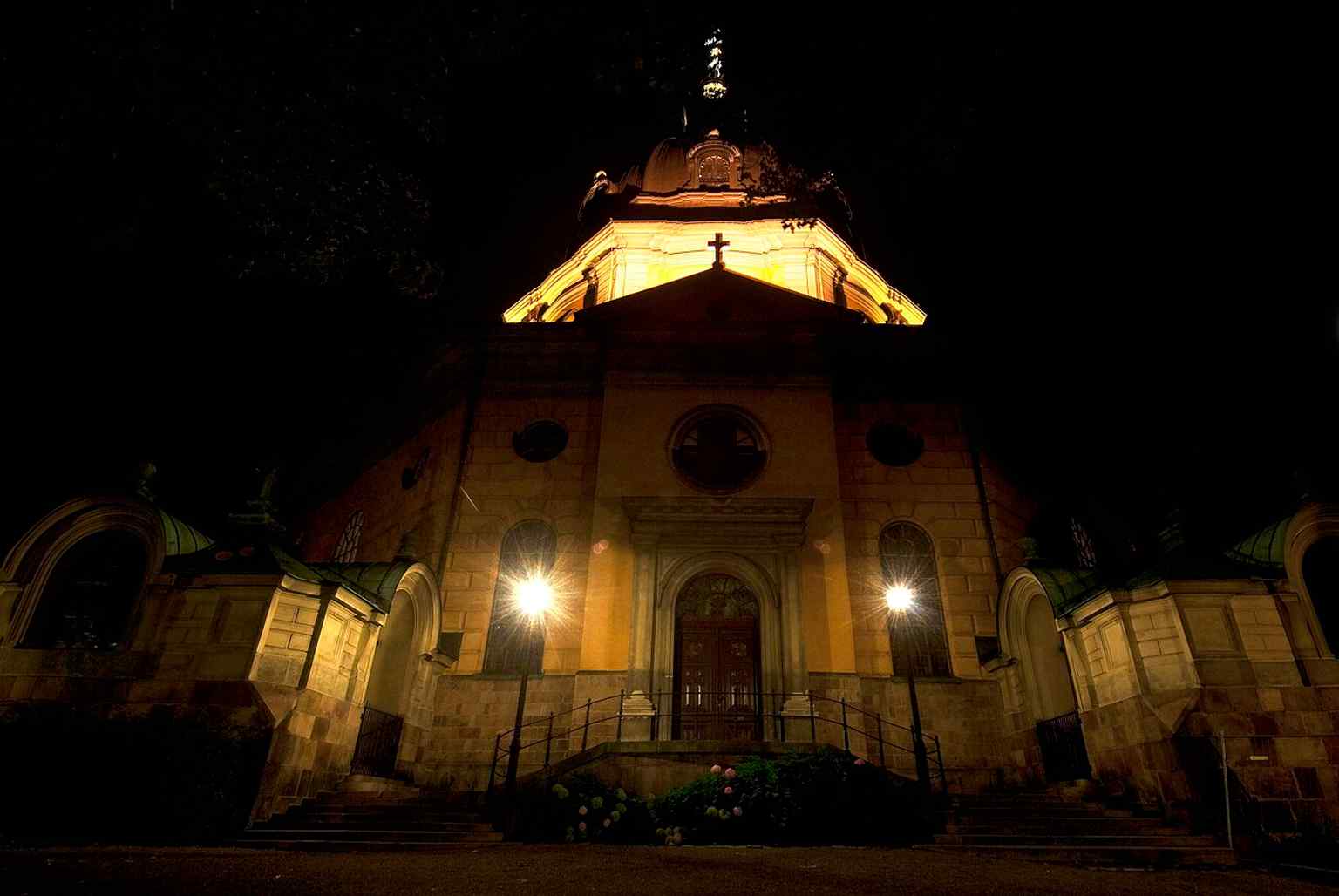
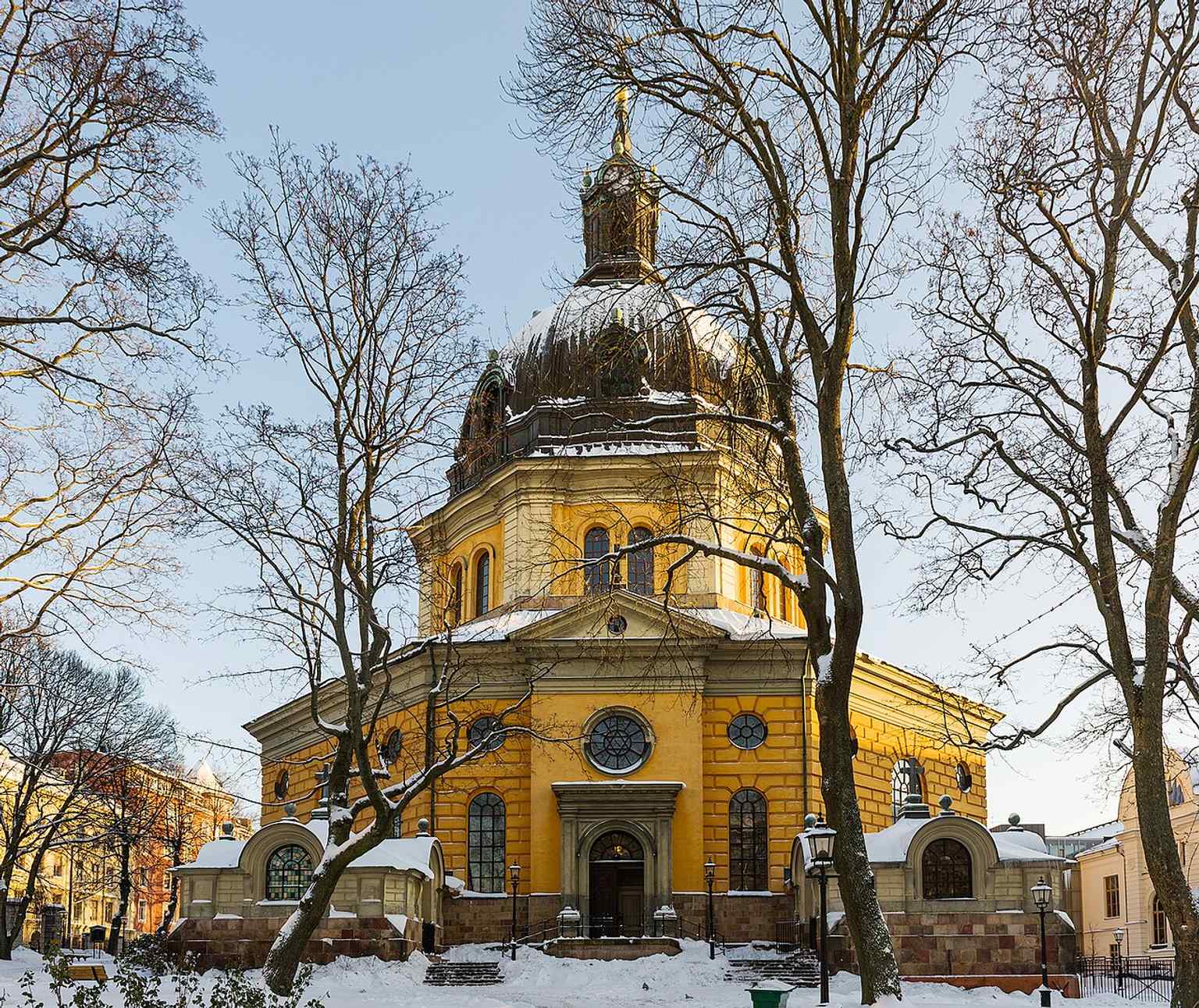
In front of you, Hedvig Eleonora Church stands in pale stone as a broad eight-sided mass crowned by a dark rounded dome, with two low front chapels that look like towers paused halfway through the job.
And honestly... that is exactly part of its charm. This church carries its history right on its face. The lower body began in the late sixteen hundreds, when this district was still called Ladugårdslandet and had split from Saint Jacob’s parish. The local congregation first centered on an Admiralty church over on Kyrkholmen, the island we now call Blasieholmen, where the Nationalmuseum stands today. Then the city decided this growing neighborhood needed something grander. Jean de la Vallée drew the first plans, workers laid the foundation in sixteen sixty-nine, and then... everything stalled because the money ran out.
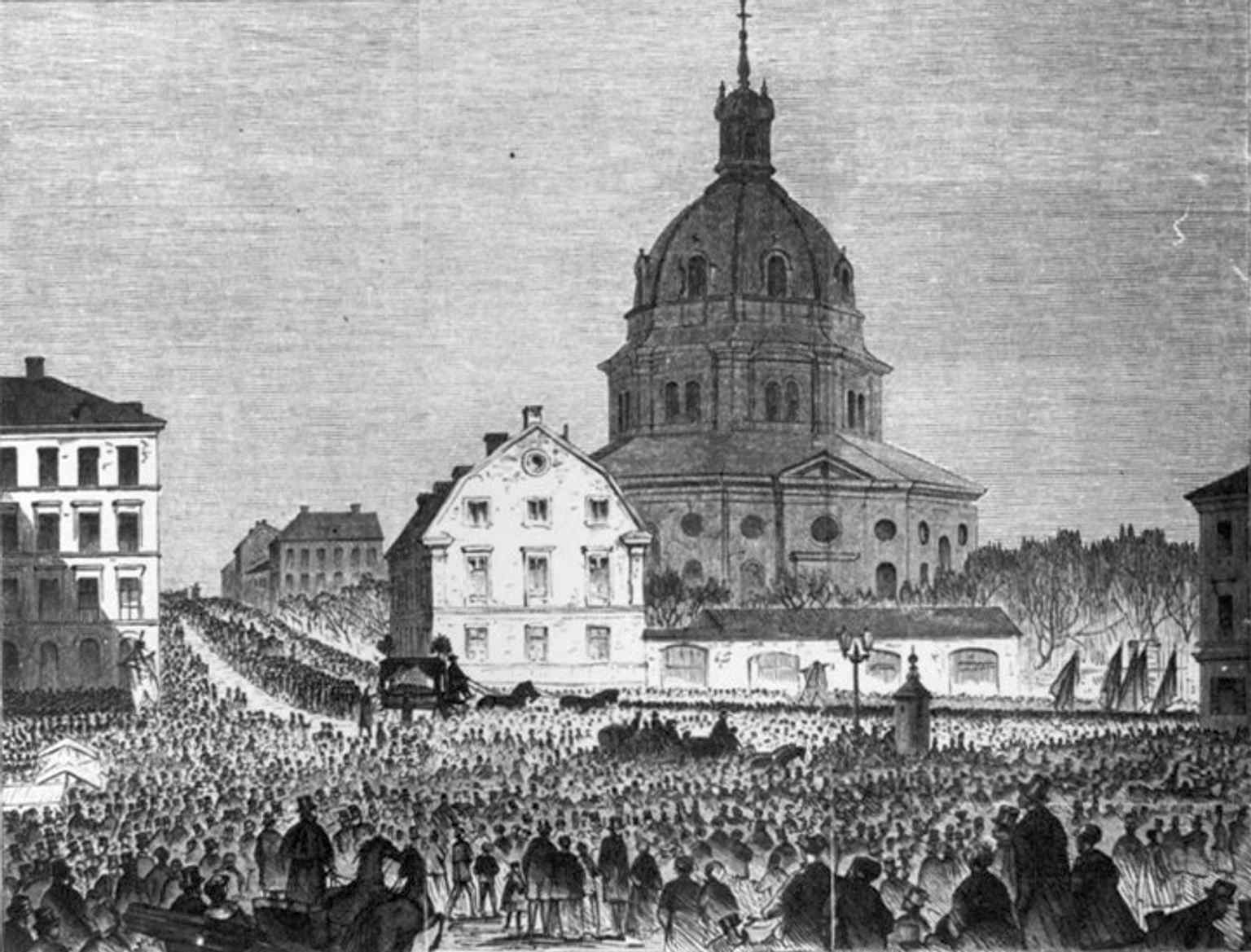
Stockholm refused to give up on it. In seventeen twenty-five, architect Göran Josuae Adelcrantz picked the project back up, and the church finally opened on the twenty-first of August, seventeen thirty-seven. It took the name Hedvig Eleonora, after Queen Hedvig Eleonora, the wife of King Charles the Tenth Gustav. So what you see is a building with layers: an eighteenth-century church body, then that striking dome added much later, from eighteen sixty-six to eighteen sixty-eight, when Fredrik Wilhelm Scholander redesigned the skyline here, with adjustments by Bror Carl Malmberg.
And those two squat structures at the front? They’re little plot twists in stone. Builders started them in seventeen fifty-five as west towers, but the towers never rose. Instead, in seventeen ninety-two, they turned them into one-story burial chapels. Even the unfinished parts found a second life.
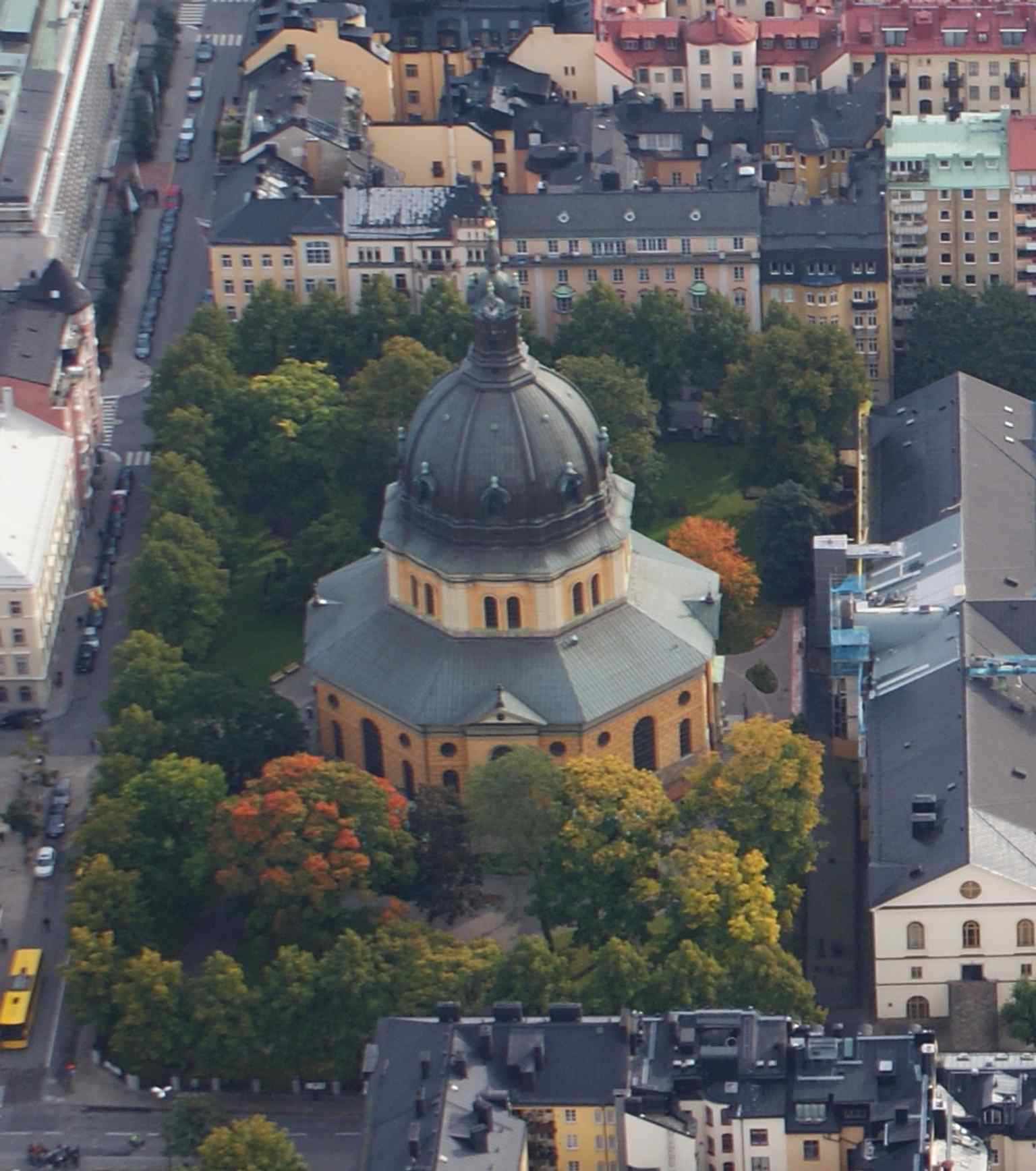
If you’re curious, the before-and-after image in the app shows how the city around the church kept changing while the church kept its ground.
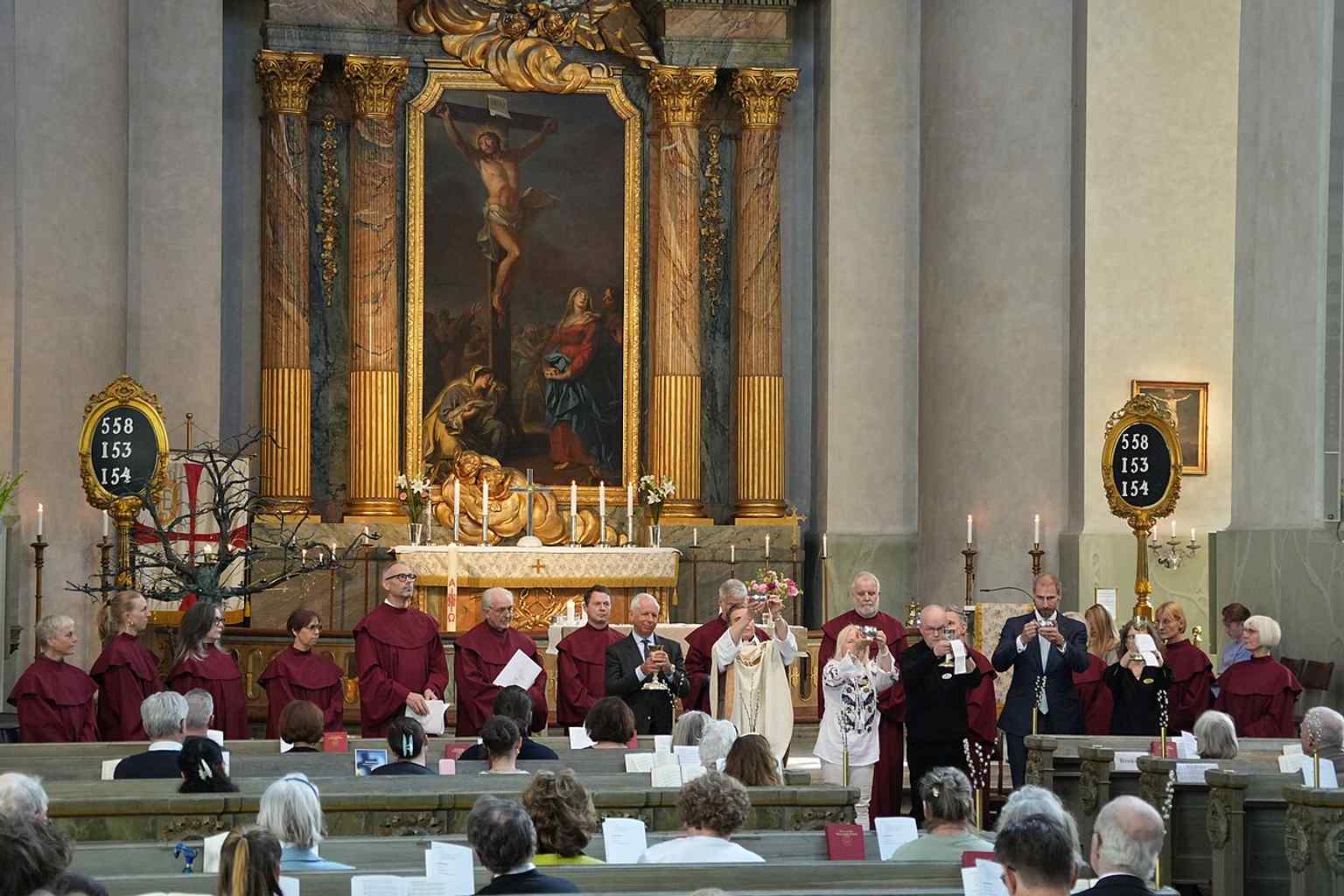
Inside, the church gets even richer. Its famous Golden Altar came as a gift from ironworks owner Johan Clason and opened in seventeen forty-seven; the altarpiece, Jesus on the Cross, was painted by Georg Engelhard Schröder in seventeen thirty-eight. Then in eighteen sixty-eight, the parish had a wonderfully human argument: should they replace it with a new painting of Christ’s Resurrection? Instead of deciding in a back room, they displayed both paintings side by side for two weeks so people could compare them. That feels very Stockholm somehow... thoughtful, public, a little dramatic.
If you glance at your screen, the organ photo shows another treasure: the church still preserves the grand organ façade designed by Carl Fredrik Adelcrantz in the seventeen sixties, even though the instrument behind it has changed again and again over the centuries.
And this church has stories with a darker flavor too. Local folklore says the White Lady of Ladugårdslandet walks here, leading a headless child by the hand, and that Carl von Cardell has haunted the place since his burial in eighteen twenty-one. Even the bells carry drama: the great bell was cast for Kronborg Castle in Helsingør in sixteen thirty-nine and came to Sweden as war booty in sixteen fifty-eight.
If you want to step inside later, the church is generally open daily from eleven A-M to six P-M.
Hedvig Eleonora is one of those rare places where royal memory, neighborhood life, music, and ghost stories all share the same address.
When you’re ready, continue on and let’s see what the next corner of Östermalm reveals.







.jpg)


