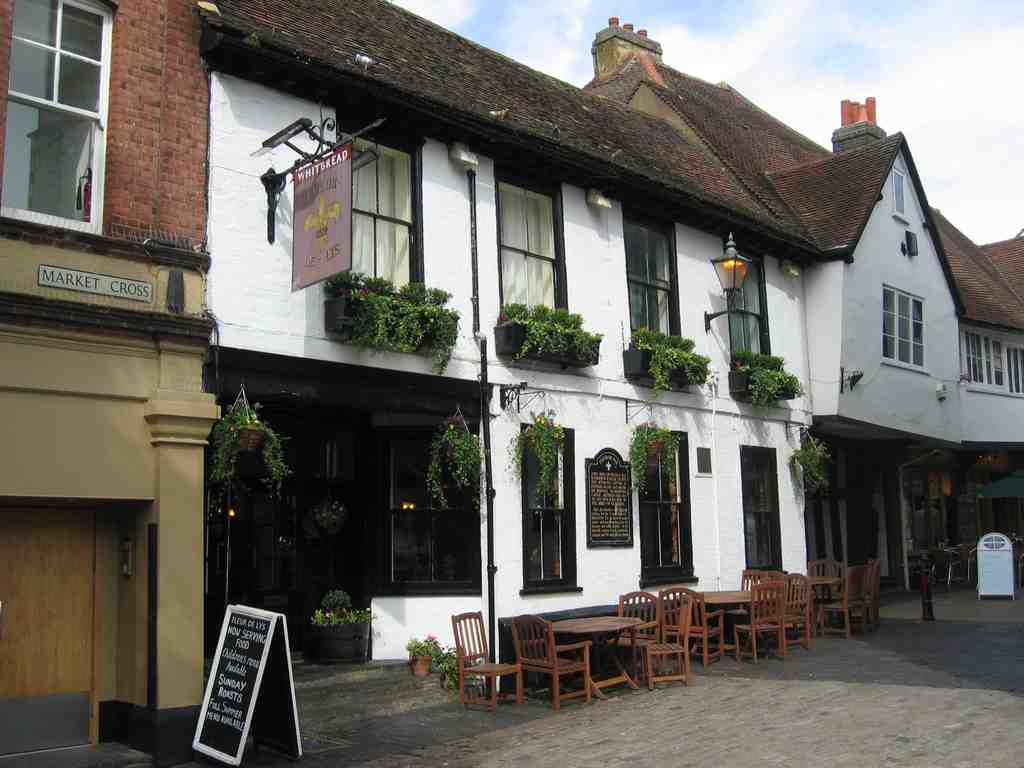
On your left is a modest red-brick frontage with tidy sash windows and a broad carriage arch through the middle, an eighteenth-century face concealing a far older inn.
The Fleur de Lys has always kept a little of itself in reserve. Long before this brick front appeared, John and Matilda Pikebon left a house on this site in the fourteenth century. Then, between fourteen twenty and fourteen forty, the abbot ordered an inn and brewery here, and by the early sixteenth century the building had settled into much of the shape it still holds.
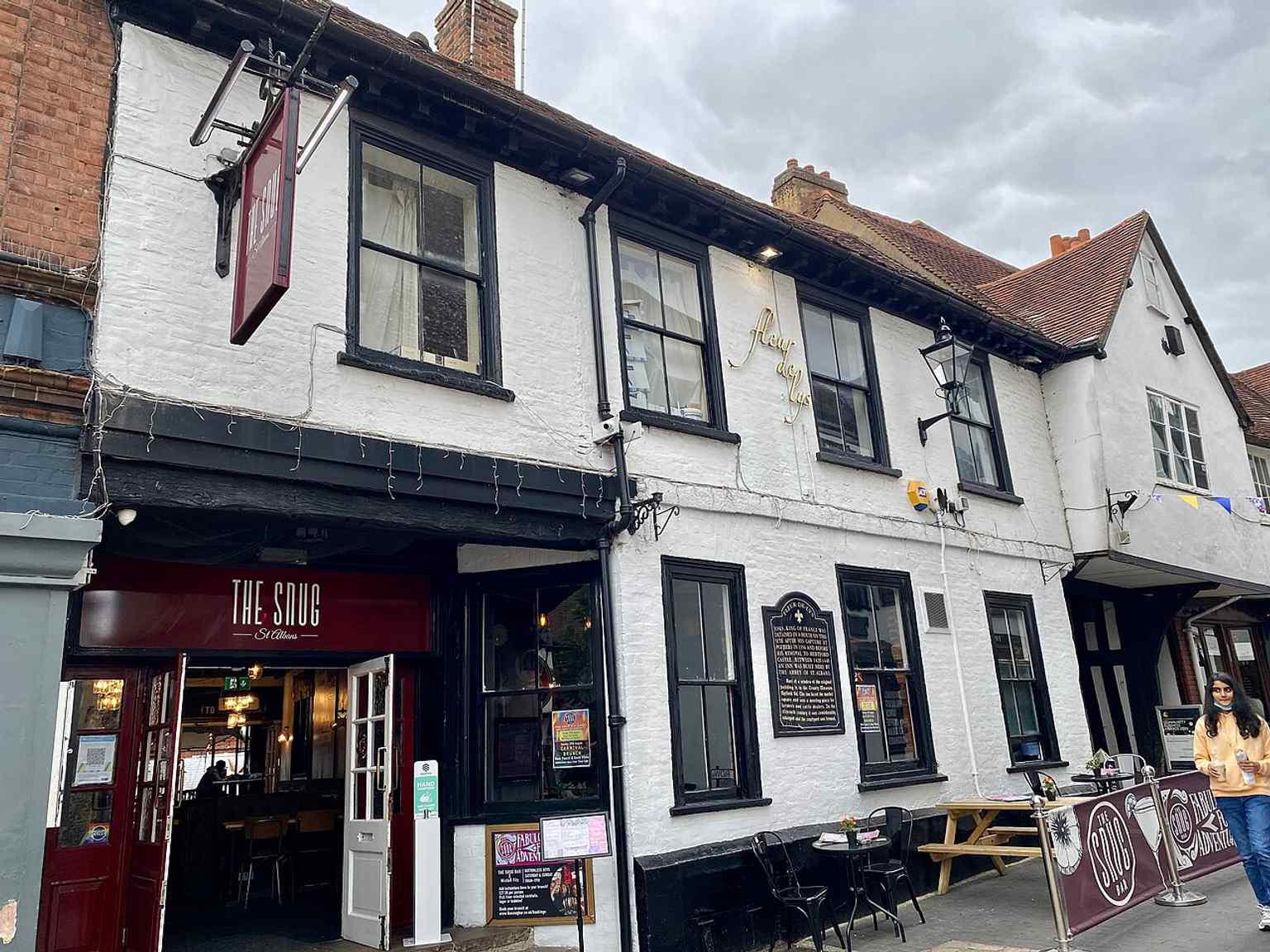
It did not stay still. After the Reformation, owners repaired it, altered it, and very nearly rebuilt it, so what stands before you is a careful layering of centuries. The image shows that pleasing deception: a later frontage with a medieval survivor tucked behind it.
Then comes the deliciously unexpected turn. Around seventeen forty-five, Thomas Dimsdale bought this inn. He became one of the great champions of variolation, an early smallpox treatment that gave a patient a controlled infection to guard against a worse one later. In seventeen sixty-eight, Catherine the Great summoned him to Russia to treat her, her son Grand Duke Paul, and about one hundred and forty courtiers. She paid him richly, granted him a pension, and even made him a Russian baron.
In the nineteenth century, a coach left from here for London each day, and when the neighbouring Great Red Lion came down in eighteen ninety-six, workers uncovered a fragment of cusped, or scalloped, medieval window carving from this very building.
The Fleur de Lys wears its centuries with quiet confidence. When you are ready, continue on to the next stop.