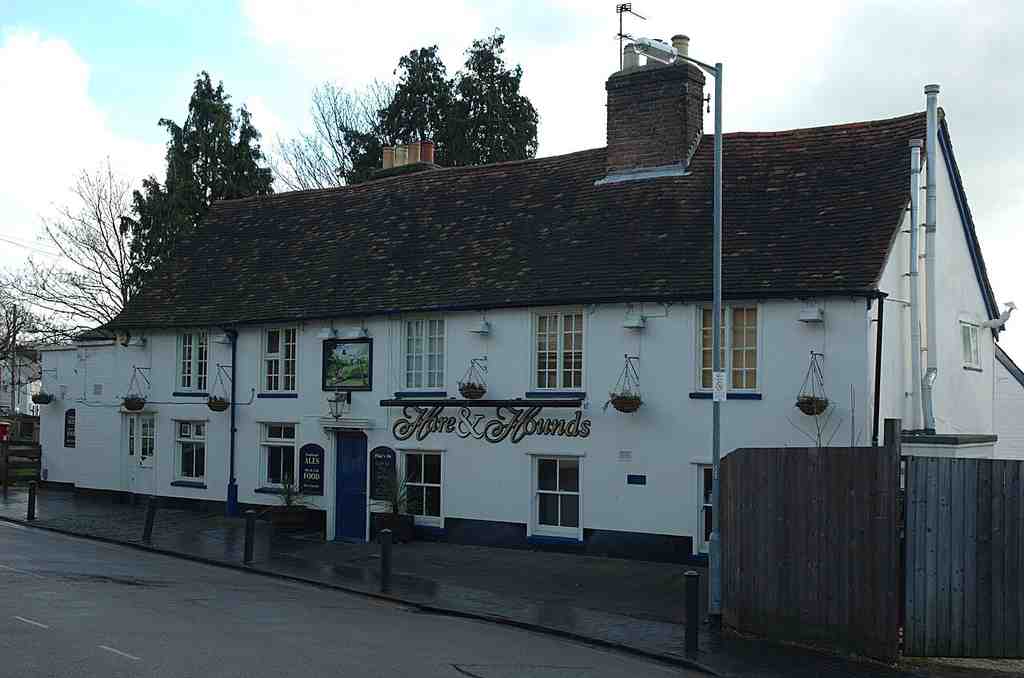
Look for the low, plastered timber-framed building with its long pitched roof and a stout central brick chimney rising above the front.
The Hare and Hounds keeps its age rather discreetly. Officially, Historic England lists it as Grade Two and dates it to the seventeenth century or earlier, but a closer archaeological look in two thousand and seventeen suggested something even more interesting: parts of the structure are older in feel than the basic listing lets on. Above the main block sits a queen-strut roof, a frame with two upright supports bracing the roof, typical of the seventeenth to early eighteenth century. That great chimney near the middle, especially across the western bays, likely belongs to the earliest house here.
And house is the right word, because this place seems to have grown by degrees rather than appearing all at once. Two bays stretched east in the late eighteenth or early nineteenth century, a southern extension arrived in the late nineteenth, and another single-storey addition followed between nineteen twenty-four and nineteen thirty-seven. You can sense those layers still stitched together in one lived-in whole.
There is even a small quarrel over its beginnings: one account places it on maps by sixteen fifty, while archaeology confirms it by seventeen twenty-one. Either way, by the early eighteenth century it was already an old, altered building, standing detached at the edge of Sopwell Lane where coaches entered St Albans and travellers paused before pressing on.
In recent years, locals crowned it a festive favourite, then welcomed it back after a six-figure refurbishment in two thousand and twenty-three; by autumn two thousand and twenty-four, repair plans reminded everyone that old timber buildings survive only because people keep caring for them. If you decide to return later, it generally opens from noon and prices are moderate.
So this is not merely a pub, but a threshold that has greeted strangers for centuries.
When you are ready, let us follow the road onward to the next chapter.