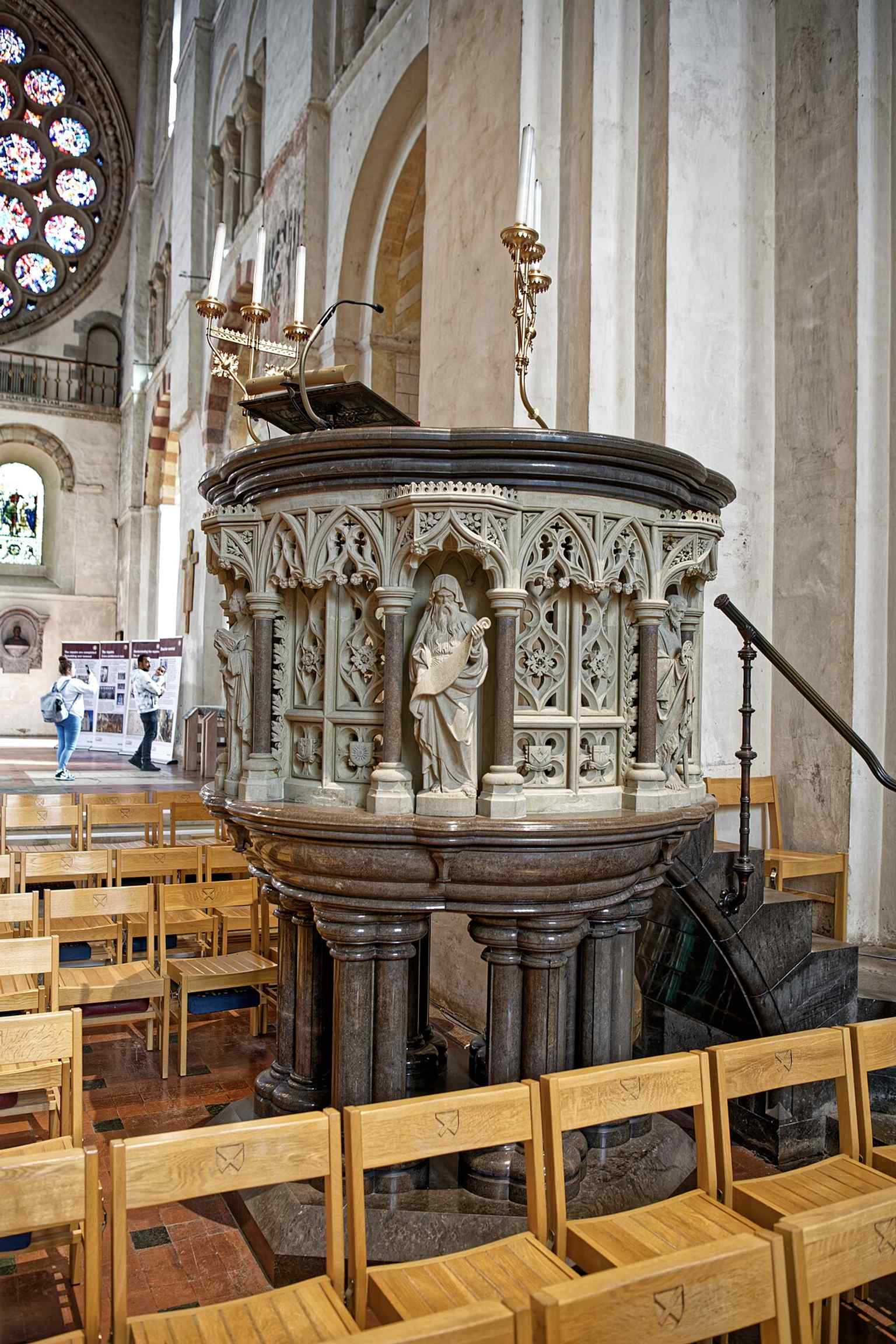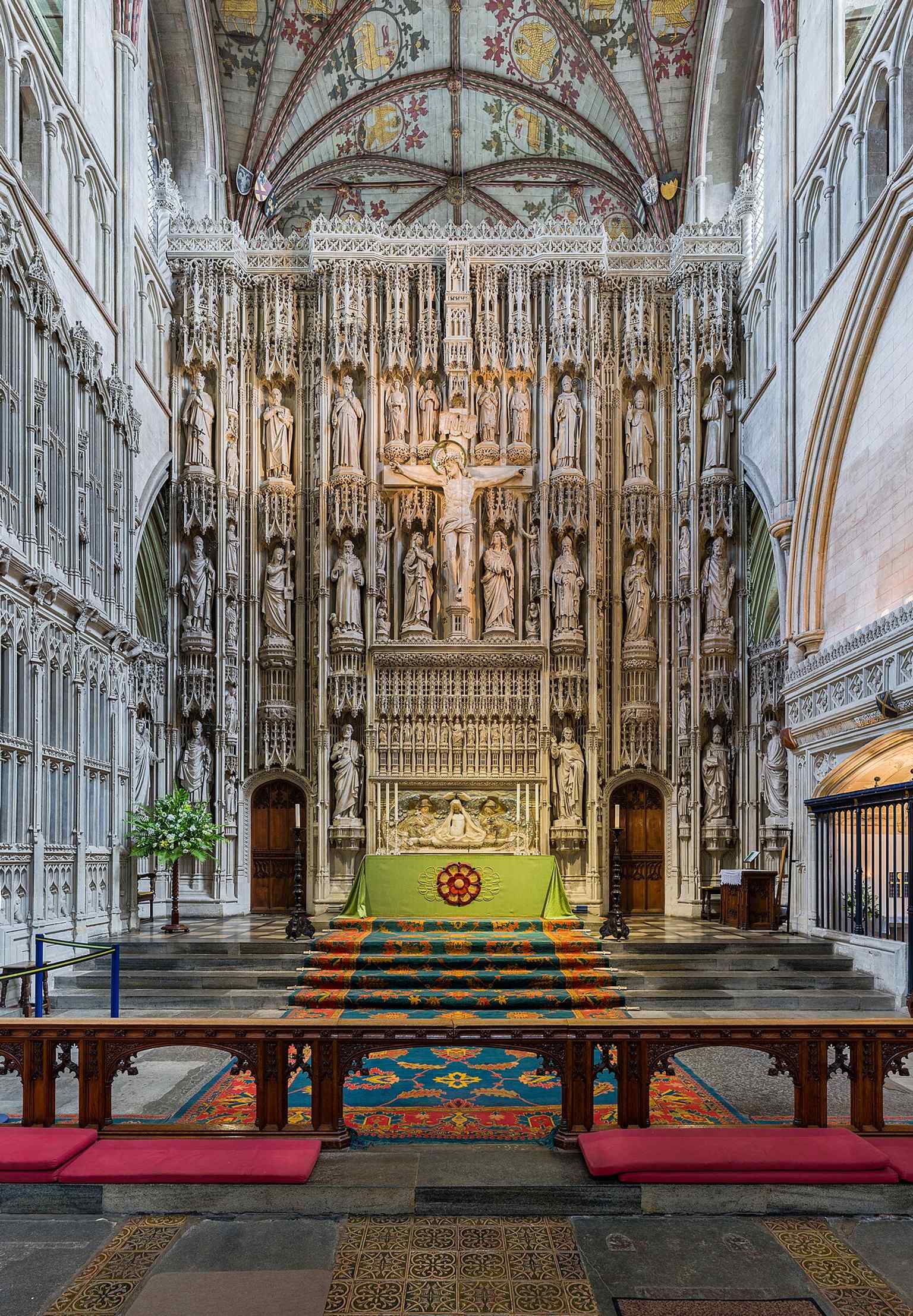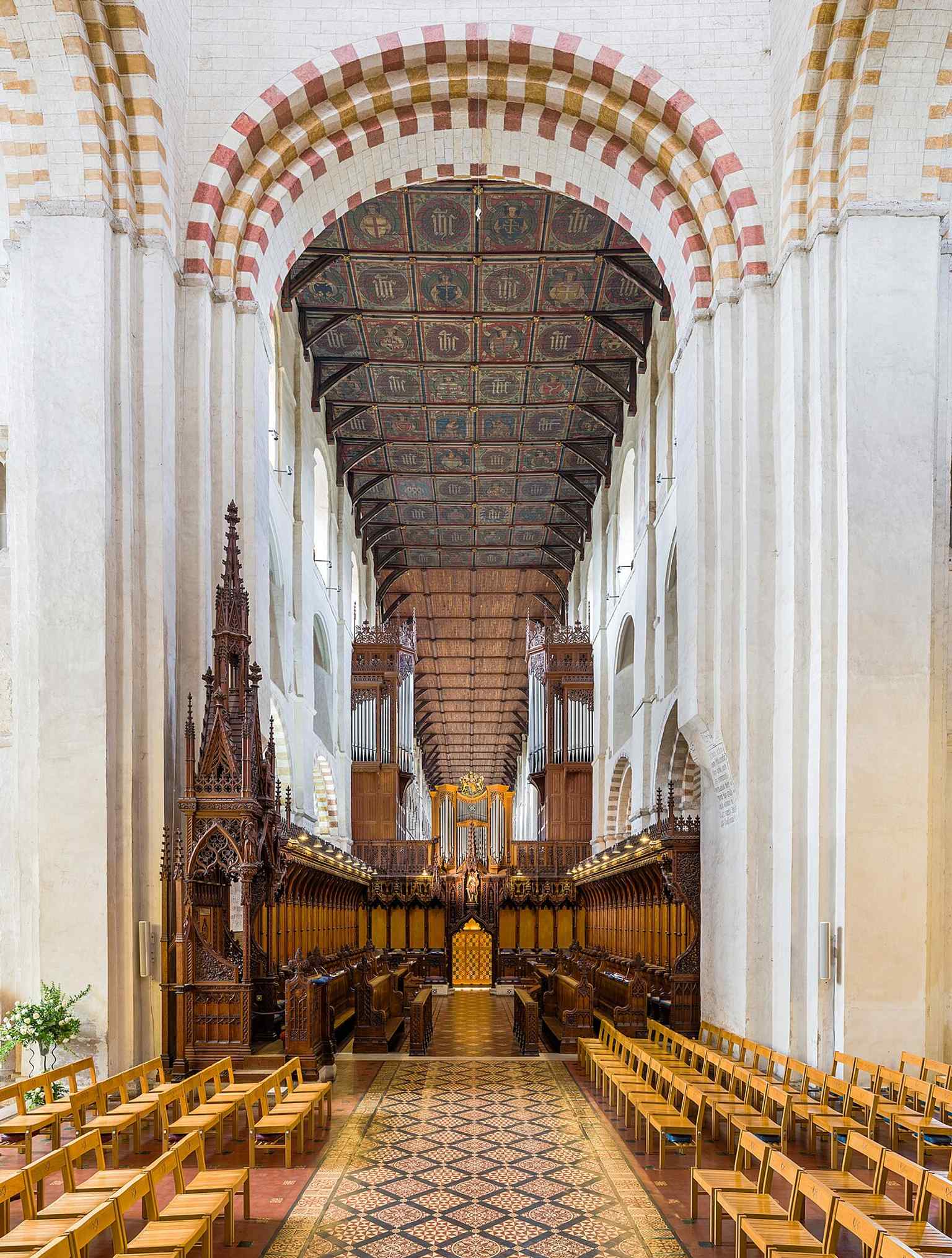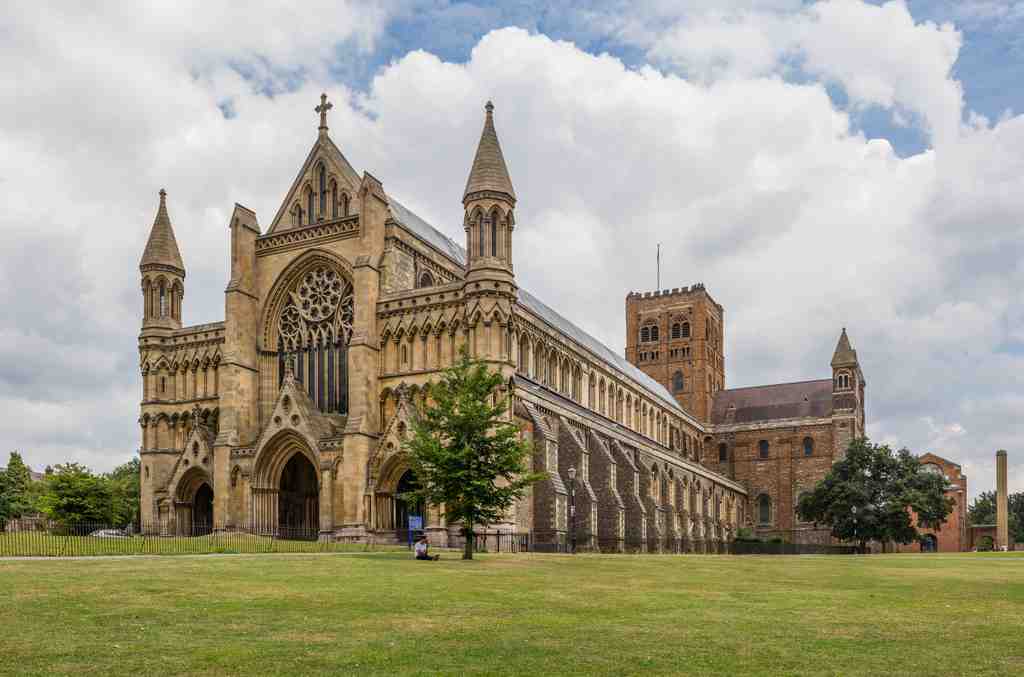
On your right, St Albans Cathedral rises as a vast red-brick-and-flint church with a long nave, a broad west front, and the great central tower lifting above it like a sturdy Norman lookout.
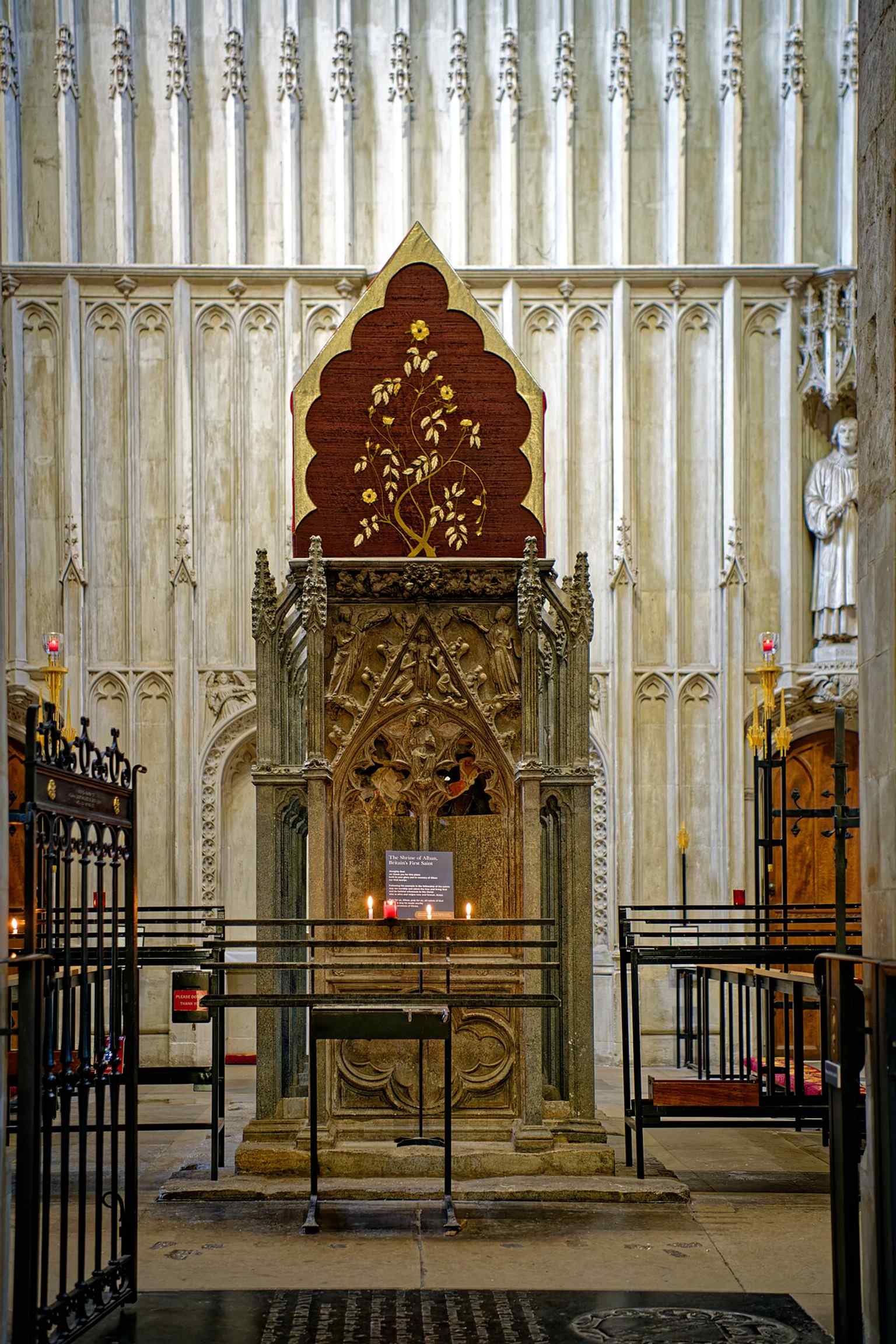
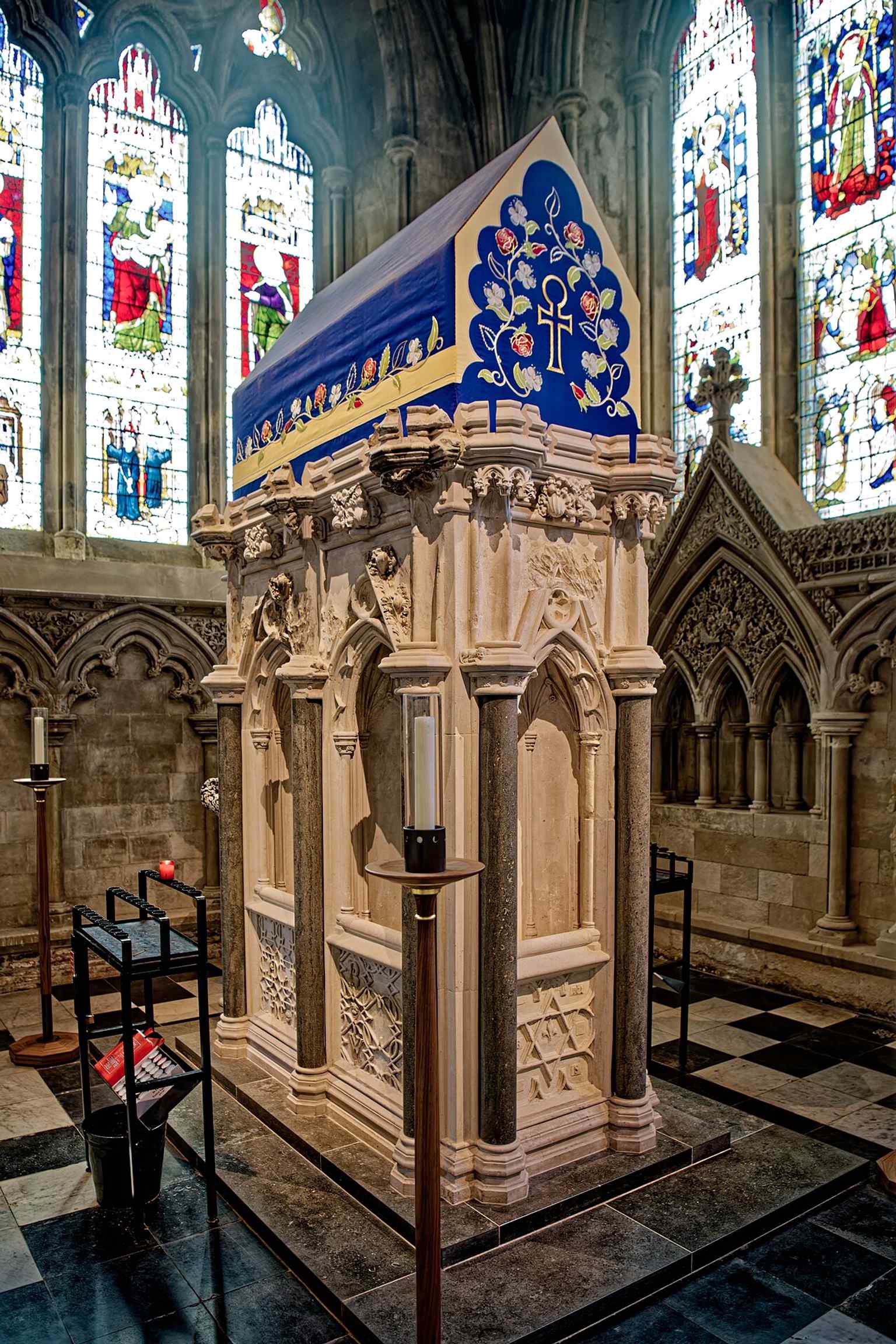
This is the Cathedral and Abbey Church of Saint Alban... though plenty of locals still just call it the Abbey, which tells you something right away about how long this place has set the tone for the city. It stands near the traditional site of Alban’s martyrdom, and his story is the seed from which almost everything here grew.
Alban, according to the old accounts, lived in Roman Verulamium sometime in the third or early fourth century. Even his death date is debated - some placed it in two hundred and eighty-three, Bede pushed it to three hundred and five, and modern historians often argue for the two fifties. But the heart of the story stays steady: Alban sheltered a Christian priest named Amphibalus, took his guest’s cloak, and gave himself up in the priest’s place. He converted through hospitality first, doctrine second... which is a pretty human way into faith.
Legend says soldiers led him uphill to execution, and that a spring burst from the ground when he prayed for water. The details grow more dramatic in later retellings - a rolling head, a holy well, startled executioners - but that is how martyr stories often work. They gather power because people keep needing them.
And here is the question this building quietly asks: when a whole city gathers around one death, how much of its character comes from belief... and how much from what later generations can build on top of that belief?
Quite a lot, as it turns out. Kings, abbots, masons, monks, and townspeople all used this hill to claim standing. King Offa founded an abbey here in the late eighth century. After that, abbey authority reached far beyond prayer: it shaped land, income, and the town’s very layout. One abbot, Ulsinus, even founded the market that we’ll meet later, placing trade where it could help finance the monastery and anchor a growing town. Holy ground and business plans... St Albans rarely bothered to keep them in separate drawers.
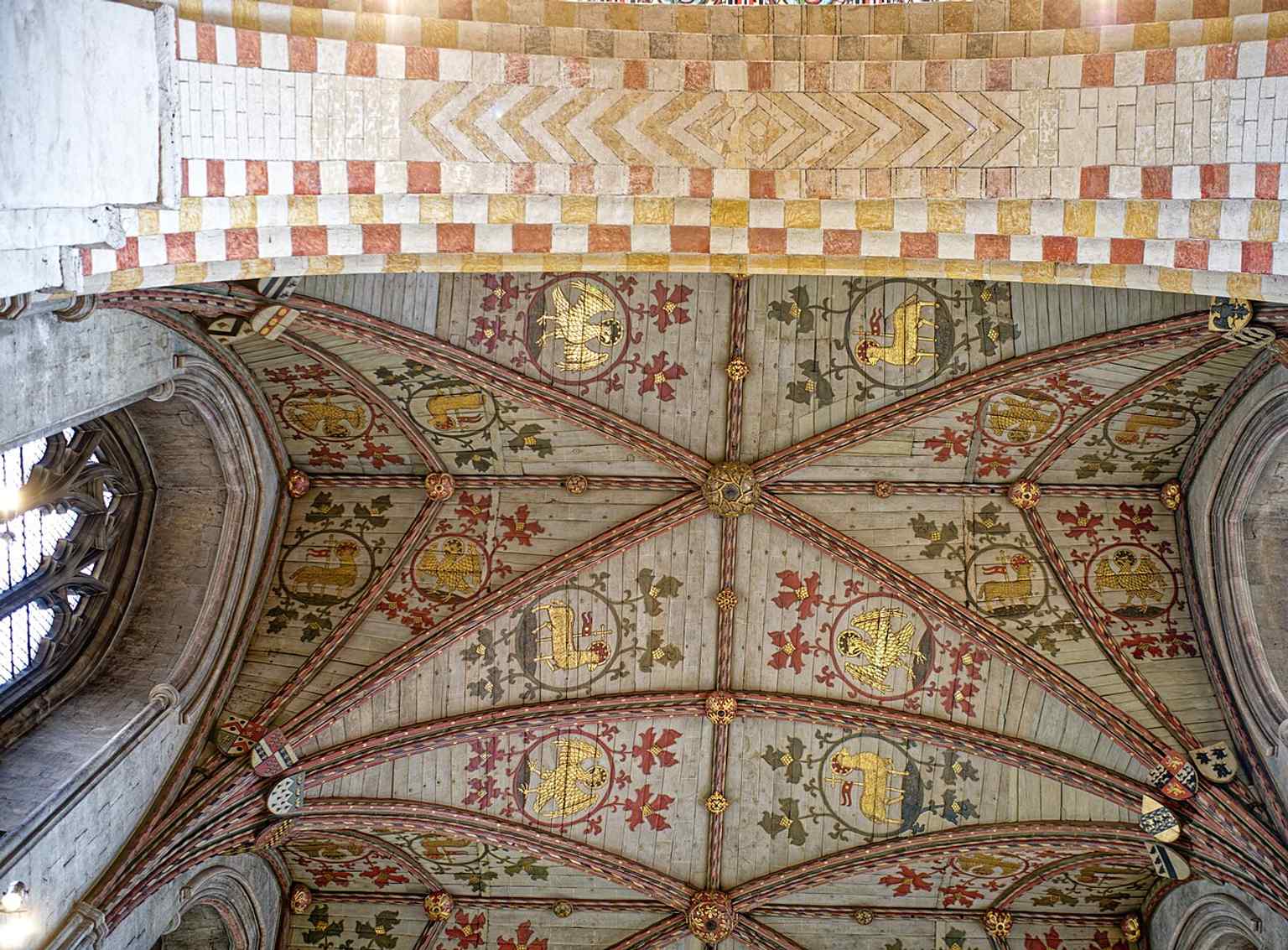
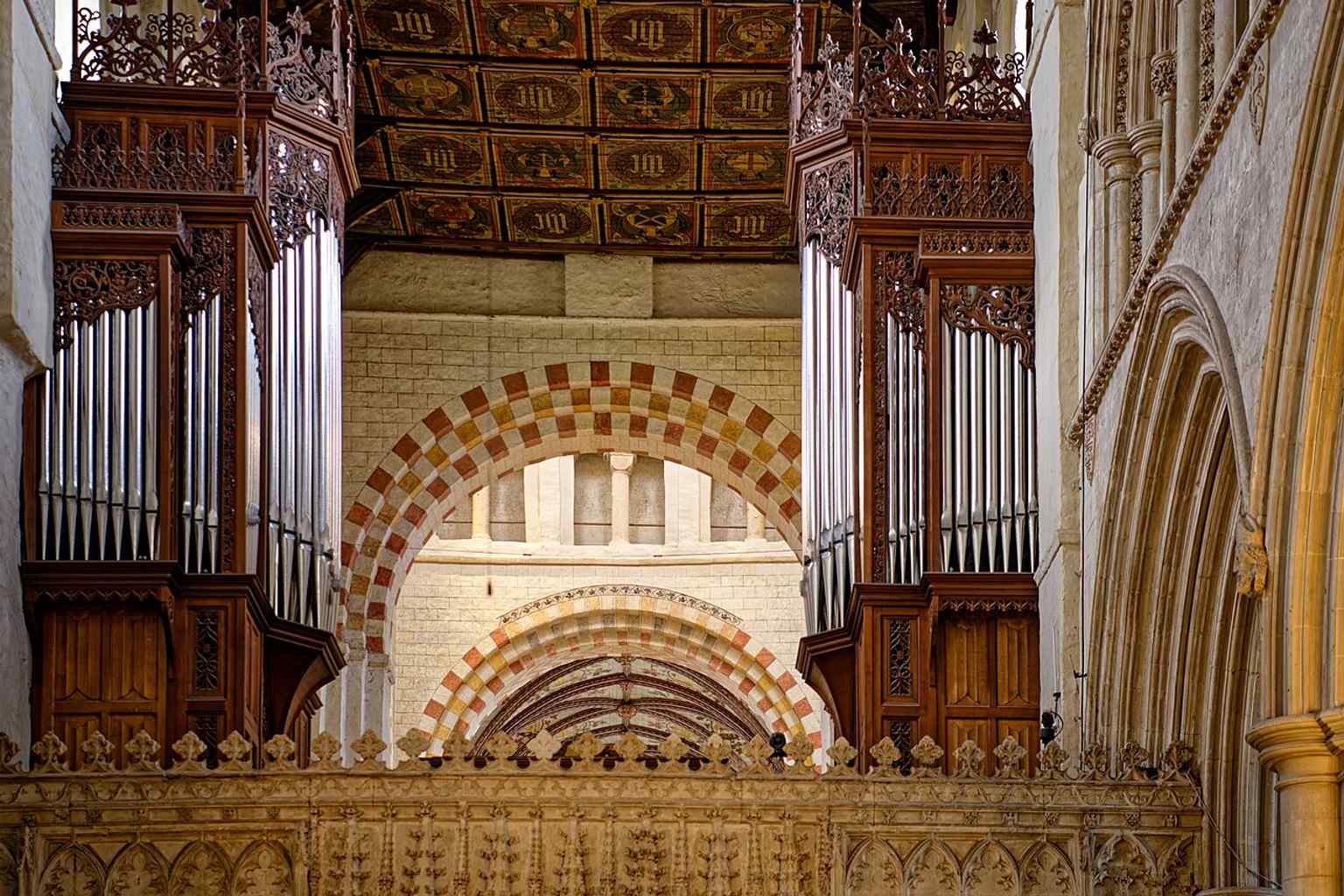
Much of what you see now took shape after Abbot Paul of Caen arrived in the eleventh century. He and his builder, Robert the Mason, created a giant Norman church using material scavenged from Roman Verulamium - especially brick and tile. So this cathedral is not just old; it is recycled old, a city literally rebuilding itself out of its previous life. If you check the image on your screen of the nave, the cathedral’s soaring central hall, you can see just how far that ambition stretched: it is the longest nave of any cathedral in England.
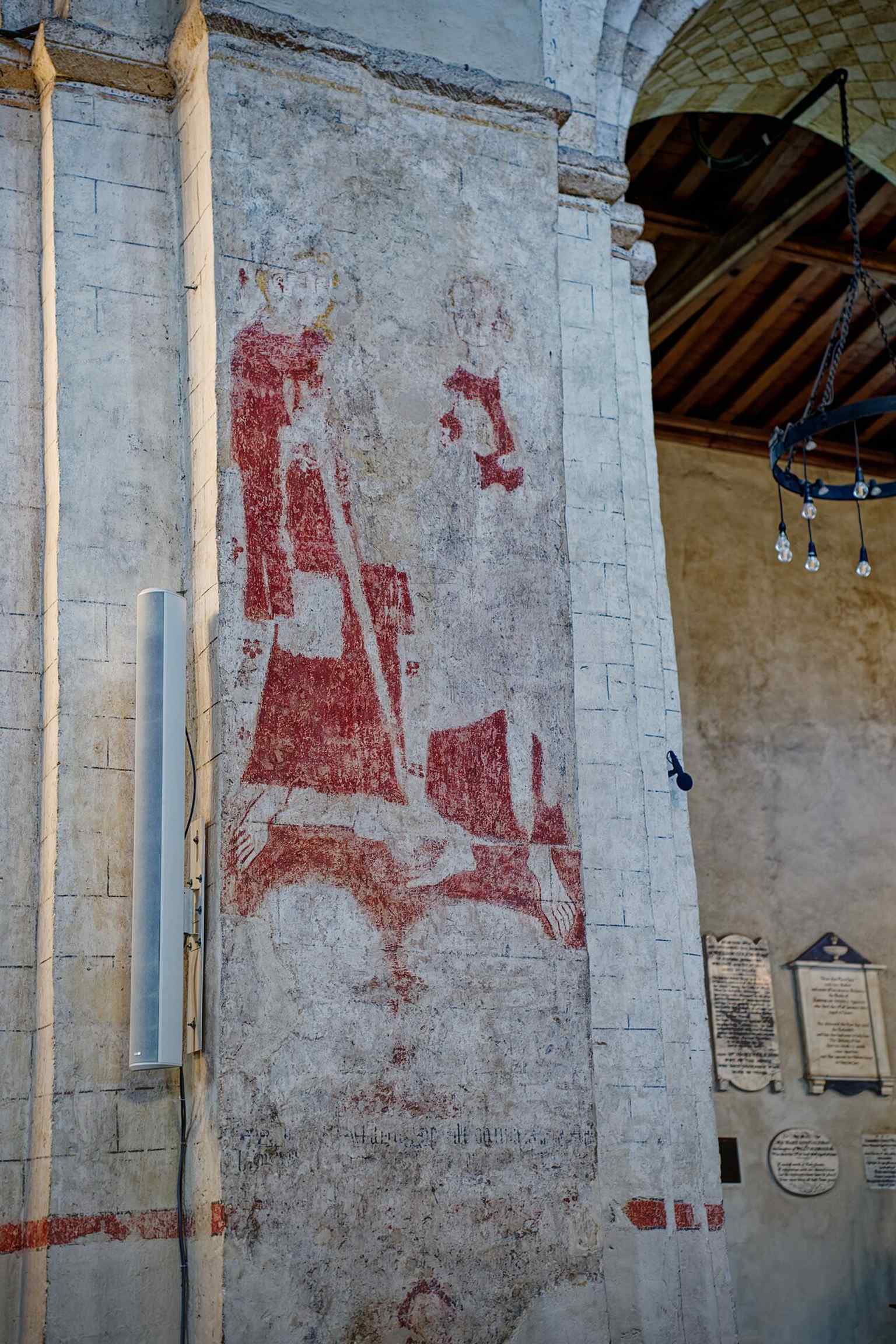
Over centuries, builders kept arguing with the structure in stone - Norman arches, Gothic rebuilding, Victorian restoration, and plenty of emergency repairs when gravity started getting ideas above its station. Another image in the app shows the abbey before the Dissolution, when a whole monastery once clustered around this church.
From here on, many places in St Albans will make more sense as replies to this building’s reach - some cooperative, some resistant, some nicely two-faced. When you are ready, head on to the Corn Exchange, about three minutes away, where trade steps forward more boldly. If you plan to go inside later, the cathedral is generally open daily from nine in the morning to five in the afternoon.