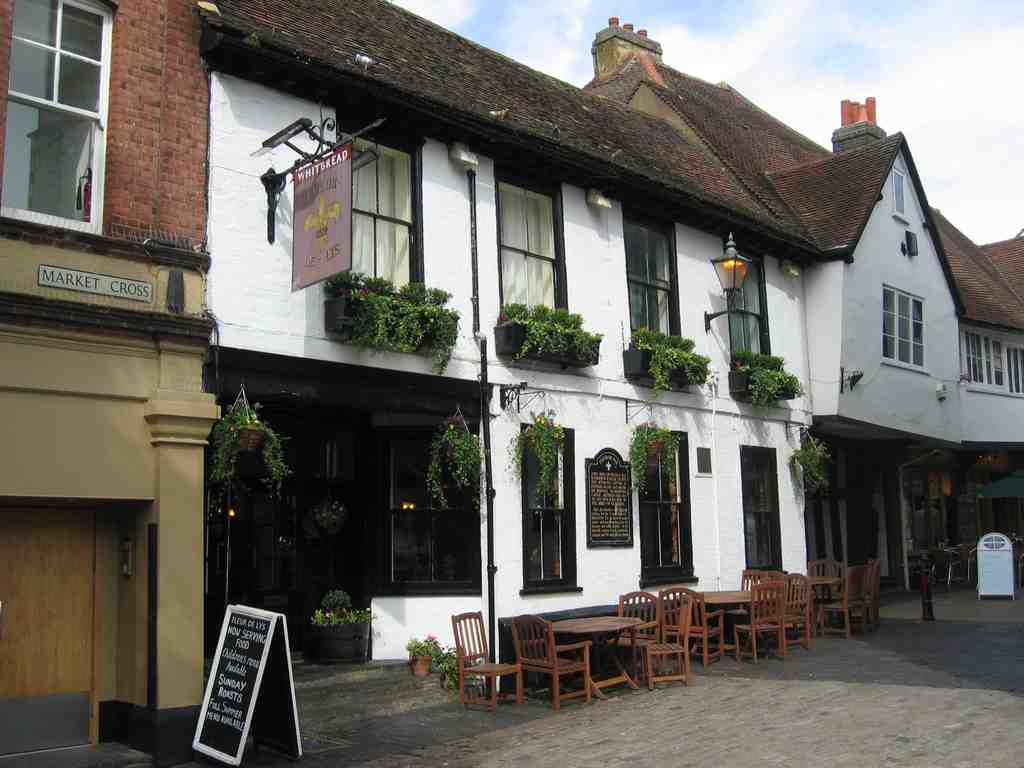
On your left, look for the red-brick front with neat sash windows and a wide arched carriageway cut through the middle.
This place plays a sly little trick. Most people clock the tidy eighteenth-century brickwork and assume that is the whole story. It is not. Museum research traces this plot back to a fourteenth-century bequest by John and Matilda Pikebon, which means the address is far older than the face it shows the street. Then, between fourteen twenty and fourteen forty, the abbot ordered an inn and brewery here, and by the early sixteen hundreds the building had settled into something close to its present form.
After the Reformation, people patched it, altered it, and nearly rebuilt it, so what stands here is layered survival... not one building, but several lives stitched together. If you check the image on your screen, you can see that later brick front still acting like a polite cover over medieval bones. By seventeen eighty-seven, a signboard already projected over the archway, marking this as one of those thresholds where trade, gossip, and arrivals all mixed.
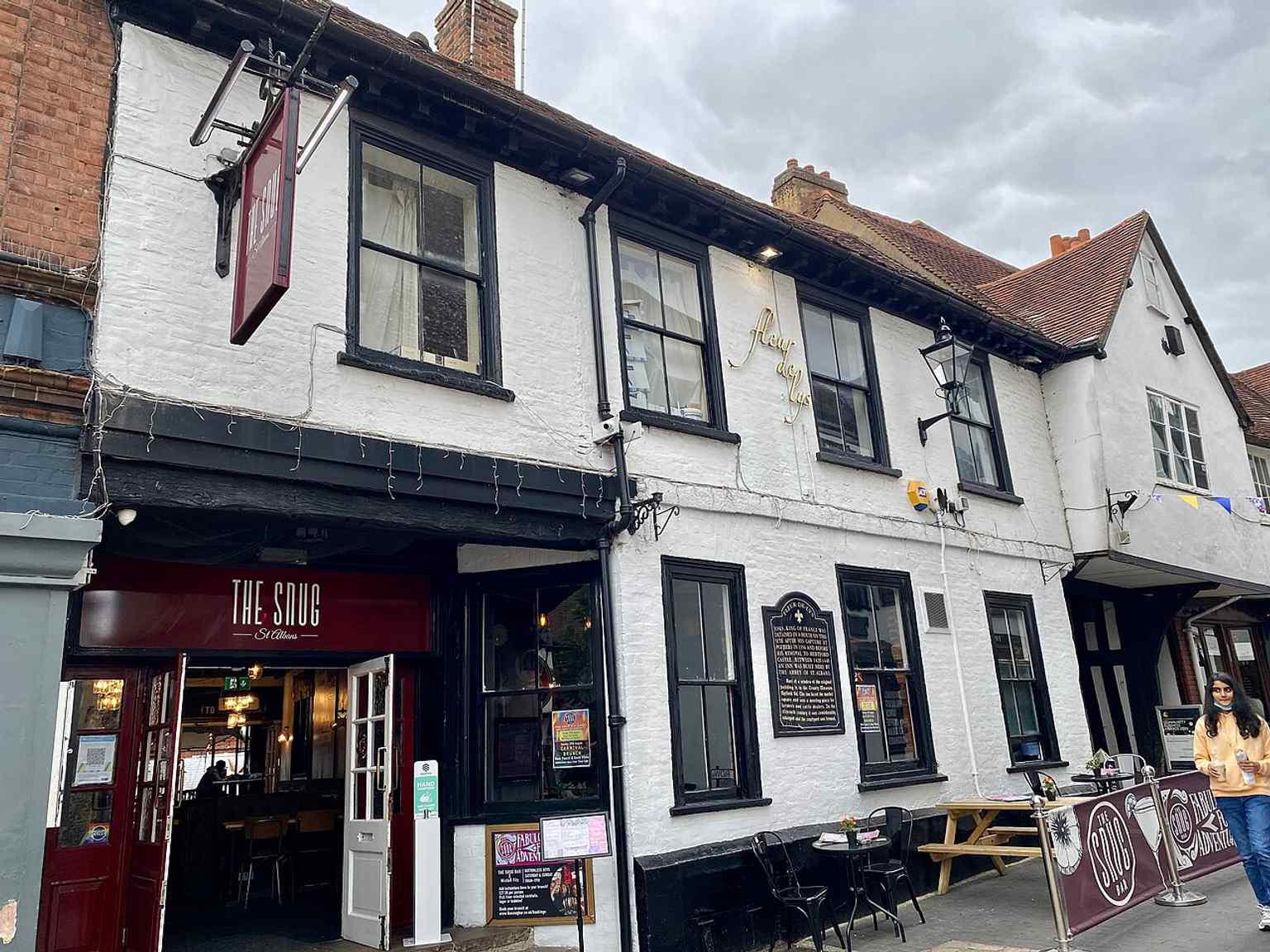
Then comes Thomas Dimsdale. Around seventeen forty-five he bought the inn, and he was no ordinary publican. He championed smallpox variolation, an early method of protection that used a controlled infection, and in seventeen sixty-eight he went to Russia to inoculate Catherine the Great, her son Paul, and about one hundred and forty courtiers. For that, Russia paid him handsomely, granted him a pension, and made him a baron. Not bad for a man tied to a St Albans inn.
So yes, deeply local... and connected to far larger currents of knowledge, rank, and ambition. The Clock Tower is right ahead.