
50+ languages

 Samarkand · Uzbekistan
 Samarkand Audio Tours
Discover Samarkand with self-guided audio walking tours
headphones
1 tours
pin_drop
20 landmarks
translate
Samarkand tours
Pick a Samarkand worth walking.
Self-guided audio tours written by people who actually live there.
1 tours
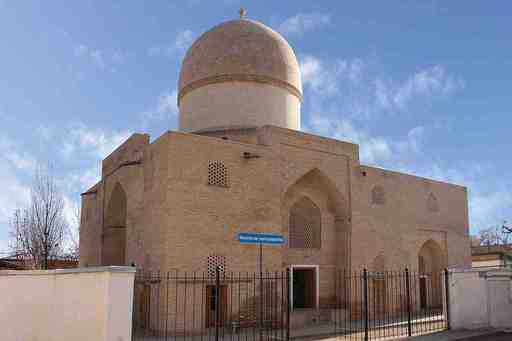
Top landmarks
The Samarkand everyone knows.
The landmarks in every guidebook — and the tours that tell you what guidebooks don't.
A few words on Samarkand
The Registan stood before Rome fell, and still stands
Samarkand has been continuously inhabited for at least 2,750 years, making it one of the oldest cities in Central Asia. It sat at the crossroads of every major trade route between China and the Mediterranean, the place where silk, spices, and ideas from East and West met and commingled. Alexander the Great took the city in 329 BC and is said to have declared it more beautiful than he had imagined. Timur, the conqueror who called himself the Sword of Islam, made it the capital of his empire in the 14th century and filled it with architects, artisans, and craftsmen taken as tribute from the cities he destroyed. The Registan, three interconnected madrasahs facing a central plaza, is the result: the most photographed collection of Islamic architecture in Central Asia.
The blue and white faience tiles of the Registan's three madrasahs, the Ulugh Beg (1420), the Sher-Dor (1636), and the Tilya-Kori (1660), define the image of Samarkand more completely than any other structure.
The tomb of Timur himself, the Gur-e-Amir, sits a short walk away, a turquoise-ribbed dome that became the template for the Mughal architecture of India, including the Taj Mahal. The Shah-i-Zinda necropolis, a lane of funerary chapels built between the 9th and 15th centuries, is perhaps the most emotionally affecting site in the city: a procession of domed tombs whose tiles still carry some of the most extraordinary medieval ceramic work surviving anywhere on earth.
Samarkand
Samarkand FAQ
Before you walk.
The Gur-e-Amir, completed in 1404, is the tomb of Timur (Tamerlane) and his family. Its distinctive ribbed turquoise dome directly influenced the Mughal architecture that produced the Taj Mahal. The interior is covered with painted plaster, jade, and carved marble. Timur's tombstone is a single piece of dark jade, said to be the largest in the world. The complex is about 500 meters from the Registan.
Shah-i-Zinda, meaning 'the living king,' is a complex of funerary chapels and mosques that grew around the shrine of Kusam ibn Abbas, a cousin of the Prophet Muhammad said to have brought Islam to Samarkand. The lane of 11th-to-15th-century tombs is considered one of the finest collections of medieval tilework in the world. The ceramic patterns range from deep cobalt geometrics to intricate floral work in gold and turquoise.
Spring (April to June) and autumn (September to October) are the ideal times, with temperatures between 15 and 25 Celsius and minimal rain. Summer is hot, regularly reaching 35-40 Celsius, though the monuments remain open. The Navruz spring festival in late March fills the city with traditional music, craft markets, and street food.
Samarkand is connected to Tashkent by the Afrosiyob high-speed train, which covers the 344 km journey in about two hours. The train runs several times daily. From Tashkent there are international connections throughout Central Asia and beyond. The Samarkand railway station, built in 1888, is a fine example of Russian Imperial architecture and worth noting as you arrive.
Every Samarkand tour, in your language.
All 50+ languages, included with every booking.
🇬🇧 English🇫🇷 Français🇪🇸 Español🇩🇪 Deutsch🇮🇹 Italiano🇯🇵 日本語🇨🇳 中文🇰🇷 한국어+ 41 more
star AudaTours Unlimited
Visiting more than one city? Subscribe.
Unlock every Samarkand tour — plus thousands more worldwide. Cancel any time.
$4.99/week · Cancel anytime

More in Uzbekistan
Explore Uzbekistan arrow_forwardOther cities to walk in Uzbekistan.


Loved by travellersThousands of tours started.
Thousands of tours started.
Plenty of opinions.
4.8 across the App Store and Google Play. Here's a few we keep coming back to.
starstarstarstarstar
This tour was such a great way to see the city. The stories were interesting without feeling too scripted, and I loved being able to explore at my own pace.

Jess
Tbilisi Tourstarstarstarstarstar
This was a solid way to get to know Brighton without feeling like a tourist. The narration had depth and context, but didn't overdo it.

Christoph
Brighton Tourstarstarstarstarstar
Started this tour with a croissant in one hand and zero expectations. The app just vibes with you, no pressure, just you, your headphones, and some cool stories.

John
Marseille Tourdownload Get the app Pop your headphones in.


Pop your headphones in.
Step outside.
Free to download. Tours in every city. Start in 60 seconds — no account, no card.

headphones
~ 4 min until your first tour starts
public
1,000+ cities worldwide
all_inclusive
AudaTours
Unlimited
Every tour. Every city. One subscription.
3097 tours2273 cities138 countries50+ languages
$39 /year
all_inclusive Explore Unlimited