
50+ languages

 Salzburg · Austria
 Salzburg Audio Tours
Discover Salzburg with self-guided audio walking tours
headphones
1 tours
pin_drop
20 landmarks
translate
Salzburg tours
Pick a Salzburg worth walking.
Self-guided audio tours written by people who actually live there.
1 tours
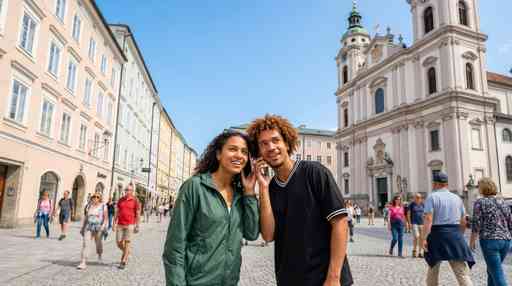
Top landmarks
The Salzburg everyone knows.
The landmarks in every guidebook — and the tours that tell you what guidebooks don't.
A few words on Salzburg
Mozart was born here. Sound of Music was filmed here. Both left.
Wolfgang Amadeus Mozart was born at Getreidegasse 9 on January 27, 1756, in a yellow-painted house that you can visit today and that is now the most visited house museum in Austria. He spent his childhood and early career in Salzburg, chafing under the Archbishop Colloredo's patronage and leaving for Vienna at 25, never to return while alive. The city that ignored him in life has built an entire tourism economy around him in death, which Mozart might have found irritating and the Archbishop would have found unseemly.
Hohensalzburg Fortress, the medieval castle on the Festungsberg hill above the old town, has commanded this bend in the Salzach River since 1077, making it one of the largest and best-preserved medieval castles in Europe.
Below it, the baroque old town, a UNESCO World Heritage Site, was shaped largely by the Prince-Archbishop Wolf Dietrich von Raitenau in the late 16th century, who hired Italian architects to transform a medieval city into one of the finest baroque townscapes north of the Alps. The Residenz Palace, the Cathedral, and the Mirabell Palace with its gardens from 1606 all date from this period of systematic urbanization.
Salzburg
Salzburg FAQ
Before you walk.
The Mozarts Geburtshaus at Getreidegasse 9 is a well-maintained museum covering Mozart's childhood and early years in Salzburg. The original apartment contains period instruments, portrait miniatures, and correspondence. It is the most popular Mozart site, though the larger Wohnhaus (where the family later lived on Makartplatz) has more exhibit space and fewer crowds.
The Salzburg Festival (Salzburger Festspiele) is one of the world's most prestigious classical music and opera events, taking place each July and August. It was founded in 1920 by Max Reinhardt, Hugo von Hofmannsthal, and Richard Strauss. Tickets for major opera productions sell out a year in advance; chamber concerts and theatre performances are more accessible. The outdoor Jedermann (Everyman) performance on Domplatz is the festival's signature event.
The fortress is accessible by funicular from Festungsgasse near the cathedral, or on foot via a cobblestone path. The interior includes the royal chambers, torture chamber museum, and a collection of medieval instruments of war. The fortress's terrace has panoramic views of the Salzach valley and the surrounding Alps. Combined tickets with the funicular are available.
Salzburger Nockerl is the city's signature dessert, a large souffled egg dumpling dusted with powdered sugar and served hot, representing the hills surrounding the city. Kasnockn, a cheese pasta dish from the Alps, and tafelspitz (boiled beef) are hearty local options. The cafe culture along Getreidegasse and around the Residenzplatz is strong; Cafe Tomaselli on Alter Markt claims to be Austria's oldest coffee house, open since 1700.
Every Salzburg tour, in your language.
All 50+ languages, included with every booking.
🇬🇧 English🇫🇷 Français🇪🇸 Español🇩🇪 Deutsch🇮🇹 Italiano🇯🇵 日本語🇨🇳 中文🇰🇷 한국어+ 41 more
star AudaTours Unlimited
Visiting more than one city? Subscribe.
Unlock every Salzburg tour — plus thousands more worldwide. Cancel any time.
$4.99/week · Cancel anytime

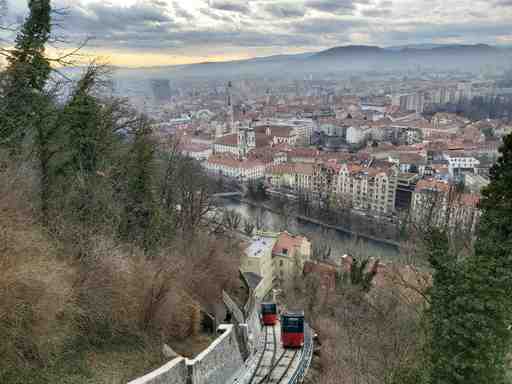

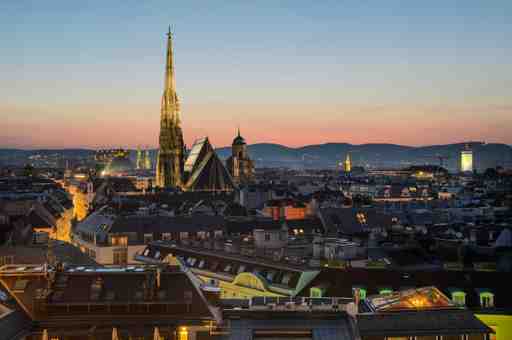

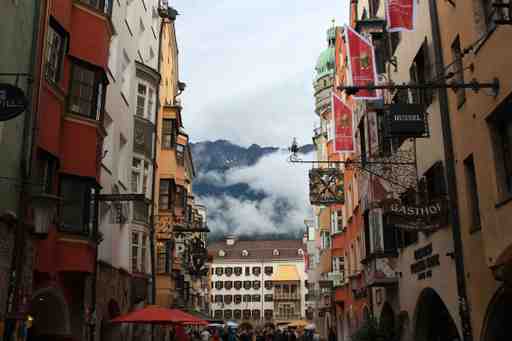

Loved by travellersThousands of tours started.
Thousands of tours started.
Plenty of opinions.
4.8 across the App Store and Google Play. Here's a few we keep coming back to.
starstarstarstarstar
This tour was such a great way to see the city. The stories were interesting without feeling too scripted, and I loved being able to explore at my own pace.

Jess
Tbilisi Tourstarstarstarstarstar
This was a solid way to get to know Brighton without feeling like a tourist. The narration had depth and context, but didn't overdo it.

Christoph
Brighton Tourstarstarstarstarstar
Started this tour with a croissant in one hand and zero expectations. The app just vibes with you, no pressure, just you, your headphones, and some cool stories.

John
Marseille Tourdownload Get the app Pop your headphones in.


Pop your headphones in.
Step outside.
Free to download. Tours in every city. Start in 60 seconds — no account, no card.
headphones
~ 4 min until your first tour starts
public
1,000+ cities worldwide
all_inclusive
AudaTours
Unlimited
Every tour. Every city. One subscription.
3097 tours2273 cities138 countries50+ languages
$39 /year
all_inclusive Explore Unlimited