
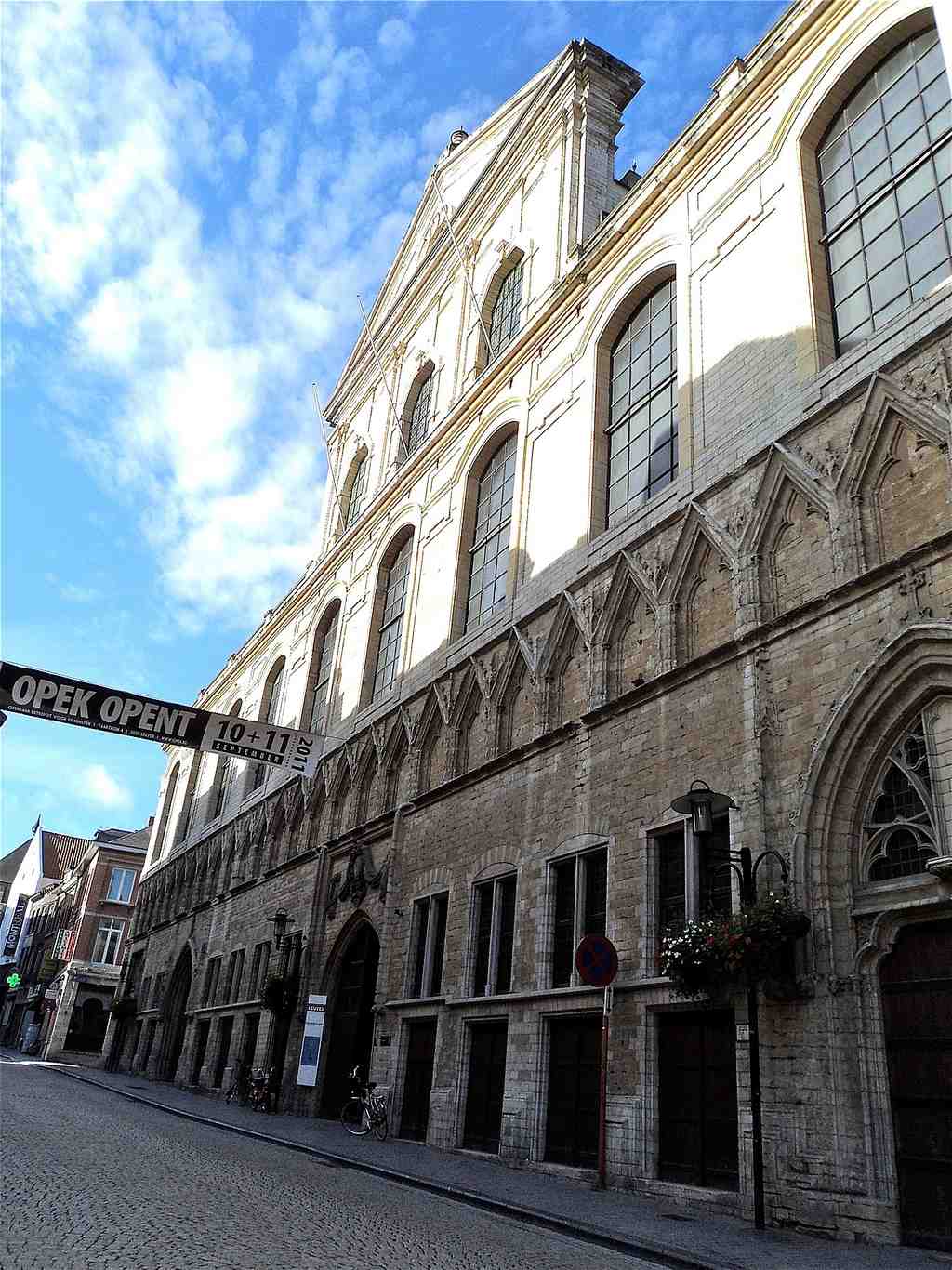
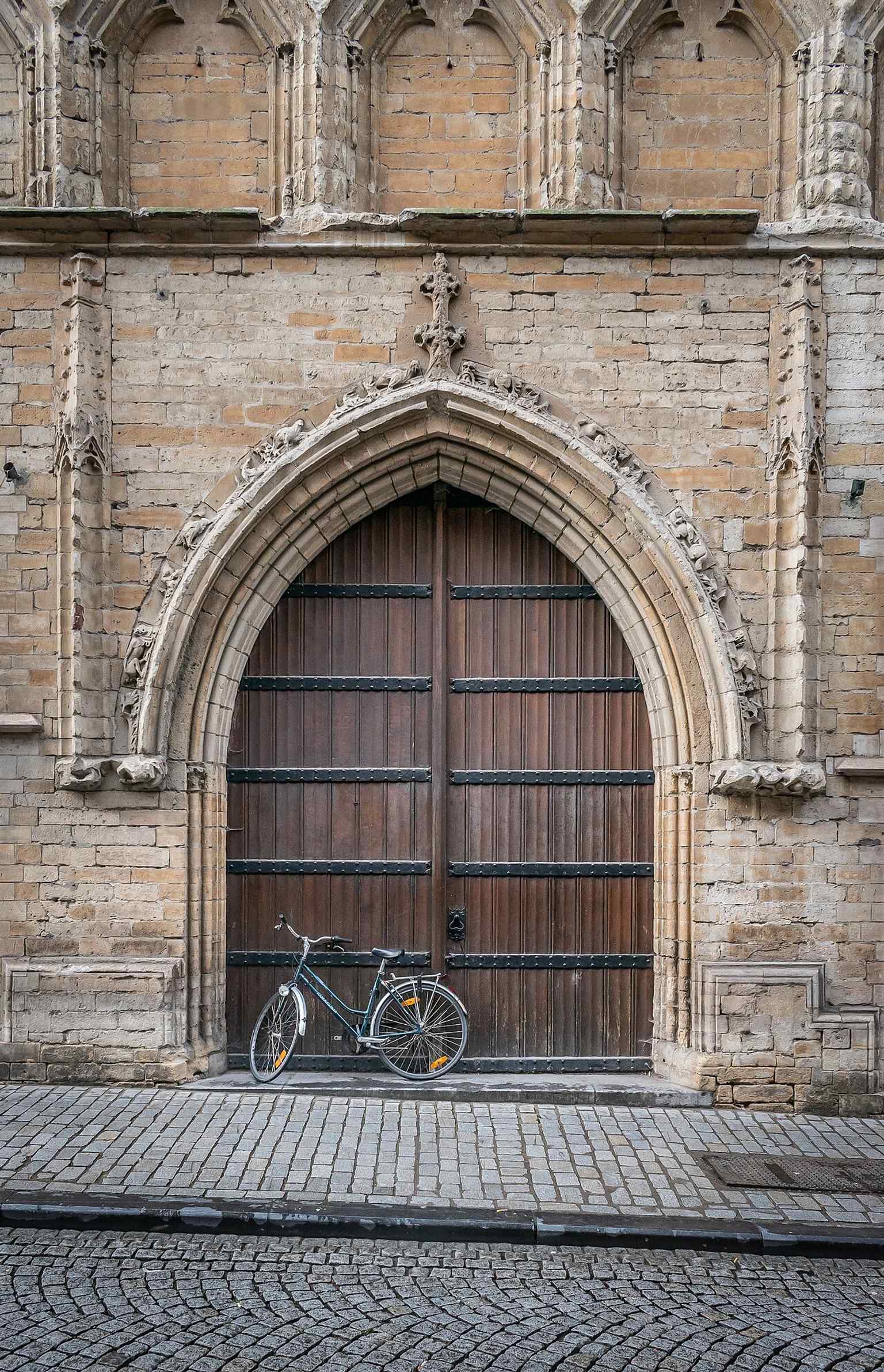
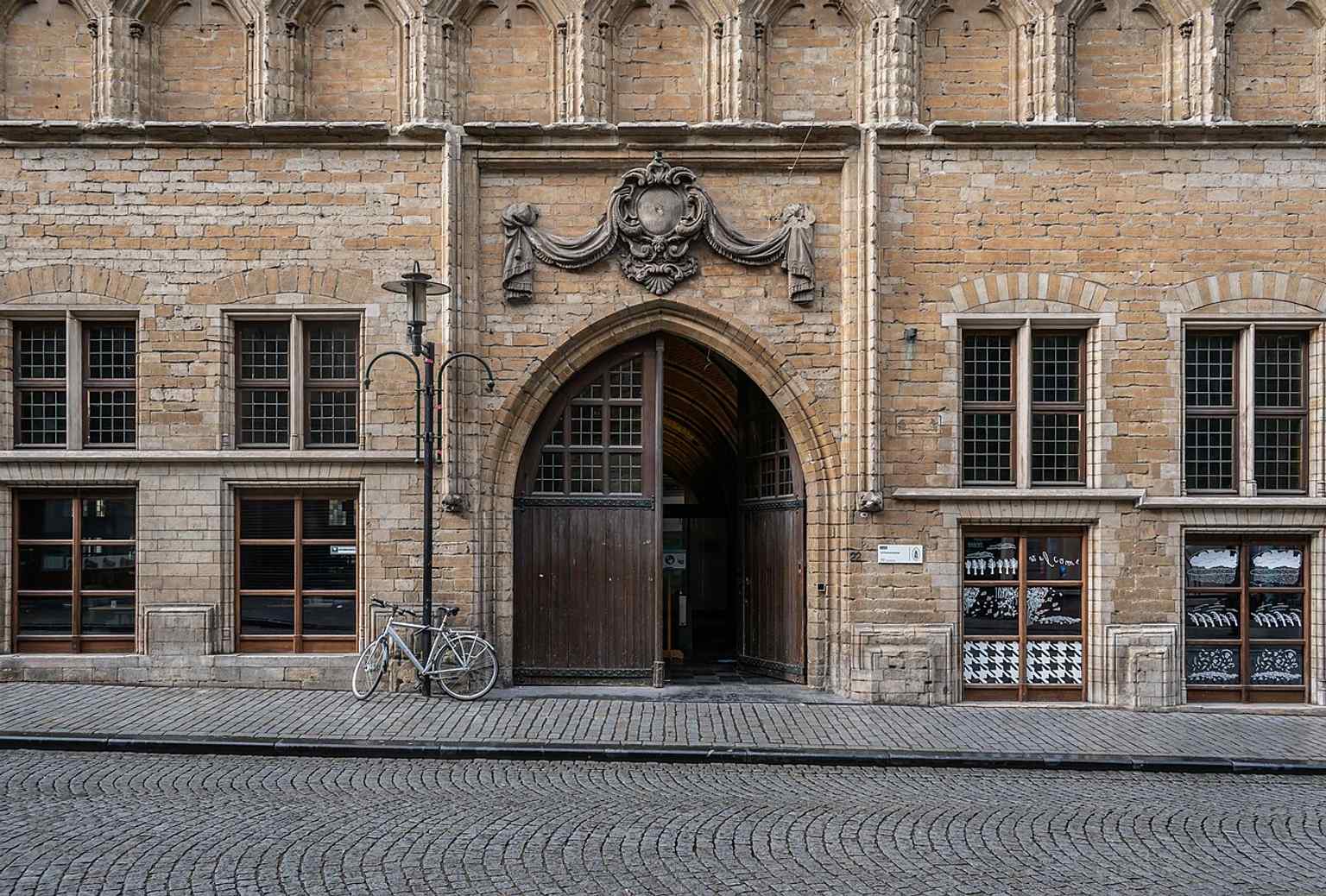
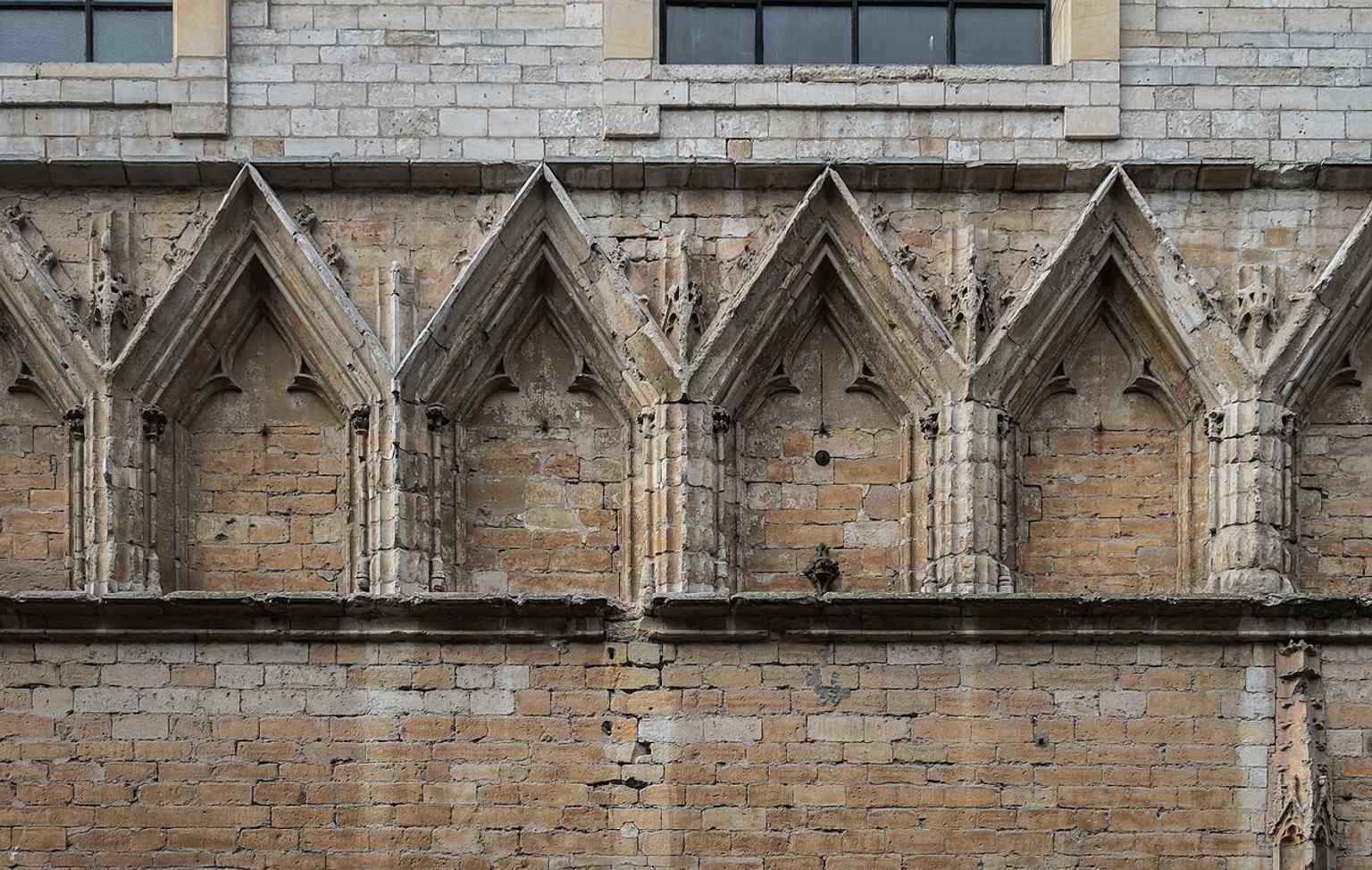
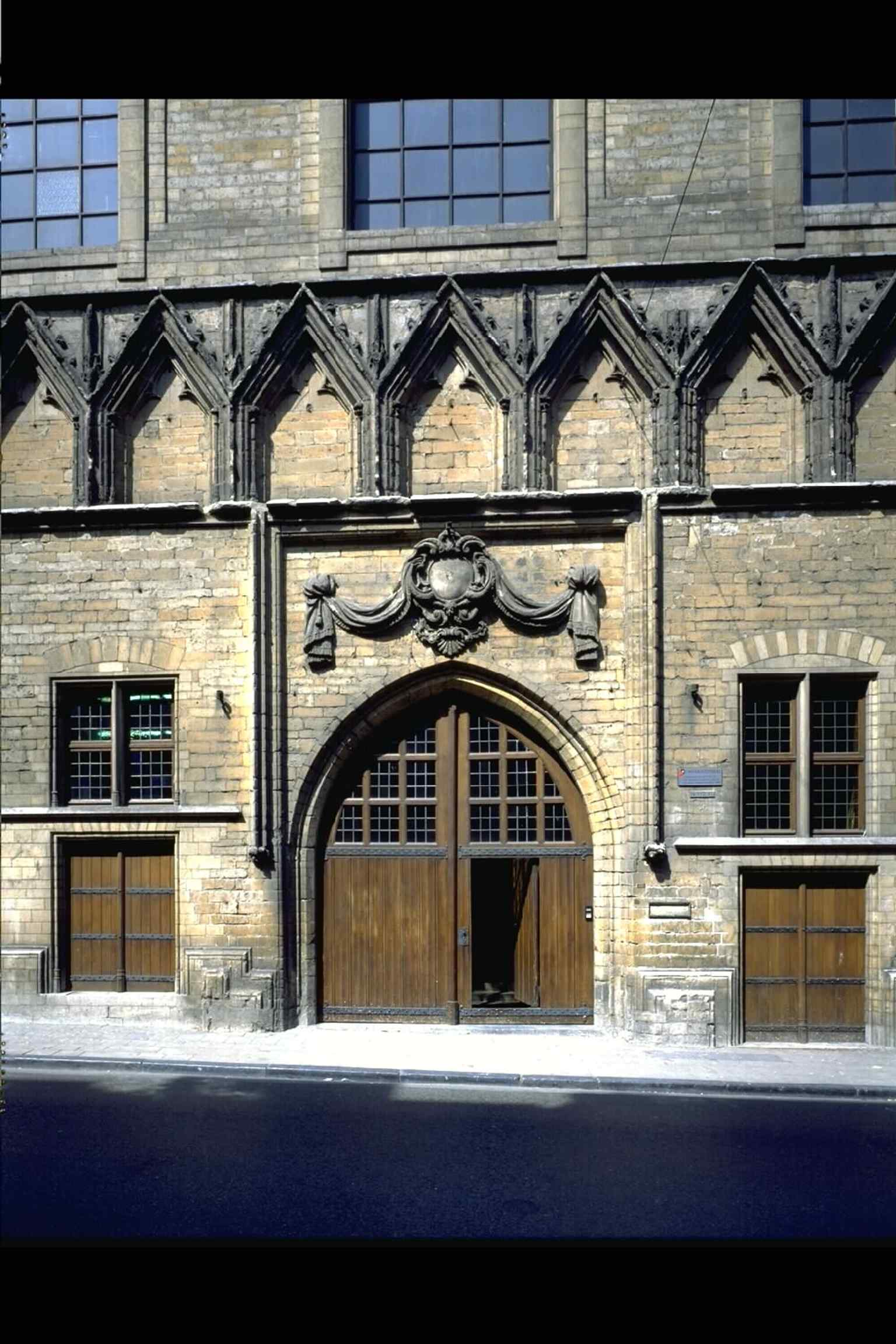
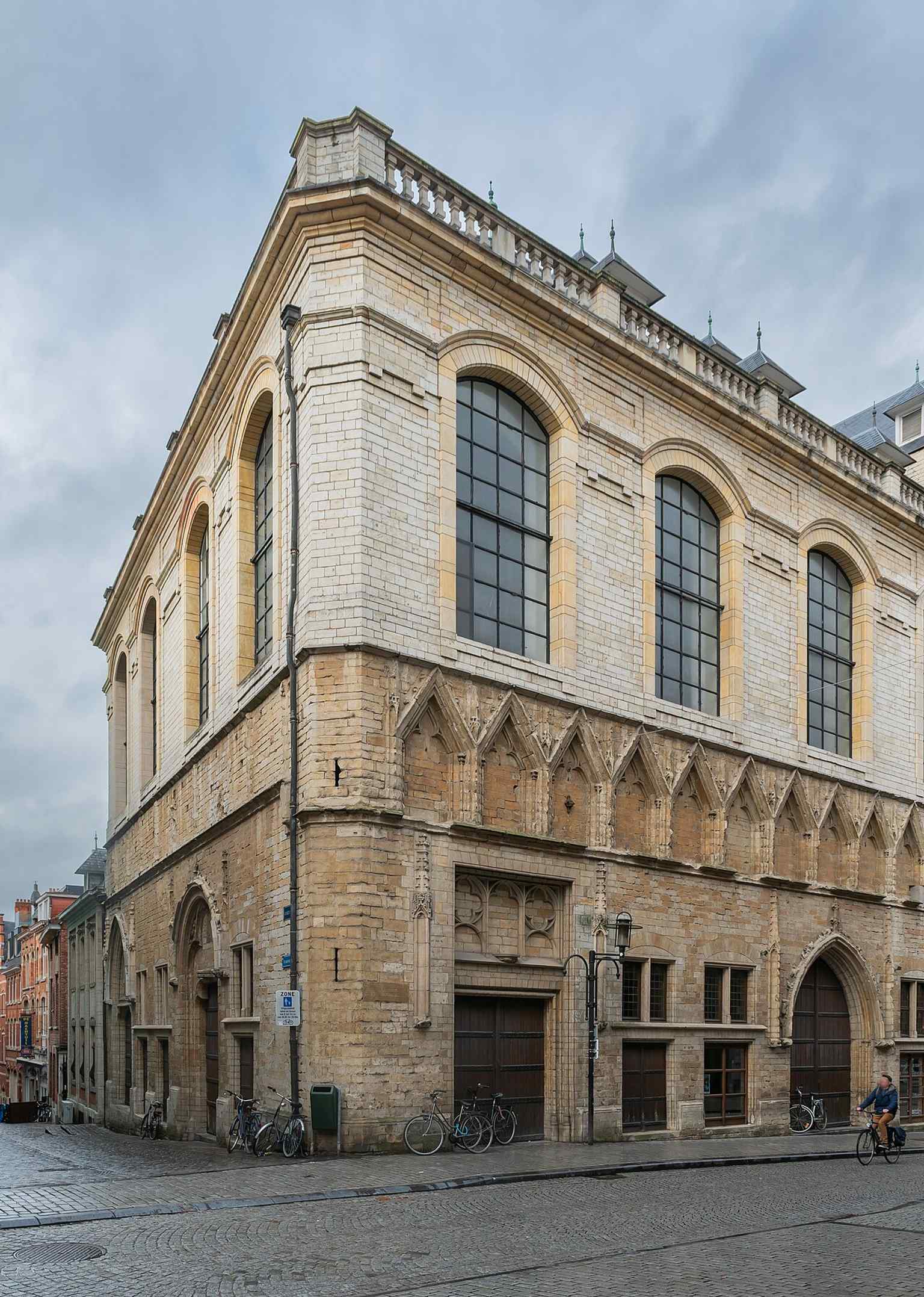
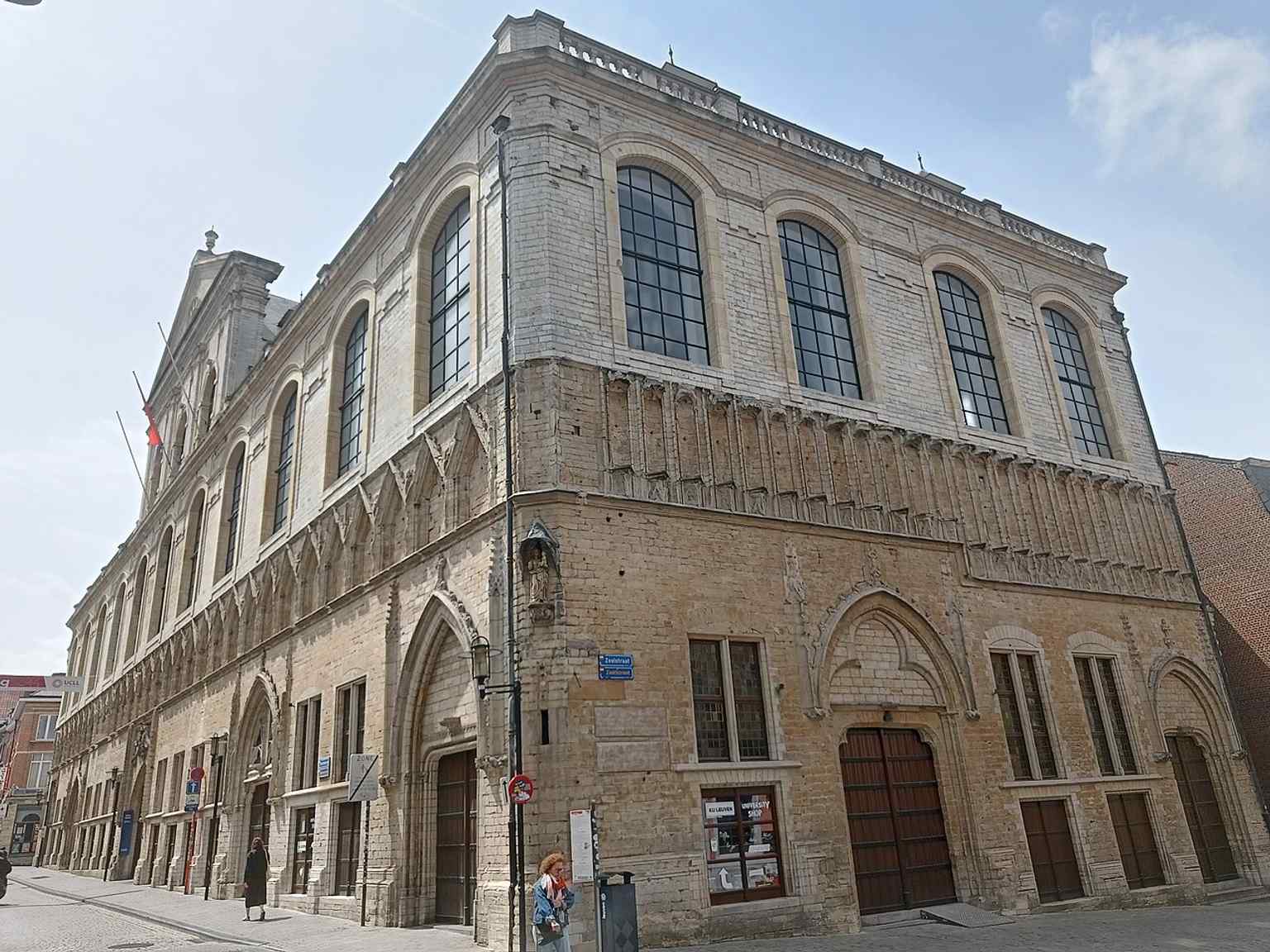
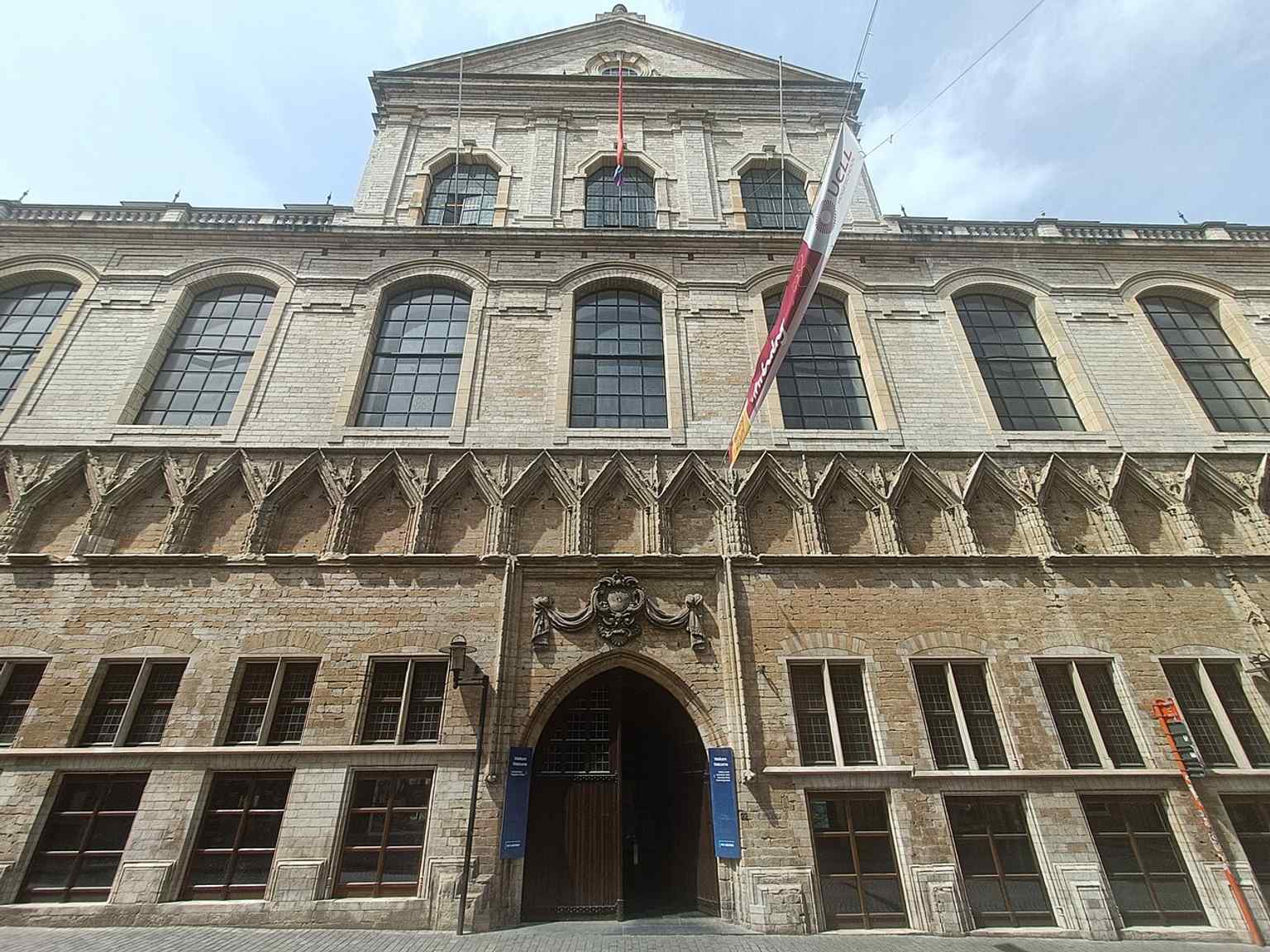
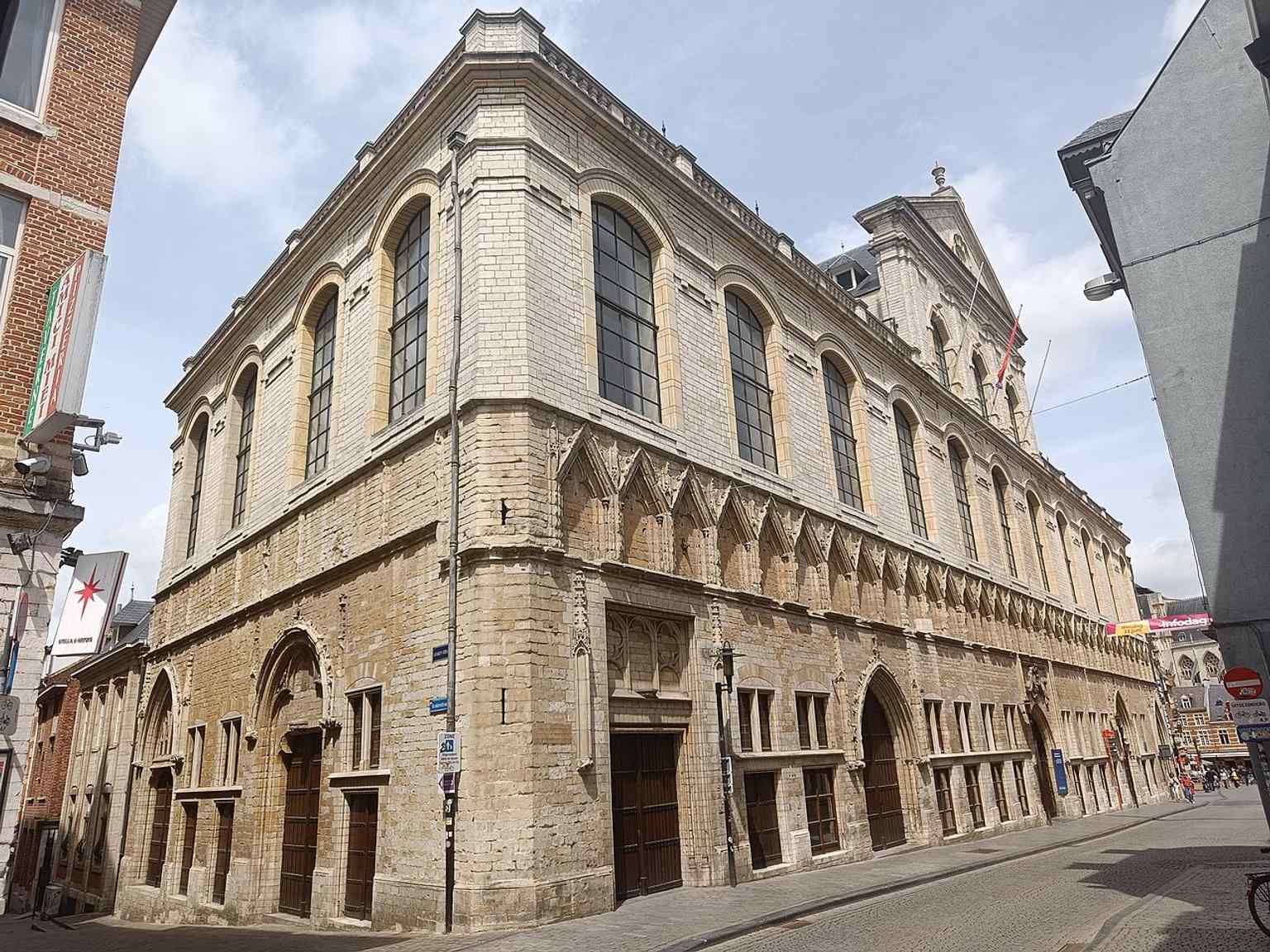
On your left, look for a long pale-stone façade with a pointed Gothic doorway, neat rows of tall windows, and a carved cartouche set above the main entrance.
This is the Lakenhal, Leuven’s cloth hall turned university hall... and it may be the clearest place in town where commerce and scholarship share the same bones. Starting in the early fourteen hundreds? Wait, even earlier: builders Jan Stevens, Arnold Hore, and Godfried Raes began the Gothic cloth hall here in thirteen seventeen, for the guild of cloth weavers to sell their wares. Then, after the university arrived in fourteen twenty-five, the city started sliding classrooms into the same building. Merchants below, masters above... Leuven has always liked stacking its ambitions.
Now here’s the twist most people miss. The university did not move into some dreamy, ready-made temple of learning. It inherited a building that was badly suited to teaching: rooms too small, light too poor, air barely moving, and the noise of the market pushing straight through the walls. Imagine trying to follow a theology lecture while traders argued prices outside. Knowledge here did not float above city life. It wrestled with it.
By fourteen thirty-two, the city gave part of this ground floor wing to the theology faculty, and in fourteen thirty-three the city master builder Sulpitius van Vorst added four lecture rooms upstairs for the other faculties. Later, Matthijs de Layens repaired and adapted the place again. Each change says the same thing: the university kept making do, then remaking do.
If you glance at the image in the app, that pointed portal helps you spot the medieval core still peeking through later layers. Above the entrance, the baroque cartouche added in sixteen ninety carries a line from Proverbs: “Wisdom has built herself a house.” A handsome phrase... though in truth wisdom moved into an old market hall and learned to live with the racket.
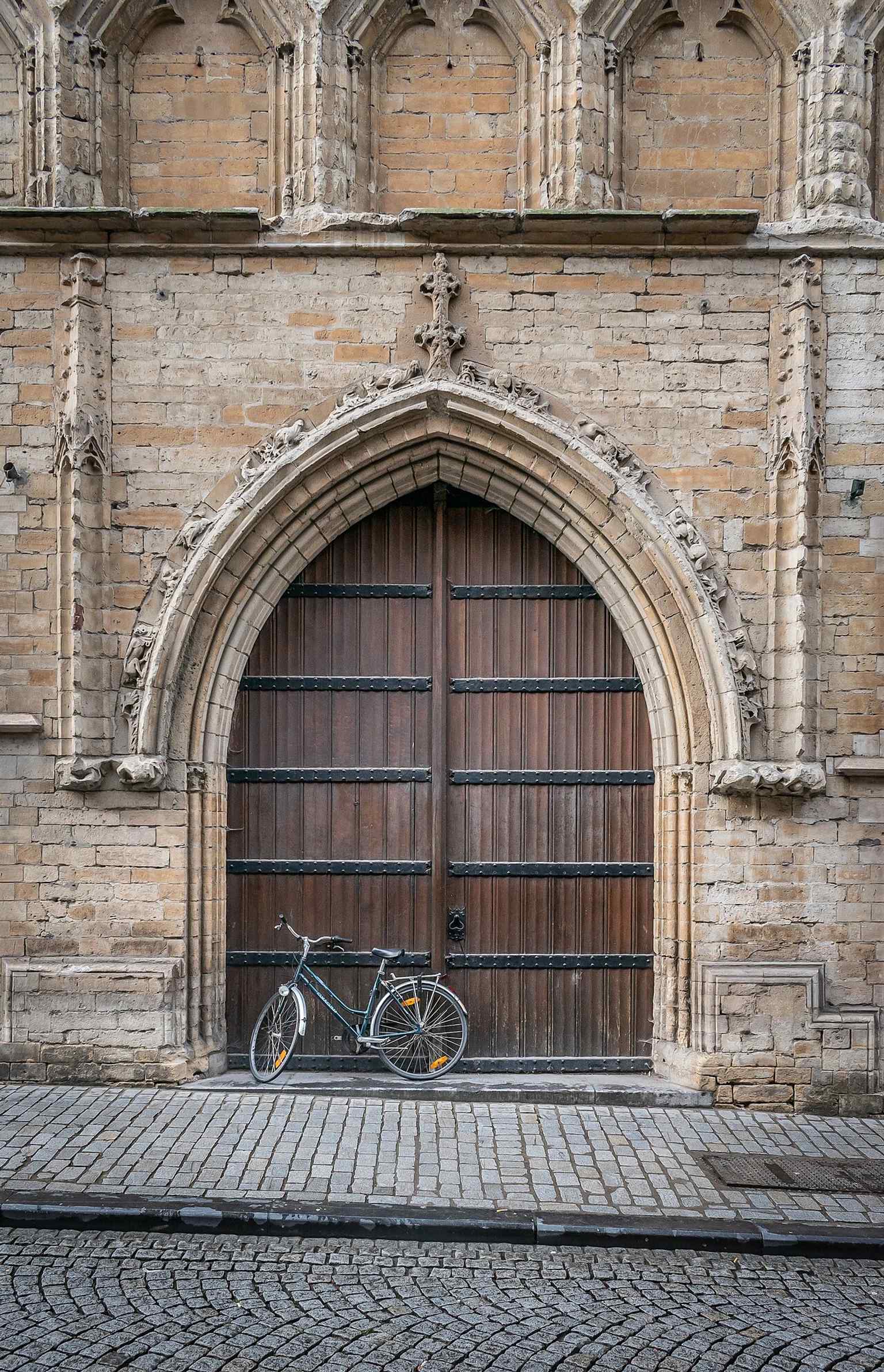
The building became even more important in sixteen seventy-nine, when the university pushed the city into a settlement and took ownership. That was not just a property deal. It meant scholars claimed a prime civic address, right in Leuven’s public life. Even then, the compromise continued. In wartime, soldiers and city officials reused the hall as a grain store and ration point, and professors had to step aside again.
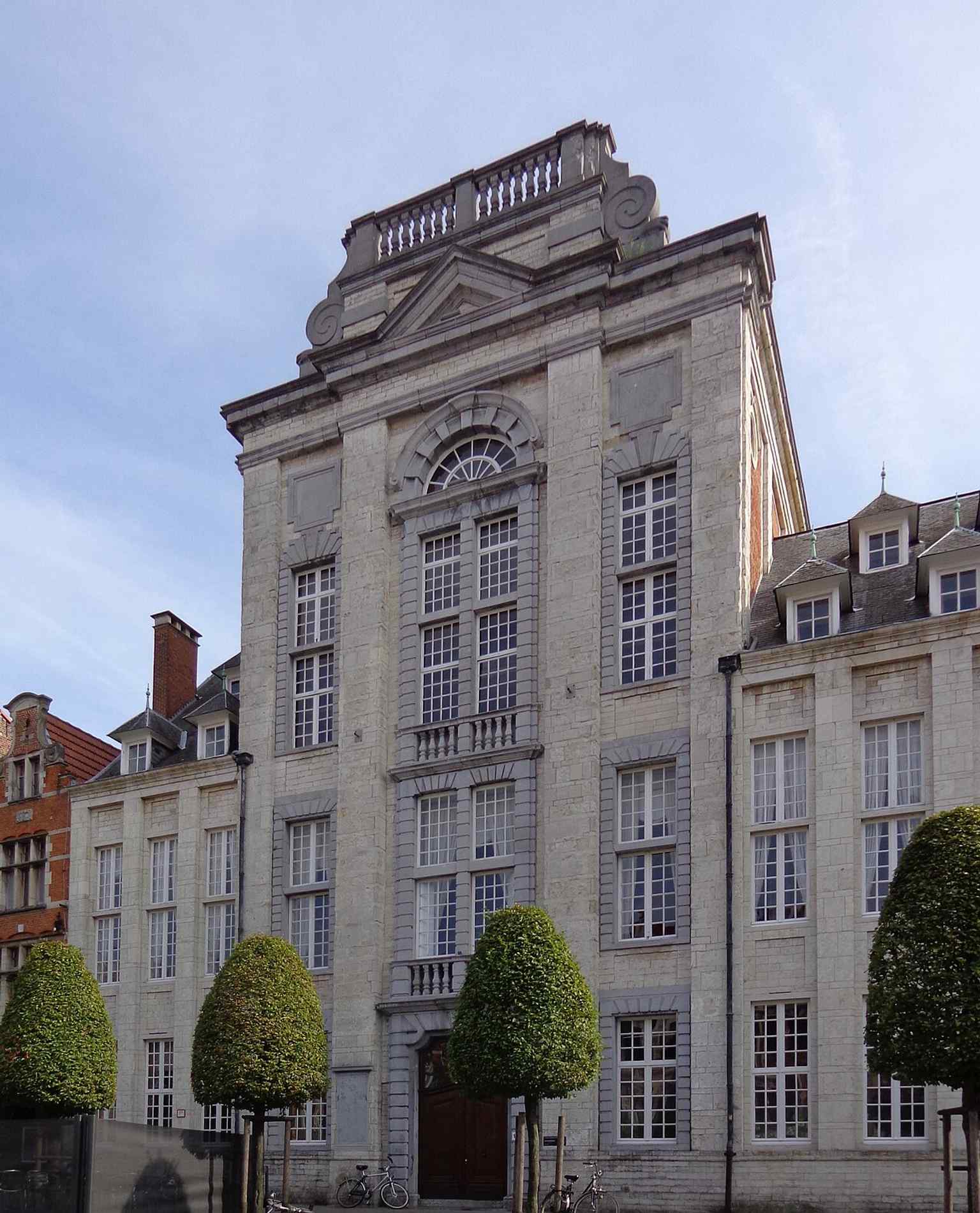
Then came Hendrik Jozef Rega, the rector and physician whose name still clings to the classic wing added in seventeen twenty-three on the Oude Markt side. Rega loved reform, books, and grand academic staging. His new wing held the university library upstairs and, on the ground floor, a tax-free beer and wine cellar. That, my friend, is a very efficient university plan: barrels below, brains above.
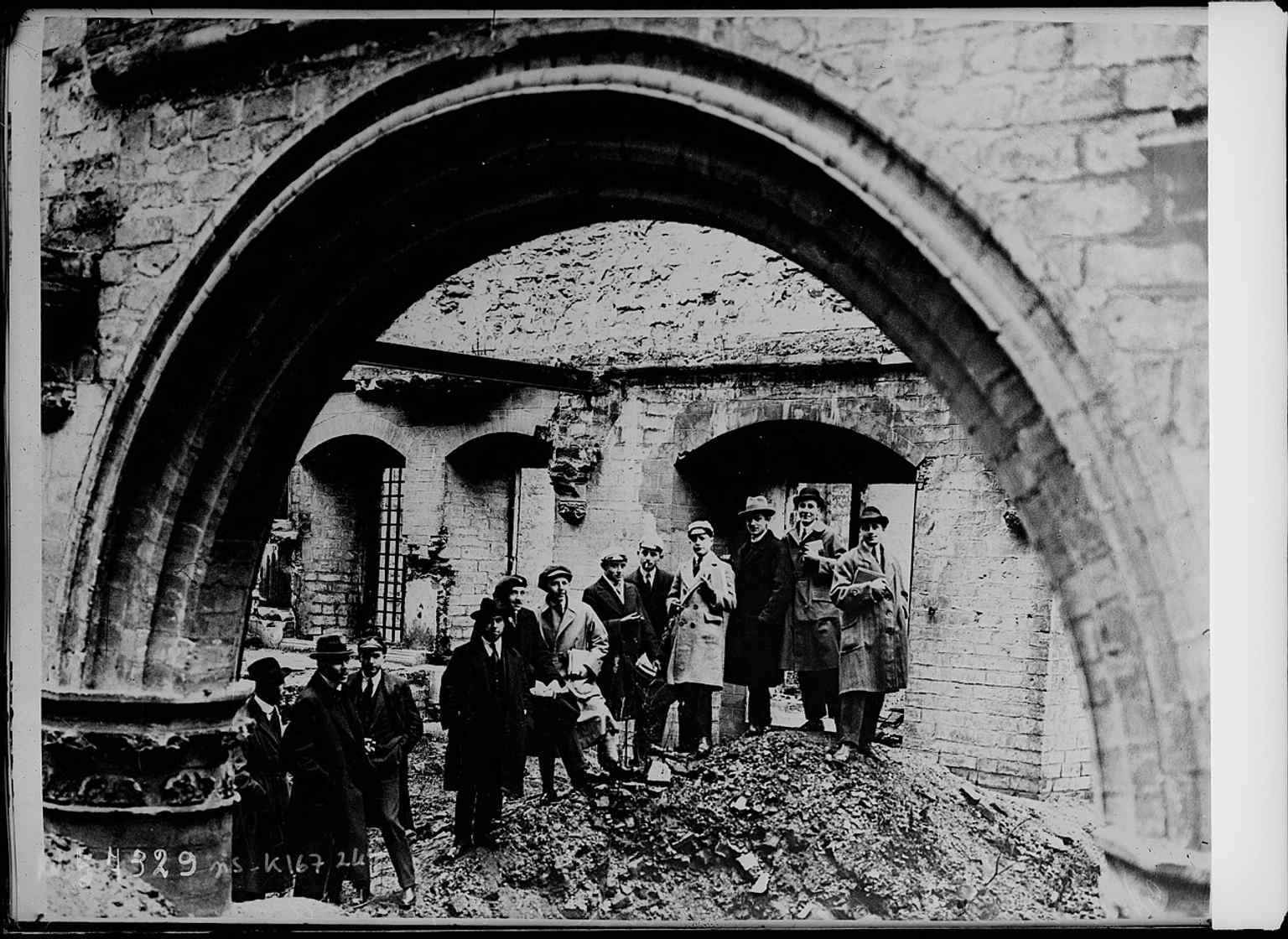
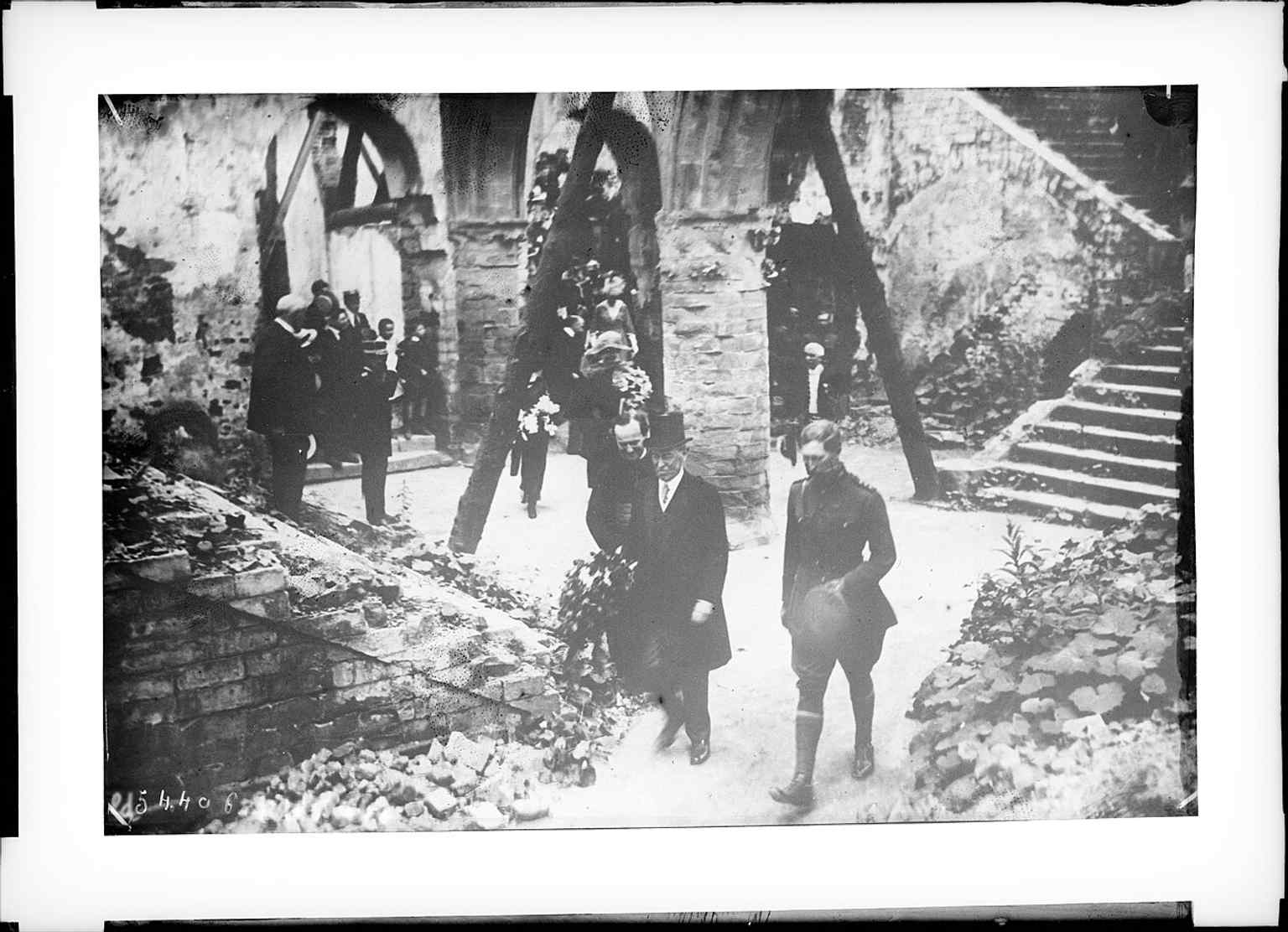
What you see today is also a survivor. In August nineteen fourteen, fire destroyed almost the whole hall and its library, along with about three hundred thousand books and manuscripts. Only the front façade largely endured. The rebuilding began in nineteen twenty-two and finished in nineteen twenty-six. If you check the archival image on your screen, you can see students picking through the ruins in nineteen nineteen.
And that is the real lesson of this place: Leuven rarely gets a clean slate. It reuses, argues, repairs, and begins again.
In about one minute, step into Oude Markt, where all this institutional weight opens into the city’s favorite living room. If you ever want practical details, the hall generally opens weekdays from eight to six, shorter on Saturday, and closes on Sunday.





.jpg)


.jpg)
.jpg)

.jpg)
.jpg)
.jpg)
.jpg)
.jpg)