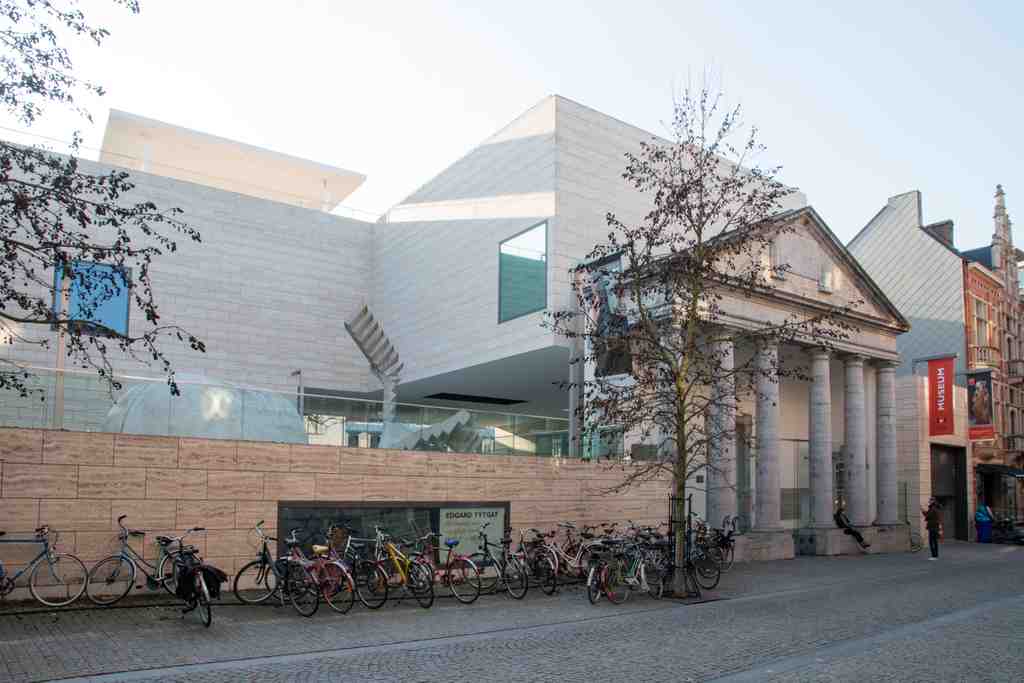
A pale stone facade with tall rectangular windows, a classical doorway, and crisp modern box-like volumes woven behind it marks M Leuven on your left.
Take a good look at this frontage. M Leuven is a museum, yes, but it also feels a little like a conversation between centuries. Right here stood the earlier city museum, the Vander Kelen-Mertens house, and in nineteen seventeen Victor Vander Kelen gave his family home to Leuven in memory of his parents, Leopold Vander Kelen and Maria Mertens, and of his brother. That gift gave the city more than walls. It gave Leuven a place to keep building its memory, one object at a time.
Now the collection holds more than fifty-eight thousand works. That is not a museum with a few nice paintings and a gift shop trying its best. That is a serious civic treasure chest.
The present museum opened on the twentieth of September, two thousand nine, when Princess Mathilde of Belgium and Princess Máxima of the Netherlands cut the ribbon together. But the real story sits in the design. Belgian architect Stéphane Beel did not treat the museum like a sealed vault. He threaded new construction through older buildings, courtyards, and existing art, shaping a site of about thirteen thousand five hundred square meters. The result is a route of long, beam-like volumes, older rooms, and a quiet inner garden.
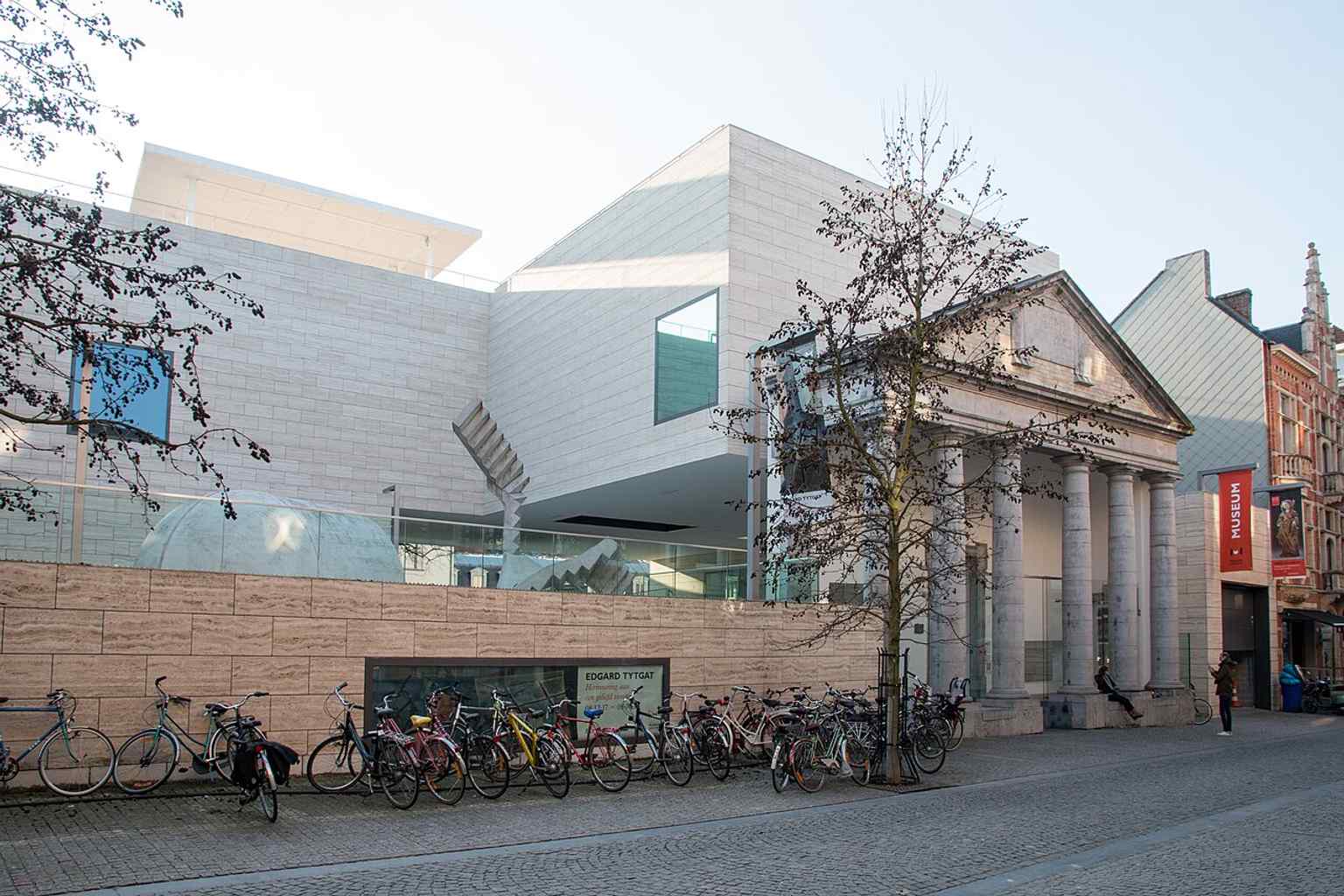
Here is the important part for our walk through Leuven: this place was designed to make culture visible. Beel opened sightlines through the complex so passersby could catch glimpses of art and visitors, while people inside could look back out at the city. In other words, the museum does not hide behind its own importance. It lets the street and the gallery keep an eye on each other... which is a healthy arrangement in any university town. If you want a visual shortcut, take a peek at the image in your app and notice how the older house and the newer forms lock together instead of pretending to be the same thing.
Inside, Leuven tells its story through art from the Middle Ages to the nineteenth century, especially works tied to Leuven and Brabant. You find late Gothic painting, nineteenth-century sculpture, and names that carry real weight here: Dieric Bouts, Rogier van der Weyden, Constantin Meunier, Jef Lambeaux, James Ensor. One standout detail I love: when M opened, visitors could actually follow the conservation and restoration of Rogier van der Weyden’s Seven Sacraments. That is classic Leuven... knowledge not hidden in a back room, but shown in the act of being tested, repaired, and argued over.
And this museum never stayed politely still. It welcomed contemporary artists, staged experimental projects, even let art spill into the streets. One year, modern walking sculptures wandered through Leuven. Another time, an installation carried the recipe for lobster bisque, and the museum cooked it for visitors. High culture, low soup bowl... everybody wins.
That openness matters, because our next stop shifts from galleries to public performance. In about one minute, head to Stadsschouwburg Leuven, where being seen becomes part of the show. If you plan to come back inside here later, M Leuven is usually open from late morning to early evening, stays closed on Wednesdays, and keeps longer hours on Thursdays.