
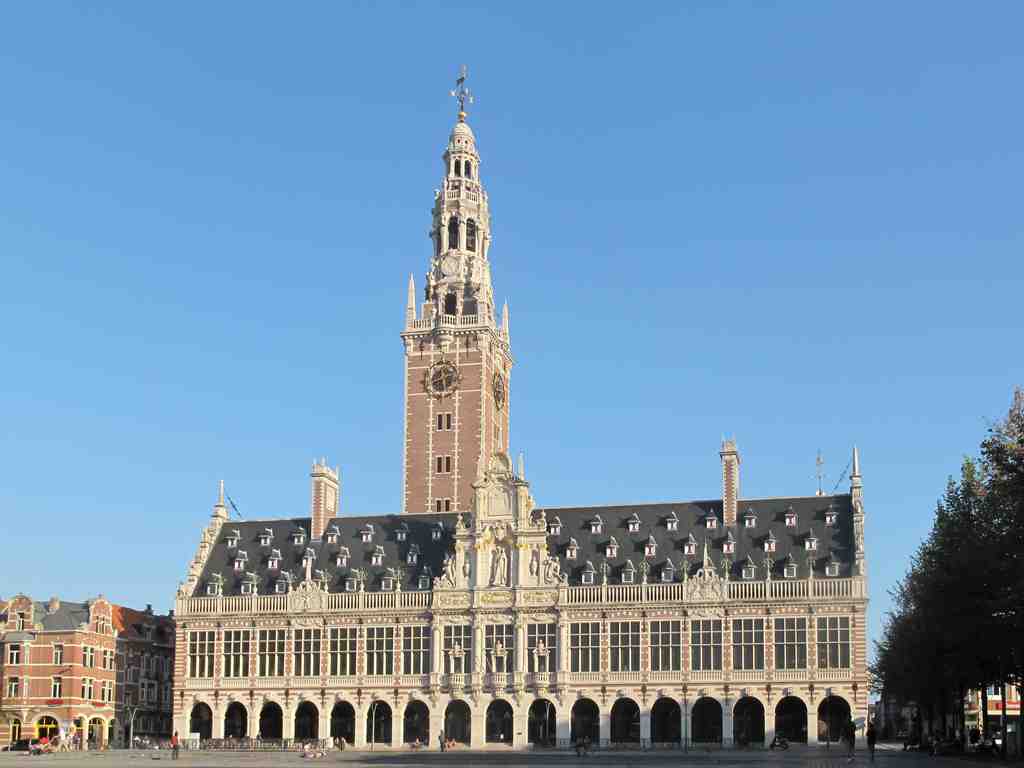
In front of you stands a red-brick and pale-stone library with a broad arched facade, a soaring square tower, and a clock set high above the entrance.
Picture a man named Jan Frans van de Velde, the university’s last librarian before the French shut the old university down in seventeen ninety-seven. He did not stand here, because this building did not exist yet... but he understood something Leuven never forgot: books are fragile, and power knows it. As French revolutionary forces approached, he secretly packed the university’s most precious archives into chests and sent them along the River Dijle toward safer places in the Netherlands and Germany. The authorities arrested him, deported him to Cayenne in French Guiana, and he later made his way back to Leuven in eighteen oh three. That is quite a librarian... not much shushing, a lot more smuggling.
Most visitors miss the first twist in this story: Leuven founded its university in fourteen twenty-five, but for more than two centuries it had no official university library at all. Students used manuscripts and printed books kept in professors’ houses, colleges, and teaching halls. Only in sixteen thirty-six did a professor named Hendrik Rega help push Leuven toward a real central library, set up on the edge of the Oude Markt. That shift mattered. A central library does more than store books; it announces who controls learning, who gets access, and how a university shows its authority to the city and to Europe.
You’ll notice a pattern here early on. Leuven gets broken, scattered, argued over... and then somebody starts gathering the pieces again. Not neatly, not painlessly, but stubbornly.
This building is the grand answer to one of the city’s worst losses. In August of nineteen fourteen, German troops deliberately burned the Catholic University library in the Naamsestraat after panic and false accusations that civilians had fired on them. Around three hundred thousand books and manuscripts vanished in the flames, including ancient, medieval, and Renaissance works that no one could replace. The destruction shocked the world. Herbert Hoover, long before his American presidency, turned rebuilding Leuven into a personal campaign, even organizing “Invisible Guest” dinners where people donated the cost of feeding an imagined Belgian guest at their table.
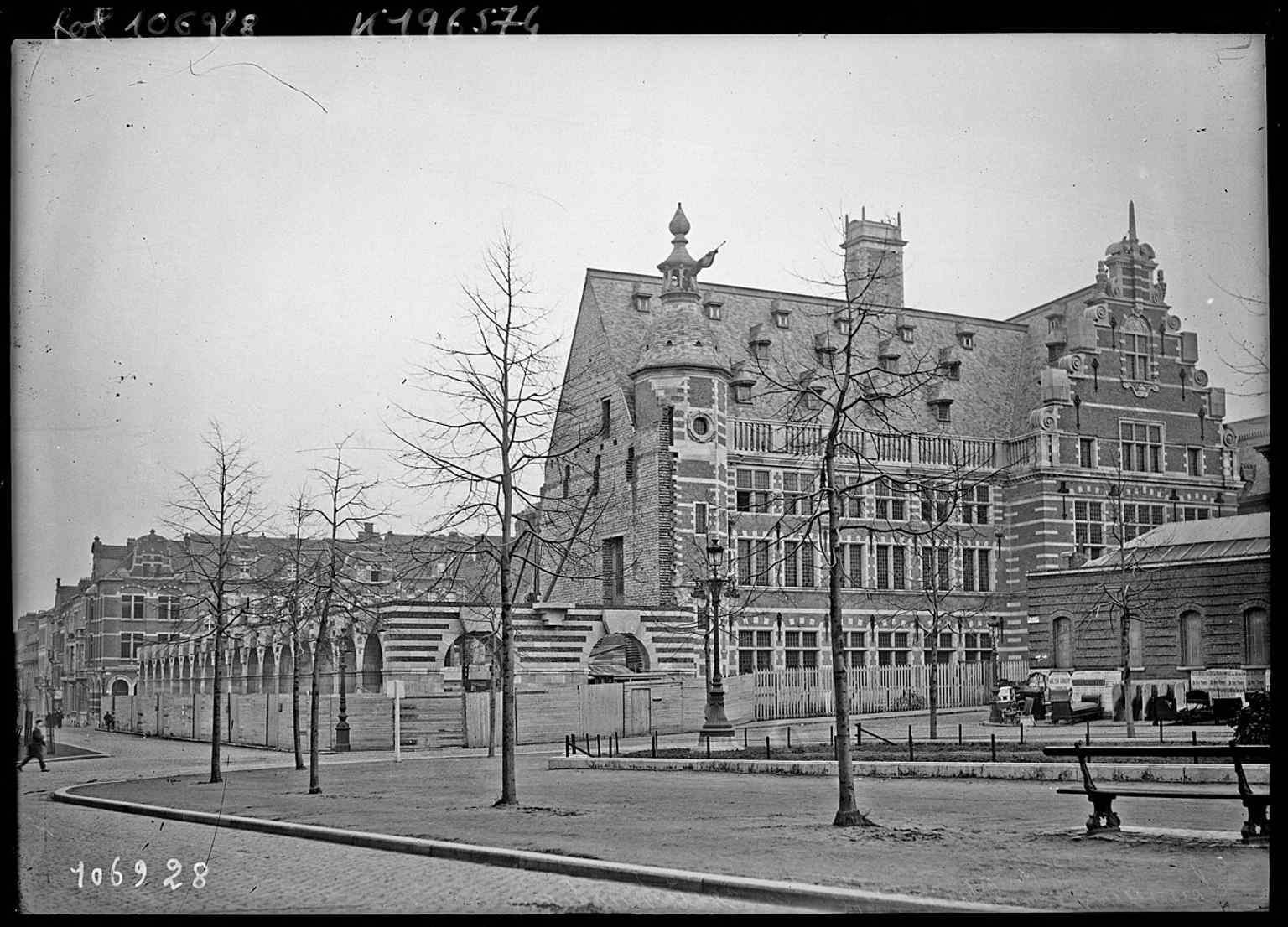
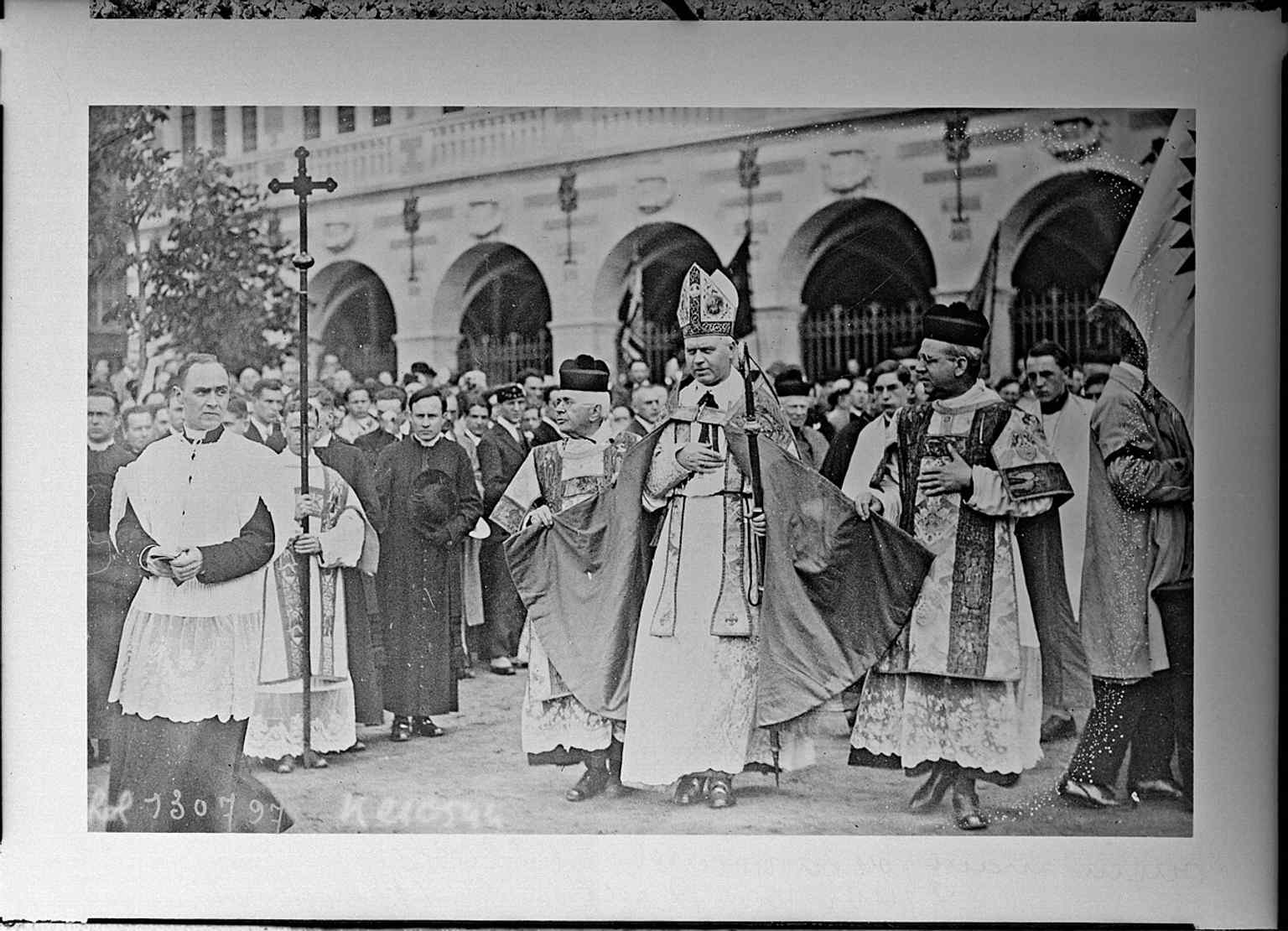
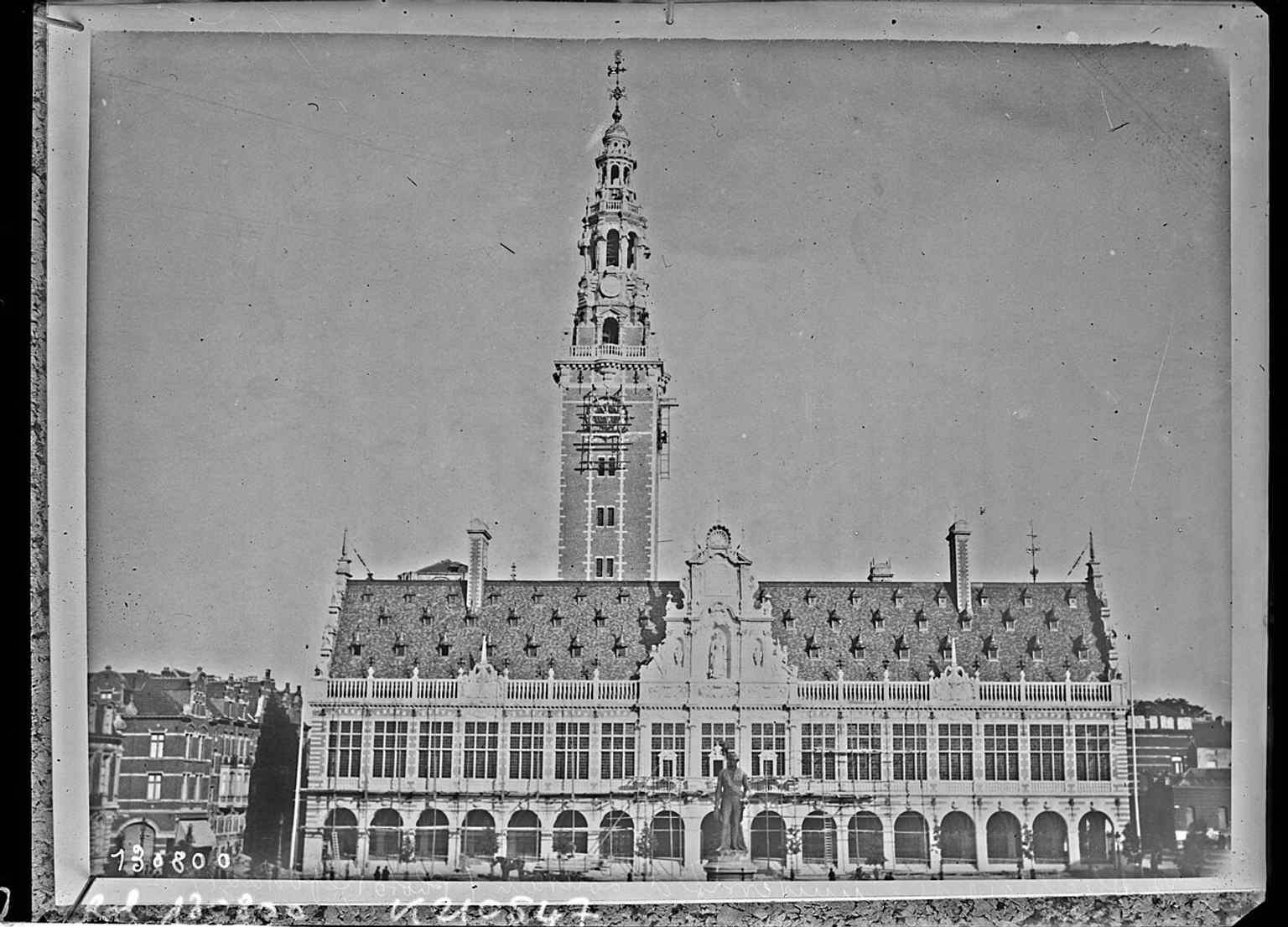
If you check the before-and-after image in the app, you can watch this place rise from a nineteen twenty-six building site into the finished landmark in front of you.
Architect Whitney Warren gave Leuven this neo-Renaissance giant between nineteen twenty-one and nineteen twenty-eight, a gift from the American people. The tower climbs to eighty-seven meters, inspired by the Giralda in Seville, and its carillon carried forty-eight bells, one for each American state at the time. The biggest one, seven tons of bronze, is called the Liberty Bell of Louvain.
And yet even this rebirth did not stay untouched. In nineteen forty, artillery fire destroyed the library again, and nearly nine hundred thousand volumes went up in flames. After the war, investigators at Nuremberg confirmed that German artillery had hit it. So Leuven adopted a fitting motto: twice destroyed, twice restored.
In the next stop, you won’t need to walk at all. Just let the view open out into Ladeuzeplein, where this whole story of learning, pride, grief, and rebuilding becomes visible in stone on a much larger stage. If you want to return later, the library is generally open every day, with longer hours on Tuesday.






.jpg)
