
50+ languages

 Banja Luka · Bosnia & Herzegovina
 Banja Luka Audio Tours
Discover Banja Luka with self-guided audio walking tours
headphones
1 tours
pin_drop
18 landmarks
translate
Banja Luka tours
Pick a Banja Luka worth walking.
Self-guided audio tours written by people who actually live there.
1 tours
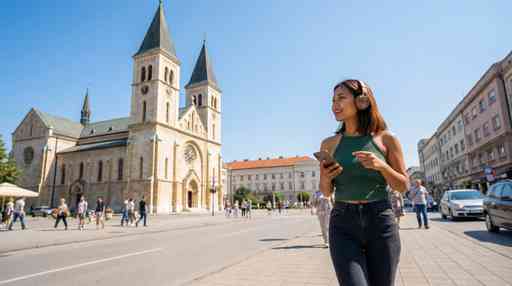
Top landmarks
The Banja Luka everyone knows.
The landmarks in every guidebook — and the tours that tell you what guidebooks don't.
A few words on Banja Luka
Republika Srpska's capital, where the Vrbas River cuts through ancient stone
Banja Luka stands on the Vrbas River in the northwest of Bosnia and Herzegovina and serves as the administrative capital of Republika Srpska, the Bosnian Serb entity created by the 1995 Dayton Agreement. The city has a compact historic core anchored by Kastel, a medieval fortress whose walls follow the limestone cliffs above the river bend, and the Cathedral of Christ the Saviour, whose twin white spires became the defining silhouette of the city's postwar reconstruction.
The Vrbas below the Kastel canyon is known among kayakers as one of the better whitewater rivers in the Balkans, and in summer the riverside cafes and rapids draw visitors from across the region.
Banja Luka's most historically significant mosque, the Ferhadija, was deliberately destroyed in 1993 and rebuilt stone by stone after the war, its reopening in 2016 attended by dignitaries from across the Islamic world. The city's green market on the main boulevard and the Serbian Orthodox churches that punctuate the older neighborhoods give Banja Luka a texture that rewards several hours of unhurried walking.
Banja Luka
Banja Luka FAQ
Before you walk.
The Ferhadija Mosque was built in 1579 during the Ottoman period and was one of the finest examples of classical Ottoman architecture in the Balkans. It was deliberately demolished in May 1993 during the Bosnian War. After the war, an international reconstruction effort gathered the original stones from across the region, and the mosque was fully rebuilt and reopened in May 2016 in a ceremony attended by thousands of people.
The Vrbas River below Banja Luka runs through a canyon with several rapids suitable for whitewater kayaking and rafting, particularly in spring and early summer when snowmelt raises the water levels. Several local operators offer guided rafting trips on the canyon section. The calmer stretches through the city itself are used for swimming and riverside recreation in summer.
The pedestrianized section of Veselina Maslese Street and the area around the Krajina Square form the social heart of the city. The green market on the main boulevard sells local produce, and the kafanas (traditional Serbian restaurants) nearby serve cevapi, roast lamb, and the Serbian bean soup prebranac. The riverside path below the Kastel offers excellent views of the canyon.
Banja Luka is approximately 230 kilometers northwest of Sarajevo, a journey of around three to four hours by car or intercity bus on roads that cross the Vlasic mountain range. There is no direct rail connection that is practically useful. The bus station in Banja Luka is well served by coaches from Sarajevo, Belgrade, Zagreb, and other regional cities.
Every Banja Luka tour, in your language.
All 50+ languages, included with every booking.
🇬🇧 English🇫🇷 Français🇪🇸 Español🇩🇪 Deutsch🇮🇹 Italiano🇯🇵 日本語🇨🇳 中文🇰🇷 한국어+ 41 more
star AudaTours Unlimited
Visiting more than one city? Subscribe.
Unlock every Banja Luka tour — plus thousands more worldwide. Cancel any time.
$4.99/week · Cancel anytime

More in Bosnia & Herzegovina
Explore Bosnia & Herzegovina arrow_forwardOther cities to walk in Bosnia & Herzegovina.
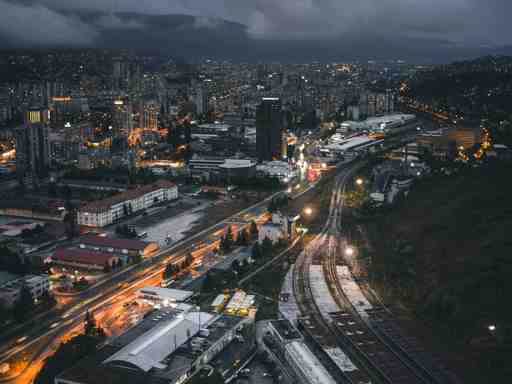

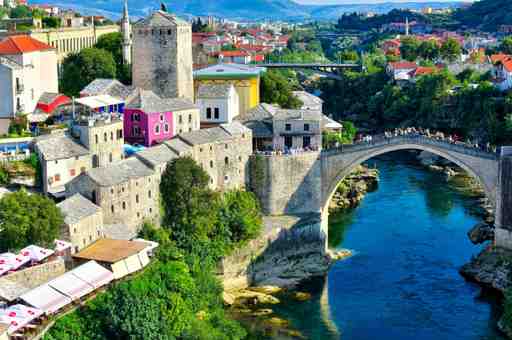
Loved by travellersThousands of tours started.
Thousands of tours started.
Plenty of opinions.
4.8 across the App Store and Google Play. Here's a few we keep coming back to.
starstarstarstarstar
This tour was such a great way to see the city. The stories were interesting without feeling too scripted, and I loved being able to explore at my own pace.

Jess
Tbilisi Tourstarstarstarstarstar
This was a solid way to get to know Brighton without feeling like a tourist. The narration had depth and context, but didn't overdo it.

Christoph
Brighton Tourstarstarstarstarstar
Started this tour with a croissant in one hand and zero expectations. The app just vibes with you, no pressure, just you, your headphones, and some cool stories.

John
Marseille Tourdownload Get the app Pop your headphones in.


Pop your headphones in.
Step outside.
Free to download. Tours in every city. Start in 60 seconds — no account, no card.

headphones
~ 4 min until your first tour starts
public
1,000+ cities worldwide
all_inclusive
AudaTours
Unlimited
Every tour. Every city. One subscription.
3097 tours2273 cities138 countries50+ languages
$39 /year
all_inclusive Explore Unlimited