
50+ languages

 Sarajevo · Bosnia & Herzegovina
 Sarajevo Audio Tours
Discover Sarajevo with self-guided audio walking tours
headphones
2 tours
pin_drop
20 landmarks
translate
Sarajevo tours
Pick a Sarajevo worth walking.
Self-guided audio tours written by people who actually live there.
2 tours

Sarajevo Highlights Audio Tour: A Journey Through History and Culture
Sarajevo is a place where bullets once carved history into the cobblestones and empires fought for every inch of soul. Behind the tranquil facades of the Cathedral of the Sacred Heart and the ancient Clock Tower lies a city defined by defiance and deep secrets. Unlock these untold narratives through this self-guided audio tour. Navigate the hidden intersections of faith and conflict that most tourists pass without a second glance. Why did the city elders keep the moon-based time of the Clock Tower running long after the world moved on? What shadow looms over the Gazi Husrev-beg Mosque from the night of the great betrayal? Can you spot the bullet holes that hold the city’s most dangerous political scandal? Traverse the narrow veins of the old bazaar and feel the pulse of history beneath your feet. Experience Sarajevo not as a map, but as a living, breathing saga. Start your journey now.
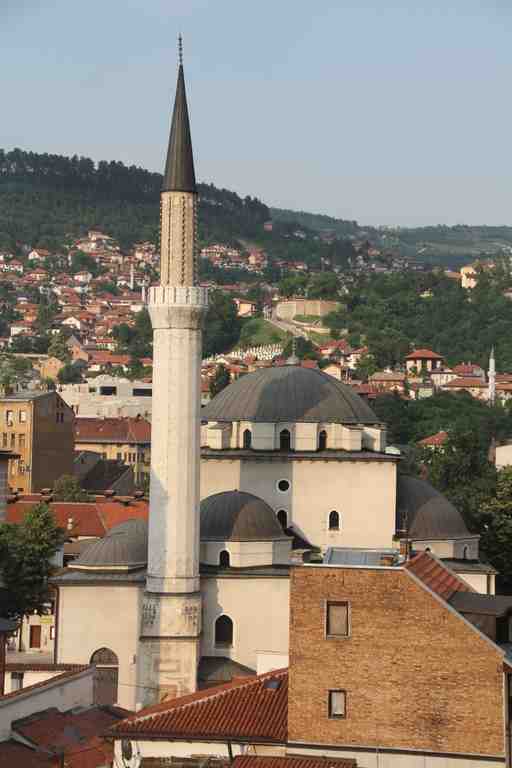
Sarajevo Audio Tour: A Journey Through Faith, History, and Heroism
A thousand years of struggle and survival echo from Sarajevo’s stone cathedrals to the soft flicker of the Eternal Flame. Each corner hides not just scars but secrets, as this city forever redefines what it means to endure and to remember. Set out on a self-guided audio adventure through these legendary streets. Peel back layers of faith, rebellion, and resilience—discovering the daring acts and curious encounters so many travelers overlook. Who risked everything at dawn as cannons stood watch over a cathedral’s grand opening? What hidden alliances and rivalries raged inside ancient towers while empires clashed outside? And why does a tiny flame in the city’s heart still draw mourners and dreamers with stories of loss, hope, and a near-singed eyebrow? Follow Sarajevo’s twisting paths, feel history pulse beneath your feet, and witness where past uprisings fuel present-day spirit. Ignite your own journey—step up and unravel the city’s most astonishing tales.
Top landmarks
The Sarajevo everyone knows.
The landmarks in every guidebook — and the tours that tell you what guidebooks don't.
A few words on Sarajevo
Where continents meet at a street corner.
There is a famous spot in Bascarsija, the Ottoman bazaar district, where the cobblestones give way to pavement and the minarets yield to a Catholic bell tower and then an Orthodox dome a block further on. Sarajevo was founded by the Ottomans in 1461 and spent four centuries as the largest Ottoman city in the Balkans after Istanbul, which means its old town smells of roasting coffee and cevapi grilling over charcoal in ways that feel entirely specific. The Gazi Husrev-beg Mosque, built in 1531, is the finest Ottoman mosque in the Balkans and still calls five times daily to a city that has earned every one of its layers.
In June 1914, Gavrilo Princip shot Archduke Franz Ferdinand on the Latin Bridge, a moment that set the 20th century on its catastrophic course.
Sarajevo also hosted the 1984 Winter Olympics, at a moment when it seemed like the city might finally step out of history's shadow. Then the Bosnian War brought a siege that lasted 1,425 days, the longest siege of a capital city in modern warfare, killing 11,541 people. The bullet marks on buildings, the red resin roses set into the pavement where mortar shells fell, and the Tunnel of Hope museum are not decorative heritage: they are the city still processing what happened.
Sarajevo
Sarajevo FAQ
Before you walk.
May through September offers the most comfortable walking weather, with long daylight hours. The city sits in a valley at 518 metres, which means summers are warm but not extreme. Spring brings the Sarajevo hills green and the Miljacka River fuller. Winter is cold and atmospheric, popular for skiing at the nearby Olympic resorts of Jahorina and Bjelasnica.
The historic core from Bascarsija to Sebilj to the Latin Bridge to Ferhadija Street is all walkable within about 20 minutes of flat ground. The tram network connects the centre to the western New Sarajevo districts. The airport is about 10 kilometres southwest, served by taxis and ride-share apps.
Cevapi (small grilled minced meat fingers in flatbread) at Zeljo or Petica in Bascarsija are the mandatory local experience. Burek, the flaky meat-filled pastry, is best eaten standing at a buregdžinica for breakfast with plain yogurt. The Bosnian coffee ritual deserves its own dedicated pause: order it slow and drink it the same way.
Yes. The Latin Bridge assassination site, the Tunnel of Hope Museum, and the Bascarsija old town are all close enough to connect on a single morning walk. The Olympic Museum and the bobsled track on Mount Trebevic require a separate afternoon excursion. The cable car to Trebevic reopened in 2018 and is worth the trip for the view alone.
Every Sarajevo tour, in your language.
All 50+ languages, included with every booking.
🇬🇧 English🇫🇷 Français🇪🇸 Español🇩🇪 Deutsch🇮🇹 Italiano🇯🇵 日本語🇨🇳 中文🇰🇷 한국어+ 41 more
star AudaTours Unlimited
Visiting more than one city? Subscribe.
Unlock every Sarajevo tour — plus thousands more worldwide. Cancel any time.
$4.99/week · Cancel anytime

More in Bosnia & Herzegovina
Explore Bosnia & Herzegovina arrow_forwardOther cities to walk in Bosnia & Herzegovina.


Loved by travellersThousands of tours started.
Thousands of tours started.
Plenty of opinions.
4.8 across the App Store and Google Play. Here's a few we keep coming back to.
starstarstarstarstar
This tour was such a great way to see the city. The stories were interesting without feeling too scripted, and I loved being able to explore at my own pace.

Jess
Tbilisi Tourstarstarstarstarstar
This was a solid way to get to know Brighton without feeling like a tourist. The narration had depth and context, but didn't overdo it.

Christoph
Brighton Tourstarstarstarstarstar
Started this tour with a croissant in one hand and zero expectations. The app just vibes with you, no pressure, just you, your headphones, and some cool stories.

John
Marseille Tourdownload Get the app Pop your headphones in.


Pop your headphones in.
Step outside.
Free to download. Tours in every city. Start in 60 seconds — no account, no card.

headphones
~ 4 min until your first tour starts
public
1,000+ cities worldwide
all_inclusive
AudaTours
Unlimited
Every tour. Every city. One subscription.
3097 tours2273 cities138 countries50+ languages
$39 /year
all_inclusive Explore Unlimited