
50+ languages

 Bogota · Colombia
 Bogota Audio Tours
Discover Bogota with self-guided audio walking tours
headphones
2 tours
pin_drop
20 landmarks
translate
Bogota tours
Pick a Bogota worth walking.
Self-guided audio tours written by people who actually live there.
2 tours
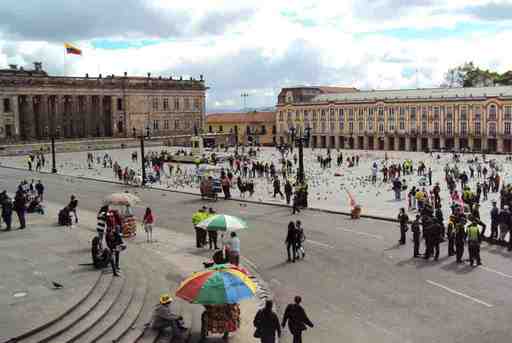
Bogota Highlights Audio Tour: Historic Heart and Cultural Treasures
Underneath Bogotá’s thin mountain air, the cobblestones vibrate with the echoes of fallen empires and bloodstained political uprisings. History here is not buried. It is carved into every neoclassical pillar and rusted iron gate waiting for you to look closer. Download this self guided audio tour to bypass the tourist crowds and peel back the layers of a city defined by rebellion and high stakes drama. Unlock stories that stay hidden in plain sight. Why did the city erupt in flames during the Bogotazo while the presidential palace stood defenseless? What dark secrets linger in the shadows of the Columbus Theatre backstage? Which silent statue in the square is actually a monument to a forgotten scandal? Traverse the heart of the capital as you bridge the gap between architectural grandeur and chaotic pasts. Leave the guidebook behind and feel the pulse of history moving beneath your feet. Start your journey now and claim the city.
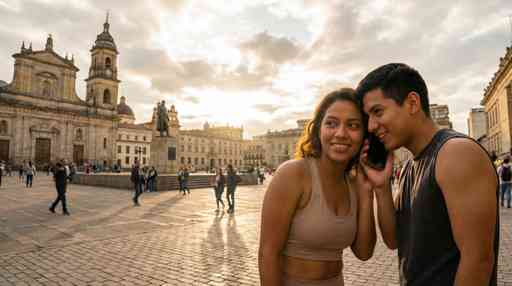
Bogotá Audio Tour: Sacred Halls and Storied Stones of the Historic Core
Cobblestones echo beneath your feet where revolutionaries once plotted in secret chambers, and dazzling gold hides just out of sight in Bogotá’s heart. This self-guided audio tour cracks open the city beyond postcards, letting you trace tales behind grand façades and whispered corridors rarely noticed. What really sparked the chaos that erupted on Plaza de Bolívar? Who vanished inside the Primate Cathedral’s shadows and was never seen again? And which scandalous feast led to the strangest painting ever hung in the Santa Clara Church Museum? Wander from soaring cathedrals to hushed museums and political hotspots. Every step peels back centuries, where power, faith, and rebellion collide on streets that refuse to forget. See Bogotá’s beating soul revealed in details hiding in plain sight. Begin the journey to uncover Bogotá’s best-kept secrets—if you dare to look beneath the surface.
Top landmarks
The Bogota everyone knows.
The landmarks in every guidebook — and the tours that tell you what guidebooks don't.
A few words on Bogota
High enough to see everything clearly.
Bogota sits at 2,640 meters above sea level, which changes everything: the light here is sharper than at sea level, the nights are colder than newcomers expect, and new arrivals often spend their first afternoon slightly out of breath in a way that feels metaphorically appropriate for a city this dense with stimulation. Gonzalo Jimenez de Quesada founded it in 1538 after displacing the Muisca people from a savanna that had supported civilization for centuries before the Spanish arrived. The Gold Museum, two blocks from Plaza de Bolivar, holds 55,000 pieces of pre-Colombian goldwork from those civilizations -- the most significant collection of this kind in the world.
La Candelaria, the colonial center around Plaza de Bolivar, is where the city makes historical sense, but Bogota's contemporary identity belongs to Usaquen (a former village absorbed into the northern suburbs, still with its Sunday flea markets), Chapinero (galleries, barrooms, and concentrated nightlife), and the city's walls themselves, which function as one of South America's most impressive public art canvases.
Every Sunday, Ciclovía turns 120 kilometers of roads over exclusively to cyclists and pedestrians -- a policy running uninterrupted since 1976 that still feels like a minor act of urban radicalism. Come on a Sunday if you possibly can.
Bogota
Bogota FAQ
Before you walk.
TransMilenio, Bogota's rapid bus transit system, is the backbone of public transport with color-coded routes covering most major areas. The newer Metro line is under construction. Taxis and ride-share apps (InDriver, Uber) are safe and inexpensive. La Candelaria, the historic center, is best explored on foot. Note that Bogota's altitude means walking uphill feels more tiring than expected.
La Candelaria and the Usaquen neighborhood are generally safe for tourists during daylight hours. Bogota has improved significantly in safety over the past two decades, but standard urban precautions apply: do not display expensive cameras or phones conspicuously, be aware of your surroundings, and ask your accommodation about current neighborhood advisories. Avoid the La Calle Del Cartucho area and some downtown streets at night.
Layer up. Even when the sun is out, Bogota's altitude means temperatures can drop quickly when clouds come over, and afternoon showers are common in the rainy months. A light waterproof jacket is genuinely useful year-round. Flat, comfortable shoes work well on the cobblestones of La Candelaria. Many visitors are surprised by how cold evenings feel at 2,640 meters elevation.
La Candelaria is well-supplied with restaurants and cafes. Ajiaco santafeno (the Bogota potato soup with chicken and corn, usually served with cream and capers) is the city's signature dish and appears on almost every local menu. The area around Plaza de Bolivar has bakeries and juice bars for a quick stop. A tinto (small black coffee) from a street vendor costs almost nothing and is excellent.
Every Bogota tour, in your language.
All 50+ languages, included with every booking.
🇬🇧 English🇫🇷 Français🇪🇸 Español🇩🇪 Deutsch🇮🇹 Italiano🇯🇵 日本語🇨🇳 中文🇰🇷 한국어+ 41 more
star AudaTours Unlimited
Visiting more than one city? Subscribe.
Unlock every Bogota tour — plus thousands more worldwide. Cancel any time.
$4.99/week · Cancel anytime

More in Colombia
Explore Colombia arrow_forwardOther cities to walk in Colombia.

Loved by travellersThousands of tours started.
Thousands of tours started.
Plenty of opinions.
4.8 across the App Store and Google Play. Here's a few we keep coming back to.
starstarstarstarstar
This tour was such a great way to see the city. The stories were interesting without feeling too scripted, and I loved being able to explore at my own pace.

Jess
Tbilisi Tourstarstarstarstarstar
This was a solid way to get to know Brighton without feeling like a tourist. The narration had depth and context, but didn't overdo it.

Christoph
Brighton Tourstarstarstarstarstar
Started this tour with a croissant in one hand and zero expectations. The app just vibes with you, no pressure, just you, your headphones, and some cool stories.

John
Marseille Tourdownload Get the app Pop your headphones in.


Pop your headphones in.
Step outside.
Free to download. Tours in every city. Start in 60 seconds — no account, no card.

headphones
~ 4 min until your first tour starts
public
1,000+ cities worldwide
all_inclusive
AudaTours
Unlimited
Every tour. Every city. One subscription.
3097 tours2273 cities138 countries50+ languages
$39 /year
all_inclusive Explore Unlimited