
50+ languages

 Cartagena · Colombia
 Cartagena Audio Tours
Discover Cartagena with self-guided audio walking tours
headphones
1 tours
pin_drop
14 landmarks
translate
Cartagena tours
Pick a Cartagena worth walking.
Self-guided audio tours written by people who actually live there.
1 tours
Top landmarks
The Cartagena everyone knows.
The landmarks in every guidebook — and the tours that tell you what guidebooks don't.
A few words on Cartagena
Walled, golden, and entirely itself.
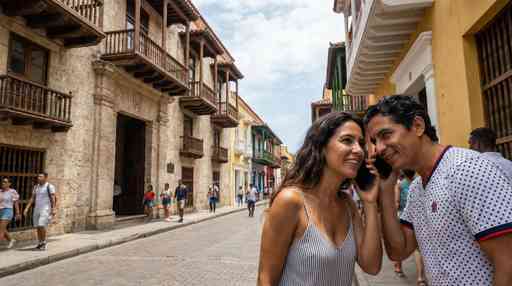
Cartagena was founded in 1533 and within decades had become the most fortified city in the Spanish Americas, the main port through which South American gold and silver moved toward Seville. The walls the Spanish built between the 16th and 17th centuries, with their bastions and sea gates, still circle the old city completely, and walking their top with the Caribbean visible on one side and the brightly painted colonial houses below on the other is one of the more dramatic urban experiences anywhere in Latin America.
Inside the walled city, the streets narrow and wind in a way that GPS cannot usefully capture.
Bougainvillea spills from balconies. The Plaza de Bolivar, shaded by palms, has Fernando Botero's bronze cat in one corner. Outside the walls, in the Getsemani neighborhood, street art covers the houses of a working-class barrio that has been slowly gentrifying as tourists arrive, creating the familiar tension between authenticity and change. The heat is real and non-negotiable. So is the fresh mango and papaya sold on every corner.
Cartagena
Cartagena FAQ
Before you walk.
Start tours early, ideally by 8am before the full heat builds. The walled city has shaded lanes and the sea breeze helps, but midday in the open is genuinely punishing. Carry water, wear light breathable clothing, and plan a two-hour lunch break in an air-conditioned restaurant during the hottest part of the day.
The streets inside the walls are almost entirely flat and paved, making Cartagena one of the more accessible walking cities in South America. The wall walkway itself is easy to reach from several points around the perimeter. Cobblestones in some older sections can be slippery when wet.
The walled city and Bocagrande tourist areas are generally safe for walking during the day and evening. Getsemani has improved significantly in recent years and is lively and popular, though standard nighttime awareness applies. The areas further from the tourist core require more caution. Jewelry and phone snatching can occur so carry minimal valuables.
Arepas de huevo, cornmeal fritters filled with egg, are the classic Cartagena street snack. Ceviche de camaron made with local shrimp is excellent everywhere. For a full meal, the restaurants inside the walled city range from expensive to mid-range, while Getsemani has better value options without sacrificing quality.
Every Cartagena tour, in your language.
All 50+ languages, included with every booking.
🇬🇧 English🇫🇷 Français🇪🇸 Español🇩🇪 Deutsch🇮🇹 Italiano🇯🇵 日本語🇨🇳 中文🇰🇷 한국어+ 41 more
star AudaTours Unlimited
Visiting more than one city? Subscribe.
Unlock every Cartagena tour — plus thousands more worldwide. Cancel any time.
$4.99/week · Cancel anytime

More in Colombia
Explore Colombia arrow_forwardOther cities to walk in Colombia.





Loved by travellersThousands of tours started.
Thousands of tours started.
Plenty of opinions.
4.8 across the App Store and Google Play. Here's a few we keep coming back to.
starstarstarstarstar
This tour was such a great way to see the city. The stories were interesting without feeling too scripted, and I loved being able to explore at my own pace.

Jess
Tbilisi Tourstarstarstarstarstar
This was a solid way to get to know Brighton without feeling like a tourist. The narration had depth and context, but didn't overdo it.

Christoph
Brighton Tourstarstarstarstarstar
Started this tour with a croissant in one hand and zero expectations. The app just vibes with you, no pressure, just you, your headphones, and some cool stories.

John
Marseille Tourdownload Get the app Pop your headphones in.


Pop your headphones in.
Step outside.
Free to download. Tours in every city. Start in 60 seconds — no account, no card.
headphones
~ 4 min until your first tour starts
public
1,000+ cities worldwide
all_inclusive
AudaTours
Unlimited
Every tour. Every city. One subscription.
3097 tours2273 cities138 countries50+ languages
$39 /year
all_inclusive Explore Unlimited