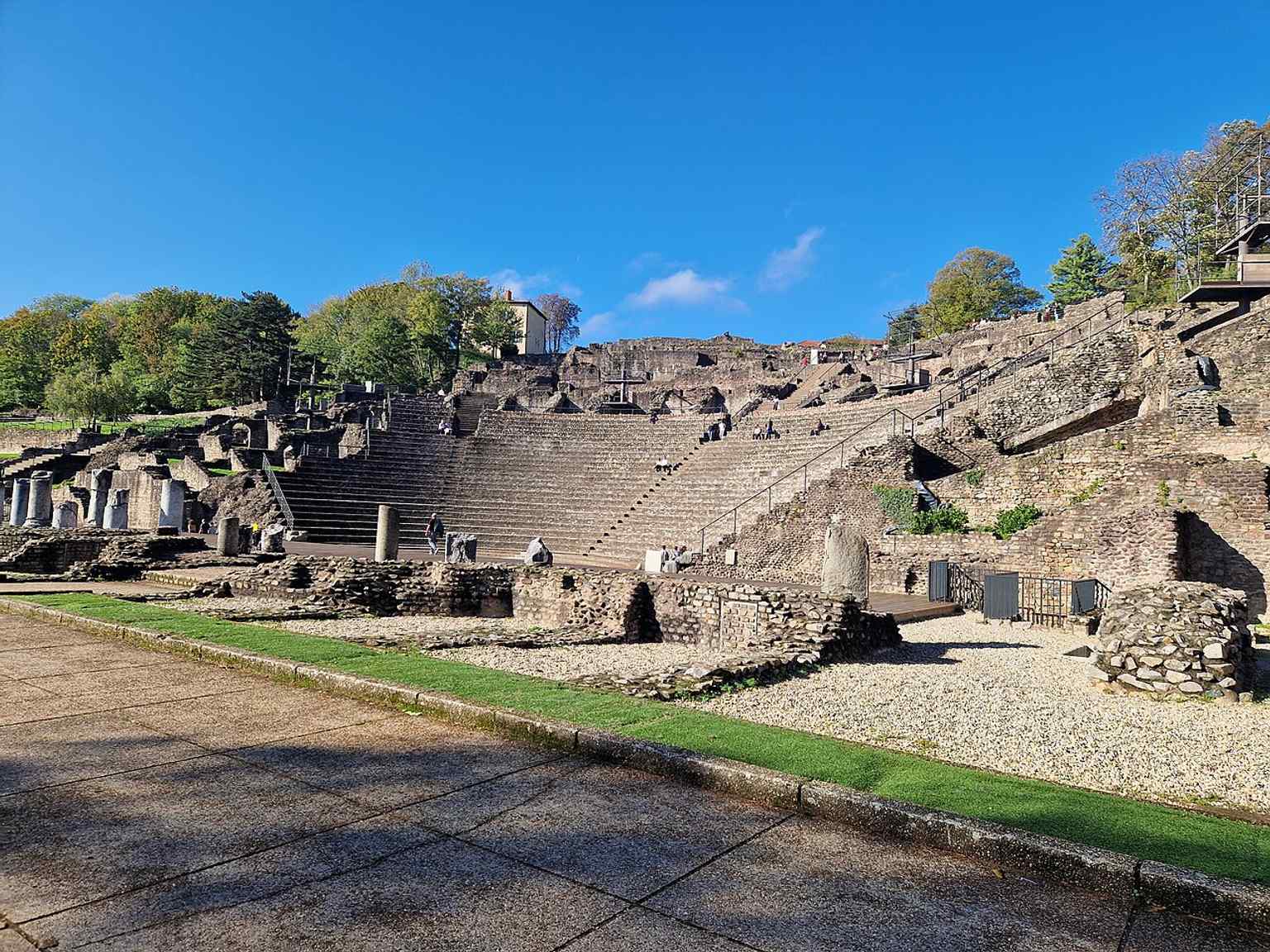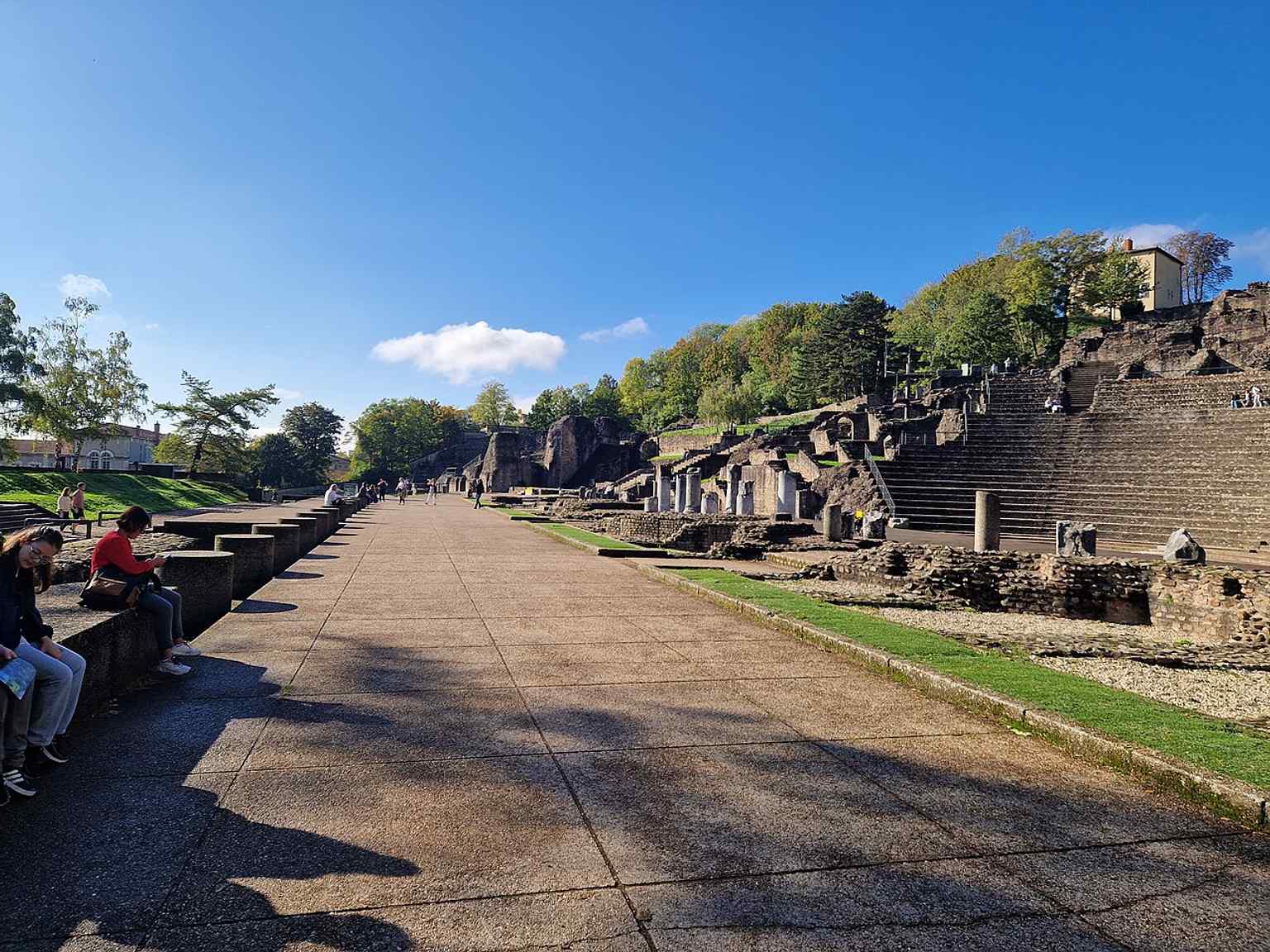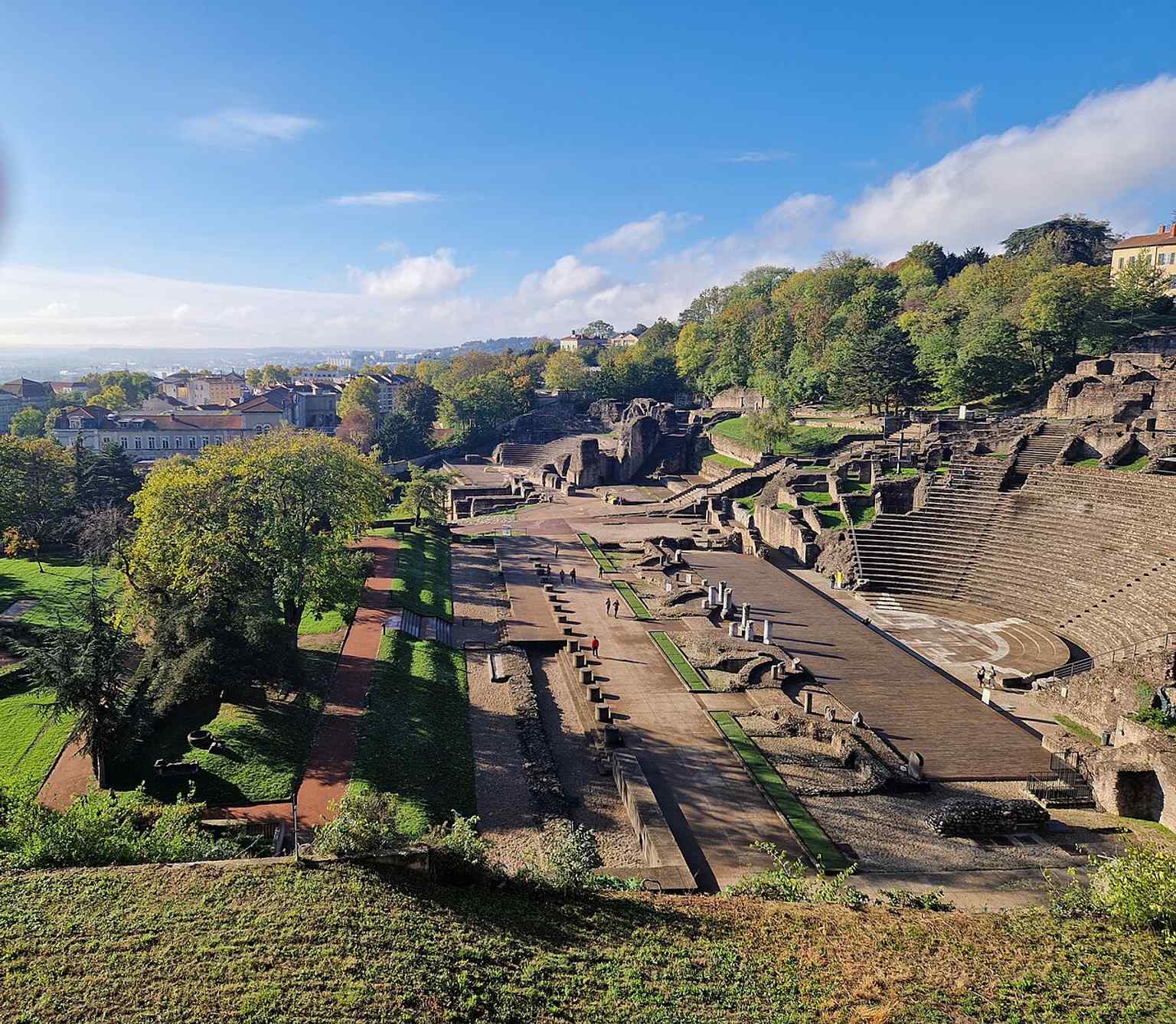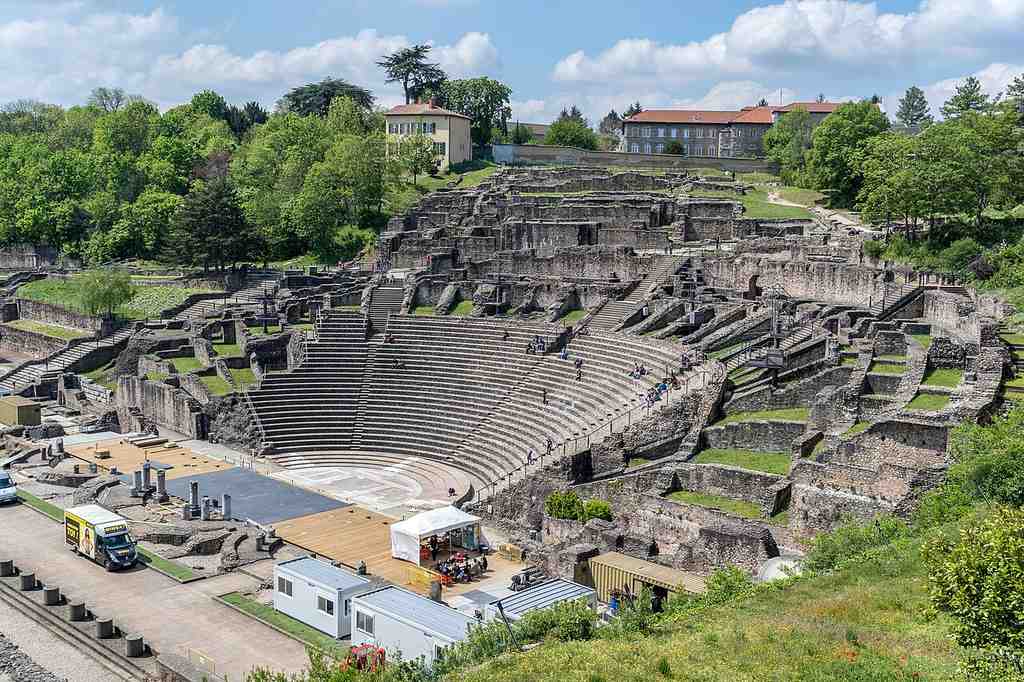
On your left, the Ancient Theatre of Lyon appears as a broad semicircle of pale stone seating cut into the hillside, with radial masonry supports and a long stage line at the bottom.
This is one of the great public faces of Roman Lyon: not a provincial extra, but a monument fit for Lugdunum, Capital of the Three Gauls. In Roman terms, that meant this hill stood near the center of a city that mattered politically, culturally, and symbolically across a huge slice of Gaul. This theater told every visitor, very plainly, that Lugdunum knew how to think big.
Archaeologists believe the first version rose here at the start of the Empire, possibly under Augustus, maybe around fifteen B-C. That would make it one of the earliest Roman theaters in Gaul. Later builders enlarged it, probably sometime between the first and second centuries, until it could hold around ten thousand people. That is not a polite little neighborhood playhouse. That is a civic machine.
And in a capital city, spectacle was never only about amusement. It helped display rank, shape public life, and remind everyone who held the whip hand. The emperor Caligula reportedly staged games here in Lugdunum, including a Greek and Latin speaking contest. The losers had to praise the winners, wipe out their own texts with a sponge, or, in the nastier version, with their tongues... Roman entertainment could be awfully inventive in all the wrong ways.
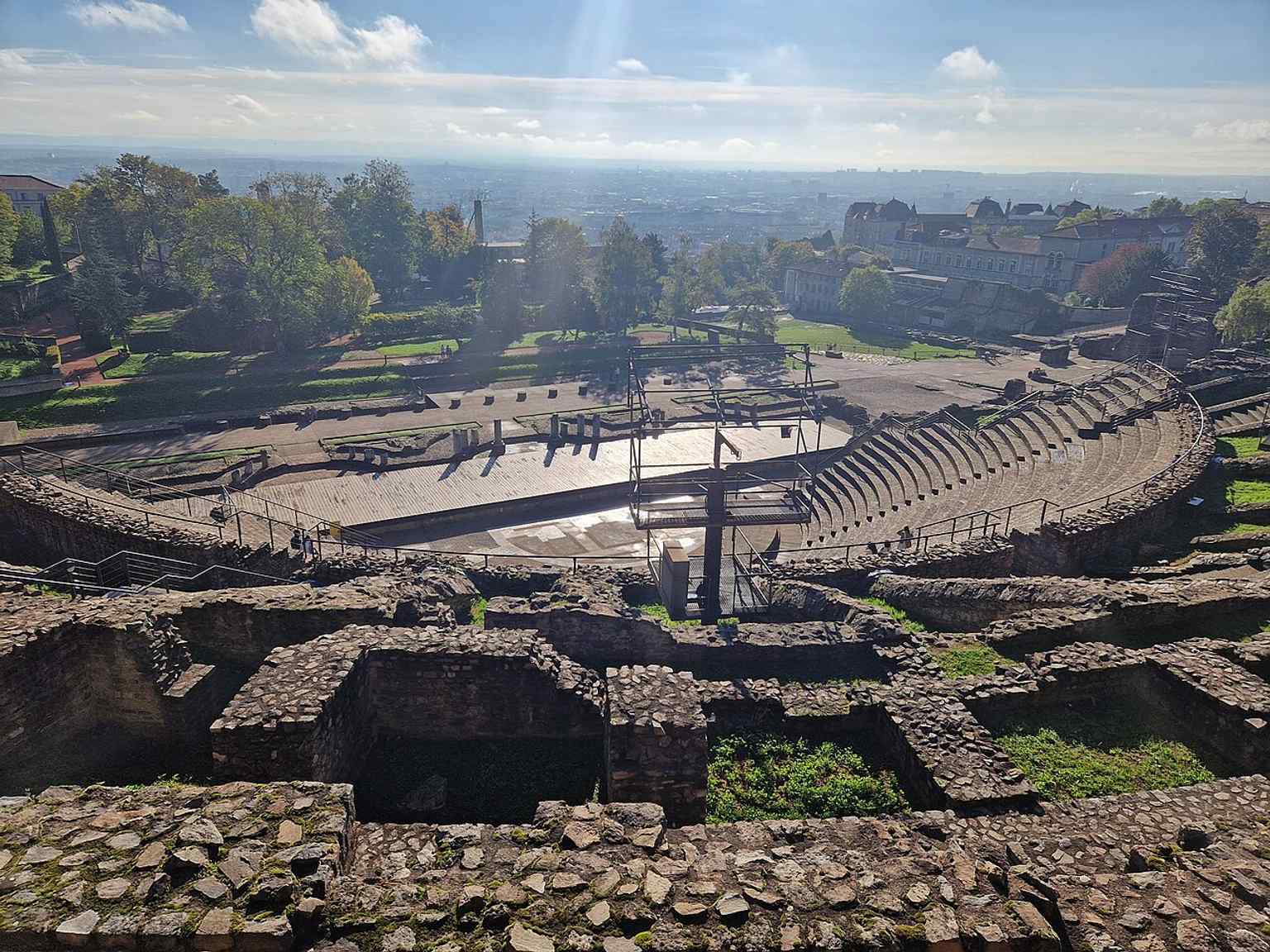
Let your eyes travel along the curve of the seating bowl and the stairways slicing up through it. Picture thousands of bodies arranged with almost military order, all facing the same stage. If you glance at the app, the aerial view makes the trick beautifully clear: the hill itself becomes architecture.
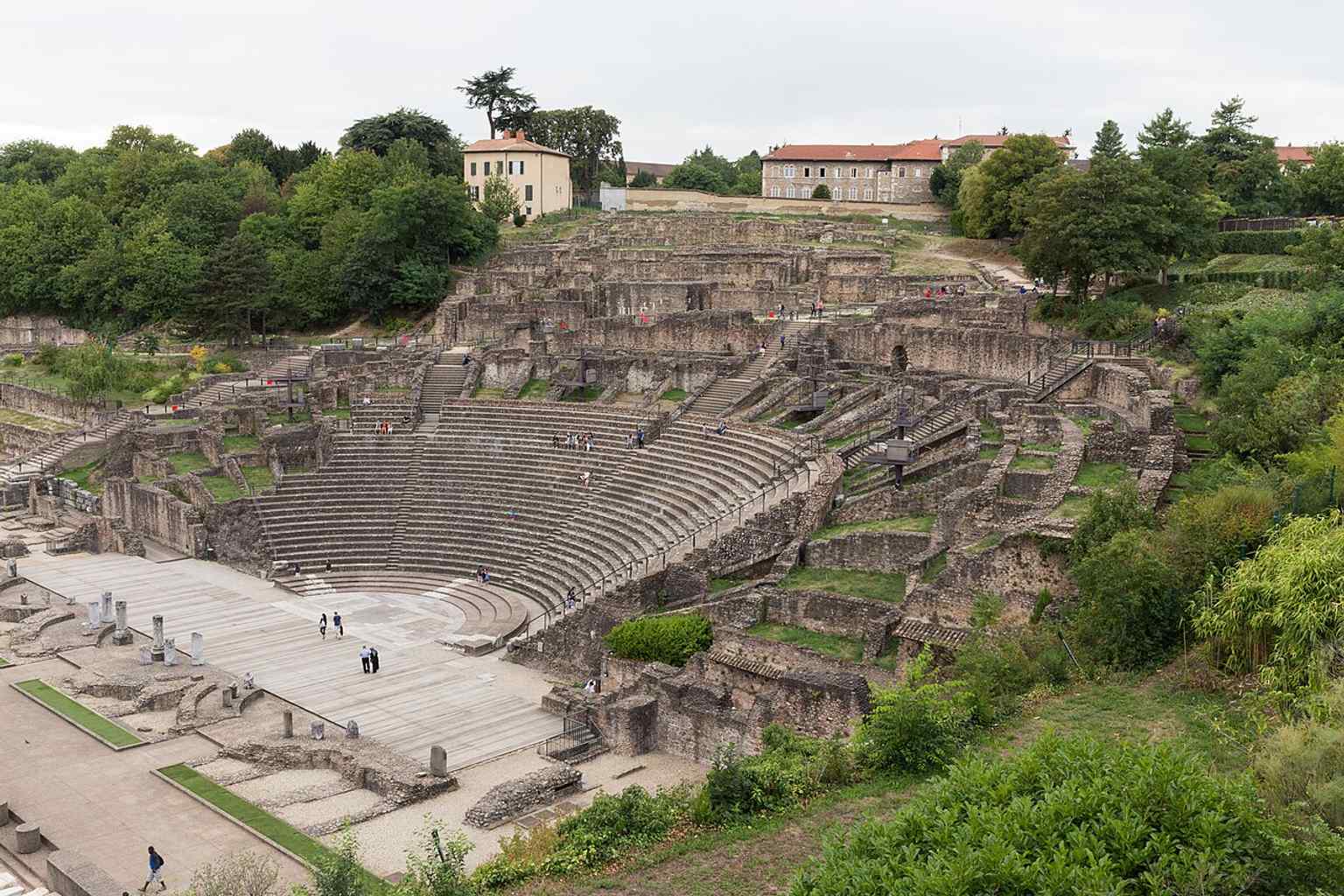
Then came the vanishing act. As Roman power faded, Fourvière slowly emptied out and the city shifted toward the Saône below. People stripped this theater for stone. Its fine blocks helped build bridges, and even Saint John’s Cathedral later on borrowed from these ruins, a thread we’ll meet again. Marble decoration went into lime kilns. Mud, gravel, and debris from the slope buried the rest so thoroughly that by the Middle Ages, this became terraced farmland and local legend more than readable monument.
One man changed the story by accident. In eighteen eighty-seven, Professor Lafon noticed the curved shape of his garden nearby and began uncovering ancient walls. He thought he had found the amphitheater of Lyon’s martyrs, and for a long time many agreed. But another historian, André Steyert, argued the shape was not oval but semicircular: a theater, not an arena. The real proof arrived in nineteen thirty-three, when Mayor Édouard Herriot backed a major dig, partly to give work to unemployed Lyonnais, and archaeologist Pierre Wuilleumier uncovered the lower seats dropping toward the orchestra, the paved half-circle before the stage. That settled it. The buried heartbeat of Roman Lyon started beating in public again.
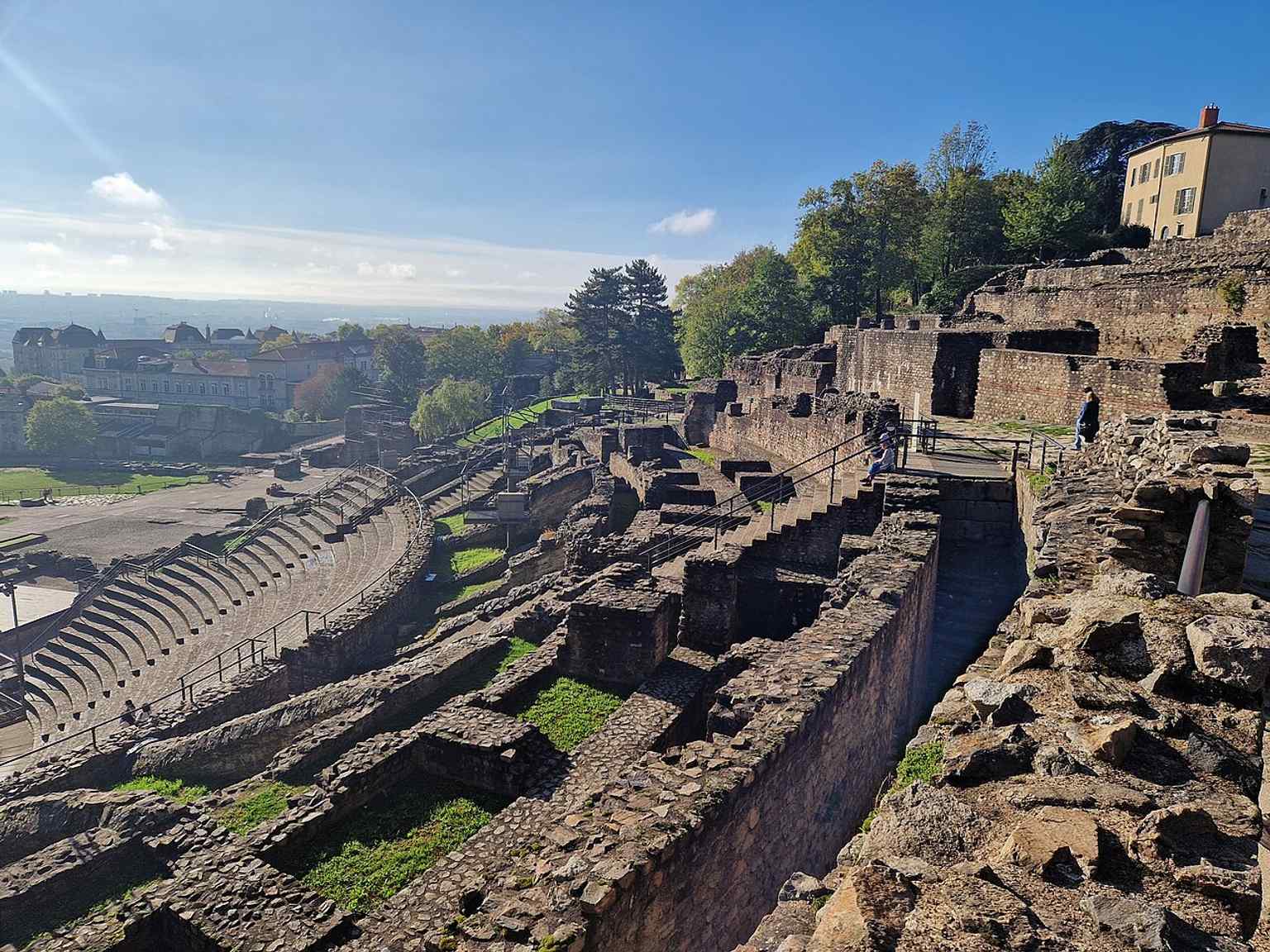
If you want a closer look at the upper seating and restored circulation passages, there’s a useful view on your screen now. Since nineteen forty-six, performances have returned here, and the United Nations Educational, Scientific and Cultural Organization, UNESCO, now protects the wider historic city that kept folding one age over another without quite erasing the last.
Next door, though, the mood changes. A smaller neighboring performance space served a tighter, more selective audience, and we’ll meet it at the next stop. And if you plan to revisit, this venue is generally closed on Monday, open from eleven to six Tuesday through Friday, and from ten to six on weekends.