AudaTours logoAudaTours

Stop 16 of 17

Église Saint-Paul

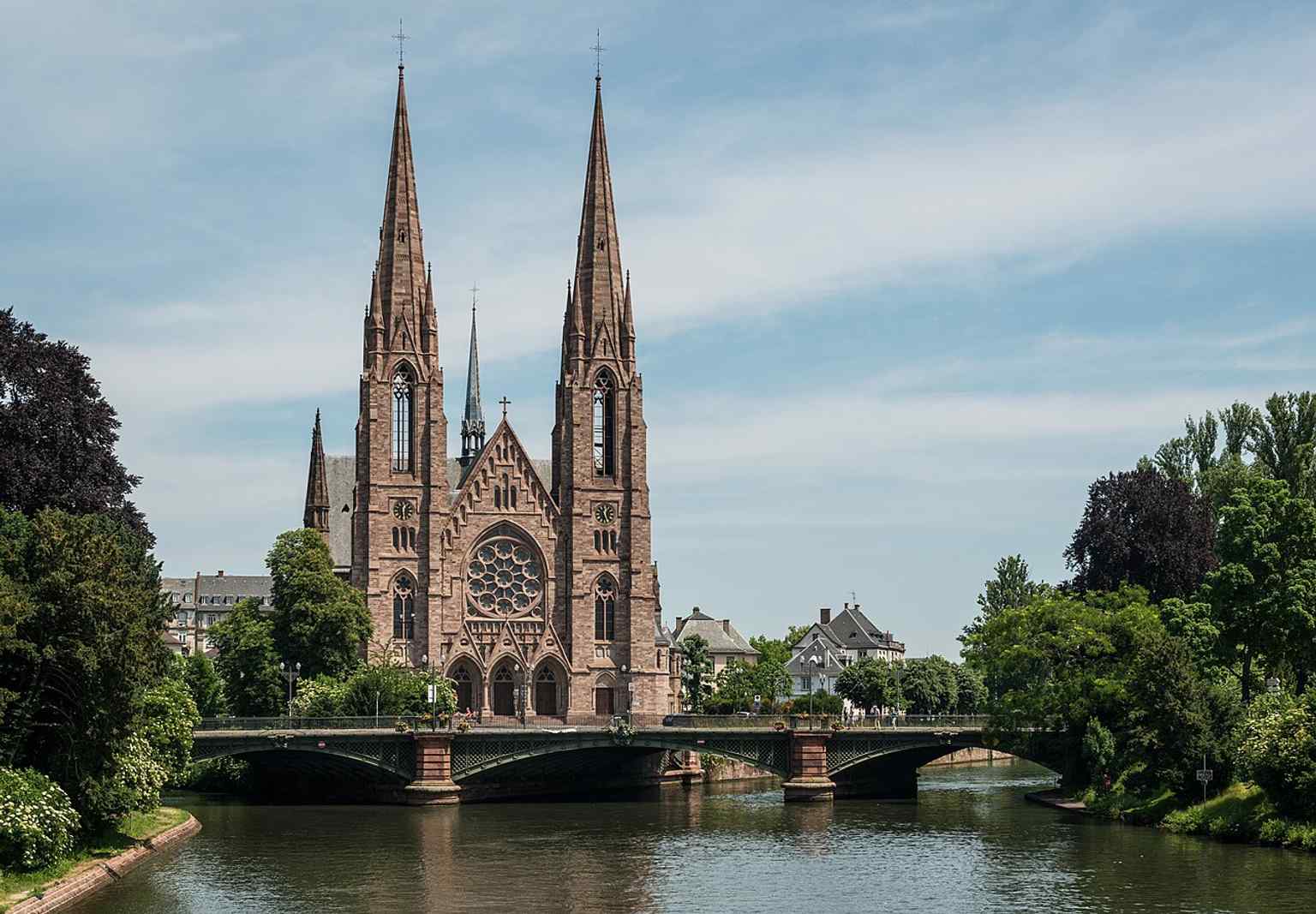
On your left, Saint Paul rises in pale stone as a neo-Gothic church with a pointed façade and two needle-like spires, its twin towers marking it instantly against the skyline.

This is a fitting last stop, because Saint Paul gathers so many Strasbourg habits into one building: water, faith, power, and a skyline that never settled for just one voice.

The church stands where the Aar meets the Ill, on the southern tip of Sainte-Hélène island. That was no accident. German planners chose this point so the building would command the river view from the old city and answer, across the distance, the spire of the cathedral. Strasbourg has always staged itself carefully... and this church knows exactly how to make an entrance.

Louis Müller, the government architect from Frankfurt, drew it between eighteen ninety-two and eighteen ninety-seven during the German annexation. He looked to Saint Elizabeth’s Church in Marburg for inspiration, and he gave Strasbourg a building that feels almost like a Protestant cathedral. Neo-Gothic simply means a later revival of medieval Gothic style, so those sharp arches, steep lines, and soaring towers were already a historical costume when Müller used them. A handsome one, though.

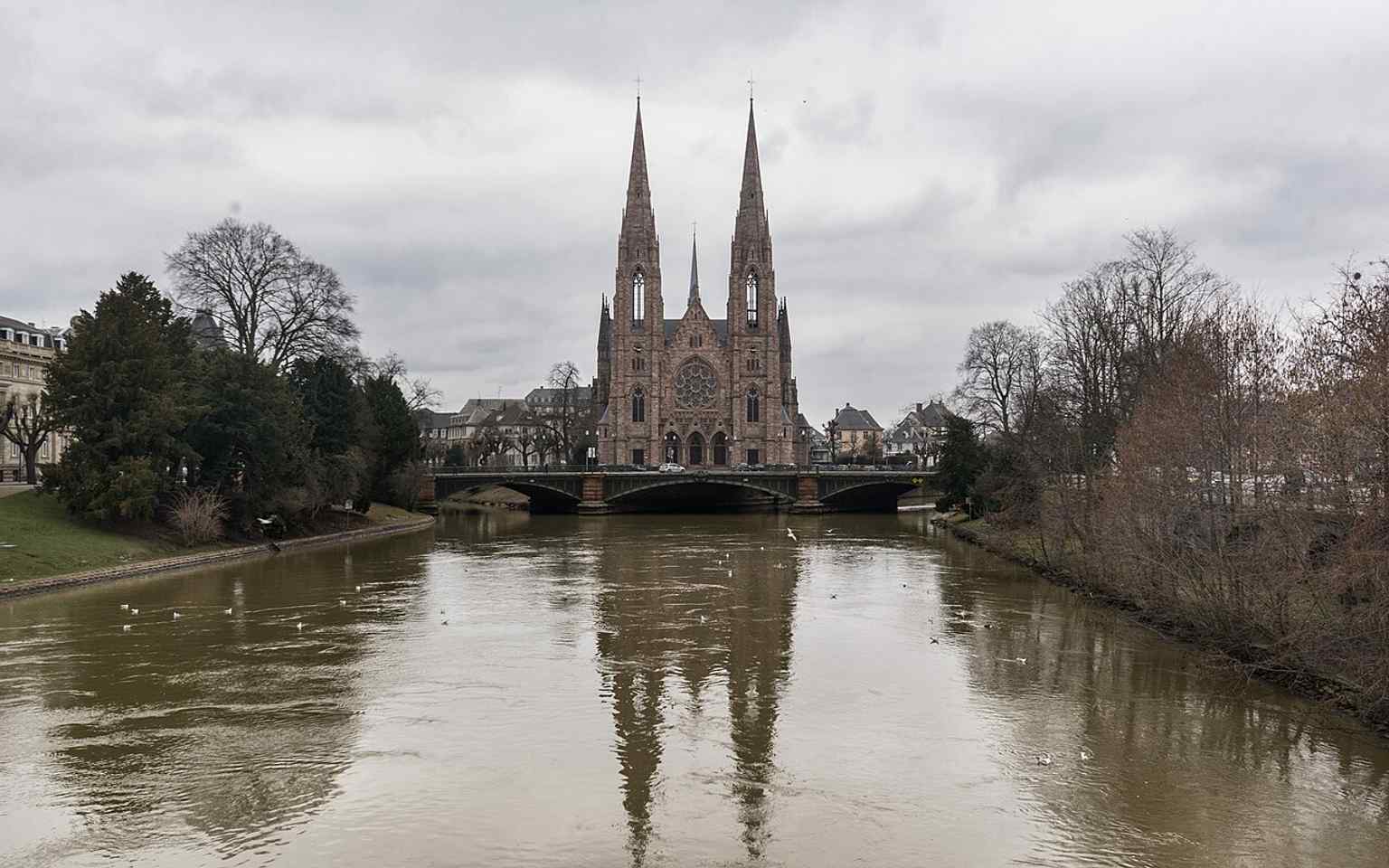
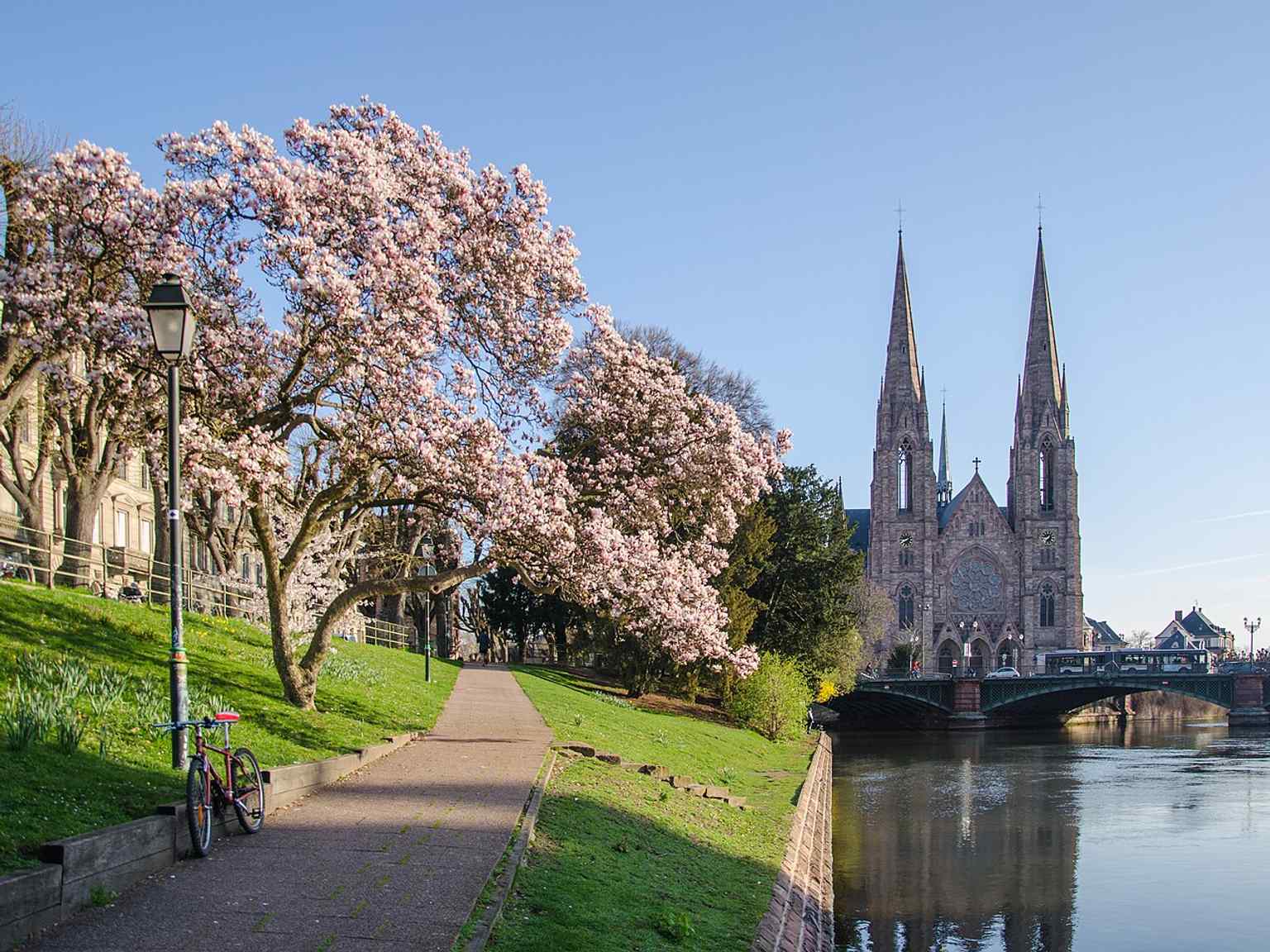
If you glance at the image in the app, the riverside view makes the strategy of the site crystal clear. This church does not merely sit by the water... it rules a fork in the rivers.
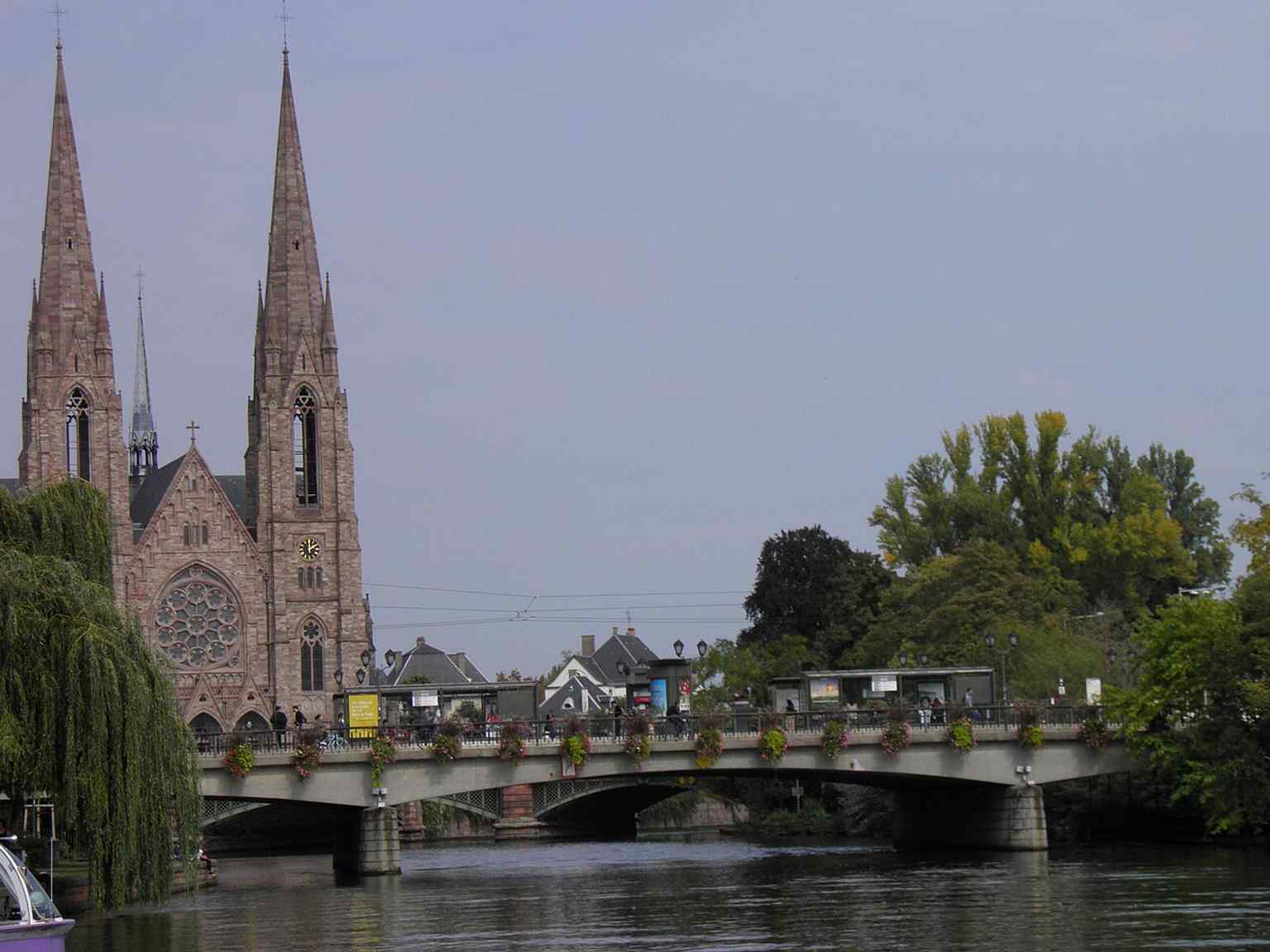
A broad riverside view where Saint Paul meets the Ill, matching the tour’s story about its setting and urban perspective.
A broad riverside view where Saint Paul meets the Ill, matching the tour’s story about its setting and urban perspective.Photo: Gzen92, Wikimedia Commons, CC BY-SA 4.0. Cropped & resized.

But Saint Paul was never just scenery. The Ministry of War ordered it as a Protestant garrison church for the German Empire, while Saint-Maurice served Catholic soldiers. That military purpose even shaped the entrances: sixteen doors around the church, reportedly echoing the army ranks of the time. Leave it to an army to organize church seating like a filing cabinet. Inside, the central plan and shortened main hall suited Protestant worship, where hearing the sermon clearly mattered as much as ceremony. Kaiser Wilhelm the Second even had his own gallery here, and the church could hold about three thousand worshippers.

Its name tells a quieter story. Protestants do not venerate saints in the Catholic sense, so choosing Paul let the church fit Strasbourg’s familiar “Saint” pattern while staying faithful to Protestant belief. That is very Strasbourg: adapting without quite surrendering.

History kept revising the place. In nineteen seventeen, authorities took the organ’s front pipes for the war effort. In nineteen forty-four, bombing destroyed the rear chapel and much of the eastern stained glass. After the war, the lost chapel was not copied stone for stone; a more modern replacement took its place. Even damage here becomes another layer, not the final word. The façade and spires you see now went through a full restoration from two thousand nine to two thousand fourteen, and another image on your screen shows that renewed west front beautifully.
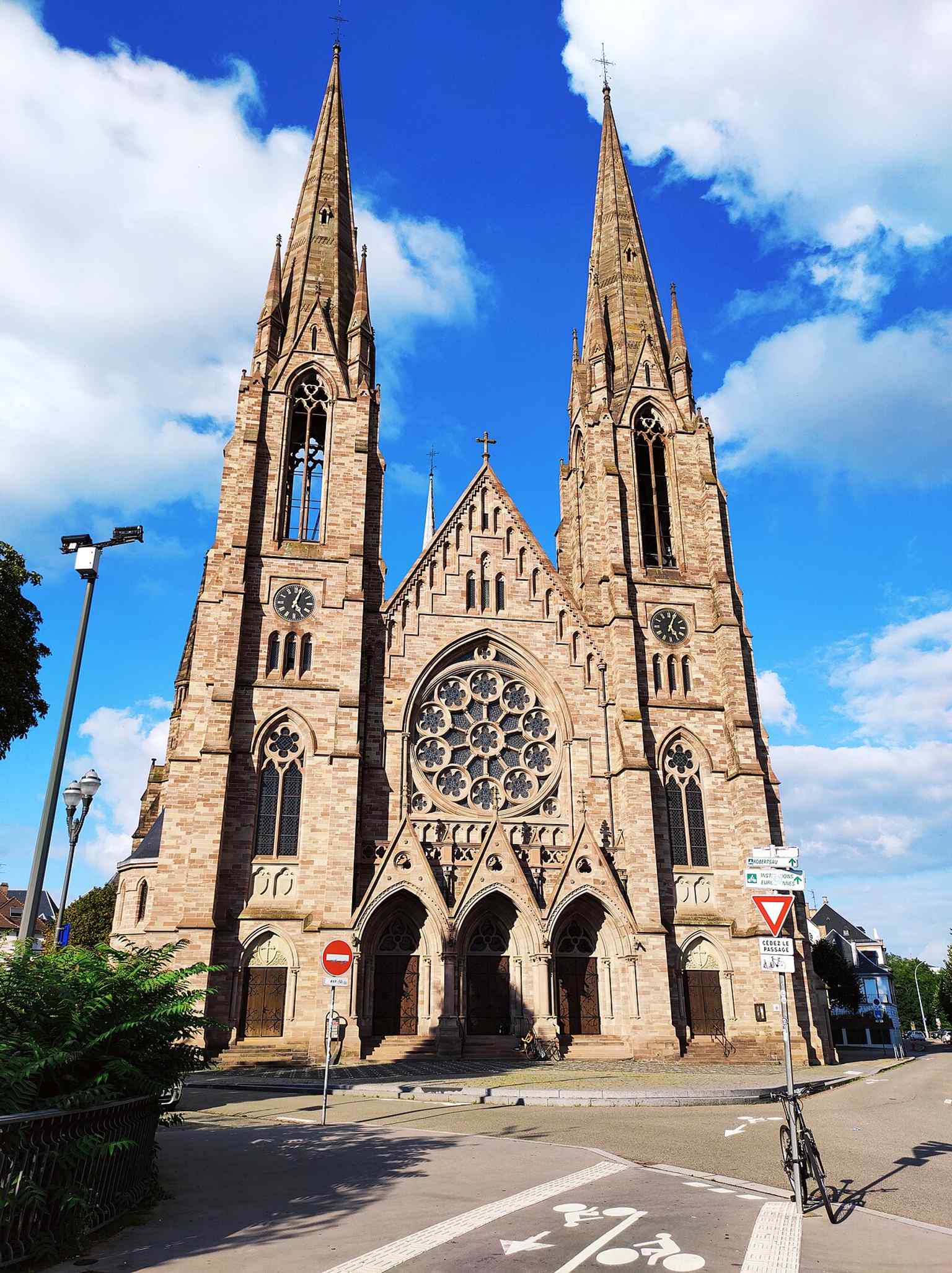
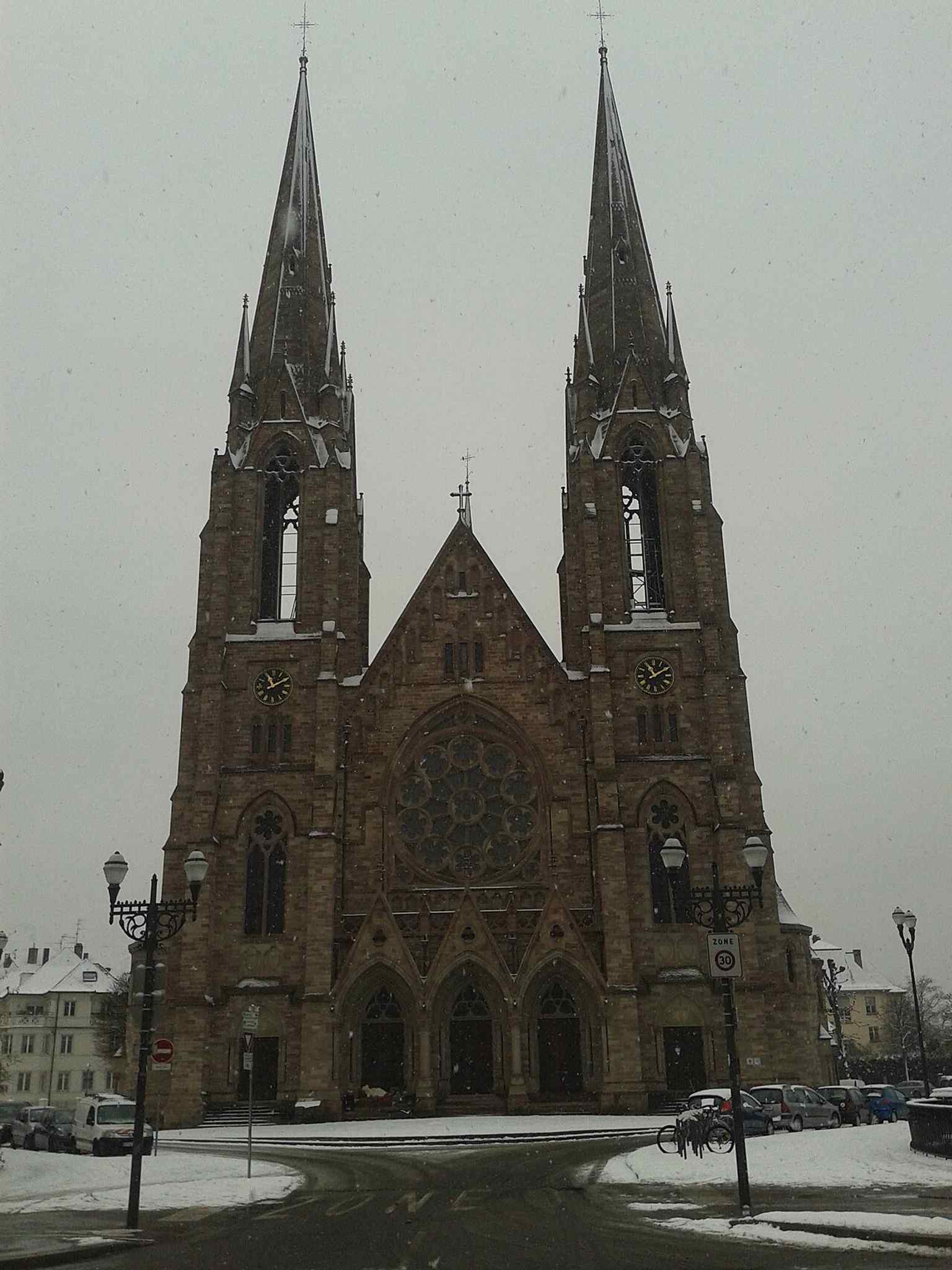
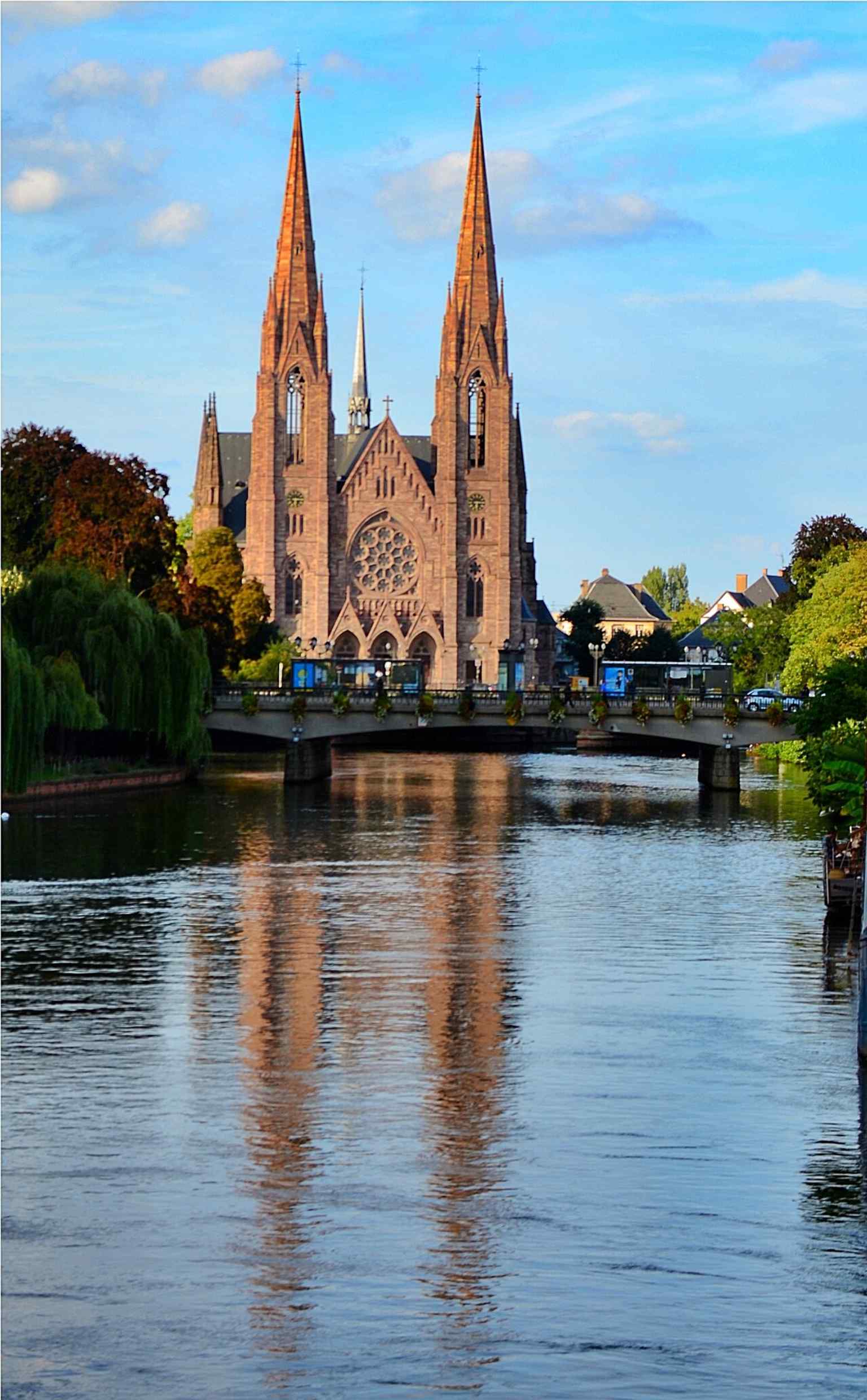
The west façade after restoration, with the twin spires that make Saint Paul one of Strasbourg’s tallest churches.
The west façade after restoration, with the twin spires that make Saint Paul one of Strasbourg’s tallest churches.Photo: Laurent Jerry, Wikimedia Commons, CC BY-SA 3.0. Cropped & resized.

If Strasbourg has seemed, all along, like a city balancing French and German, old town and new district, Catholic towers and Protestant halls, riverbanks and parade avenues... this church makes that balance visible. Look up at those twin spires and imagine the whole skyline as a conversation, not an argument: many stories, held in tension, somehow making one city.

If you want to come back inside another time, Saint Paul is generally open only for a short window on Wednesday from noon to two PM, and on Sunday from ten AM to noon.
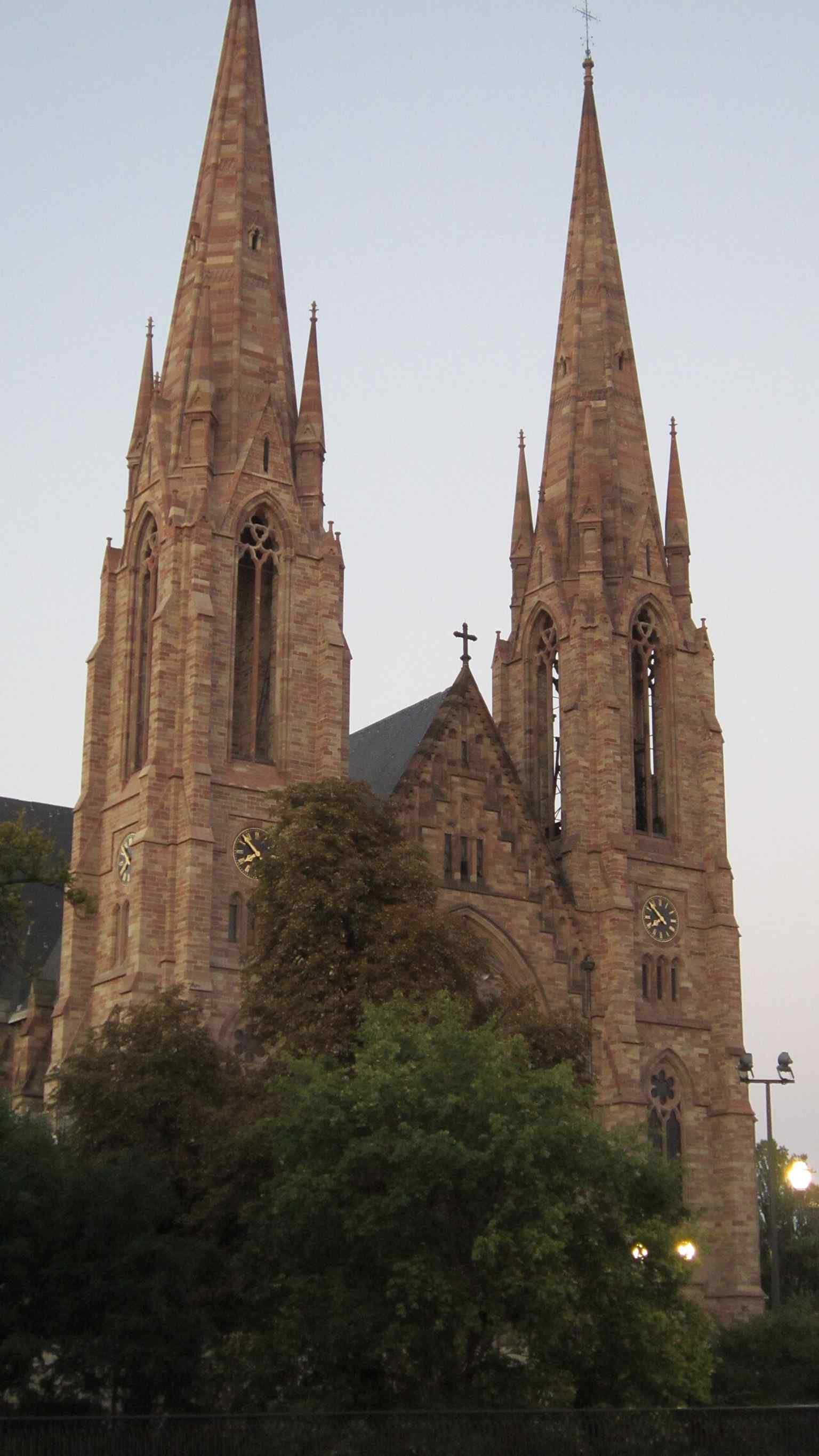
A clear view of the main west façade, showing the neo-Gothic front that was restored after the long 2009–2014 campaign.
A clear view of the main west façade, showing the neo-Gothic front that was restored after the long 2009–2014 campaign.Photo: Laurent Jerry, Wikimedia Commons, CC BY-SA 3.0. Cropped & resized.
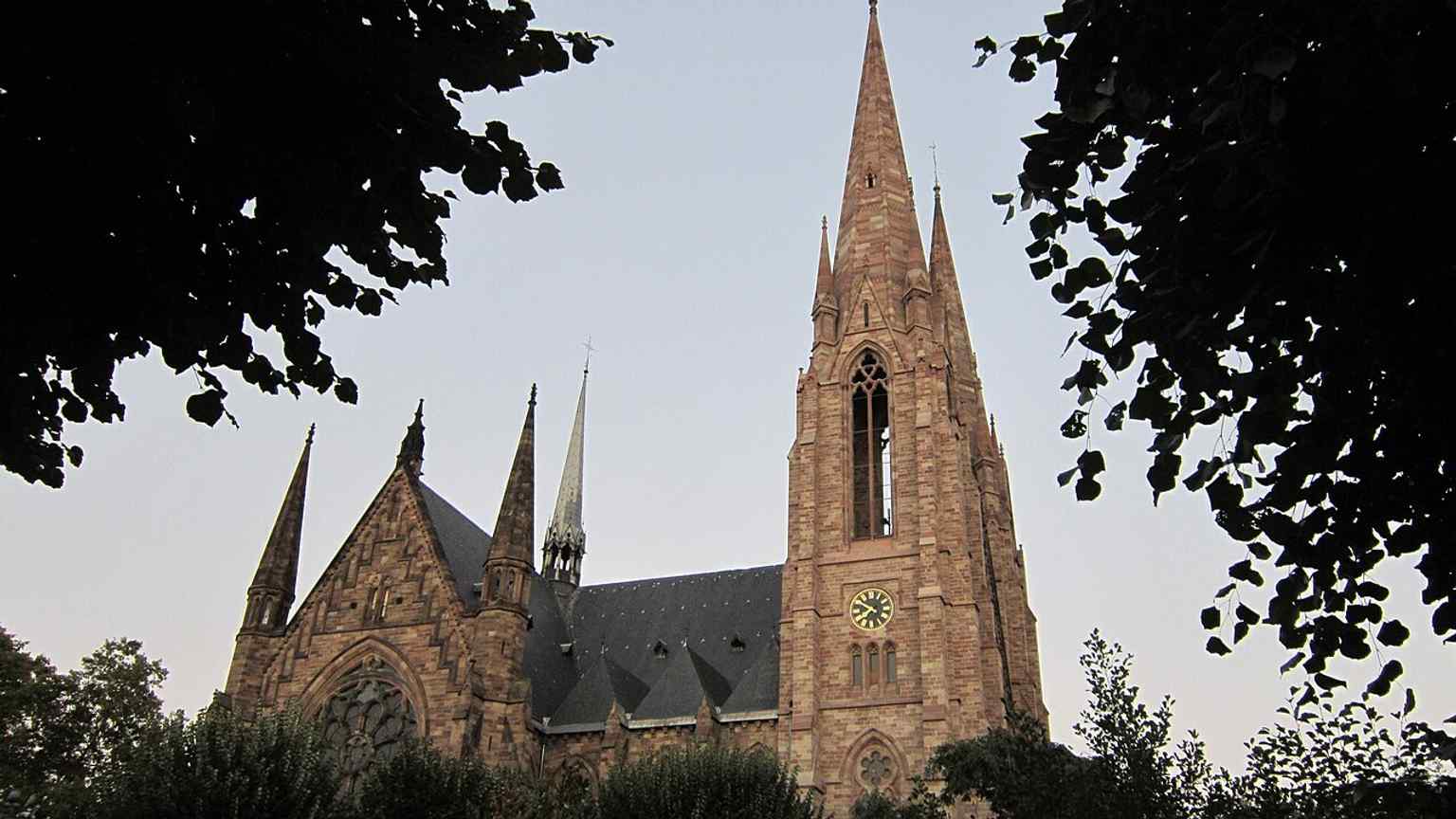
The north side of the church, useful for showing the building’s scale and its many entrances around the perimeter.
The north side of the church, useful for showing the building’s scale and its many entrances around the perimeter.Photo: Laurent Jerry, Wikimedia Commons, CC BY-SA 3.0. Cropped & resized.
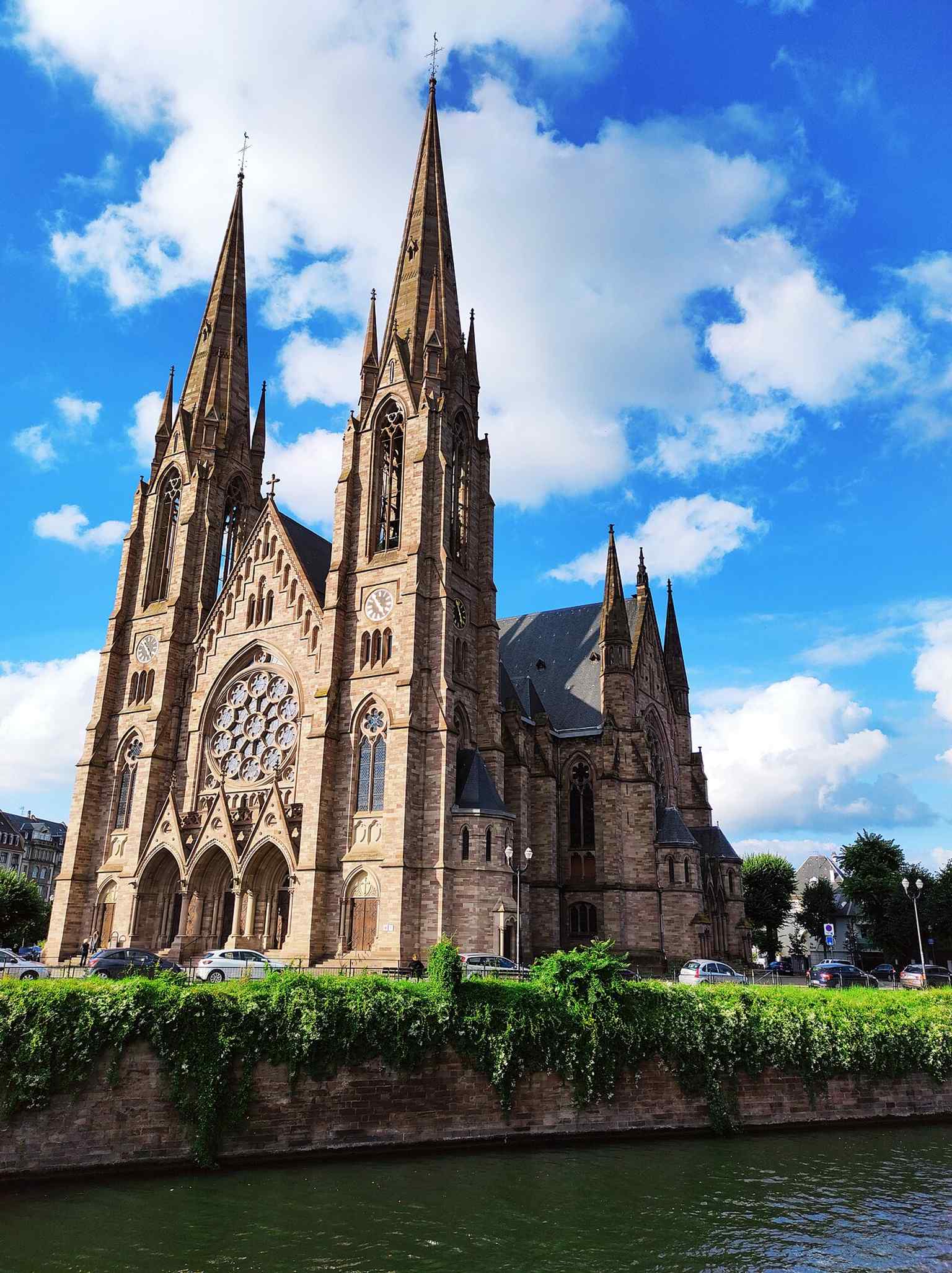
A south-side view of the church, emphasizing its massive footprint on the island between the Aar and the Ill.
A south-side view of the church, emphasizing its massive footprint on the island between the Aar and the Ill.Photo: DXR, Wikimedia Commons, CC BY-SA 4.0. Cropped & resized.
A wide west-facade view that highlights the church’s soaring vertical lines and twin spires.
A wide west-facade view that highlights the church’s soaring vertical lines and twin spires.Photo: Pedro J Pacheco, Wikimedia Commons, CC BY-SA 4.0. Cropped & resized.
The church seen in its riverside setting, exactly where the Aar and the Ill meet near Quai Zorn and Quai Mullenheim.
The church seen in its riverside setting, exactly where the Aar and the Ill meet near Quai Zorn and Quai Mullenheim.Photo: Nguyễn Mai Trang, Wikimedia Commons, CC BY-SA 4.0. Cropped & resized.
Another river-level perspective that helps explain why the church was placed on this strategic point of the island.
Another river-level perspective that helps explain why the church was placed on this strategic point of the island.Photo: Nguyễn Mai Trang, Wikimedia Commons, CC BY-SA 4.0. Cropped & resized.
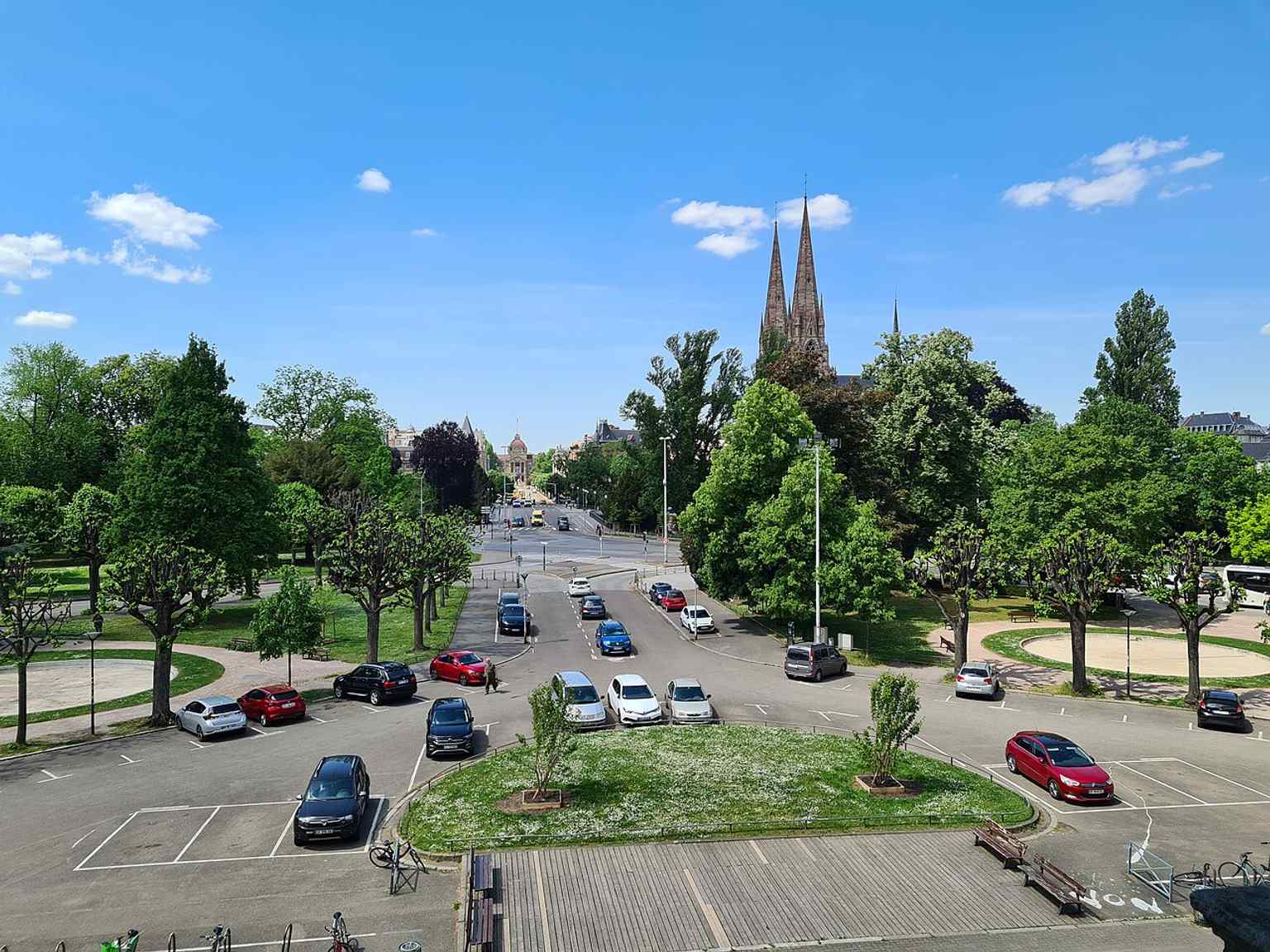
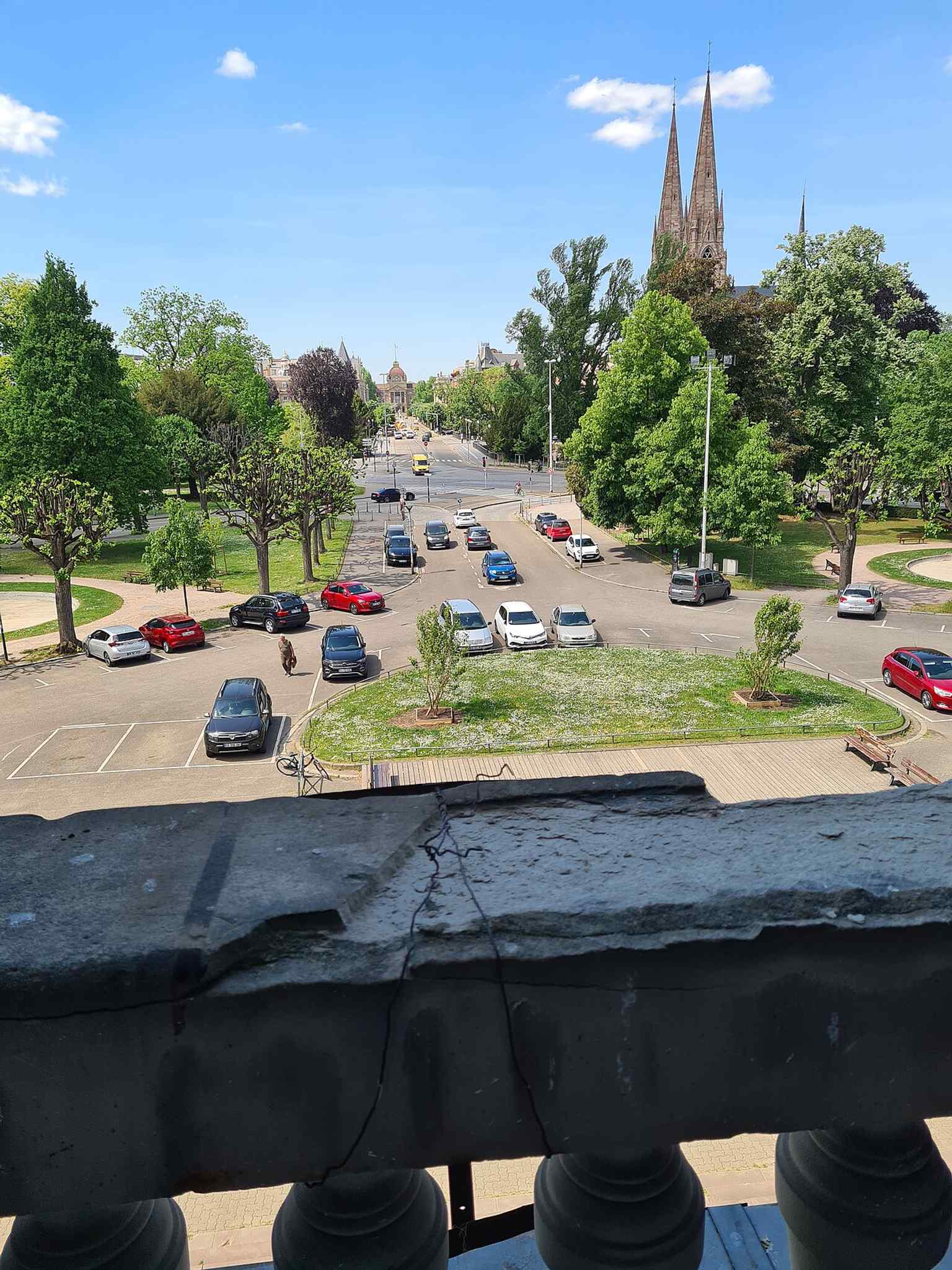
A distant city view linking Saint Paul to Strasbourg’s Neustadt axis and the surrounding imperial-era urban landscape.
A distant city view linking Saint Paul to Strasbourg’s Neustadt axis and the surrounding imperial-era urban landscape.Photo: Ji-Elle, Wikimedia Commons, CC BY-SA 4.0. Cropped & resized.
The church seen from the University area, echoing the monumental alignment of the German-built Neustadt.
The church seen from the University area, echoing the monumental alignment of the German-built Neustadt.Photo: Ji-Elle, Wikimedia Commons, CC BY-SA 4.0. Cropped & resized.
Saint Paul framed by spring blossoms on Quai Koch — a quieter angle that still shows the church’s landmark silhouette.
Saint Paul framed by spring blossoms on Quai Koch — a quieter angle that still shows the church’s landmark silhouette.Photo: Valentin F.R., Wikimedia Commons, CC0. Cropped & resized.
A street-level view of the church, giving a modern sense of its height and neo-Gothic presence.
A street-level view of the church, giving a modern sense of its height and neo-Gothic presence.Photo: Gzen92, Wikimedia Commons, CC BY-SA 4.0. Cropped & resized.
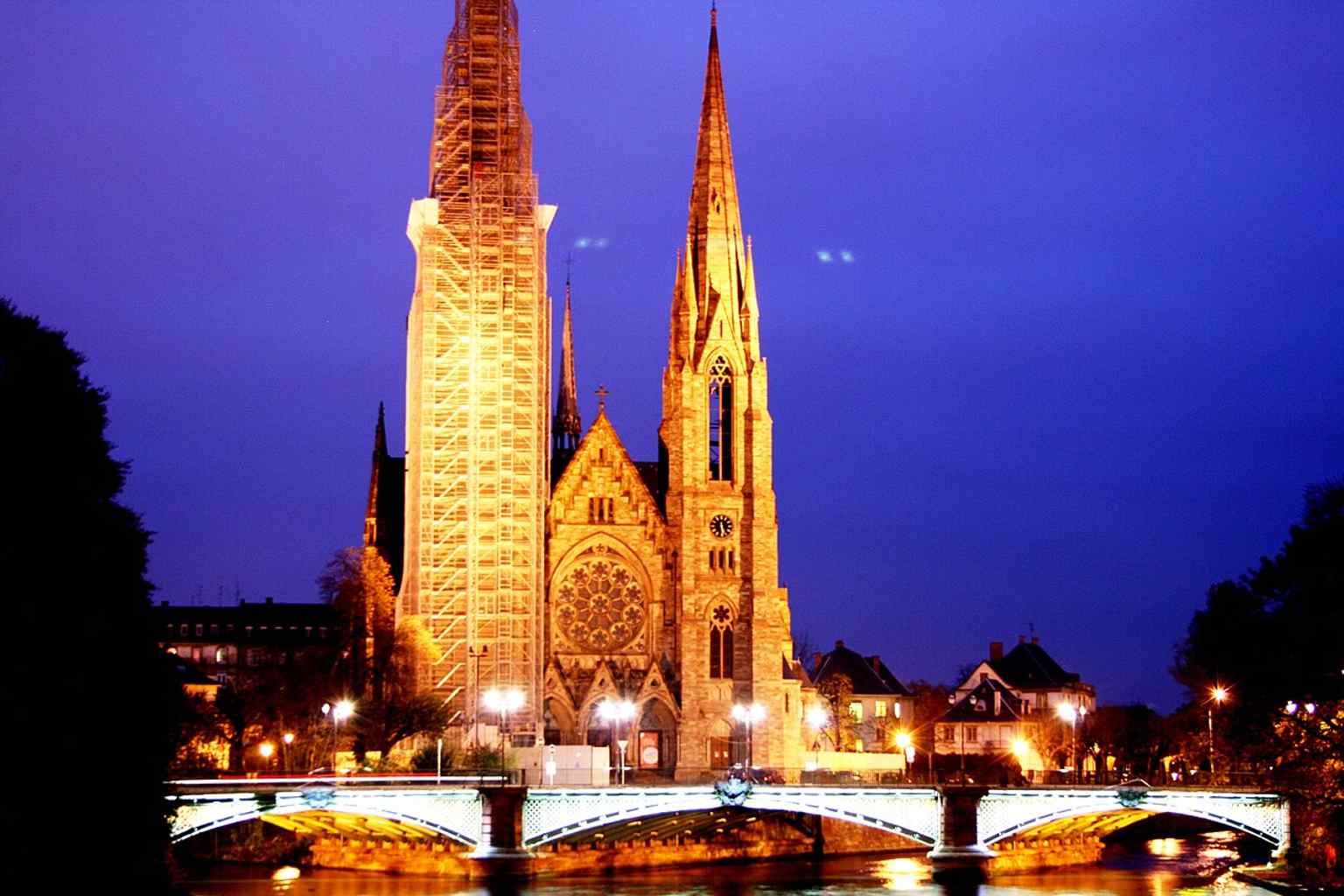
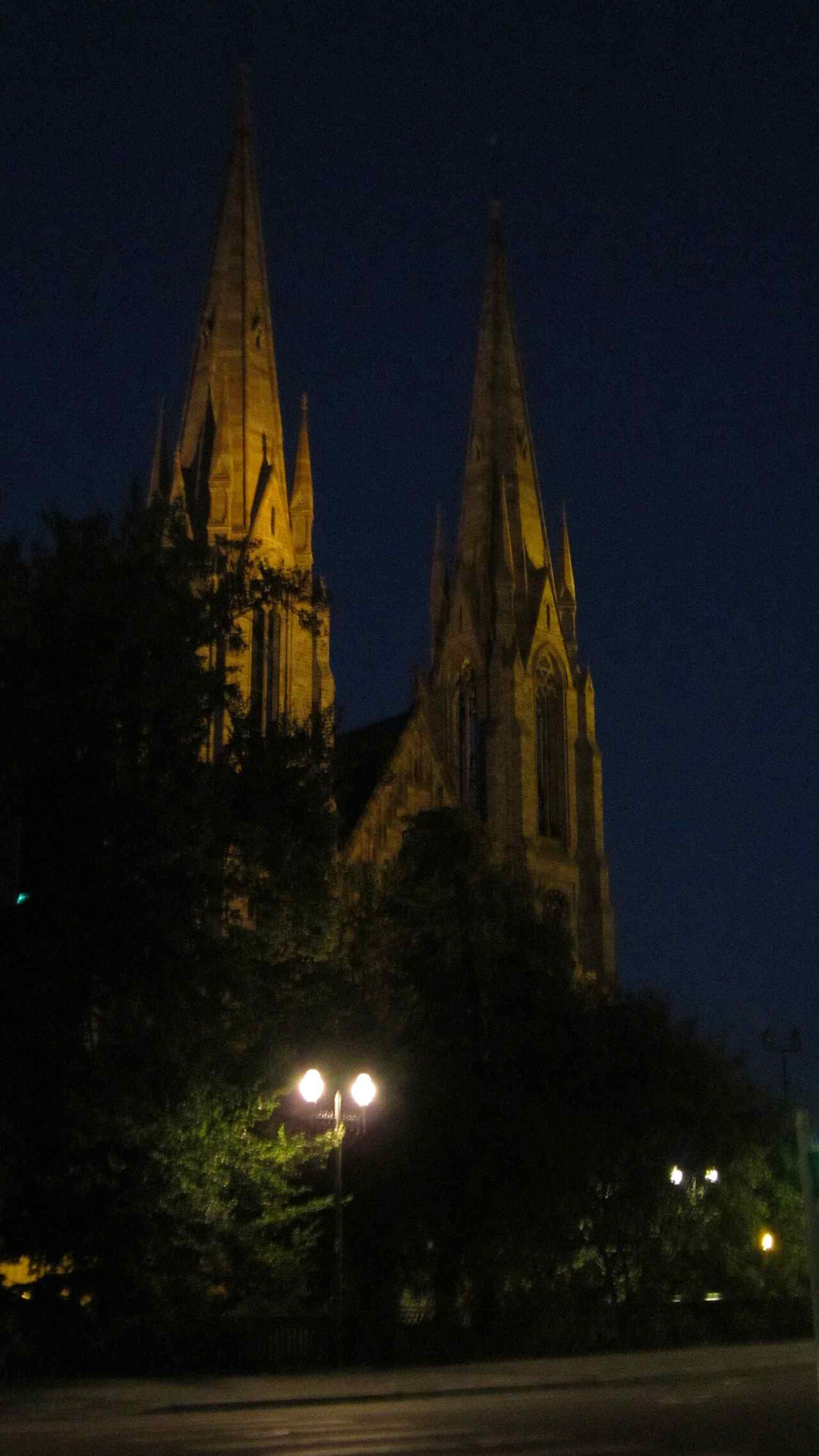
Saint Paul at night, a dramatic look at the landmark long after its construction in the German imperial period.
Saint Paul at night, a dramatic look at the landmark long after its construction in the German imperial period.Photo: Annagialdini, Wikimedia Commons, CC BY-SA 3.0. Cropped & resized.
The church from the water, reinforcing its location at the junction of the city’s rivers and canals.
The church from the water, reinforcing its location at the junction of the city’s rivers and canals.Photo: Old Pionear, Wikimedia Commons, CC BY-SA 4.0. Cropped & resized.
arrow_back Back to Strasbourg Highlights Audio Tour: Historic Treasures and Architectural Wonders
Loved by travellers

Thousands of tours started.
Plenty of opinions.

4.8 across the App Store and Google Play. Here's a few we keep coming back to.

starstarstarstarstar
This was a solid way to get to know Brighton without feeling like a tourist. The narration had depth and context, but didn't overdo it.
Christoph
Christoph
Brighton Tour
starstarstarstarstar
Started this tour with a croissant in one hand and zero expectations. The app just vibes with you, no pressure, just you, your headphones, and some cool stories.
download Get the app

Pop your headphones in.
Step outside.

Free to download. Tours in every city. Start in 60 seconds — no account, no card.

Download on the App StoreGet it on Google Play
starstarstarstarstar_half
4.8
AudaTours app icon
headphones
~ 4 min until your first tour starts
public
1,000+ cities worldwide
all_inclusive
AudaTours
Unlimited

Every tour. Every city. One subscription.

3097 tours2273 cities138 countries50+ languages