
Strasbourg Highlights Audio Tour: Historic Treasures and Architectural Wonders
Beneath the polished facade of Strasbourg lies a powder keg of buried betrayals and imperial ghosts waiting to be unearthed. Uncover the truth with this self-guided audio tour that pulls you away from the tourist crowds and deep into the city’s visceral, secret history. You are the protagonist exploring paths that most visitors overlook. Why was the Rhine Palace the site of a clandestine power struggle that nearly tore the city apart? What shadow still clings to the spires of Saint-Paul Church after the midnight bells ring? How did a single forgotten operatic scandal at the Strasbourg Opera House alter the local political landscape forever? Stroll through corridors of power and echo-filled plazas where every cobblestone pulses with the weight of rebellion. Transcend the typical sightseeing experience as you peel back the layers of a city defined by drama. Start the journey now and master the secrets of Strasbourg.
Tour preview
About this tour
- scheduleDuration 110–130 minsGo at your own pace
- straighten4.8 km walking routeFollow the guided path
- location_onLocationStrasbourg, France
- wifi_offWorks offlineDownload once, use anywhere
- all_inclusiveLifetime accessReplay anytime, forever
- location_onStarts at Place Kléber
Stops on this tour
lock_open 3 free previews · 12 unlock with purchase
Look for the wide stone square centered on a bronze standing general atop a tall pedestal, with the long pale neoclassical façade of the Aubette stretching along one side.…Read moreShow less
Open dedicated page →Look for the wide stone square centered on a bronze standing general atop a tall pedestal, with the long pale neoclassical façade of the Aubette stretching along one side.
Welcome to Place Kléber, the city’s main square... and a fine place to learn that Strasbourg rarely tells just one story at a time. Right in the middle stands General Jean-Baptiste Kléber, a Strasbourg-born hero of the French Revolutionary Wars. His statue, finished by Philippe Grass in eighteen forty, shows him standing firm with a letter in hand: the British admiral Keith had demanded surrender, and Kléber answered in action instead. There’s an extra twist here. Kléber is not only honored above ground. Since 1838, his coffin has rested in a vault directly under the statue.
His path back here was anything but tidy. In Cairo, in eighteen hundred, a young Syrian student named Soleyman el-Halaby assassinated Kléber. The body was embalmed, sealed in lead and oak, buried, moved, and then quietly kept for years at the Château d’If near Marseille before King Louis the Eighteenth finally allowed Strasbourg to receive him. That is very Strasbourg, if you ask me: even the monument in the middle of the square arrives by way of Egypt, politics, delay, and a long memory.
This square kept reinventing itself too. In the eighteenth century, architect Jacques-François Blondel imagined a grand military parade ground here, a modern showpiece for the city. Money ran short, then the Revolution rolled in, and most of the plan stayed on paper. The Aubette is the great survivor of that dream. Built in seventeen seventy-eight as a guardhouse, it took its name from dawn orders given to the garrison there. Later it housed music, then a leisure complex, and even interiors by Theo van Doesburg, Hans Arp, and Sophie Taeuber-Arp that some call the Sistine Chapel of modern art. Not bad for a former military checkpoint.
And the ground itself has older layers. Before Place Kléber, this was Barfüßerplatz, the “barefoot” square, named for a Franciscan convent nearby; in French it was also the Place des Cordeliers, after the rope belts those friars wore. Later it became the place d’Armes, the parade ground. Archaeologists even found a Roman stele here, a carved stone monument to four gods, reminding us that the visible square sits on much deeper footing than its paving suggests.
Its shape kept changing with the city’s needs. It served as the hub of the old tram network, then turned into a surface parking lot with a road slicing through it... not exactly poetic. In nineteen ninety-four and again in two thousand seven, Strasbourg remade it into the broad pedestrian plaza you see now, adding green spaces and long water basins edged in gneiss stone. If you want a quick visual of that change, have a peek at the before-and-after in the app. And if you’d like to see one vanished layer, check the old Maison Rouge on your screen; a grand wilhelminian building once stood here before demolition made way for the later shopping complex.
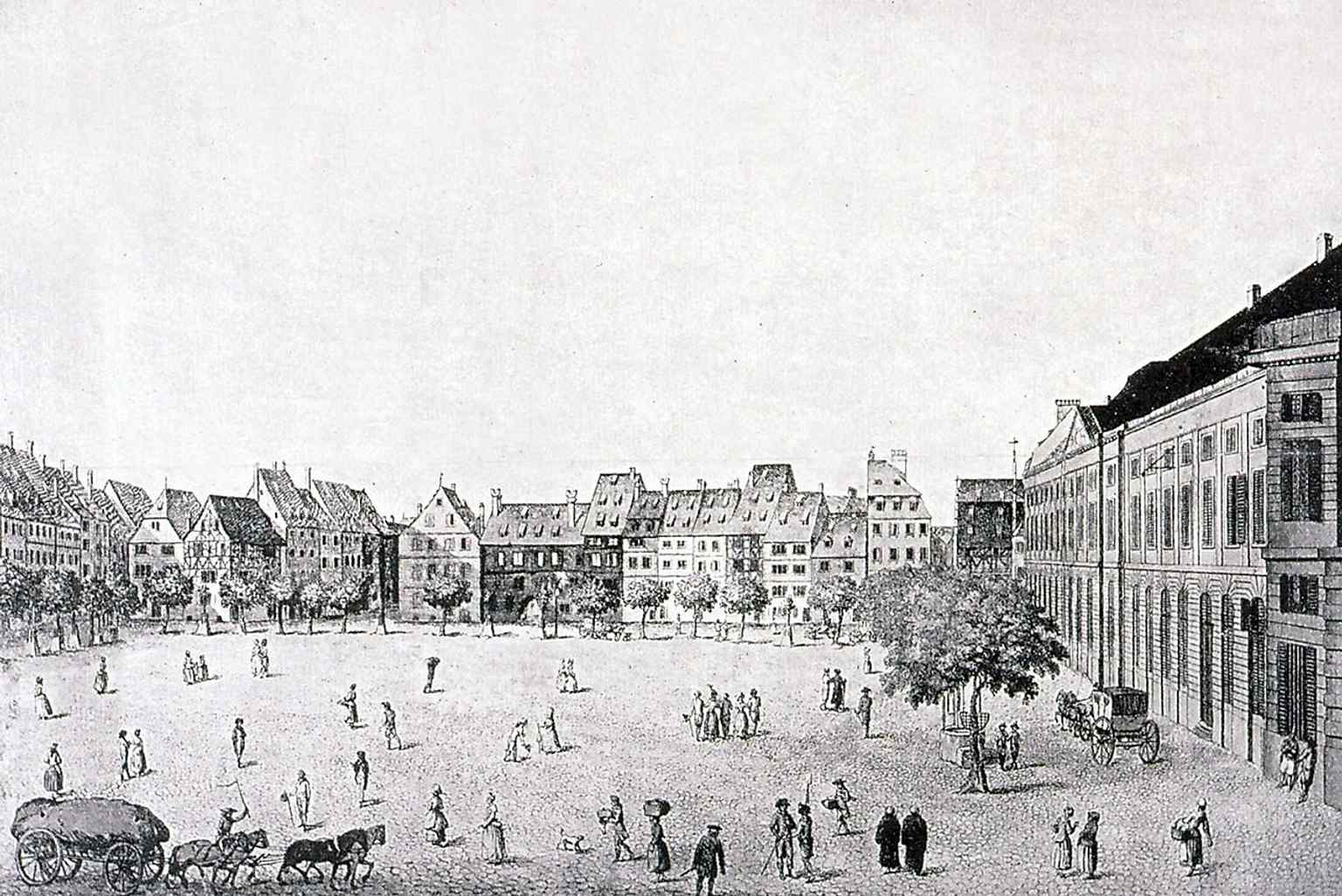
An old view of the Maison Rouge on Place Kléber, recalling the grand building that once stood where the shopping center is today.Photo: Jean Hans, Wikimedia Commons, Public domain. Cropped & resized. So here’s a question to carry with you: when a city keeps renaming, rebuilding, and re-centering its main square, what is it trying to hold onto... and what is it trying to outgrow?
If one square can carry Roman memory, a buried general, and an unfinished urban dream, the rest of Strasbourg is only going to get more interesting. When you’re ready, head on to Petite France, about a nine-minute walk from here. Handy thing about this stop: the square is always open.
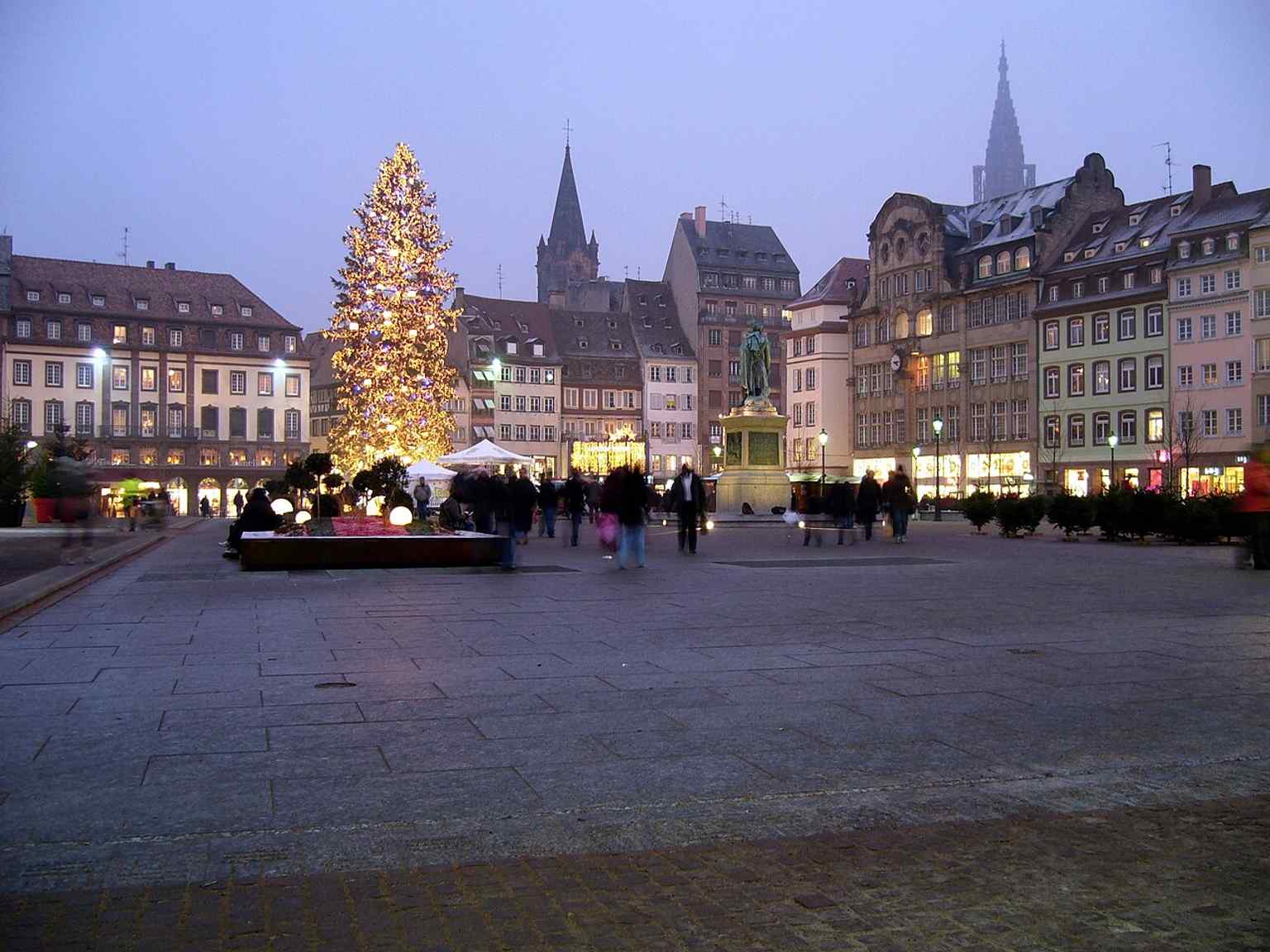
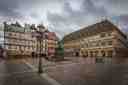
A broad contemporary view of Place Kléber dressed for Christmas, reflecting its role as Strasbourg’s main public square.Photo: Jonathan Martz, Wikimedia Commons, CC BY-SA 3.0. Cropped & resized. 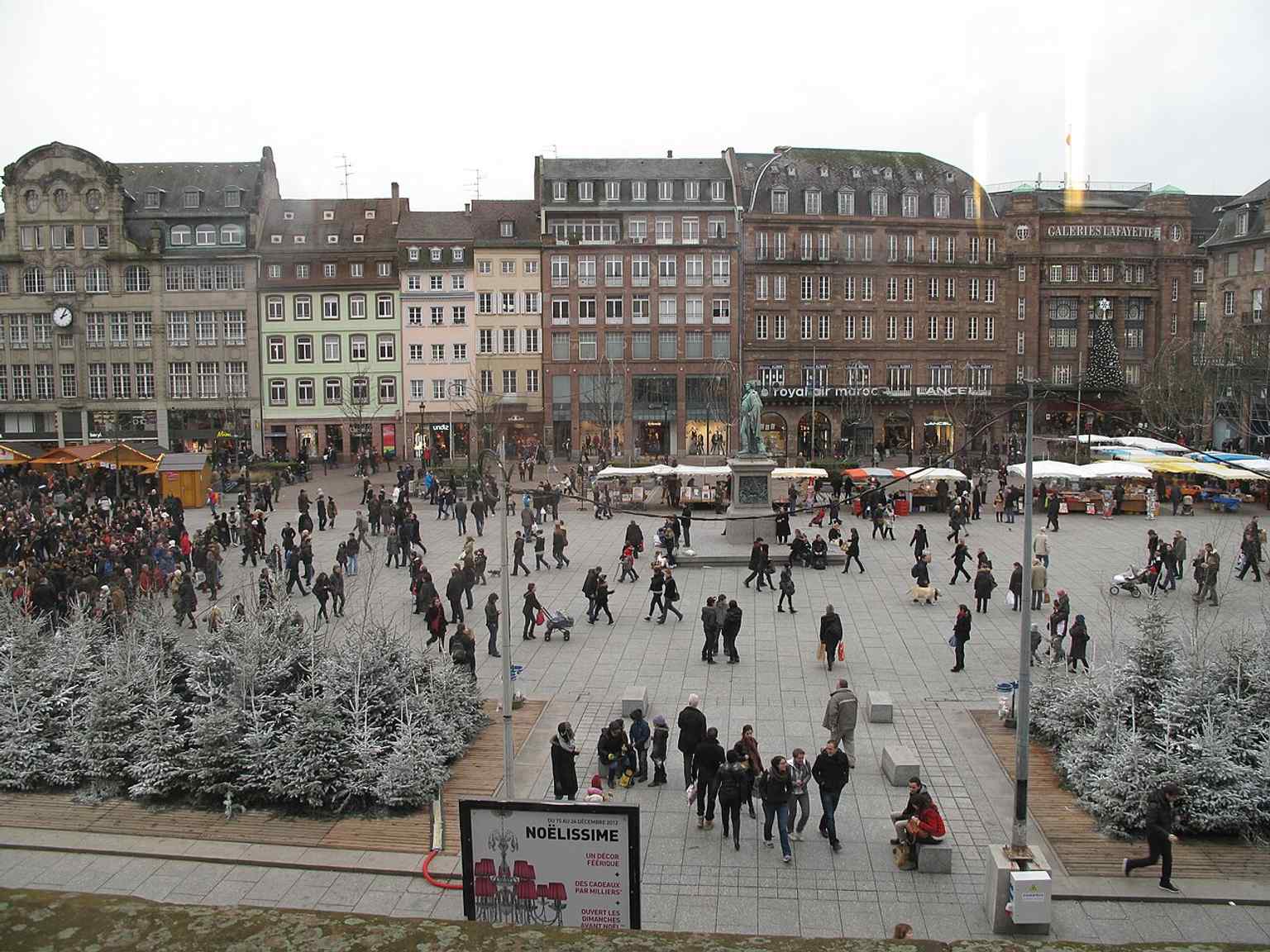
Seen from the Aubette, this image shows the square’s wide pedestrian layout after its modern reworking and tram integration.Photo: Tangopaso, Wikimedia Commons, Public domain. Cropped & resized. 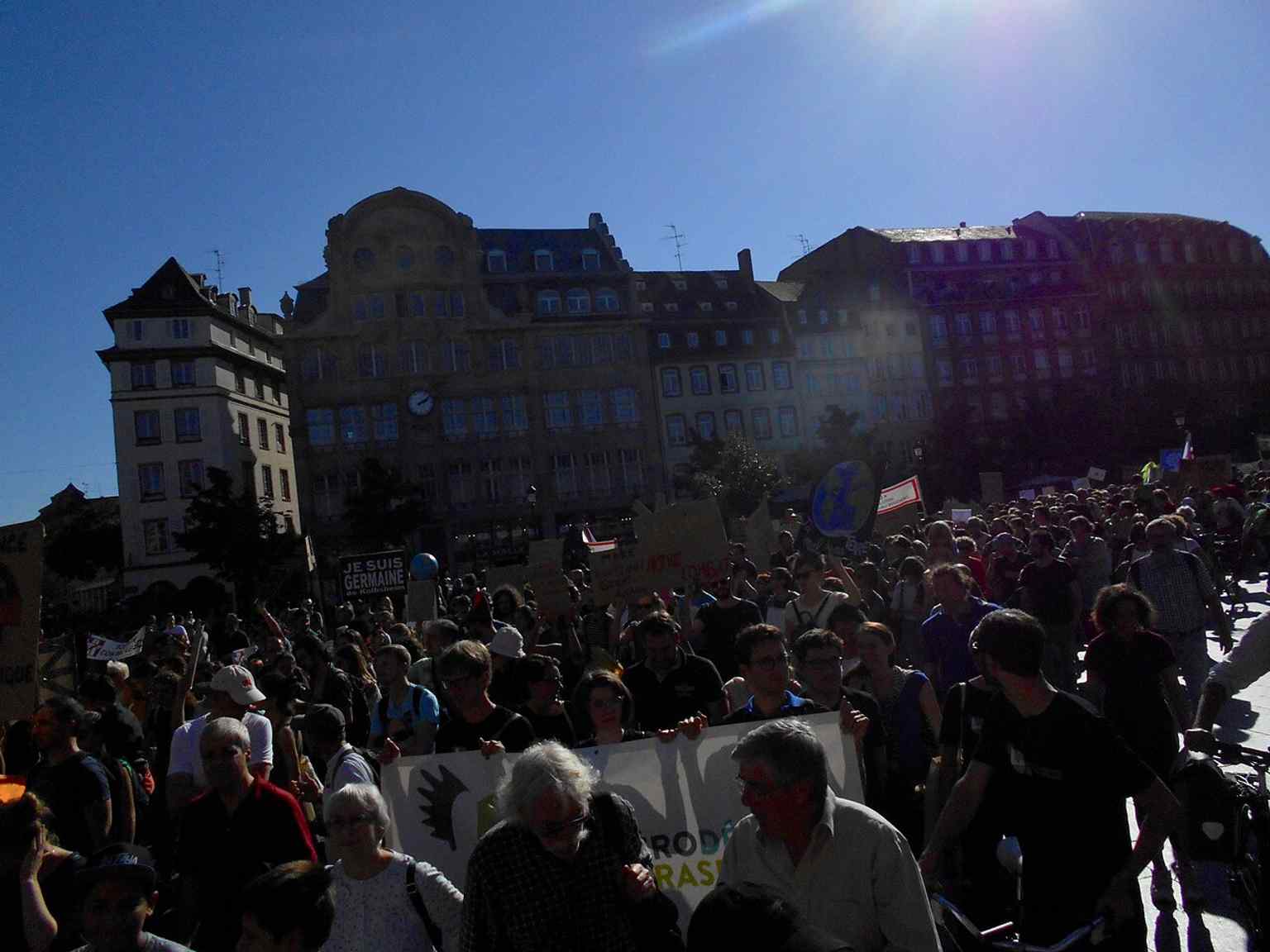
A modern protest gathering on Place Kléber, echoing the square’s long history as a rallying point for political demonstrations.Photo: Shloren, Wikimedia Commons, CC BY-SA 4.0. Cropped & resized. 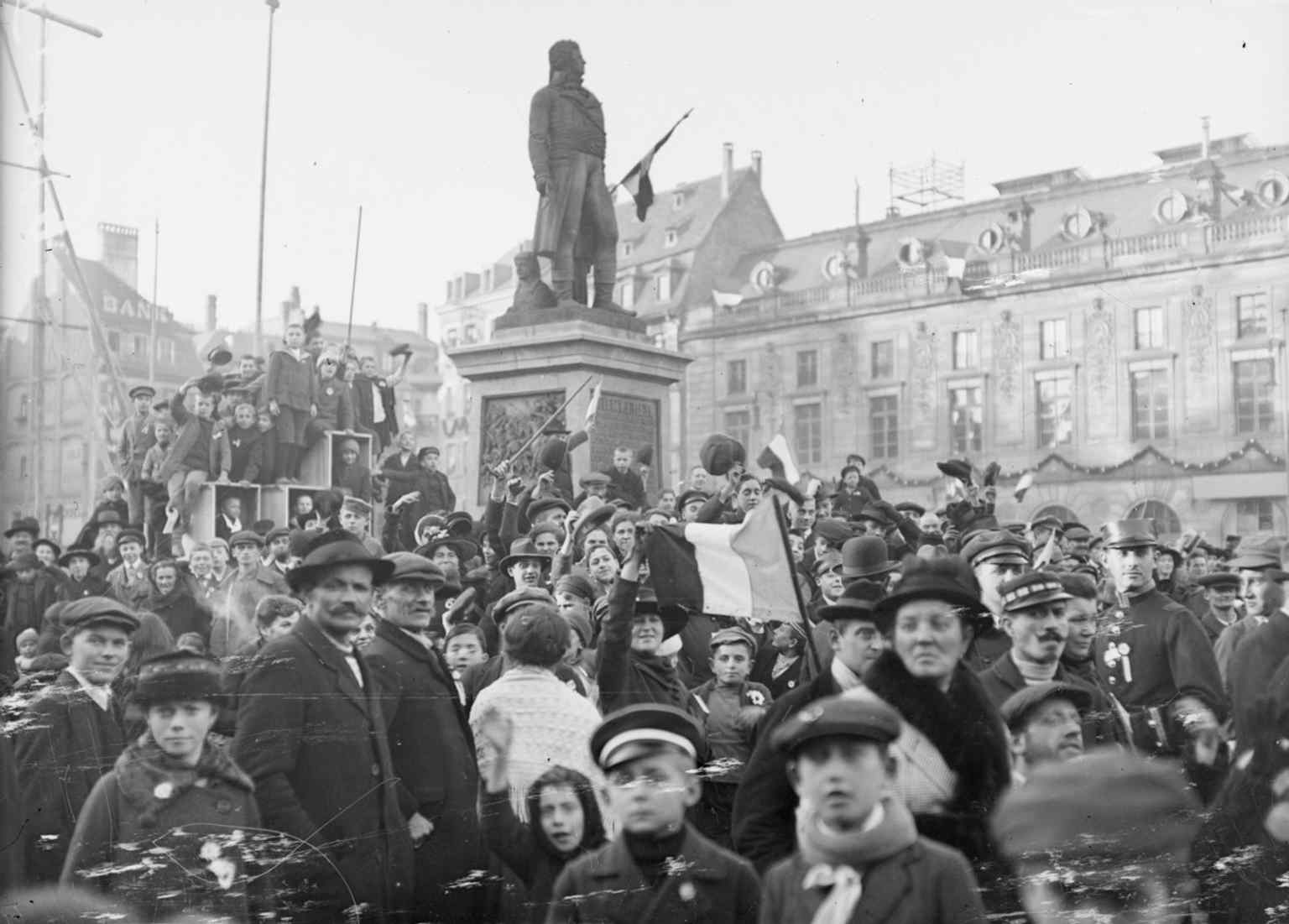
Crowds filling the square in November 1918, when Place Kléber became a dramatic civic stage at the end of World War I.Photo: Gustave Alaux, Wikimedia Commons, Public domain. Cropped & resized. 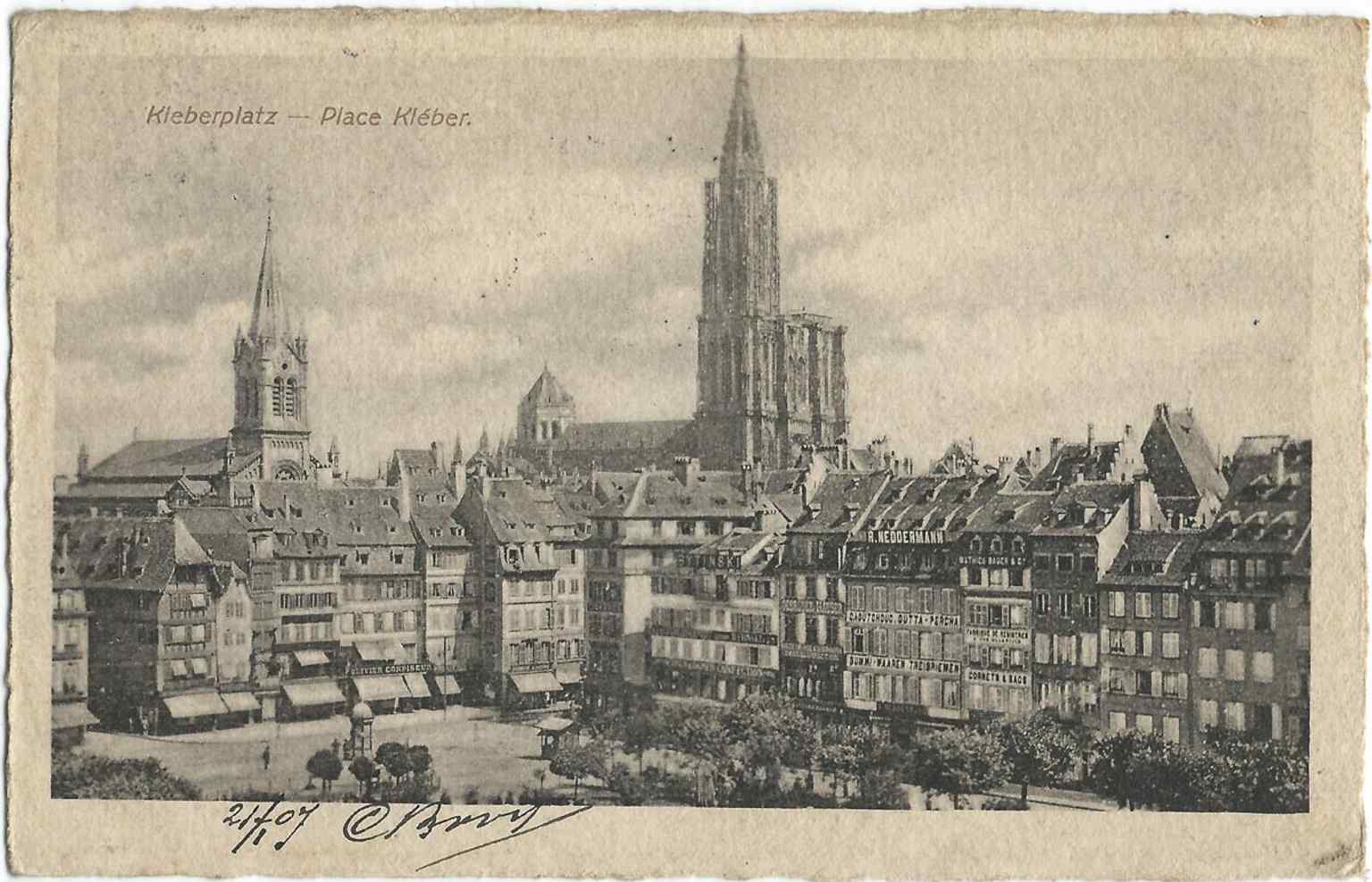
A postcard view of Strasbourg from the early 1900s, useful for showing how the Place Kléber area looked before modern redevelopment.Photo: Unknown authorUnknown author, Wikimedia Commons, Public domain. Cropped & resized. 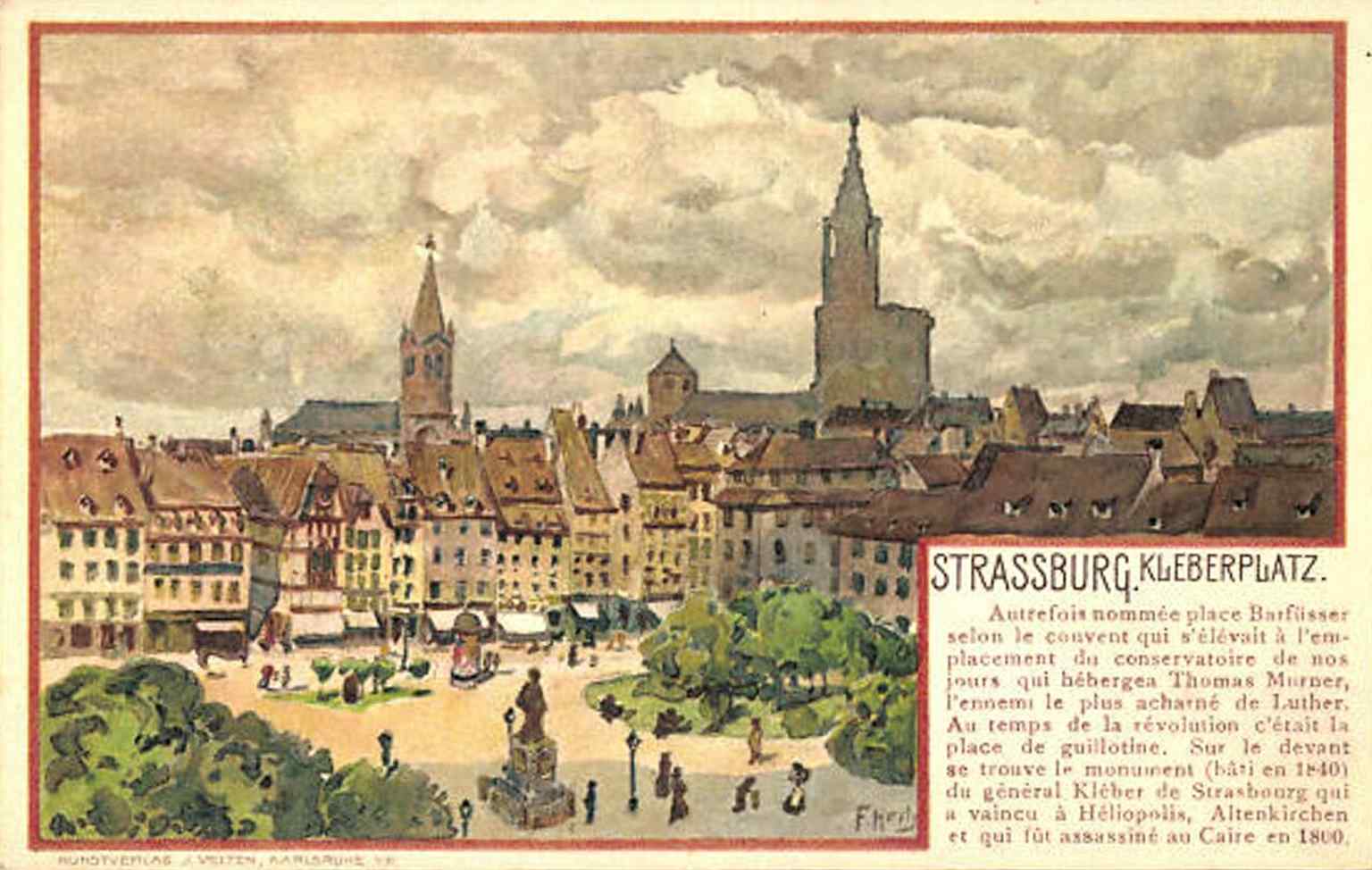
A 1916 postcard of Kleberplatz, capturing the square’s early-20th-century urban character under German rule.Photo: Franz Xaver Hoch, Wikimedia Commons, Public domain. Cropped & resized. On your left, Petite France appears as a knot of half-timbered houses with dark wooden frames, steep gabled roofs, and canals sliding between the façades. Pretty, yes... but…Read moreShow less
Open dedicated page →On your left, Petite France appears as a knot of half-timbered houses with dark wooden frames, steep gabled roofs, and canals sliding between the façades.
Pretty, yes... but this quarter earned its beauty the hard way. Petite France belongs to the Grande Île, the historic island at the heart of Strasbourg, shaped by the River Ill and a web of canals. Once you see that island logic, the city starts to read like a map drawn by water instead of streets.
This neighborhood sits on the south-west edge of that island core, and for centuries it worked for a living. Tanners, millers, fishermen, and boatmen filled these banks. The craft guilds here - trade groups that organized skills, prices, and standards - depended on water every day. Tanners soaked and washed hides in it, mills borrowed its force, and barges used it as the city’s delivery route. The result was profitable, necessary... and, for the tanners especially, not exactly perfume-counter material. Strasbourg kept these messy trades near the canals and a little apart from grander homes, which was practical and, let’s say, socially convenient.
That working history still hides in the buildings. On Rue du Bain-aux-Plantes, the oldest tanners’ houses have ventilated attics, open enough to dry skins after treatment. One of the clearest examples came from a man with means: in fifteen sixty-six, the wealthy tanner Michel Wittich built number forty on that street. So this was never just a poor backwater. Some people here made serious money from hard, wet labor.
And then there’s the name. Petite France sounds sweet as pie, but it began with an hospice for patients suffering from syphilis, the so-called “French disease” in that era. Locals called the place Französel in Alsatian, “Little France,” and the name gradually spread from the hospice to the surrounding ground, then to the whole district. Strasbourg has a habit of turning rough origins into lasting identity.
Most visitors admire the Maison des Tanneurs and assume it simply drifted intact out of the sixteenth century. Here’s the local version: eight winegrowers rescued and restored it in nineteen forty-nine, then turned it into a restaurant; the Behe family took it over in nineteen fifty-six. That famous overhanging silhouette beside a branch of the Ill is not just survival. It is revival.
If you want, take a quick look at the before-and-after image in the app; the eighteen ninety-five view shows a riverside that still worked for a living before it became one of Strasbourg’s signature scenes.
This is also more than one pretty canal. Petite France spreads across a small delta of five channels, including the navigation canal and mill waterways like the Zornmühle and Spitzmühle. Even the little Pont du Faisan nearby turns to let boats through - a neat reminder that these waters were built to do things.
In a moment, head on toward the Vauban Dam. That stop makes the next piece of the puzzle clear: here, canals were not just decoration for postcards... they were machinery for keeping Strasbourg alive.
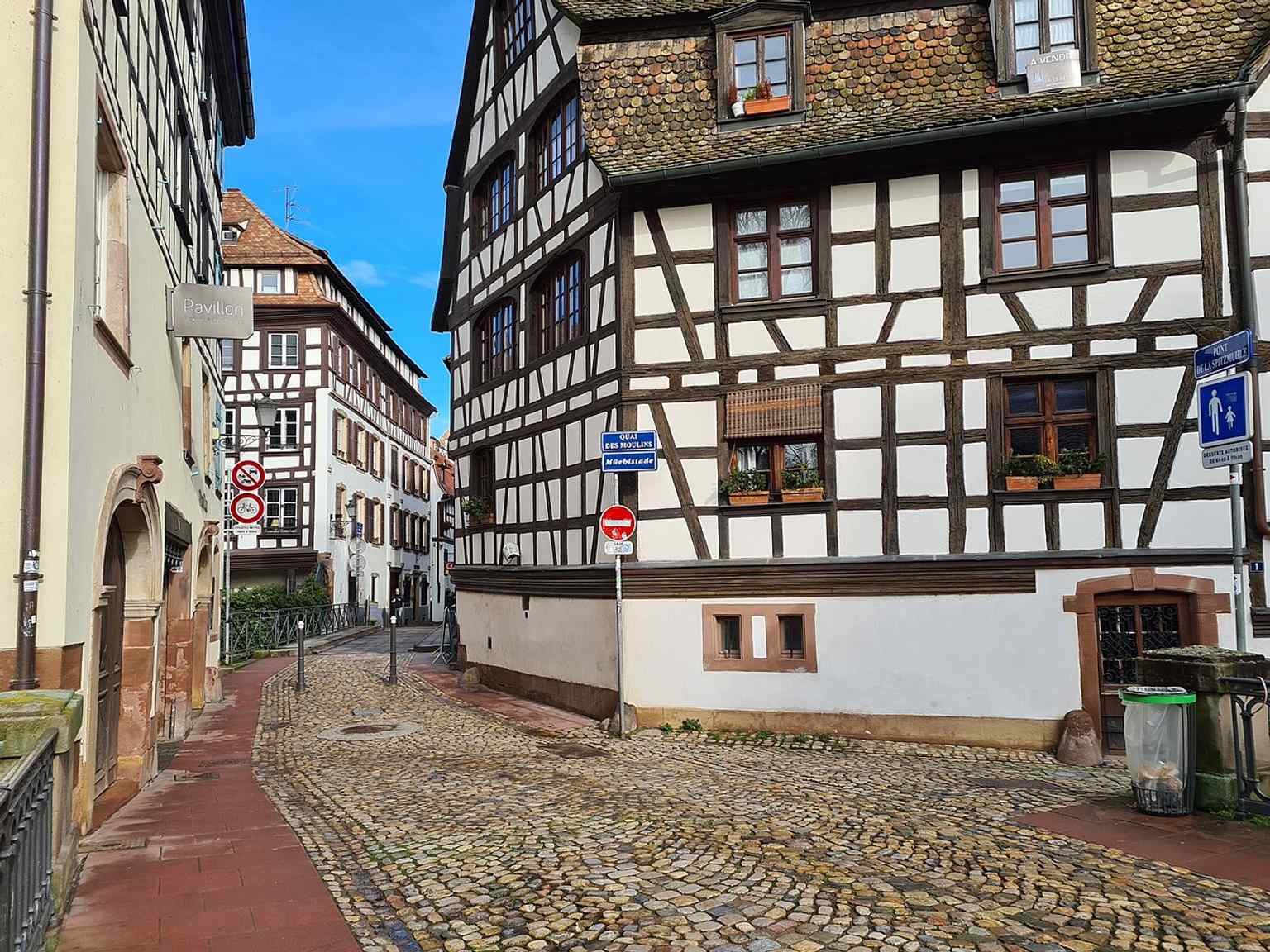
The Spitzmühle canal corner near the Pont du Faisan captures the maze of waterways that defines Petite France.Photo: Ji-Elle, Wikimedia Commons, CC BY-SA 4.0. Cropped & resized. 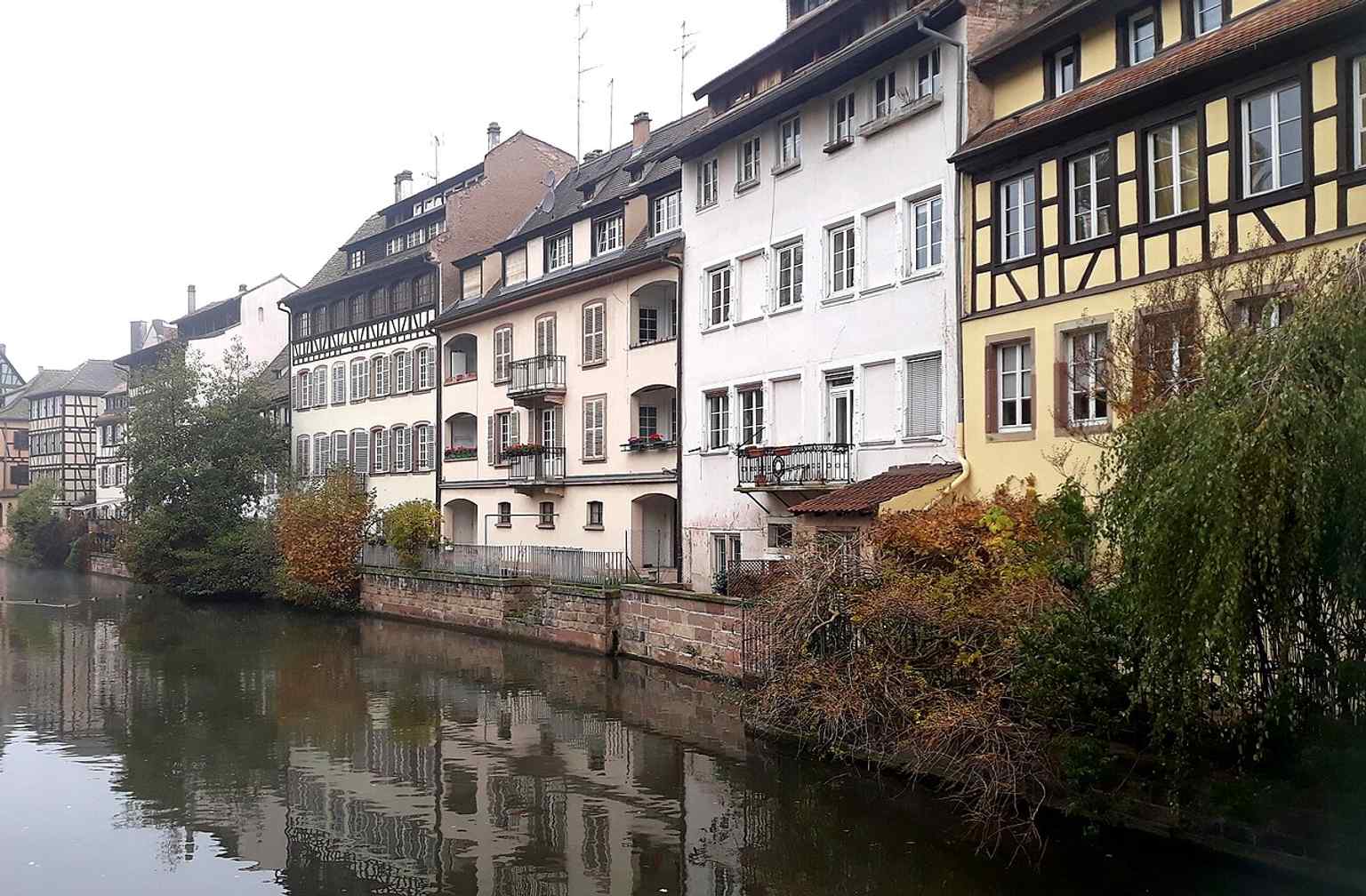
A classic view of timber-framed houses from the Pont du Faisan, echoing the half-timbered façades that made the quarter famous.Photo: acediscovery, Wikimedia Commons, CC BY 4.0. Cropped & resized. 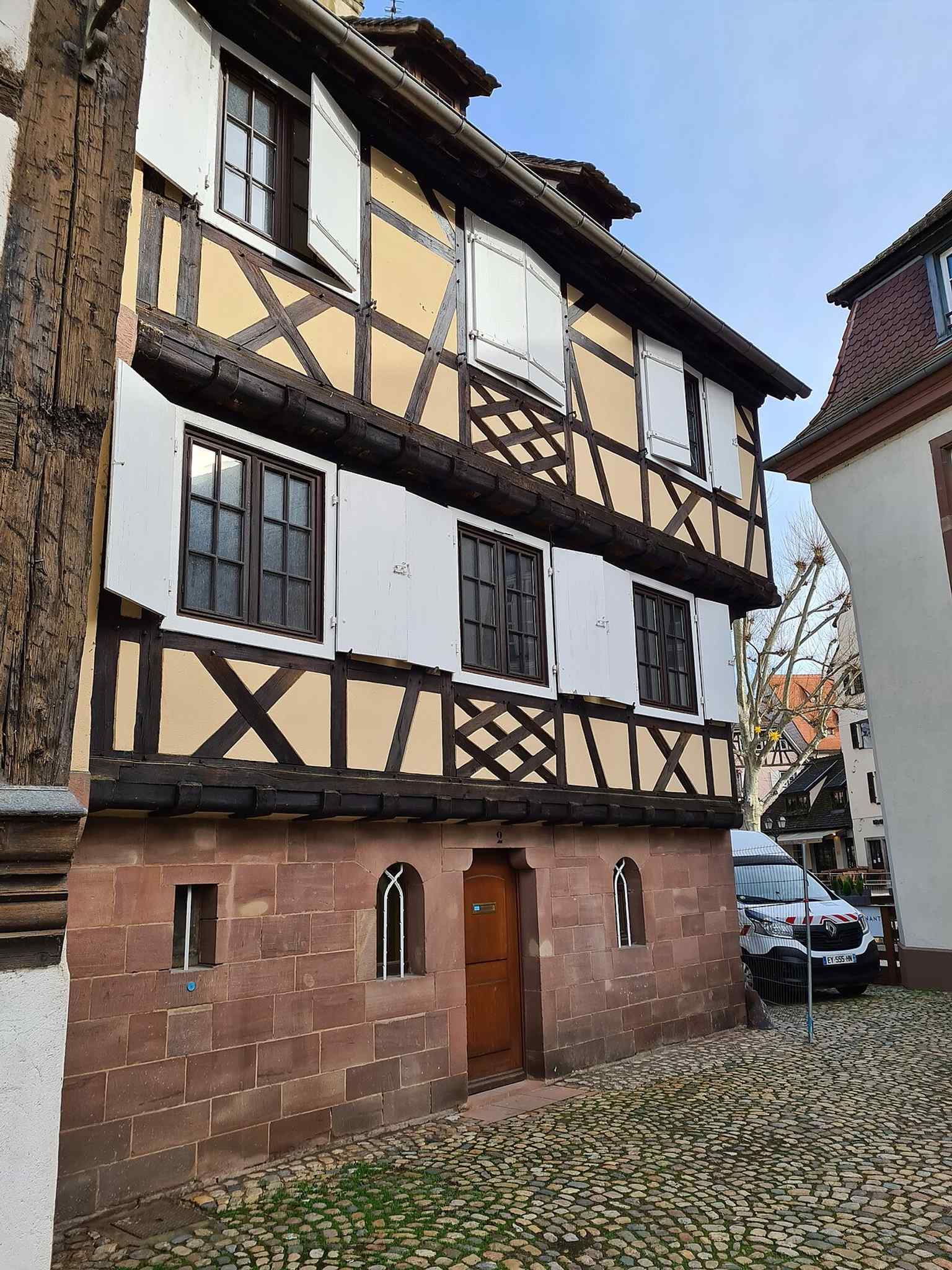
The quay of the Moulins along the water shows the mixed riverfront of homes and canals that shaped the district’s identity.Photo: Ji-Elle, Wikimedia Commons, CC BY-SA 4.0. Cropped & resized. 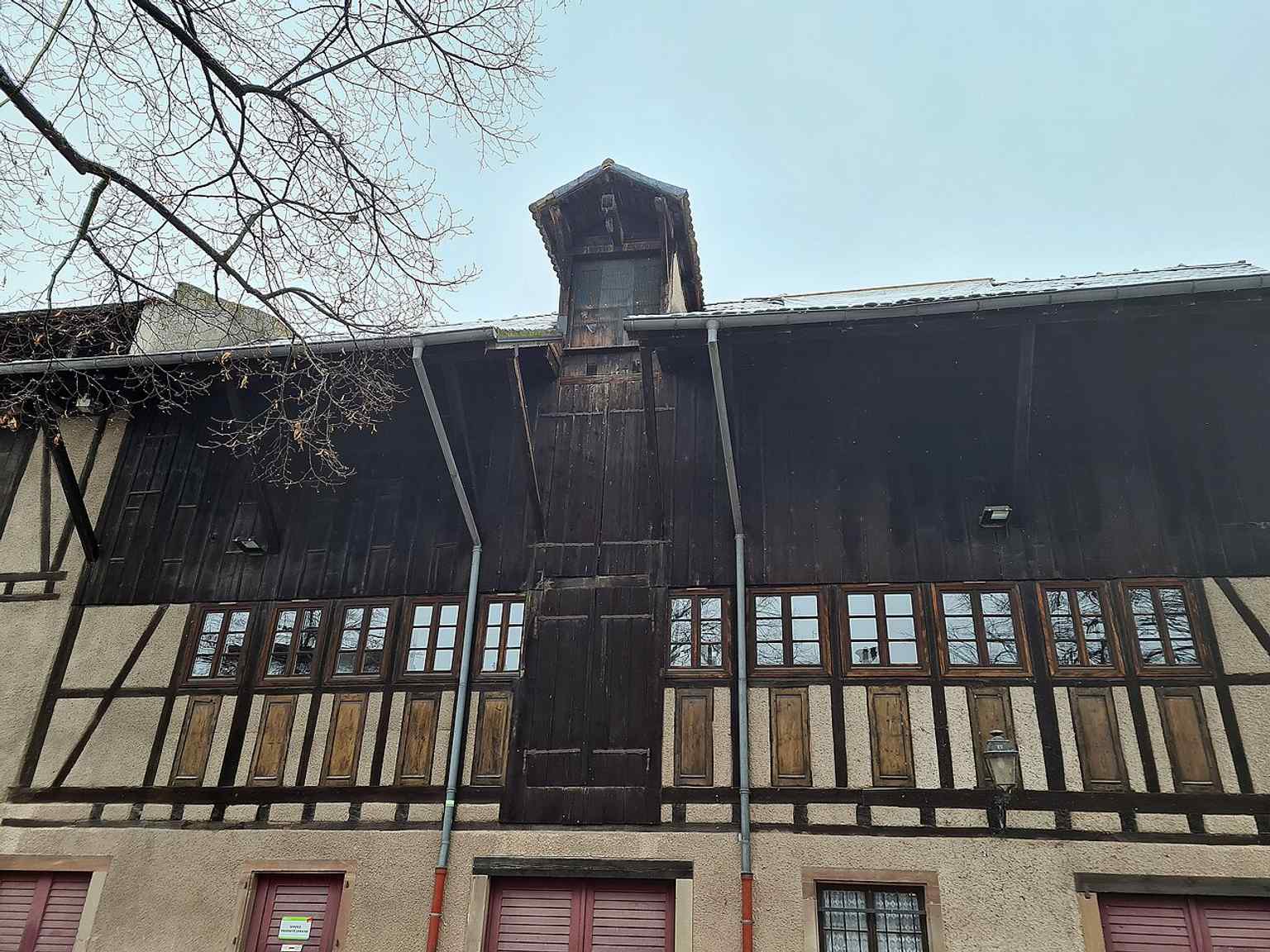
An old warehouse behind Rue des Moulins reminds us that Petite France was not only scenic, but also a working riverside quarter.Photo: Ji-Elle, Wikimedia Commons, CC BY-SA 4.0. Cropped & resized. 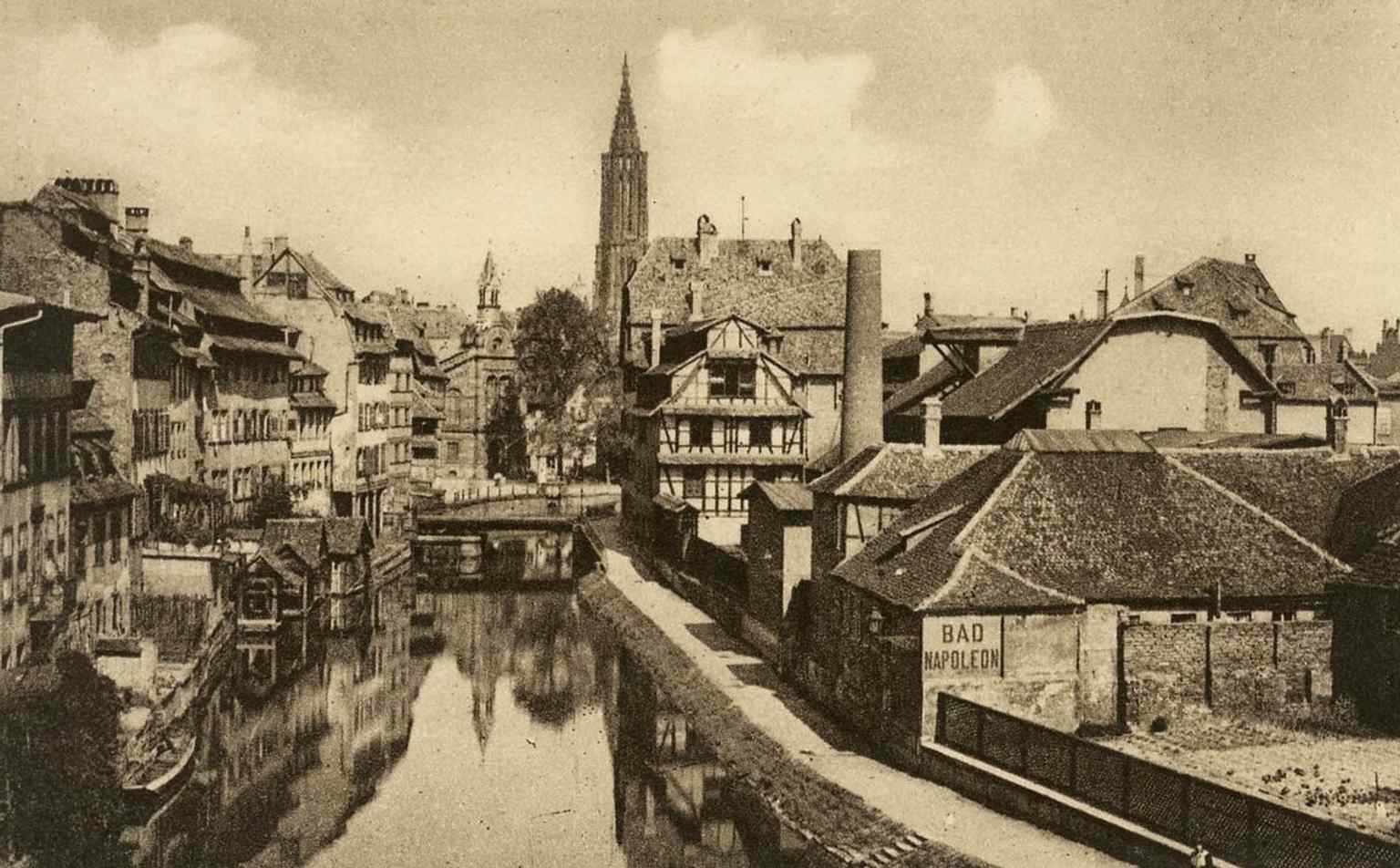
A 1920 postcard view of the quai de la Petite France, useful for showing how the district looked in the early 20th century.Photo: Félix Luib, Wikimedia Commons, Public domain. Cropped & resized. 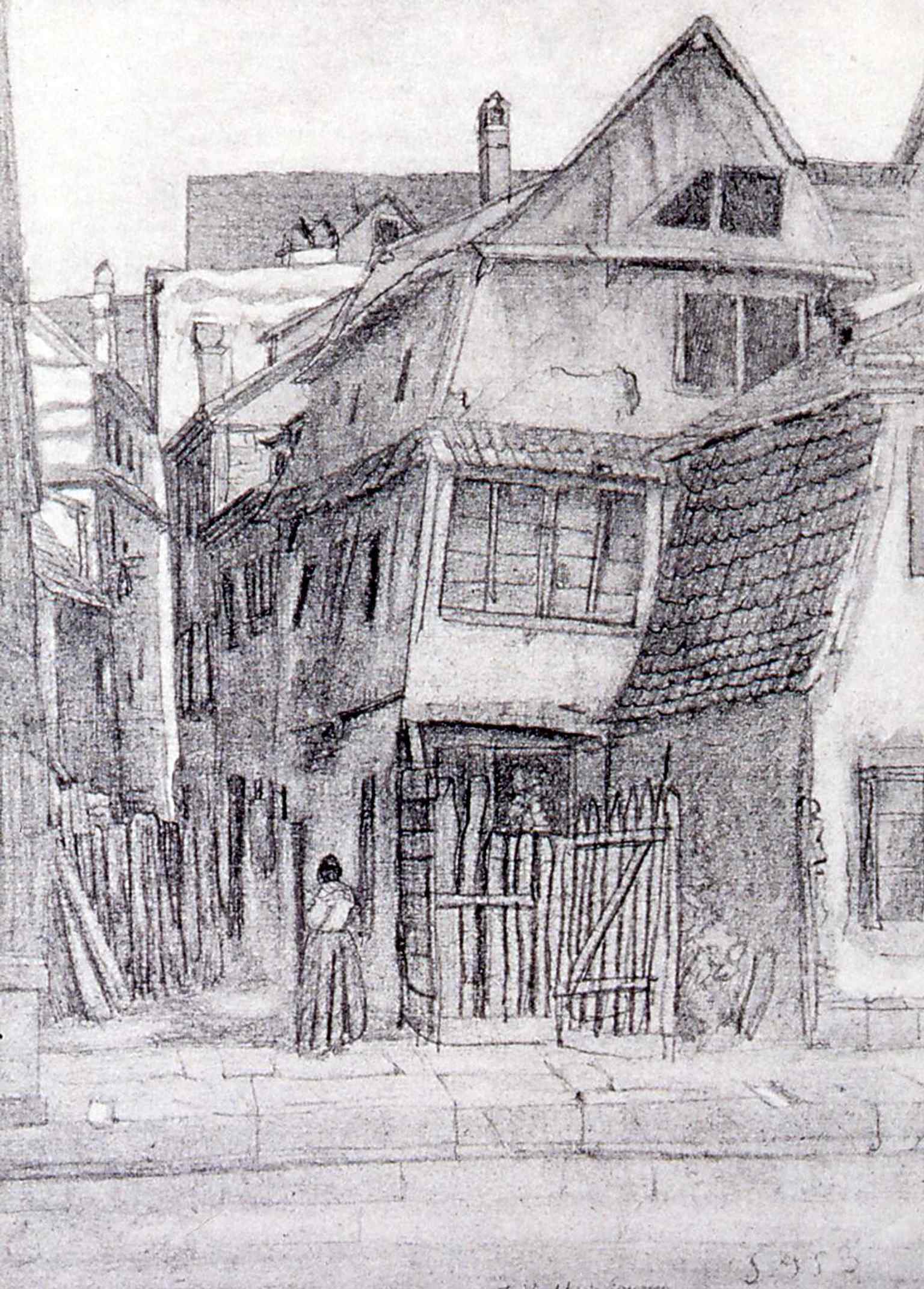
This 1895 view preserves an older riverside atmosphere before later tourism reshaped the district’s image.Photo: Ji-Elle, Wikimedia Commons, CC BY-SA 4.0. Cropped & resized. 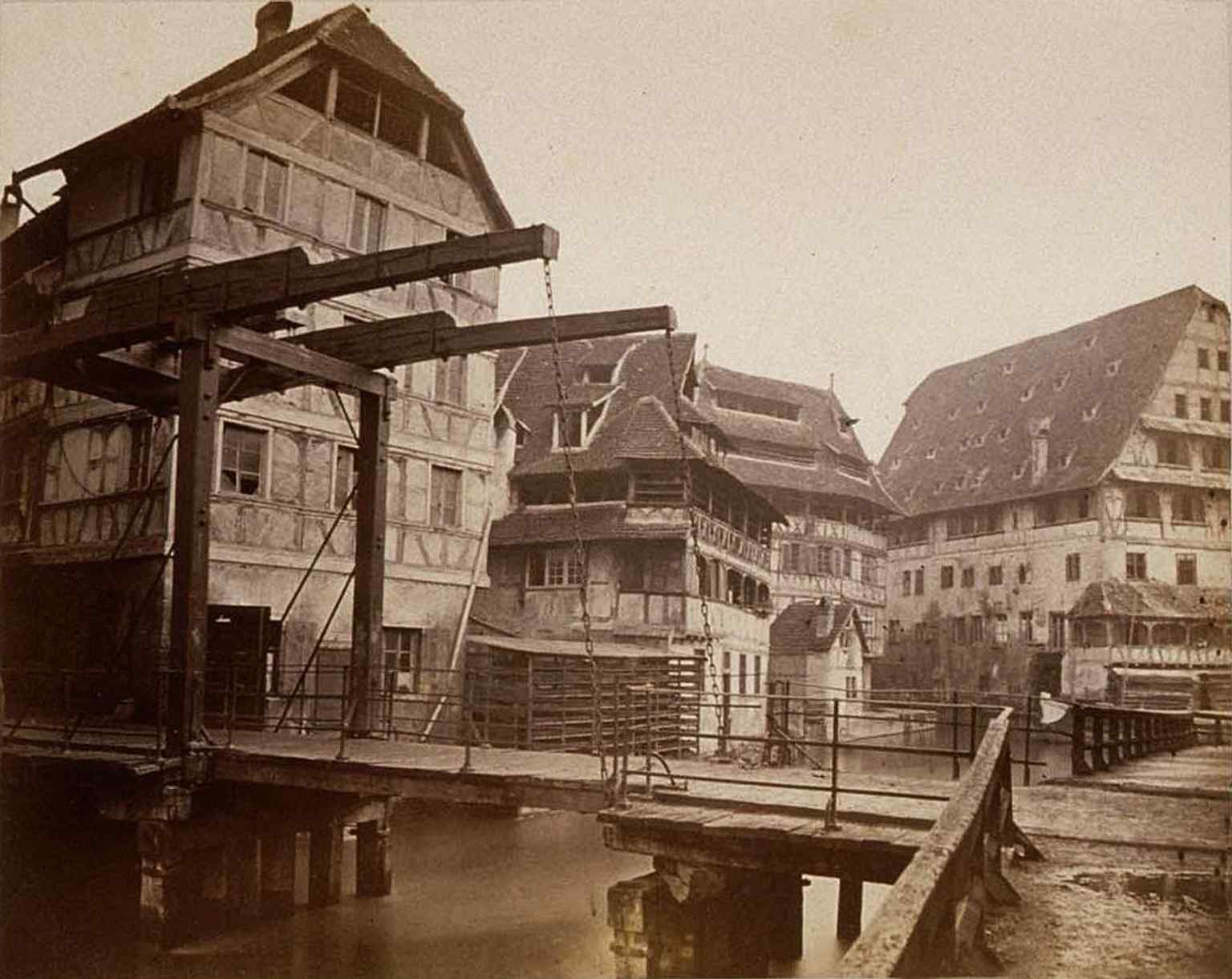
An 1871 view of the Gerbergraben area links Petite France to the older defensive waterways that once surrounded Strasbourg.Photo: Georg Maria Eckert, Wikimedia Commons, Public domain. Cropped & resized. 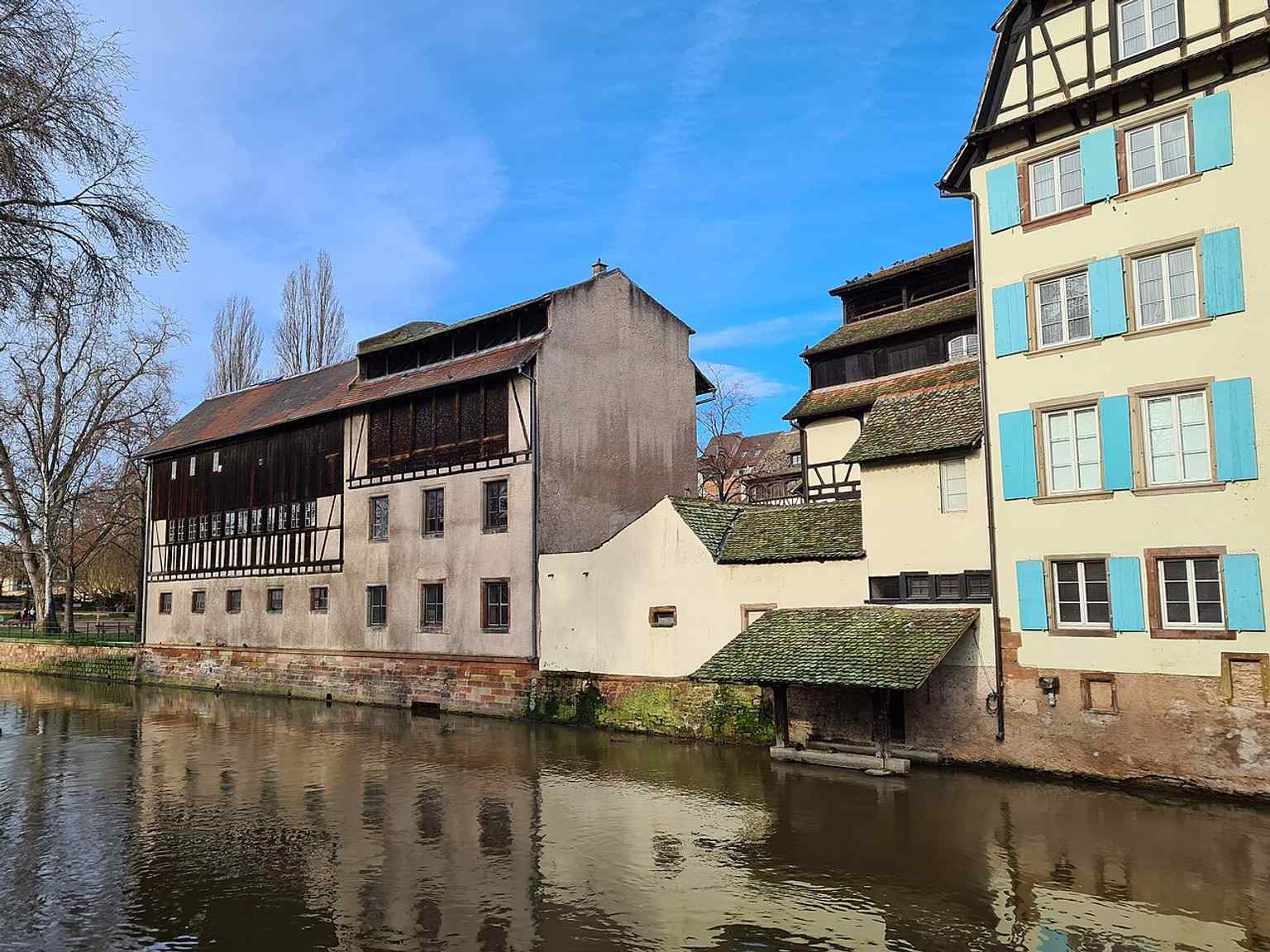
The Zornmühle canal highlights the district’s network of five channels, a key part of its historic water landscape.Photo: Ji-Elle, Wikimedia Commons, CC BY-SA 4.0. Cropped & resized. 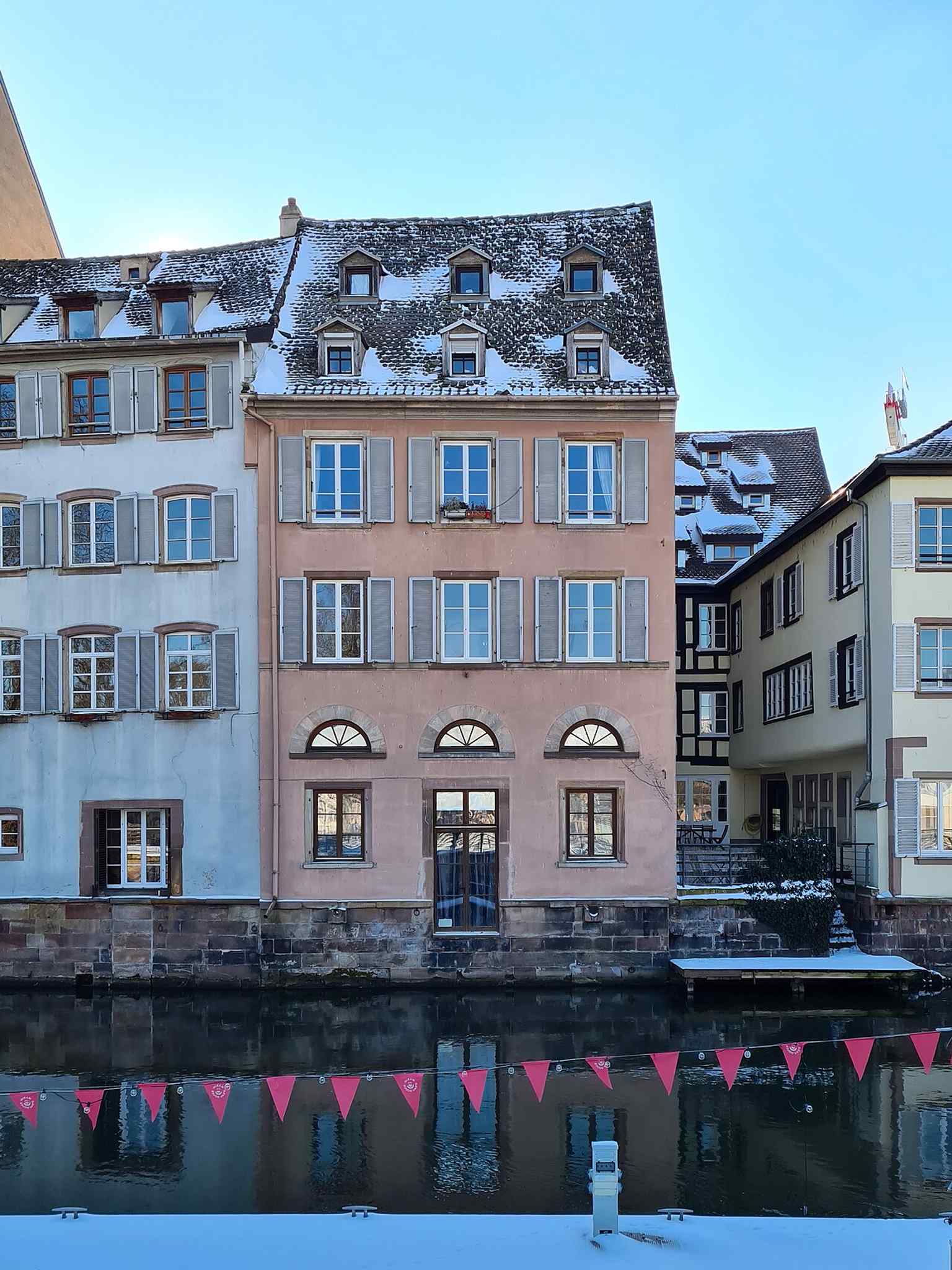
Another view of the Zornmühle canal helps show the quieter service waterways behind the postcard-famous façades.Photo: Ji-Elle, Wikimedia Commons, CC BY-SA 4.0. Cropped & resized. 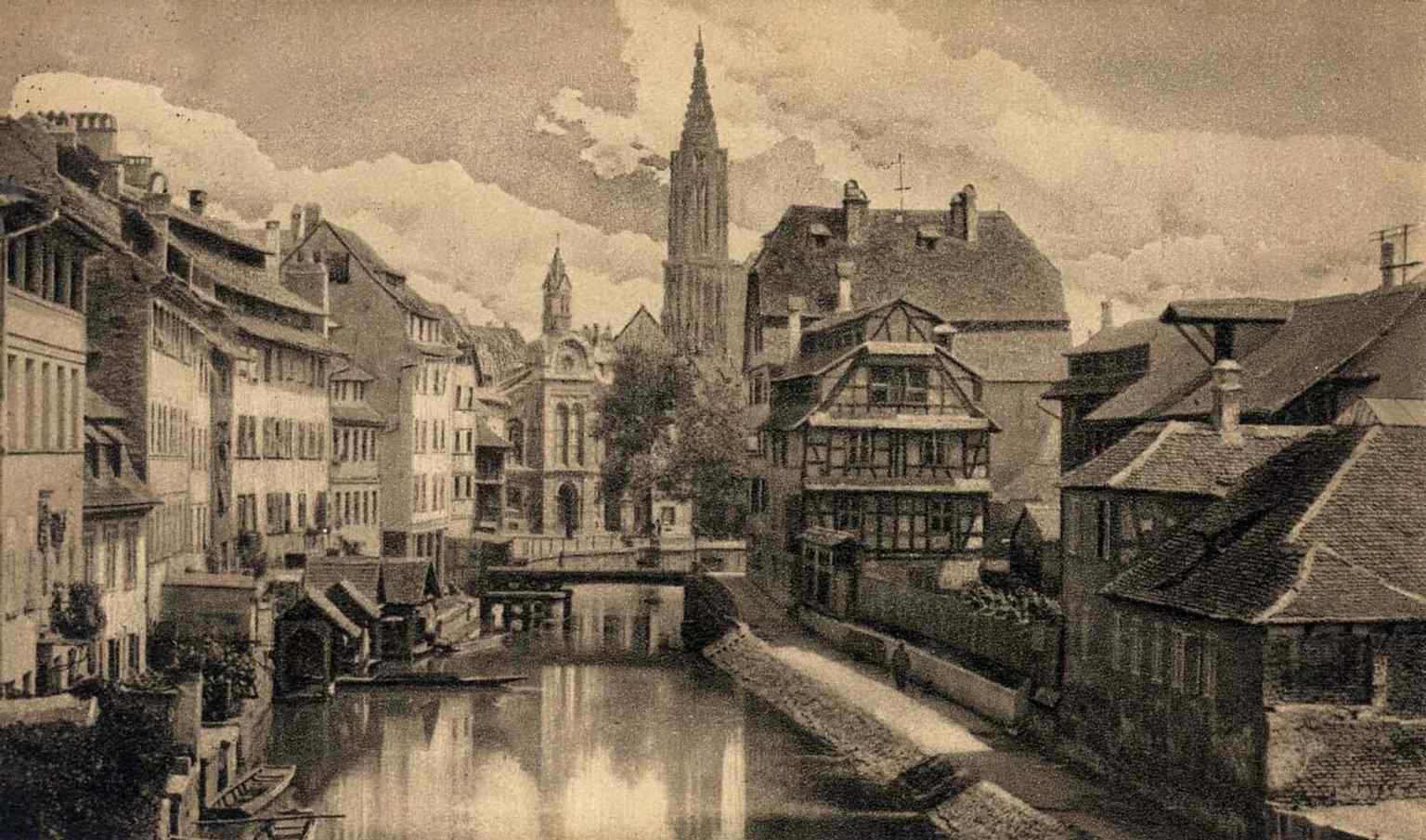
A 1930 postcard of the quai de la Petite France bridges the gap between the old artisan quarter and its tourist era.Photo: Felix Luib, Wikimedia Commons, Public domain. Cropped & resized. In front of you stands a long stone bridge-dam, cut with tall arches and topped by a heavy enclosed gallery that makes the whole structure look like a fortress stretched across…Read moreShow less
Open dedicated page →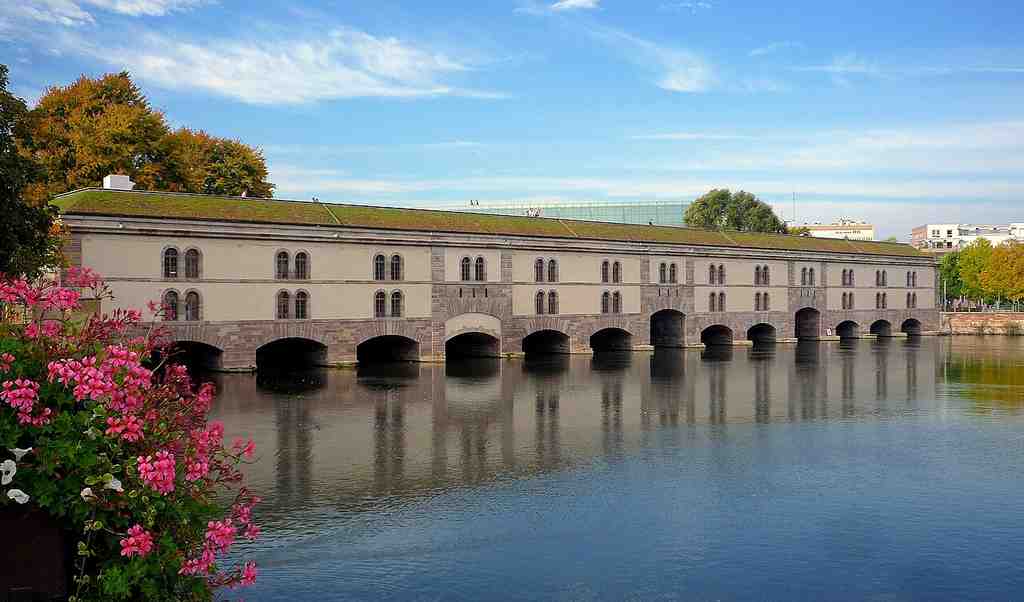
Vauban DamPhoto: Claude TRUONG-NGOC, Wikimedia Commons, CC BY-SA 3.0. Cropped & resized. In front of you stands a long stone bridge-dam, cut with tall arches and topped by a heavy enclosed gallery that makes the whole structure look like a fortress stretched across the water.
This is the Vauban Dam, though that name hides how many jobs it carried at once. Between sixteen eighty-six and sixteen ninety, Jacques Tarade directed the work here from Sébastien Le Prestre de Vauban’s plans, and Vauban kept returning to Strasbourg to inspect it himself. He was not designing scenery. He was building a machine.
Water here meant power in the most practical sense. It fed channels, protected crossings, and could be ordered to block an enemy. If Strasbourg came under siege, this barrage could help flood the southern approaches to the Grande Île, turning the river into a weapon with excellent manners.
Most visitors miss its double life. The same structure that could drown an advance also served as the Écluse aux farines, the Flour Lock, with flour stored in the upper floor and attic. That’s Strasbourg for you... one building, half sword, half pantry.
And like any serious machine, it kept demanding repairs. By seventeen forty-seven, engineers were worrying over masonry, carpentry, ironwork, sluices, drainage, and canal clearing. In seventeen forty-eight and seventeen forty-nine, Baudouin and Duportal warned it was leaking and weakening the city’s defenses, so they called for new masonry and new heavy gate grilles.
If you glance at the early view on your screen, you can see it before monument status softened its image. Inside, the passage later became a lapidarium, or stone-display gallery, showing casts of cathedral and Palais Rohan sculptures. In eighteen seventy, the army used the flooding system one last time during the siege, and Strasbourg still fell. Charming canals, you see, sometimes depended on architecture built for emergency and coercion. Saint Thomas Church is about an eight-minute walk from here, and if you want the terrace later, this site is generally open daily from seven fifteen in the morning to nine at night.
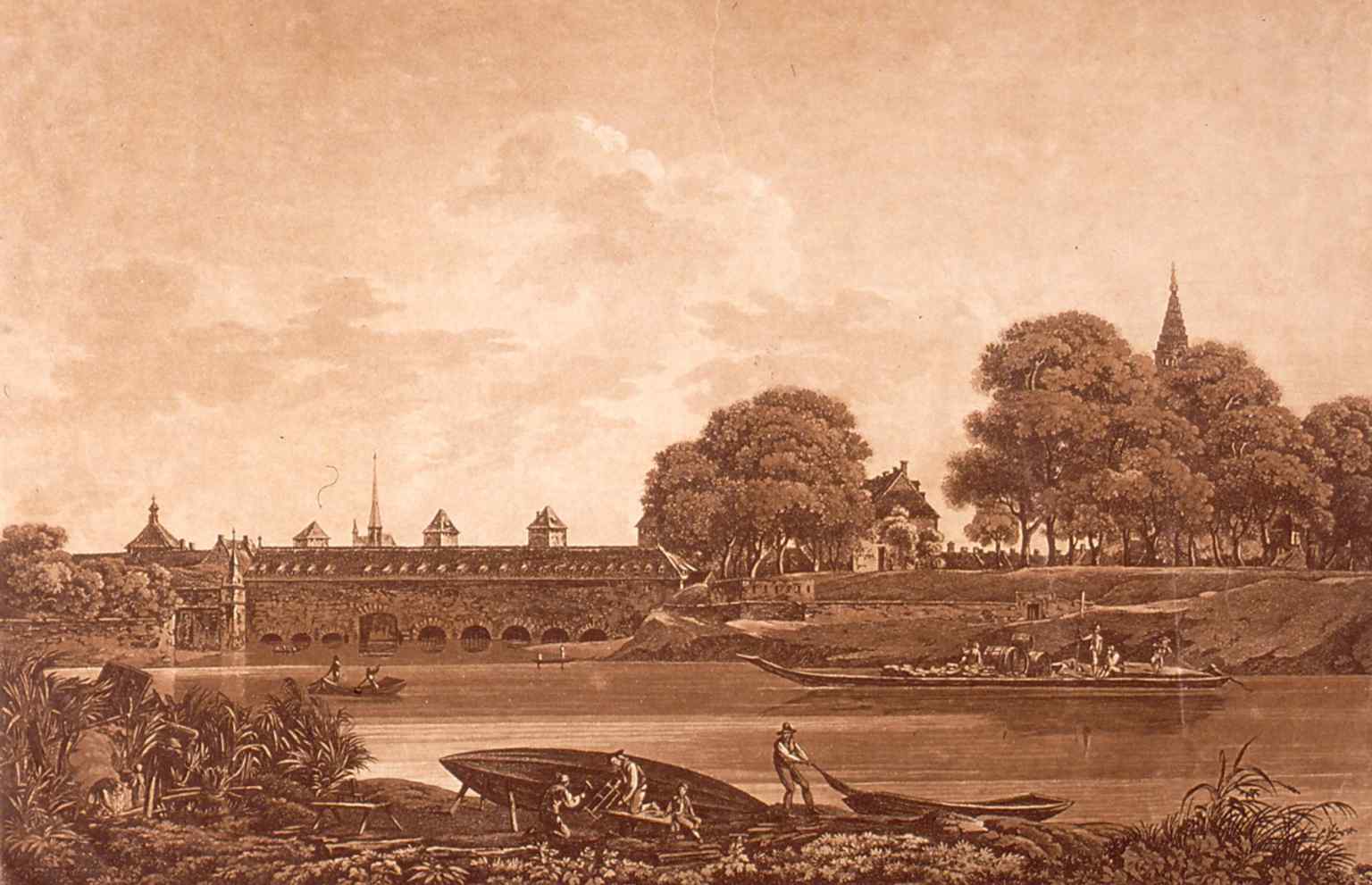
An early view of the dam from 1750, showing the fortress work long before it became a monument and public terrace.Photo: Stuntz et Reinermann, Wikimedia Commons, Public domain. Cropped & resized. 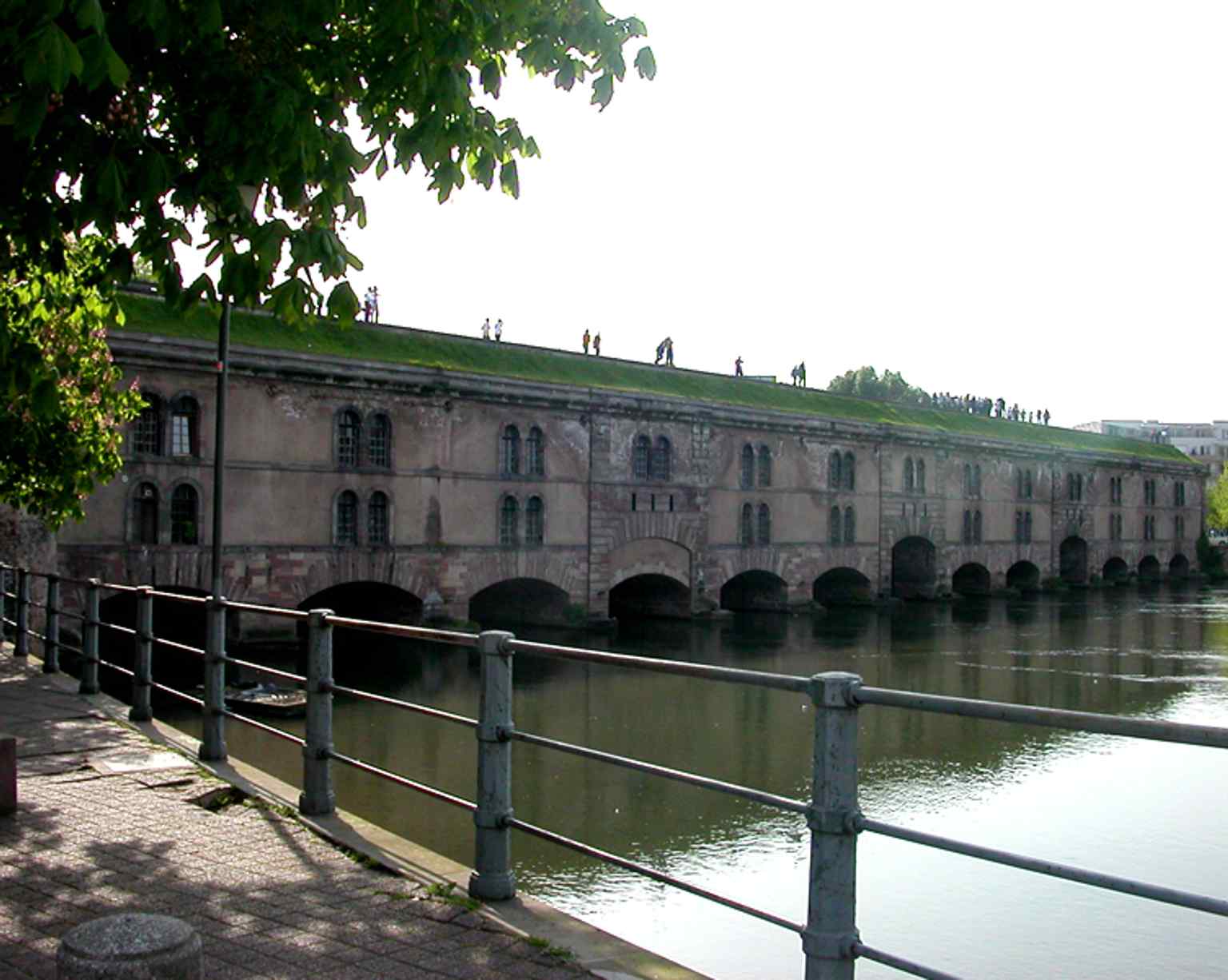
The classic west-side view of the Vauban Dam, built from Vauban’s plans by Jacques Tarade between 1686 and 1700.Photo: Quedza (Laurent Munch), Wikimedia Commons, CC BY-SA 3.0. Cropped & resized. 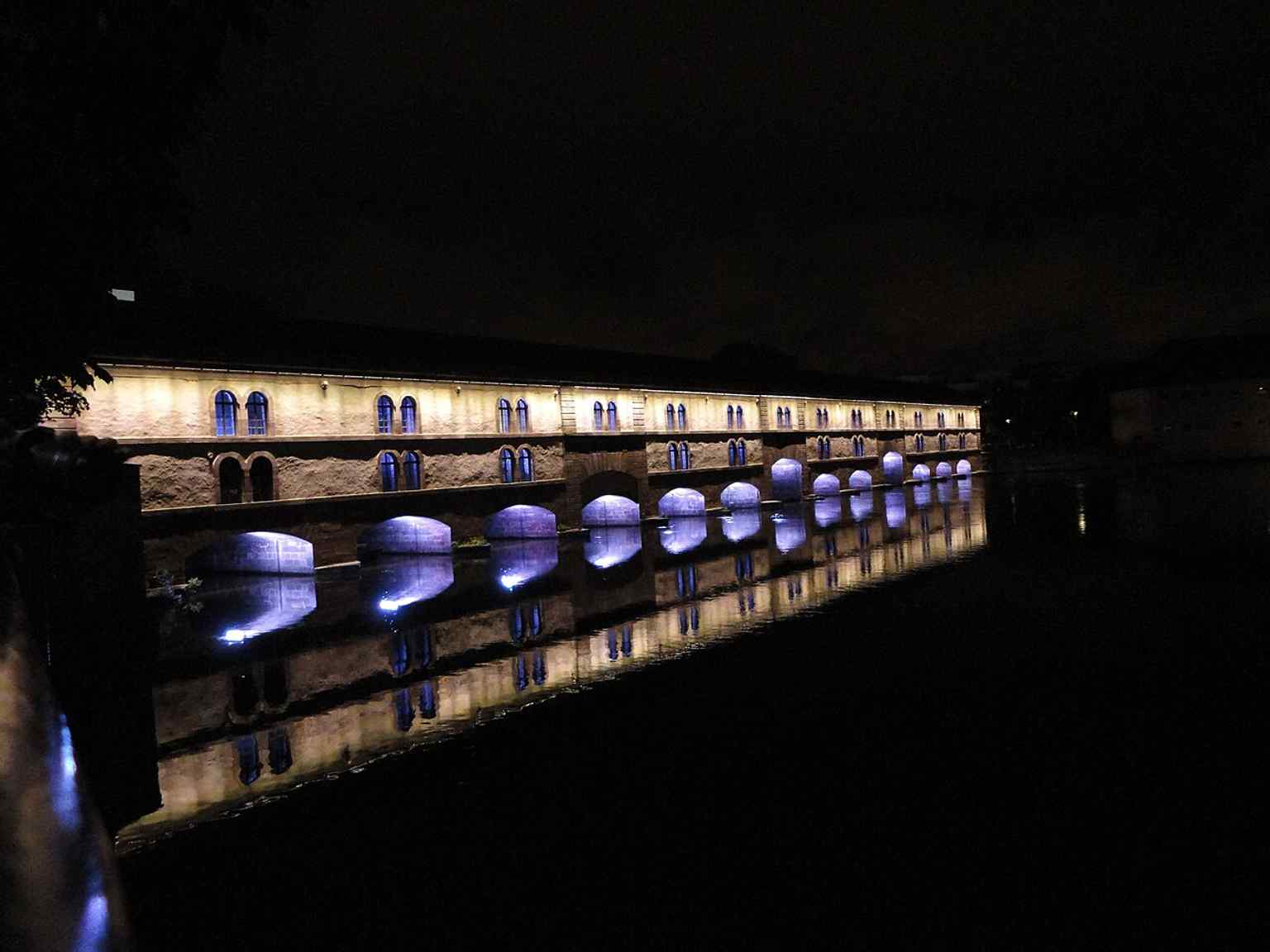
A detailed exterior view that shows the dam as both bridge and flood-control machine, with the fortified walls and sluice elements still visible.Photo: Austriantraveler, Wikimedia Commons, CC BY-SA 3.0. Cropped & resized. 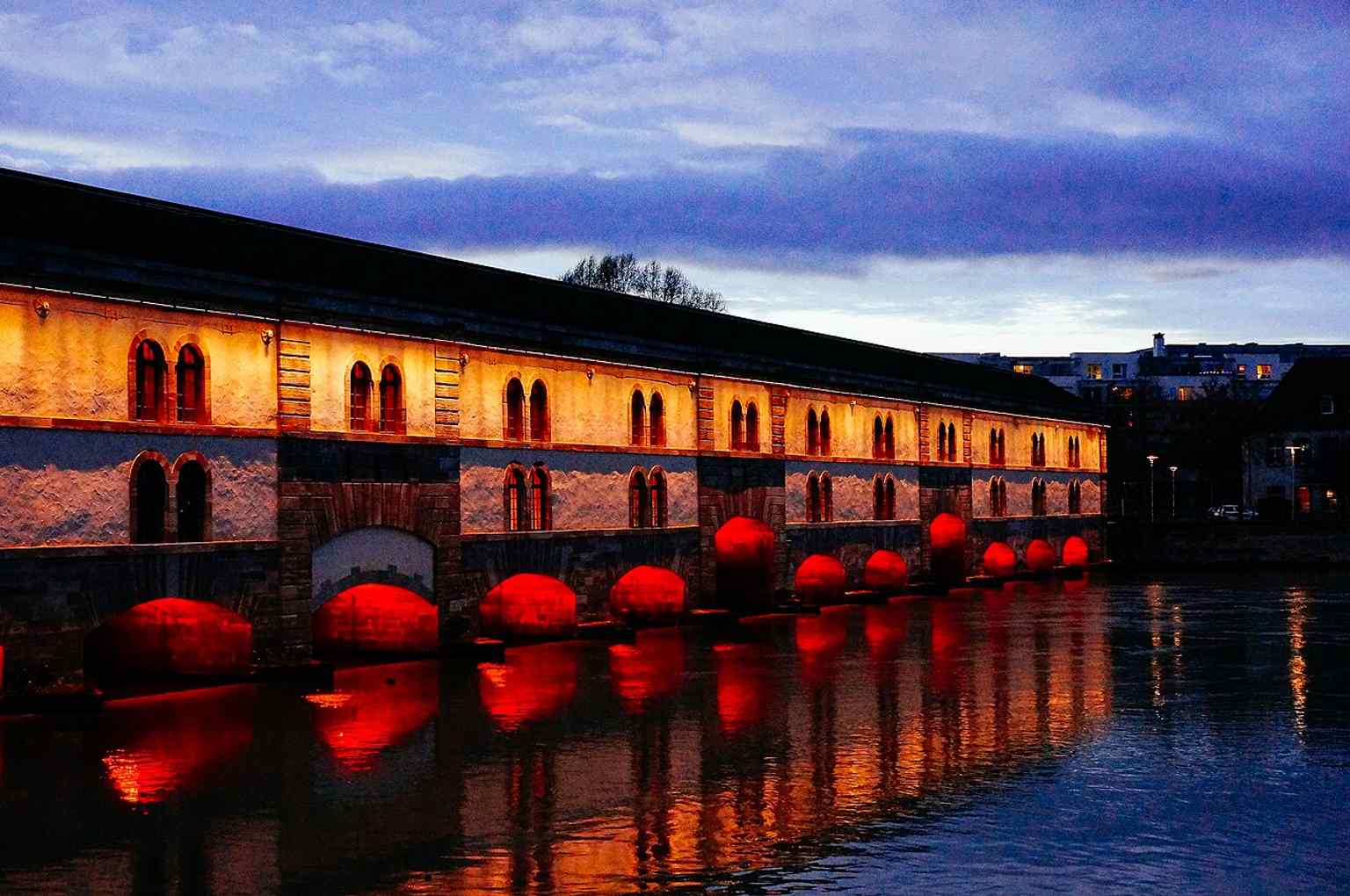
A clean modern view of the Barrage Vauban on the Ill, useful for explaining its role in the Strasbourg fortifications.Photo: Li FU, Wikimedia Commons, CC BY-SA 3.0. Cropped & resized. 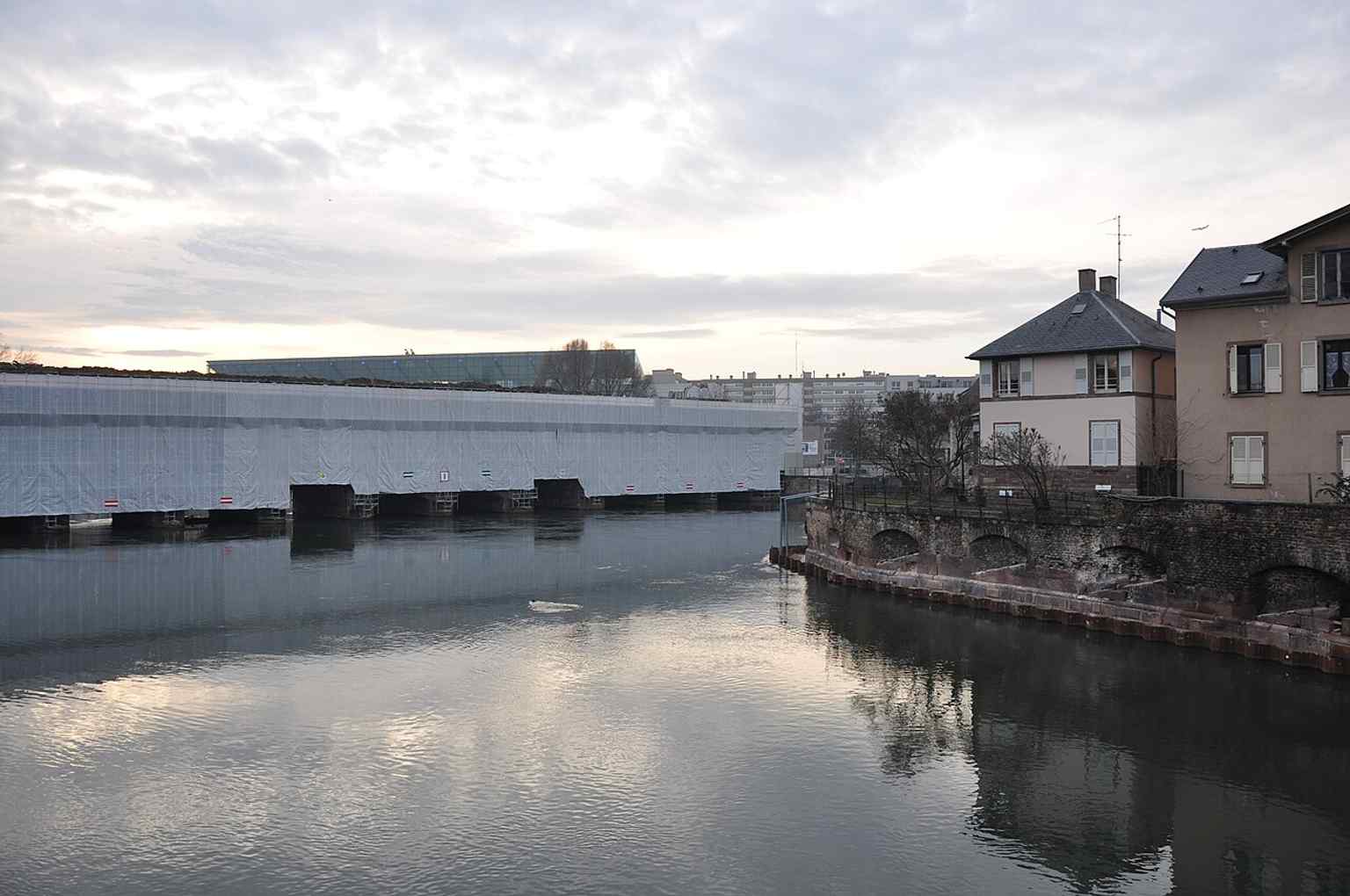
The dam from the river side, emphasizing how it spans the Ill and controls water in front of the old ramparts.Photo: M.Strīķis, Wikimedia Commons, CC BY-SA 3.0. Cropped & resized. 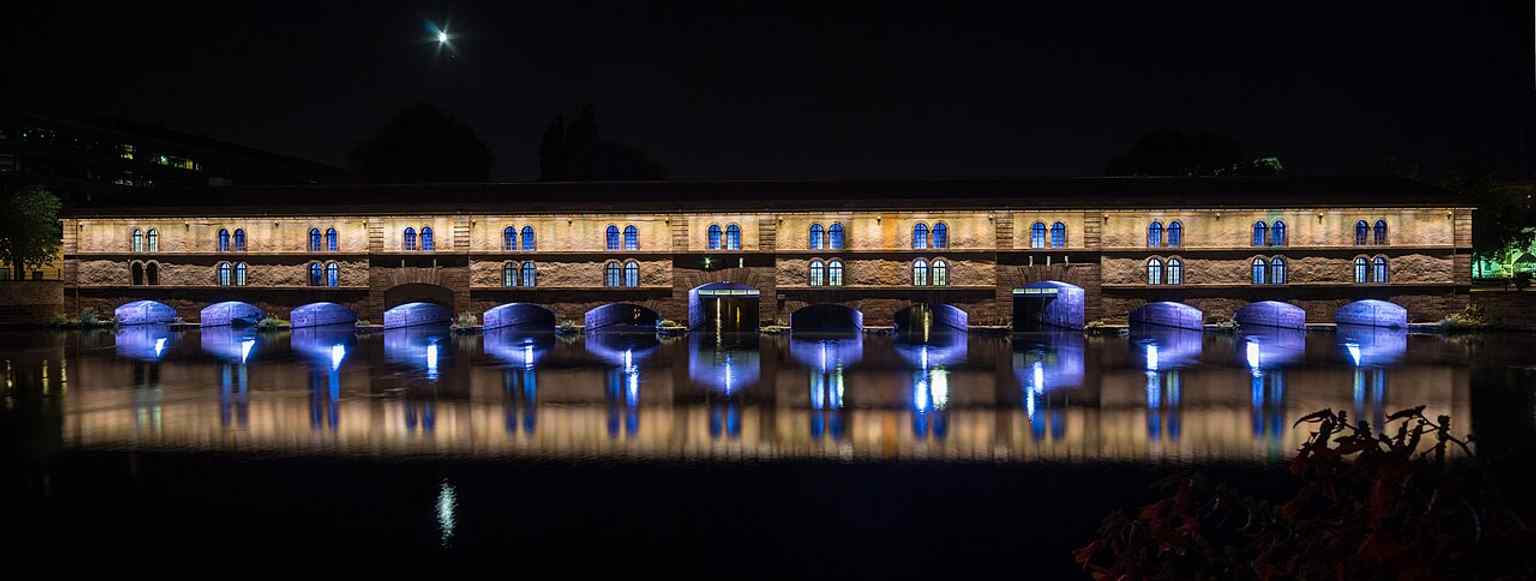
The Vauban Dam lit at night, matching its modern life as a public terrace since the military use ended.Photo: Pedro J Pacheco, Wikimedia Commons, CC BY-SA 4.0. Cropped & resized. 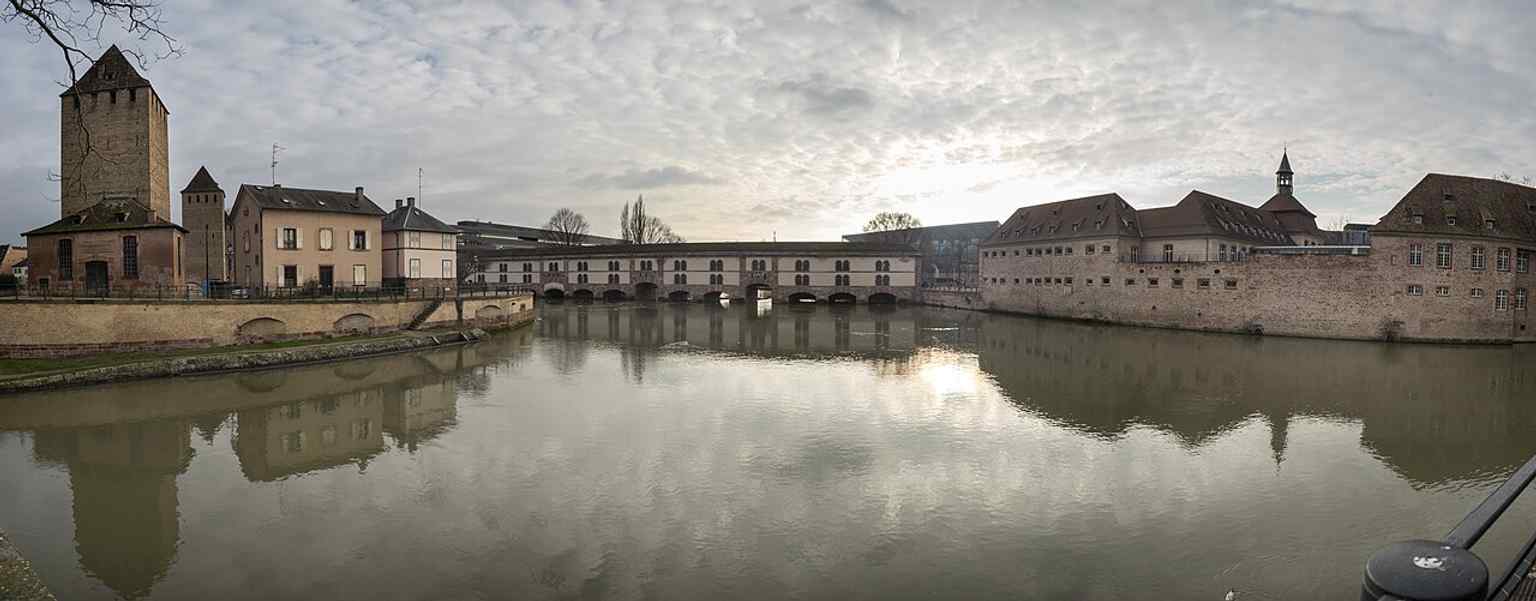
A wide panoramic view that makes the dam’s bridge-like form and its position beside Petite France easy to understand.Photo: Pedro J Pacheco, Wikimedia Commons, CC BY-SA 4.0. Cropped & resized. 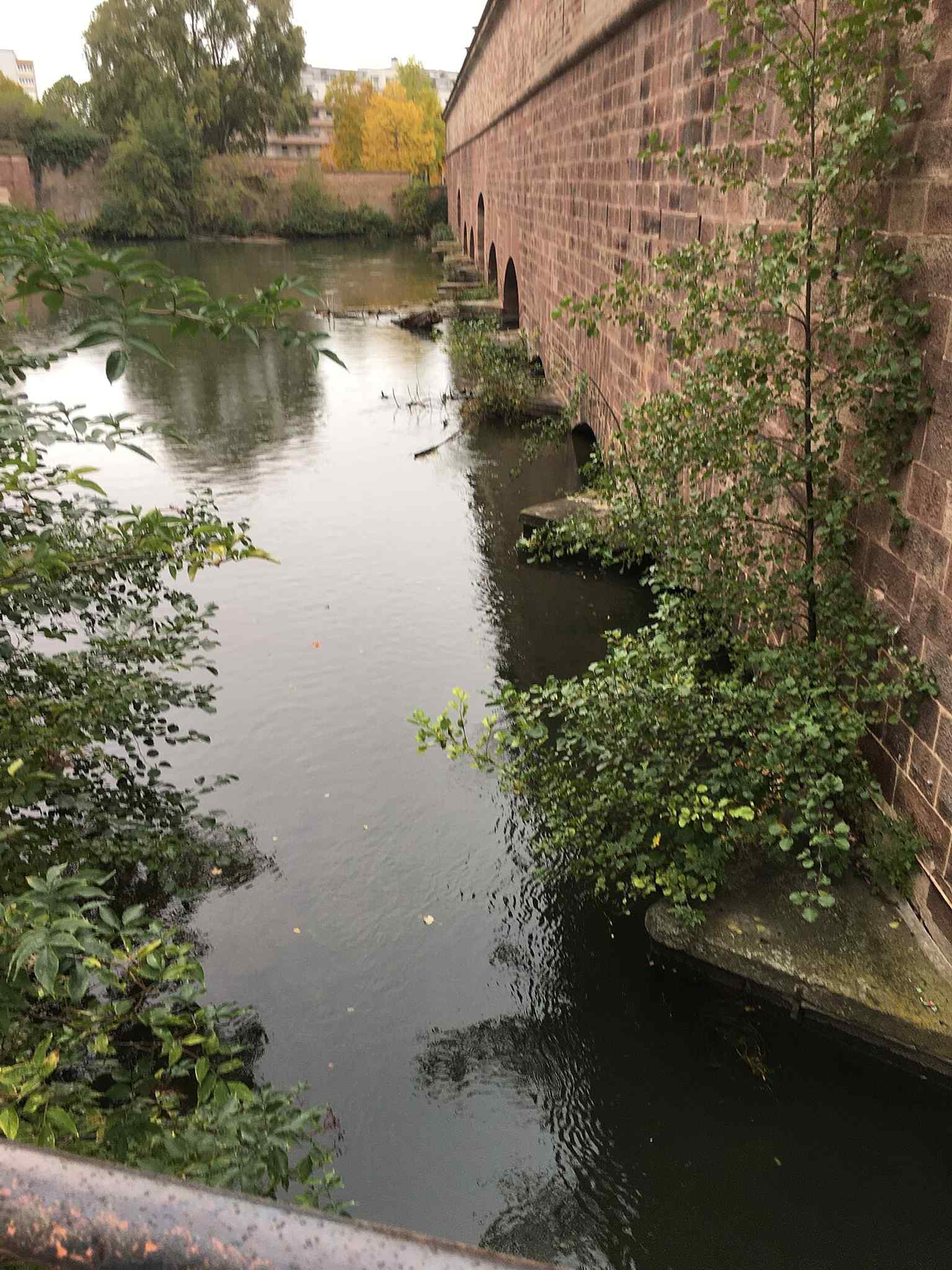
A side view from Quai de Malte that shows the fortified masonry and water-control structure mentioned in the repair records.Photo: Lidine Mia, Wikimedia Commons, CC BY-SA 4.0. Cropped & resized. 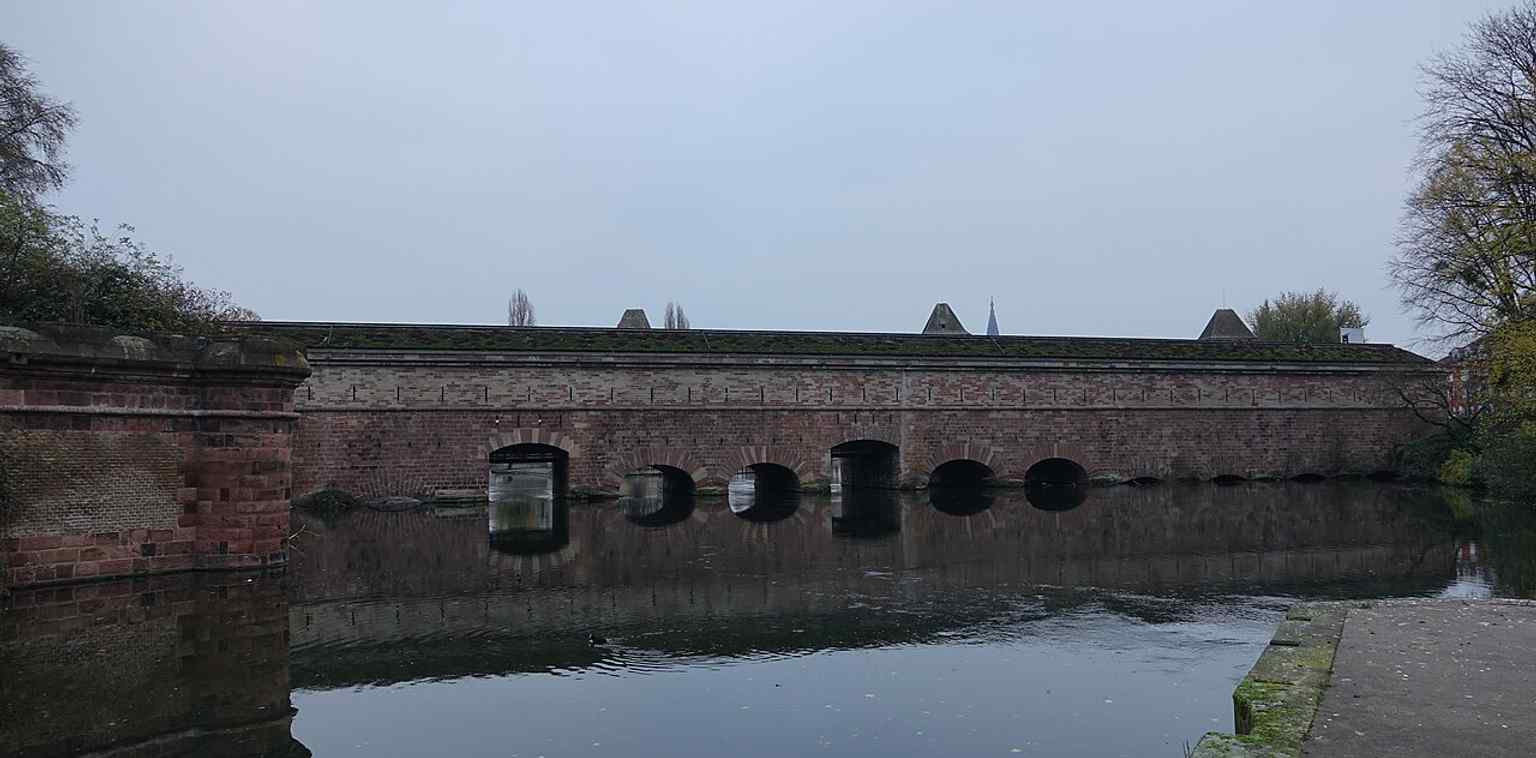
A modern exterior view of the Vauban Dam, now listed as a historic monument and no longer used for military purposes.Photo: Gzen92, Wikimedia Commons, CC BY-SA 4.0. Cropped & resized. 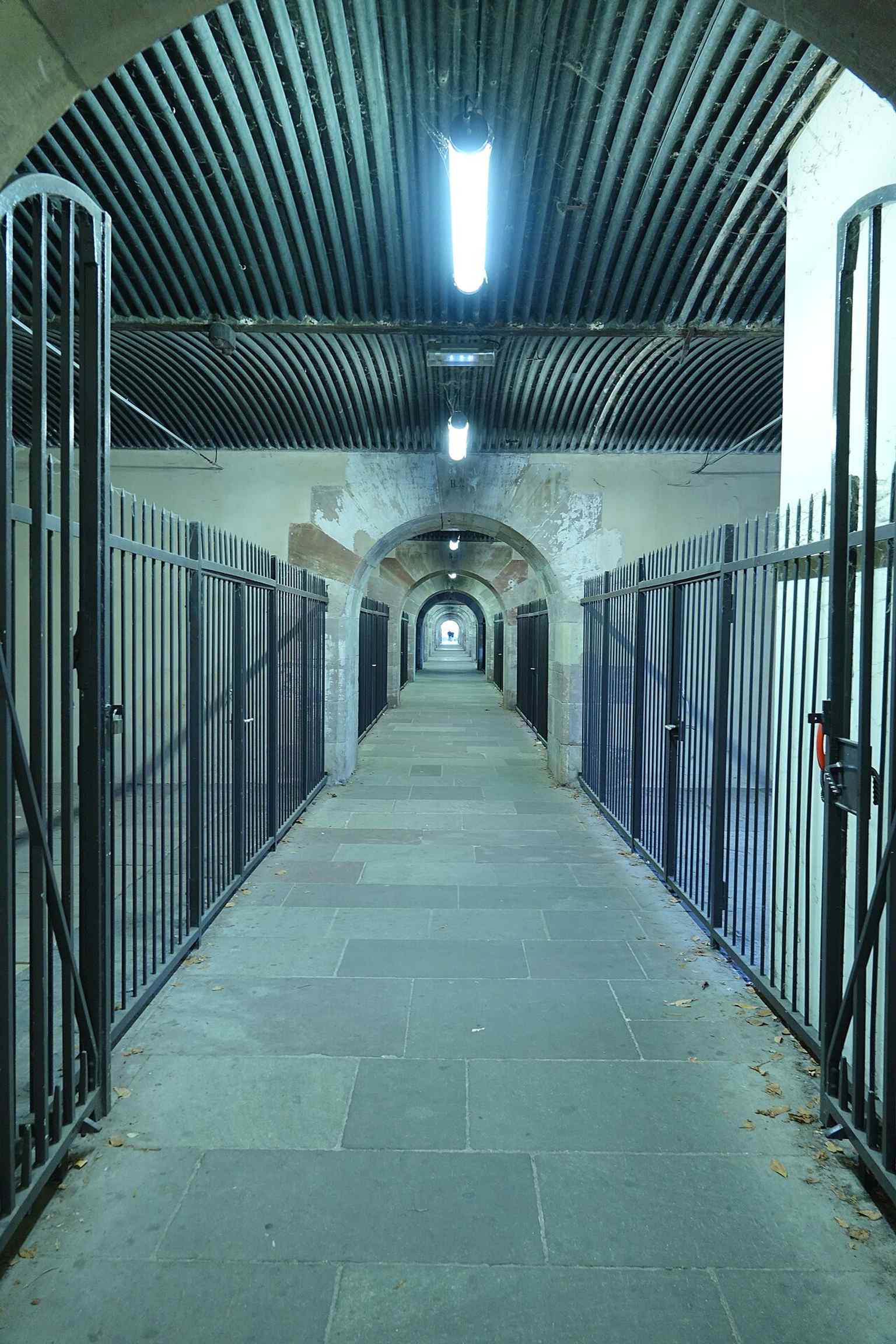
The interior of the dam in 2021, illustrating the restored passage that visitors now cross instead of soldiers.Photo: Gzen92, Wikimedia Commons, CC BY-SA 4.0. Cropped & resized.
Show 12 more stopsShow fewer stopsexpand_moreexpand_less
On your right rises a broad church of pink sandstone, with a square entrance tower, a long steep roof, and a round rose window set above the main portal. Saint-Thomas is one of…Read moreShow less
Open dedicated page →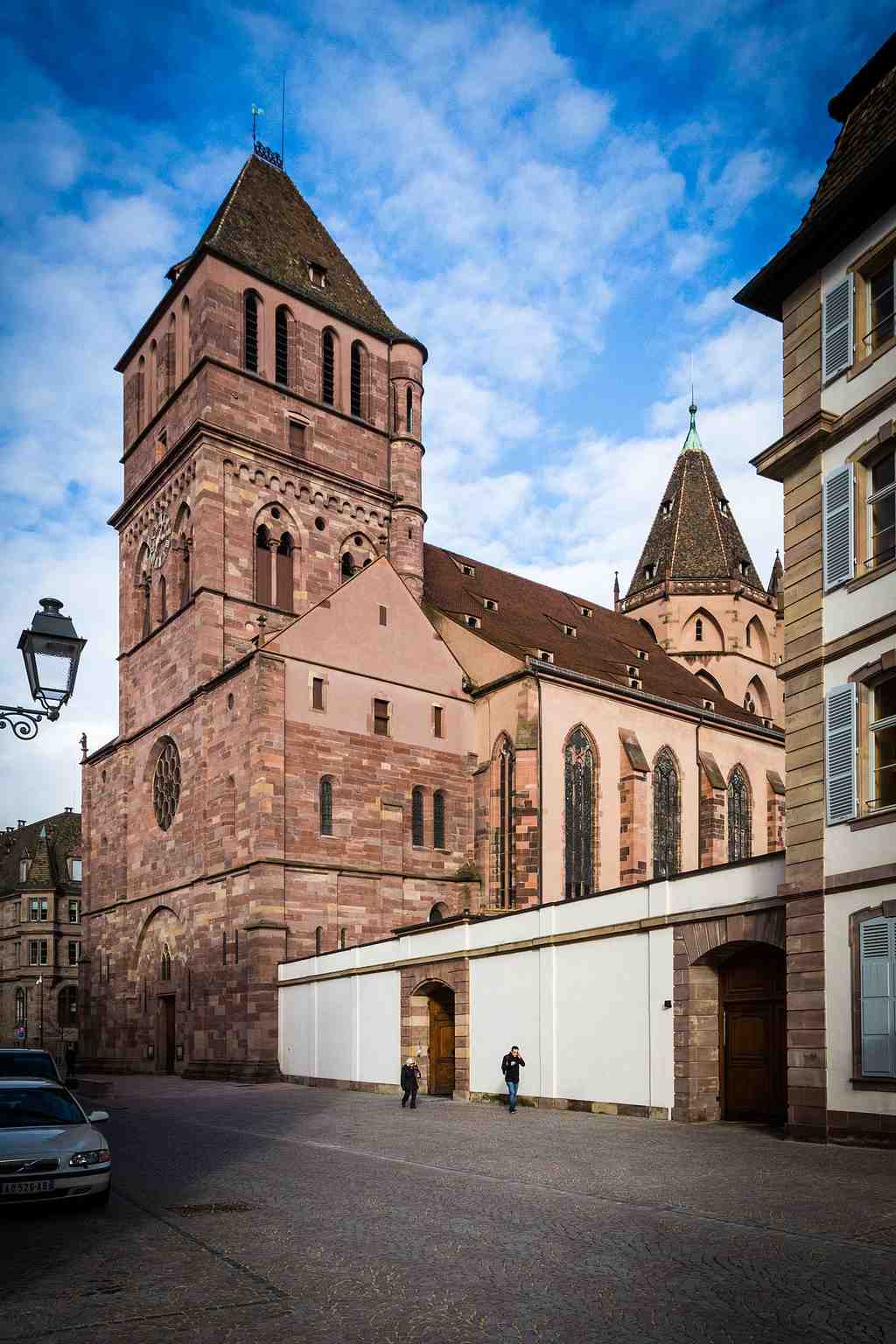
Saint Thomas Church in StrasbourgPhoto: Photo Claude TRUONG-NGOC, Wikimedia Commons, CC BY-SA 3.0. Cropped & resized. On your right rises a broad church of pink sandstone, with a square entrance tower, a long steep roof, and a round rose window set above the main portal.
Saint-Thomas is one of Strasbourg’s best lessons in how a city can change direction without wiping the slate clean. People have worshipped on this site since the early Middle Ages, and local tradition reaches even farther back, to Christian monks from the British Isles in the fifth century. Saint Florent, a bishop who died in six ninety-three, is buried here, so this was sacred ground long before the present building took shape.
The church you see now came through disaster more than once. Fire destroyed an earlier church here in one thousand seven, along with a huge part of Strasbourg. Then lightning finished off the next one in eleven forty-four. Lightning, apparently, had strong architectural opinions. In eleven ninety-six, builders began again from the facade, giving Saint-Thomas that sturdy, almost fortress-like front tower.
What makes it especially important is its form. This is a hall church, which means the central space and the side aisles rise to nearly the same height, creating a broad, unified interior instead of one towering middle lane. It is the only church of that type in Alsace, and one of the oldest of its kind in this part of the former Holy Roman Empire. If you glance at the image in the app, you can see that wide, open interior very clearly.
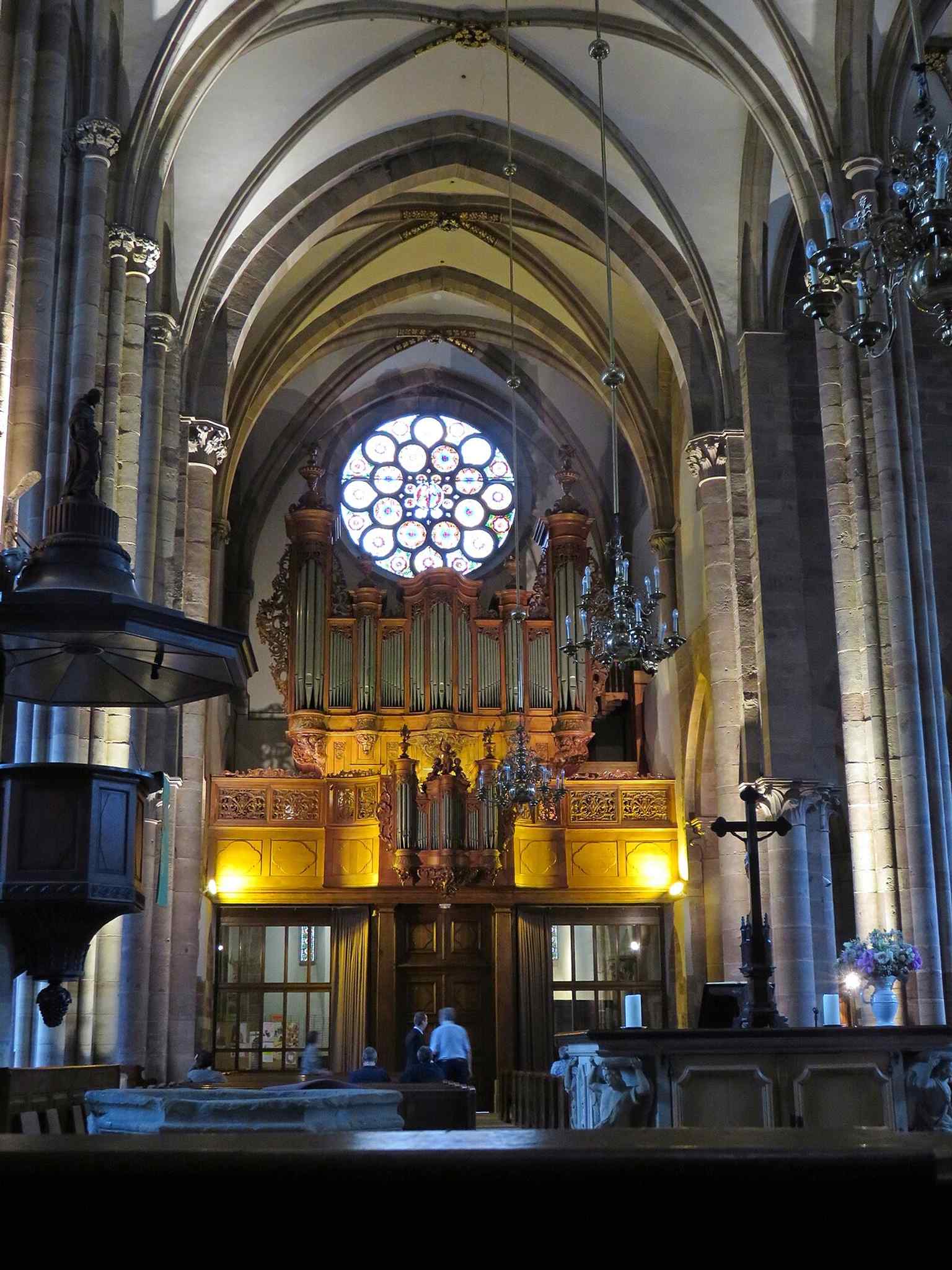
Inside Saint Thomas Church, where the vast hall-church layout gives the Protestant nave its distinctive open feel.Photo: Unknown, Wikimedia Commons, CC BY-SA 4.0. Cropped & resized. People often call Saint-Thomas the cathedral of Protestantism in Alsace. When the Reformation spread after Martin Luther’s challenge in fifteen seventeen, this church became one of Strasbourg’s key turning points. In fifteen twenty-four, worship here shifted into the language ordinary people spoke, and communion was offered in both bread and wine. That changed more than prayer... it reshaped schools, church property, and public identity across the city.
One man helps make that shift feel human: Martin Bucer. He served here as pastor, though his arrival raised eyebrows because he had married and had already been excommunicated. Not exactly the safe, uncontroversial hire. Yet from Saint-Thomas, Bucer became one of Strasbourg’s great Protestant voices, trying to reconcile rival reform movements across Europe.
And here is the Strasbourg part of the story: even after the church became Lutheran, it did not erase everything older. Saint-Thomas kept its chapter of canons, the clergy who managed the church’s life and property, making it a rare Protestant church with a very old institutional backbone still intact. Later, one of those canons, Marc Otto, signed the Peace of Westphalia in sixteen forty-eight, helping end the Thirty Years’ War and affirming that rulers could not simply force people to convert.
Music carried Saint-Thomas even farther. Its great Silbermann organ from seventeen forty-one impressed Mozart in seventeen seventy-eight, and if you check the organ photo on your screen, that is the instrument’s famous case. More than a century later, Albert Schweitzer designed the choir organ here in nineteen oh-six, tying this church to a future Nobel Peace Prize winner.
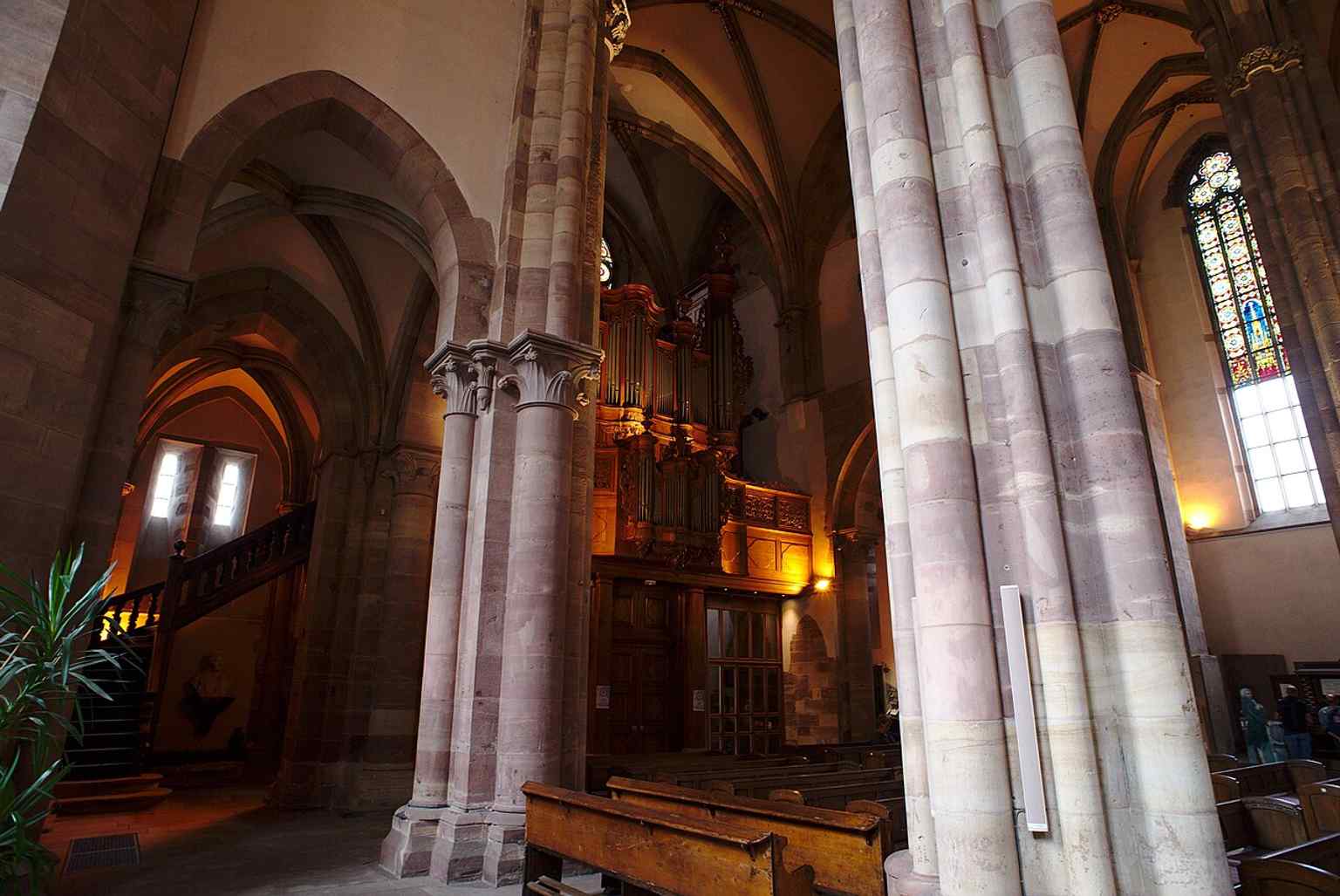
The famous Silbermann pipe organ, central to Saint Thomas’s reputation as a major Strasbourg music venue since the 18th century.Photo: Flocci Nivis, Wikimedia Commons, CC BY-SA 4.0. Cropped & resized. Keep that in mind as you head to Gutenberg Square, about a six-minute walk from here: Strasbourg’s religious changes will keep showing up in places that seem purely civic, even on facades and in public imagery. If you want to return and go inside, Saint-Thomas is generally open from ten to five-thirty most days, and on Sundays from one-thirty to five-thirty.
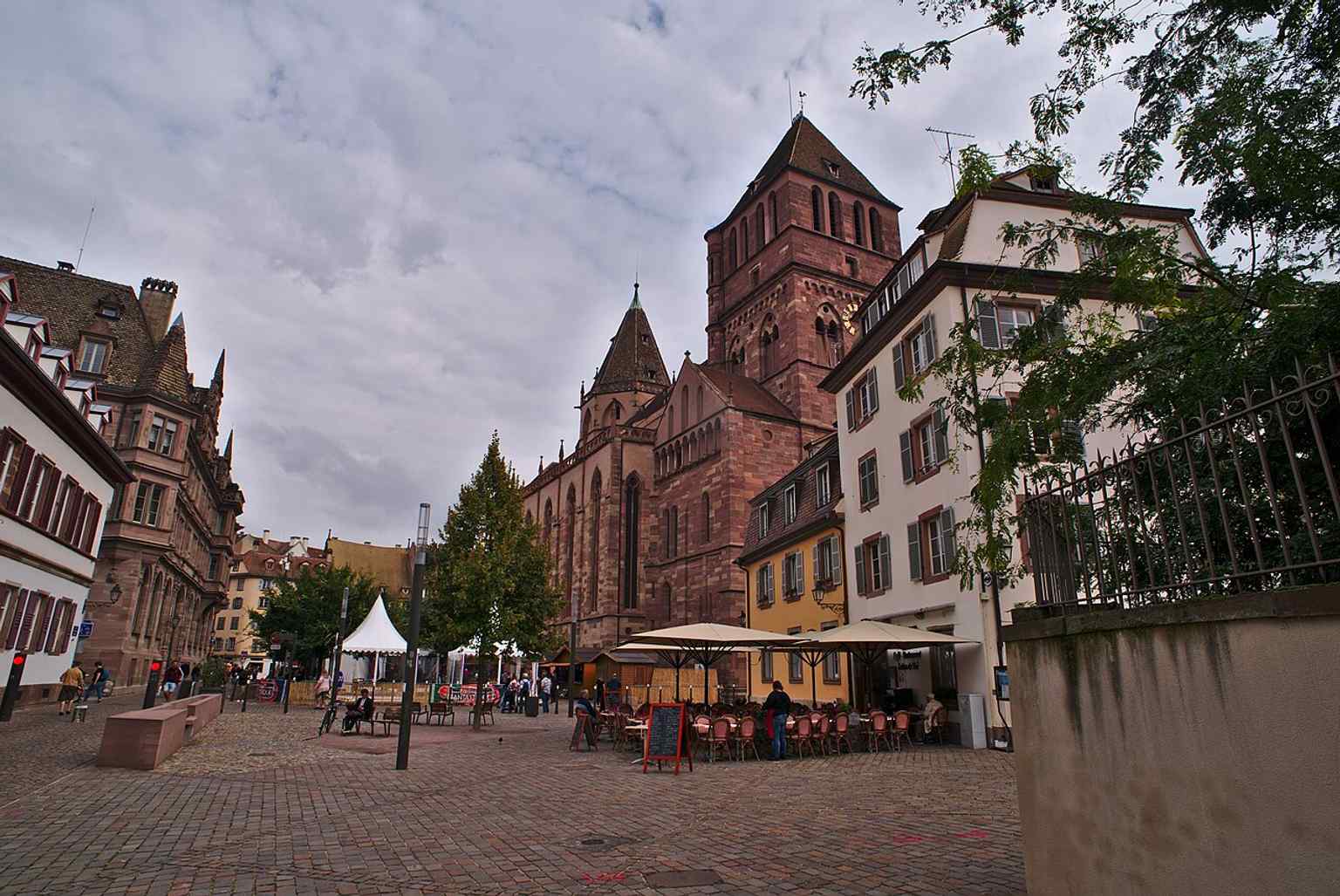
A clear street-level view of Saint Thomas Church, the historic Protestant landmark near Place Saint-Thomas in Strasbourg.Photo: Flocci Nivis, Wikimedia Commons, CC BY-SA 4.0. Cropped & resized. 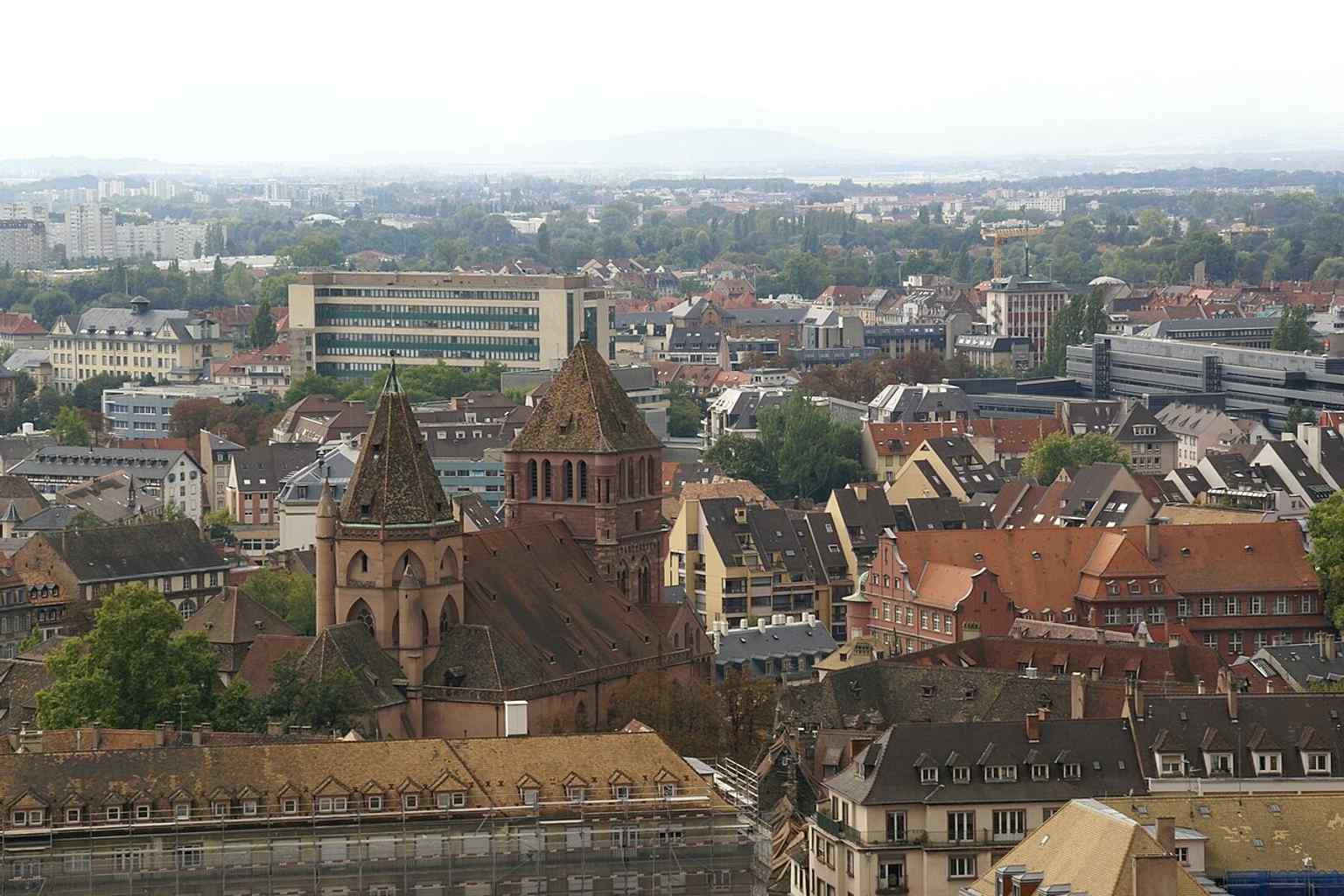
The church seen from across Strasbourg, showing its urban setting close to the cathedral and the old city center.Photo: Hermann Luyken, Wikimedia Commons, CC0. Cropped & resized. 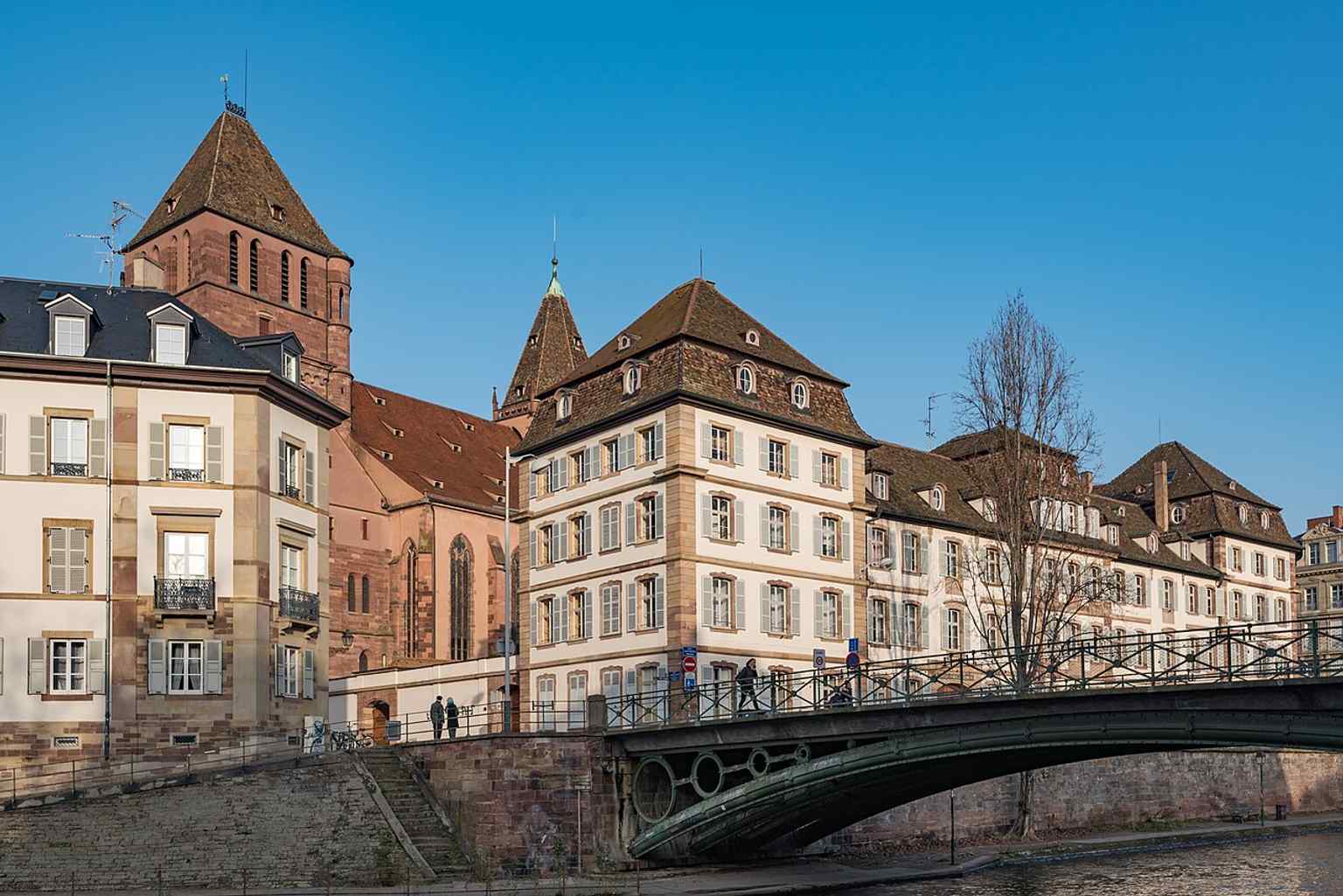
A wider view from the Quai Saint-Thomas, helping place the church beside the riverfront and the Petite France area.Photo: Tilman2007, Wikimedia Commons, CC BY-SA 4.0. Cropped & resized. 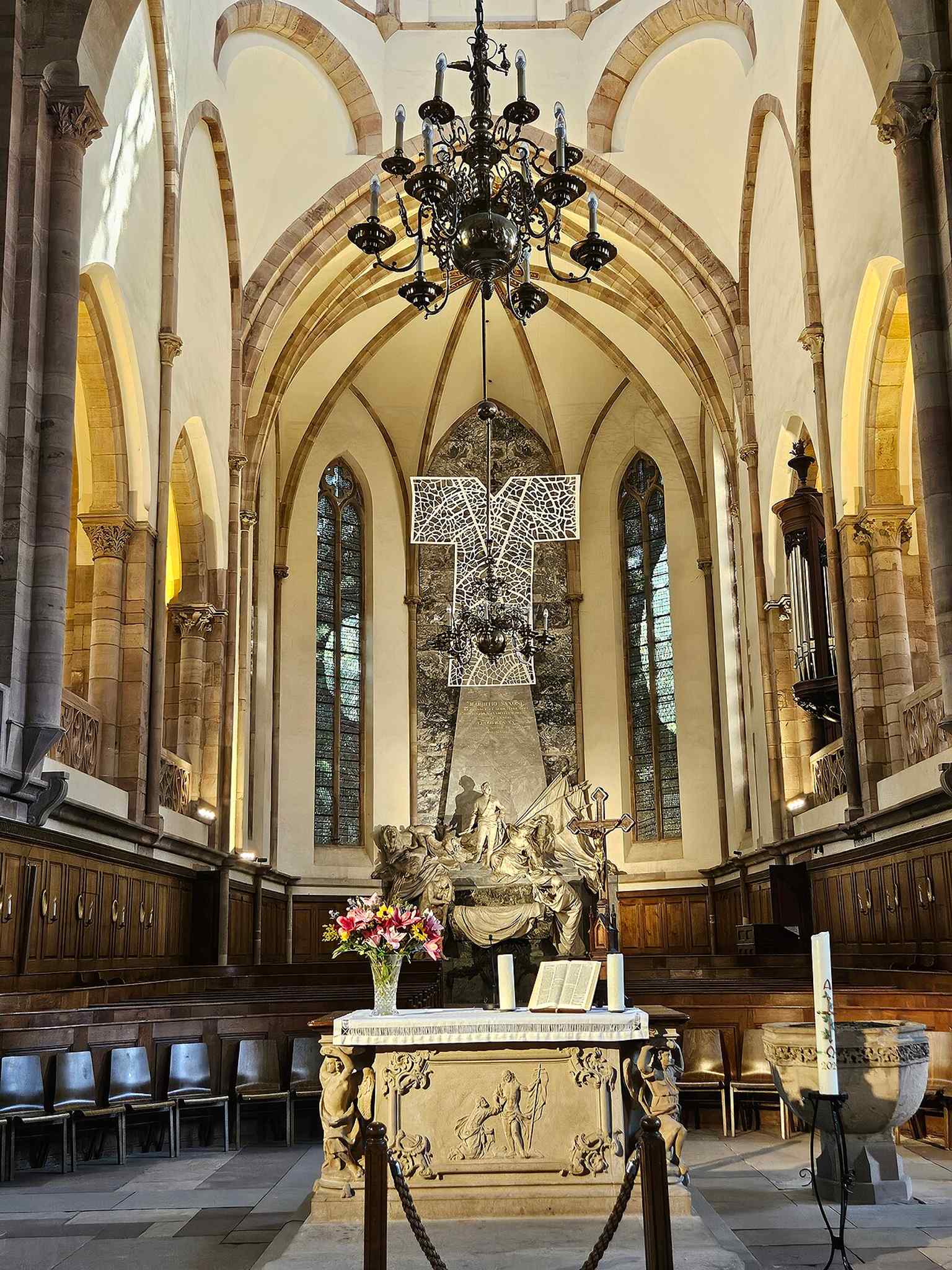
The altar in the church interior, useful for showing the active worship space that still serves Lutheran services today.Photo: John Samuel, Wikimedia Commons, CC BY-SA 4.0. Cropped & resized. 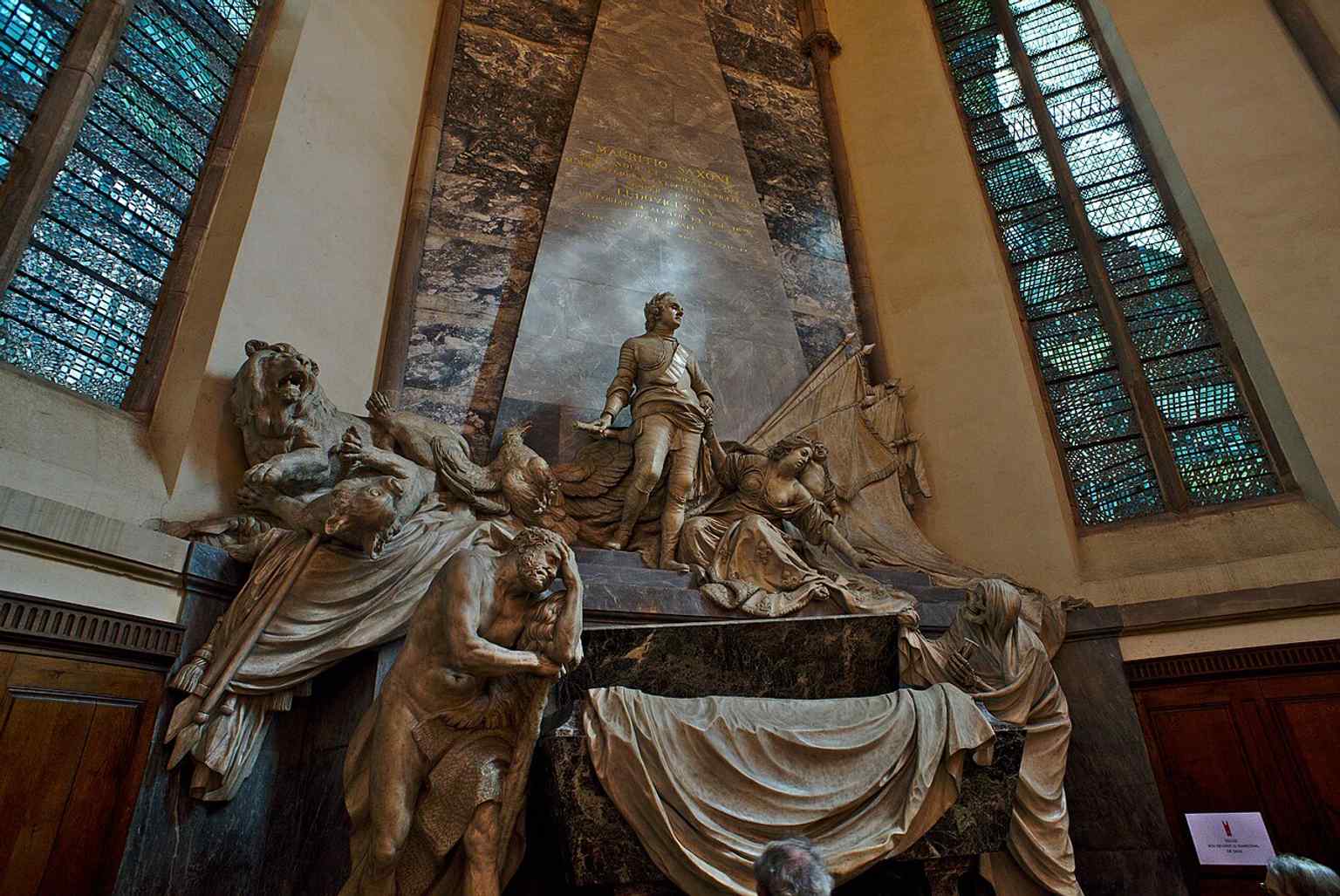
The tomb of Maurice de Saxe, the dramatic baroque monument that made this church famous beyond Alsace.Photo: Flocci Nivis, Wikimedia Commons, CC BY-SA 4.0. Cropped & resized. 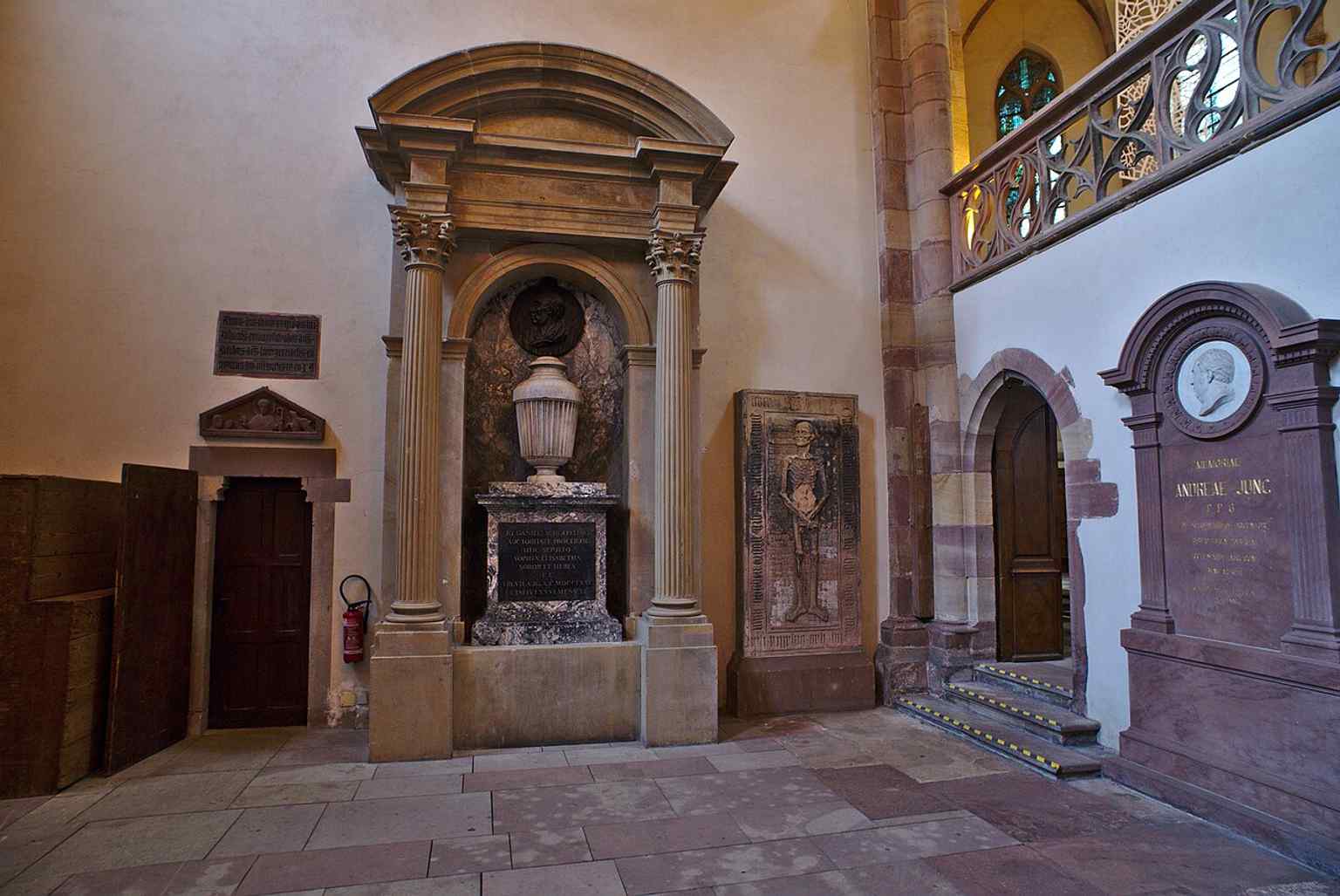
A funerary monument inside the church, reflecting Saint Thomas’s role as a burial place for notable Strasbourg figures.Photo: Flocci Nivis, Wikimedia Commons, CC BY-SA 4.0. Cropped & resized. 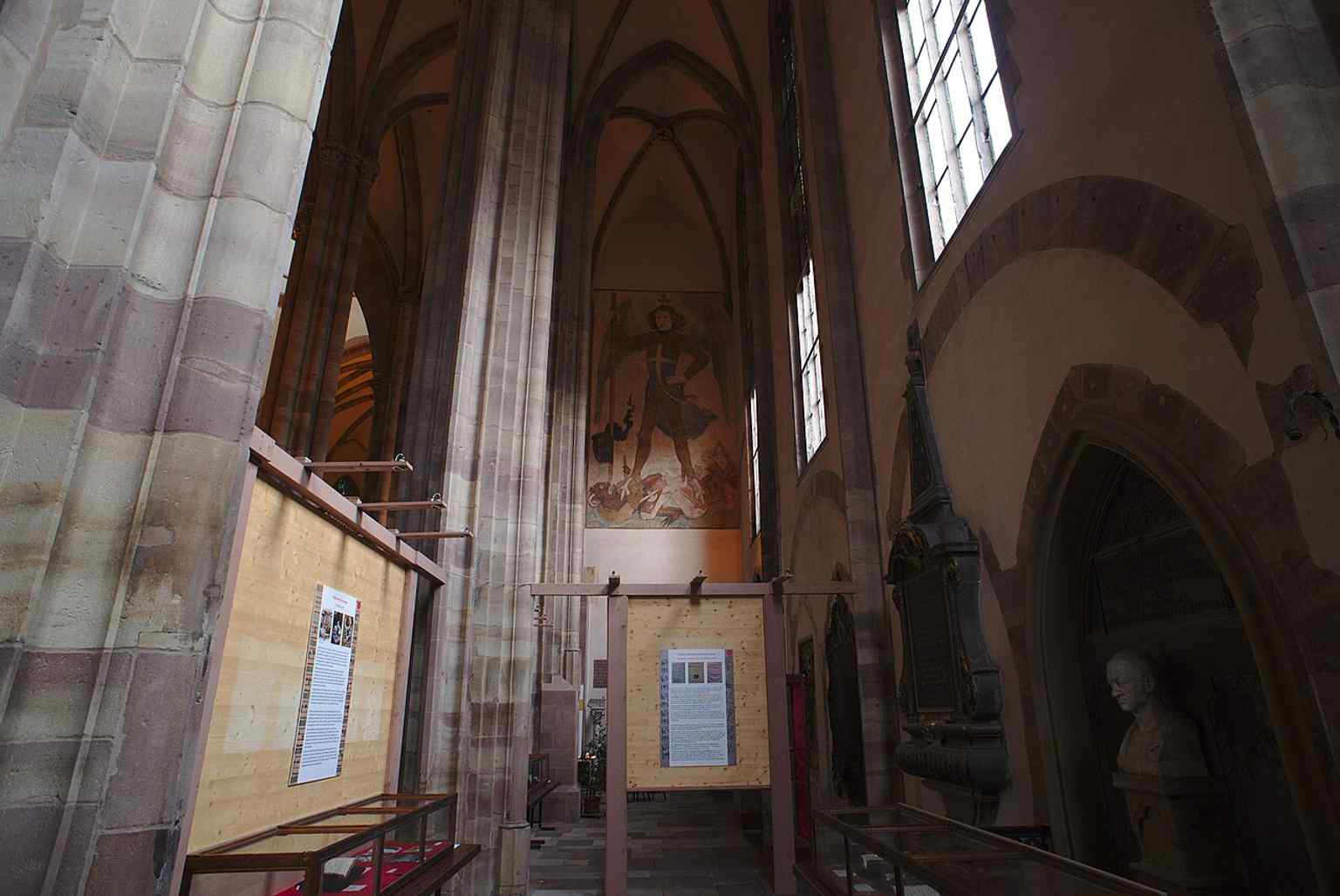
A wall painting in the church interior, linking the building to its layered medieval art and later restorations.Photo: Flocci Nivis, Wikimedia Commons, CC BY-SA 4.0. Cropped & resized. 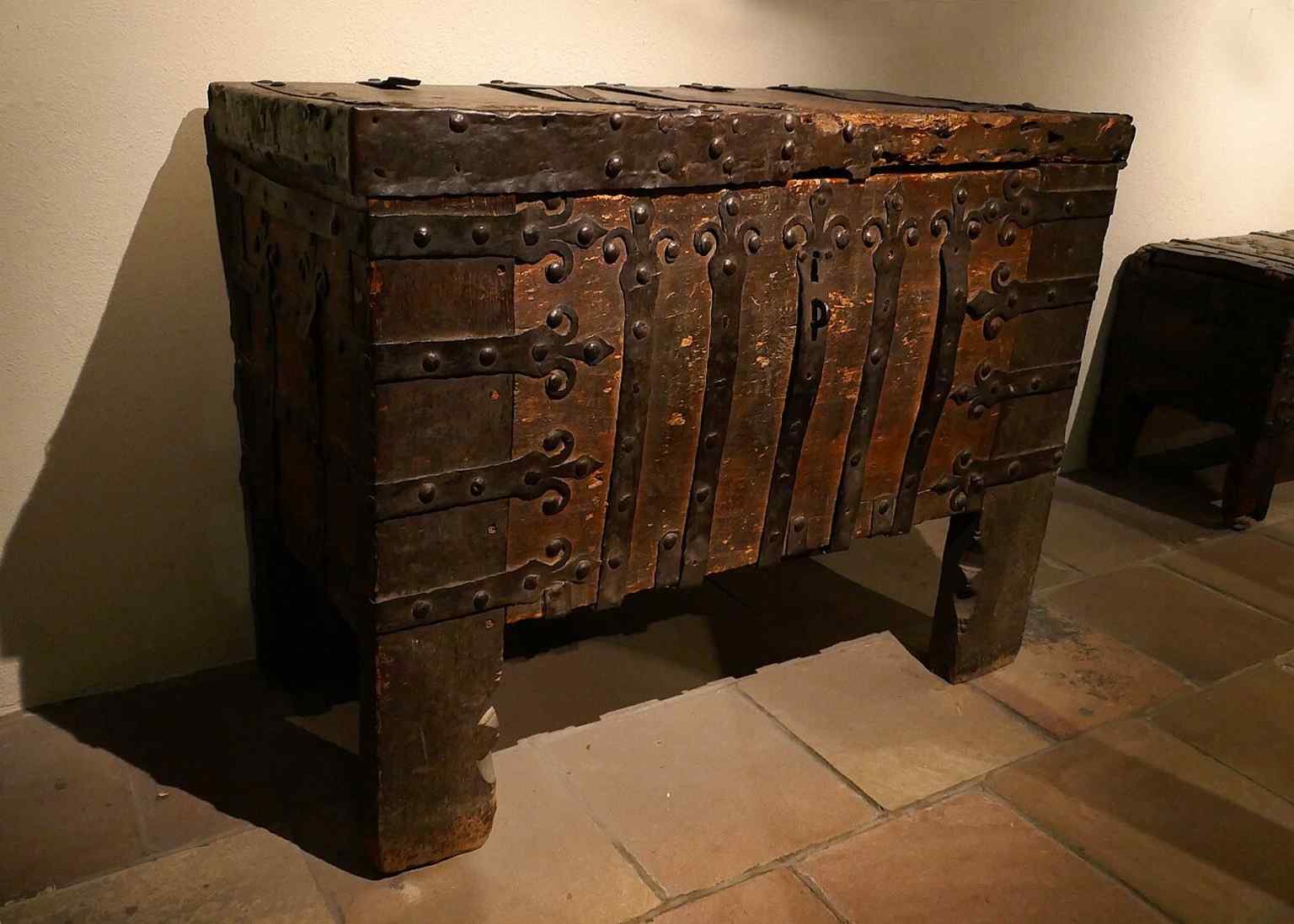
A medieval iron-bound chest from Saint Thomas, now in the Musée de l’Œuvre Notre-Dame, showing the church’s deep historical legacy.Photo: Ji-Elle, Wikimedia Commons, CC BY-SA 4.0. Cropped & resized. 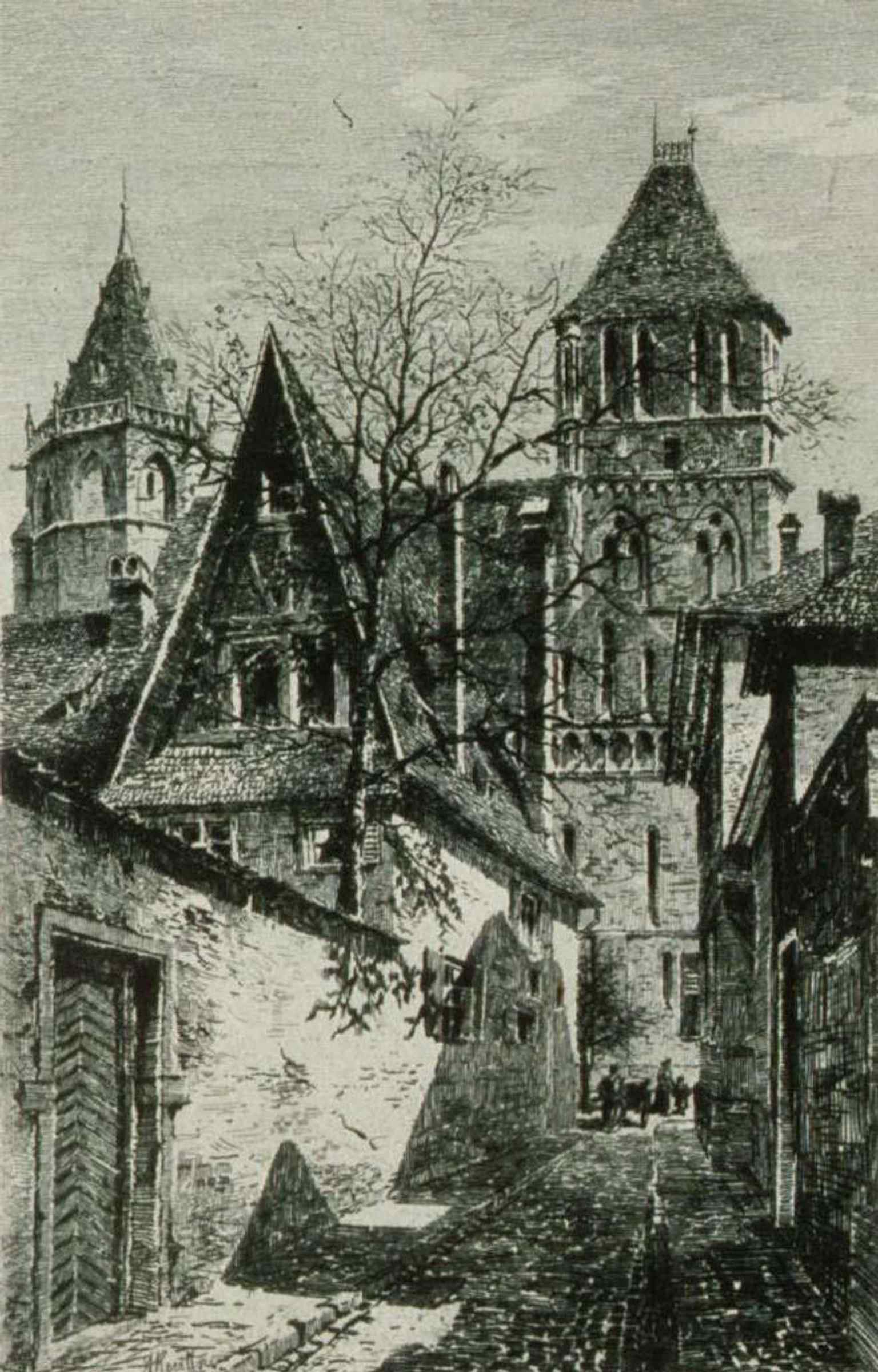
A 1898 street scene with Saint Thomas Church, useful for evoking the neighborhood around the church at the end of the 19th century.Photo: Albert Koerttge, Wikimedia Commons, Public domain. Cropped & resized. 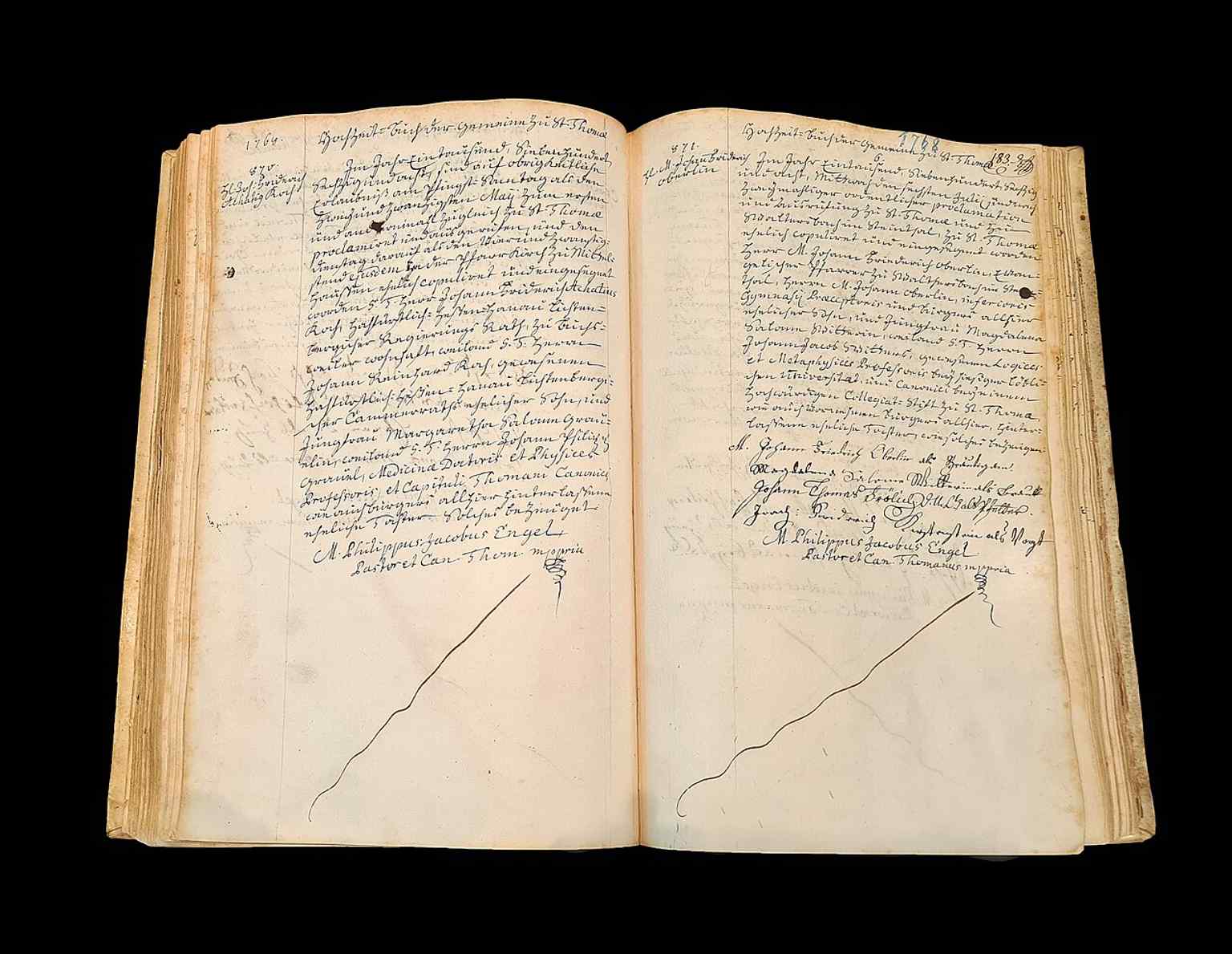
A Protestant marriage register from Saint Thomas, underscoring the church’s long role in Strasbourg’s Lutheran community.Photo: Ji-Elle, Wikimedia Commons, CC BY-SA 4.0. Cropped & resized. 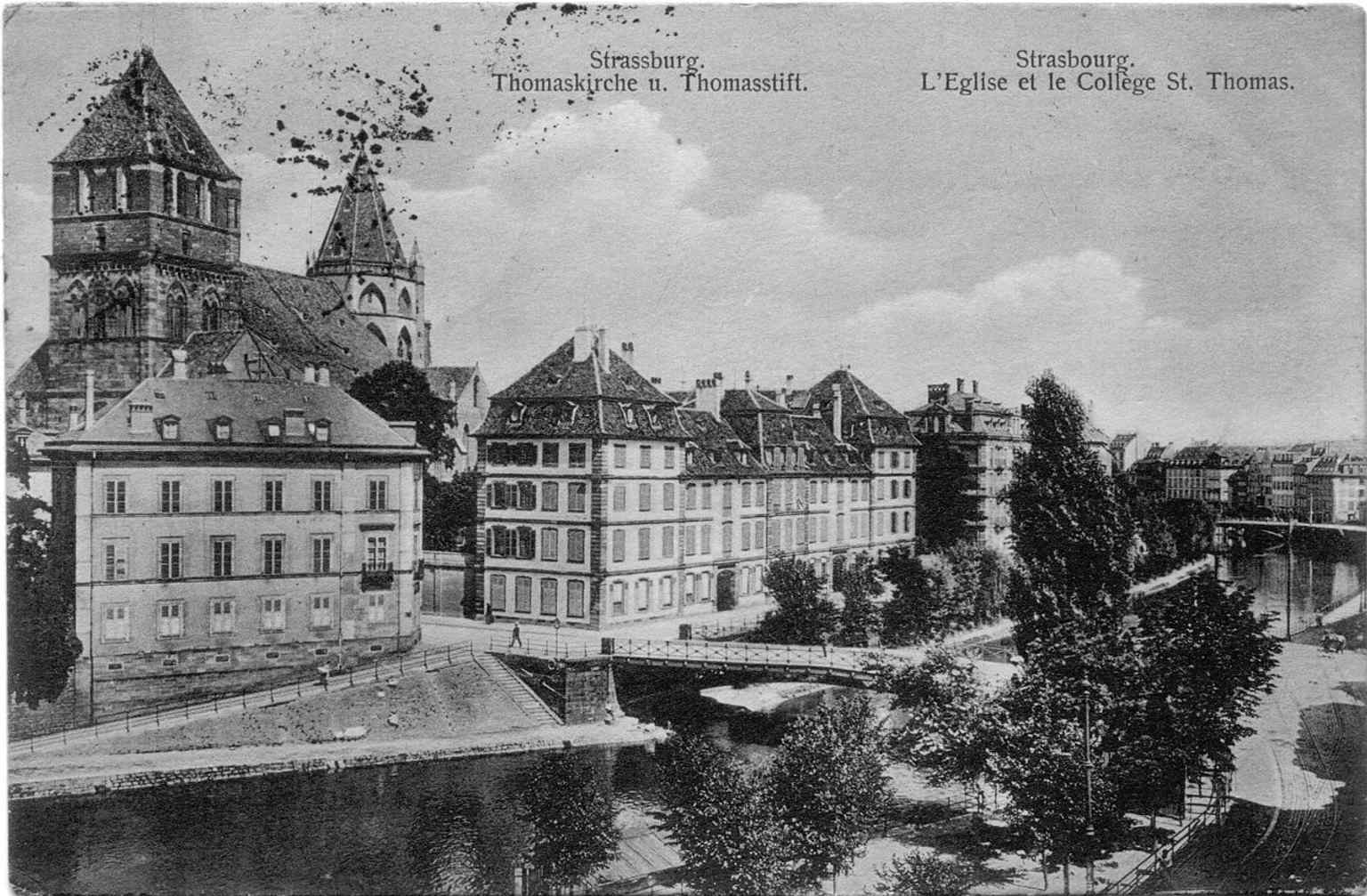
An old postcard of the Saint Thomas district, capturing the church’s historic setting before modern Strasbourg changed around it.Photo: Unknown authorUnknown author, Wikimedia Commons, Public domain. Cropped & resized. 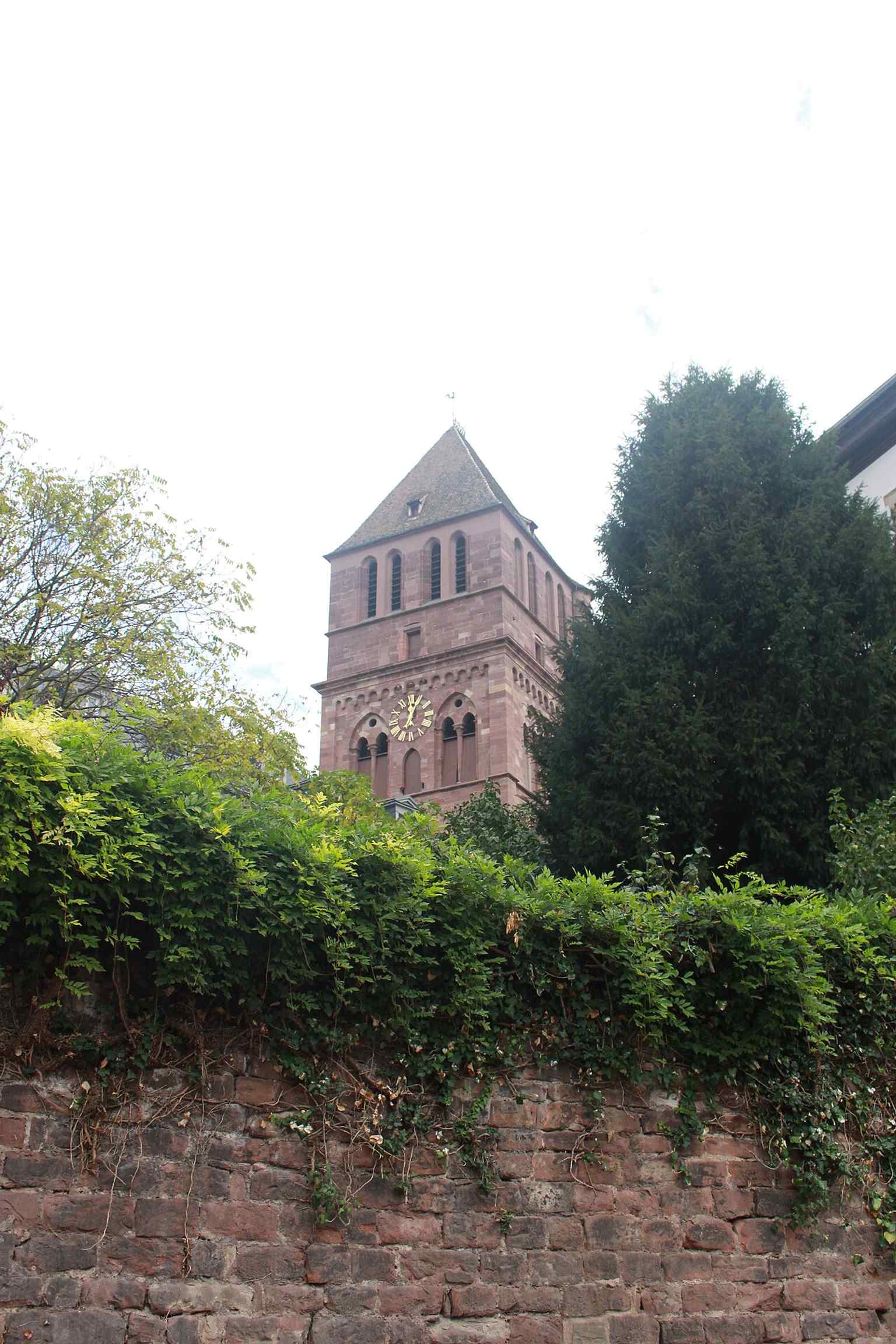
A close-up of the church tower, highlighting the Gothic silhouette that makes Saint Thomas recognizable from nearby streets.Photo: Sami Mlouhi, Wikimedia Commons, CC BY-SA 4.0. Cropped & resized. On your left, Gutenberg Square opens as a broad stone plaza framed by the long pale facade of the Neue Bau, with a dark bronze figure in the center holding a parchment high.…Read moreShow less
Open dedicated page →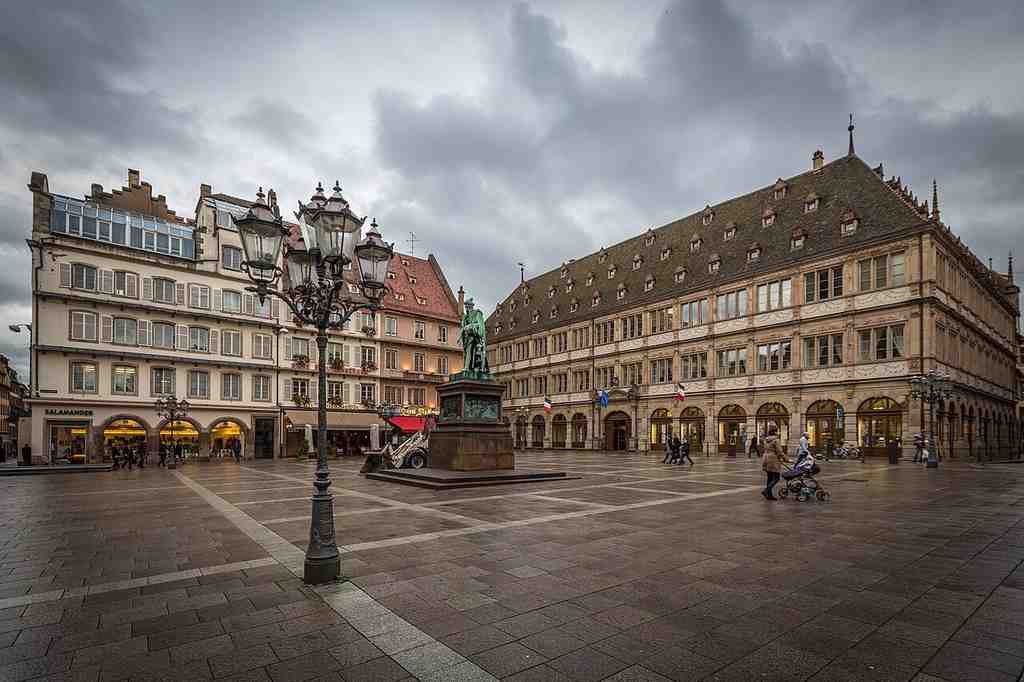
Gutenberg SquarePhoto: Photo Claude TRUONG-NGOC, Wikimedia Commons, CC BY-SA 3.0. Cropped & resized. On your left, Gutenberg Square opens as a broad stone plaza framed by the long pale facade of the Neue Bau, with a dark bronze figure in the center holding a parchment high.
This square has changed its role so many times, it could give lessons in career reinvention. Around the twelfth century, people knew it as Martinsplatz, a market space tied to merchants and already close to Strasbourg’s political heart. In the fifteen twenties, city leaders tried to reclaim the church of Saint Martin so they could enlarge the town hall. The plan failed... then in fifteen twenty-nine they demolished the church, and that cleared the opening that helped shape the square you see now.
Then came another sharp turn. In seventeen eighty-one, Strasbourg tore down the Pfalz, the old town hall, and the building beside you, the Neue Bau, took over as the new city hall. That grand administrative moment did not last long. Revolutionaries ransacked it, and in seventeen ninety-five private owners bought it. Today, fittingly enough, it belongs to the Chamber of Commerce and Industry. Trade, government, and public life keep swapping seats at the same table here.
Now look at the statue for a beat. Johannes Gutenberg holds a parchment that reads, “And there was light.” Not subtle, is it? But Strasbourg meant every word. Gutenberg, born in Mainz, spent years here between fourteen thirty-four and fourteen forty-four, working inside a city wired for exchange: merchants, officials, scholars, churchmen. Whether or not he fully invented printing in Strasbourg, he carried out crucial early experiments here, including work connected to the Bible. In other words, this was a city ready to turn ideas into something portable.
The bronze monument itself arrived in eighteen forty, when sculptor David d’Angers created it for the four hundredth anniversary of printing’s rise. If you check the image on your screen, the celebration looks like a civic parade for a machine that changed the human brain. And notice the pedestal: four bronze plaques show printing spreading across different continents. This is not just a local hero statue. It is Strasbourg saying, very calmly, “We helped flip the switch.”
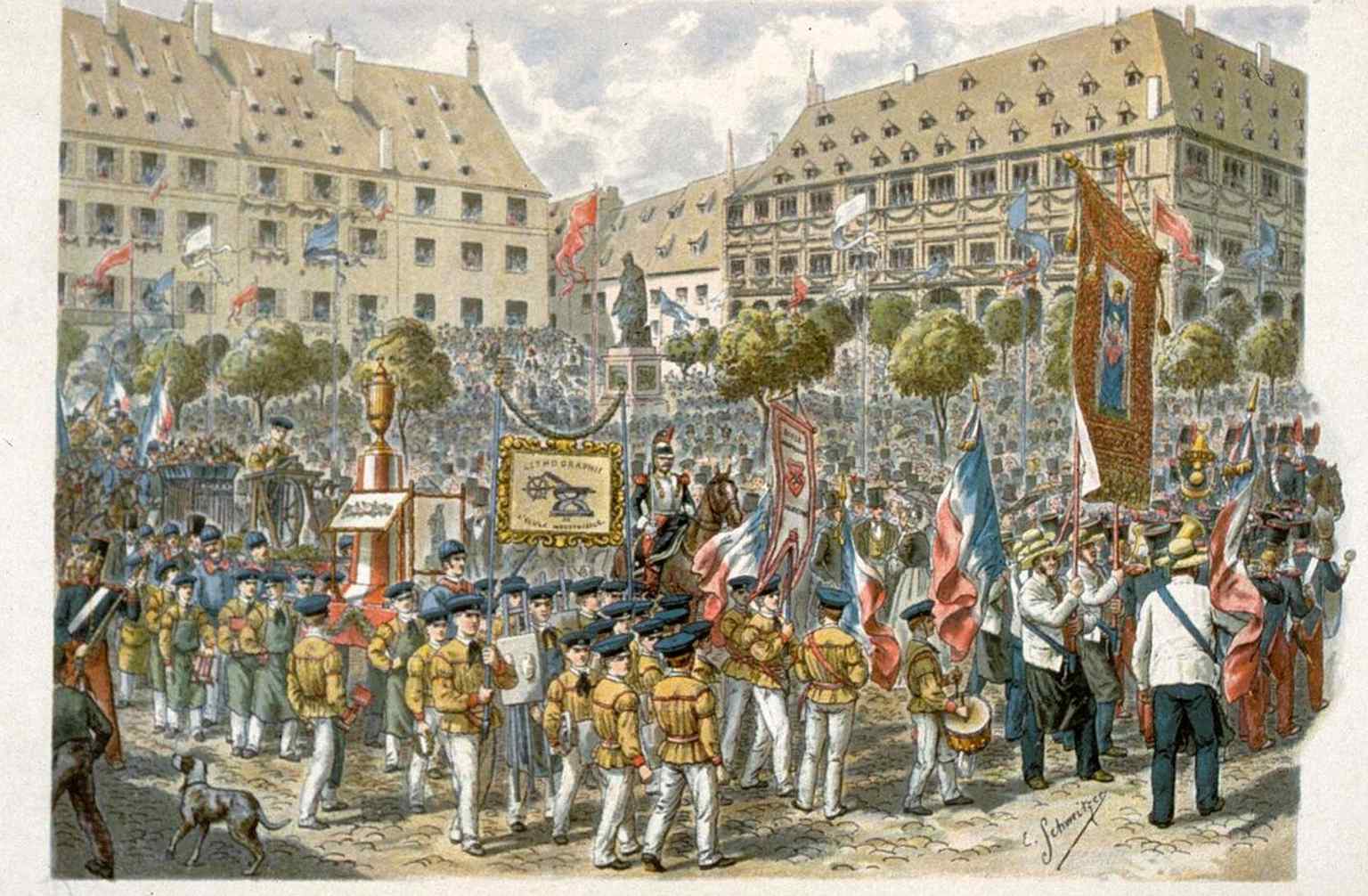
An 1894 engraving of the 25 June 1840 Gutenberg celebrations — a reminder that the square’s current name was adopted to honor Strasbourg’s connection to early printing.Photo: Emile Schweitzer, Wikimedia Commons, Public domain. Cropped & resized. Even the shopfront history here carries weight. At numbers one and two stood the ancestor of the famous Schwowelade hardware store. Paul Siebler-Ferry, from the nearby Black Forest, helped build it into the Quincaillerie Centrale. In August nineteen forty-four, bombing hit the building, fire followed, and Arno Siebler-Ferry died there. So yes, even ordinary commerce in this square got caught in Europe’s larger storms.
From here, the next stop offers a quieter answer to what Alsatian culture means beyond public monuments and civic muscle. The Alsatian Museum is about a five-minute walk away, and it brings the story down to the scale of lived rooms, tools, and daily ritual.
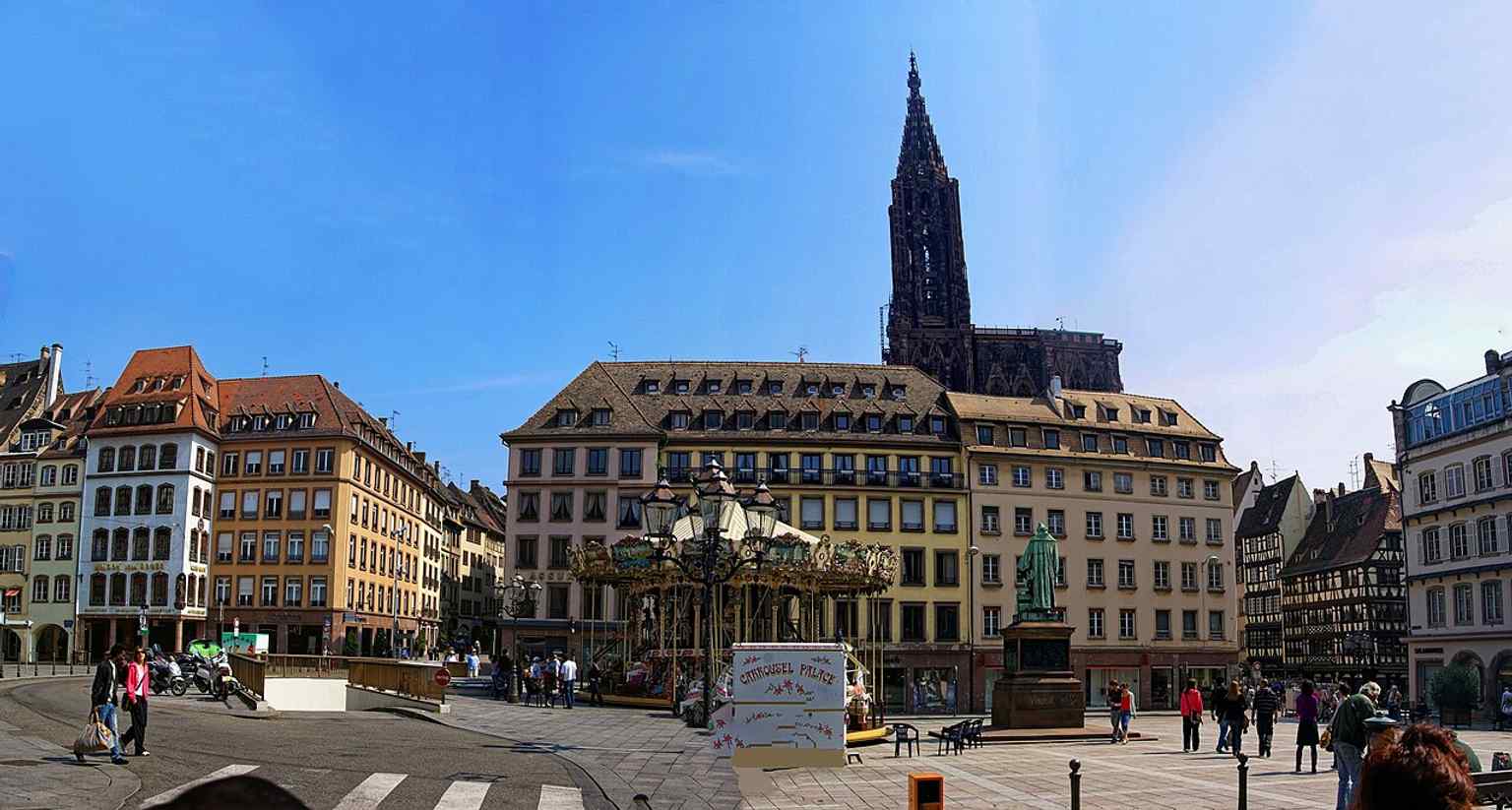
A wide fisheye view over Place Gutenberg, showing the square as an open civic space in the heart of Strasbourg’s Grande Île.Photo: Txllxt TxllxT, Wikimedia Commons, CC BY-SA 4.0. Cropped & resized. 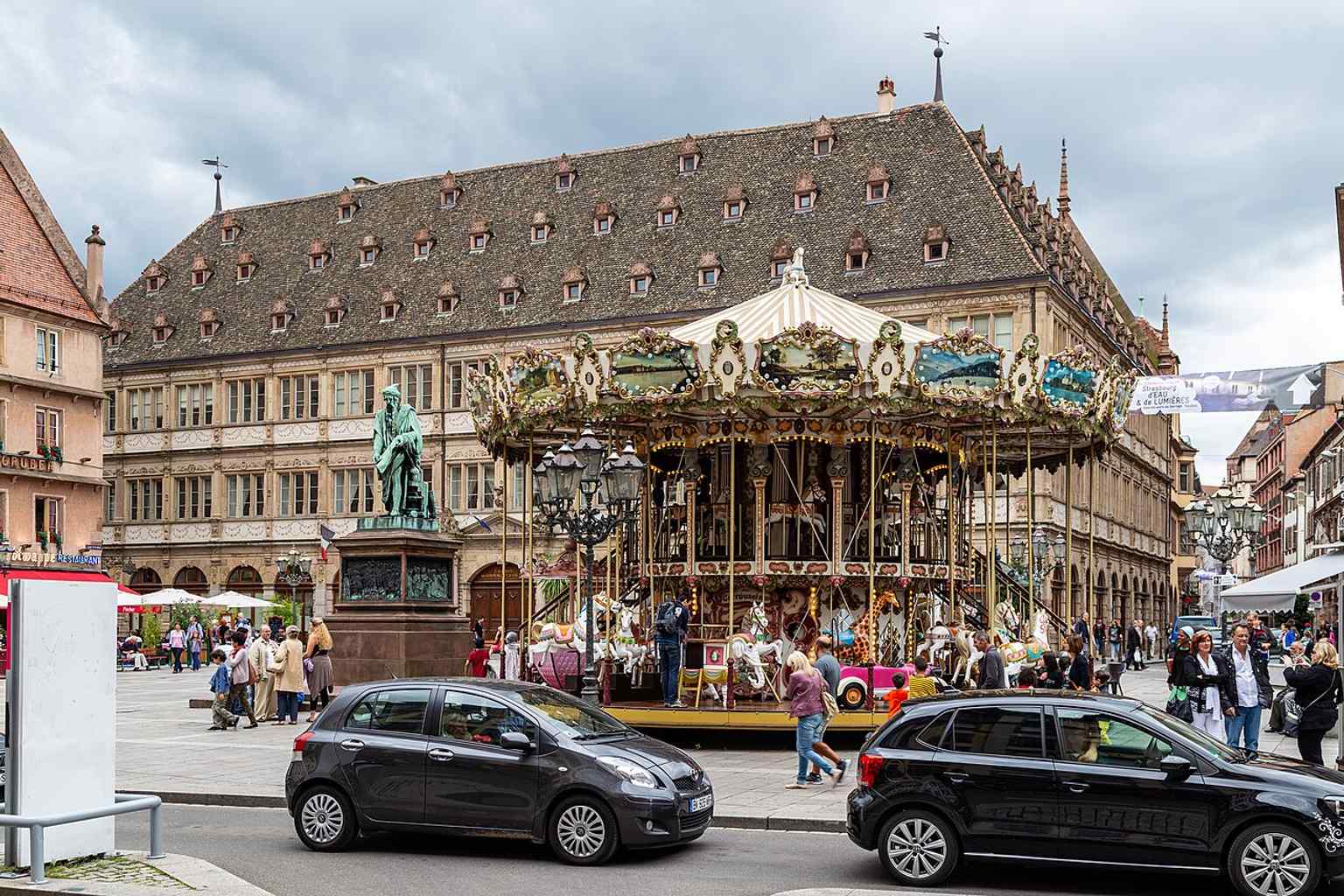
The Gutenberg statue, the carousel, and the former city hall in one frame — the key trio that defines the square today.Photo: JoachimKohler-HB, Wikimedia Commons, CC BY-SA 4.0. Cropped & resized. Look for three adjoining half-timbered houses of wood and plaster along the river, with steep roofs and an old wooden gallery wrapped around an inner courtyard. This is the…Read moreShow less
Open dedicated page →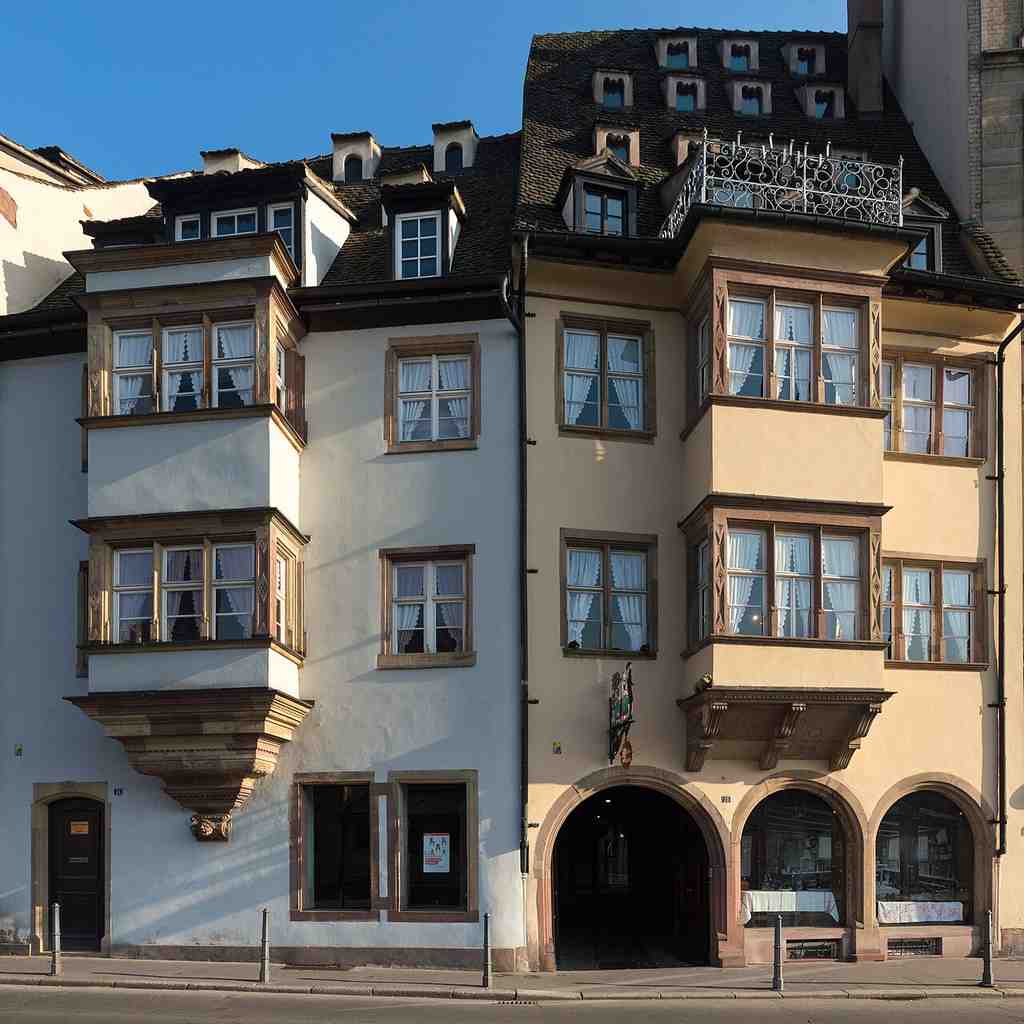
Alsatian MuseumPhoto: Aloïs Peiffer, Wikimedia Commons, CC BY-SA 3.0. Cropped & resized. Look for three adjoining half-timbered houses of wood and plaster along the river, with steep roofs and an old wooden gallery wrapped around an inner courtyard.
This is the Alsatian Museum, and it does something grand monuments often cannot... it remembers how people actually lived. Not how rulers wanted to be seen, but how families cooked, prayed, married, mourned, played, and argued over the good chair by the stove.
Alsatian identity comes into focus here as lived memory, not folklore wallpaper. The museum preserves domestic life, language, craft, and regional memory shaped by shifting borders and changing political belonging. In Alsace, people might speak dialect at home, write German before nineteen eighteen, then gradually shift toward French after the wars. When the map kept moving under people’s feet, the household became a kind of anchor.
That idea took shape in eighteen ninety-eight, when the artist Charles Spindler and other writers and artists launched the Revue alsacienne illustrée, a journal devoted to regional culture during the years when Alsace belonged to the German Empire. Spindler did not treat carved wardrobes and village costumes as cute antiques. He treated them as evidence: proof that a people’s character lived in ordinary rooms. He even helped seed the future museum with his own original watercolors from Costumes et coutumes d’Alsace. In nineteen hundred and four, the founders bought the house at number twenty-three quai Saint-Nicolas for its character and its central position. That choice says a lot. They picked a building that already felt like a statement.
When the museum opened in nineteen hundred seven, it did so with a peasant fair held for charity. Society ladies dressed as Alsatian village women and sold local food and objects here. Charming, yes... but also pointed. The following year, the costumes nodded toward patriotic French novels by Erckmann and Chatrian, a discreet political message stitched into festival cloth.
Inside, the museum spreads across three neighboring buildings and more than fifty thousand objects, with reconstructed interiors that make the past feel close enough to touch. If you glance at your screen, the tiled stove with its built-in seat shows the heart of a traditional Stub, the main family room and often the only heated one besides the kitchen. That stove, called a Kachelofe when covered in ceramic tiles, warmed the room from the other side while smoke passed through the kitchen hood. Efficient, practical, no nonsense... very Alsatian, you might say.
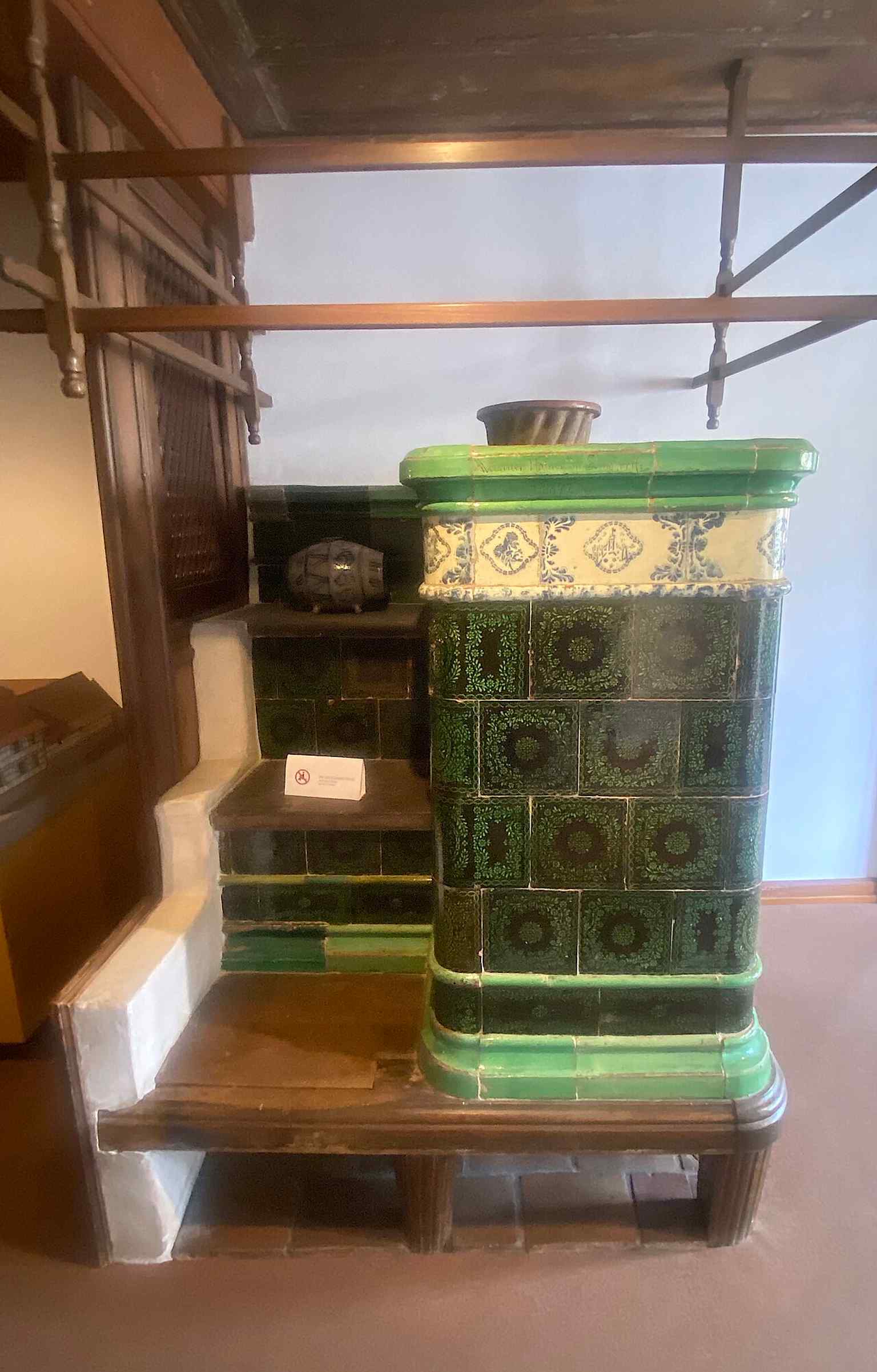
A tiled stove with built-in seat, showing how the Stub doubled as a warm living room and family space.Photo: DCHNwam, Wikimedia Commons, Public domain. Cropped & resized. And the story here is broader than one faith or one village. The museum has held an important collection of Jewish heritage from Alsace and Lorraine almost from the beginning. On your phone, that ritual object points to a deeper truth: this region’s identity formed through Catholic, Protestant, and Jewish lives lived side by side.
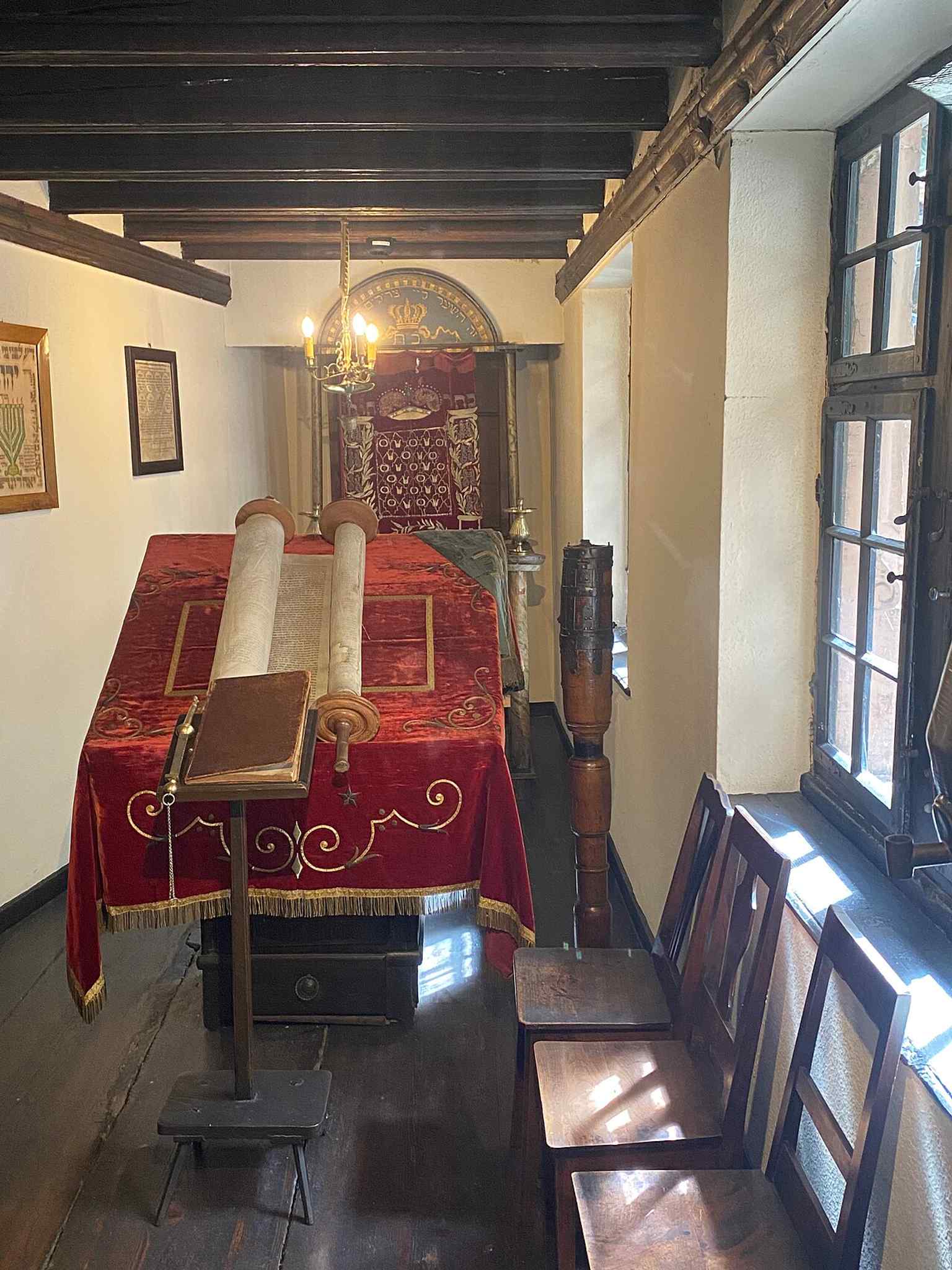
A Jewish ritual object from the museum’s important Judaica holdings, highlighting the Alsatian Jewish heritage in the collections.Photo: DCHNwam, Wikimedia Commons, Public domain. Cropped & resized. Most visitors never hear about the goodbye. Before closing for major renovation, the museum staged an unusually emotional farewell called Salü bisàmme! Works moved to Strasbourg’s study and conservation center for restoration. That was not just maintenance. It was a pause to rethink the institution from the ground up.
So here, by the Ill, Strasbourg keeps its quieter layers beneath the official story: stove tiles, birth chairs, wedding wardrobes, toys, prayer objects, paper images, wine tools, even kougelhopf molds. In a few minutes, we’ll step from household memory into princely display. When you’re ready, head about five minutes toward the Palais Rohan.
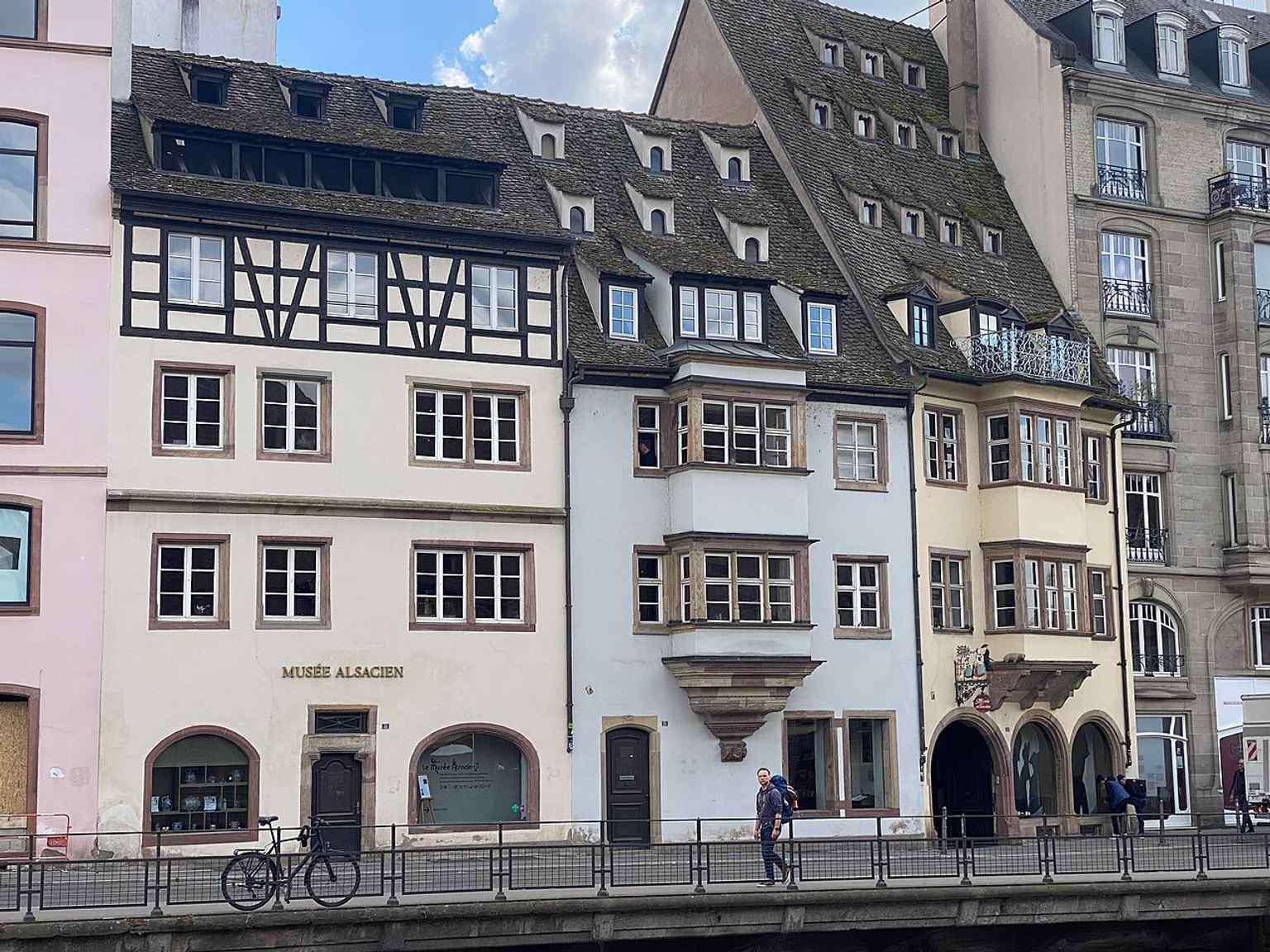
One of the museum’s quai Saint-Nicolas façades, matching the historic three-building complex beside the Ill.Photo: DCHNwam, Wikimedia Commons, Public domain. Cropped & resized. 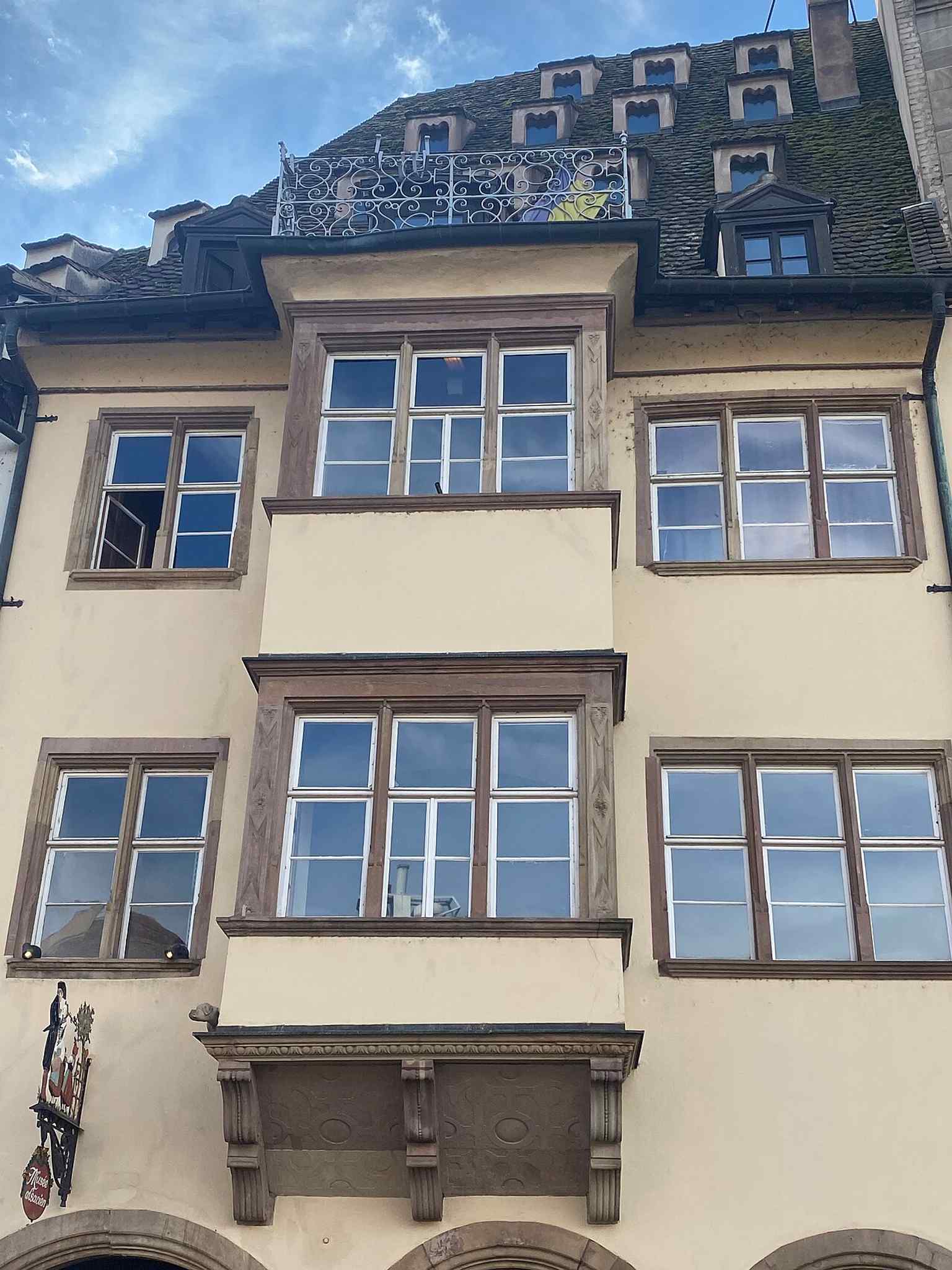
A clear street view of the museum building on Quai Saint-Nicolas, where the institution has stood since its early 20th-century expansion.Photo: DCHNwam, Wikimedia Commons, Public domain. Cropped & resized. 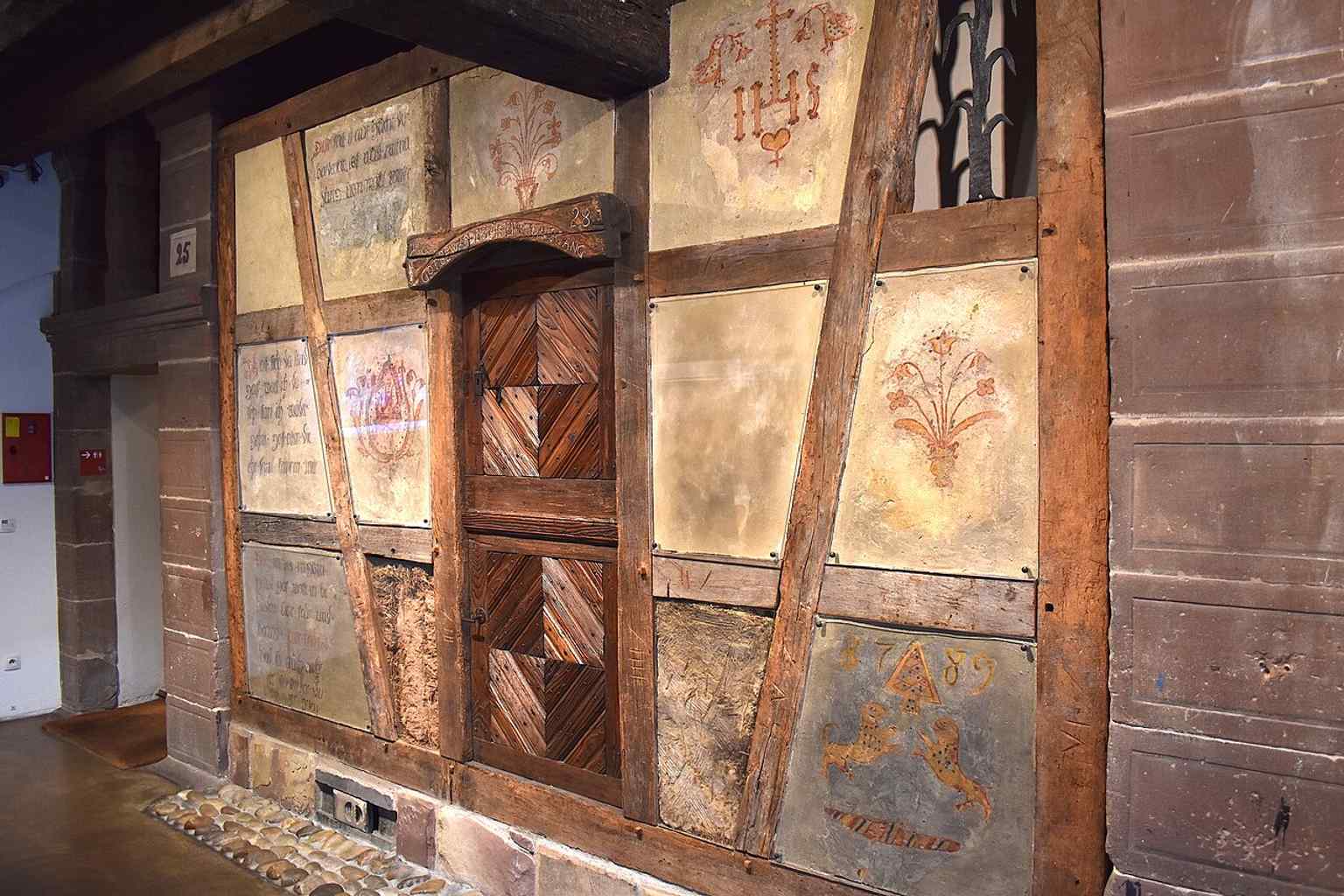
A decorated half-timber wall detail, reflecting the traditional Alsatian timber architecture shown throughout the museum.Photo: DCHNwam, Wikimedia Commons, Public domain. Cropped & resized. 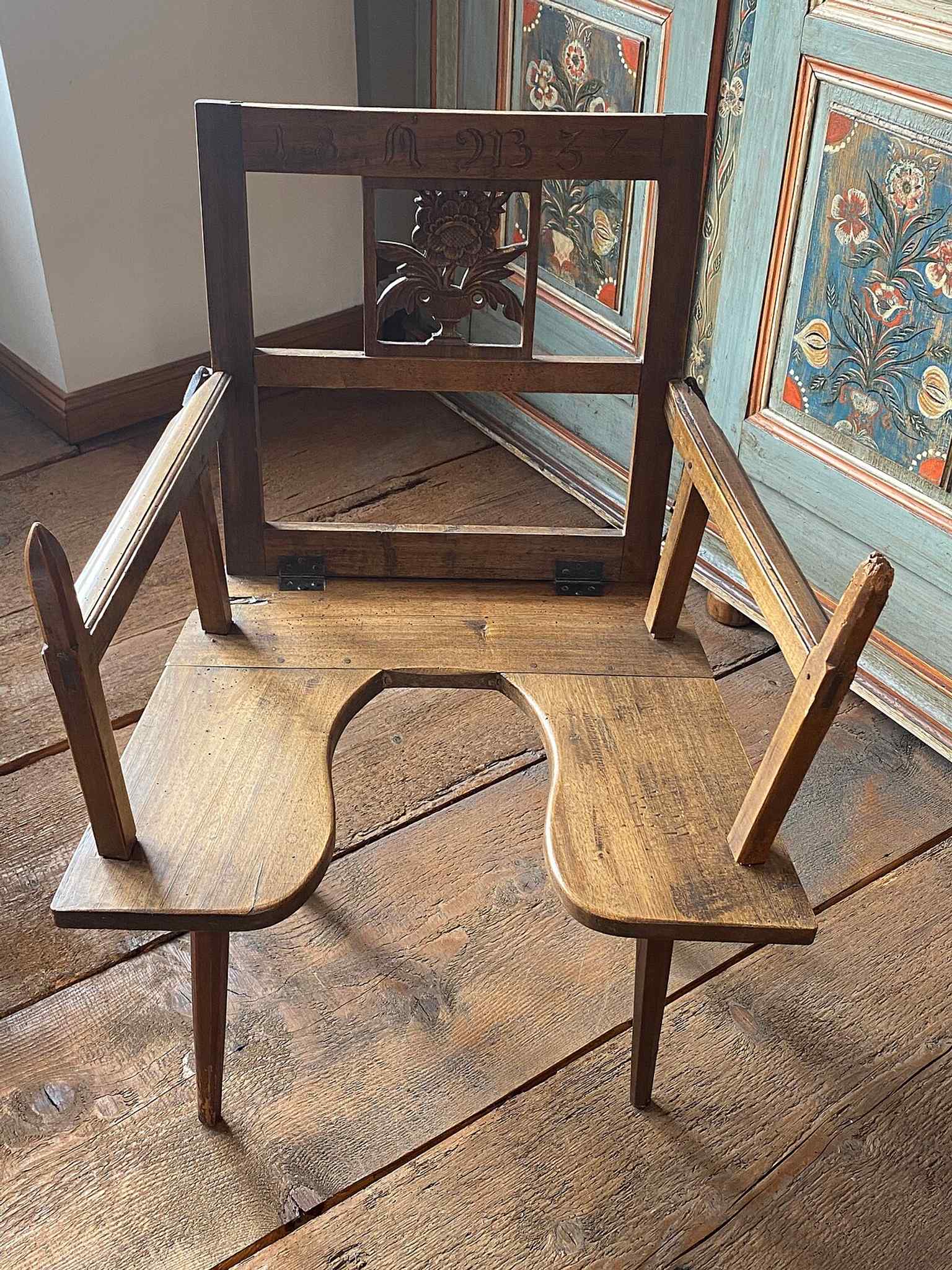
A childbirth chair, illustrating the museum’s section on life events, from birth and baptism to marriage and death.Photo: DCHNwam, Wikimedia Commons, Public domain. Cropped & resized. 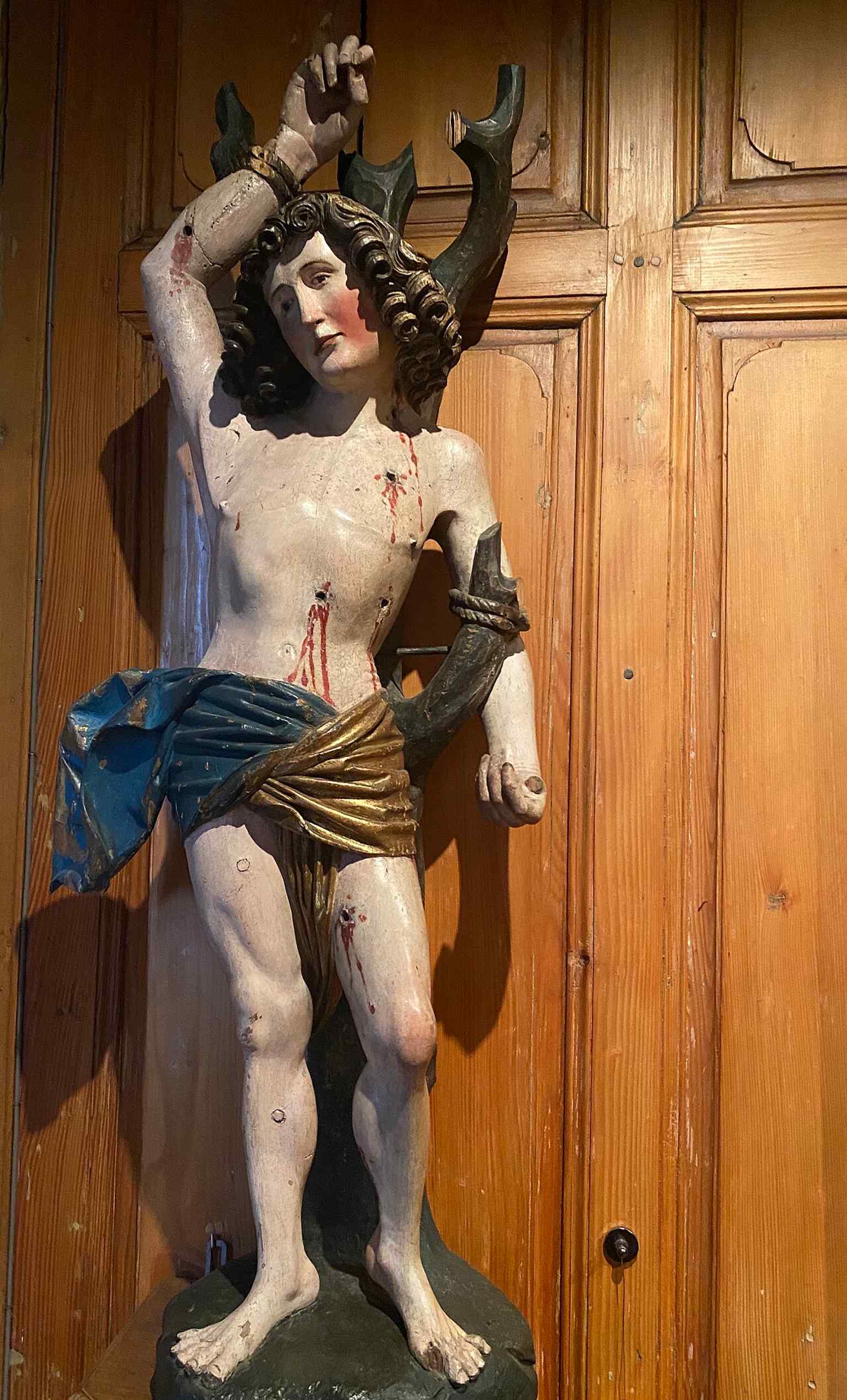
A late medieval Saint Sebastian, an example of the museum’s religious art and devotional objects.Photo: DCHNwam, Wikimedia Commons, Public domain. Cropped & resized. 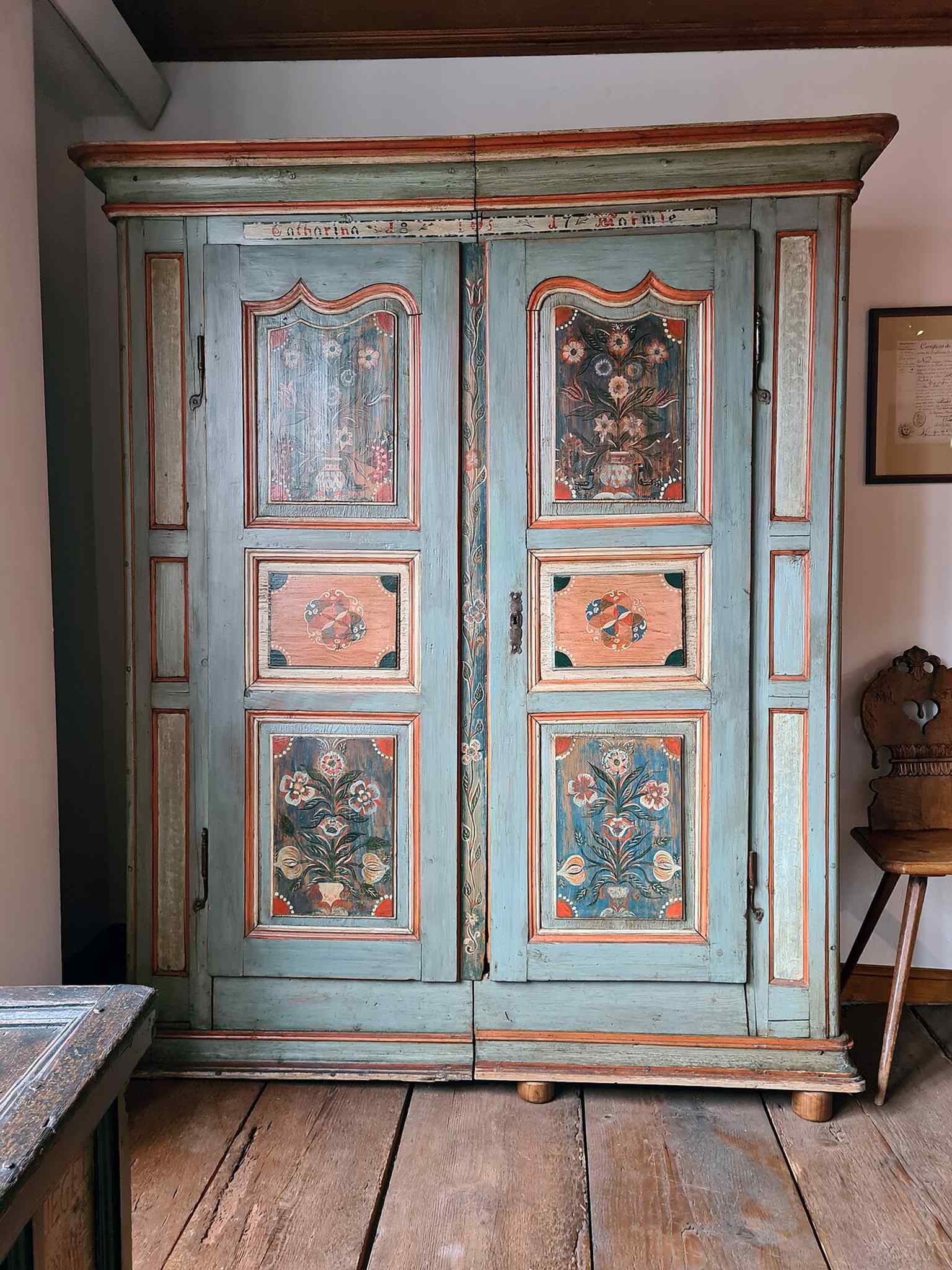
A wedding wardrobe from Sundhoffen, typical of the richly decorated furniture used to mark marriage and household status.Photo: Ji-Elle, Wikimedia Commons, CC BY-SA 4.0. Cropped & resized. 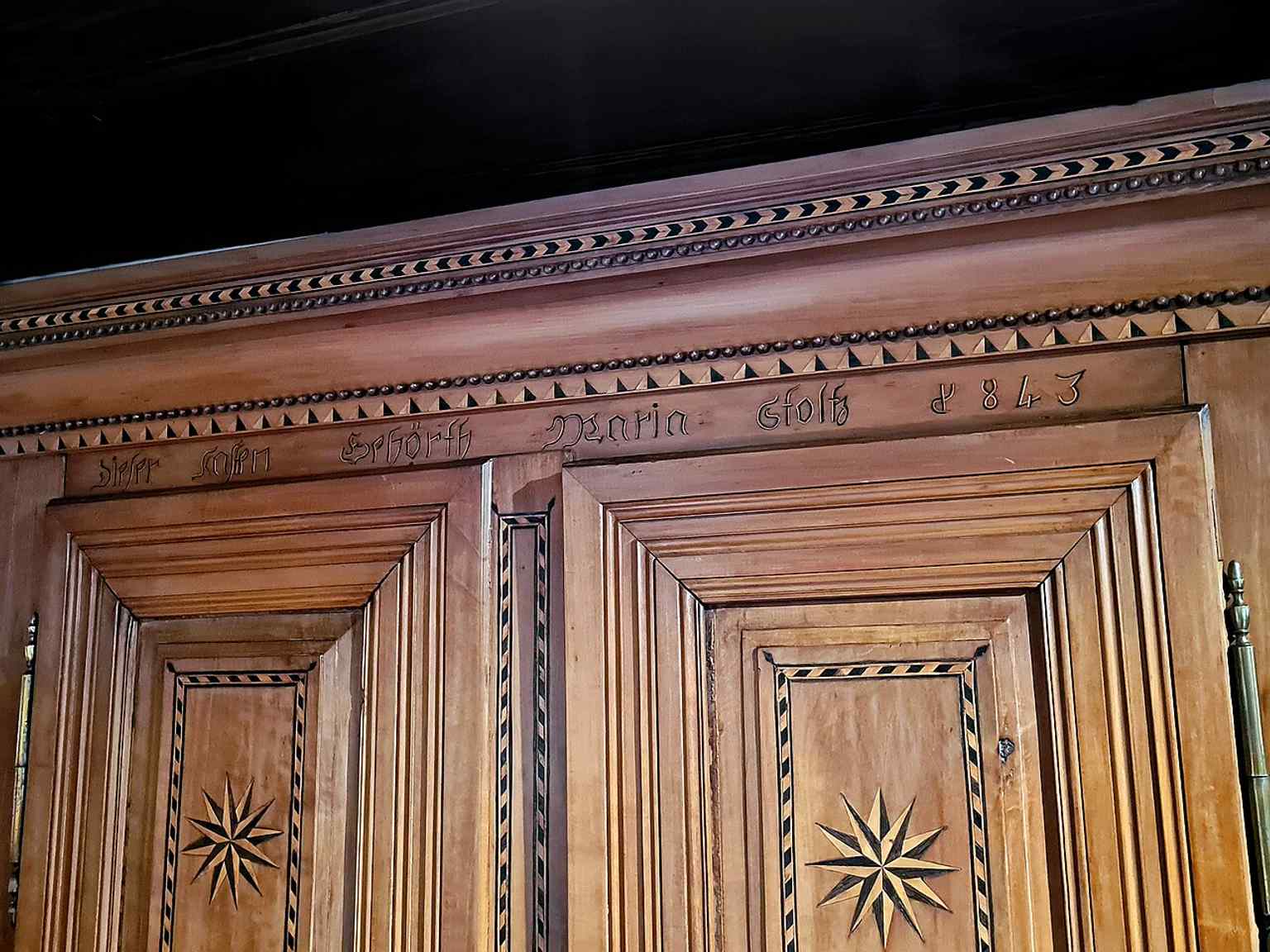
Marquetry from the Pays de Hanau, representing the museum’s fine regional furniture and craftsmanship.Photo: Ji-Elle, Wikimedia Commons, CC BY-SA 4.0. Cropped & resized. On your left, Palais Rohan stretches in yellow sandstone behind a broad curved gateway, with paired columns at the center and sculpted figures standing above the roofline. This…Read moreShow less
Open dedicated page →On your left, Palais Rohan stretches in yellow sandstone behind a broad curved gateway, with paired columns at the center and sculpted figures standing above the roofline.
This is where Strasbourg decided that power should dress well. In the seventeen thirties, Cardinal Armand Gaston Maximilien de Rohan asked the royal architect Robert de Cotte to design a residence fit for a prince-bishop, a man who held both noble rank and church authority. The House of Rohan was exactly that kind of family: high aristocracy wrapped around episcopal power, with enough ceremony to make a stage manager nervous.
From where you stand, the message is plain. That central portal pushes forward like a triumphal arch. The statues above speak the language of Catholic virtue. And the whole palace sits right beside the cathedral on purpose. After Strasbourg had spent about two centuries under strong Protestant influence, this residence announced that Roman Catholic authority had returned... not quietly, and certainly not modestly.
The Rohans did not do modesty.
One of the most memorable residents, Cardinal Louis-René de Rohan, moved through the city like a man who thought consequences were for other people. Local lore says he once tore through the market square in his carriage, smashed a poor woman’s crockery stall, then tossed her a purse of gold worth three times the damage and sped away. In Strasbourg, that counted as outrageous behavior with excellent customer service.
He also brought a whiff of velvet-curtain mystery to this place. In the seventeen eighties, Louis-René welcomed the adventurer and self-styled alchemist Alessandro Cagliostro into the palace. While the city’s elite whispered and leaned in, Cagliostro held séances, promised the secret of turning metal into gold, and worked in a laboratory the Cardinal set up here. Most visitors see Baroque elegance; locals remember that this palace once flirted with the occult.
Then came the scandal that cracked the performance. Louis-René got entangled in the Affair of the Diamond Necklace, a notorious fraud involving a necklace worth a fortune and the hope of winning back Marie Antoinette’s favor. His arrest wrecked his reputation, and before long the French Revolution stripped the family of the palace altogether.
That is the Strasbourg pattern we have been tracing: one address, many identities. This place served prince-bishops, then the city as town hall, then Napoleon, later the German imperial university and library, and now the city again as a cluster of museums. If you want a neat little proof of that long makeover, check the before-and-after image of the portal in the app.
Inside, the show goes on. Royal guests slept here, including Louis the Fifteenth, Marie Antoinette on her first night in France, and Napoleon with Joséphine. If you glance at the app, the King’s Bedchamber gives you the full theatrical treatment: canopy bed, ceremony, and not much room for humility.
Since the late nineteenth century, the palace has housed three museums: archaeology in the basement, decorative arts on the ground floor, and fine arts above. So even after revolution, imperial handoffs, wartime damage, and fire, the building kept changing costumes without leaving the stage.
And now, just ahead, comes the one monument that could outstare all of this splendid competition. Strasbourg Cathedral is about a four-minute walk from here. If you plan to come back inside, the museums generally open from ten to one and two to six, close on Tuesday, and run from ten to six on weekends.
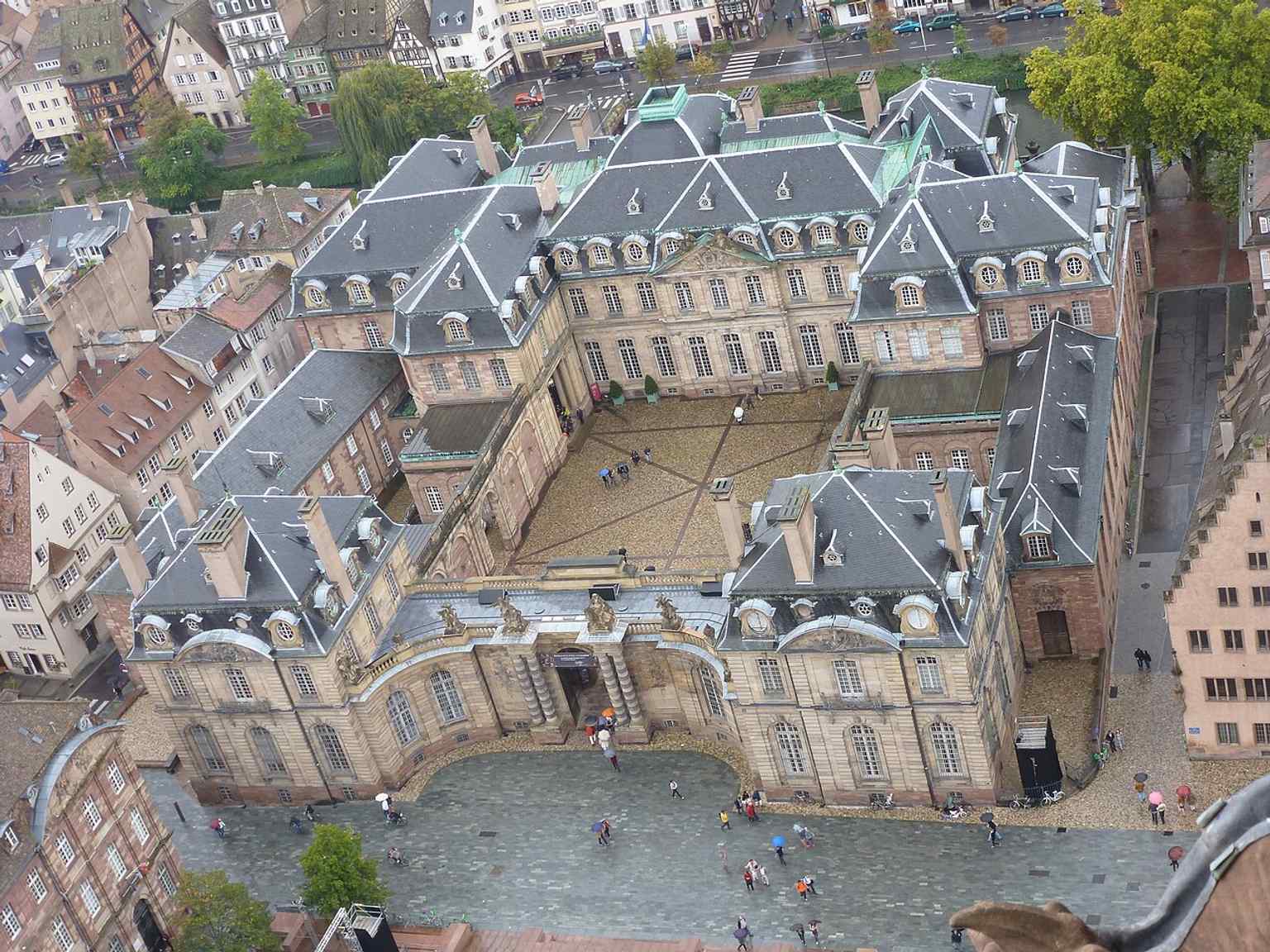
The palace seen from Strasbourg Cathedral, showing how its Baroque façade was placed beside the city’s great religious landmark.Photo: Paralacre, Wikimedia Commons, CC BY-SA 3.0. Cropped & resized. 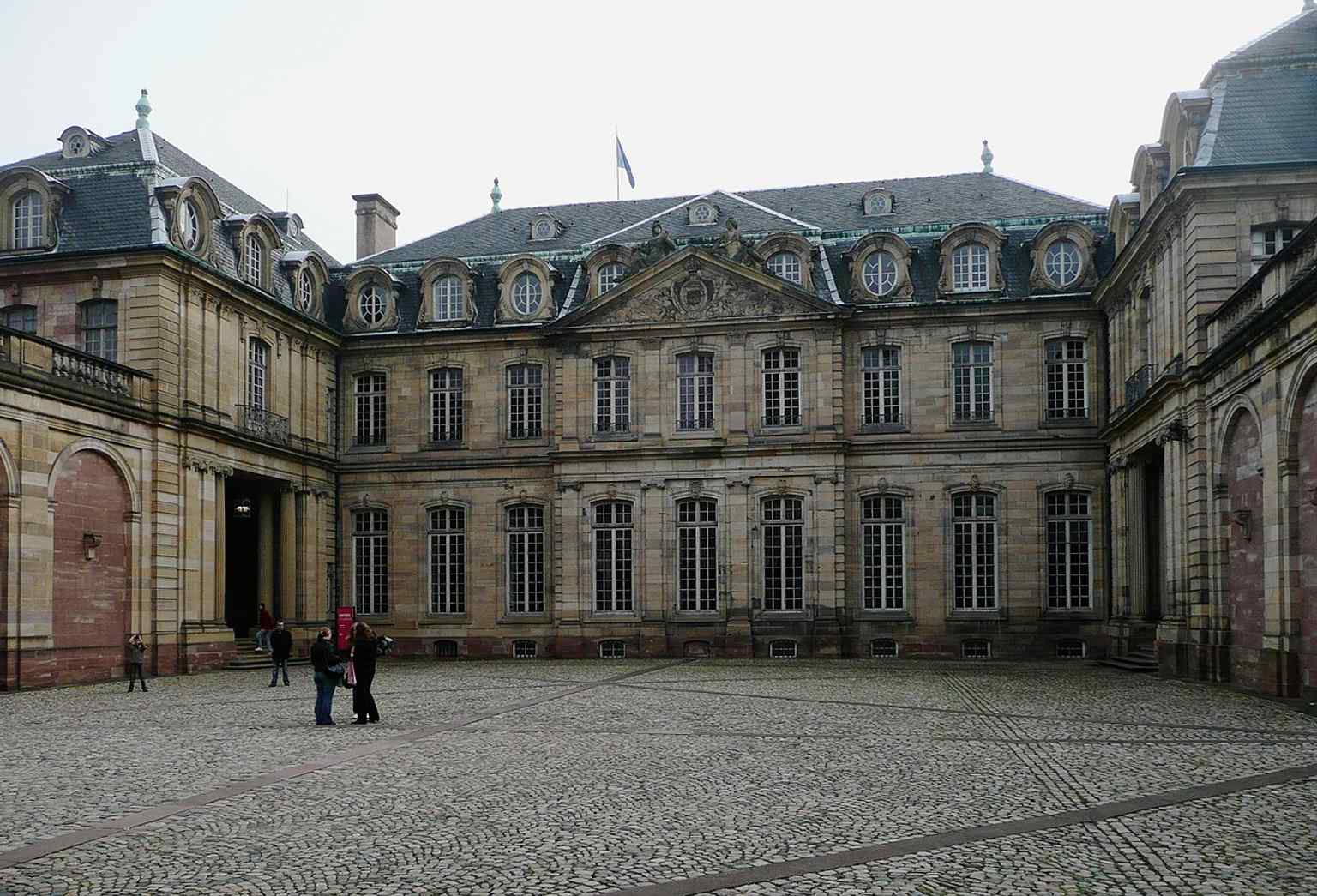
The main courtyard reveals the elegant court d’honneur where nobles, monarchs, and later city officials entered the palace.Photo: Georg Schelbert, Wikimedia Commons, CC BY-SA 3.0. Cropped & resized. 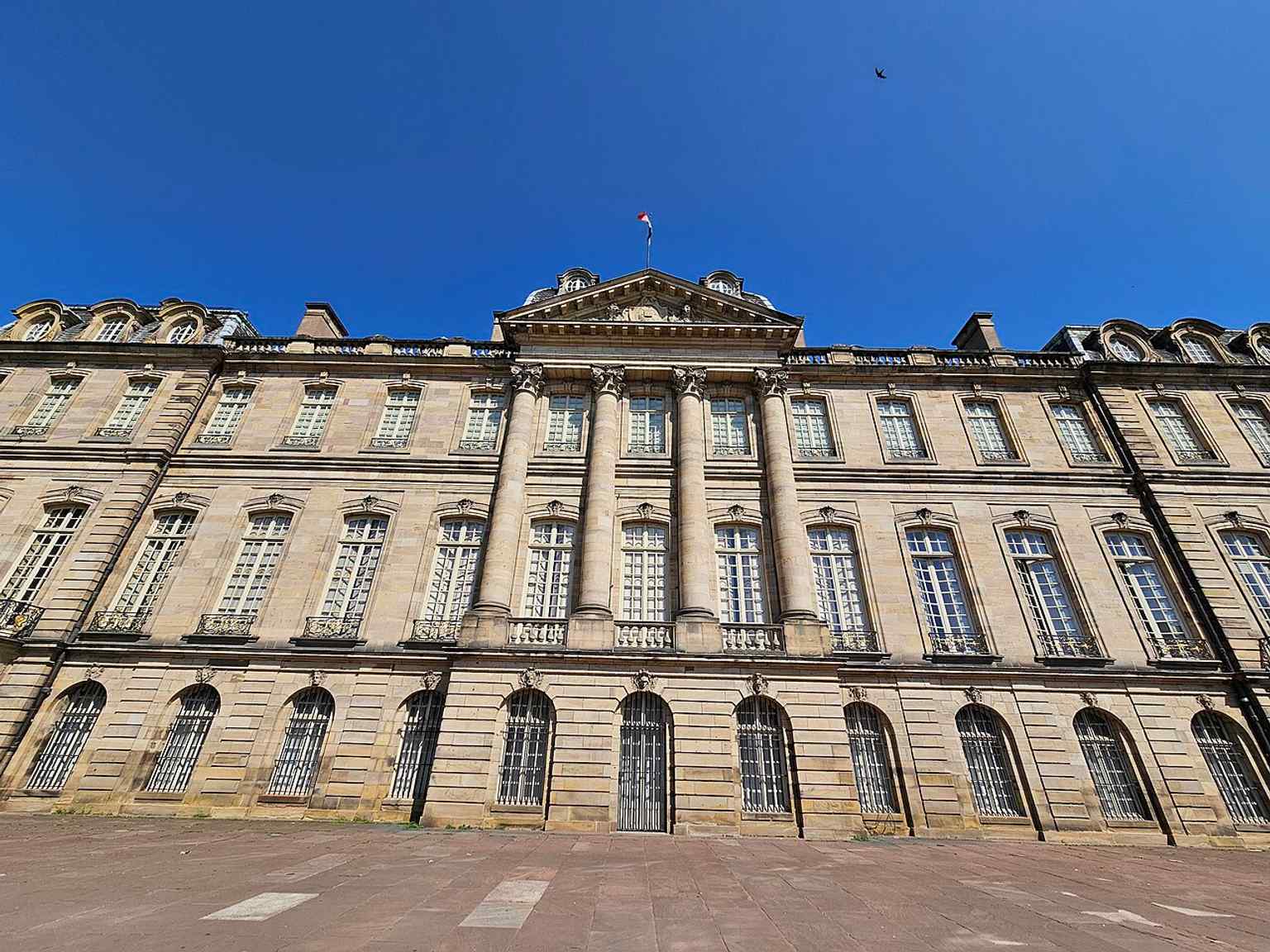
The riverside façade along the Ill, the palace’s widest side, built in yellow sandstone with rich Baroque symmetry.Photo: John Samuel, Wikimedia Commons, CC BY-SA 4.0. Cropped & resized. 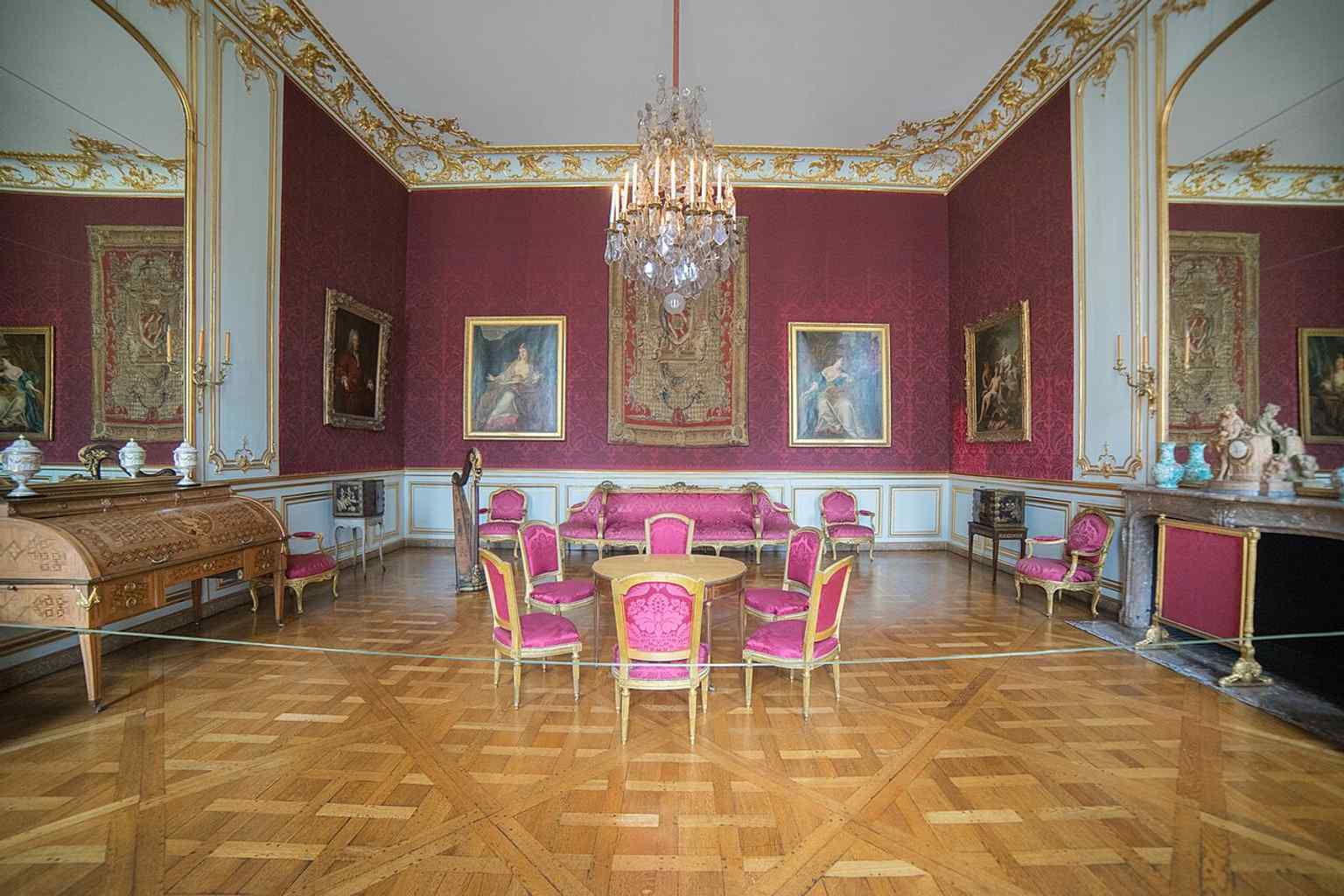
An interior view from the museum rooms now housed in the former palace apartments, where royal ceremonial spaces were later adapted for collections.Photo: Pedro J Pacheco, Wikimedia Commons, CC BY-SA 4.0. Cropped & resized. On your right rises a pink sandstone front like carved lace, with a huge round rose window in the middle and a single needle-sharp spire soaring from one side. This is…Read moreShow less
Open dedicated page →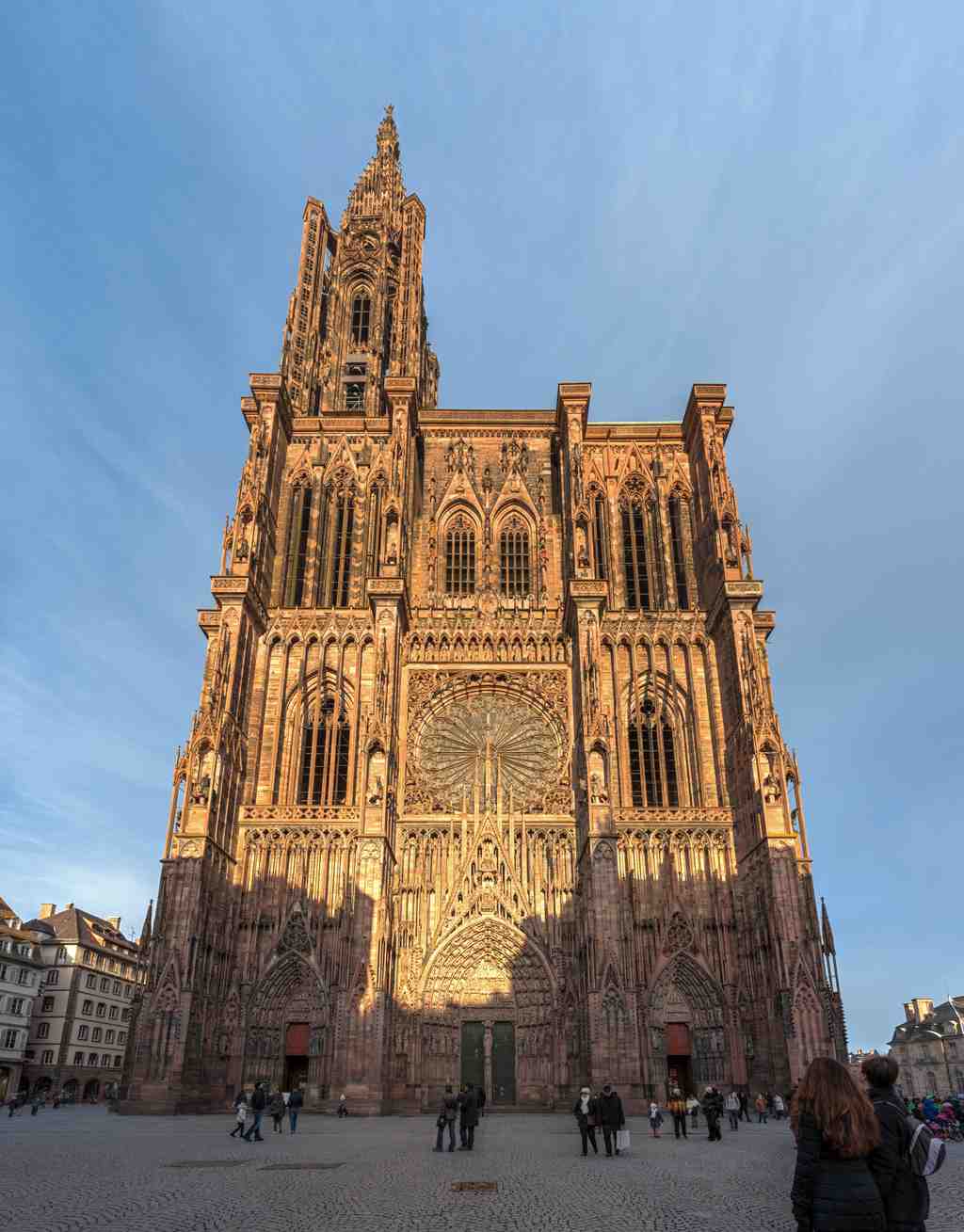
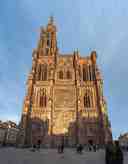
Strasbourg CathedralPhoto: Diliff, Wikimedia Commons, CC BY-SA 3.0. Cropped & resized. On your right rises a pink sandstone front like carved lace, with a huge round rose window in the middle and a single needle-sharp spire soaring from one side.
This is Strasbourg Cathedral, and it is the old city’s great drumroll. Builders founded a church here in the year ten fifteen over even earlier sacred ground, then from about twelve twenty the city raised the cathedral you see now in the new Gothic style, finishing most of it by thirteen sixty-five. The gap between the two towers got filled in by thirteen eighty-eight, and in fourteen thirty-nine Jean Hültz completed the great spire. At one hundred forty-two meters, it ruled the skyline so completely that from sixteen forty-seven to eighteen seventy-four it stood as the tallest building on earth. Folks could spot it from far across the Alsace plain, even from the Vosges and the Black Forest. That is not just architecture... that is a declaration.
And here is the surprise tucked inside all that holiness: this cathedral does not only tell the story of bishops. It also tells the story of a self-confident city. After Strasbourg defeated its prince-bishop in twelve sixty-two, the free city took control of the works through the Fondation de l’Œuvre Notre-Dame, the body that funded and managed the chantier, or building site. So this spire became a kind of civic exclamation point, a merchant republic saying, in stone, “We are here.” Cathedrals usually preach. This one also campaigns.
Let your eyes climb from the portals to the rose, then all the way up that lone spire.
You can feel why Goethe lost his nerve here... and then came back for more. When the young Goethe arrived in seventeen seventy to study law, he was terrified of heights. So he treated the cathedral like his own homemade medicine: he climbed the tower again and again, sat on a narrow platform at the crown with his legs hanging over the void, and waited until the panic eased. He later compared the sensation to being lifted by a balloon. That is one way to make a building unforgettable.
Its faith changed too. During the Reformation, Catholics and Protestants both claimed this place. From fifteen twenty-seven it served Protestant worship, though the choir remained Catholic, and after Louis the Fourteenth took Strasbourg in sixteen eighty-one, the cathedral returned to Catholic use. So even this great façade was not a settled symbol. It stood at the center of arguments over who Strasbourg was, and who got to define it.
One more thing to notice: unlike many cathedrals, this one still feels tightly wrapped by the city around it, so the frontage hits you almost all at once, like a mountain at the end of a street. If you want, take a quick look at the before-and-after image in the app; the square changes enormously, while the cathedral stays stubbornly in command. And if you glance at the crypt image, you can see one of the Romanesque survivors hidden beneath this Gothic giant.
Now bring your gaze down from the vastness to one remarkable neighbor beside the cathedral, where belief, trade, and carved detail get folded into a single house: Kammerzell House is just about a minute away. If you plan to step inside the cathedral later, it usually opens Monday through Saturday in two blocks, roughly eight thirty to eleven fifteen and twelve forty-five to five forty-five, and on Sunday from two o’clock to five fifteen.
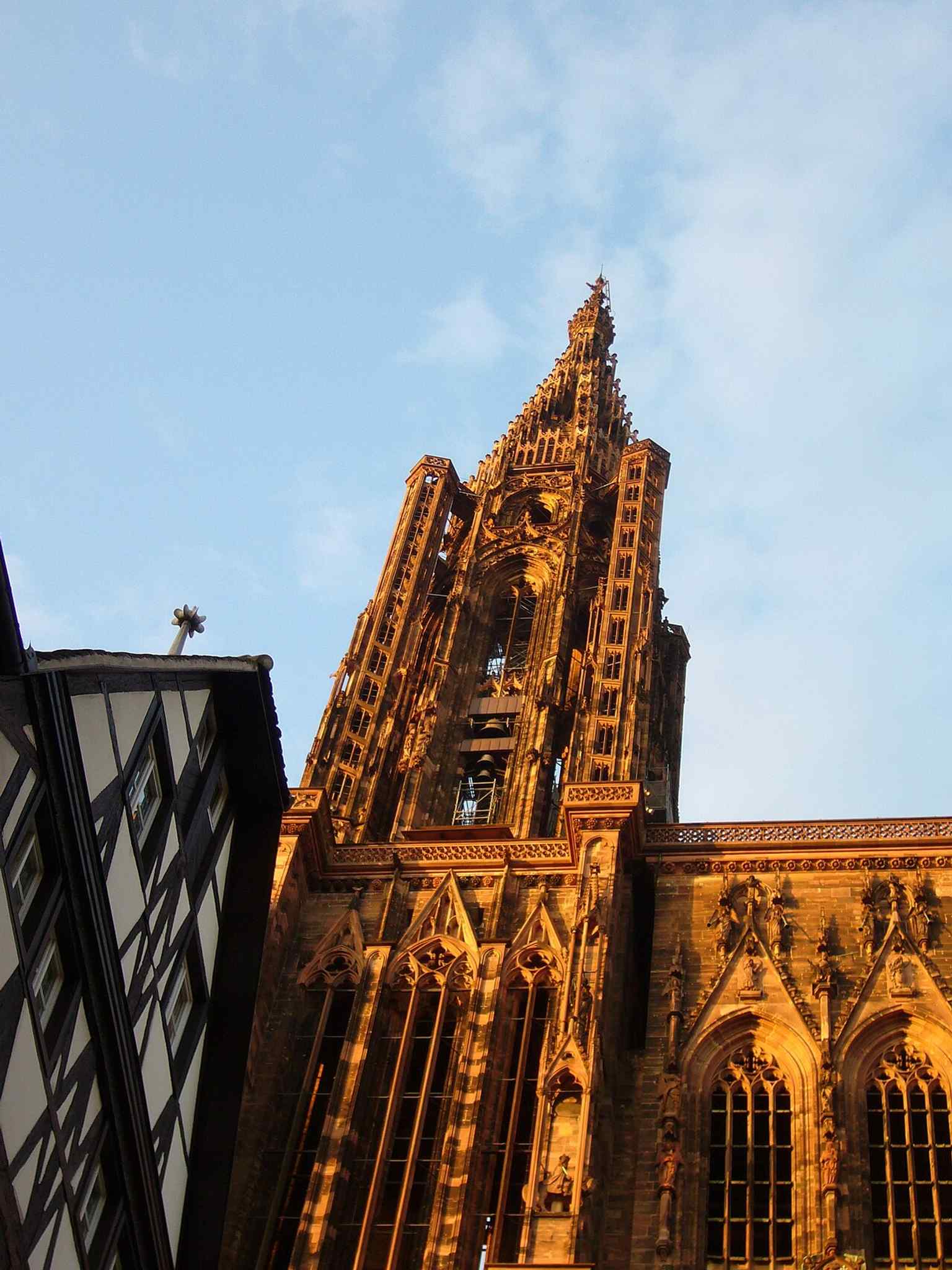
A classic full-height view of the cathedral’s soaring single spire — the landmark that once made Strasbourg the tallest church in the world.Photo: Jonathan M, Wikimedia Commons, CC BY-SA 3.0. Cropped & resized. 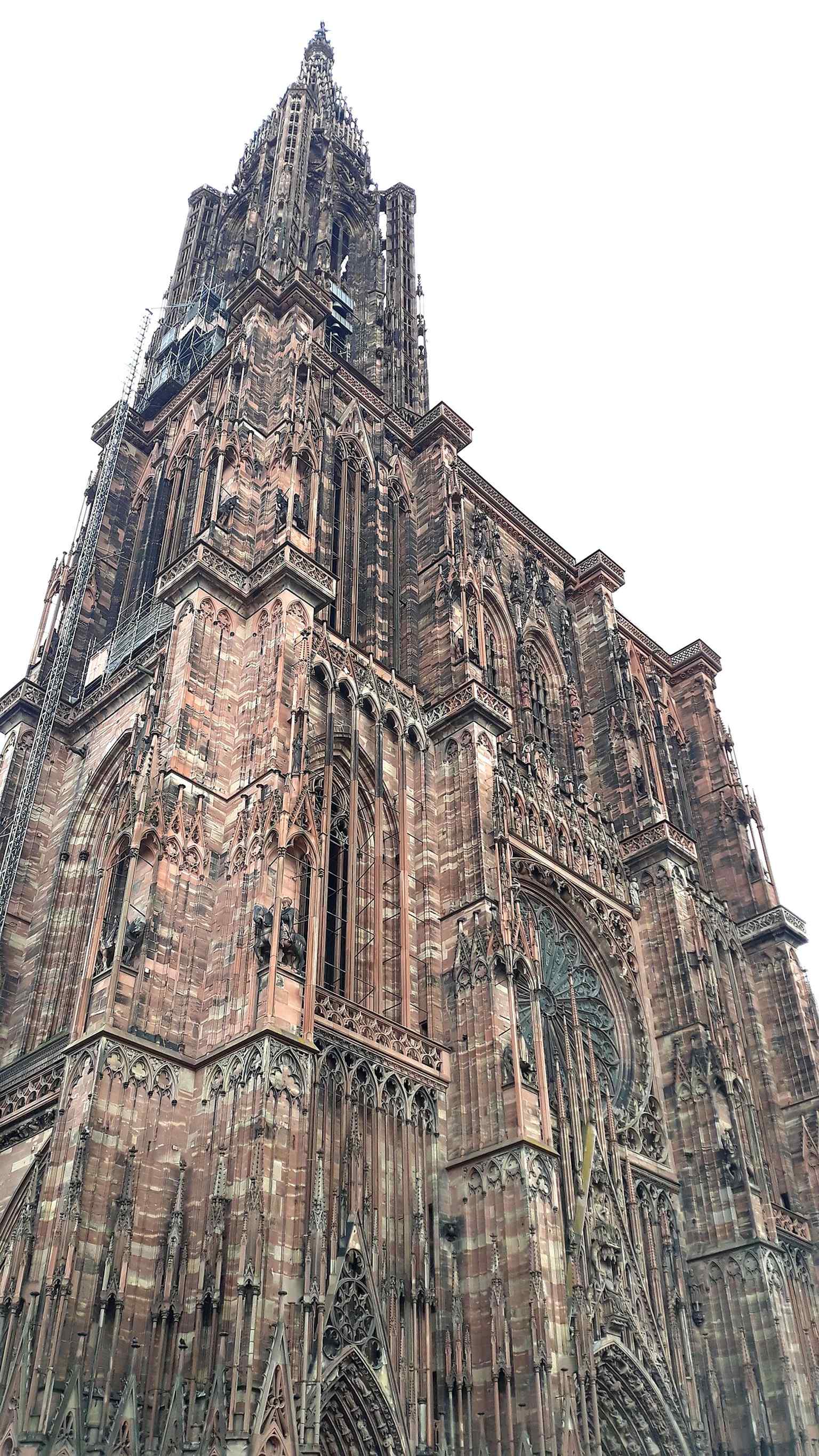
A northwest exterior view that shows the cathedral rising above the old city fabric, matching the text’s emphasis on how tightly it is embedded in Strasbourg’s historic center.Photo: acediscovery, Wikimedia Commons, CC BY 4.0. Cropped & resized. 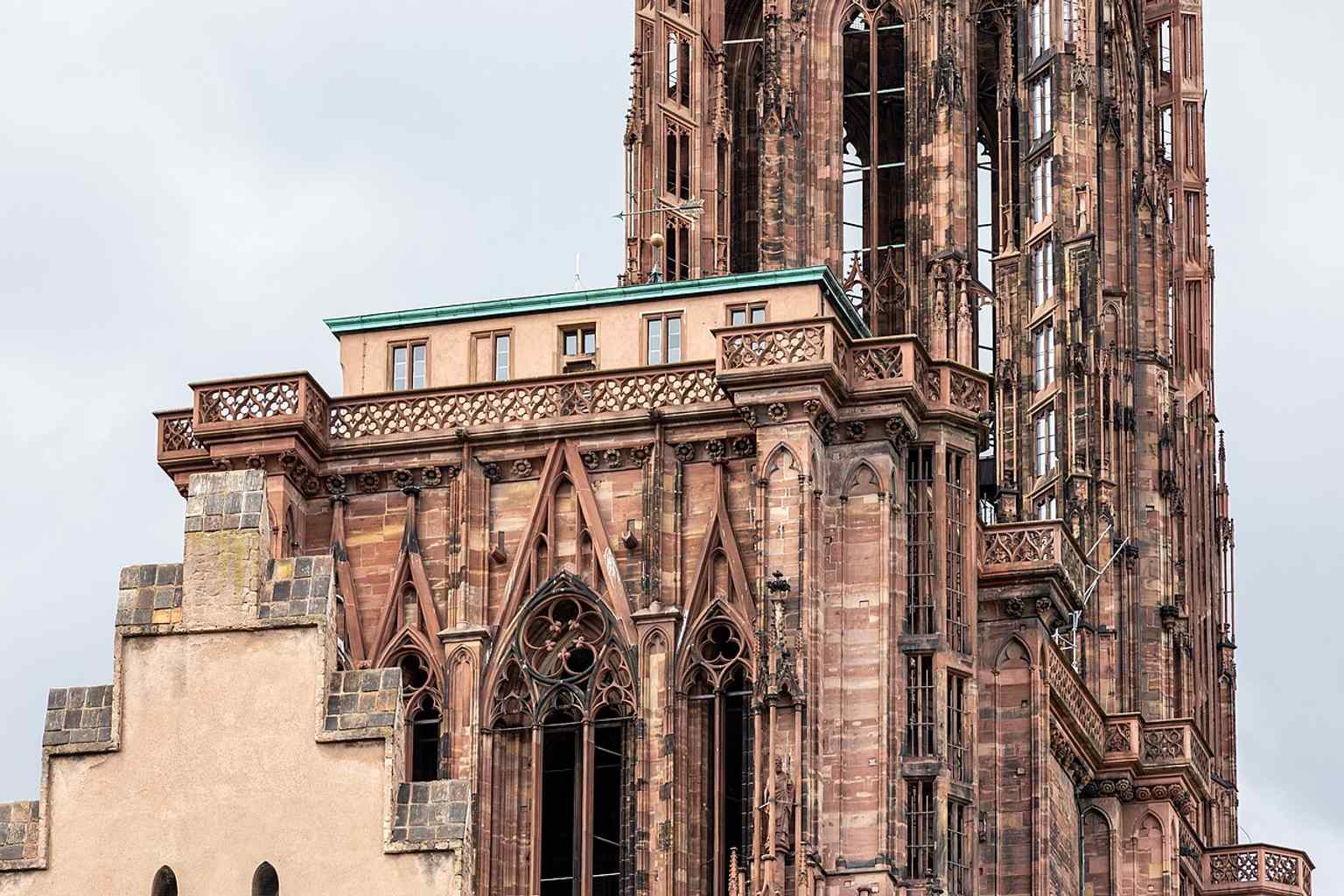
Visitors’ platform and fire-guard house on the south tower — a useful detail for explaining access to the tower and the cathedral’s long history of protection.Photo: JoachimKohler-HB, Wikimedia Commons, CC BY-SA 4.0. Cropped & resized. On your right, Kammerzell House rises in a stone-and-dark-timber stack, with overhanging upper floors and a steep gable topped by an old wooden lifting arm. This is one of…Read moreShow less
Open dedicated page →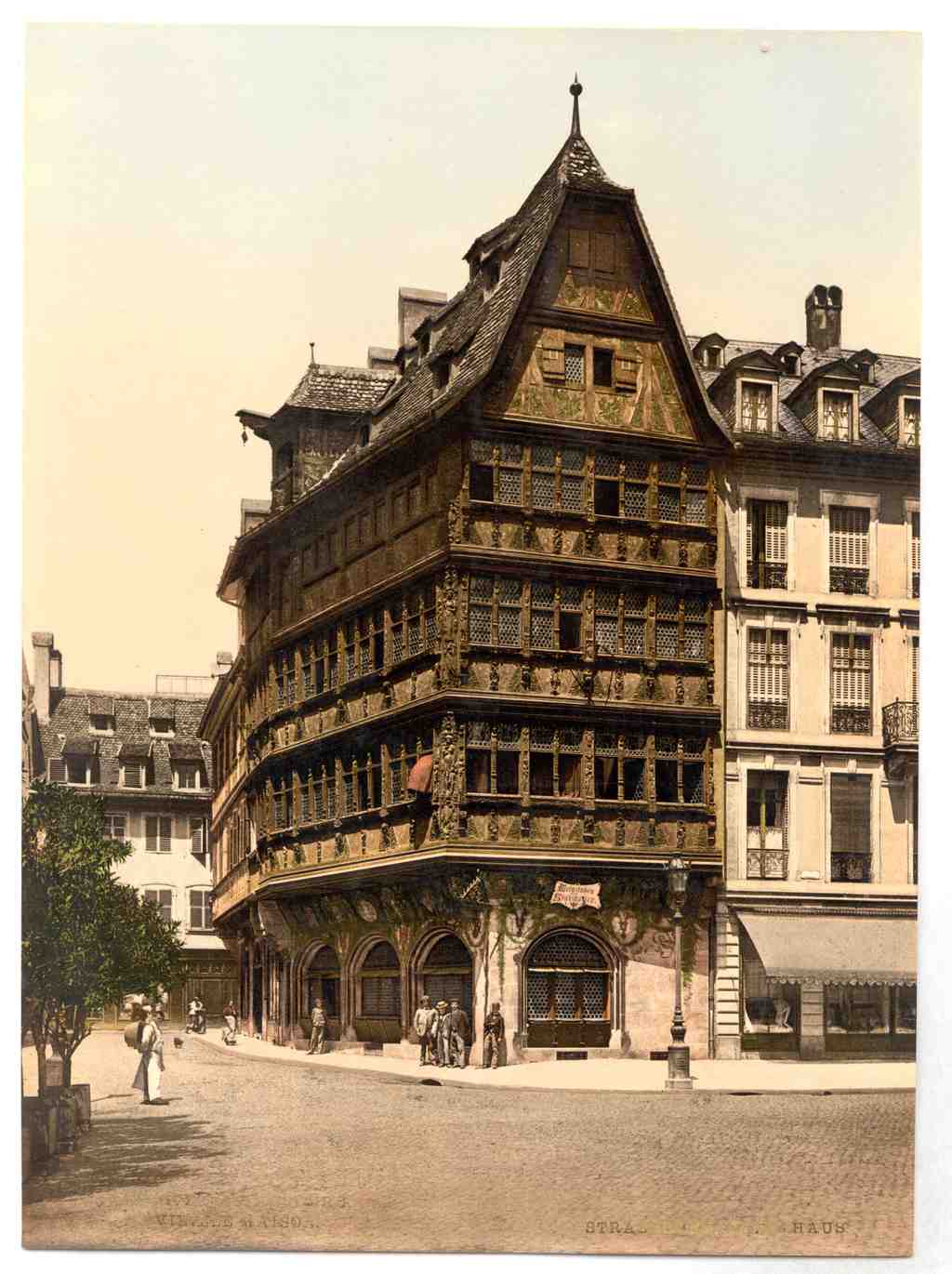
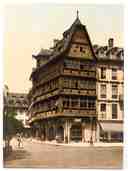
Kammerzell HousePhoto: Unknown author, Wikimedia Commons, Public domain. Cropped & resized. On your right, Kammerzell House rises in a stone-and-dark-timber stack, with overhanging upper floors and a steep gable topped by an old wooden lifting arm.
This is one of Strasbourg’s great show-offs... and I mean that as a compliment. The house began in fourteen twenty-seven, then changed shape in fourteen sixty-seven and again in fifteen eighty-nine, when Martin Braun, a wealthy cheese merchant with grand tastes and very little interest in restraint, bought it and decided no exterior wall should go undecorated. He kept the stone ground floor, then piled on three corbelled wooden stories - corbelled meaning they jut outward over the street - plus three loft levels above.
Here’s the twist most people miss: this riot of carving took shape during the Protestant Reformation, when religious images had become suspect in many circles. A lot of the finest sculptors and painters simply left for places with more work and fewer objections. So Braun hired more modest craftsmen, and that pressure shows. The result is not polished court art; it is something more revealing - a crowded, lively mix of sacred and secular pictures living side by side. One facade runs through the stages of life, the five senses, and the zodiac. Another packs in musicians, Catholic saints, the Nine Worthies of medieval chivalry, Julius Caesar, and Charlemagne. It’s a merchant’s worldview carved in wood: faith, trade, status, spectacle... all elbowing for room.
If you glance at the close-up on your screen, you can see how densely those figures press across the facade.
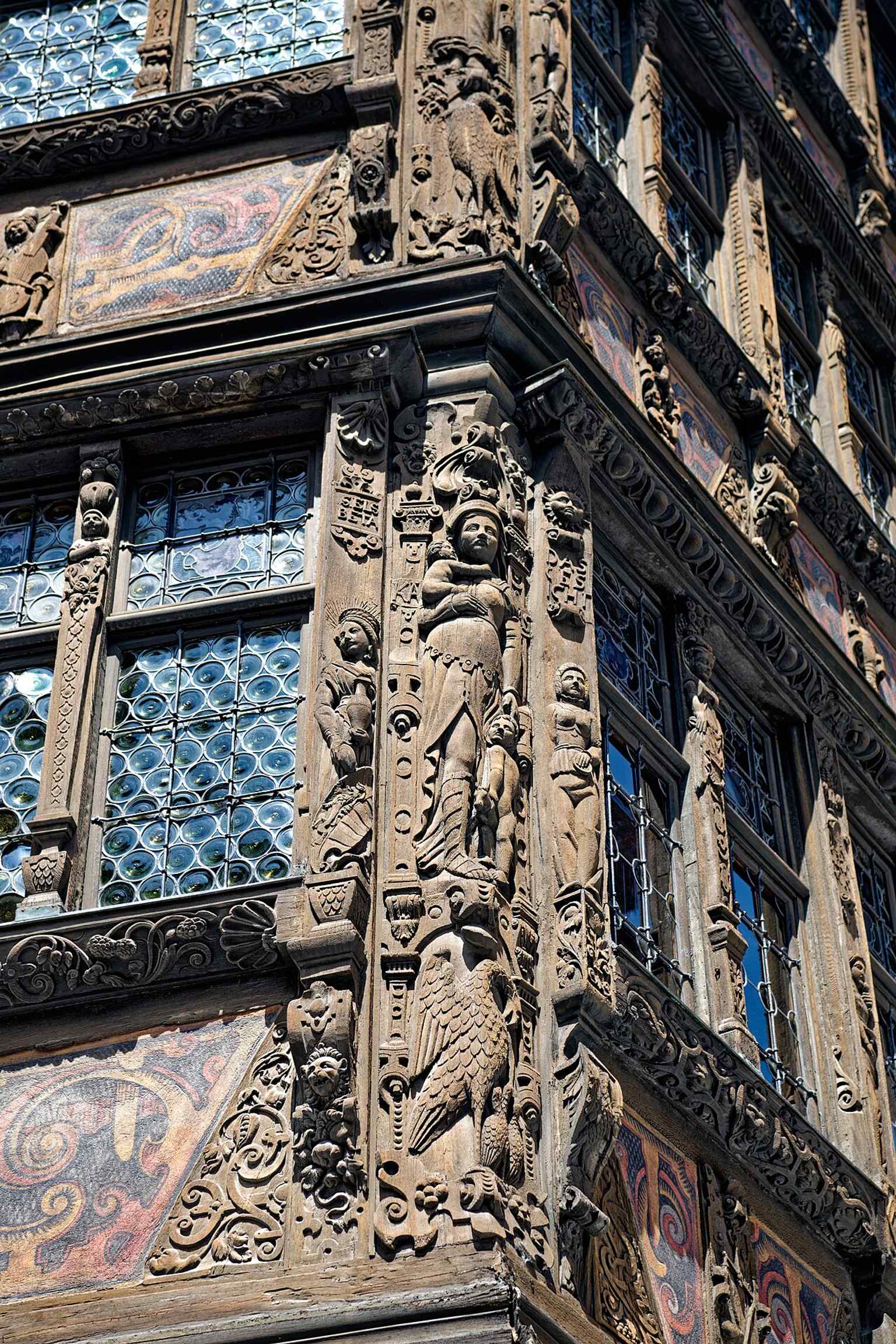
A tight close-up on the carved exterior, ideal for discussing the building’s nearly wall-to-wall sculptural decoration.Photo: Tilman2007, Wikimedia Commons, CC BY-SA 4.0. Cropped & resized. And look high at the gable: that wooden pulley is original. Workers once used it to haul goods straight up to the attic, a handy reminder that this beauty started as a business address.
Oddly enough, Braun does not get the name. A later owner, the grocer Philipp Franz Kammerzell, bought it in eighteen fifteen, and his name stuck. If you want, check the before-and-after view in the app; the square changed plenty, but this house still plays its part like an old pro.
Inside, it now serves Alsatian food and usually opens daily from eight in the morning to ten at night. From here, we head to Place Broglie - pronounced broh-lee - where names, ceremony, and public display take over the stage.
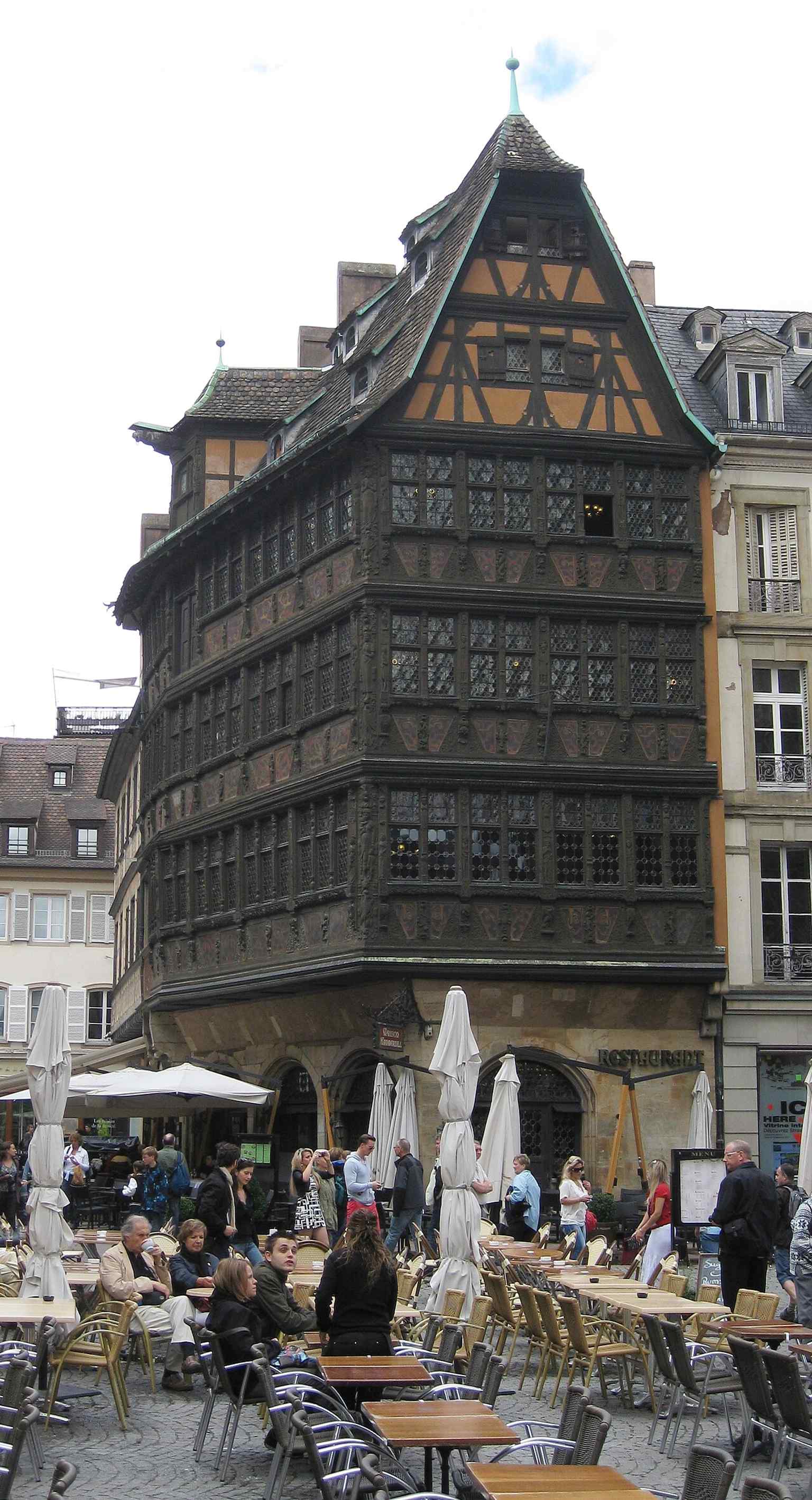
A clear documentary view of the house as a listed historical monument, useful for telling its story as a protected landmark in Strasbourg’s UNESCO center.Photo: Sir James, Wikimedia Commons, CC BY-SA 3.0. Cropped & resized. 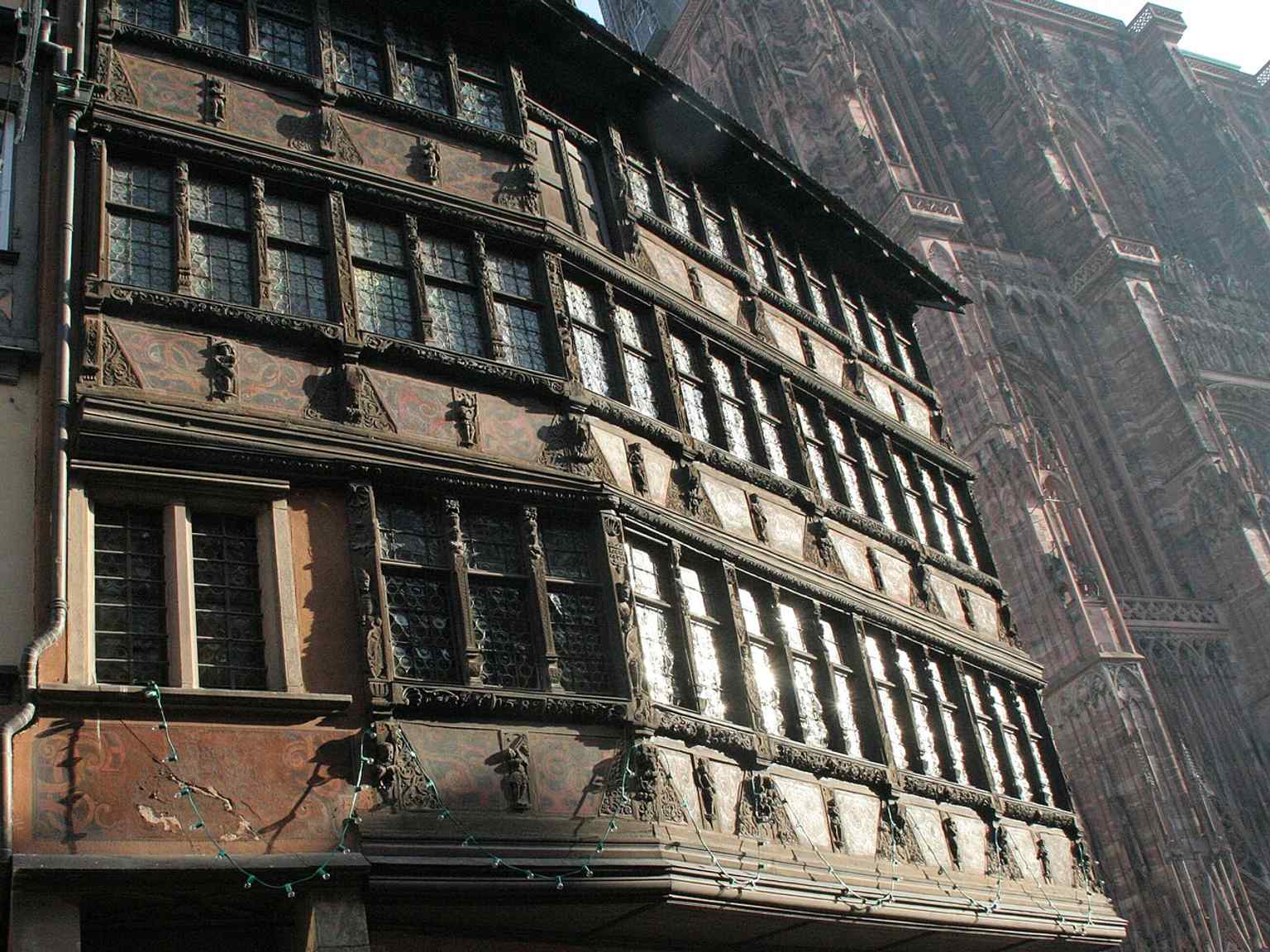
The landmark framed from the northwest, placing Kammerzell House in its cathedral-square setting on Place de la Cathédrale.Photo: JMRW67, Wikimedia Commons, CC BY-SA 3.0. Cropped & resized. 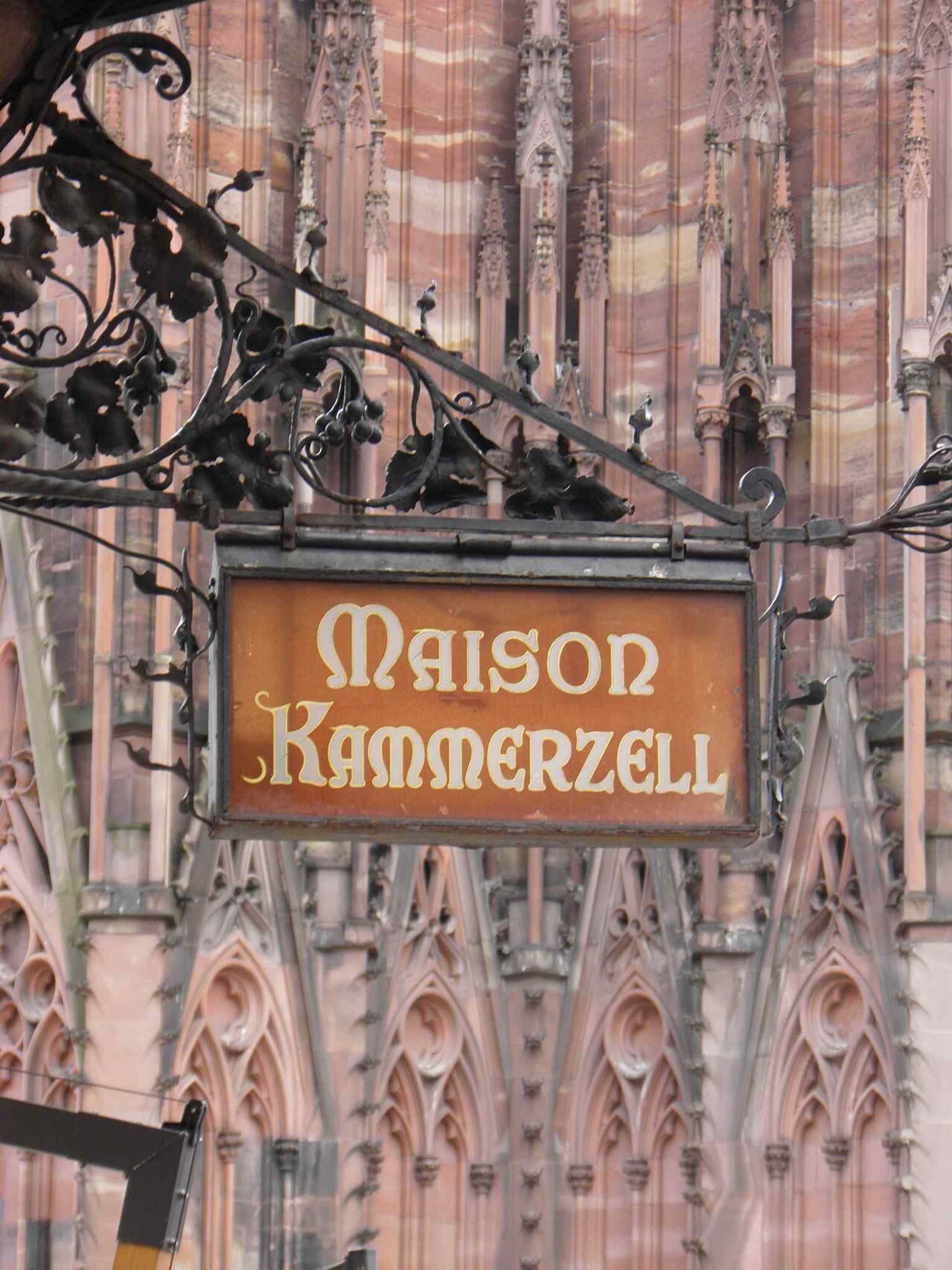
The house sign and west-side details highlight the richly carved facade that was expanded in 1589 under the merchant Martin Braun.Photo: Gzen92, Wikimedia Commons, CC BY-SA 4.0. Cropped & resized. 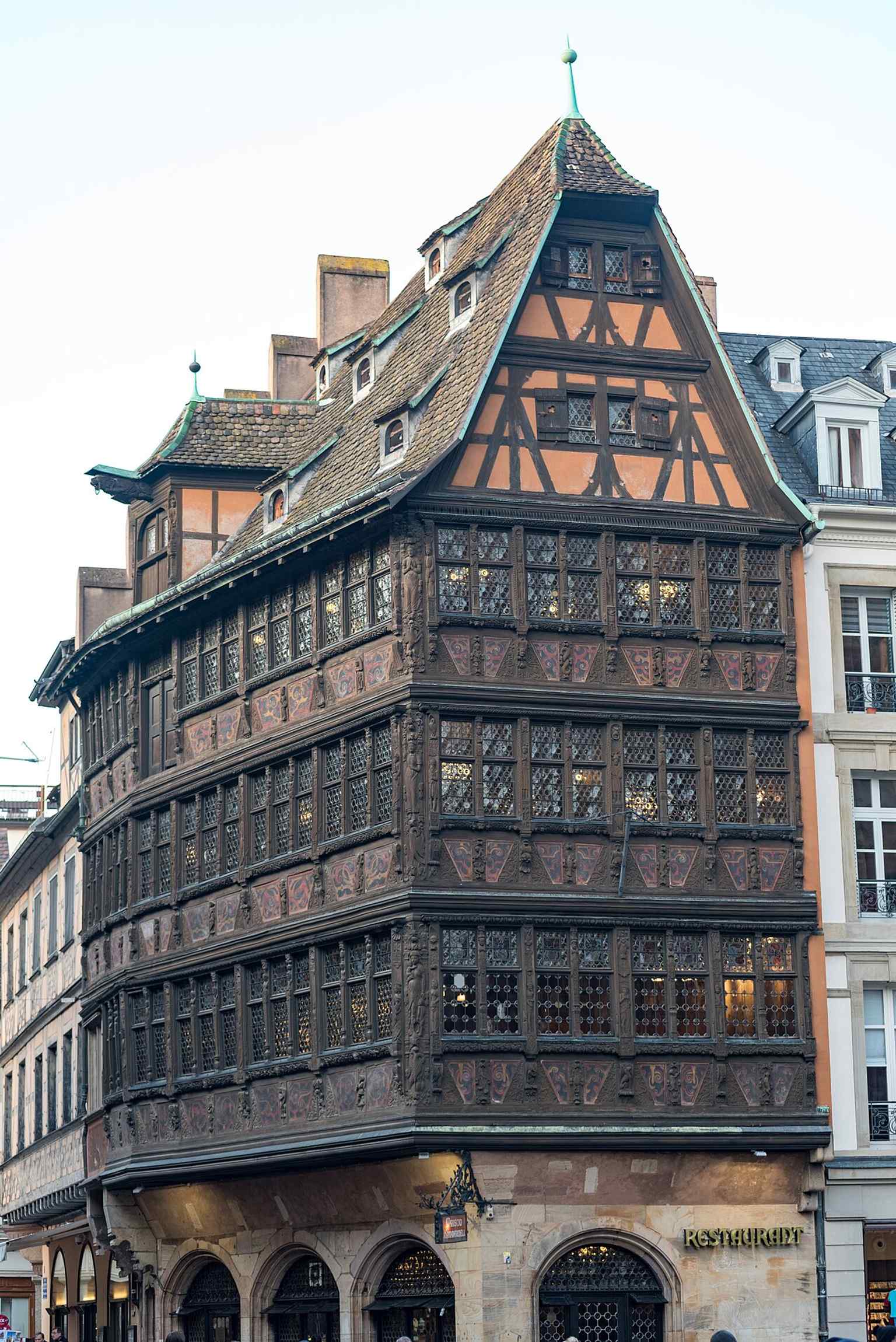
A recent street-level view of 16 Place de la Cathédrale, showing the building still standing in active use beside the cathedral.Photo: Tilman2007, Wikimedia Commons, CC BY-SA 4.0. Cropped & resized. 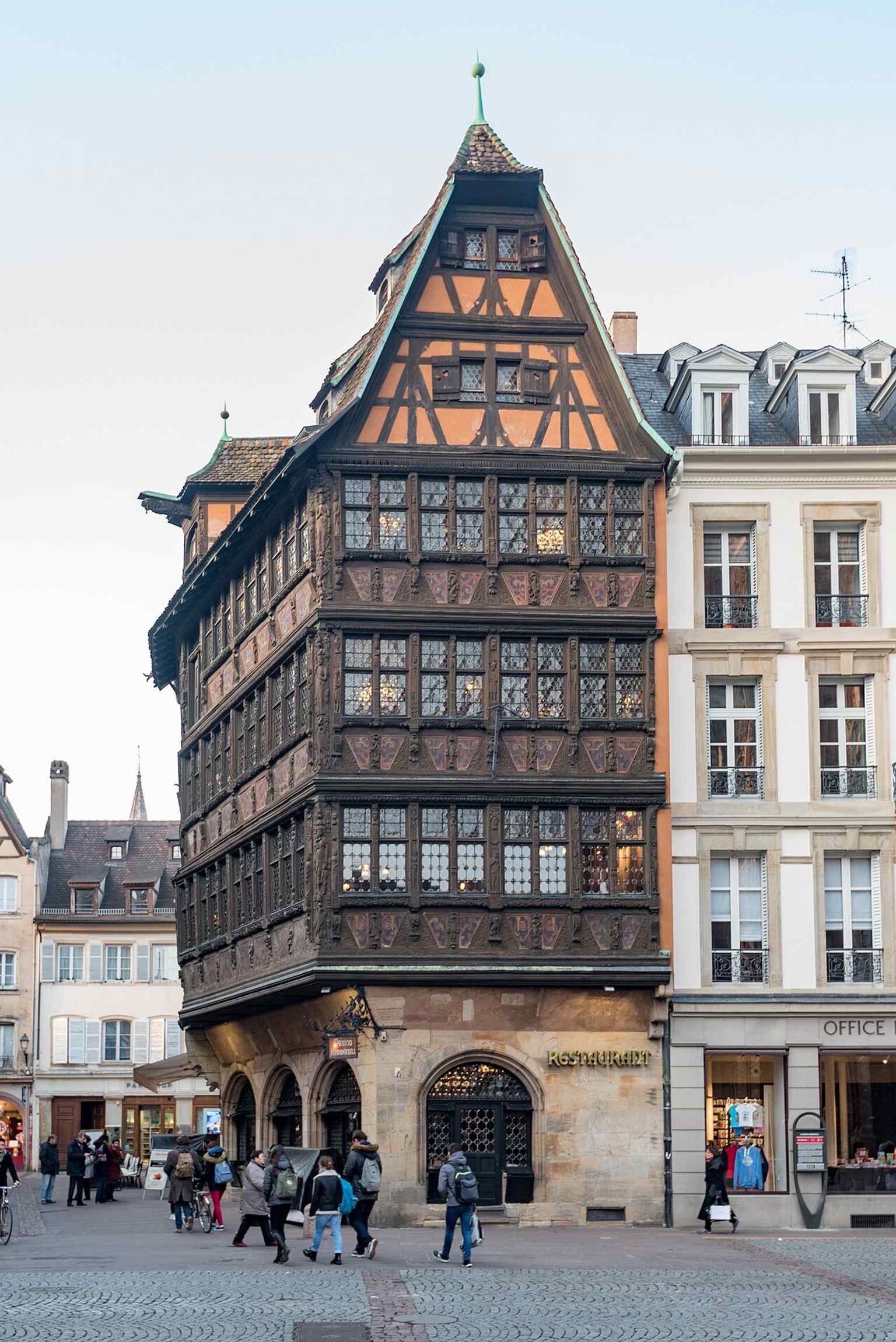
Another modern exterior angle of the house, helping show its dramatic height and layered timber-and-stone structure.Photo: Tilman2007, Wikimedia Commons, CC BY-SA 4.0. Cropped & resized. 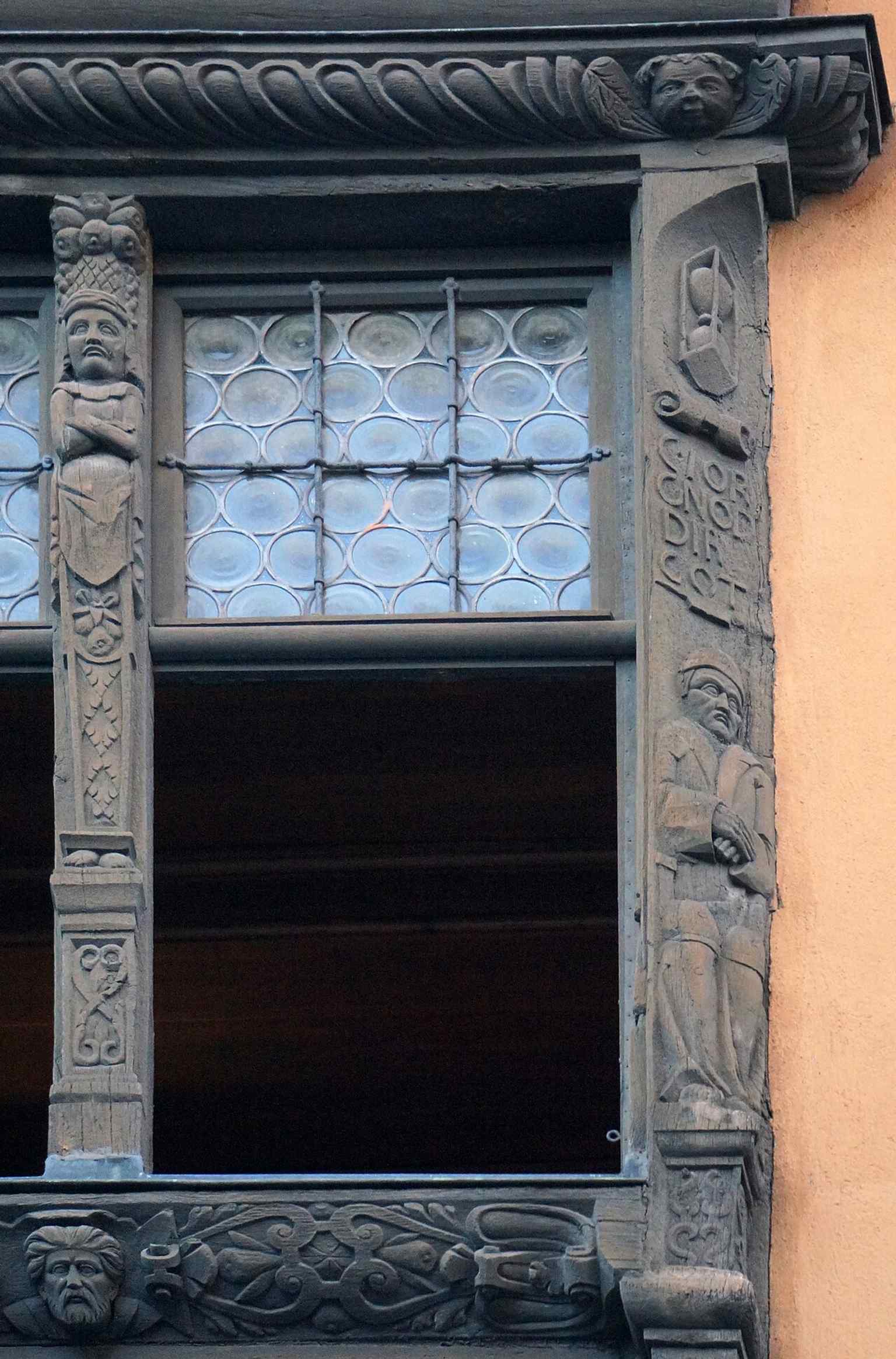
One of the sculpted facade figures, part of the exuberant program of saints, virtues, and historical imagery carved into the walls.Photo: G.Garitan, Wikimedia Commons, CC BY-SA 3.0. Cropped & resized. 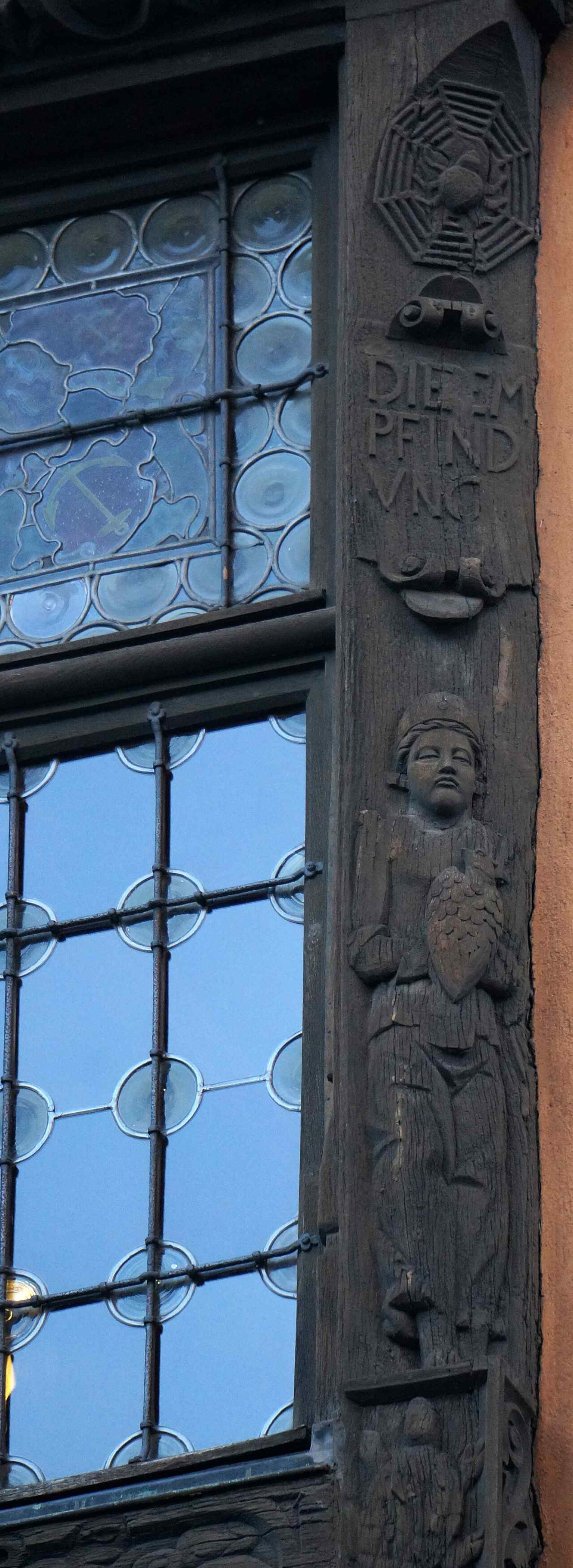
A vivid close-up of the carved exterior artwork, showing how the house’s decorations became so elaborate after the 1589 rebuilding.Photo: G.Garitan, Wikimedia Commons, CC BY-SA 3.0. Cropped & resized. 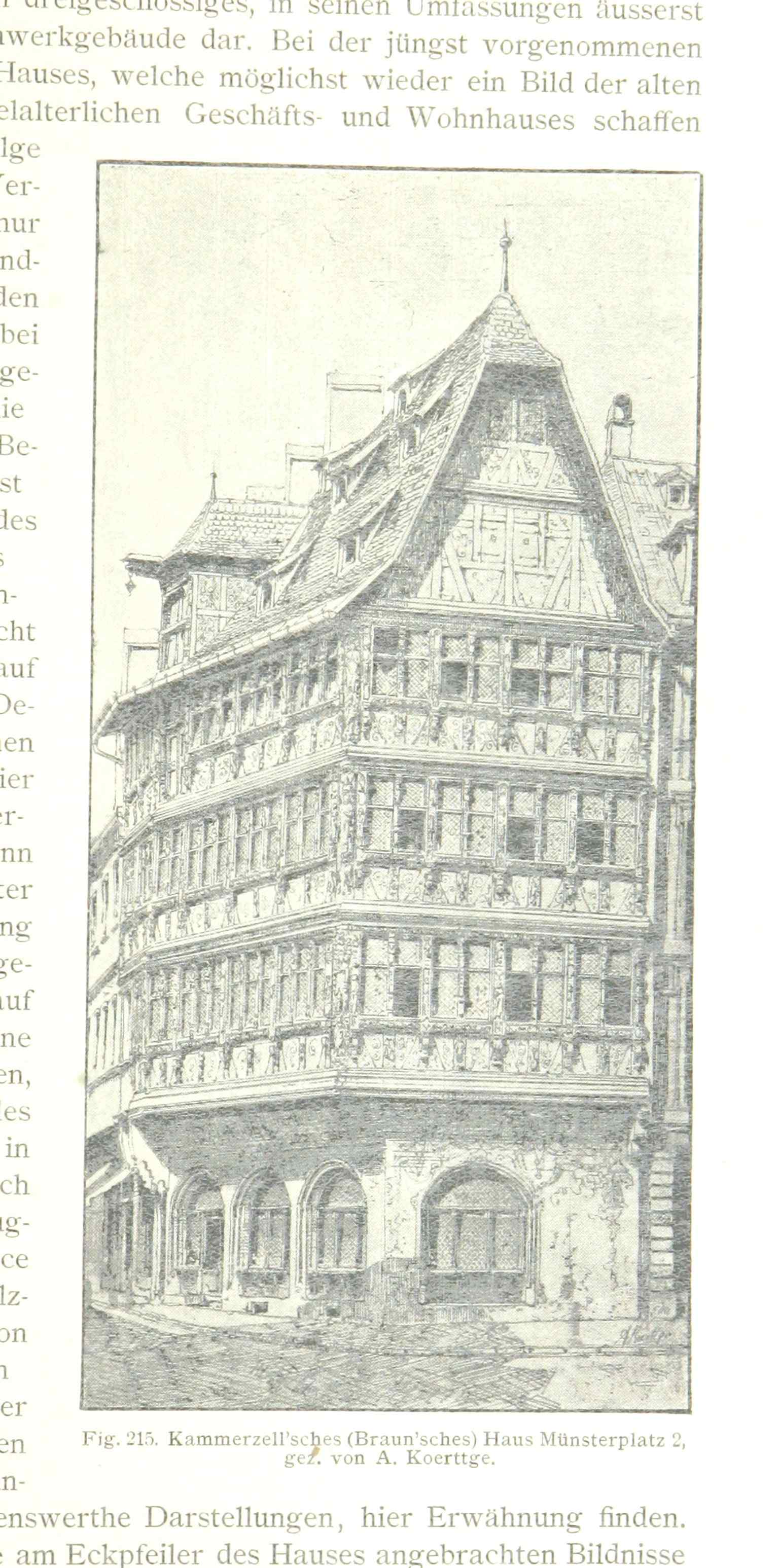
An old architectural plate documenting Kammerzell House in the 19th century, useful for showing how long the building has been admired.Photo: The British Library, Wikimedia Commons, No restrictions. Cropped & resized. 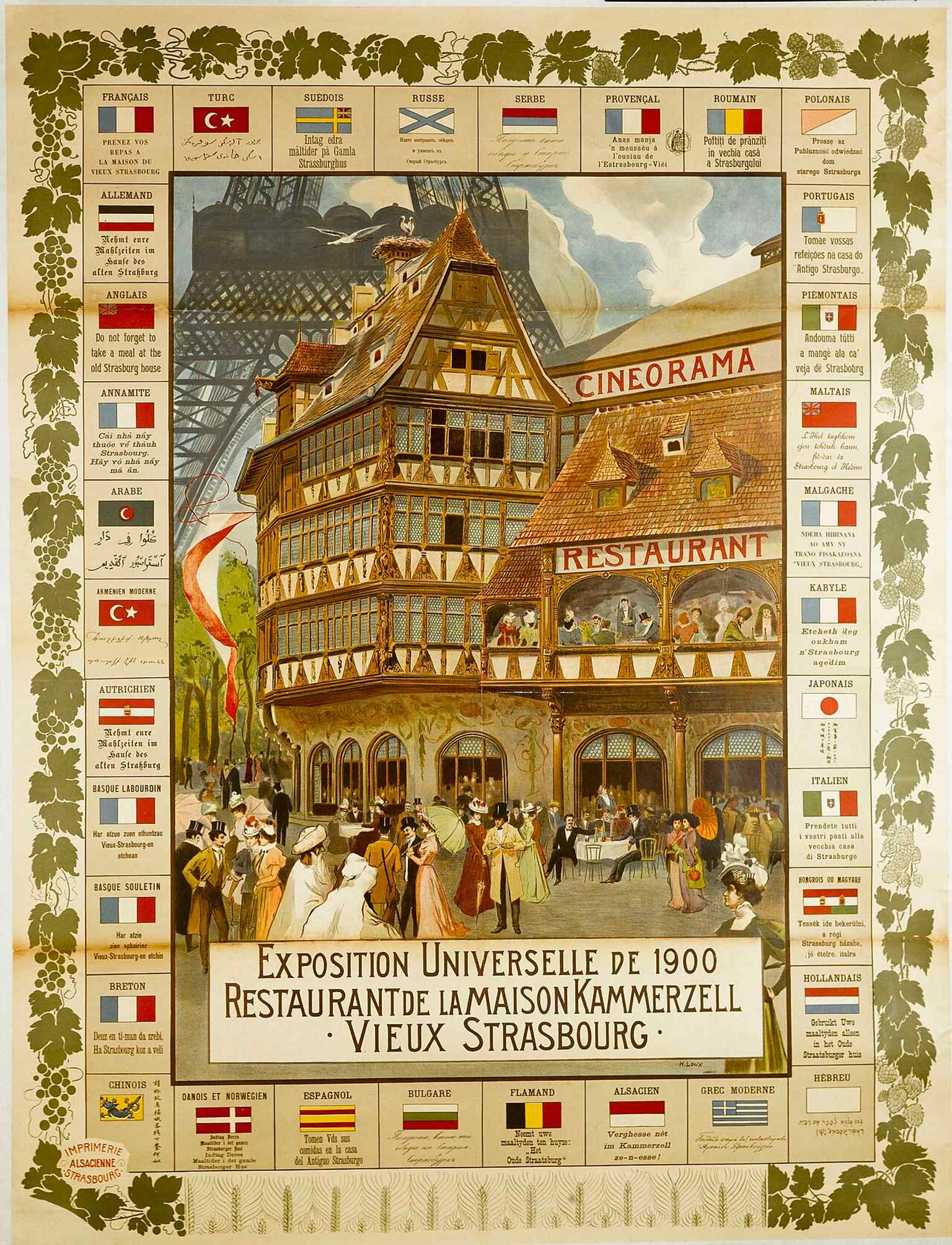
A 1900 poster for the restaurant at Maison Kammerzell, linking the historic house to its later life as a celebrated dining destination.Photo: Loux, Henri (Auenheim, en 1873 - Strasbourg, en 1907), dessinateur, Wikimedia Commons, CC0. Cropped & resized. 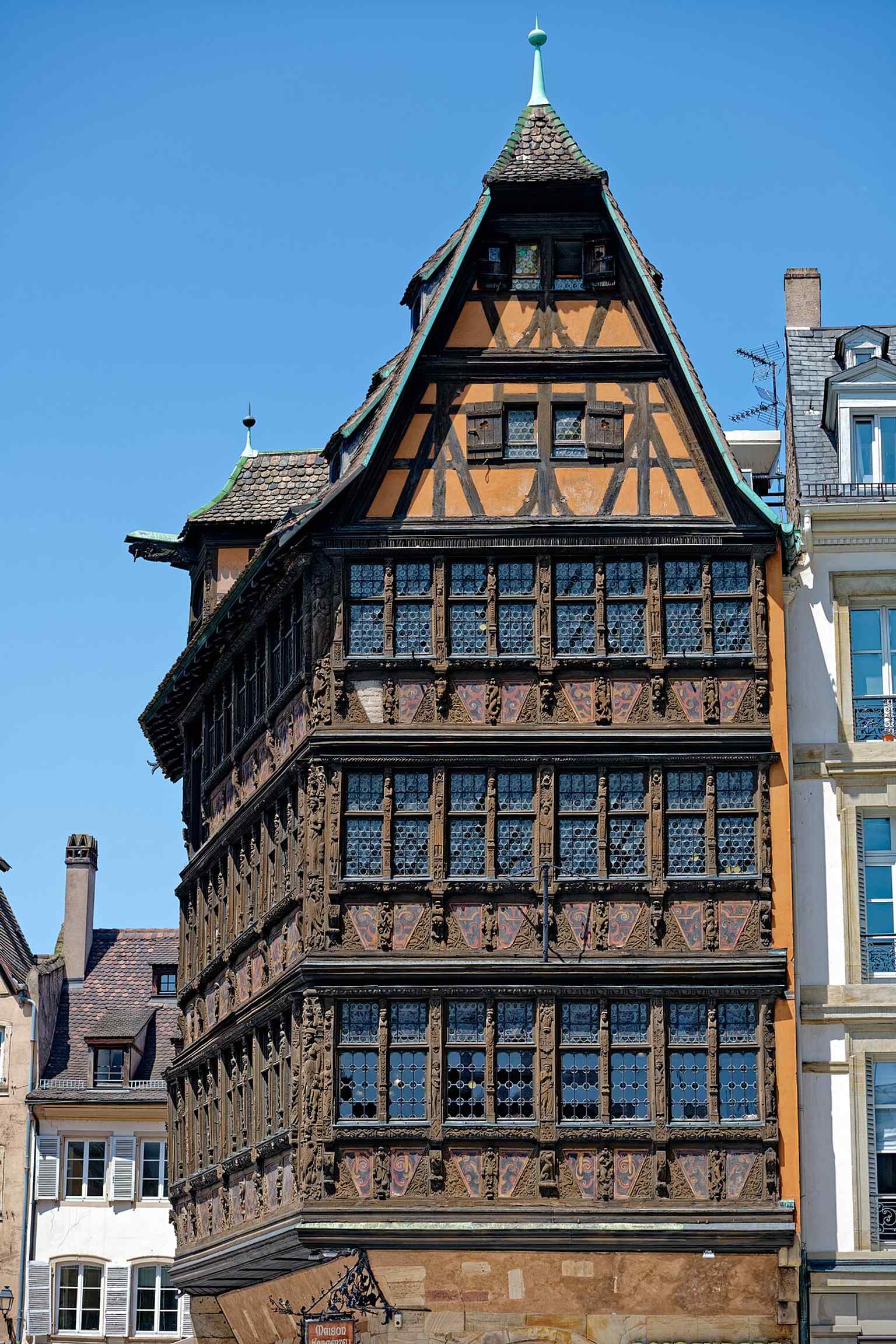
A high-resolution modern facade view from Place de la Cathédrale, emphasizing the building’s survival as Strasbourg’s oldest still-used house.Photo: Tilman2007, Wikimedia Commons, CC BY-SA 4.0. Cropped & resized. Look for the long rectangular square lined with three rows of plane trees, edged by pale stone façades, and closed at one end by the opera’s columned front like a grand backdrop.…Read moreShow less
Open dedicated page →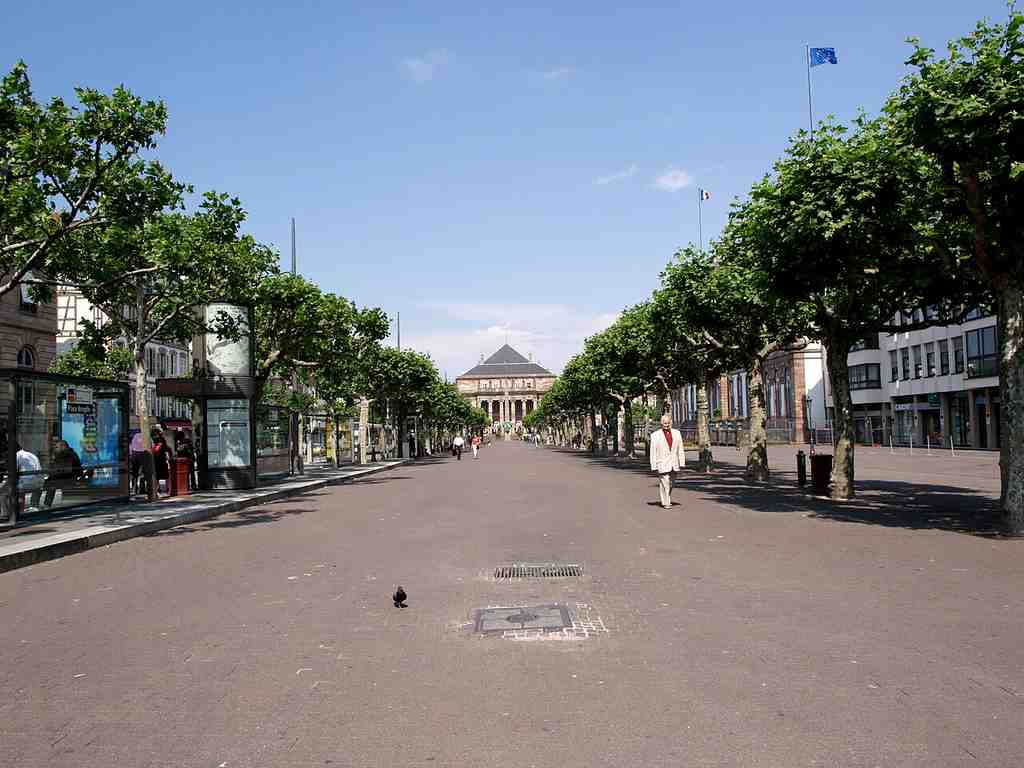
Place BrogliePhoto: Tael, Wikimedia Commons, CC BY 3.0. Cropped & resized. Look for the long rectangular square lined with three rows of plane trees, edged by pale stone façades, and closed at one end by the opera’s columned front like a grand backdrop.
Place Broglie is one of those Strasbourg places that seems calm at first glance... and then starts talking. Even its name performs a little trick. The family name Broglie, borrowed from Marshal François-Marie de Broglie, traditionally sounds more like “Breuil” in French, but many Strasbourgeois simply say “Broglie.” In other words, the square carries two pronunciations, just as it carries several identities.
This is a good place to notice the imperial staging of the city. Rulers do not only build walls and palaces; they arrange views, rename spaces, and decide where public life should happen. A broad square like this becomes a kind of outdoor theater, where power can appear, be heard, and be remembered.
That story started early. By the early thirteenth century, this was already a fairground inside Strasbourg’s expanded walls. People once called it the horse market, Roosmarkt in the local Germanic tradition, and in fourteen eighteen the city hosted a famous imperial fair here. If you want a quick glimpse of that earlier life, the horse tournament image in the app gives the old market real muscle and motion.
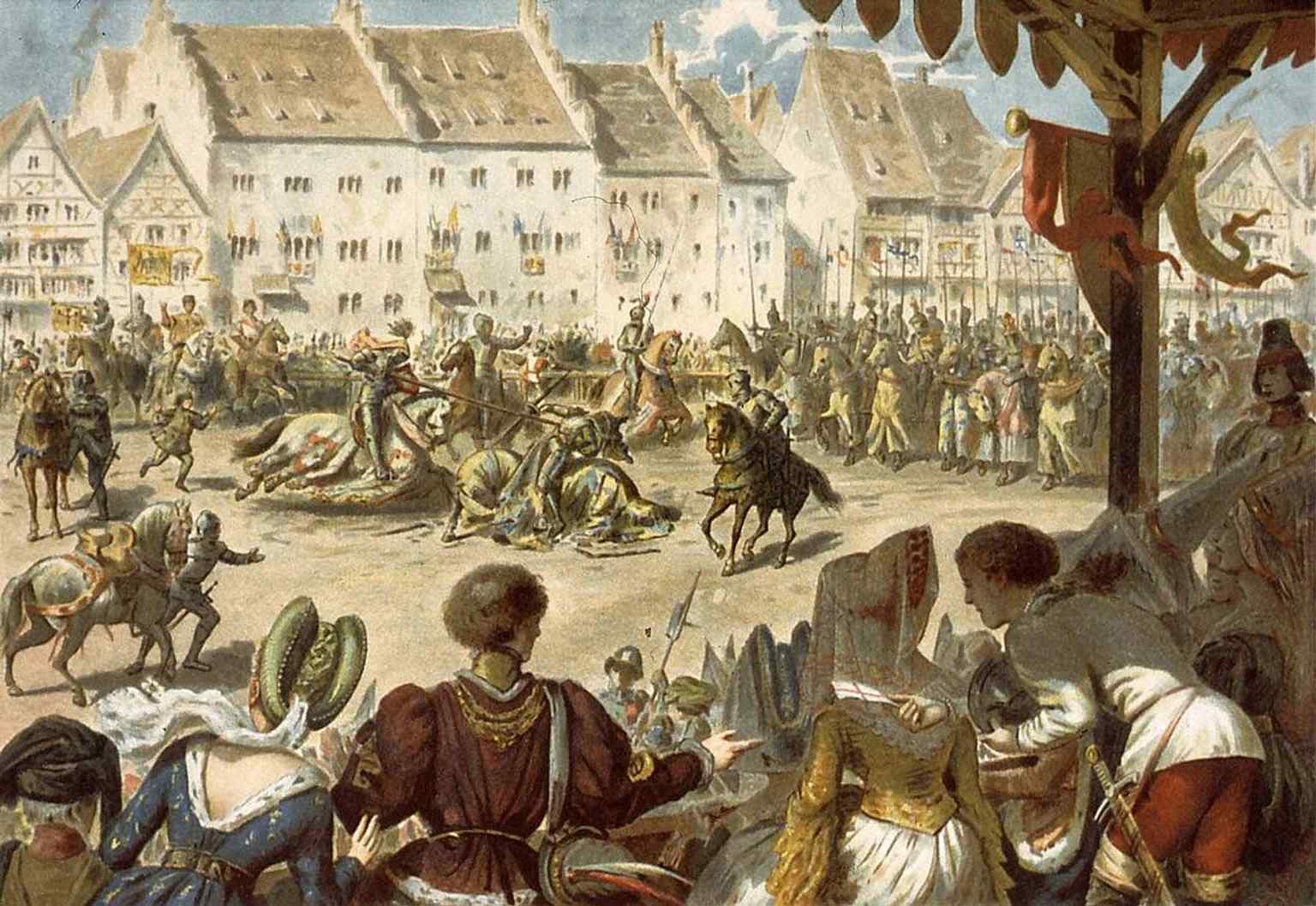
A lively 1890 horse tournament on the old Marché-aux-Chevaux, recalling the square’s medieval origin as a horse market.Photo: Emile Schweitzer, Wikimedia Commons, Public domain. Cropped & resized. Then the script changed. After the French annexation in sixteen eighty-one, the area became strategically important. The municipal arsenal here housed a royal cannon foundry, and power in Strasbourg began shifting away from Gutenberg Square toward this end of town. In seventeen forty, Marshal François-Marie de Broglie, then governor of Strasbourg, planted linden trees and turned the old horse market into a fashionable promenade. Same ground, new meaning. Strasbourg does that a lot.
The most famous voice here belonged to Philippe-Frédéric de Dietrich, the mayor of Strasbourg. In April of seventeen ninety-two, Captain Rouget de Lisle came to Dietrich’s home on this square and sang the war song Dietrich had asked him to write after France declared war on Austria. That song became La Marseillaise. So yes... the French national anthem began not on a battlefield, but in a mayor’s home here, then rang out publicly on this very square. That is classic Strasbourg: civic space turning into national stage.
And names kept changing with whoever held the pen. During the Revolution, authorities renamed it Place de l’Égalité, Equality Square. During the second German annexation, the Nazi regime renamed it Adolf-Hitler Platz. Those changes were not cosmetic. They were claims of ownership, stamped onto daily speech.
Its shape today comes mostly from the nineteenth century, when the municipal theater rose between eighteen oh four and eighteen twenty-one, and the old Tanners’ ditch was filled in by eighteen thirty-two. If you like, check the before-and-after image; it shows how the old bandstand era gave way to the traffic-lined square you see now.
Around you, the square still reads like a cast list: the Hôtel de Hanau, now City Hall; the governor’s residence; the old Kornspeicher, a medieval grain store; monuments to Kellermann, Leclerc, and La Marseillaise. Public memory here does not whisper. It takes the microphone.
Now turn your eyes across the square to the opera house, with its giant Ionic columns and six muses on top. That is where this square’s taste for performance becomes literal... and it’s our next stop, about four minutes away.
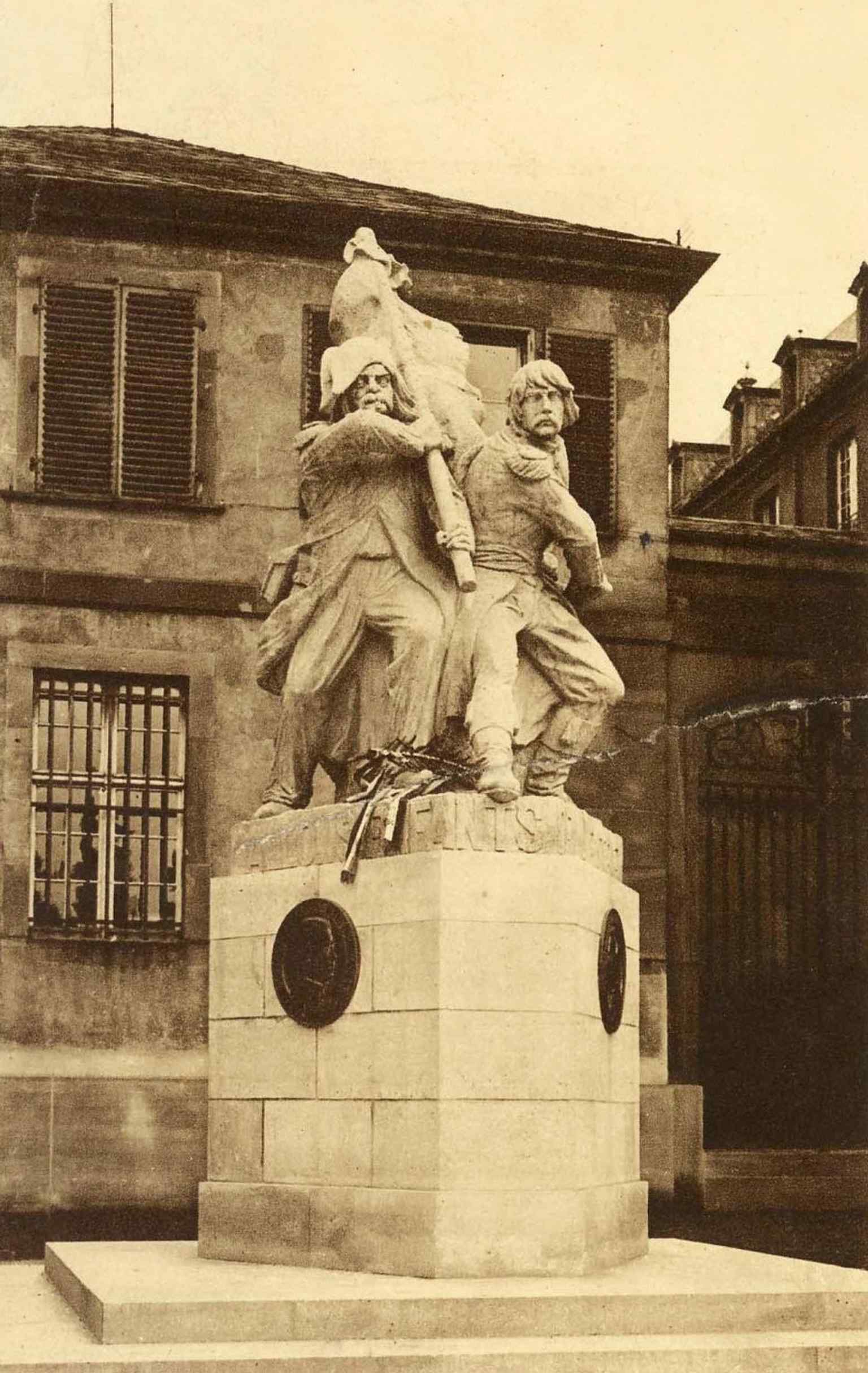
The Marseillaise monument on Place Broglie before its wartime destruction, tying the square to Strasbourg’s most famous patriotic story.Photo: Inconnu (Numistral, domaine public), Wikimedia Commons, Public domain. Cropped & resized. 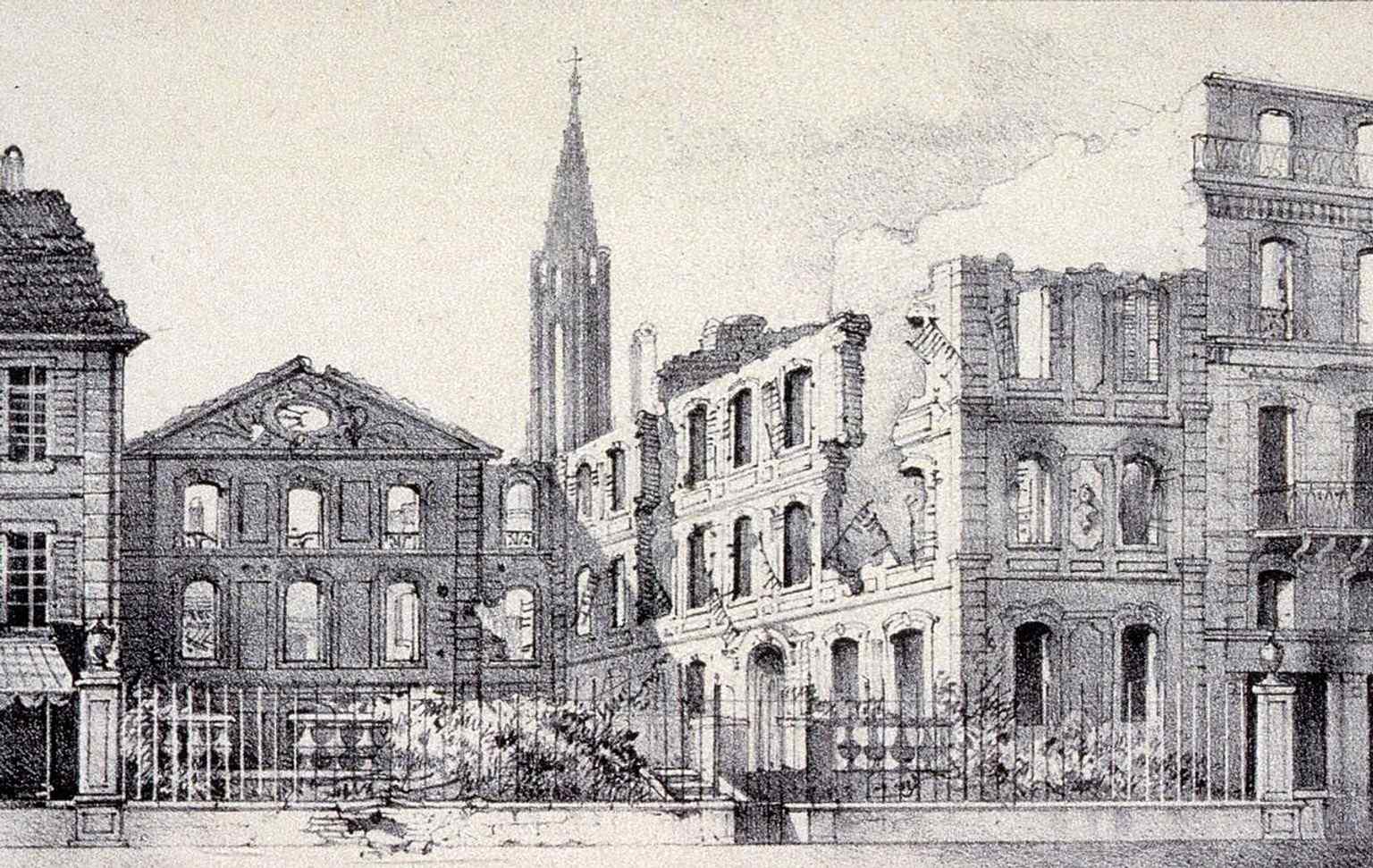
Maison Gast on Place Broglie, a fine 19th-century building that reflects the elegant urban edge of the square.Photo: J. Wencker, Wikimedia Commons, Public domain. Cropped & resized. 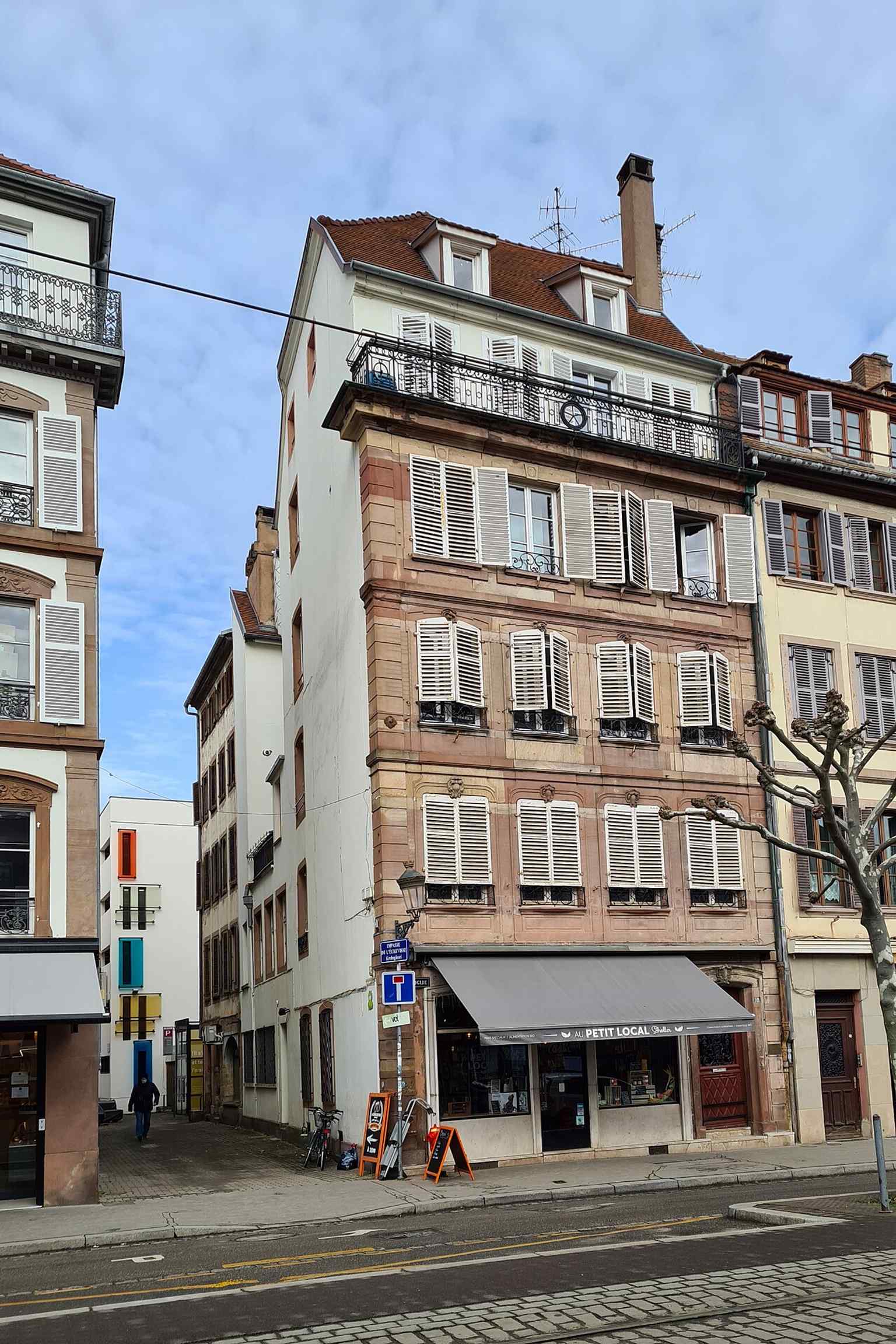
A modern view down the Impasse de l’Écrevisse from Place Broglie, showing the square’s tucked-away historic side streets.Photo: Ji-Elle, Wikimedia Commons, CC BY-SA 4.0. Cropped & resized. 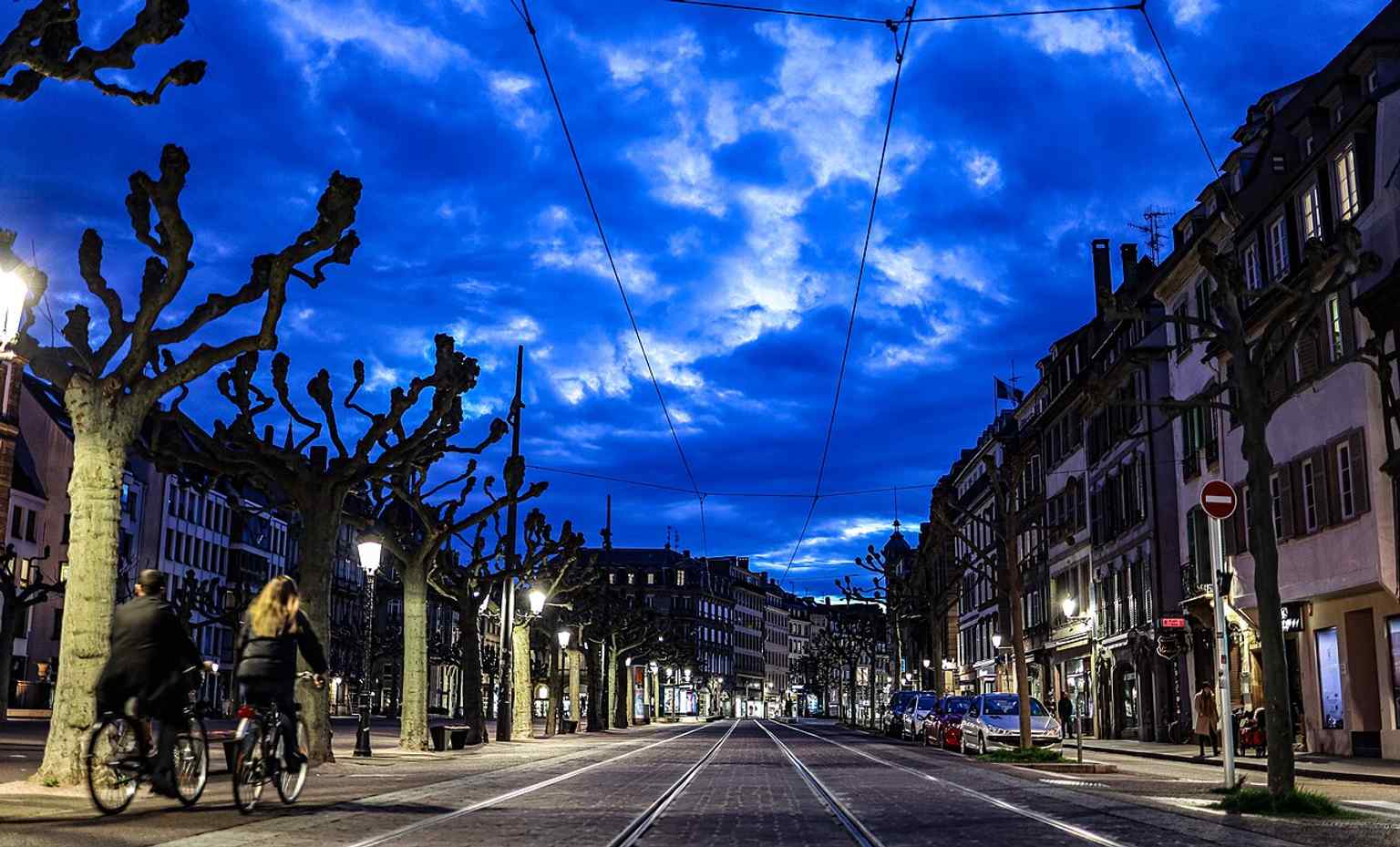
A broad atmospheric skyline view that can help set Place Broglie in Strasbourg’s historic center and river-city setting.Photo: noirdenoir67, Wikimedia Commons, CC0. Cropped & resized. Ahead of you is a pale sandstone theater with a long neoclassical front, a triangular pediment, and statues lined along the roof like a stone chorus waiting for its cue. From…Read moreShow less
Open dedicated page →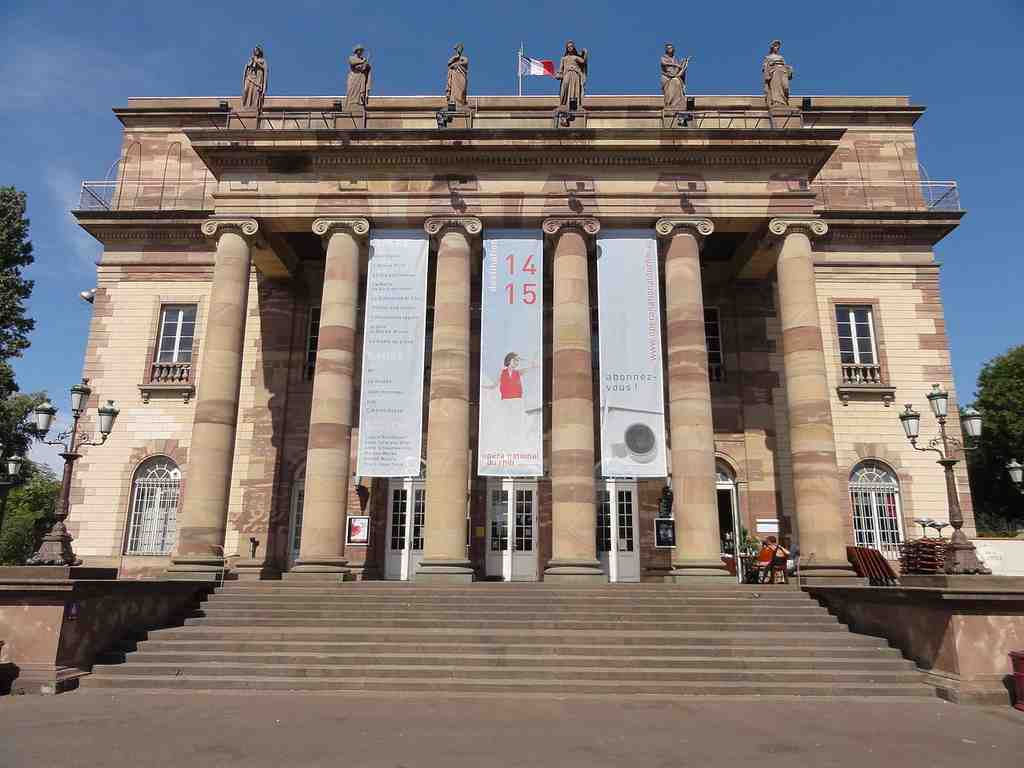
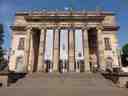
Strasbourg Opera HousePhoto: © Ralph Hammann - Wikimedia Commons, Wikimedia Commons, CC BY-SA 4.0. Cropped & resized. Ahead of you is a pale sandstone theater with a long neoclassical front, a triangular pediment, and statues lined along the roof like a stone chorus waiting for its cue.
From this angled corner view, you can read the opera house almost like a set piece... grand at the front, practical at the back. After the fire of eighteen hundred destroyed the earlier opera on this square, Strasbourg had to improvise. French plays moved into an old oat store, while German drama shifted to the drapers’ hall, the Poêle des Drapiers. That split tells you a lot: in the nineteenth century, this city did not just lose buildings, it kept losing shared cultural ground and then trying to rebuild it.
Architect Jean-Nicolas Villot gave Strasbourg its answer. He designed this new municipal theater in a neoclassical style, meaning it borrows the calm authority of ancient Greek and Roman temples. If you glance at your screen, the straight-on façade in image two makes that temple-like front especially clear. The foundation stone went down on the second of December, eighteen oh four, the very day Napoleon crowned himself emperor in Paris. Now that is timing. Culture here was not tucked away; it was staged, publicly, with imperial swagger.
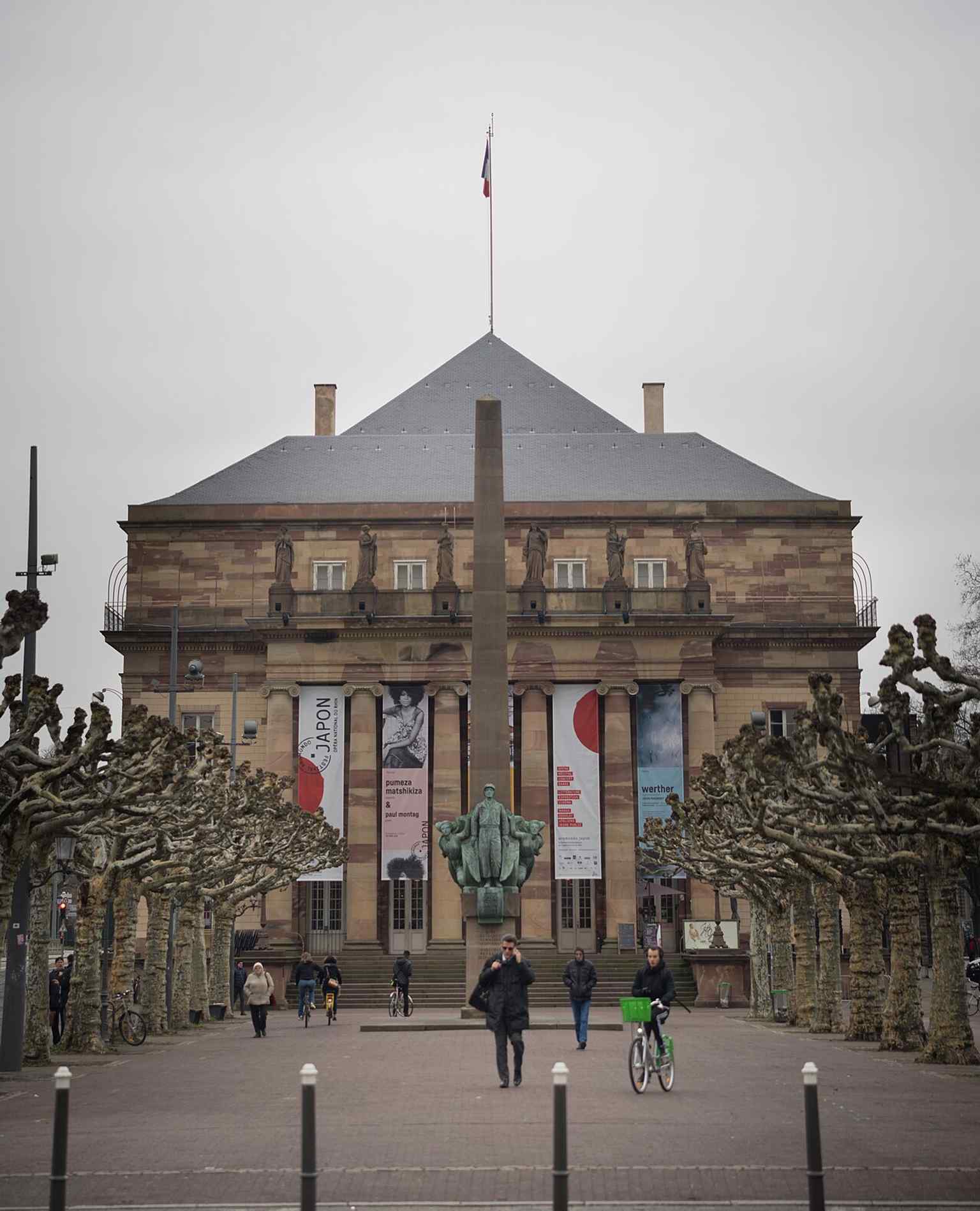
A clear front view of the Neoclassical façade, matching the rebuilt opera house that opened in 1821 after the 1800 fire.Photo: Pedro J Pacheco, Wikimedia Commons, CC BY-SA 4.0. Cropped & resized. And it cost a small fortune. The city first guessed three hundred thousand francs, and by the opening in eighteen twenty-one, the bill had climbed to about two point one five million francs. Even the muses are expensive. Landolin Ohmacht carved six of them for the façade, one above each column; if you want a closer look, image five shows that sculptural world up close.
Then came the siege of eighteen seventy. Prussian artillery battered the opera and left it burning. Strasbourg rebuilt it faithfully and reopened it in eighteen seventy-three, then added the semicircular rear wing in eighteen eighty-eight for storage and a library, because an opera house is not just glamour... it is also a backstage machine.
Since nineteen seventy-two, this has been the home base of the Opéra national du Rhin. And if this building shows culture dressed for ceremony, the Palais du Rhin will show you power trying to choreograph an entire city. The box office generally opens Monday through Friday from twelve thirty to six thirty, and it is closed on weekends.
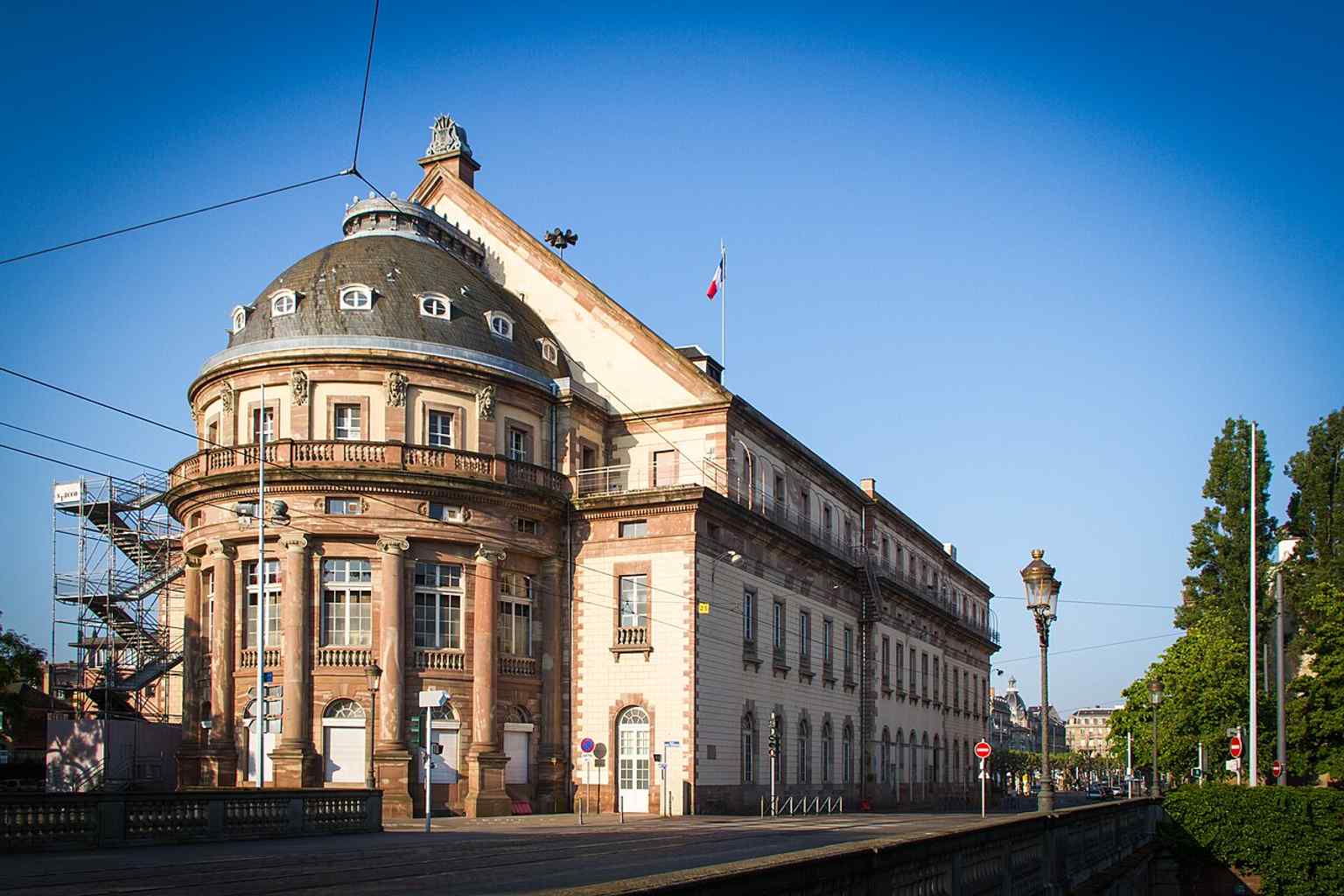
View from the Théâtre bridge showing the opera house on Place Broglie — the city’s main opera venue and home of the Opéra national du Rhin.Photo: Ctruongngoc, Wikimedia Commons, CC BY-SA 3.0. Cropped & resized. 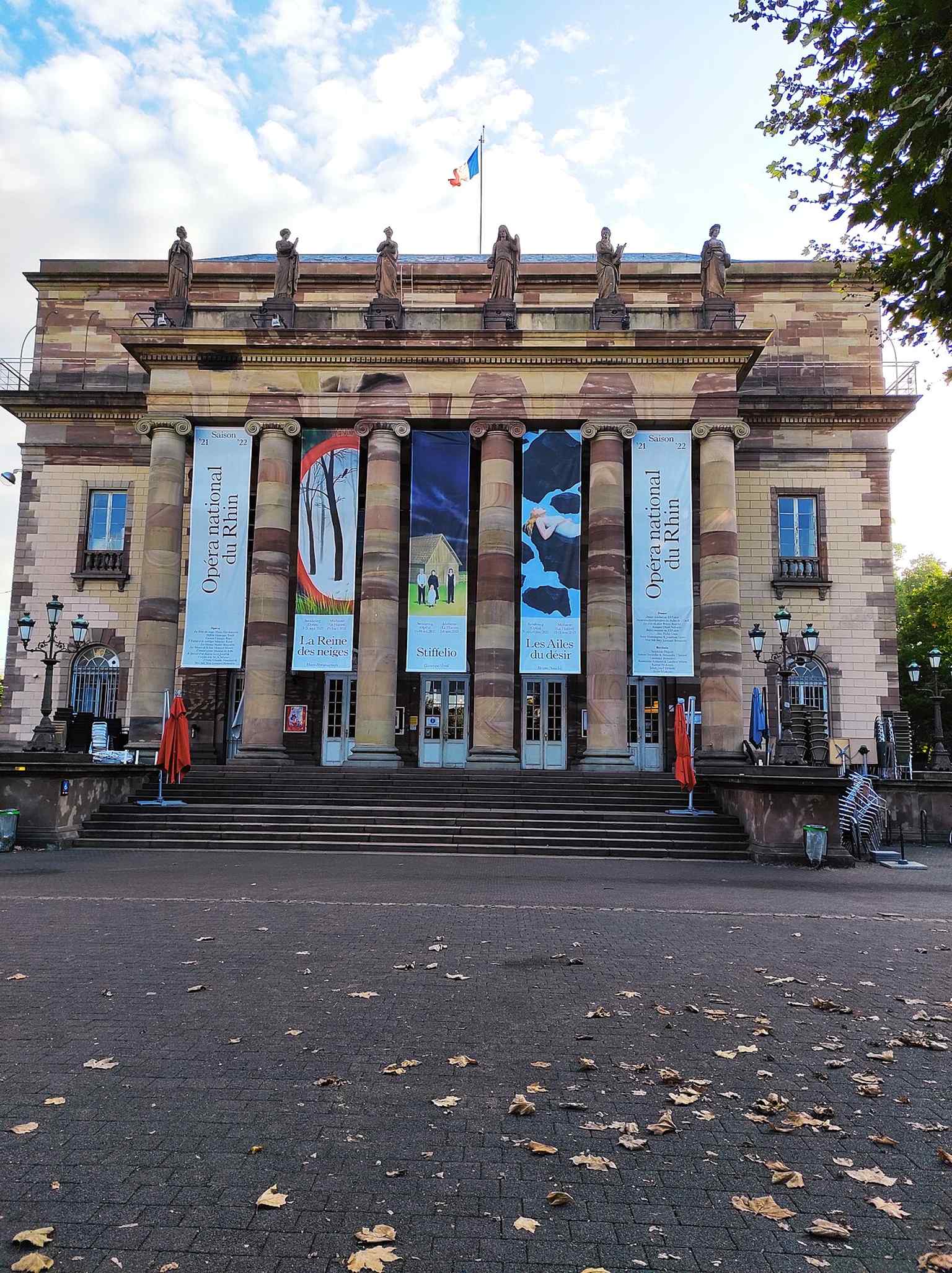
Full-height view of the opera’s façade, a landmark listed as a historic monument since 1921.Photo: Nguyễn Mai Trang, Wikimedia Commons, CC BY-SA 4.0. Cropped & resized. 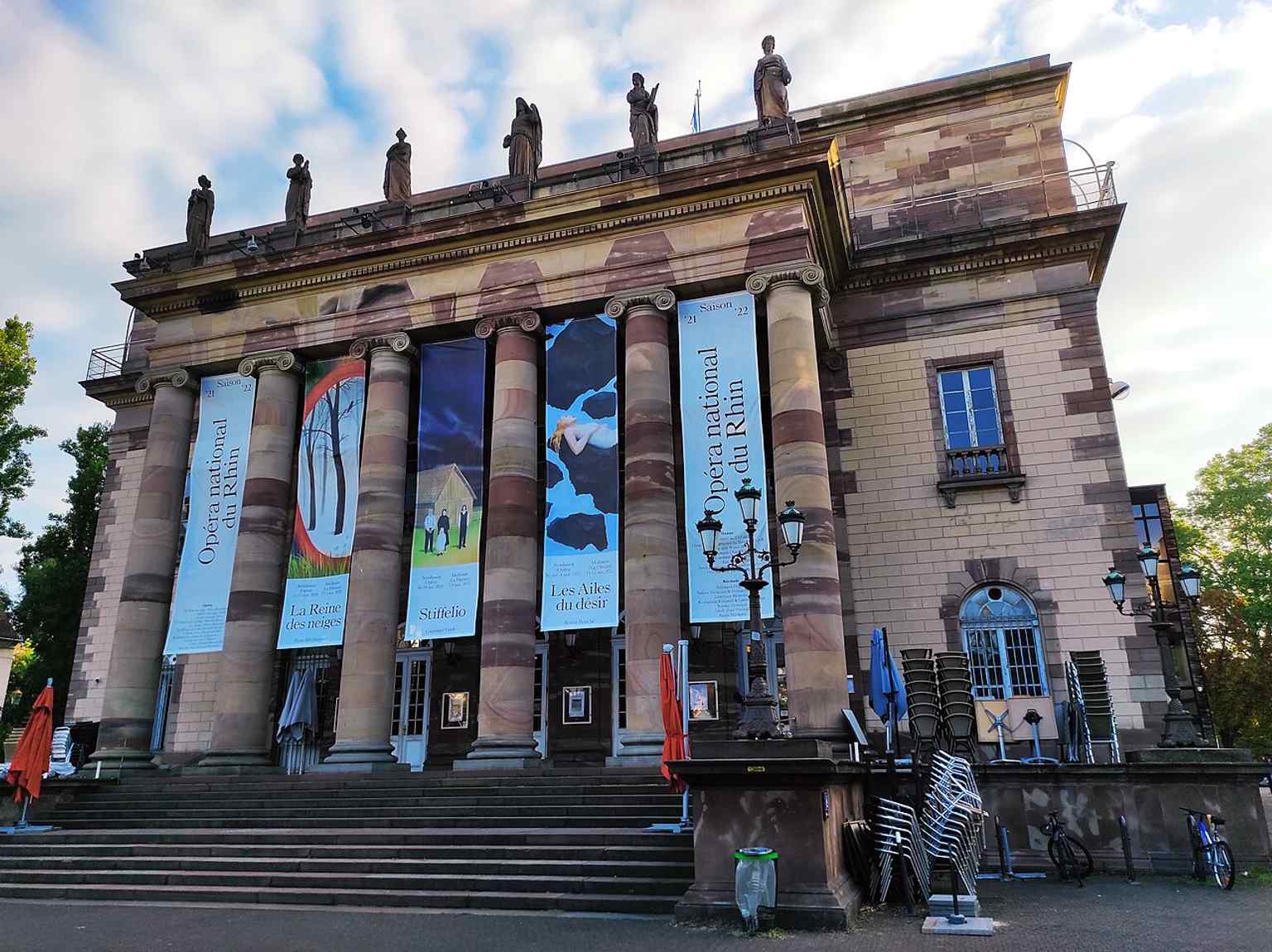
Another tall exterior shot of the Strasbourg Opera House, useful for showing the monumental front and columned design.Photo: Nguyễn Mai Trang, Wikimedia Commons, CC BY-SA 4.0. Cropped & resized. On your left, look for a broad stone palace shaped like a massive square block, crowned by a central dome and set behind ornate wrought-iron gates. From right here, the building…Read moreShow less
Open dedicated page →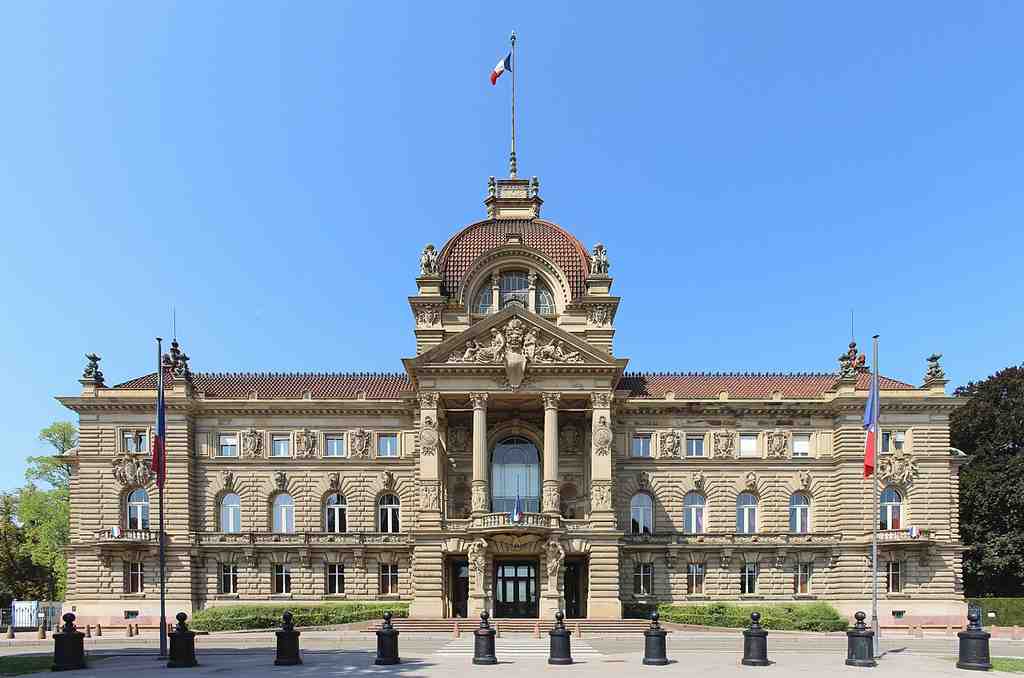
Palais du RhinPhoto: Chabe01, Wikimedia Commons, CC BY-SA 4.0. Cropped & resized. On your left, look for a broad stone palace shaped like a massive square block, crowned by a central dome and set behind ornate wrought-iron gates.
From right here, the building tells you exactly what it wanted to be: not a home, but a statement. After the war of eighteen seventy, when the German Empire annexed Alsace-Lorraine, officials wanted Strasbourg to display imperial power in stone. So architect Hermann Eggert designed this palace between eighteen eighty-three and eighteen eighty-eight as the Kaiser’s official residence, a neo-Renaissance showpiece borrowing the language of Italian palaces and German baroque grandeur.
And yet, for all that swagger, it carried a little insecurity. The project cost about three million gold marks, and critics complained about the price and the look. Even the imperial camp grumbled that it seemed “massive and elephantine.” That is not quite the compliment Eggert was hoping to frame.
Still, the staging is clever. Notice how the dome rises above the square like a crown set on a pedestal. Inside, Eggert arranged a vast glass-roofed square courtyard and a monumental honor staircase with fountains representing the Rhine. If you glance at the image in the app, that grand stair makes the whole idea plain: moving through the palace was meant to feel like entering a political theater. The first floor held reception rooms, a banquet hall for three hundred and fifty guests, and spaces for ceremony. Public display came first; private life took the back seat.
That may explain the palace’s quiet punch line. Wilhelm the Second inaugurated it in August of eighteen eighty-nine with three days of festivities... and then barely used it. According to the Rhine Commission, he came only a handful of times before the First World War. A palace built to prove permanent imperial presence ended up hosting an emperor who seemed almost like an occasional guest.
Then history kept changing the sign on the door. The building became a military hospital during the First World War. In November of nineteen eighteen, French troops arrived in front of this very façade, and the symbol flipped in full public view. If you tap the before-and-after image, you can watch that shift from imperial showcase to protected landmark at the heart of the Neustadt, the German-era new town.
The least obvious chapter is the one still unfolding inside. Most visitors see a former imperial palace; locals know it now houses the Central Commission for Navigation on the Rhine, founded after the Congress of Vienna in eighteen fifteen and often described as the oldest international organization of the modern era. That is classic Strasbourg: a building raised to dominate a borderland now helps manage cooperation across one of Europe’s great rivers.
During the Second World War, the Nazis used it as their command headquarters. Then General Leclerc’s forces took it over, and he used the palace as his headquarters too, even drafting a proclamation here after Strasbourg’s liberation. Same walls, different masters, different futures.
Later, some city leaders wanted to demolish the place and replace it with a tower. Preservationists and the Friends of Old Strasbourg stepped in, and the palace survived long enough for people to see it differently. If you ever circle the railings later, look closely at the ironwork; there is a sly little caricature of Wilhelm the Second worked into the metal, like the fence muttering under its breath.
Now widen your gaze beyond the façade to the garden ring and the formal space around it; this palace was designed as one piece of a much larger civic stage. In about two minutes, we’ll step into Place de la République itself. If you plan to return, the palace generally opens on weekday mornings and afternoons, with shorter hours on Friday, and it stays closed on weekends.
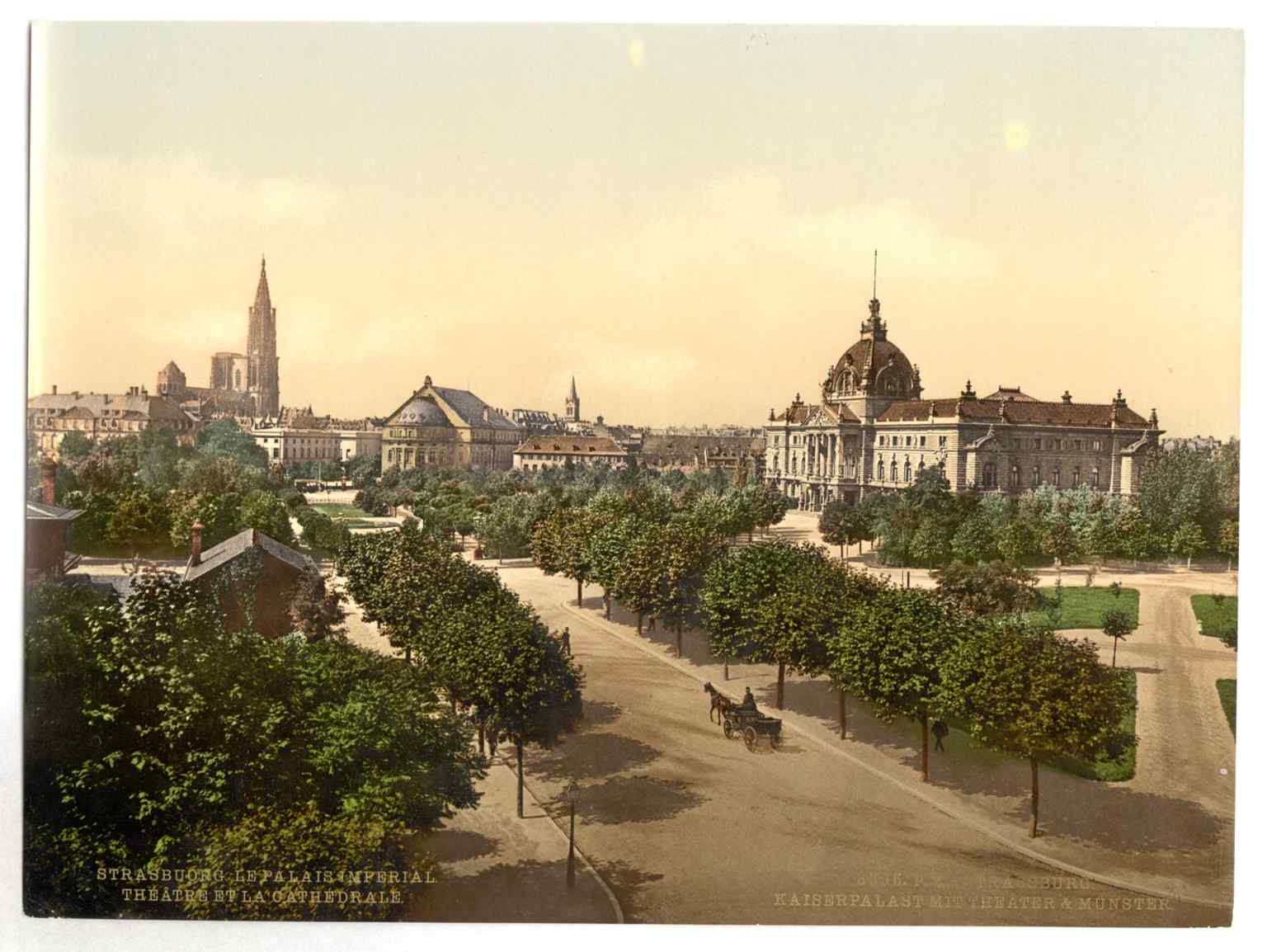
Another late-19th-century view of the Kaiserpalast, useful for the story of the building as a showcase of German rule in Alsace-Lorraine.Photo: Photochrom Print Collection, Wikimedia Commons, Public domain. Cropped & resized. 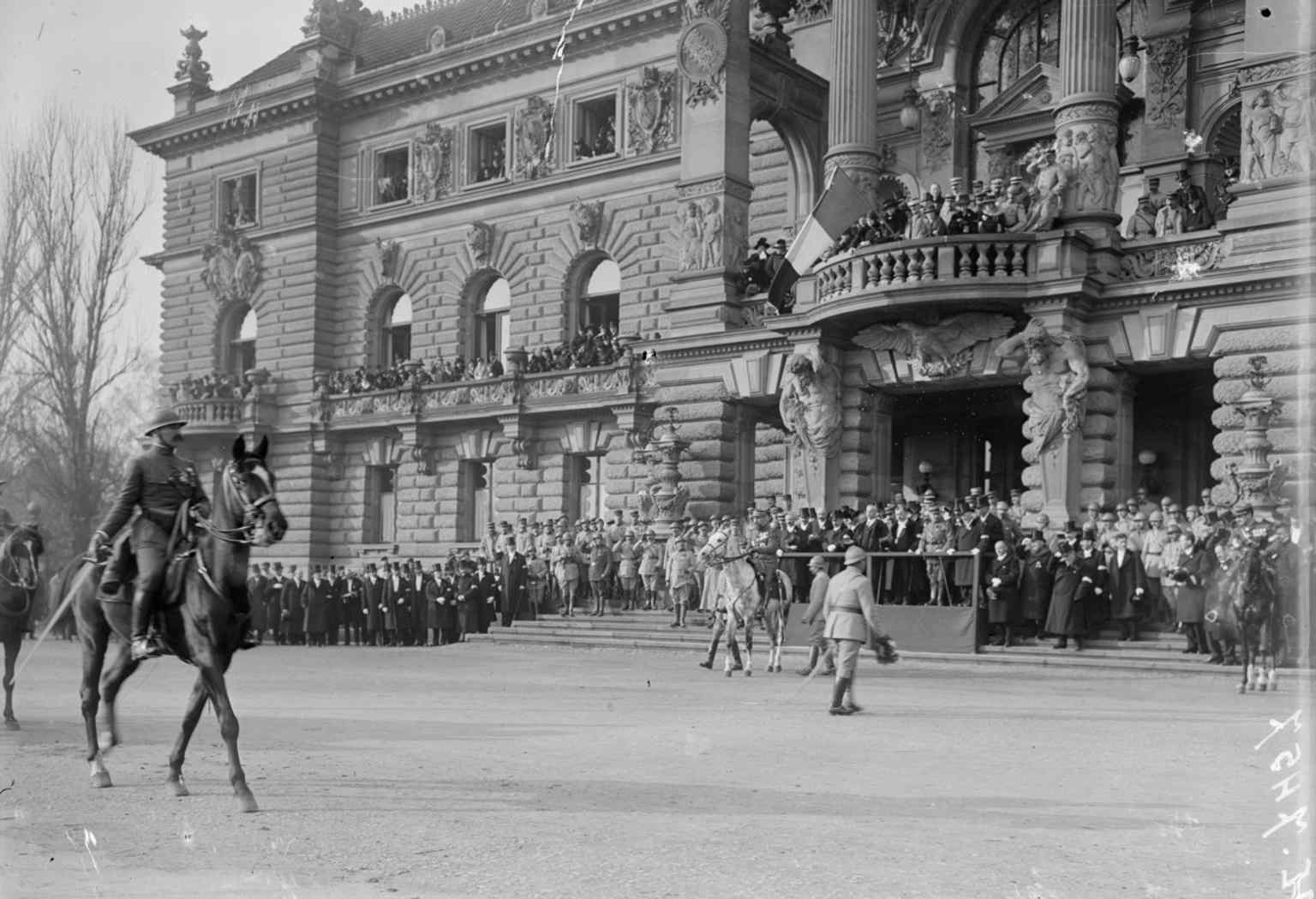
French troops parade in front of the palace in November 1918, capturing the moment the building’s symbolism switched from empire to French sovereignty.Photo: Frédéric Gadmer, Wikimedia Commons, Public domain. Cropped & resized. 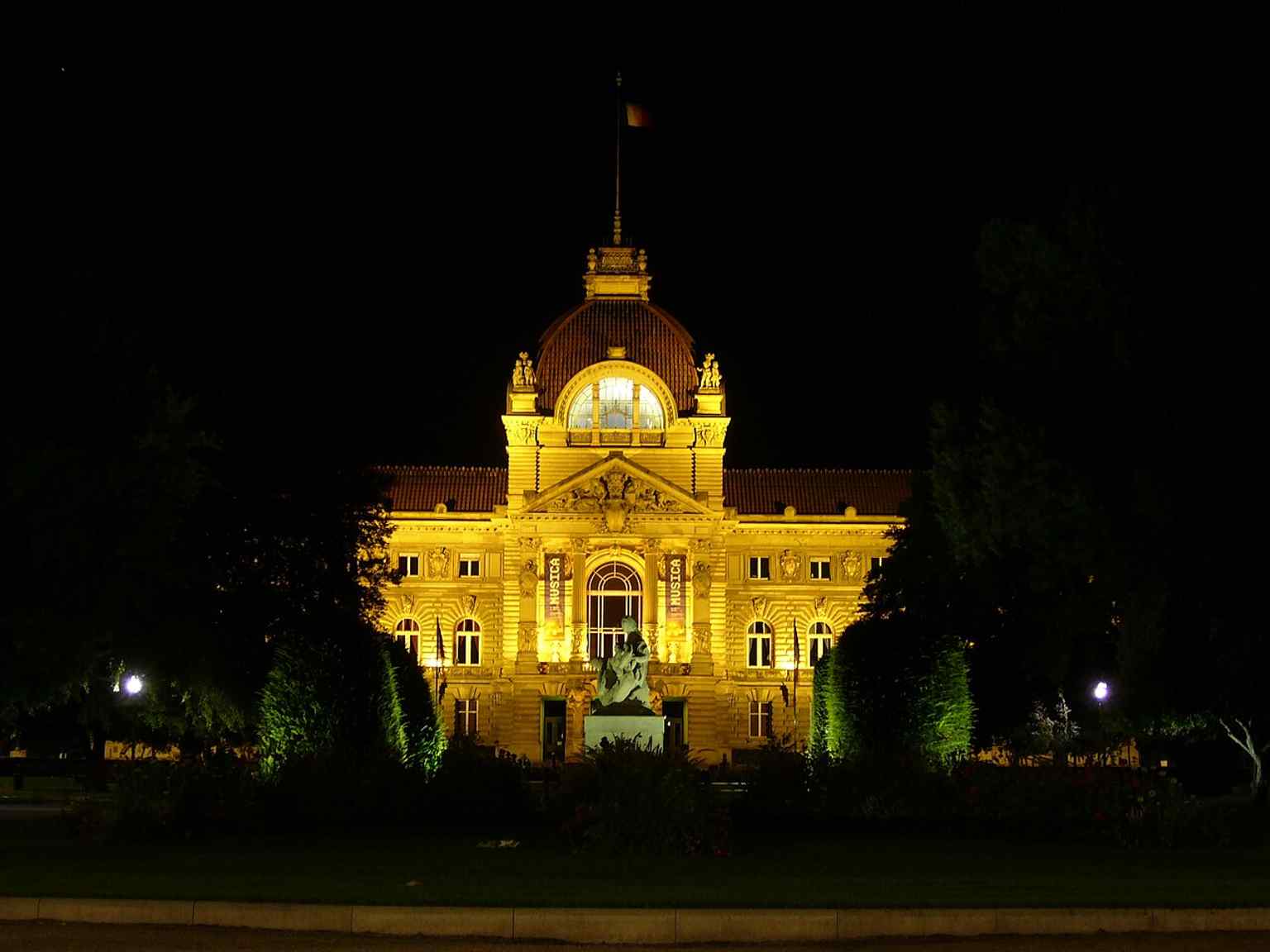
The palace at night, emphasizing the monumental dome that dominates the Place de la République today.Photo: Jonathan M, Wikimedia Commons, CC BY-SA 3.0. Cropped & resized. 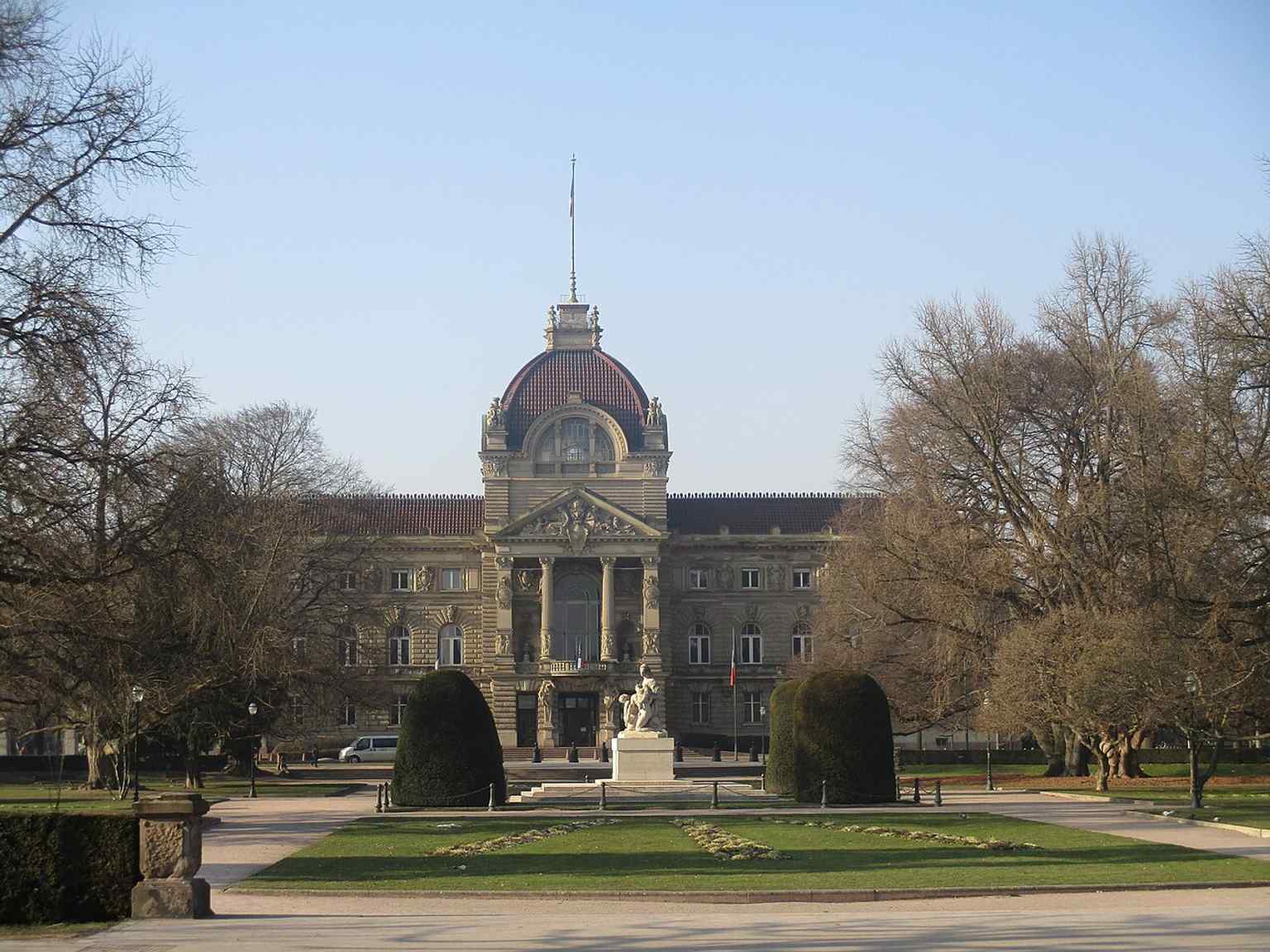
A full view of the former Kaiserpalast, now the Palais du Rhin, highlighting its imposing imperial façade.Photo: Thomon, Wikimedia Commons, CC BY-SA 4.0. Cropped & resized. 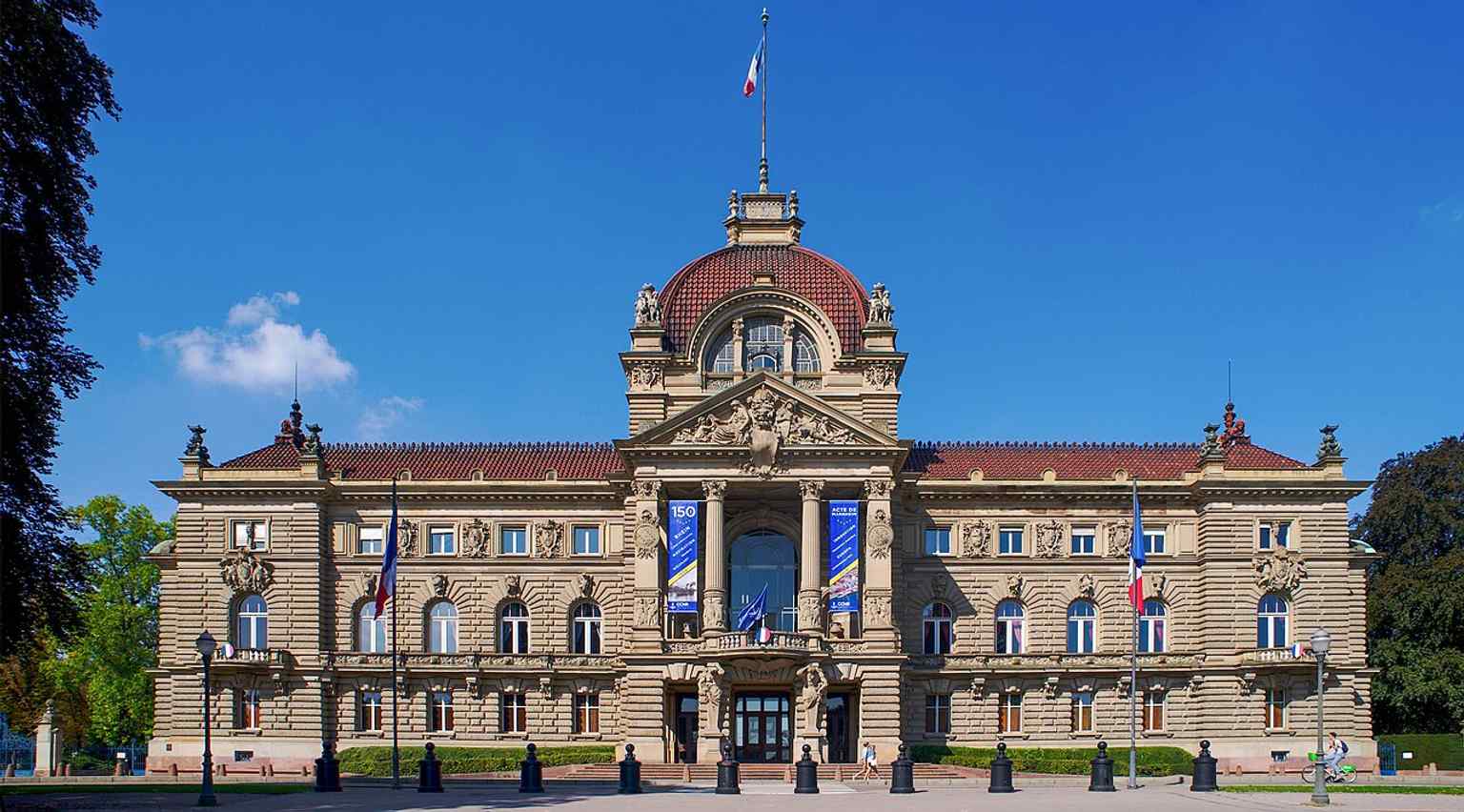
A wider contemporary view situating the palace within the square, garden, and formal setting described in the tour text.Photo: Flocci Nivis, Wikimedia Commons, CC BY-SA 4.0. Cropped & resized. 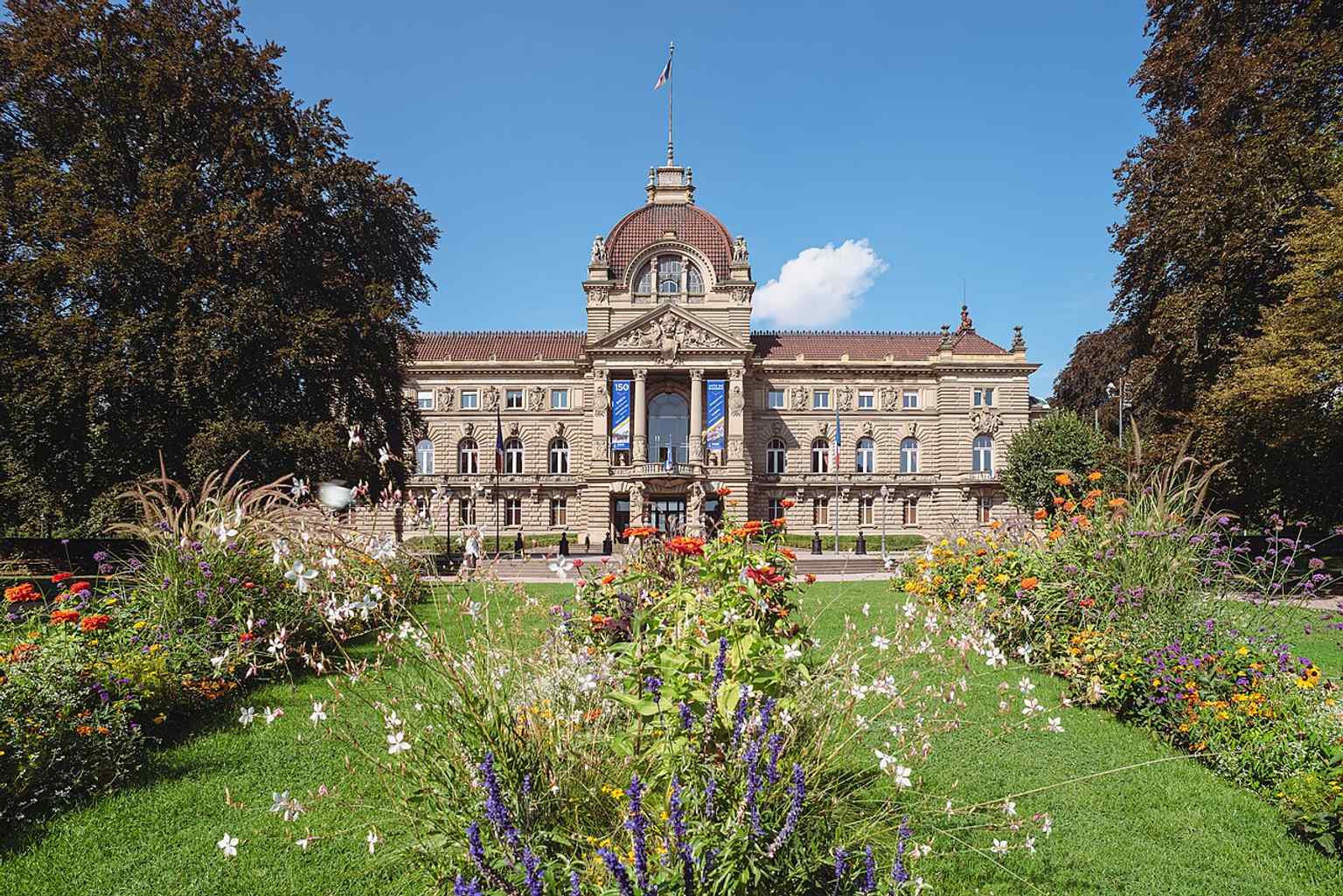
The palace fronted by flowerbeds in the park, a good illustration of the landscaped setting that frames the building.Photo: Flocci Nivis, Wikimedia Commons, CC BY-SA 4.0. Cropped & resized. 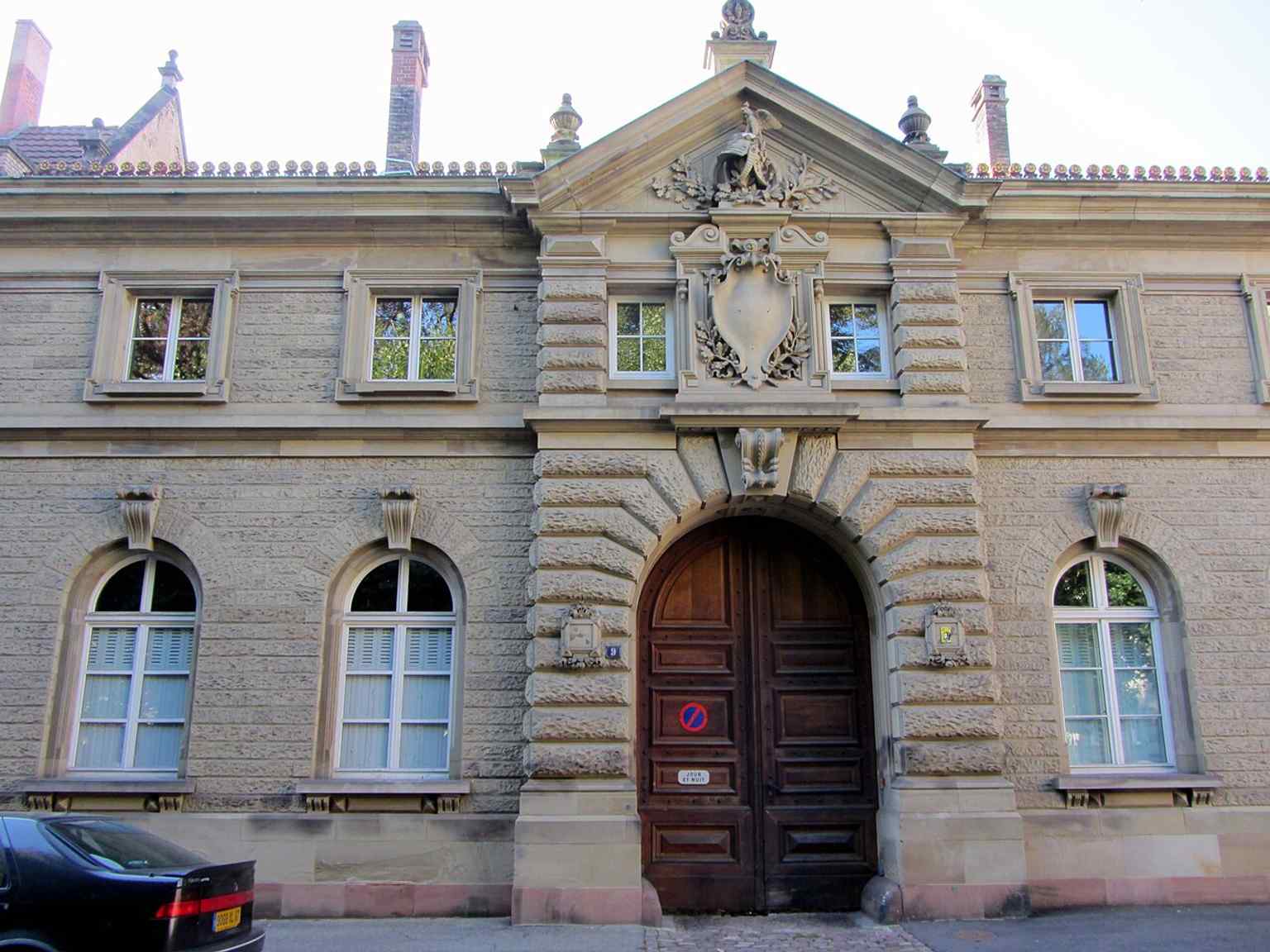
The former imperial stables behind the palace, part of the same monumental ensemble and now protected as historic architecture.Photo: Schlosser Saunal, Wikimedia Commons, CC BY-SA 3.0. Cropped & resized. On your right, Place de la République opens as a broad circular garden edged by pale stone avenues, ringed with grand sandstone facades, and marked by a solemn memorial at its…Read moreShow less
Open dedicated page →On your right, Place de la République opens as a broad circular garden edged by pale stone avenues, ringed with grand sandstone facades, and marked by a solemn memorial at its center.
This square is the key that helps the whole Neustadt make sense. Neustadt simply means “new town” in German, and from the eighteen eighties onward, German planners used this place as the hinge between old Strasbourg and their new imperial district. City architect Johann Carl Ott designed it from eighteen eighty-three to eighteen eighty-seven, and he did not design it as an everyday patch of open ground. He designed a stage.
Look around the edges and you can read the cast list. The former imperial palace, now the Palais du Rhin. The former parliament building, now the Théâtre national de Strasbourg. The National and University Library. Two former ministry buildings, now government offices. Different styles mingle here - Italian Renaissance, baroque, classical - but the message is consistent: authority, arranged with a ruler and a very steady hand.
Pause for a beat and trace the alignments around you... do these spaces feel improvised, or carefully aimed? From here, planners opened a grand perspective between power and knowledge: from the imperial palace toward the university quarter beyond. If you want a handy overview, the image on your screen shows that ceremonial composition beautifully.
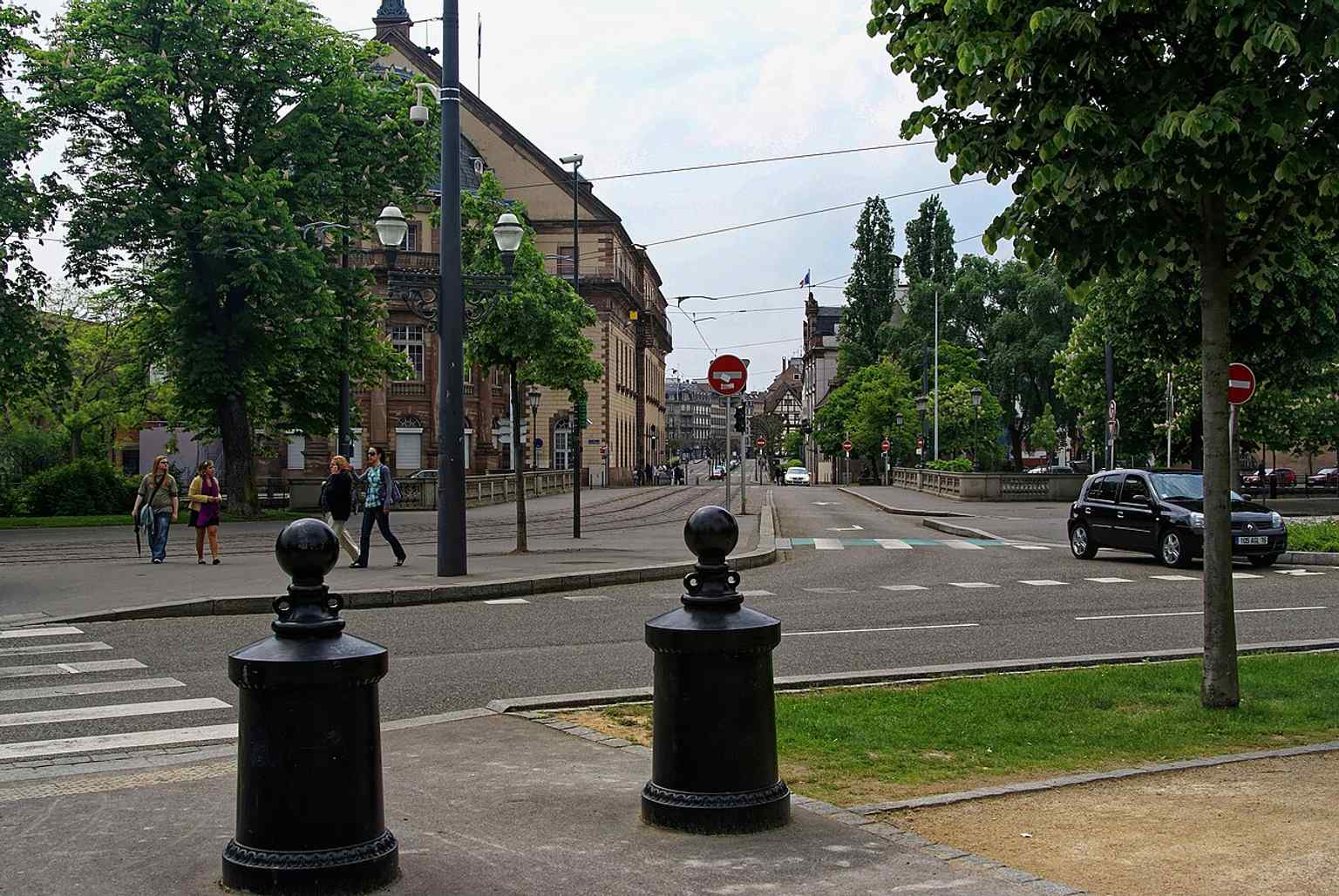
The square seen from the Pont du Théâtre, where the central garden and its ginkgo trees sit amid the grand axes of the Neustadt.Photo: Txllxt TxllxT, Wikimedia Commons, CC BY-SA 4.0. Cropped & resized. And yet, for all that imperial confidence, this square never held still politically. It began as Kaiserplatz, Imperial Square. After the First World War and the return of Alsace-Lorraine to France, it became Place de la République. During the second German annexation in nineteen forty, authorities renamed it Bismarckplatz. In nineteen forty-five, it became République again. Same geometry, different regime. Stone, as it turns out, is patient.
The center tells that story most sharply. In nineteen eleven, Ludwig Manzel placed an equestrian statue of Emperor William there. Strasbourg residents pulled it down in nineteen eighteen, just before French troops entered the city. In nineteen nineteen, a captured German biplane briefly took its place on the pedestal - history here can turn on a dime, or on a propeller. A temporary obelisk followed, because the square had already become a public place of grief.
Then Henry Lévy, an industrialist, former deputy mayor, and vice-president of the Jewish Consistory of Bas-Rhin, pushed for a permanent memorial. The result, sculpted by Léon-Ernest Drivier and inaugurated in nineteen thirty-six by President Albert Lebrun, remains one of the most striking war memorials in France. A mother holds two dying sons on her knees: one fought in the French army, the other in the German army. No heroic uniforms, no victory pose, no easy comfort. Just loss... shared and unbearable. Even the Nazi occupiers left it untouched.
The garden around it adds another layer. Those ginkgo trees are said to have come as gifts from Emperor Mutsuhito of Japan to William. Local people loved the way their leaves turned the round garden into a scatter of gold. On your screen, another image gives you that central symmetry - memorial, paths, planting beds, all composed with almost theatrical precision.
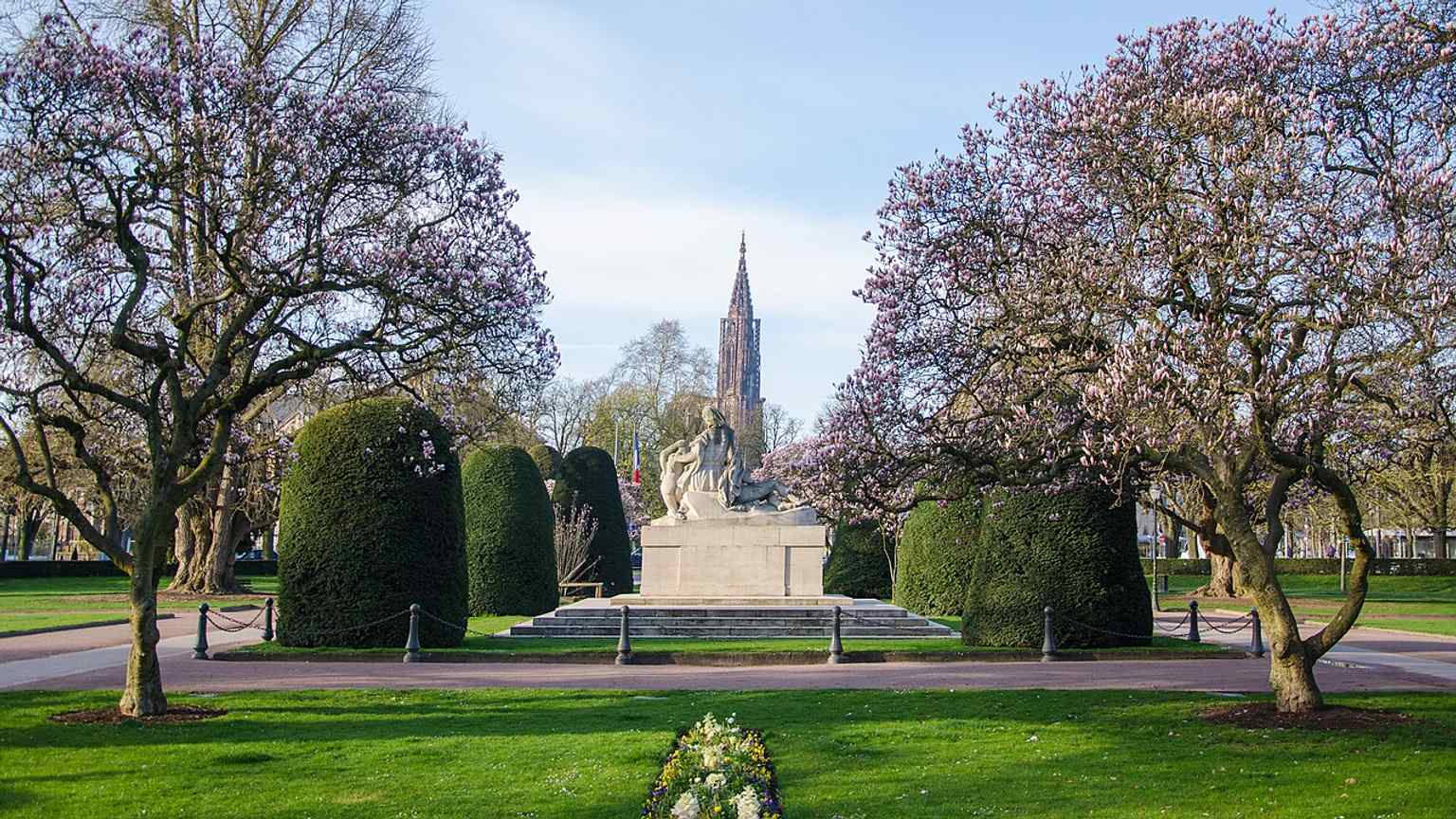
A symmetrical view centered on the war memorial and its planting beds, echoing the square’s carefully designed monumental layout.Photo: Valentin F.R., Wikimedia Commons, CC0. Cropped & resized. And now the final turn of the screw: one side of this square houses memory, but another houses learning. The library standing here grew from the same imperial project, then outlived it, and today it holds more than three million volumes and thousands of manuscripts. That is Strasbourg in a nutshell: power tries to script the city... and the city answers by reading, keeping, and reinterpreting the script. Our next stop is the National and University Library. It’s about a four-minute walk away.
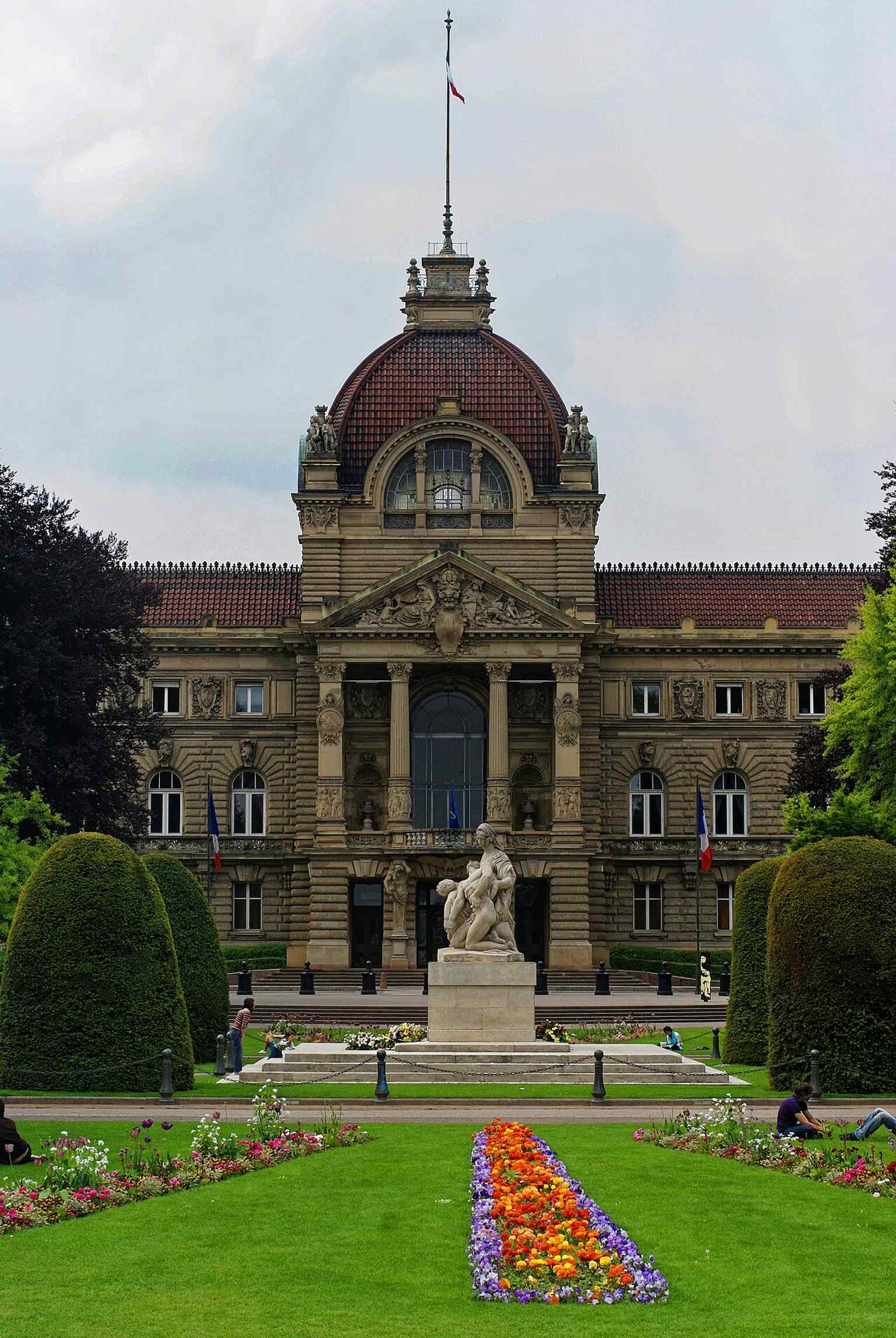
A wide view toward the Palais du Rhin, one of the grand imperial buildings that frame the former Kaiserplatz and give the square its monumental feel.Photo: Txllxt TxllxT, Wikimedia Commons, CC BY-SA 4.0. Cropped & resized. 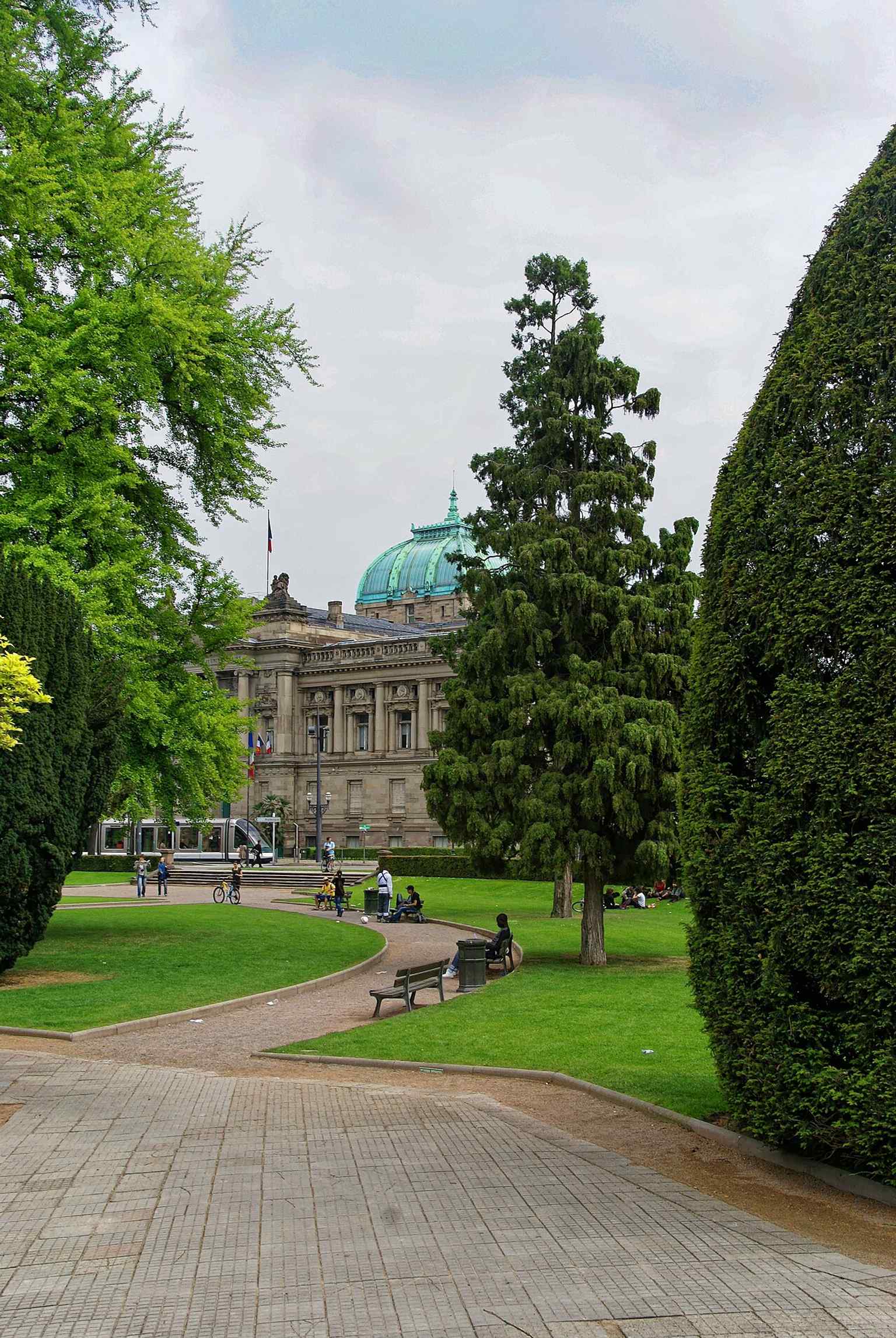
Looking east to the Bibliothèque nationale et universitaire, part of the ceremonial ensemble that marked Strasbourg’s Neustadt as an imperial showcase.Photo: Txllxt TxllxT, Wikimedia Commons, CC BY-SA 4.0. Cropped & resized. 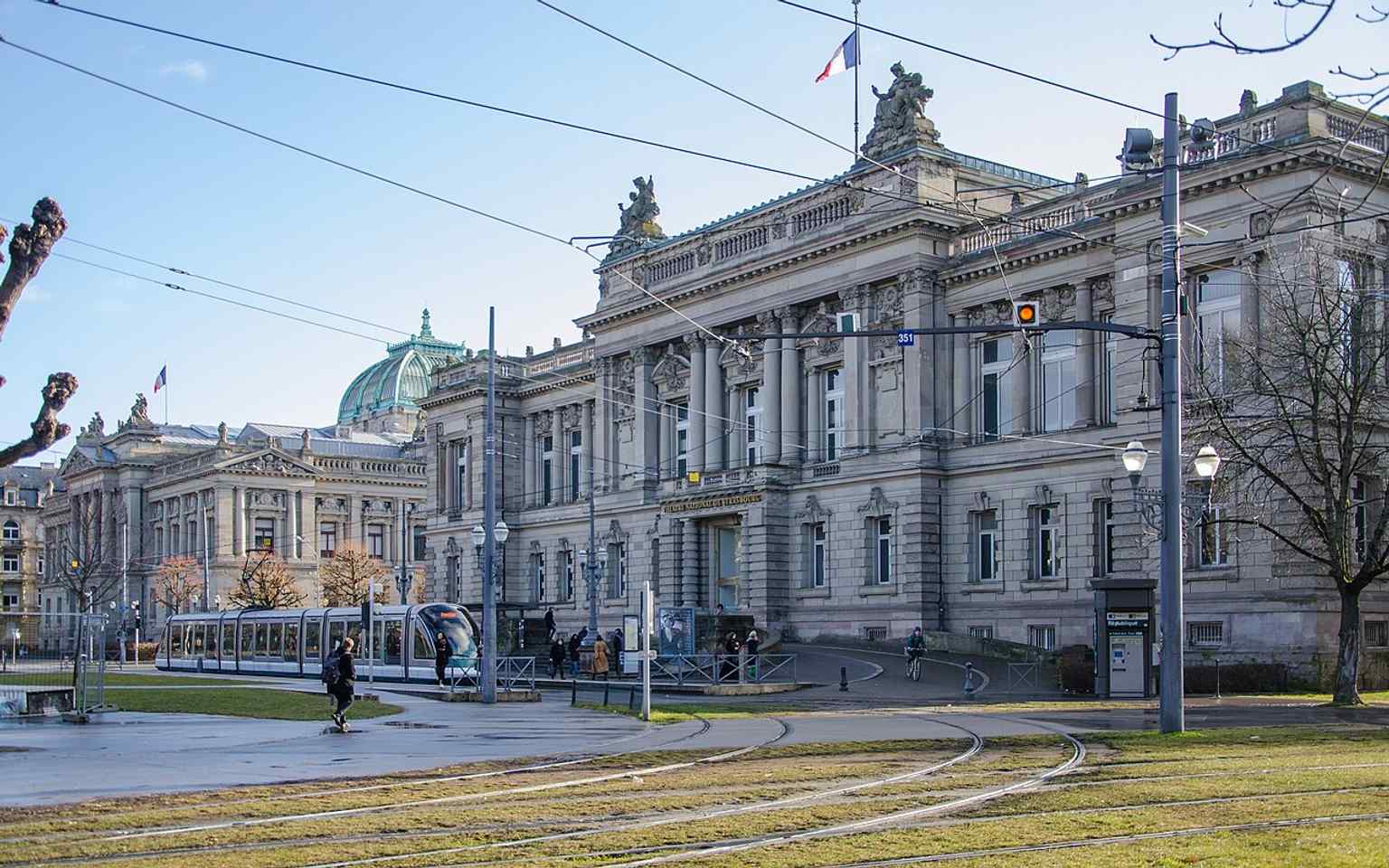
The former Landtag, now the Théâtre national de Strasbourg, with the BNU beside it — two of the prestigious buildings that define Place de la République.Photo: Valentin F.R., Wikimedia Commons, CC0. Cropped & resized. Look for a broad pale-stone facade shaped like an Italian palace, with tall arched windows and a central dome rising behind the roofline. This is the National and University…Read moreShow less
Open dedicated page →Look for a broad pale-stone facade shaped like an Italian palace, with tall arched windows and a central dome rising behind the roofline.
This is the National and University Library of Strasbourg, known here as the B-N-U, and it stands for something larger than bookshelves. It stands for memory rebuilt.
Before eighteen seventy, Strasbourg already had two remarkable libraries: the Protestant seminary library and the municipal library. Together they held hundreds of thousands of volumes and precious manuscripts, including Herrade of Landsberg’s Hortus deliciarum, a twelfth-century encyclopedia of knowledge made in a convent here in Alsace. Then came the siege of Strasbourg. On the night of the twenty-fourth to the twenty-fifth of August, eighteen seventy, shells struck the Temple-Neuf church. The building burned, and with it went those collections... whole centuries of thought, gone in smoke.
Scholars and collectors answered that loss the way good neighbors answer a house fire: they showed up carrying what they could. Librarians, donors, and researchers from across the German-speaking world sent books, manuscripts, and learned tools of every kind so Strasbourg could rebuild not only its shelves, but its mind.
One man matters here: Karl August Barack. He became the first administrator of the recreated library and, on the first of November, eighteen seventy, he issued an appeal for donations. It worked far better than anyone dared hope. By the inauguration in eighteen seventy-one, two hundred thousand volumes already waited in the Palais Rohan. Other libraries sent duplicates, Emperor Wilhelm donated four thousand books from his own collection, and later Julius Euting helped shape one of Europe’s richest collections on the cultures of the East.
The books kept coming, so the old quarters no longer fit. Architects August Hartel and Skjold Neckelmann gave the library this grand home, opened in eighteen ninety-five in a neo-Renaissance style, meaning a nineteenth-century revival of Renaissance palace design. Fitting, really: when the city lost its written inheritance, it answered with a monument.
Today the B-N-U holds more than three million three hundred thousand documents, making it the second-largest library in France by holdings. Its treasures range from papyri and coins to manuscripts, incunables - those are books printed in the earliest age of printing - and early editions of Dante. There is a quiet Strasbourg logic in that. Gutenberg helped make knowledge travel; this place made sure knowledge survived.
The story nearly repeated in the Second World War. In nineteen thirty-nine, the librarian Kuhlmann used carefully prepared plans to pack the reserve collections, the coin collection, and the archives into two hundred sixty-four crates in just over three days. About one and a half million volumes went south toward Clermont-Ferrand and nearby châteaux for safety. If you glance at your screen, image eight shows staff during that evacuation - a grand institution reduced, in the best possible way, to human hands and wooden boxes.
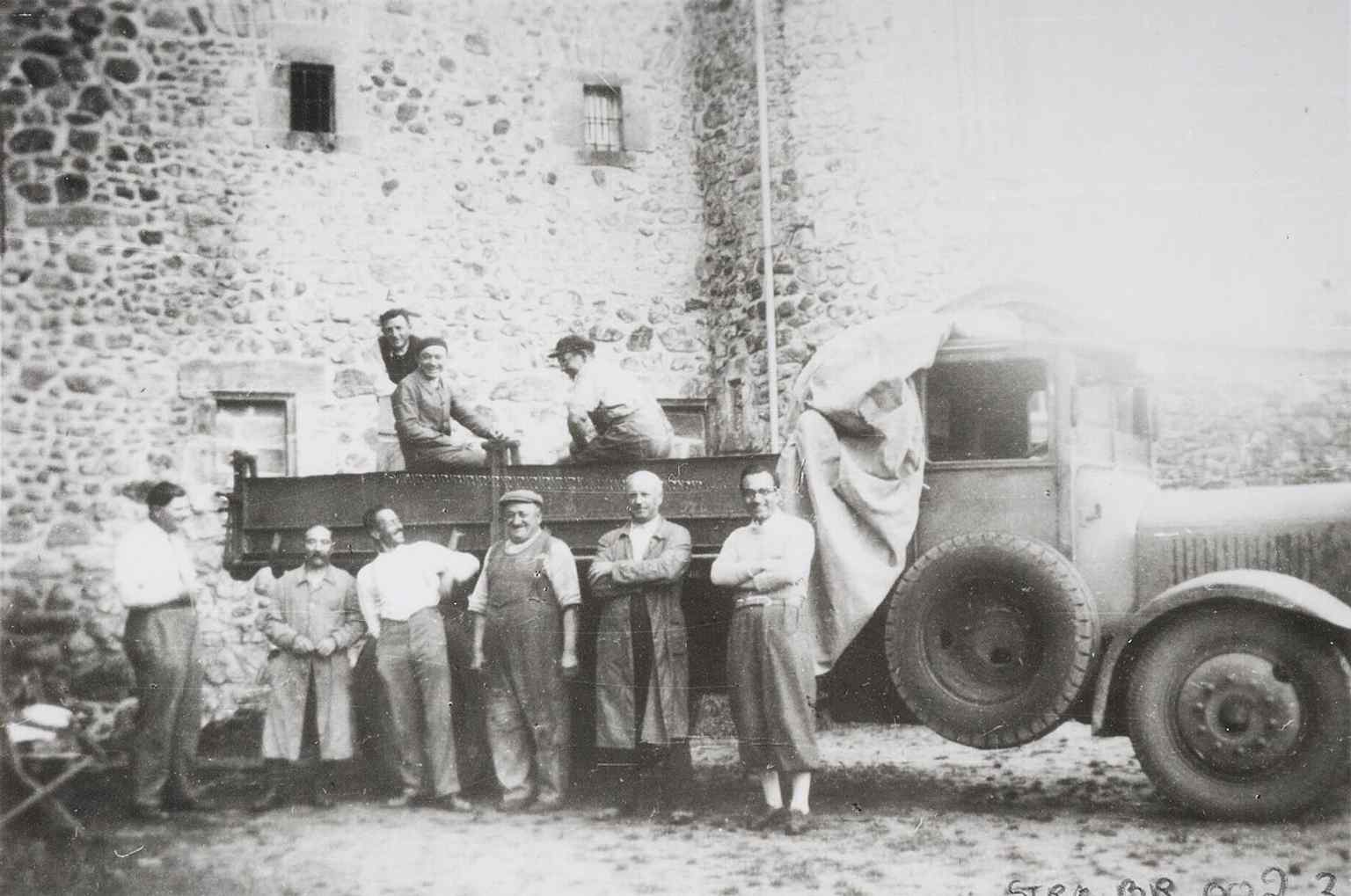
BNU staff helping evacuate the collections in 1939 — a striking image of the wartime rescue operation that moved the library to Auvergne.Photo: Unknown authorUnknown author, Wikimedia Commons, Licence Ouverte. Cropped & resized. Some collections were still lost, and many had to be recovered after the war. Yet the building remained, and the library adapted again. A major renovation between two thousand ten and two thousand fourteen reopened the interior around the dome and brought light back into its heart. If you like, try the before-and-after slider in the app; the facade barely changes while the city around it learns new habits.
That is Strasbourg in a nutshell, folks: not pretending nothing broke, but deciding the answer is to learn, preserve, and begin again.
In about five minutes, we’ll continue to Saint Paul’s Church, where this grand district ends with a church that says a lot about Strasbourg’s tangled loyalties and layered faiths. If you want to return later, the library is generally open Monday through Saturday from ten A-M to seven P-M, and closed on Sunday.
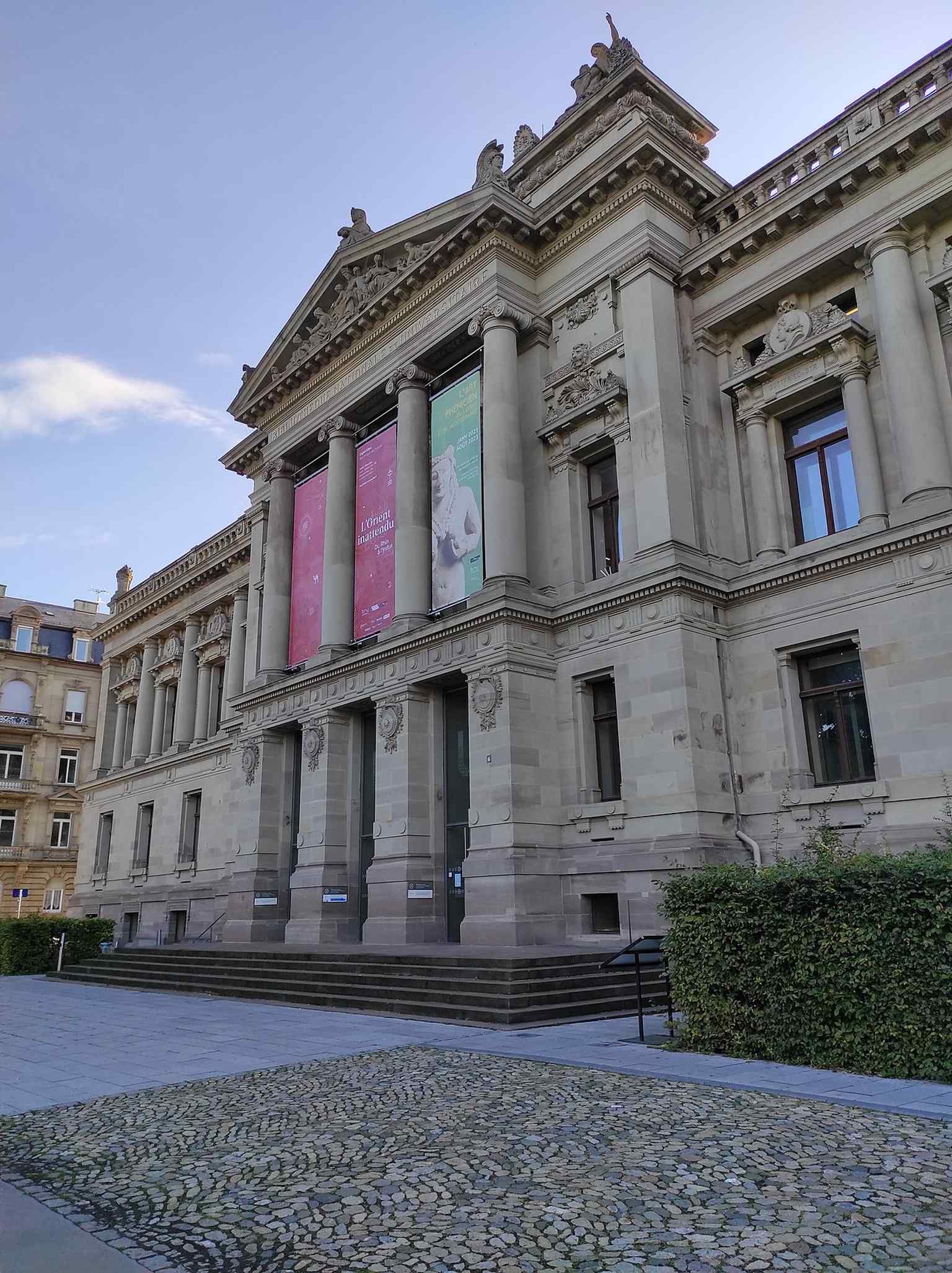
The grand neo-Renaissance facade of the former Imperial University Library, now the BNU — the monument that was rebuilt from the ashes of Strasbourg’s lost libraries.Photo: Nguyễn Mai Trang, Wikimedia Commons, CC BY-SA 4.0. Cropped & resized. 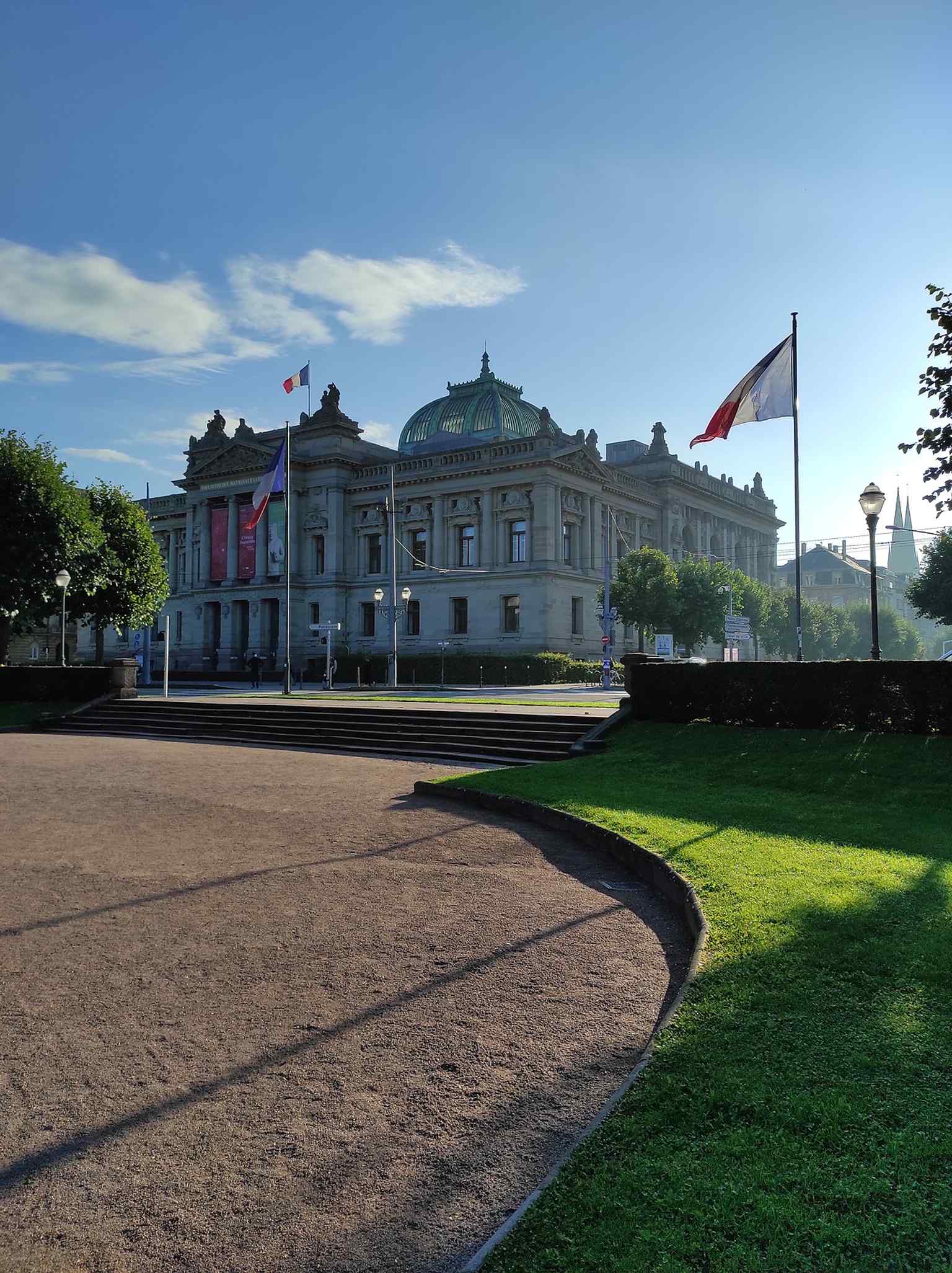
A second wide view of the BNU’s monumental exterior, showing the historic building’s impressive scale on Place de la République.Photo: Nguyễn Mai Trang, Wikimedia Commons, CC BY-SA 4.0. Cropped & resized. 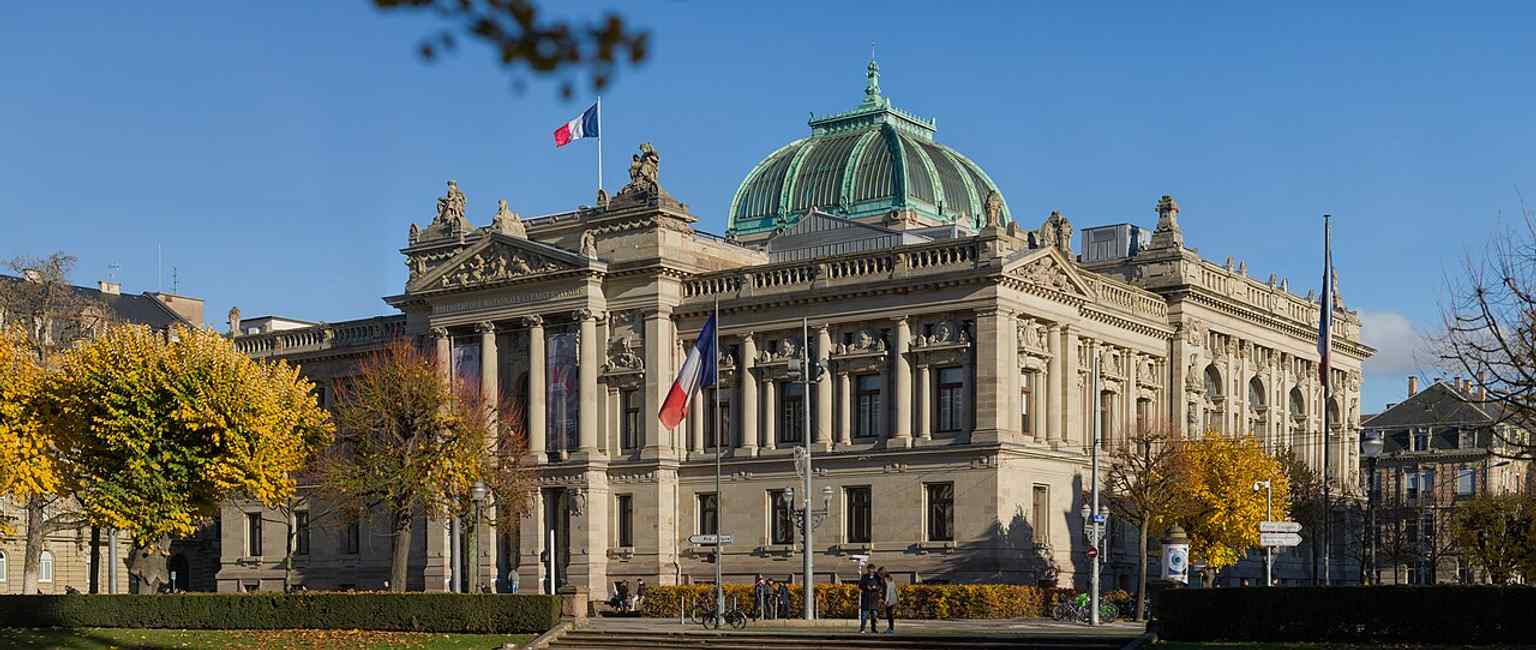
The BNU in 2018, after its major renovation, with the building still anchoring the Neustadt around Place de la République.Photo: BNU - Rosenkranz, Wikimedia Commons, CC BY-SA 3.0. Cropped & resized. 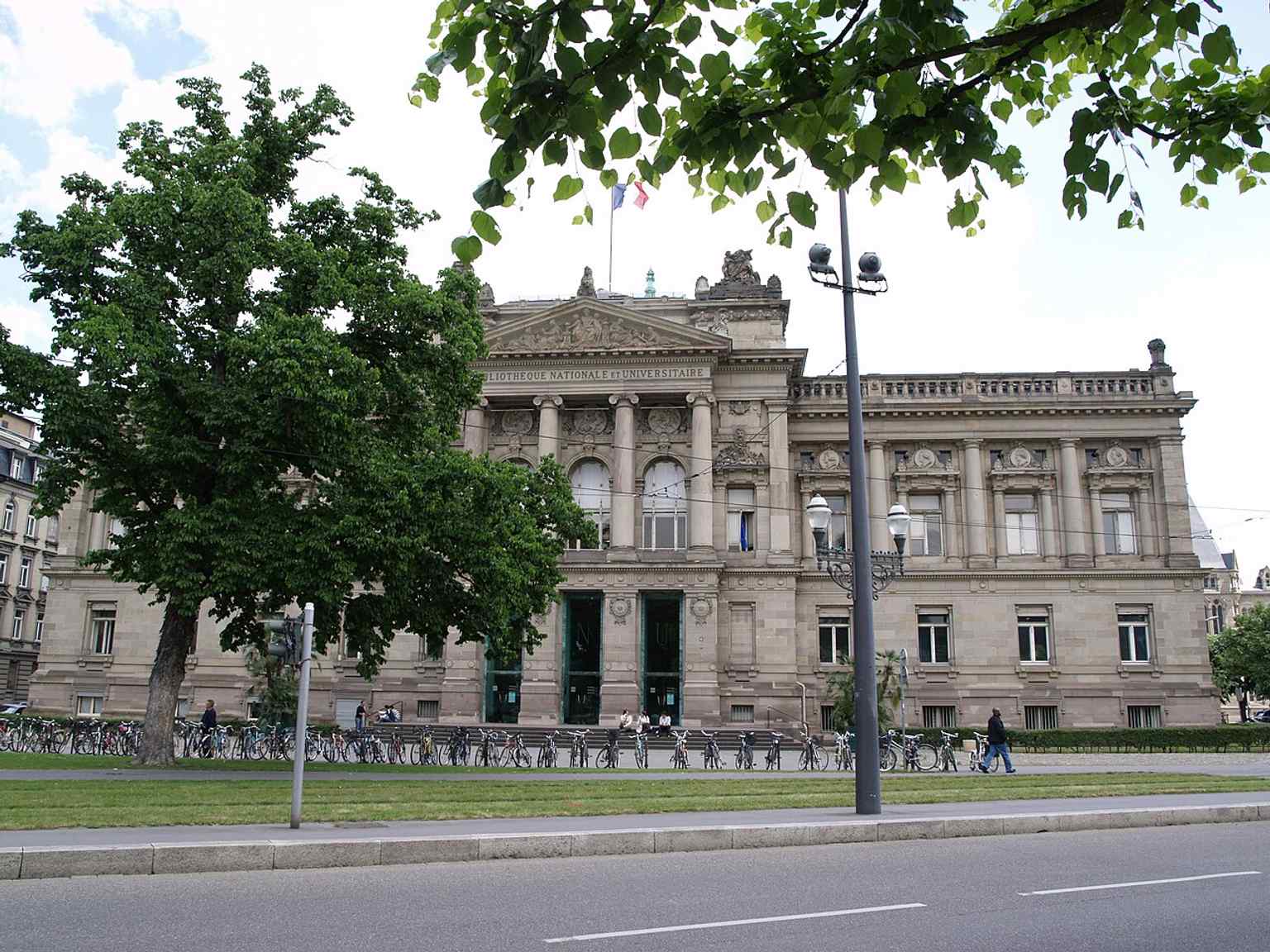
A clear contemporary view of the National and University Library of Strasbourg, useful for introducing the landmark in the tour.Photo: Tael, Wikimedia Commons, CC BY 3.0. Cropped & resized. 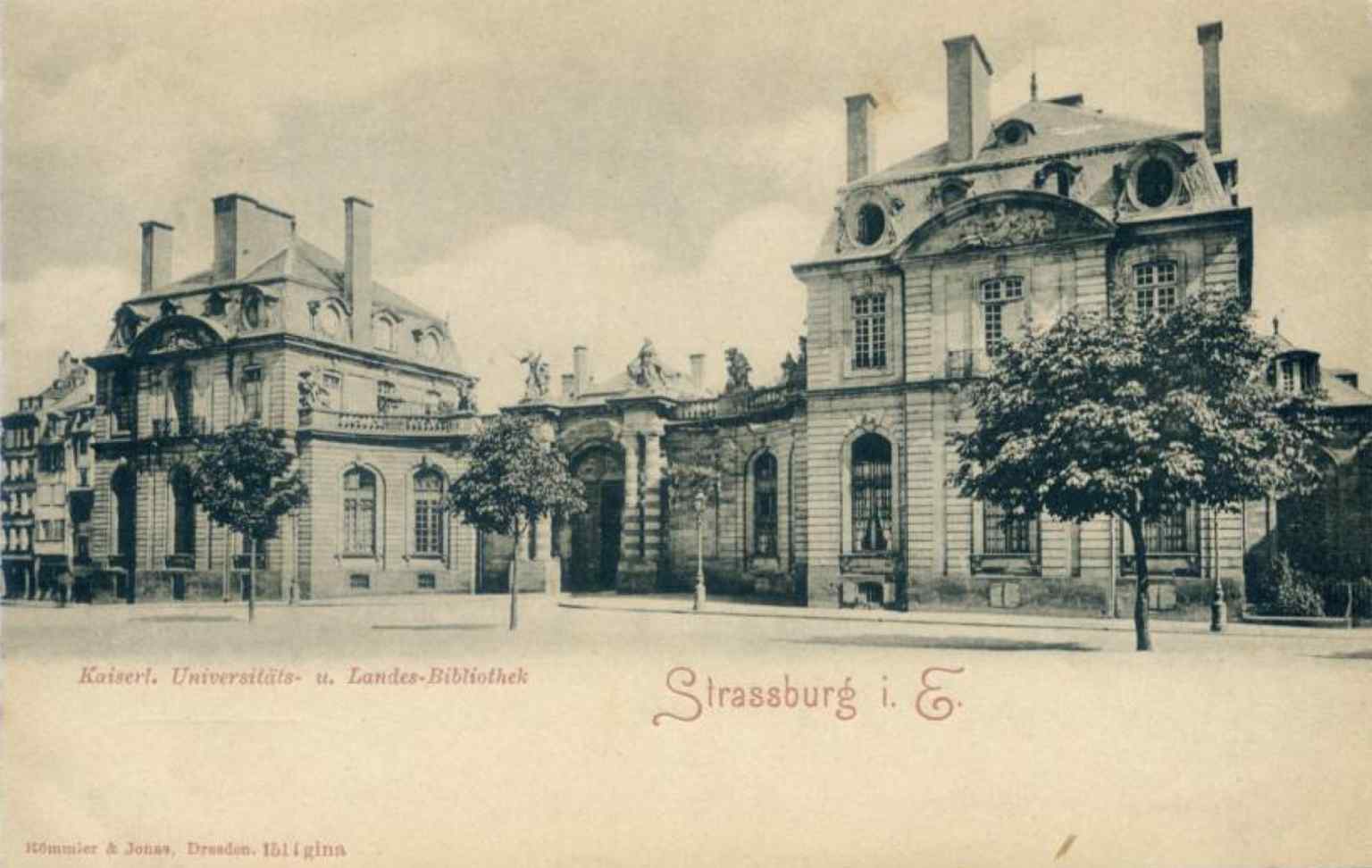
An old postcard of the library beside the Palais Rohan, recalling the institution’s early years before it moved to its current monumental home.Photo: photographe : Emil Römmler (1842-1941) ; éditeur : Römmler & Jonas, Dresde, vers 1880., Wikimedia Commons, CC0. Cropped & resized. 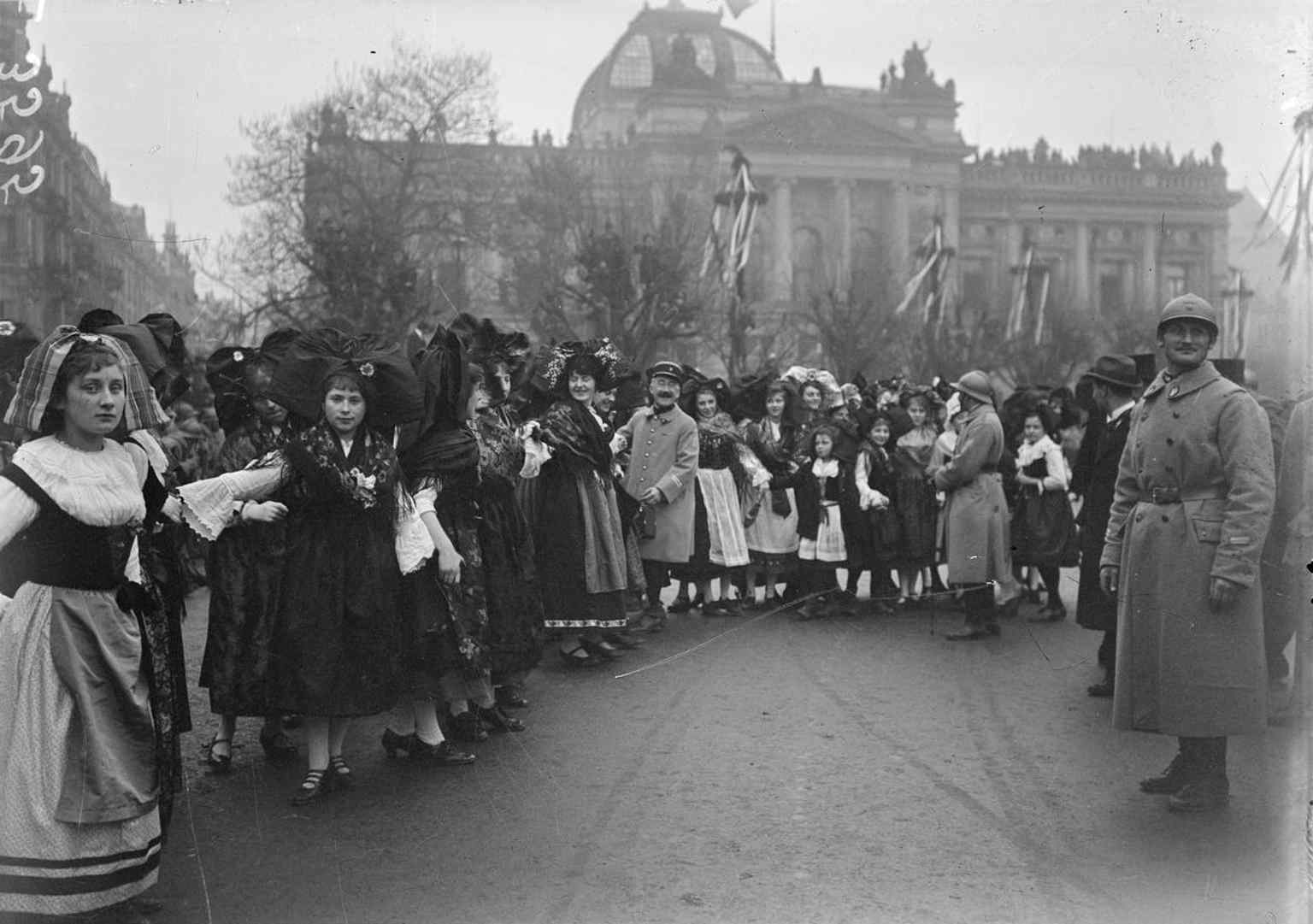
People in Alsatian costume gathered for Poincaré and Clemenceau’s 1918 visit — a symbolic moment when the library became part of French Strasbourg.Photo: Amédée Eywinger, Wikimedia Commons, Public domain. Cropped & resized. 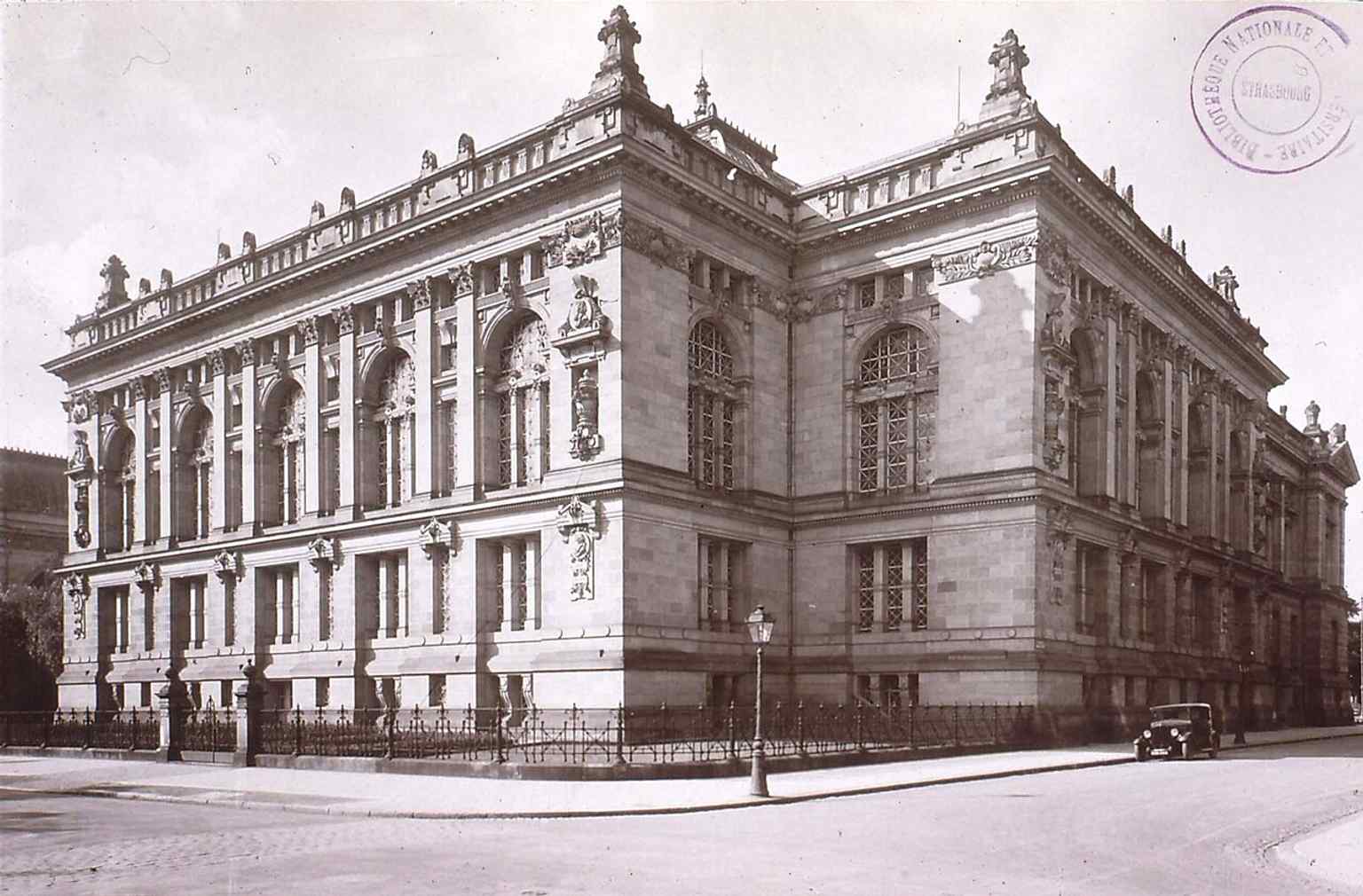
Historic views of the BNU during the 1930s work period, evoking the building’s changing interiors before wartime upheaval.Photo: Non déterminé, Wikimedia Commons, CC0. Cropped & resized. 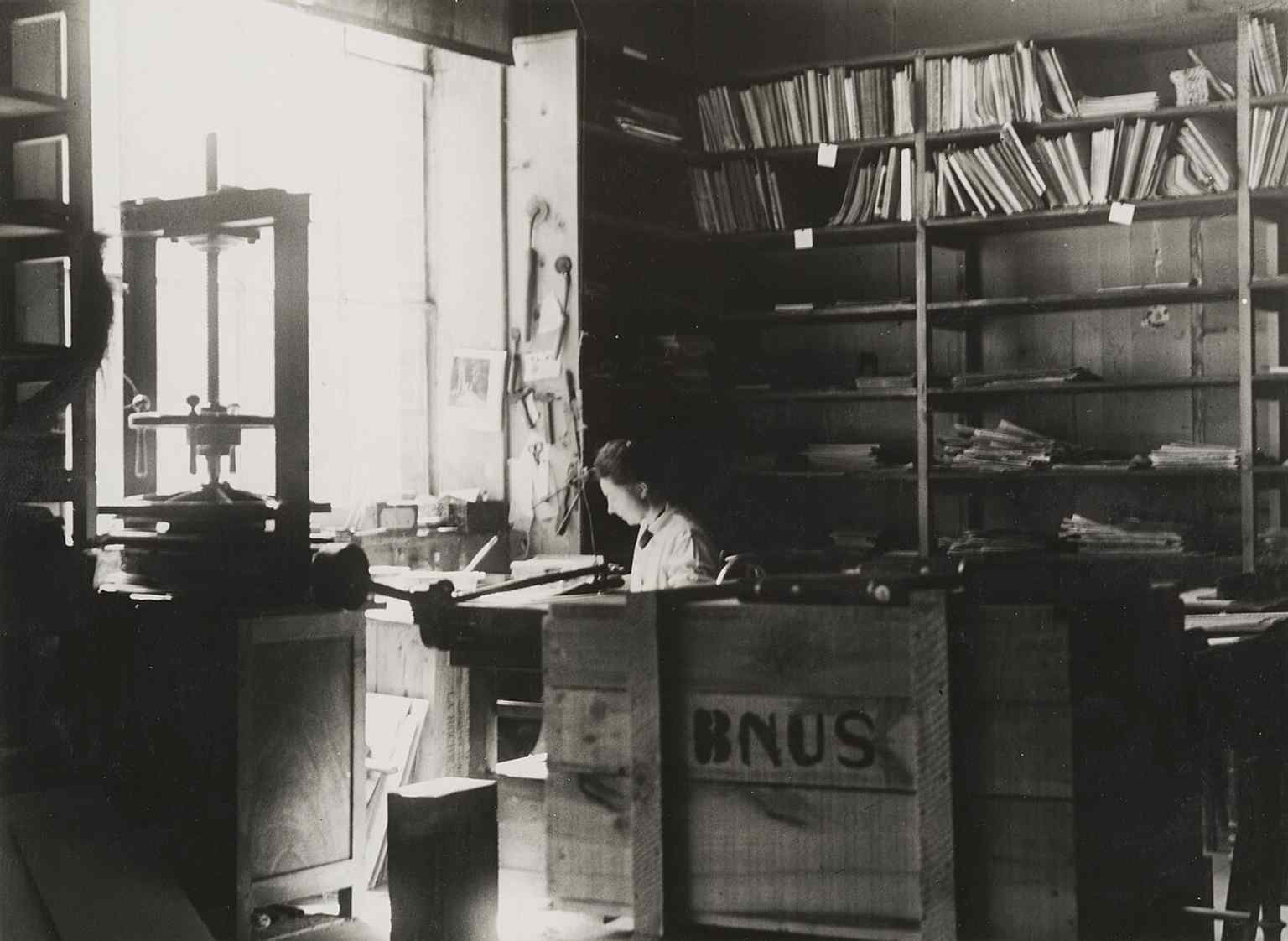
The bookbinding workshop in Clermont-Ferrand, where evacuated collections were cared for and preserved during the war.Photo: Unknown authorUnknown author, Wikimedia Commons, Licence Ouverte. Cropped & resized. 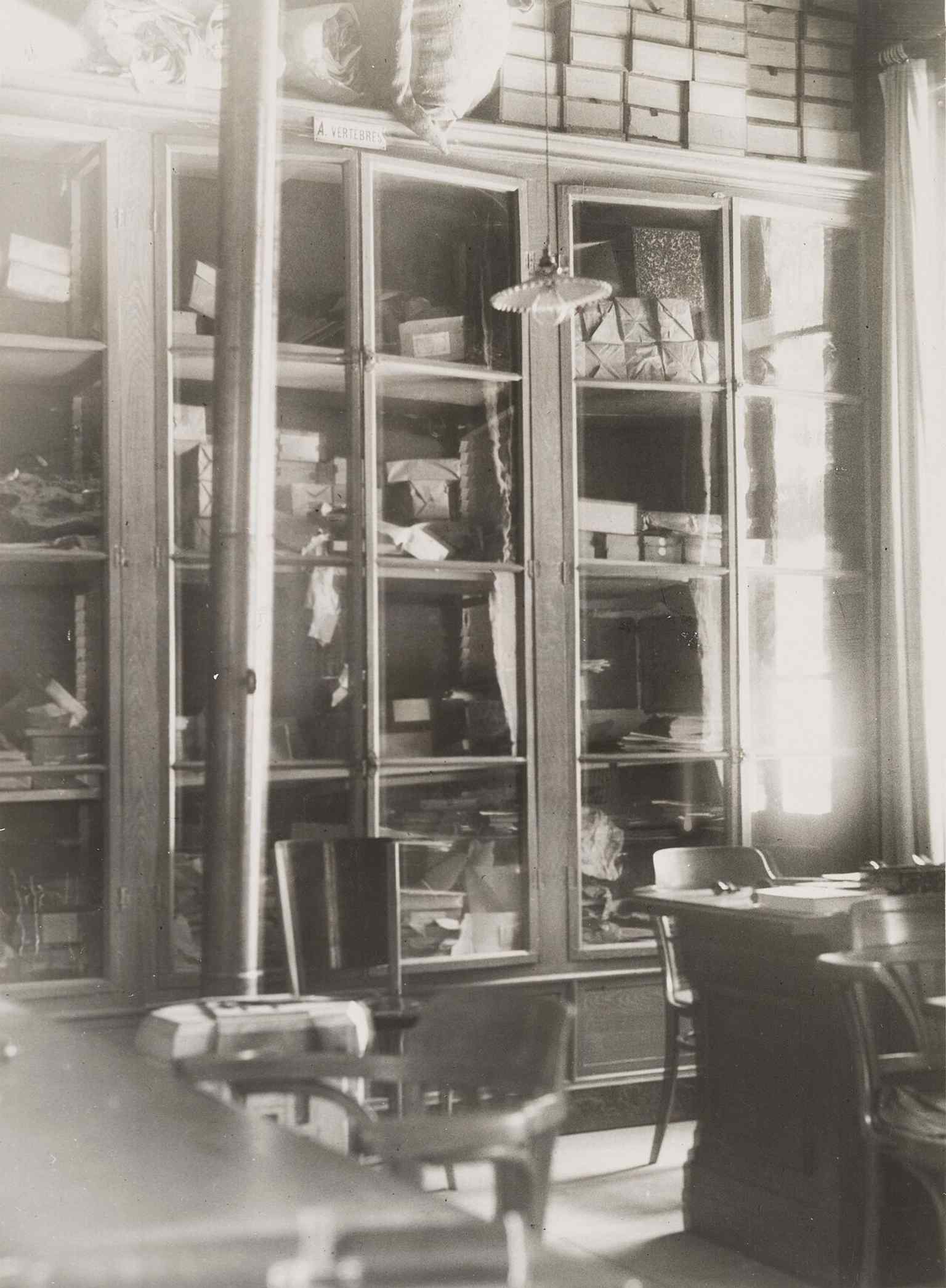
A wartime reading room in Clermont-Ferrand — proof that the BNU remained a working research library even in exile.Photo: Unknown authorUnknown author, Wikimedia Commons, Licence Ouverte. Cropped & resized. 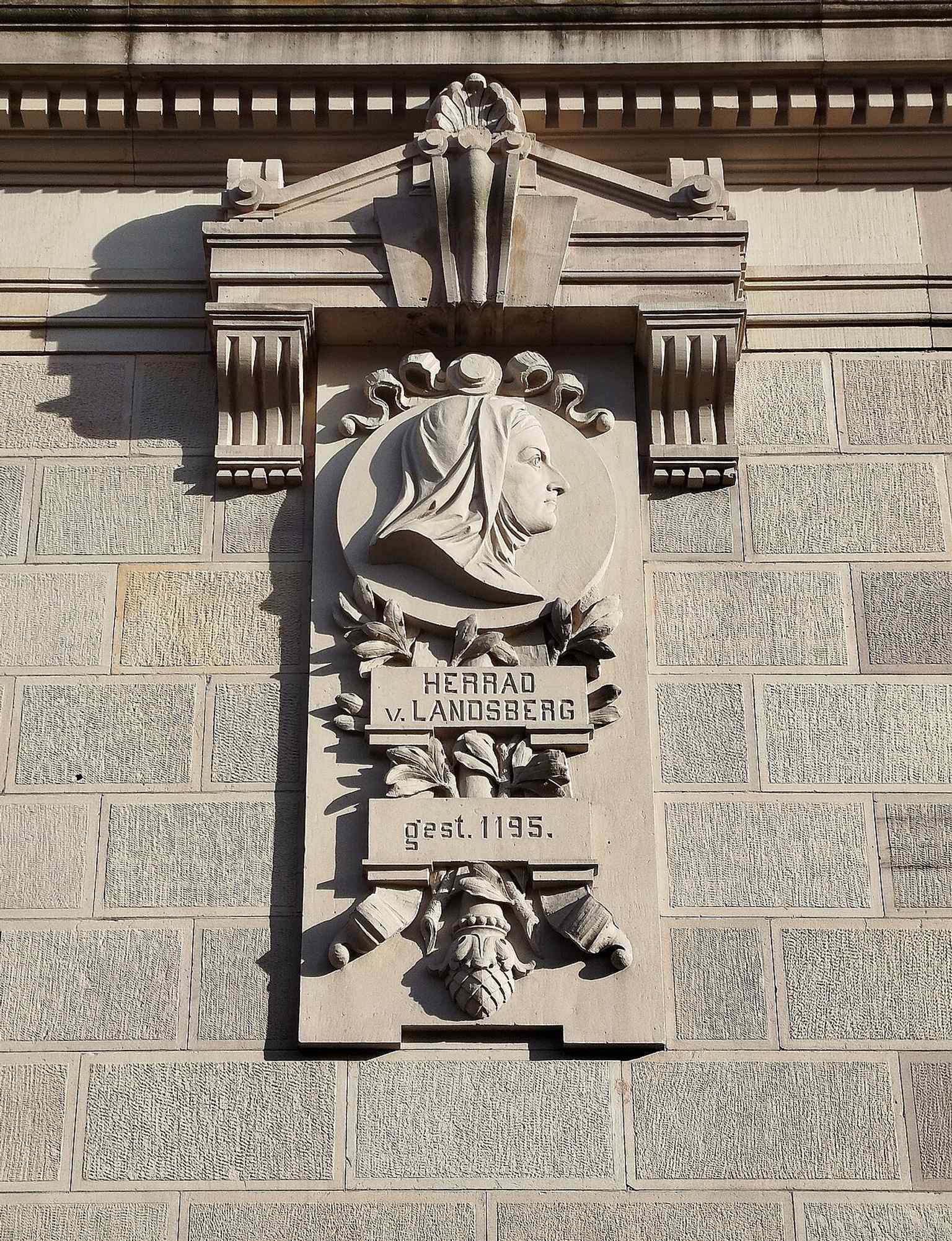
A sculpted medallion of Herrade of Landsberg, recalling the medieval manuscript heritage linked to Strasbourg’s lost and rebuilt collections.Photo: ThomSchu, Wikimedia Commons, CC BY 4.0. Cropped & resized. On your left, Saint Paul rises in pale stone as a neo-Gothic church with a pointed façade and two needle-like spires, its twin towers marking it instantly against the skyline.…Read moreShow less
Open dedicated page →On your left, Saint Paul rises in pale stone as a neo-Gothic church with a pointed façade and two needle-like spires, its twin towers marking it instantly against the skyline.
This is a fitting last stop, because Saint Paul gathers so many Strasbourg habits into one building: water, faith, power, and a skyline that never settled for just one voice.
The church stands where the Aar meets the Ill, on the southern tip of Sainte-Hélène island. That was no accident. German planners chose this point so the building would command the river view from the old city and answer, across the distance, the spire of the cathedral. Strasbourg has always staged itself carefully... and this church knows exactly how to make an entrance.
Louis Müller, the government architect from Frankfurt, drew it between eighteen ninety-two and eighteen ninety-seven during the German annexation. He looked to Saint Elizabeth’s Church in Marburg for inspiration, and he gave Strasbourg a building that feels almost like a Protestant cathedral. Neo-Gothic simply means a later revival of medieval Gothic style, so those sharp arches, steep lines, and soaring towers were already a historical costume when Müller used them. A handsome one, though.
If you glance at the image in the app, the riverside view makes the strategy of the site crystal clear. This church does not merely sit by the water... it rules a fork in the rivers.
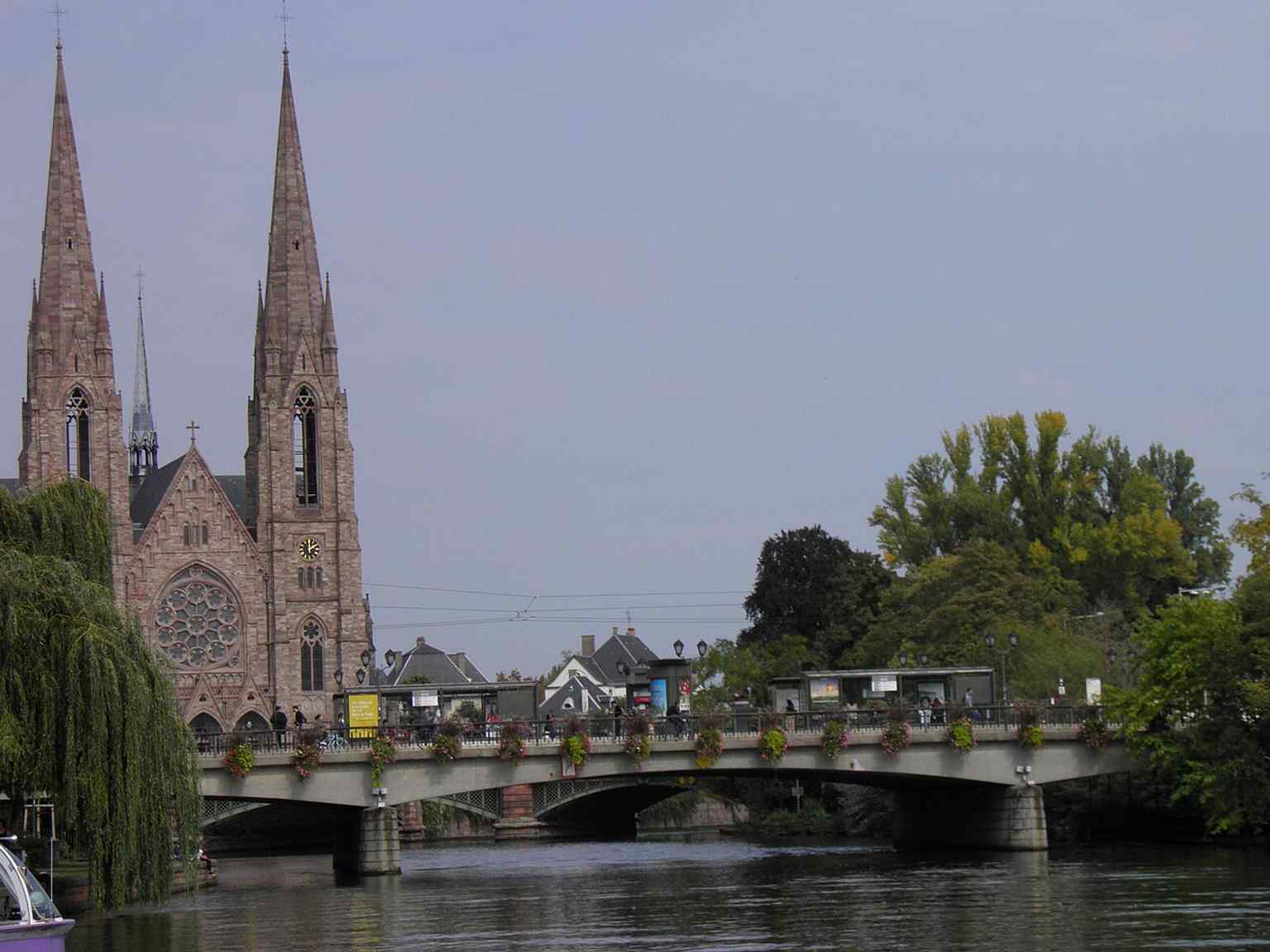
A broad riverside view where Saint Paul meets the Ill, matching the tour’s story about its setting and urban perspective.Photo: Gzen92, Wikimedia Commons, CC BY-SA 4.0. Cropped & resized. But Saint Paul was never just scenery. The Ministry of War ordered it as a Protestant garrison church for the German Empire, while Saint-Maurice served Catholic soldiers. That military purpose even shaped the entrances: sixteen doors around the church, reportedly echoing the army ranks of the time. Leave it to an army to organize church seating like a filing cabinet. Inside, the central plan and shortened main hall suited Protestant worship, where hearing the sermon clearly mattered as much as ceremony. Kaiser Wilhelm the Second even had his own gallery here, and the church could hold about three thousand worshippers.
Its name tells a quieter story. Protestants do not venerate saints in the Catholic sense, so choosing Paul let the church fit Strasbourg’s familiar “Saint” pattern while staying faithful to Protestant belief. That is very Strasbourg: adapting without quite surrendering.
History kept revising the place. In nineteen seventeen, authorities took the organ’s front pipes for the war effort. In nineteen forty-four, bombing destroyed the rear chapel and much of the eastern stained glass. After the war, the lost chapel was not copied stone for stone; a more modern replacement took its place. Even damage here becomes another layer, not the final word. The façade and spires you see now went through a full restoration from two thousand nine to two thousand fourteen, and another image on your screen shows that renewed west front beautifully.
The west façade after restoration, with the twin spires that make Saint Paul one of Strasbourg’s tallest churches.Photo: Laurent Jerry, Wikimedia Commons, CC BY-SA 3.0. Cropped & resized. If Strasbourg has seemed, all along, like a city balancing French and German, old town and new district, Catholic towers and Protestant halls, riverbanks and parade avenues... this church makes that balance visible. Look up at those twin spires and imagine the whole skyline as a conversation, not an argument: many stories, held in tension, somehow making one city.
If you want to come back inside another time, Saint Paul is generally open only for a short window on Wednesday from noon to two PM, and on Sunday from ten AM to noon.
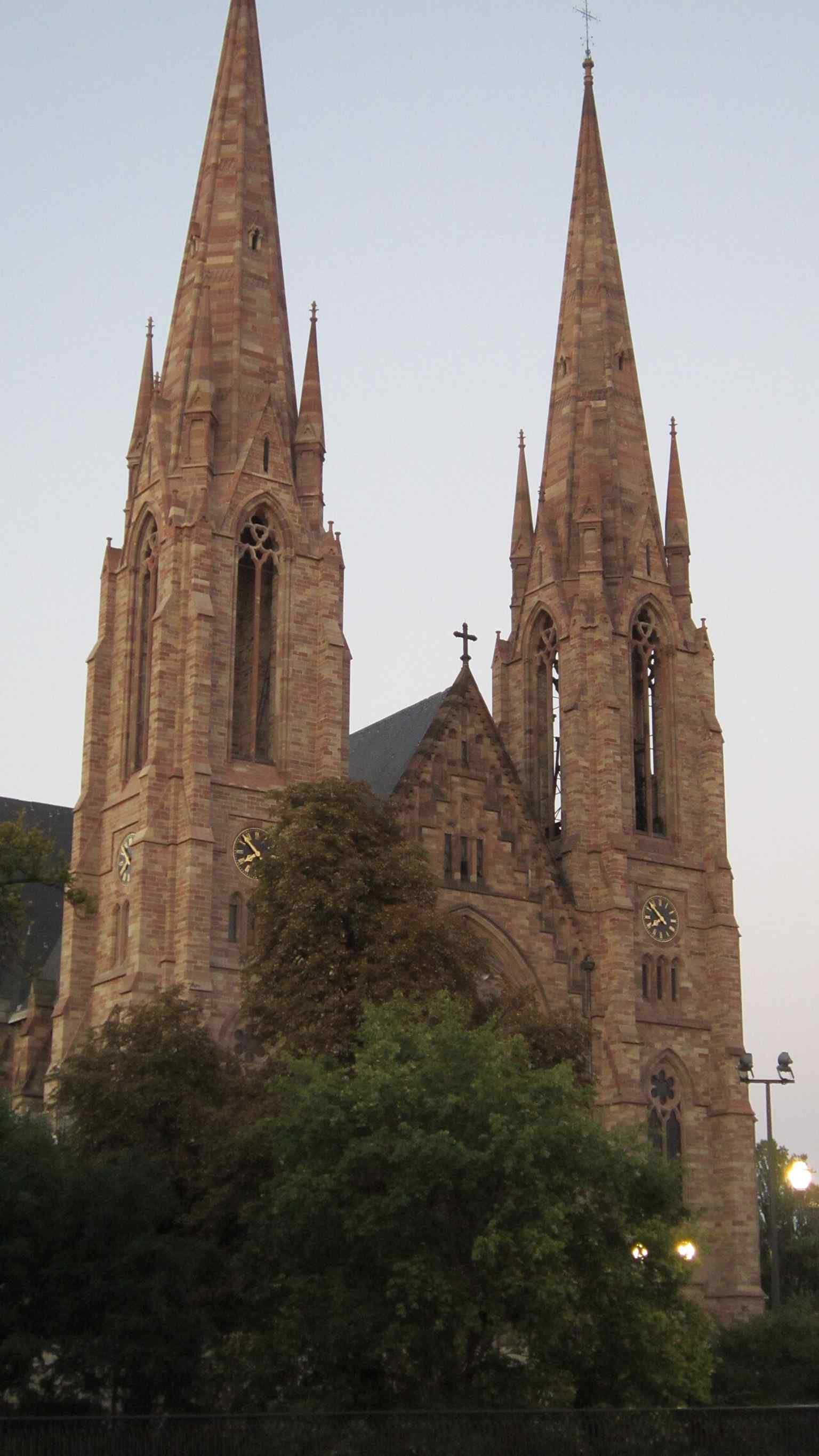
A clear view of the main west façade, showing the neo-Gothic front that was restored after the long 2009–2014 campaign.Photo: Laurent Jerry, Wikimedia Commons, CC BY-SA 3.0. Cropped & resized. 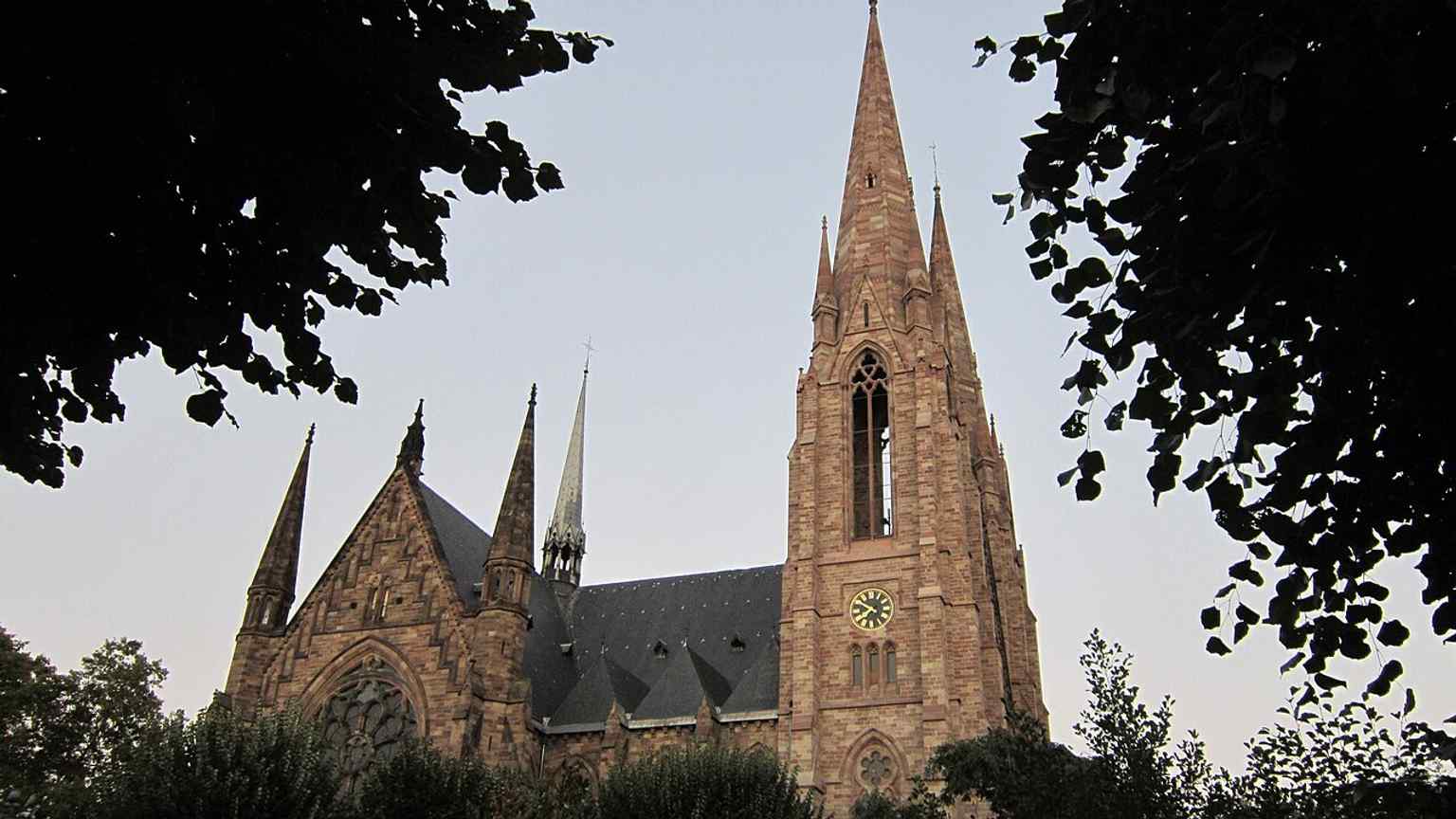
The north side of the church, useful for showing the building’s scale and its many entrances around the perimeter.Photo: Laurent Jerry, Wikimedia Commons, CC BY-SA 3.0. Cropped & resized. 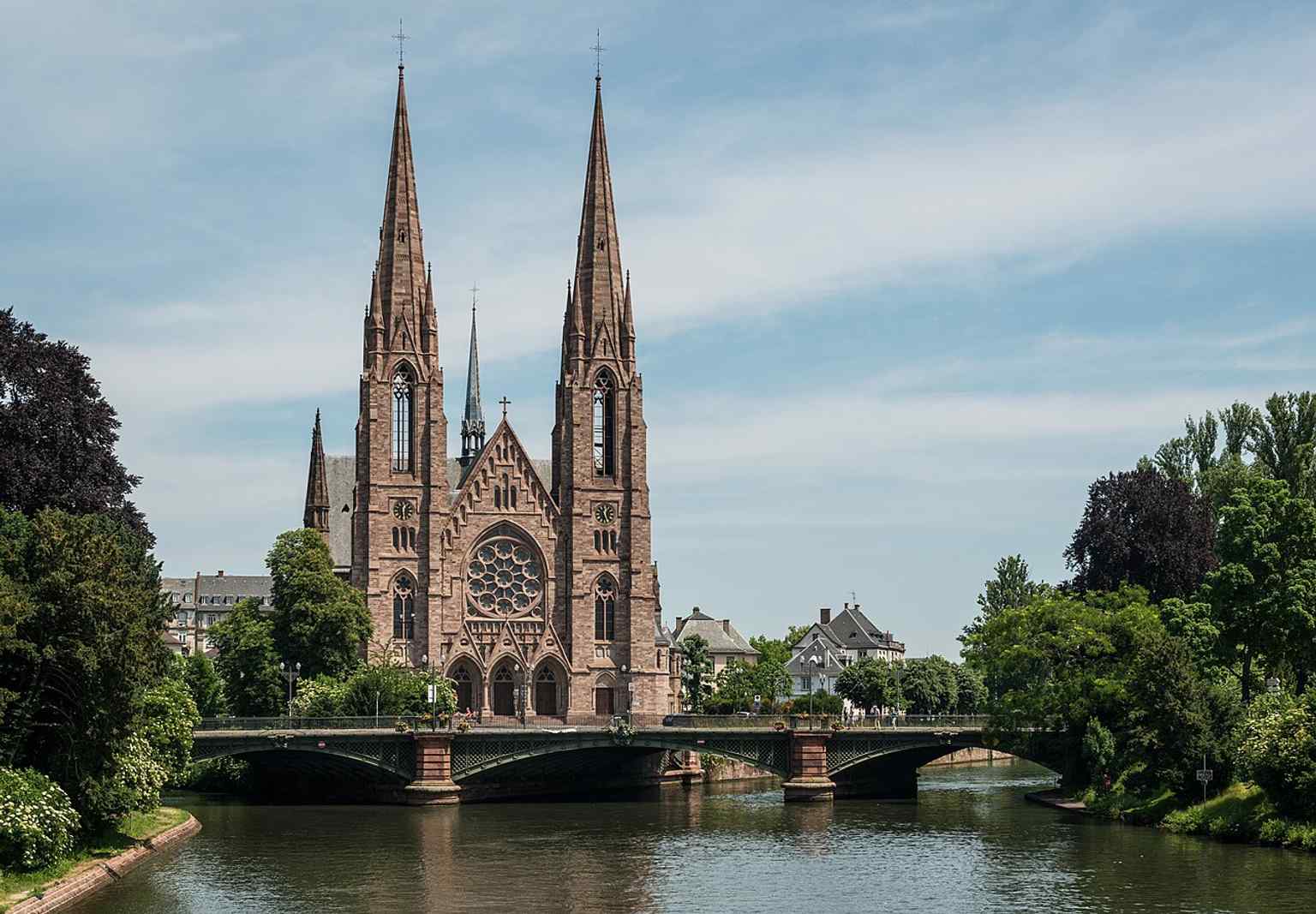
A south-side view of the church, emphasizing its massive footprint on the island between the Aar and the Ill.Photo: DXR, Wikimedia Commons, CC BY-SA 4.0. Cropped & resized. 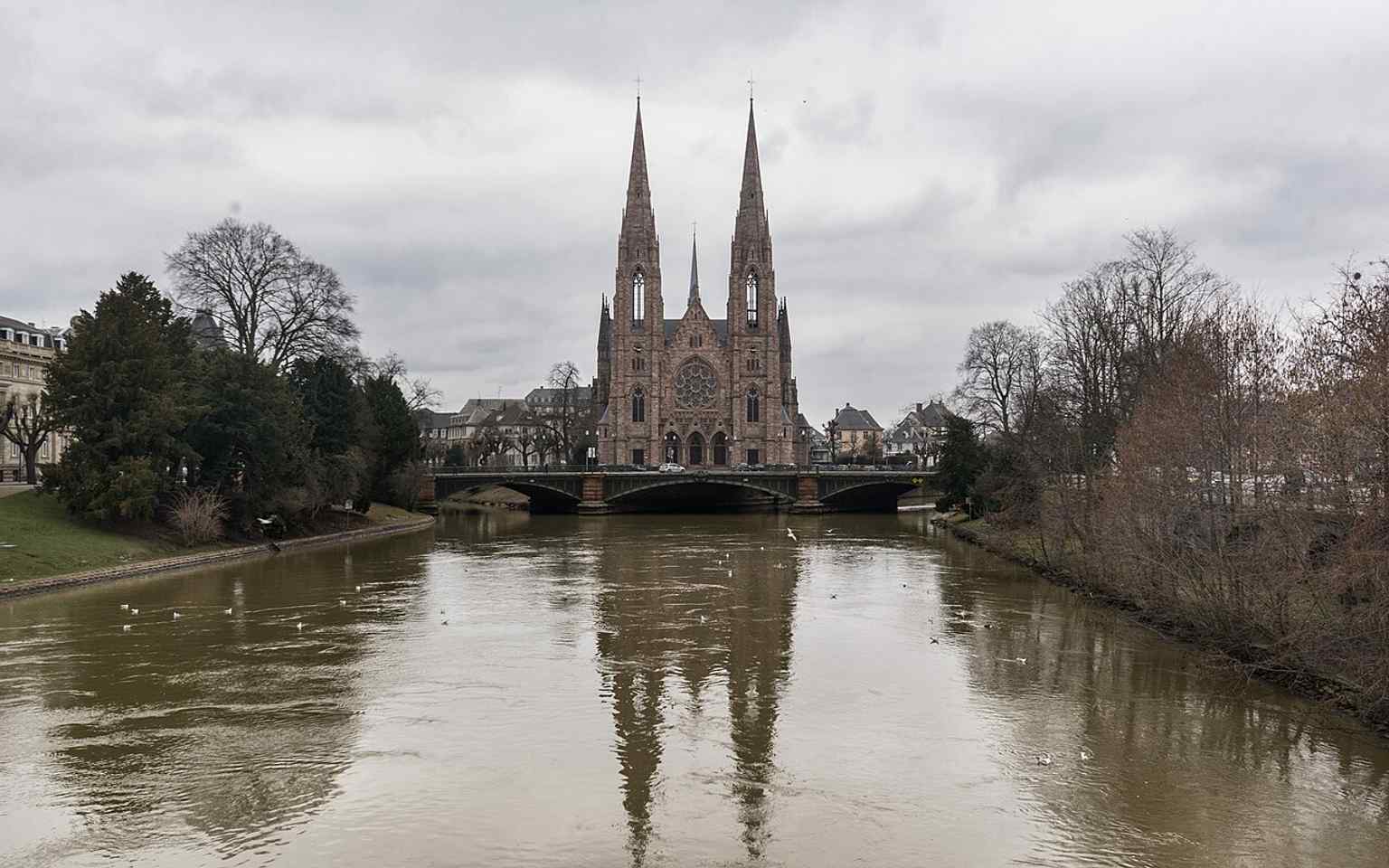
A wide west-facade view that highlights the church’s soaring vertical lines and twin spires.Photo: Pedro J Pacheco, Wikimedia Commons, CC BY-SA 4.0. Cropped & resized. 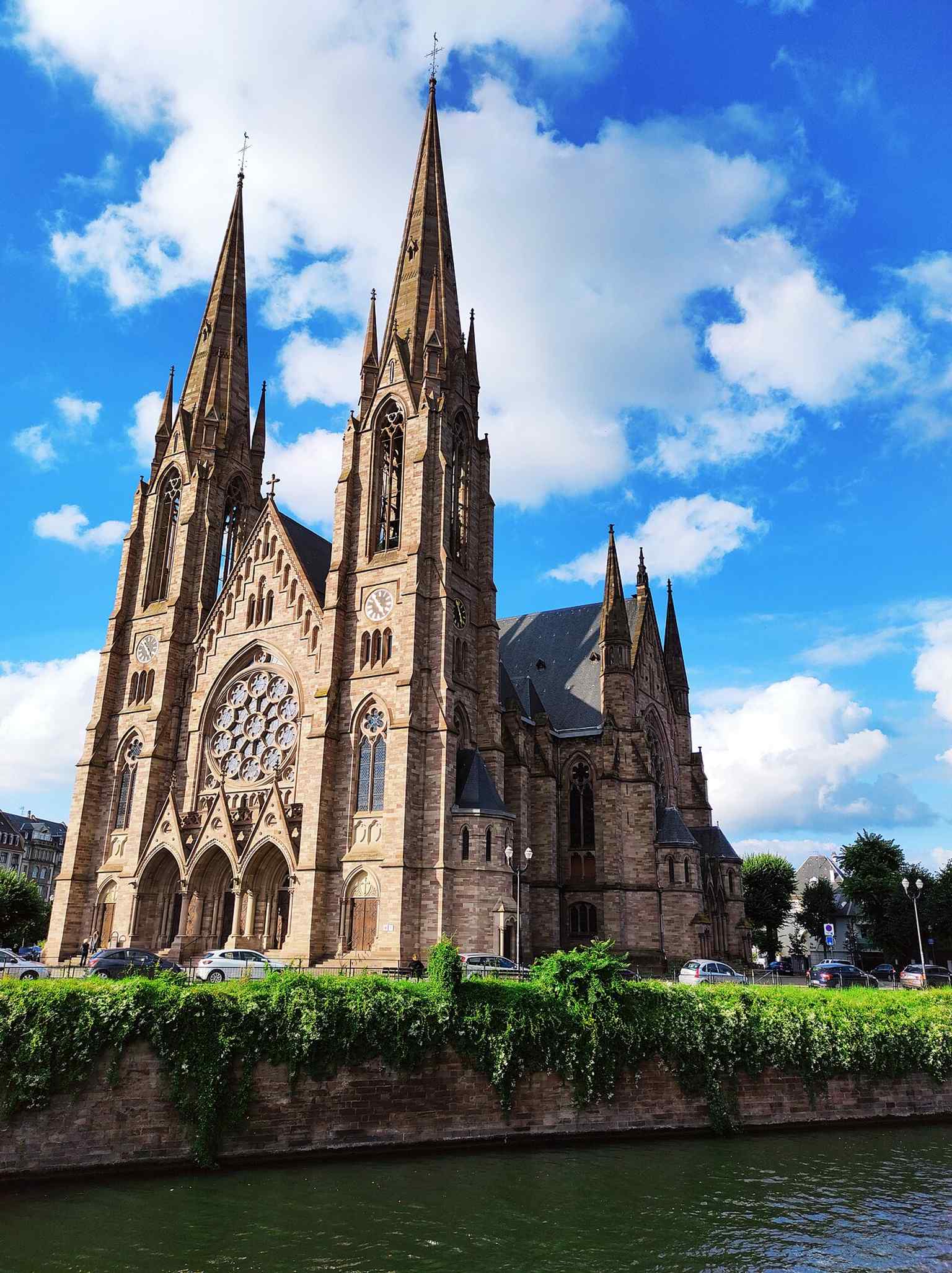
The church seen in its riverside setting, exactly where the Aar and the Ill meet near Quai Zorn and Quai Mullenheim.Photo: Nguyễn Mai Trang, Wikimedia Commons, CC BY-SA 4.0. Cropped & resized. 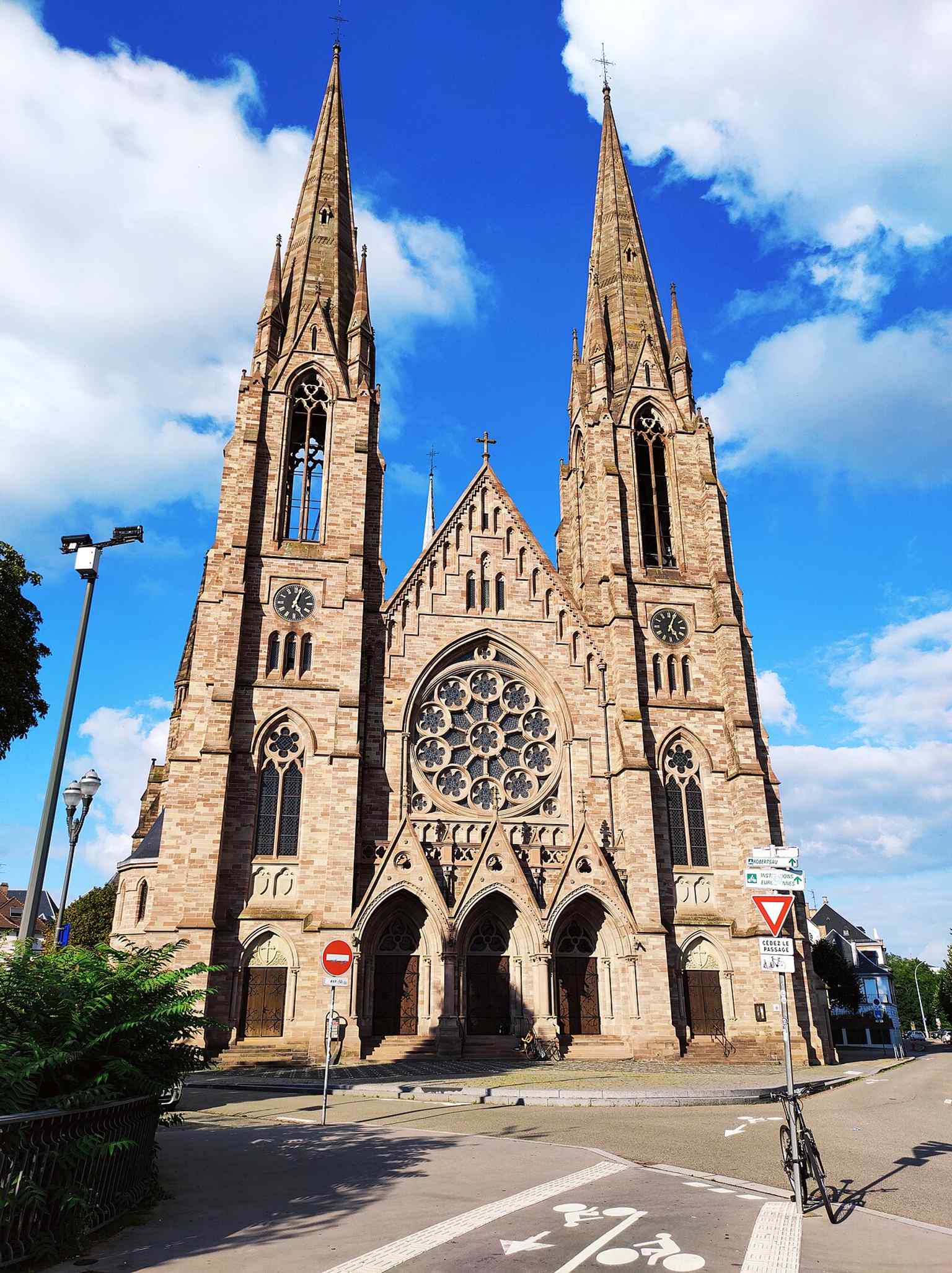
Another river-level perspective that helps explain why the church was placed on this strategic point of the island.Photo: Nguyễn Mai Trang, Wikimedia Commons, CC BY-SA 4.0. Cropped & resized. 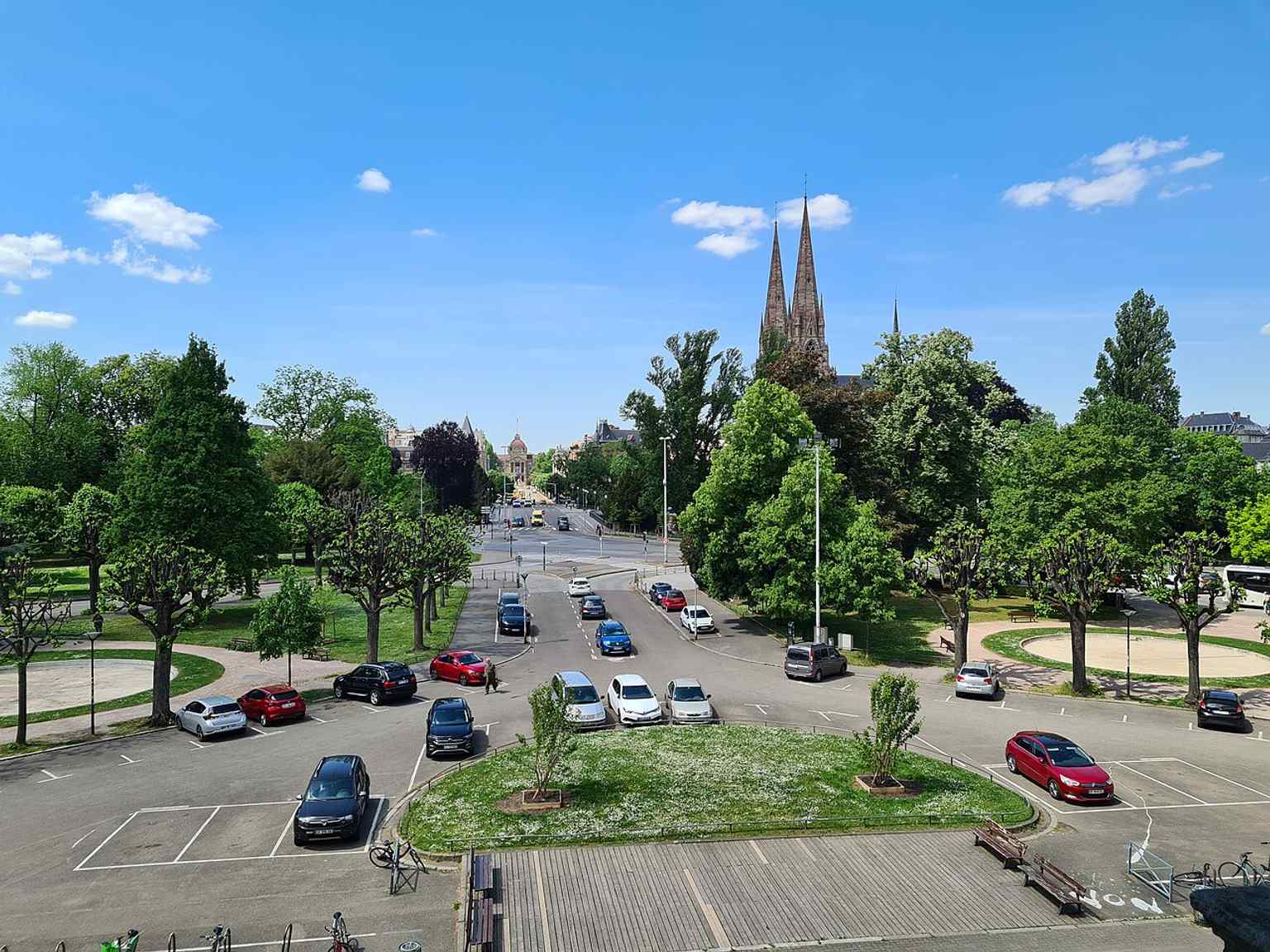
A distant city view linking Saint Paul to Strasbourg’s Neustadt axis and the surrounding imperial-era urban landscape.Photo: Ji-Elle, Wikimedia Commons, CC BY-SA 4.0. Cropped & resized. 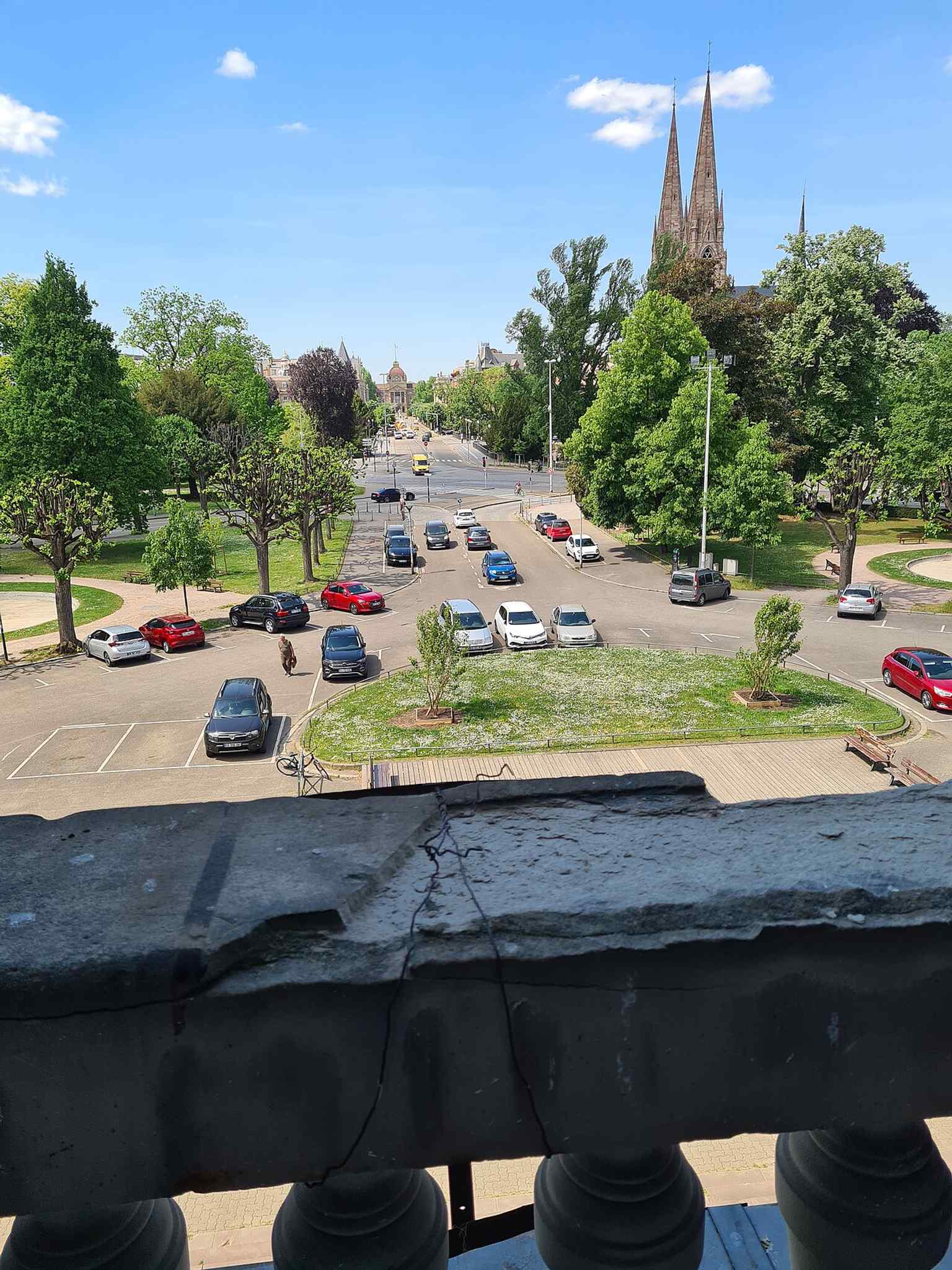
The church seen from the University area, echoing the monumental alignment of the German-built Neustadt.Photo: Ji-Elle, Wikimedia Commons, CC BY-SA 4.0. Cropped & resized. 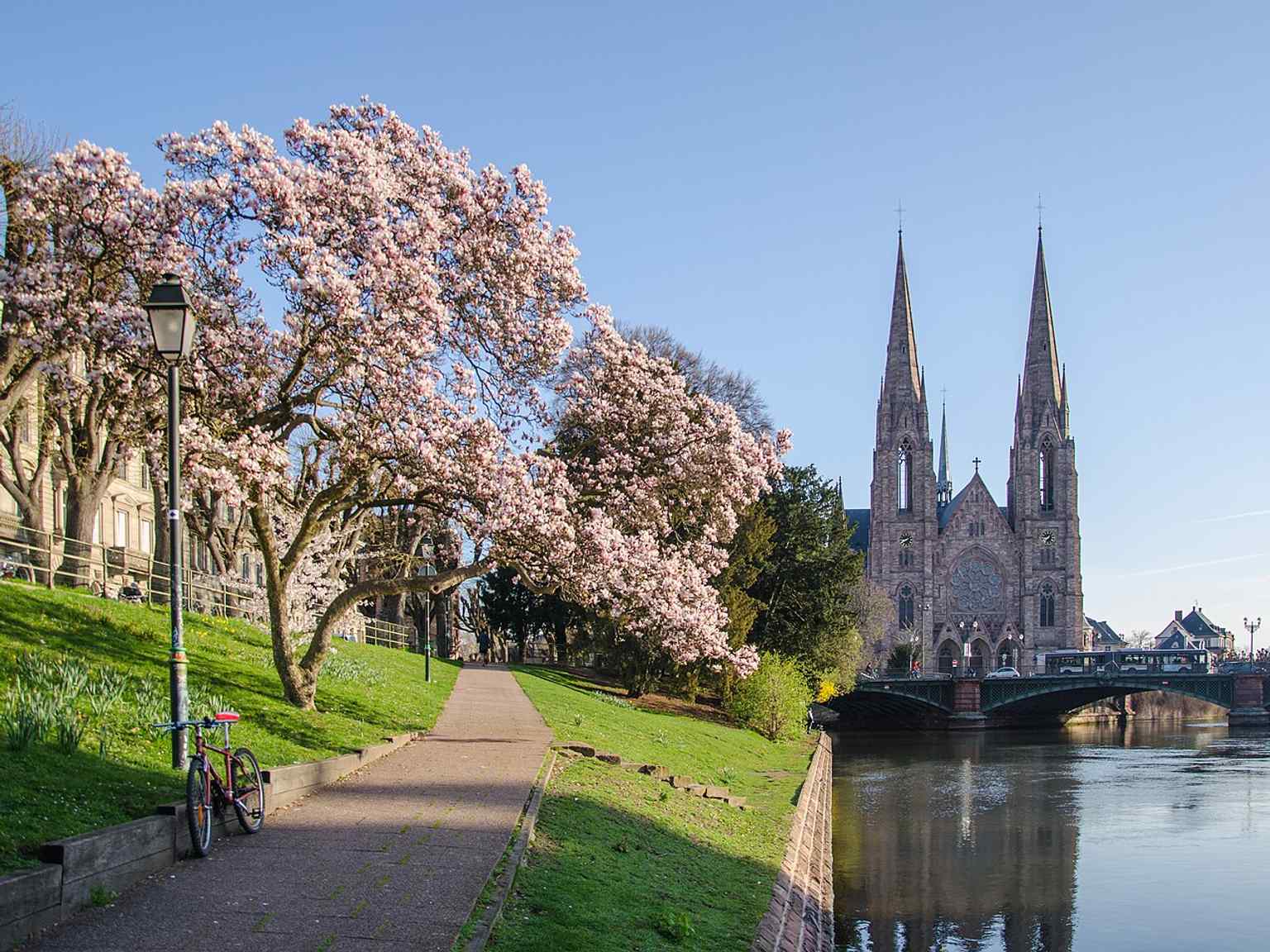
Saint Paul framed by spring blossoms on Quai Koch — a quieter angle that still shows the church’s landmark silhouette.Photo: Valentin F.R., Wikimedia Commons, CC0. Cropped & resized. 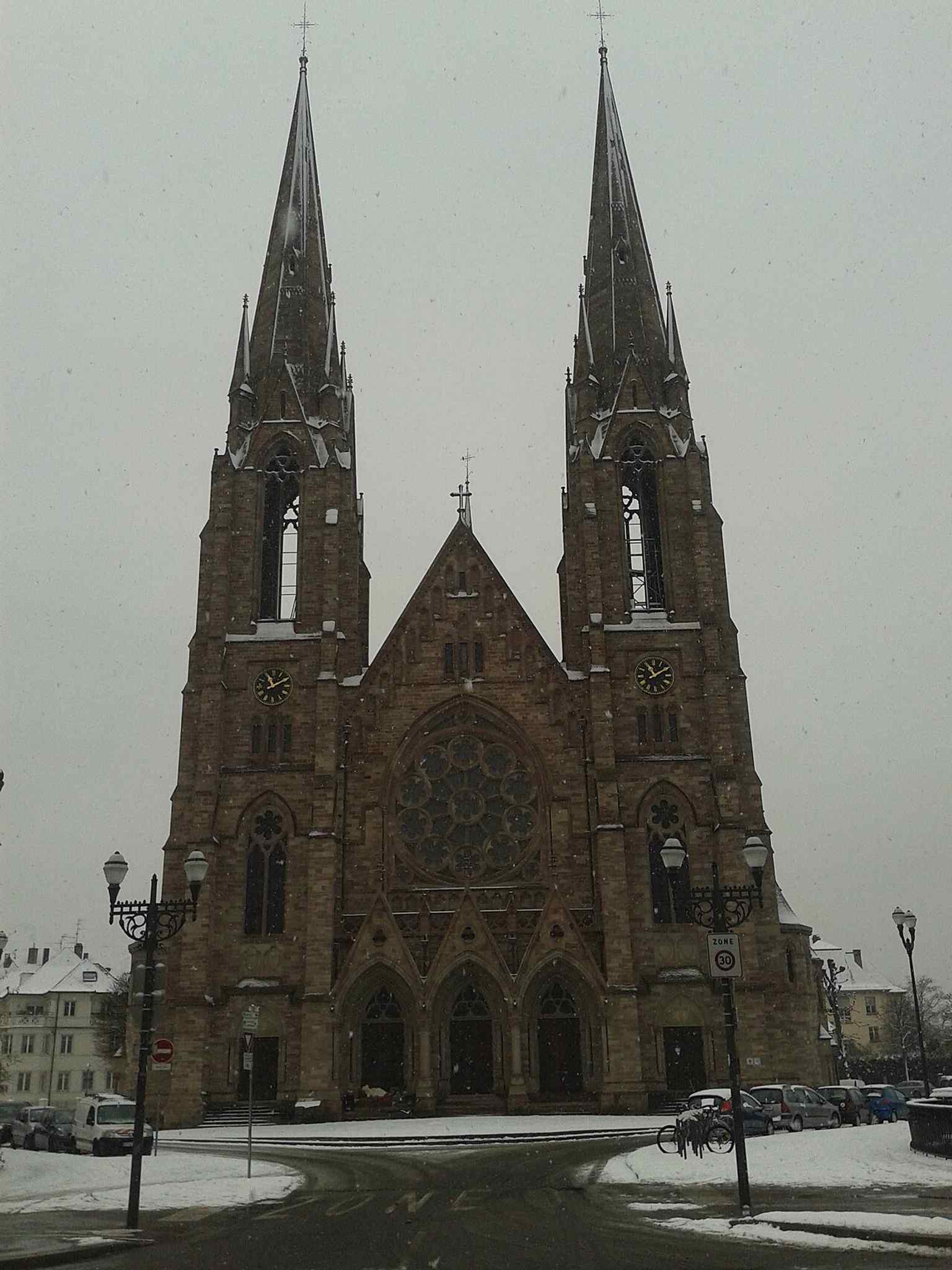
A street-level view of the church, giving a modern sense of its height and neo-Gothic presence.Photo: Gzen92, Wikimedia Commons, CC BY-SA 4.0. Cropped & resized. 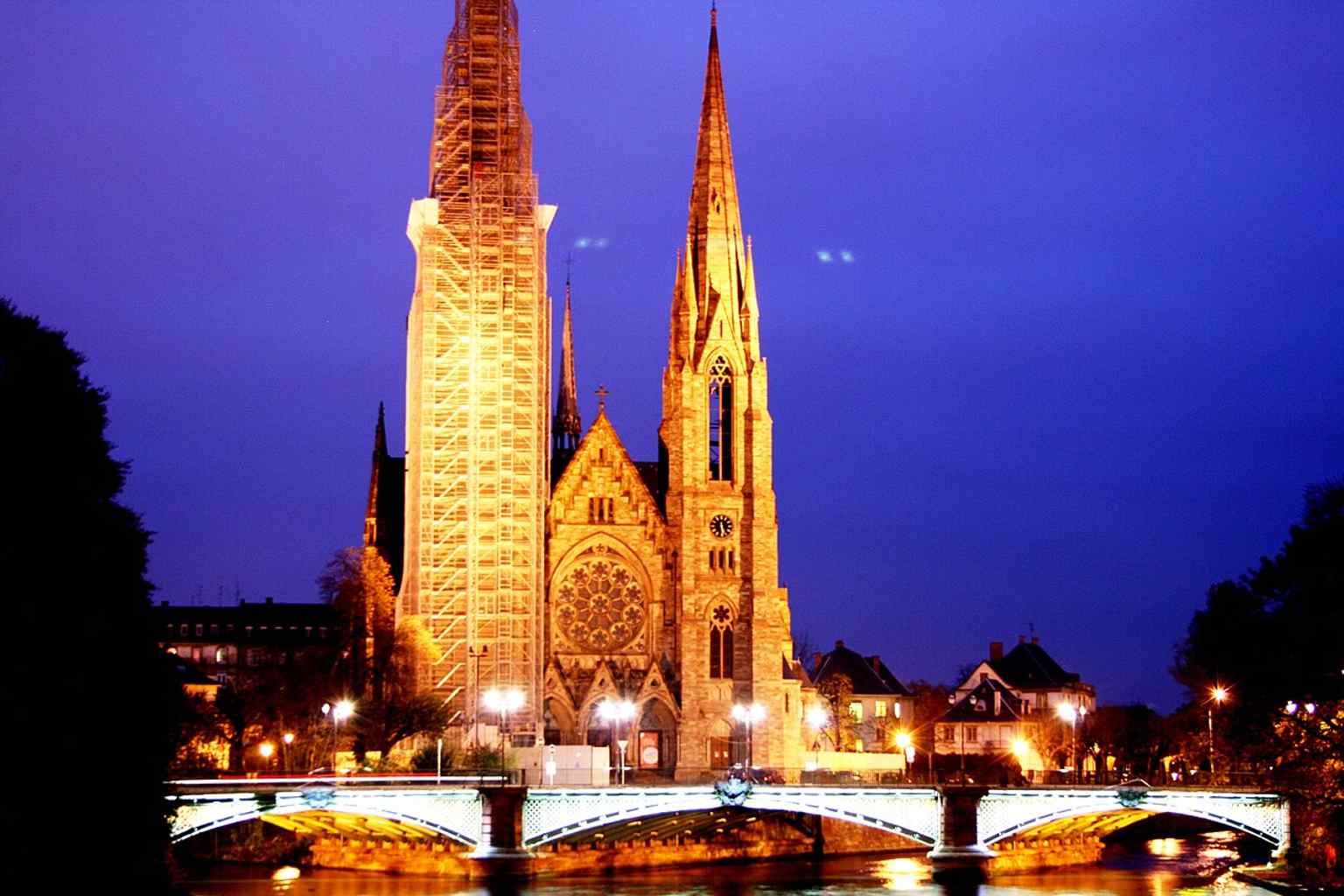
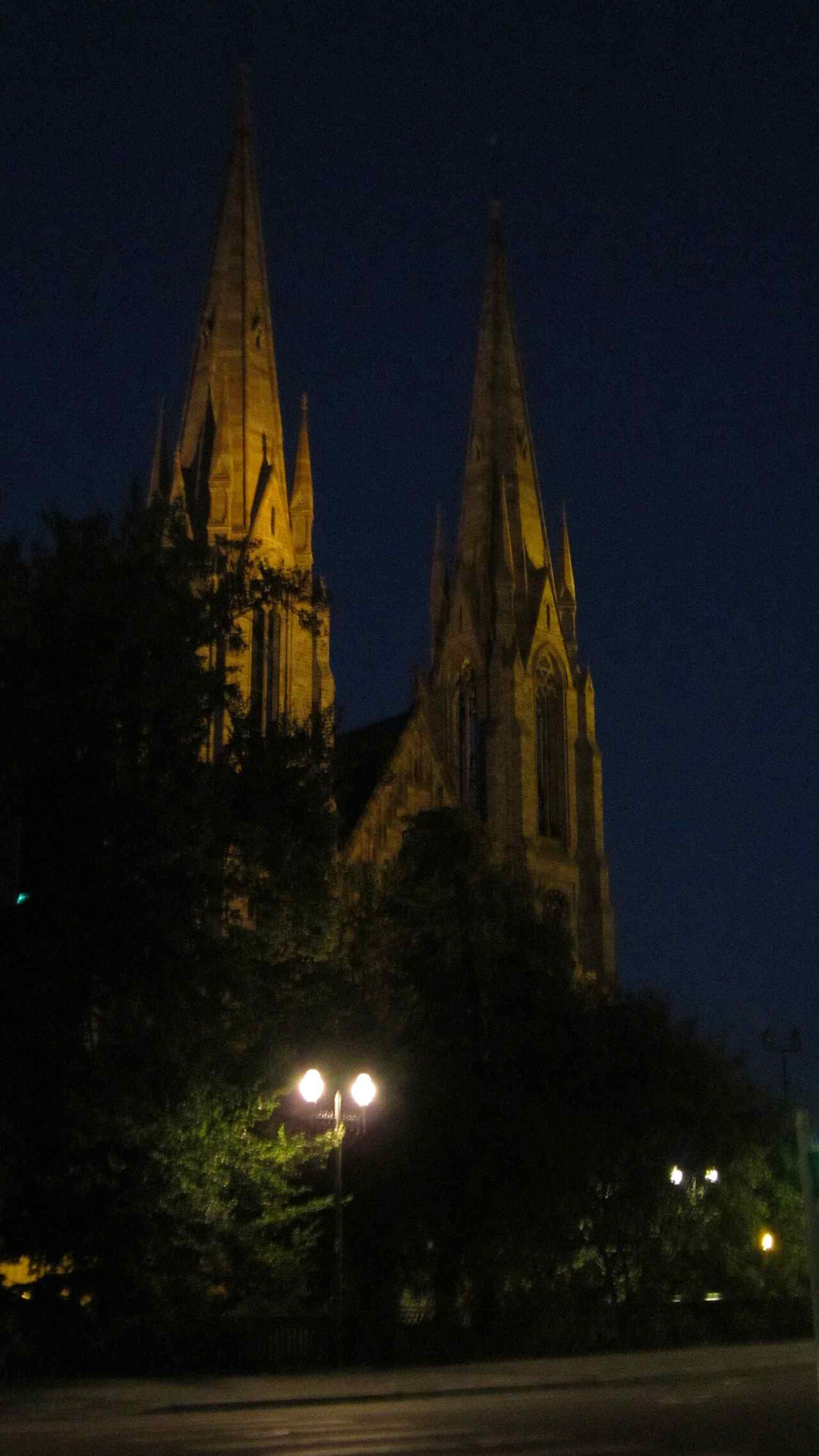
Saint Paul at night, a dramatic look at the landmark long after its construction in the German imperial period.Photo: Annagialdini, Wikimedia Commons, CC BY-SA 3.0. Cropped & resized. 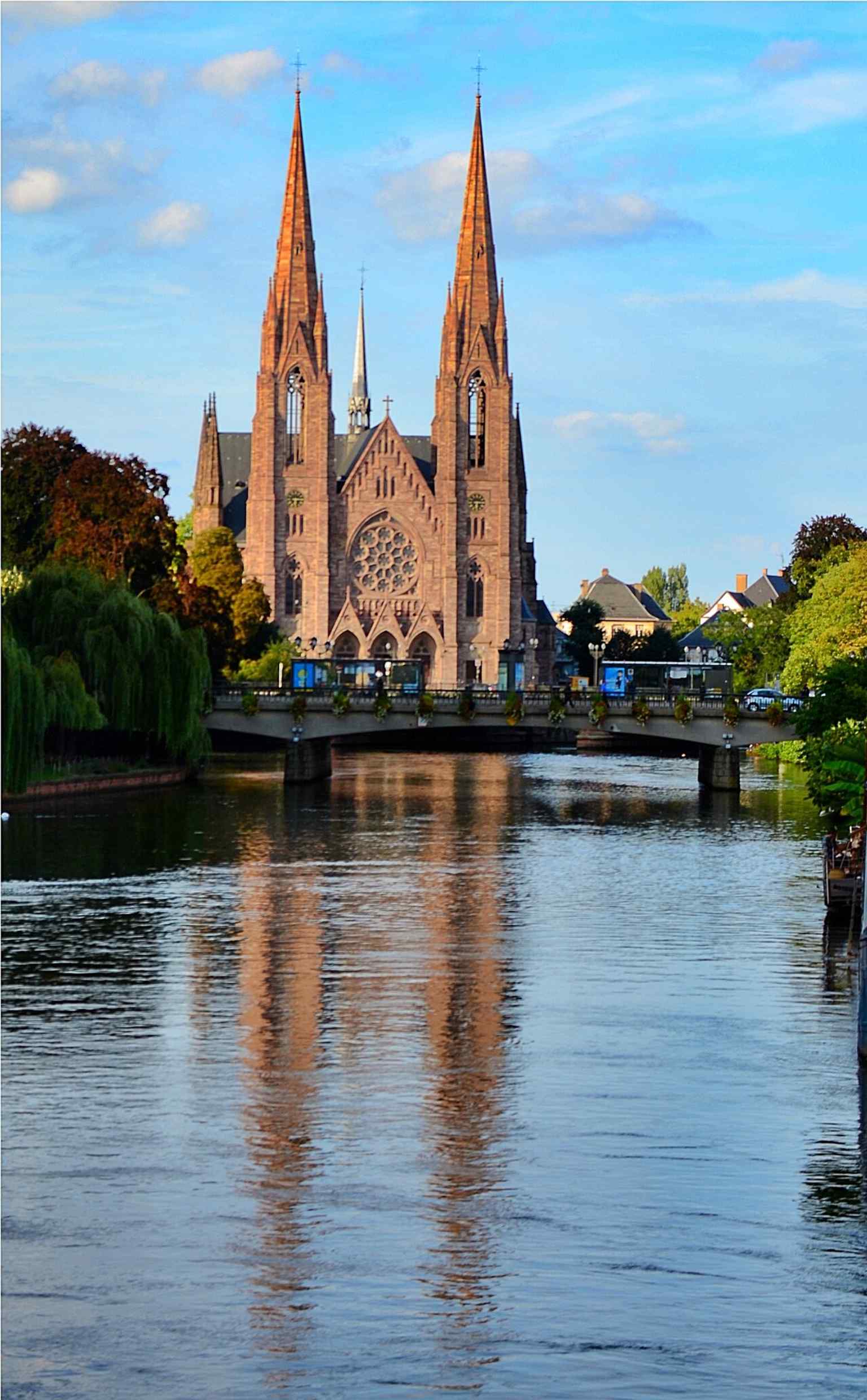
The church from the water, reinforcing its location at the junction of the city’s rivers and canals.Photo: Old Pionear, Wikimedia Commons, CC BY-SA 4.0. Cropped & resized.
Frequently asked questions
How do I start the tour?
After purchase, download the AudaTours app and enter your redemption code. The tour will be ready to start immediately - just tap play and follow the GPS-guided route.
Do I need internet during the tour?
No! Download the tour before you start and enjoy it fully offline. Only the chat feature requires internet. We recommend downloading on WiFi to save mobile data.
Is this a guided group tour?
No - this is a self-guided audio tour. You explore independently at your own pace, with audio narration playing through your phone. No tour guide, no group, no schedule.
How long does the tour take?
Most tours take 60–90 minutes to complete, but you control the pace entirely. Pause, skip stops, or take breaks whenever you want.
What if I can't finish the tour today?
No problem! Tours have lifetime access. Pause and resume whenever you like - tomorrow, next week, or next year. Your progress is saved.
What languages are available?
All tours are available in 50+ languages. Select your preferred language when redeeming your code. Note: language cannot be changed after tour generation.
Where do I access the tour after purchase?
Download the free AudaTours app from the App Store or Google Play. Enter your redemption code (sent via email) and the tour will appear in your library, ready to download and start.
If you don't enjoy the tour, we'll refund your purchase. Contact us at help@audatours.com
Checkout securely with 












.jpg)
.jpg)
.jpg)
.jpg)

.jpg)
.jpg)
.jpg)


.jpg)
.jpg)
.jpg)


-Mus%C3%A9e%20de%20l'%C5%92uvre%20Notre-Dame.jpg)

.jpg)


.jpg)
%2C%20de%20Wanner%20(po%C3%AAlier%20de%20Linsdorf)%2C%201872.jpg)


.jpg)
.jpg)
.jpg)


.jpg)


.jpg)

.JPG)

.jpg)


.jpg)


%20en%201890.jpg)
.jpg)
.jpg)
.jpg)


.jpg)
.jpg)


.jpg)


%20et%20sa%20voisine%20la%20Biblioth%C3%A8que%20nationnale%20universitaire%20(BNU).jpg)

.jpg)
.jpg)


.jpg)
%20fa%C3%A7ade%20Ouest%20au%20cr%C3%A9puscule.JPG)
%20fa%C3%A7ade%20Ouest.JPG)
%20fa%C3%A7ade%20Nord.JPG)


.jpg)
.jpg)
.jpg)
.jpg)

.jpg)

