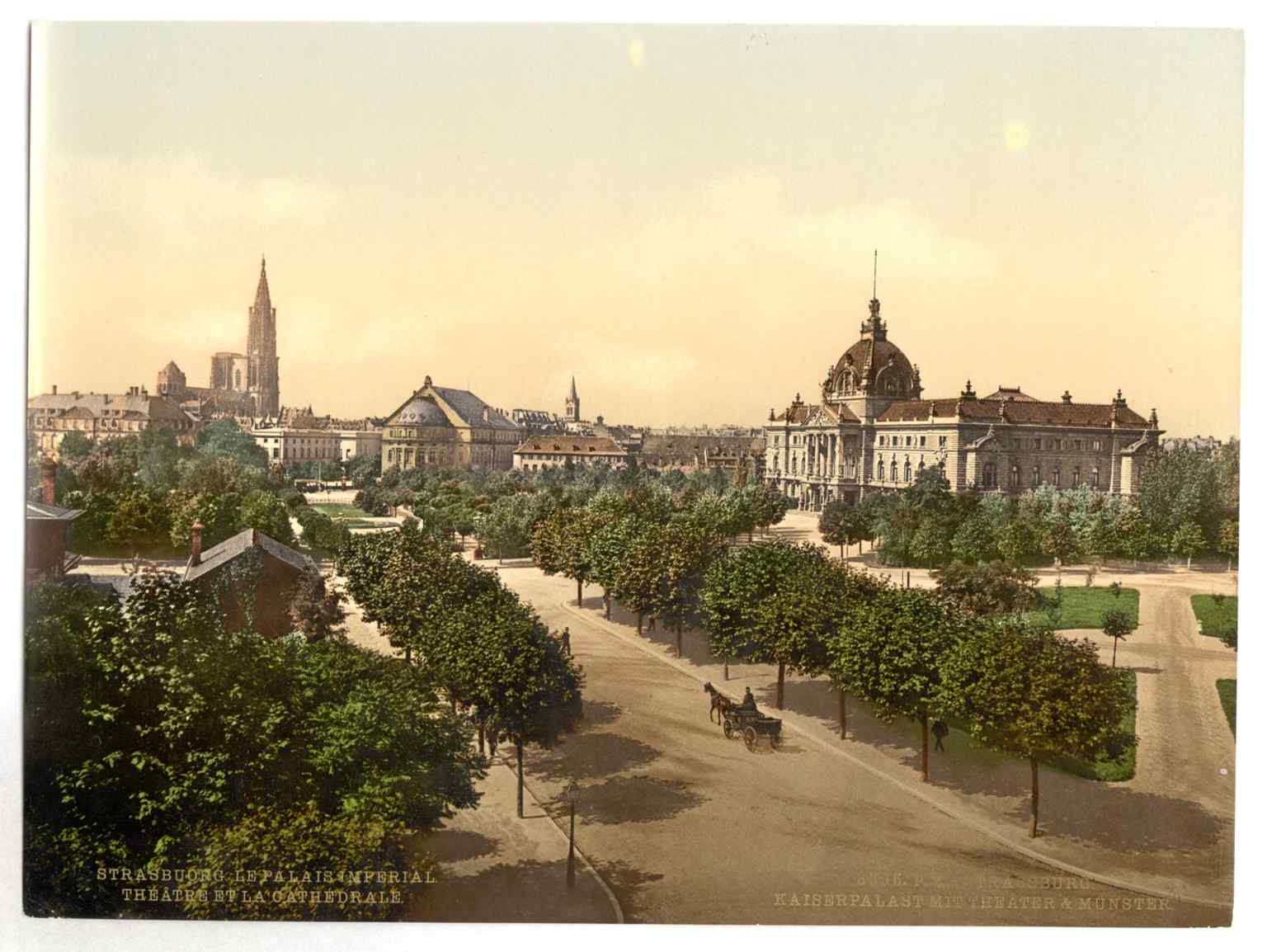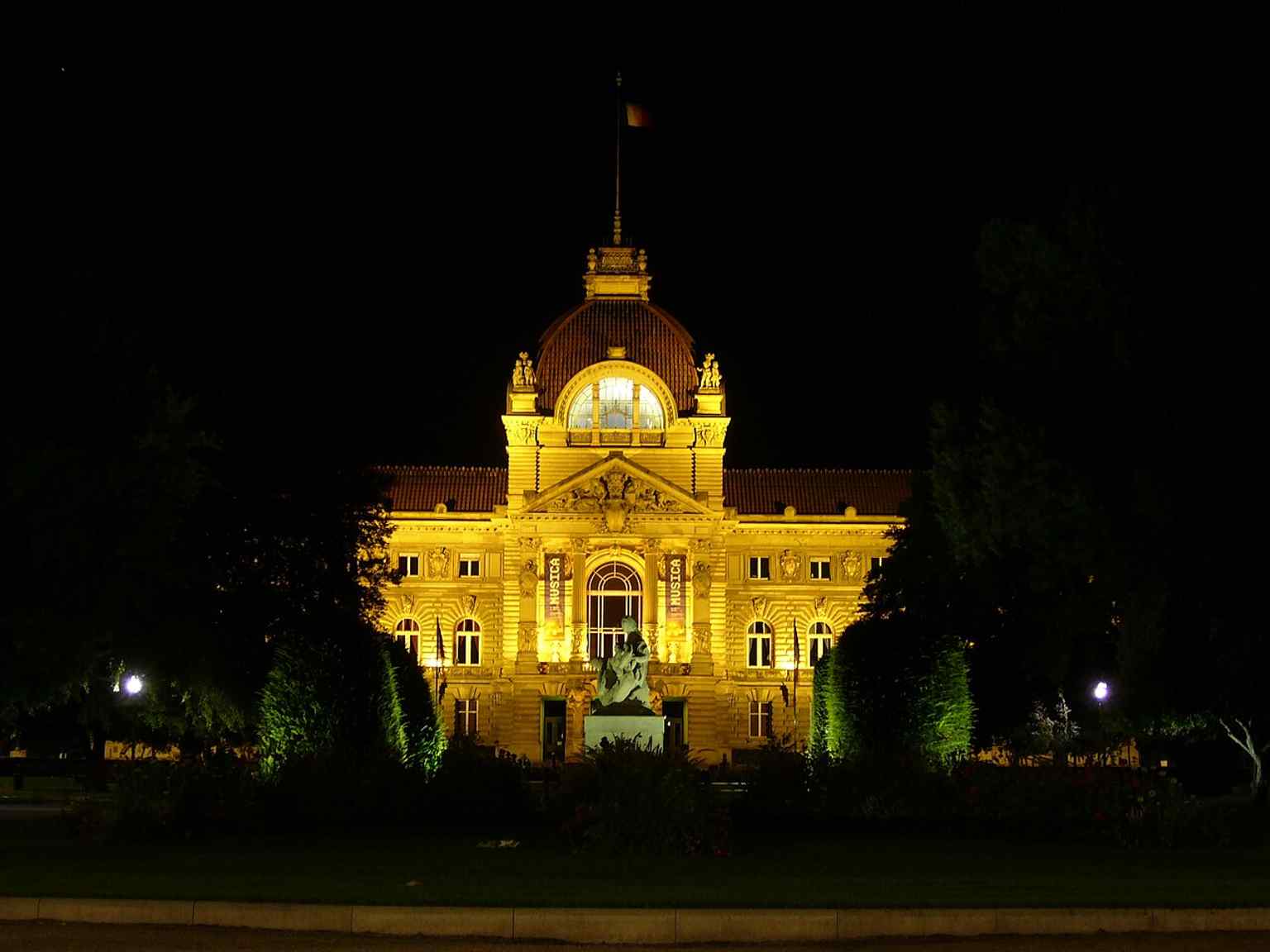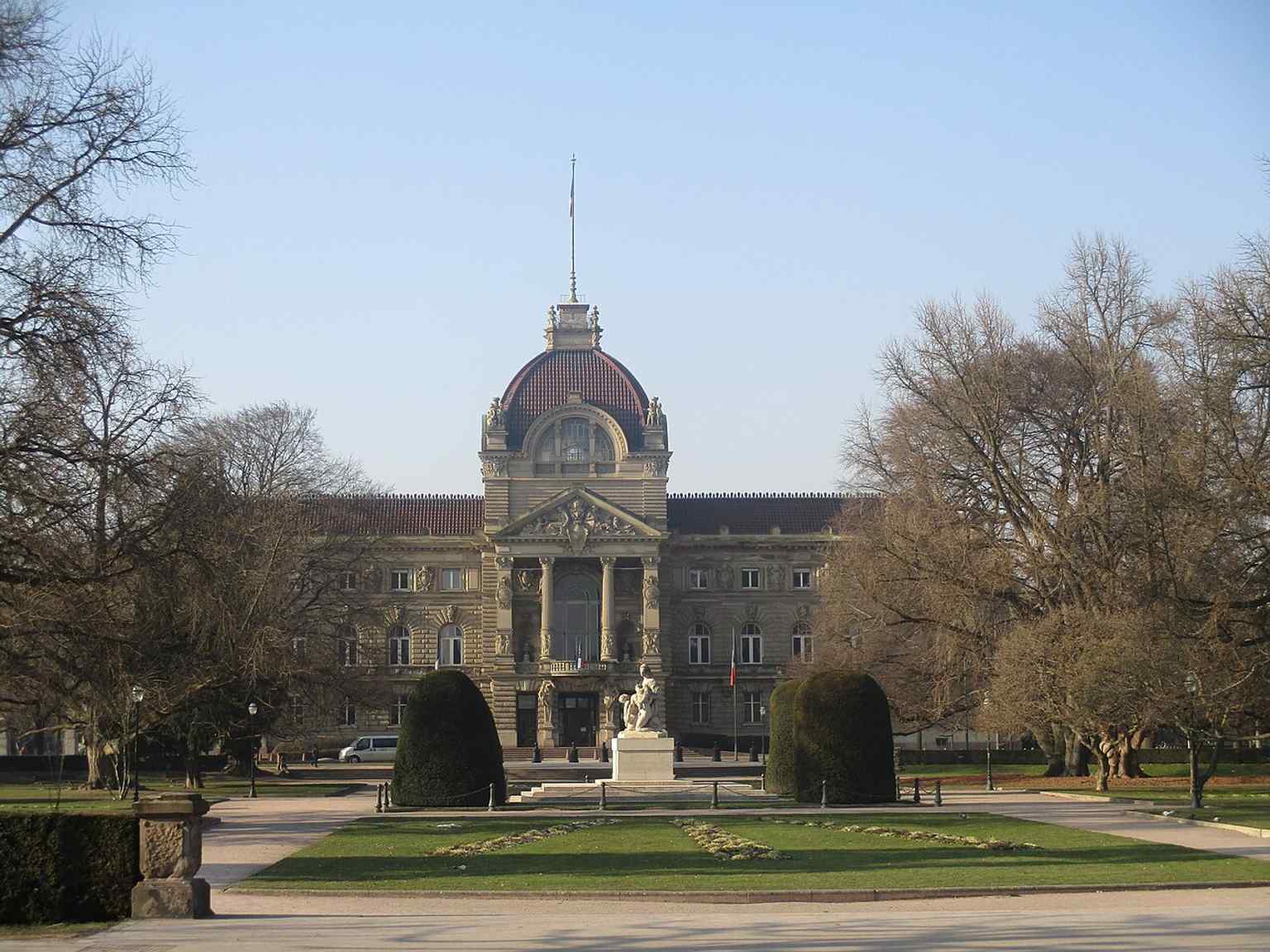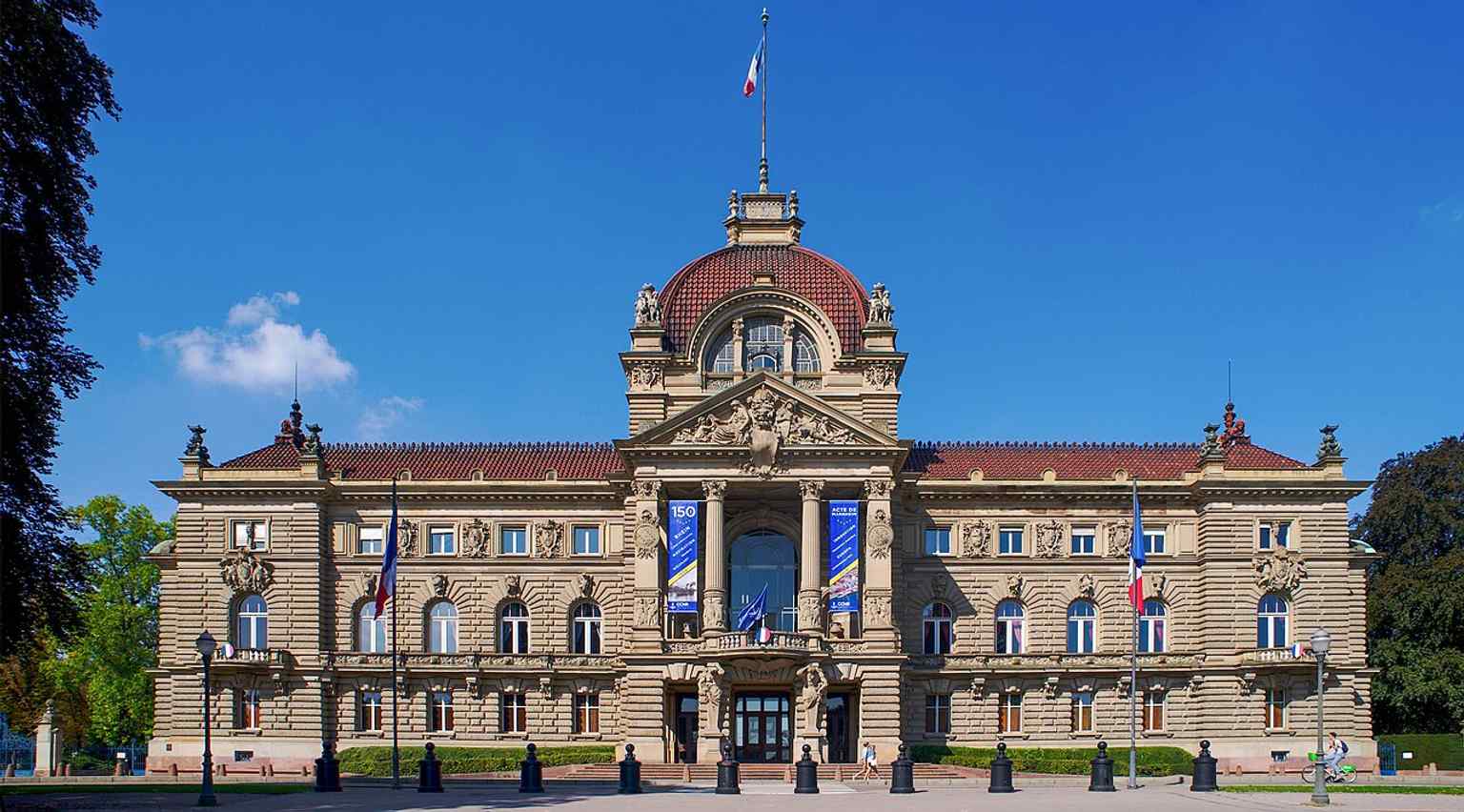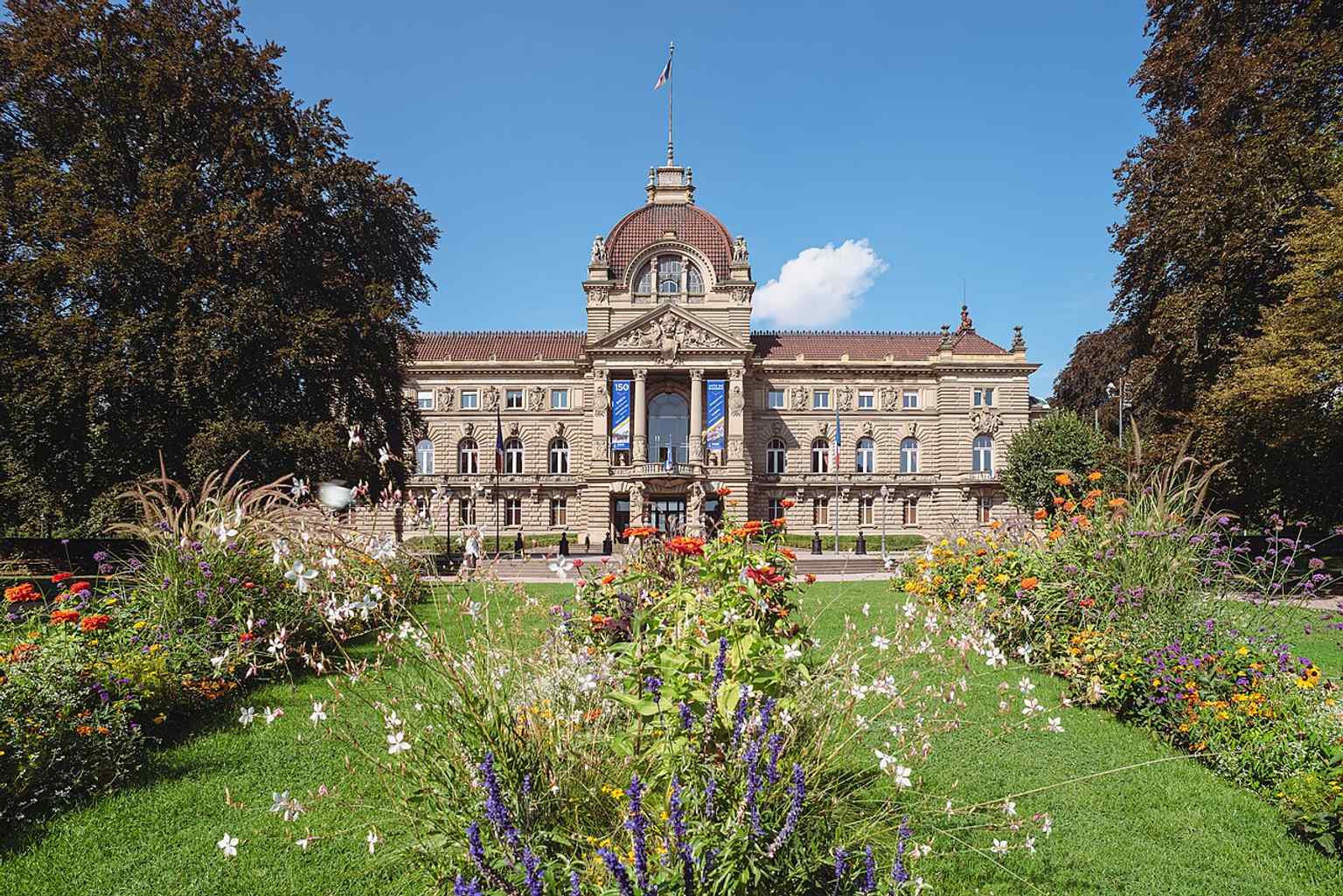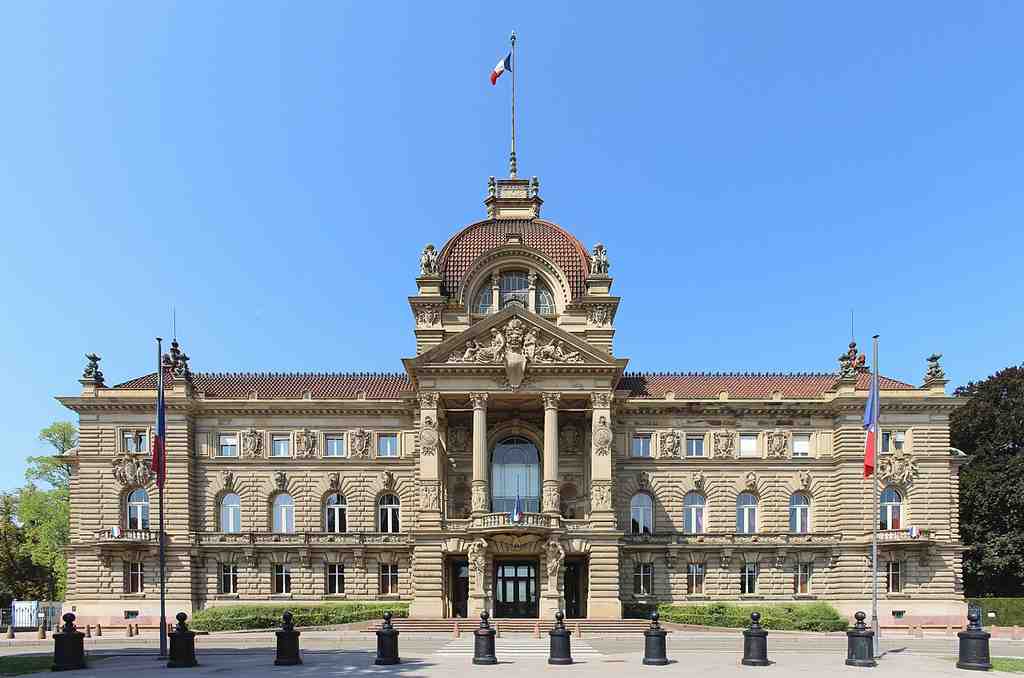
On your left, look for a broad stone palace shaped like a massive square block, crowned by a central dome and set behind ornate wrought-iron gates.
From right here, the building tells you exactly what it wanted to be: not a home, but a statement. After the war of eighteen seventy, when the German Empire annexed Alsace-Lorraine, officials wanted Strasbourg to display imperial power in stone. So architect Hermann Eggert designed this palace between eighteen eighty-three and eighteen eighty-eight as the Kaiser’s official residence, a neo-Renaissance showpiece borrowing the language of Italian palaces and German baroque grandeur.
And yet, for all that swagger, it carried a little insecurity. The project cost about three million gold marks, and critics complained about the price and the look. Even the imperial camp grumbled that it seemed “massive and elephantine.” That is not quite the compliment Eggert was hoping to frame.
Still, the staging is clever. Notice how the dome rises above the square like a crown set on a pedestal. Inside, Eggert arranged a vast glass-roofed square courtyard and a monumental honor staircase with fountains representing the Rhine. If you glance at the image in the app, that grand stair makes the whole idea plain: moving through the palace was meant to feel like entering a political theater. The first floor held reception rooms, a banquet hall for three hundred and fifty guests, and spaces for ceremony. Public display came first; private life took the back seat.
That may explain the palace’s quiet punch line. Wilhelm the Second inaugurated it in August of eighteen eighty-nine with three days of festivities... and then barely used it. According to the Rhine Commission, he came only a handful of times before the First World War. A palace built to prove permanent imperial presence ended up hosting an emperor who seemed almost like an occasional guest.
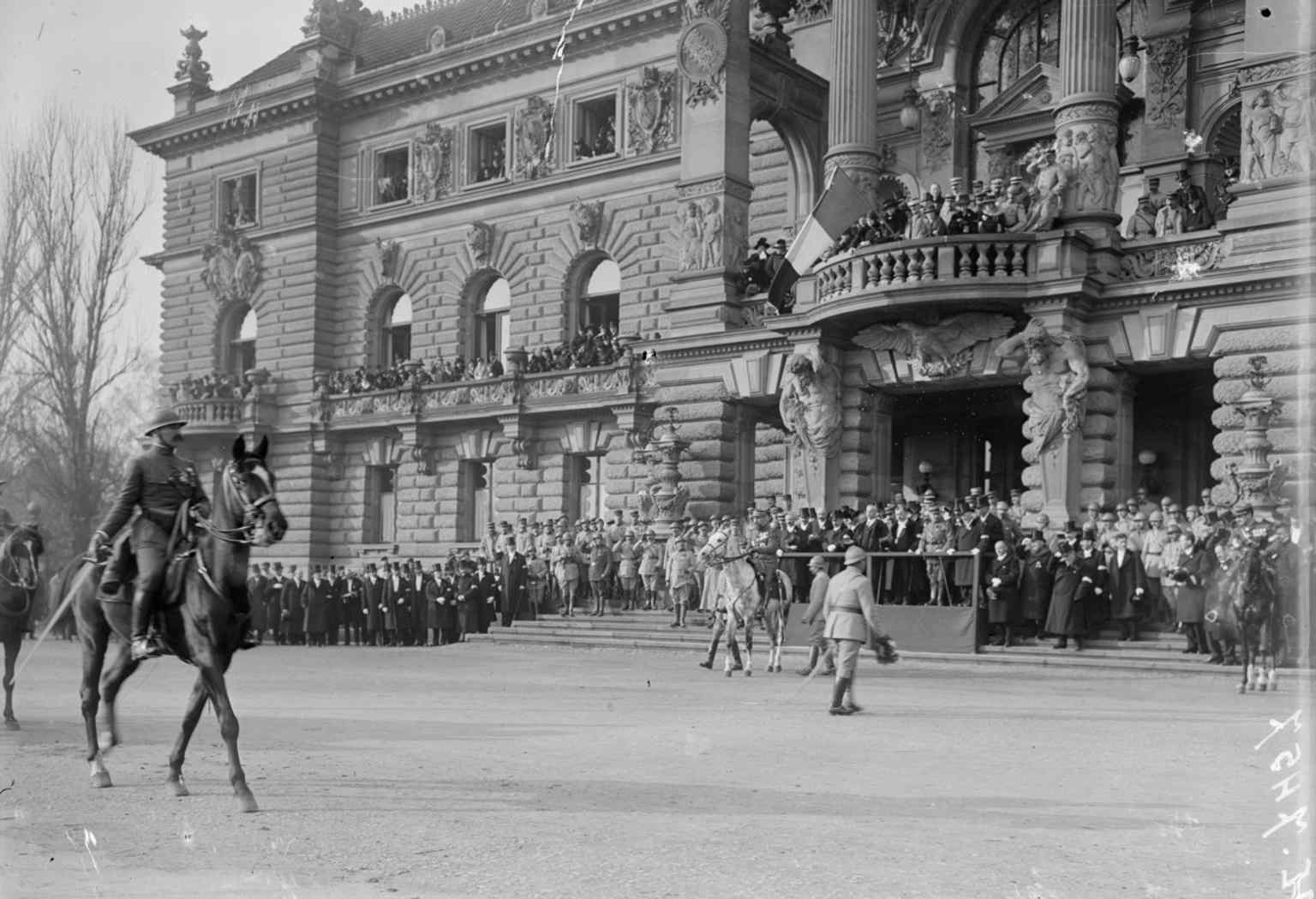
Then history kept changing the sign on the door. The building became a military hospital during the First World War. In November of nineteen eighteen, French troops arrived in front of this very façade, and the symbol flipped in full public view. If you tap the before-and-after image, you can watch that shift from imperial showcase to protected landmark at the heart of the Neustadt, the German-era new town.
The least obvious chapter is the one still unfolding inside. Most visitors see a former imperial palace; locals know it now houses the Central Commission for Navigation on the Rhine, founded after the Congress of Vienna in eighteen fifteen and often described as the oldest international organization of the modern era. That is classic Strasbourg: a building raised to dominate a borderland now helps manage cooperation across one of Europe’s great rivers.
During the Second World War, the Nazis used it as their command headquarters. Then General Leclerc’s forces took it over, and he used the palace as his headquarters too, even drafting a proclamation here after Strasbourg’s liberation. Same walls, different masters, different futures.
Later, some city leaders wanted to demolish the place and replace it with a tower. Preservationists and the Friends of Old Strasbourg stepped in, and the palace survived long enough for people to see it differently. If you ever circle the railings later, look closely at the ironwork; there is a sly little caricature of Wilhelm the Second worked into the metal, like the fence muttering under its breath.
Now widen your gaze beyond the façade to the garden ring and the formal space around it; this palace was designed as one piece of a much larger civic stage. In about two minutes, we’ll step into Place de la République itself. If you plan to return, the palace generally opens on weekday mornings and afternoons, with shorter hours on Friday, and it stays closed on weekends.