
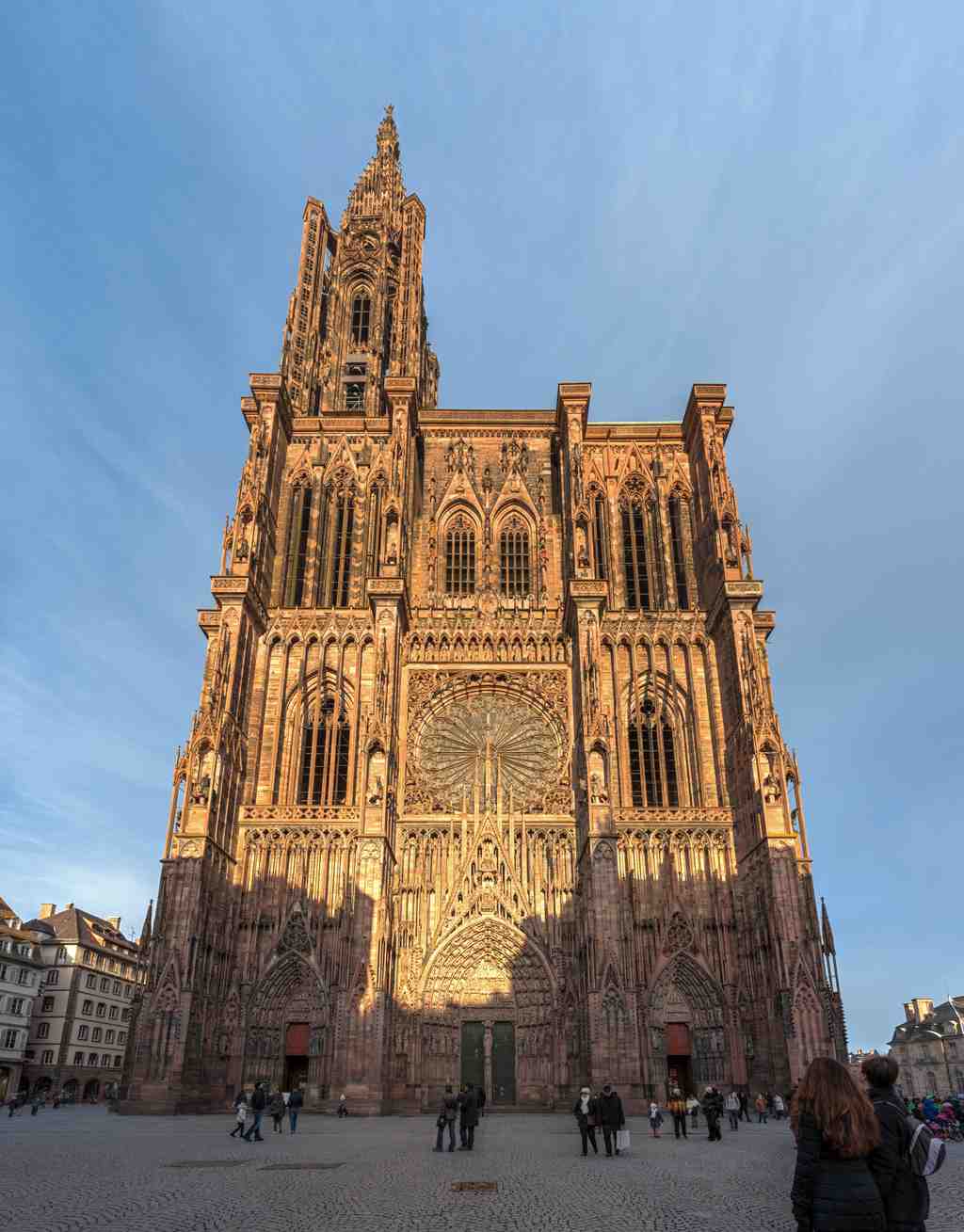
On your right rises a pink sandstone front like carved lace, with a huge round rose window in the middle and a single needle-sharp spire soaring from one side.
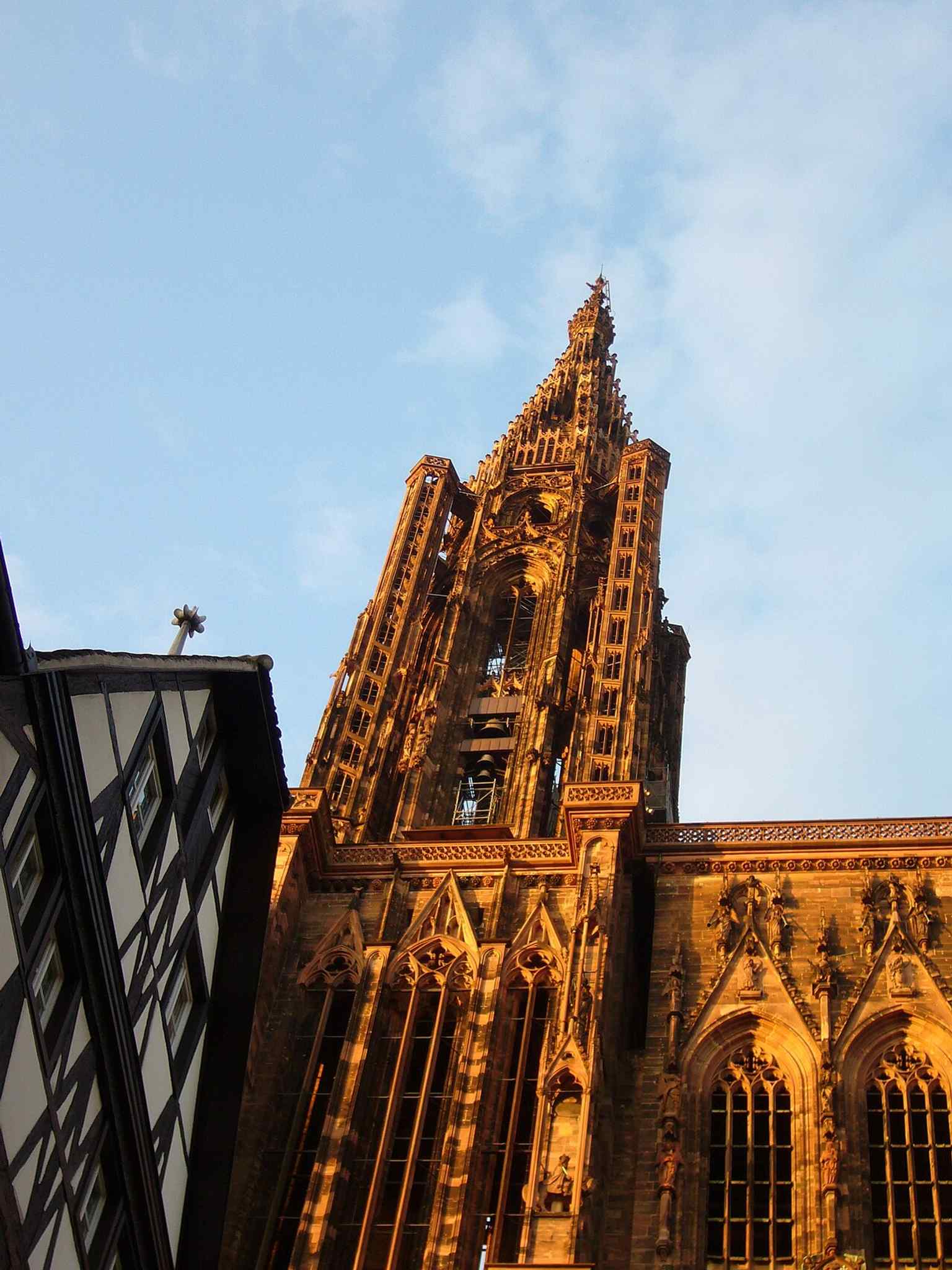
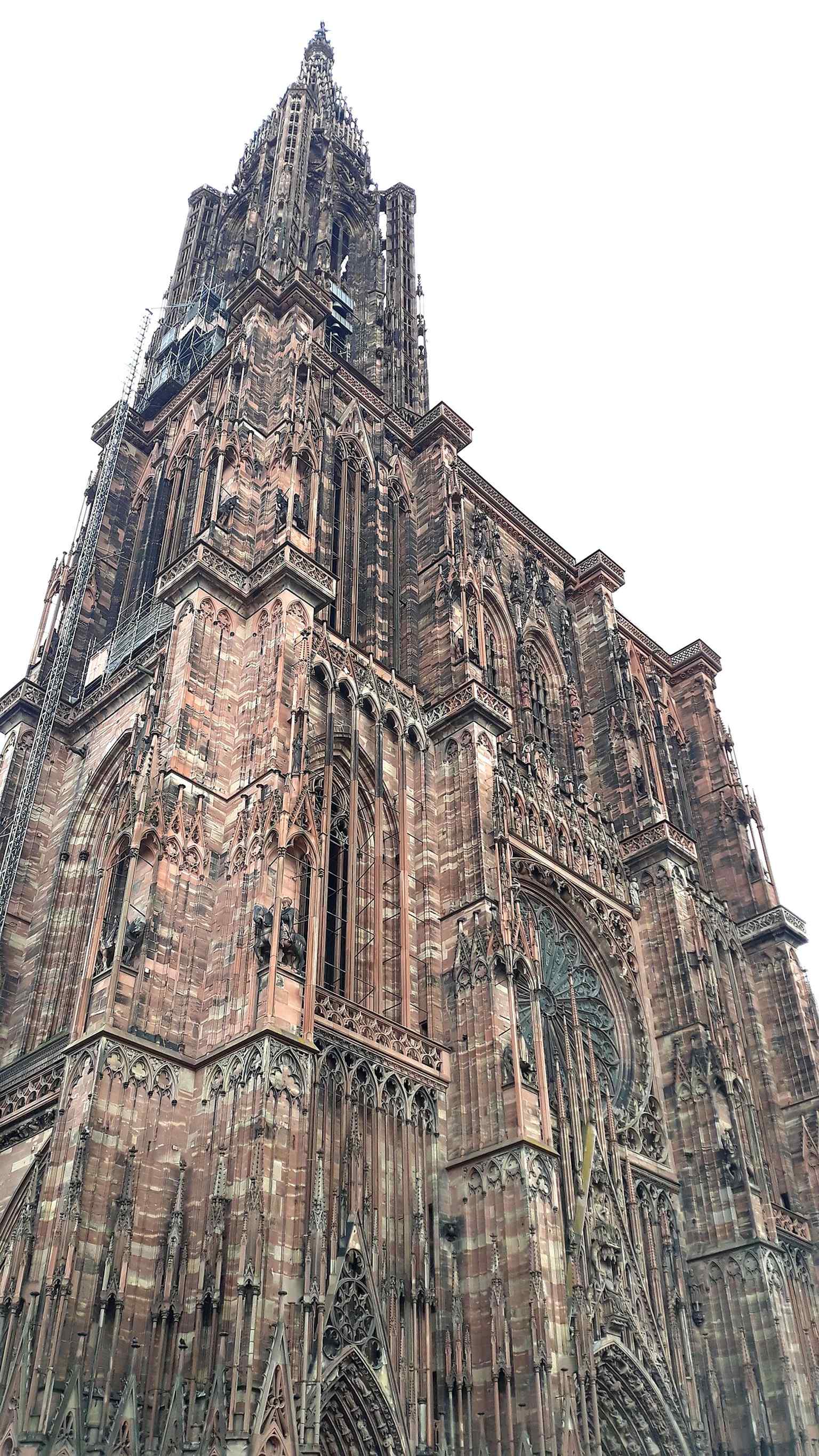
This is Strasbourg Cathedral, and it is the old city’s great drumroll. Builders founded a church here in the year ten fifteen over even earlier sacred ground, then from about twelve twenty the city raised the cathedral you see now in the new Gothic style, finishing most of it by thirteen sixty-five. The gap between the two towers got filled in by thirteen eighty-eight, and in fourteen thirty-nine Jean Hültz completed the great spire. At one hundred forty-two meters, it ruled the skyline so completely that from sixteen forty-seven to eighteen seventy-four it stood as the tallest building on earth. Folks could spot it from far across the Alsace plain, even from the Vosges and the Black Forest. That is not just architecture... that is a declaration.
And here is the surprise tucked inside all that holiness: this cathedral does not only tell the story of bishops. It also tells the story of a self-confident city. After Strasbourg defeated its prince-bishop in twelve sixty-two, the free city took control of the works through the Fondation de l’Œuvre Notre-Dame, the body that funded and managed the chantier, or building site. So this spire became a kind of civic exclamation point, a merchant republic saying, in stone, “We are here.” Cathedrals usually preach. This one also campaigns.
Let your eyes climb from the portals to the rose, then all the way up that lone spire.
You can feel why Goethe lost his nerve here... and then came back for more. When the young Goethe arrived in seventeen seventy to study law, he was terrified of heights. So he treated the cathedral like his own homemade medicine: he climbed the tower again and again, sat on a narrow platform at the crown with his legs hanging over the void, and waited until the panic eased. He later compared the sensation to being lifted by a balloon. That is one way to make a building unforgettable.
Its faith changed too. During the Reformation, Catholics and Protestants both claimed this place. From fifteen twenty-seven it served Protestant worship, though the choir remained Catholic, and after Louis the Fourteenth took Strasbourg in sixteen eighty-one, the cathedral returned to Catholic use. So even this great façade was not a settled symbol. It stood at the center of arguments over who Strasbourg was, and who got to define it.
One more thing to notice: unlike many cathedrals, this one still feels tightly wrapped by the city around it, so the frontage hits you almost all at once, like a mountain at the end of a street. If you want, take a quick look at the before-and-after image in the app; the square changes enormously, while the cathedral stays stubbornly in command. And if you glance at the crypt image, you can see one of the Romanesque survivors hidden beneath this Gothic giant.
Now bring your gaze down from the vastness to one remarkable neighbor beside the cathedral, where belief, trade, and carved detail get folded into a single house: Kammerzell House is just about a minute away. If you plan to step inside the cathedral later, it usually opens Monday through Saturday in two blocks, roughly eight thirty to eleven fifteen and twelve forty-five to five forty-five, and on Sunday from two o’clock to five fifteen.







.jpg)