
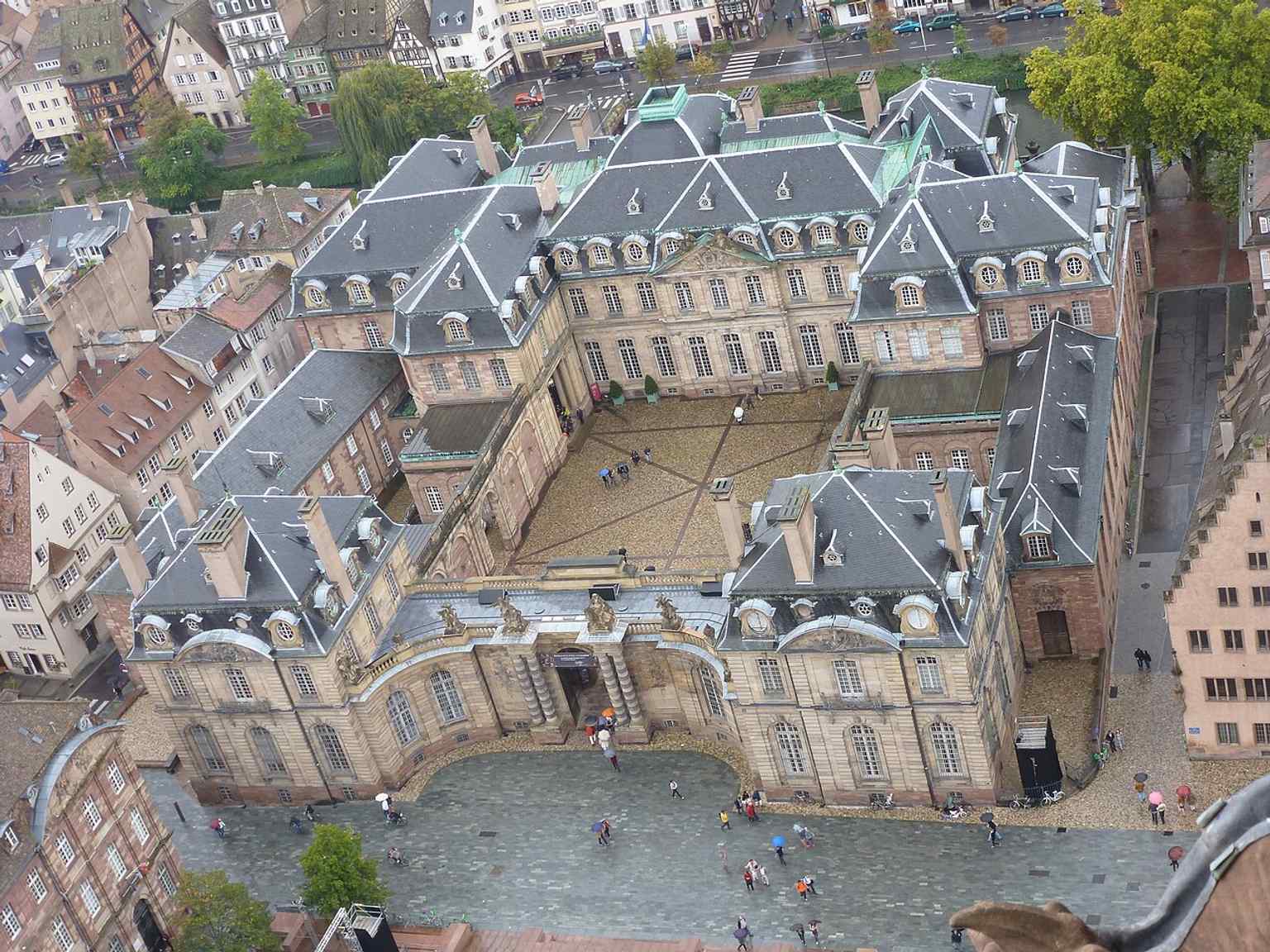
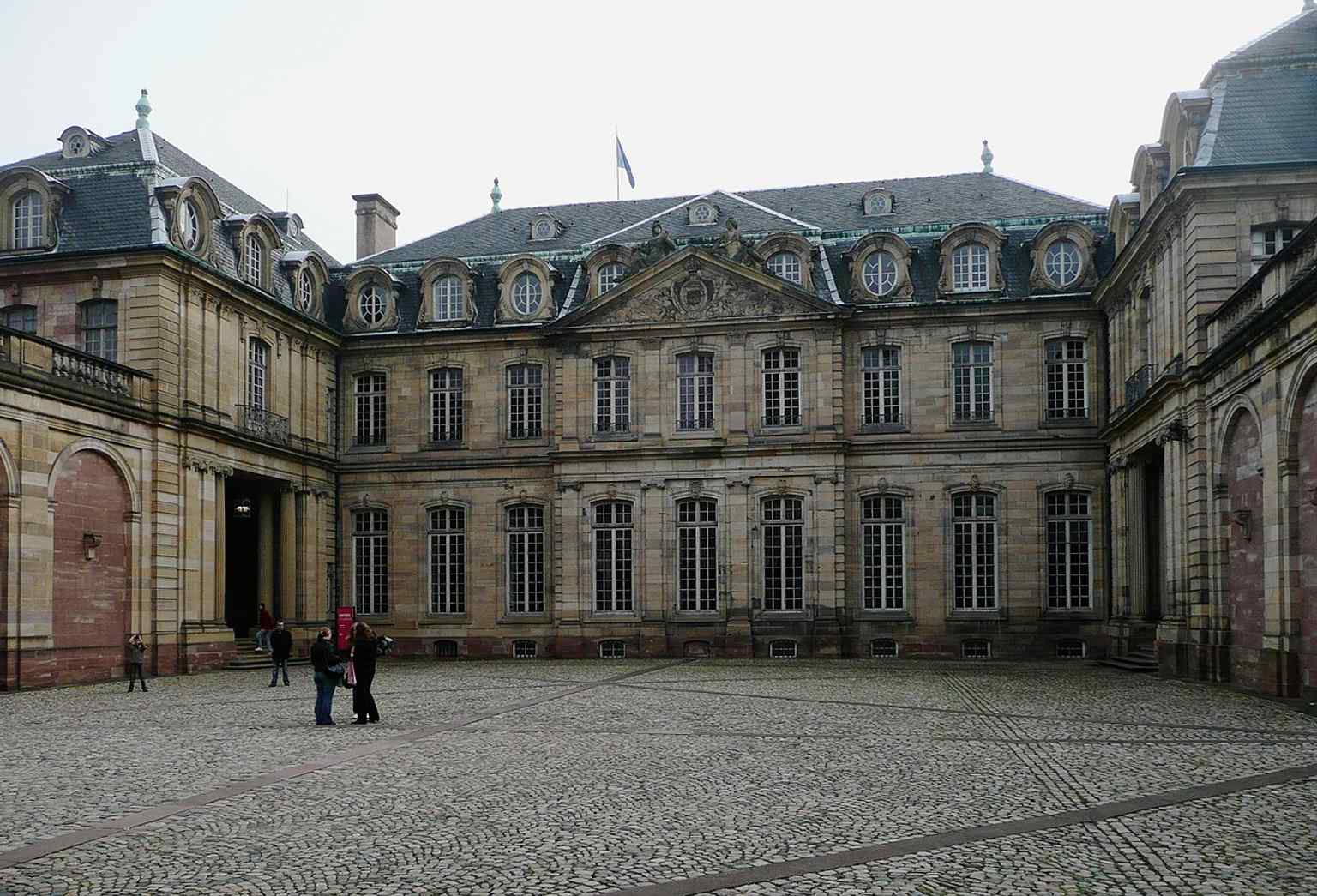
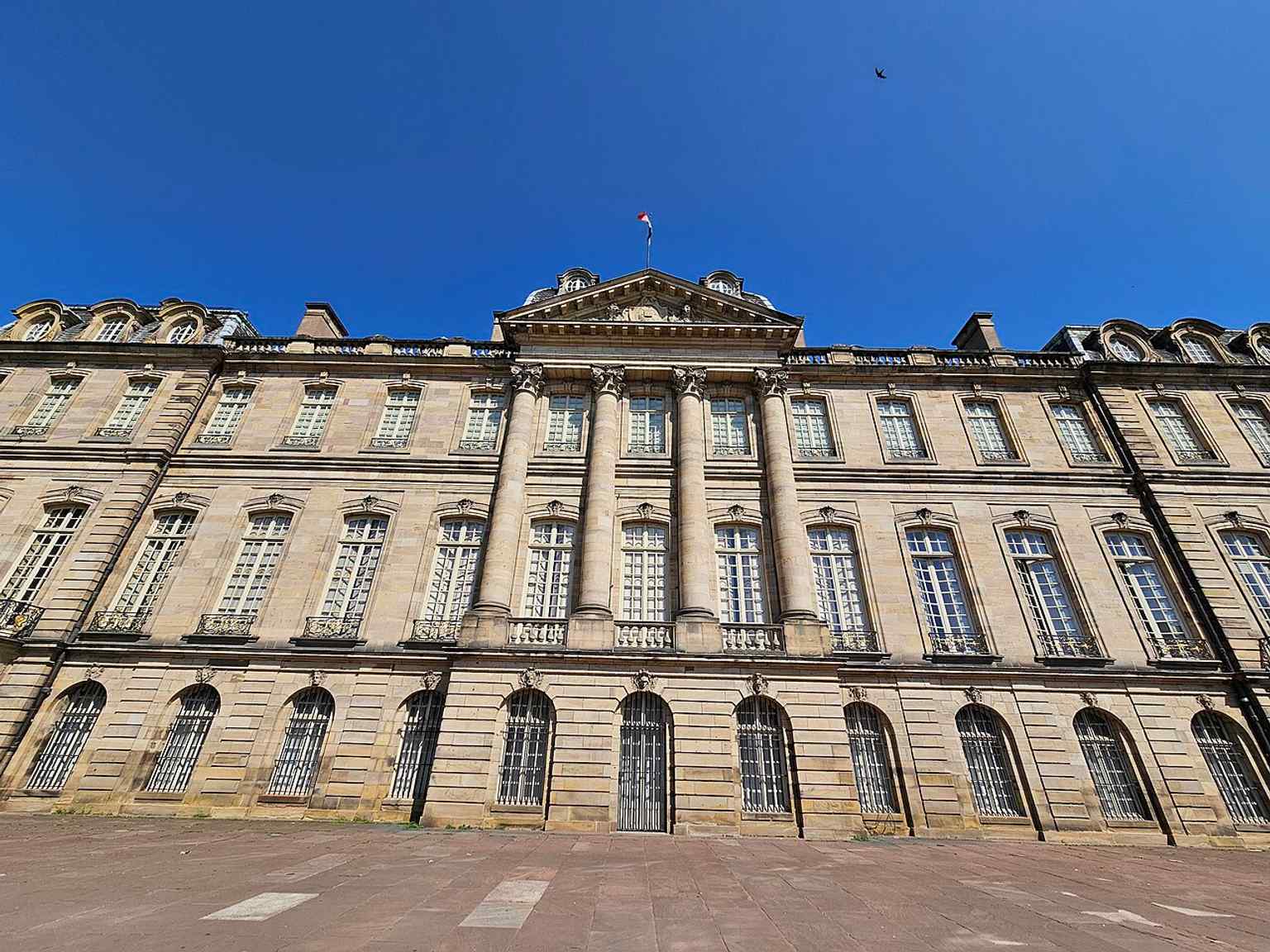
On your left, Palais Rohan stretches in yellow sandstone behind a broad curved gateway, with paired columns at the center and sculpted figures standing above the roofline.
This is where Strasbourg decided that power should dress well. In the seventeen thirties, Cardinal Armand Gaston Maximilien de Rohan asked the royal architect Robert de Cotte to design a residence fit for a prince-bishop, a man who held both noble rank and church authority. The House of Rohan was exactly that kind of family: high aristocracy wrapped around episcopal power, with enough ceremony to make a stage manager nervous.
From where you stand, the message is plain. That central portal pushes forward like a triumphal arch. The statues above speak the language of Catholic virtue. And the whole palace sits right beside the cathedral on purpose. After Strasbourg had spent about two centuries under strong Protestant influence, this residence announced that Roman Catholic authority had returned... not quietly, and certainly not modestly.
The Rohans did not do modesty.
One of the most memorable residents, Cardinal Louis-René de Rohan, moved through the city like a man who thought consequences were for other people. Local lore says he once tore through the market square in his carriage, smashed a poor woman’s crockery stall, then tossed her a purse of gold worth three times the damage and sped away. In Strasbourg, that counted as outrageous behavior with excellent customer service.
He also brought a whiff of velvet-curtain mystery to this place. In the seventeen eighties, Louis-René welcomed the adventurer and self-styled alchemist Alessandro Cagliostro into the palace. While the city’s elite whispered and leaned in, Cagliostro held séances, promised the secret of turning metal into gold, and worked in a laboratory the Cardinal set up here. Most visitors see Baroque elegance; locals remember that this palace once flirted with the occult.
Then came the scandal that cracked the performance. Louis-René got entangled in the Affair of the Diamond Necklace, a notorious fraud involving a necklace worth a fortune and the hope of winning back Marie Antoinette’s favor. His arrest wrecked his reputation, and before long the French Revolution stripped the family of the palace altogether.
That is the Strasbourg pattern we have been tracing: one address, many identities. This place served prince-bishops, then the city as town hall, then Napoleon, later the German imperial university and library, and now the city again as a cluster of museums. If you want a neat little proof of that long makeover, check the before-and-after image of the portal in the app.
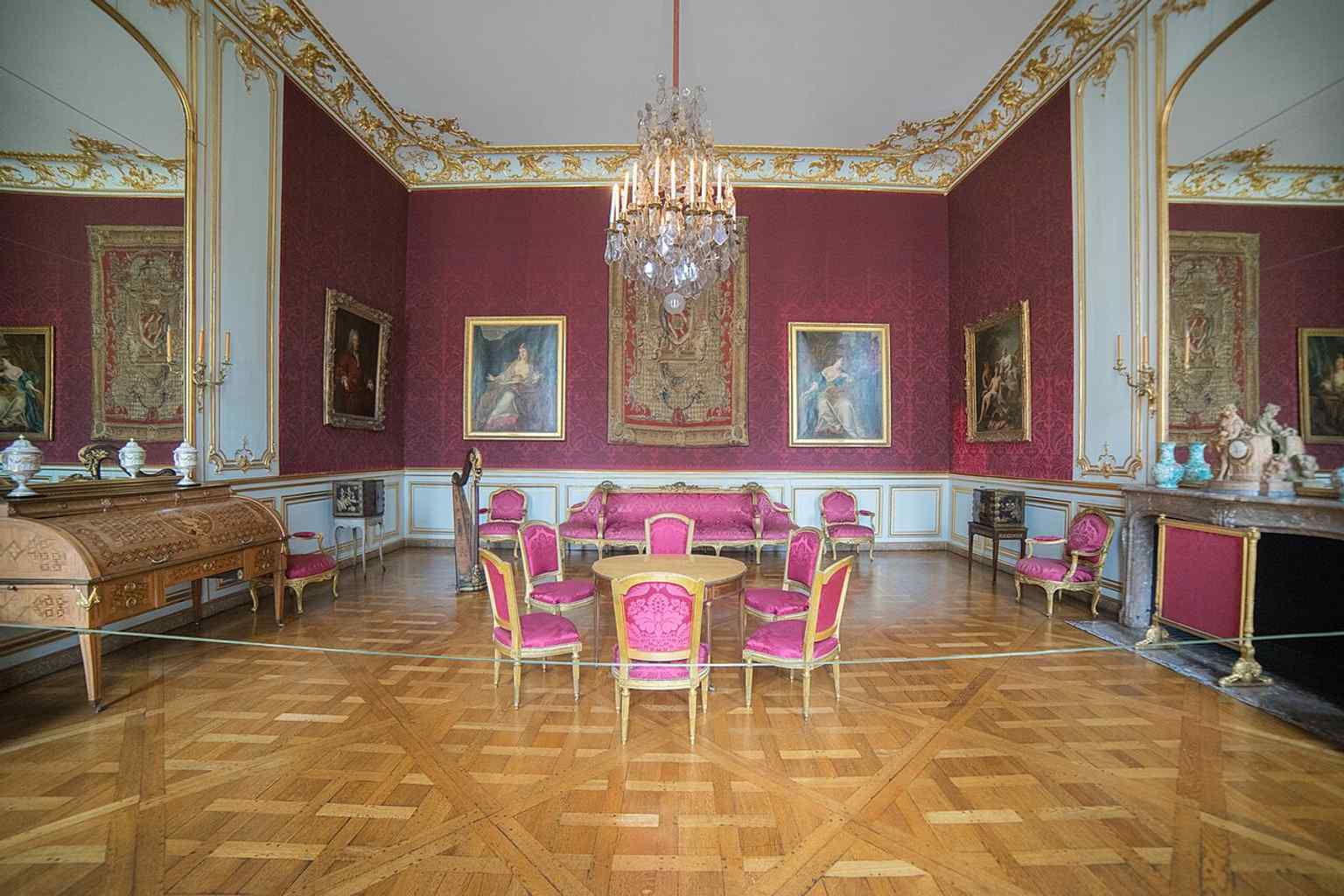
Inside, the show goes on. Royal guests slept here, including Louis the Fifteenth, Marie Antoinette on her first night in France, and Napoleon with Joséphine. If you glance at the app, the King’s Bedchamber gives you the full theatrical treatment: canopy bed, ceremony, and not much room for humility.
Since the late nineteenth century, the palace has housed three museums: archaeology in the basement, decorative arts on the ground floor, and fine arts above. So even after revolution, imperial handoffs, wartime damage, and fire, the building kept changing costumes without leaving the stage.
And now, just ahead, comes the one monument that could outstare all of this splendid competition. Strasbourg Cathedral is about a four-minute walk from here. If you plan to come back inside, the museums generally open from ten to one and two to six, close on Tuesday, and run from ten to six on weekends.





.jpg)


.jpg)