
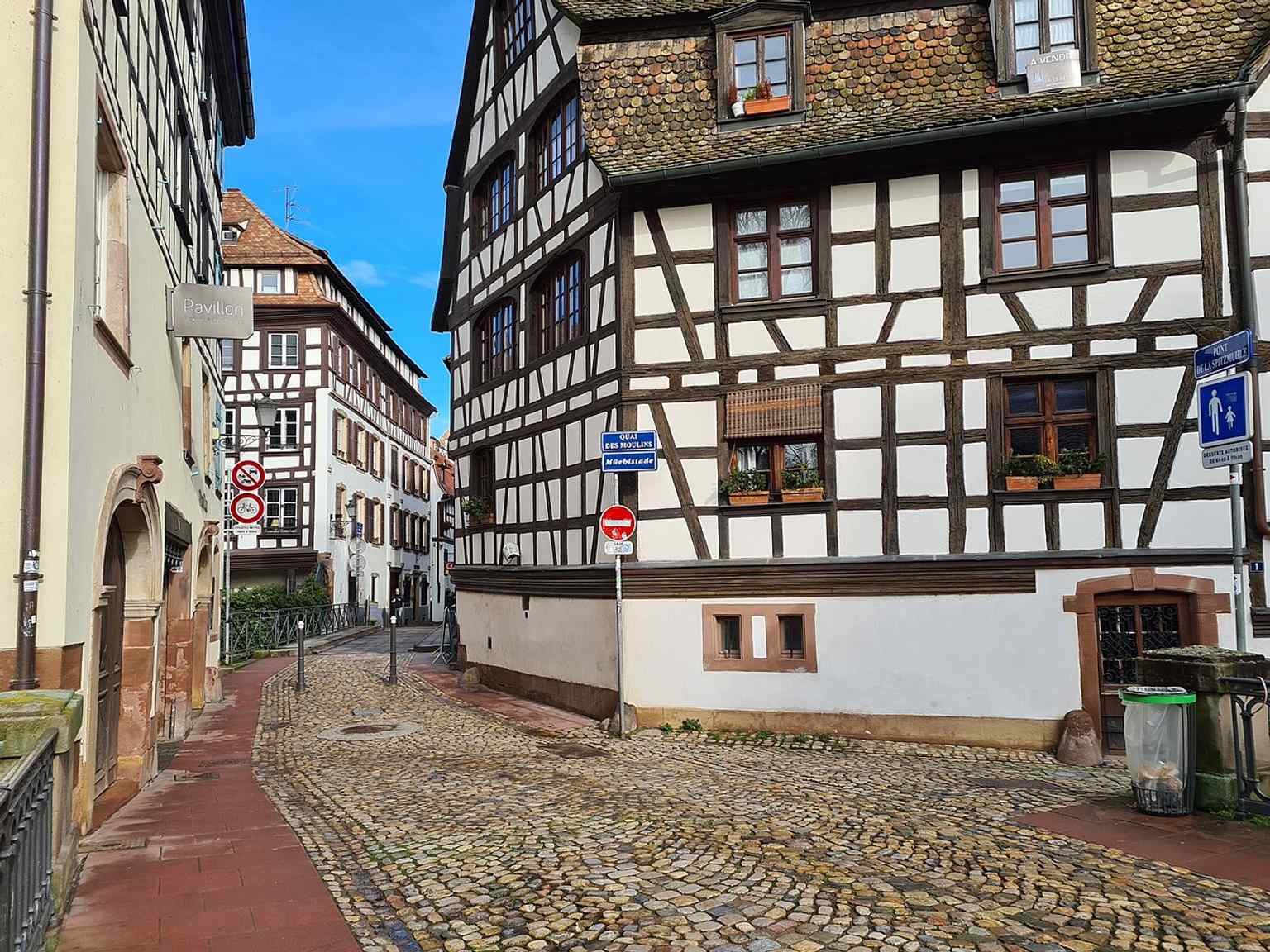
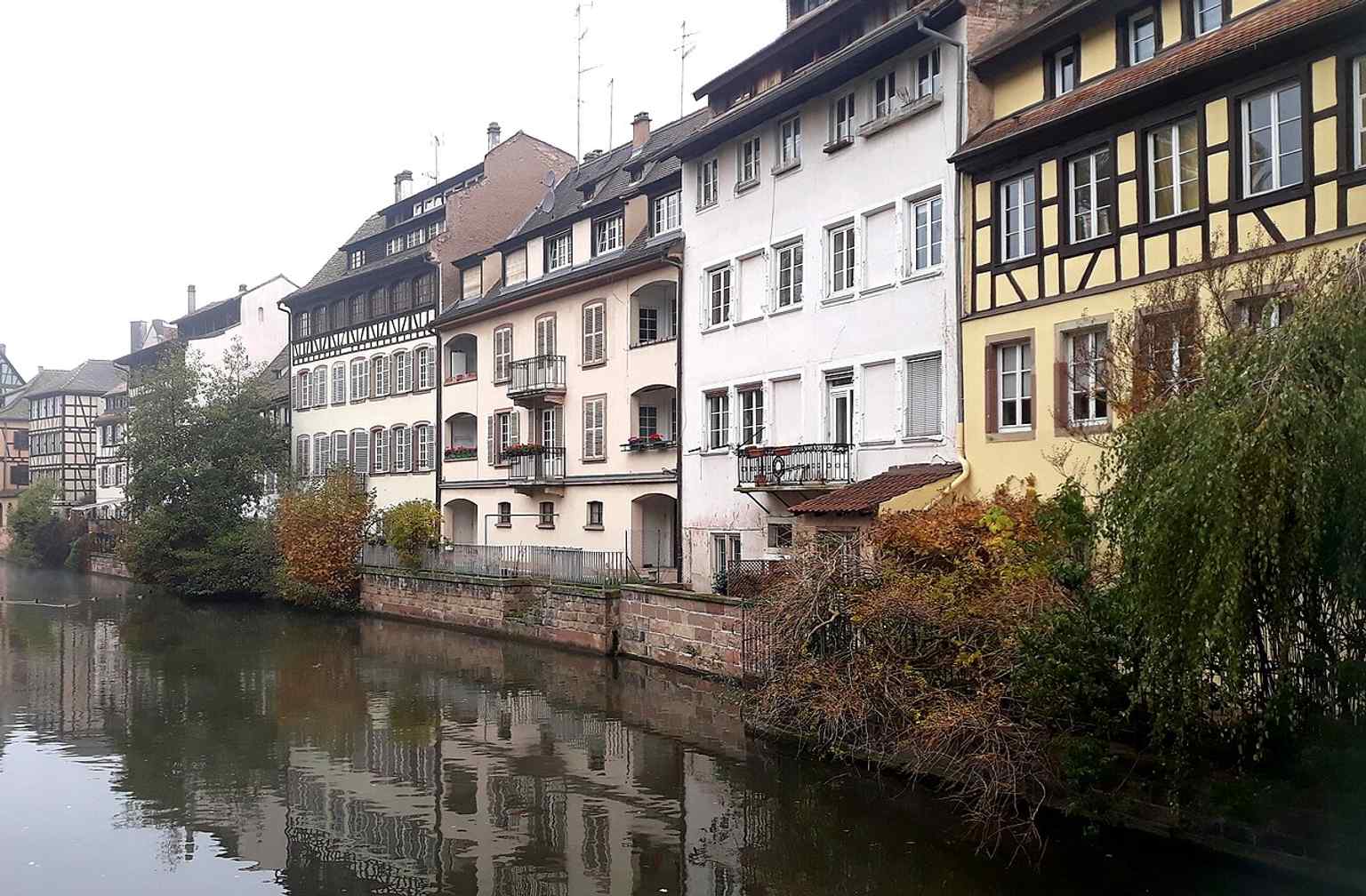
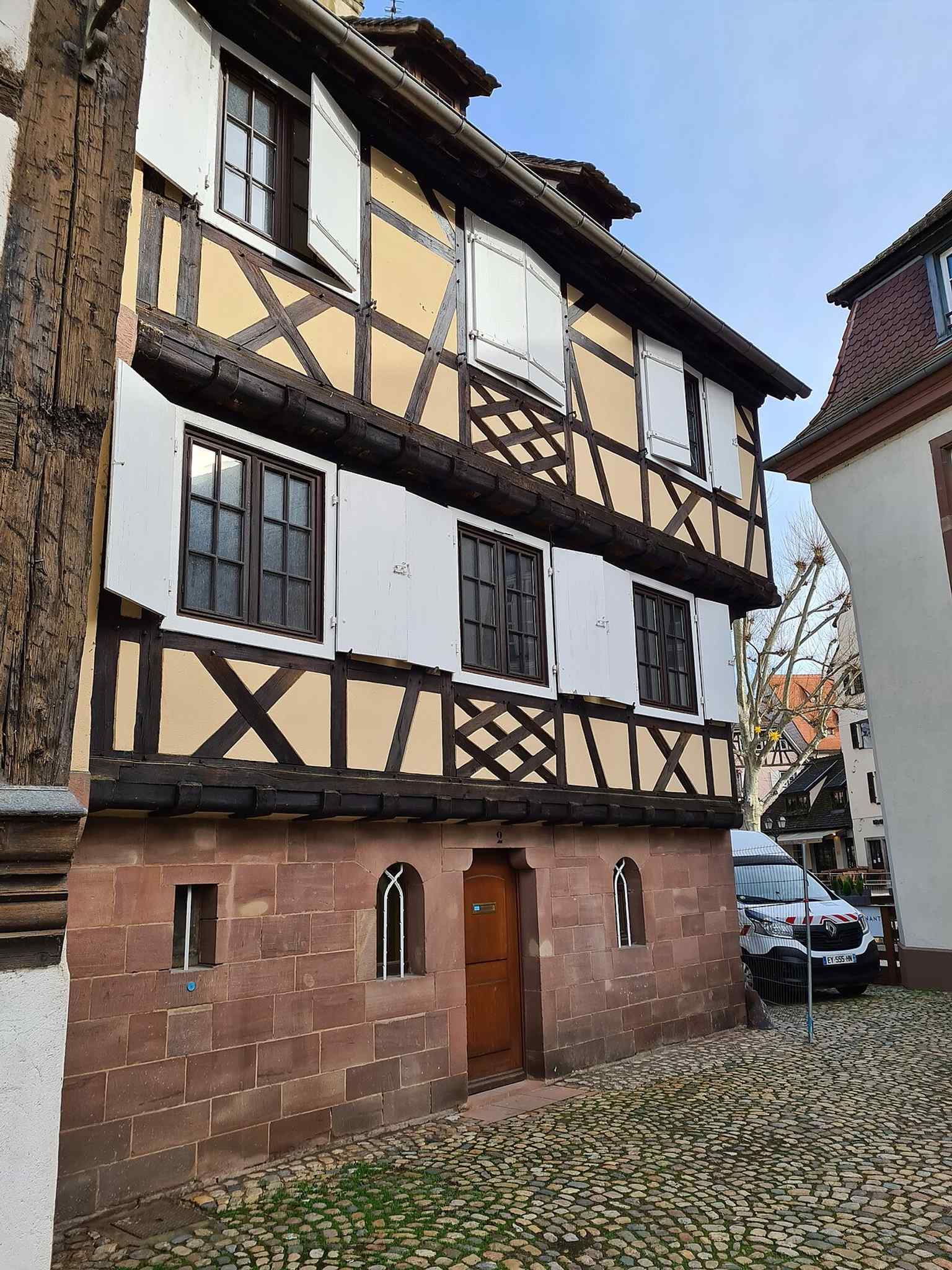
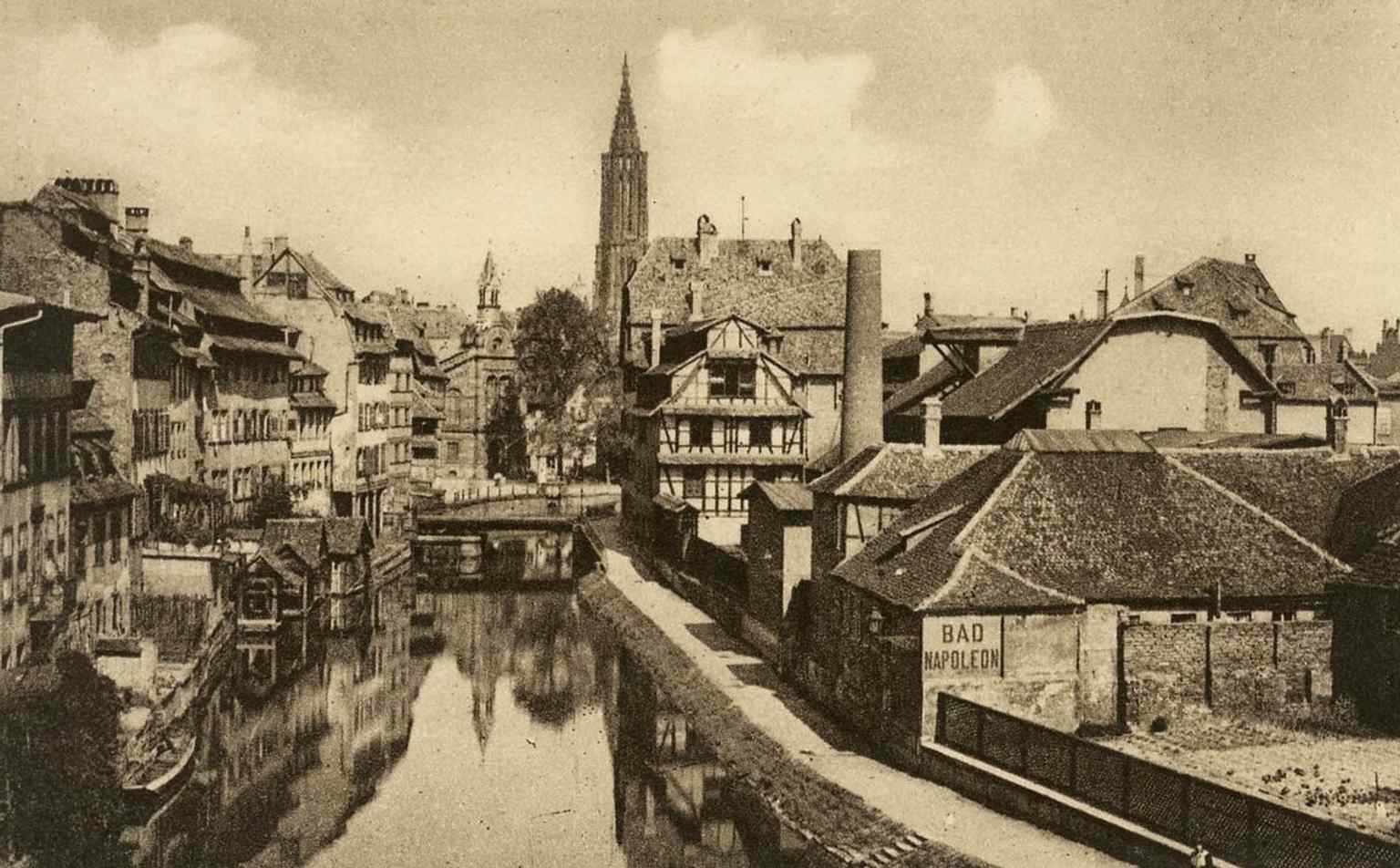
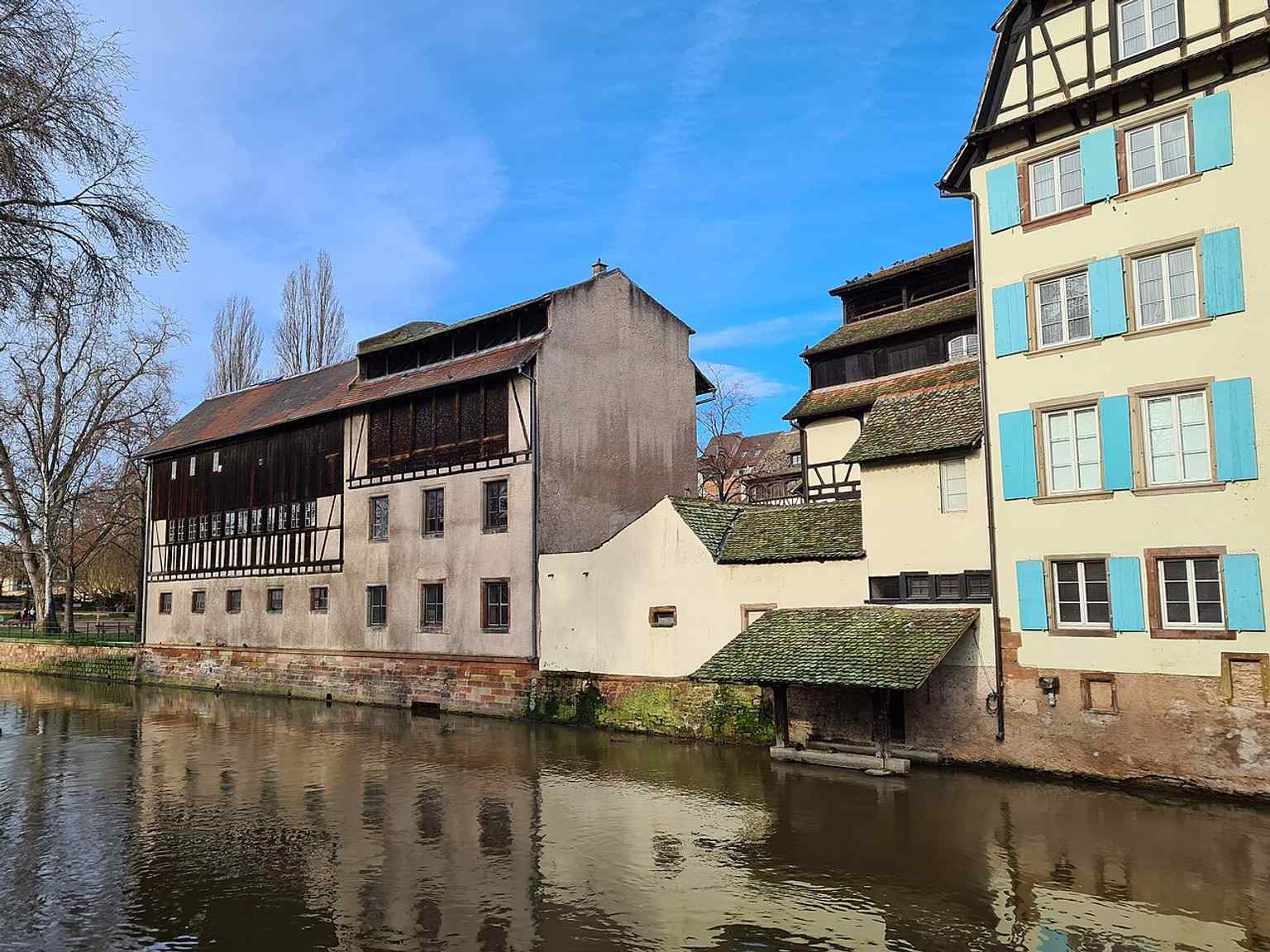
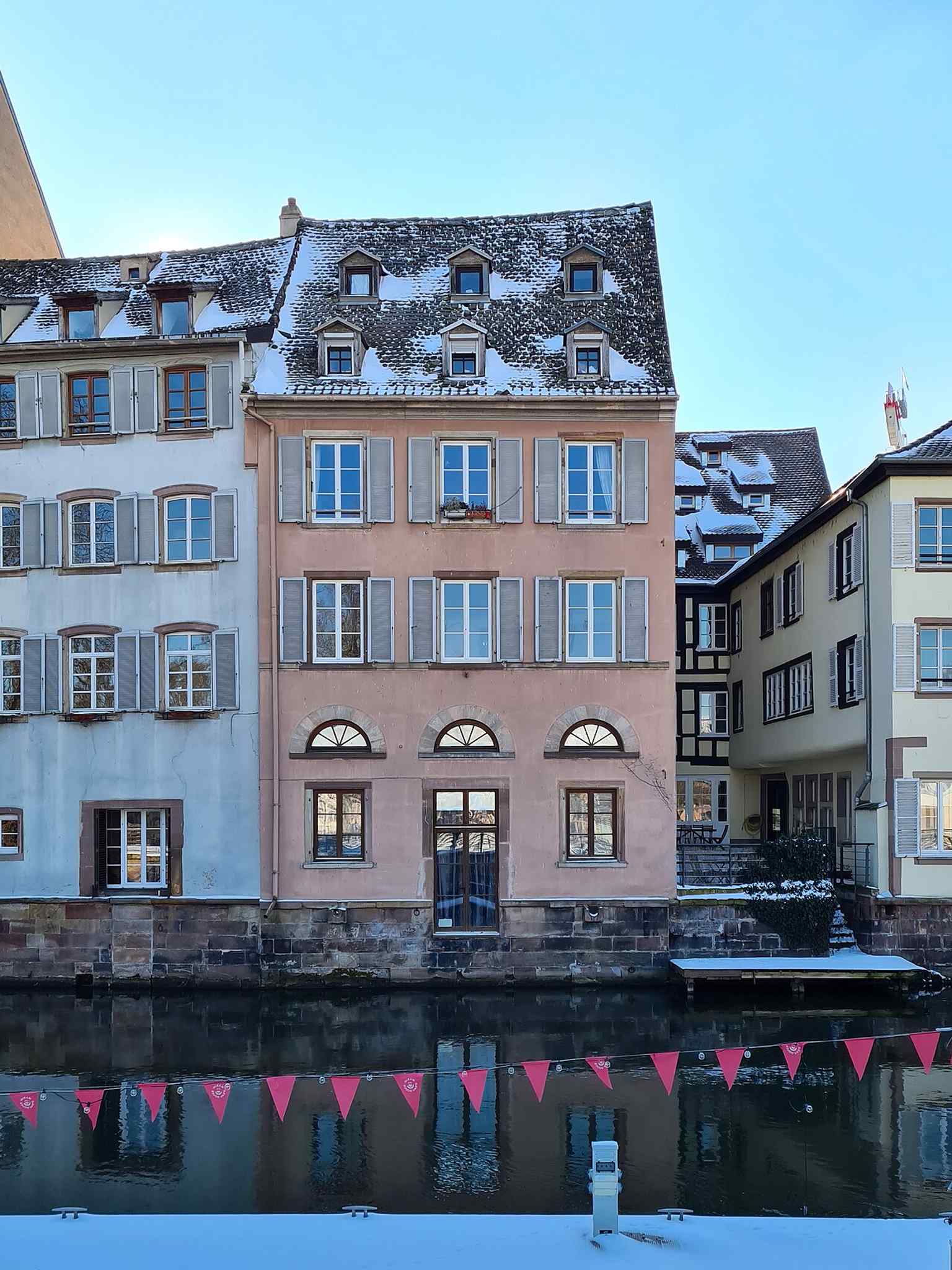
On your left, Petite France appears as a knot of half-timbered houses with dark wooden frames, steep gabled roofs, and canals sliding between the façades.
Pretty, yes... but this quarter earned its beauty the hard way. Petite France belongs to the Grande Île, the historic island at the heart of Strasbourg, shaped by the River Ill and a web of canals. Once you see that island logic, the city starts to read like a map drawn by water instead of streets.
This neighborhood sits on the south-west edge of that island core, and for centuries it worked for a living. Tanners, millers, fishermen, and boatmen filled these banks. The craft guilds here - trade groups that organized skills, prices, and standards - depended on water every day. Tanners soaked and washed hides in it, mills borrowed its force, and barges used it as the city’s delivery route. The result was profitable, necessary... and, for the tanners especially, not exactly perfume-counter material. Strasbourg kept these messy trades near the canals and a little apart from grander homes, which was practical and, let’s say, socially convenient.
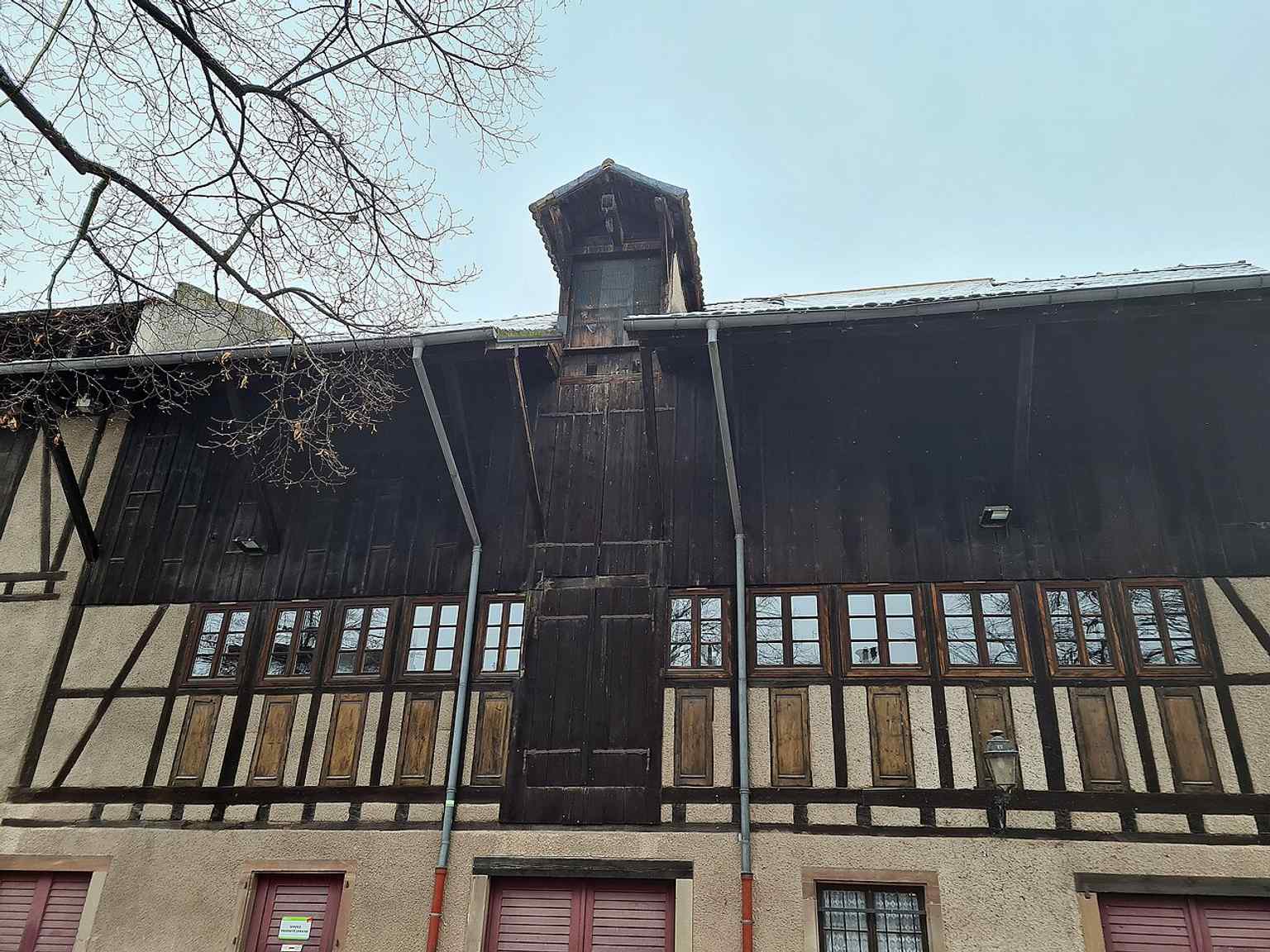
That working history still hides in the buildings. On Rue du Bain-aux-Plantes, the oldest tanners’ houses have ventilated attics, open enough to dry skins after treatment. One of the clearest examples came from a man with means: in fifteen sixty-six, the wealthy tanner Michel Wittich built number forty on that street. So this was never just a poor backwater. Some people here made serious money from hard, wet labor.
And then there’s the name. Petite France sounds sweet as pie, but it began with an hospice for patients suffering from syphilis, the so-called “French disease” in that era. Locals called the place Französel in Alsatian, “Little France,” and the name gradually spread from the hospice to the surrounding ground, then to the whole district. Strasbourg has a habit of turning rough origins into lasting identity.
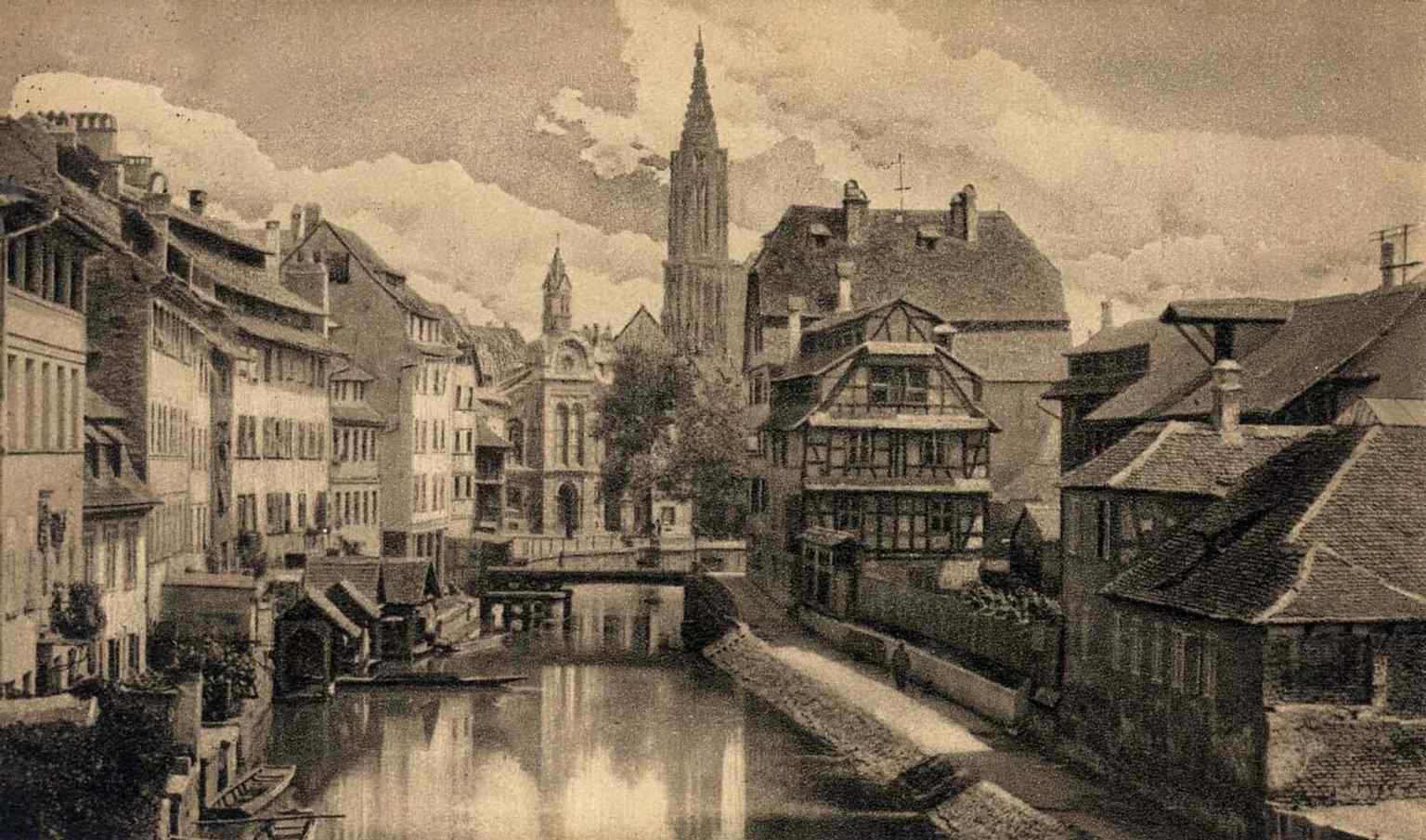
Most visitors admire the Maison des Tanneurs and assume it simply drifted intact out of the sixteenth century. Here’s the local version: eight winegrowers rescued and restored it in nineteen forty-nine, then turned it into a restaurant; the Behe family took it over in nineteen fifty-six. That famous overhanging silhouette beside a branch of the Ill is not just survival. It is revival.
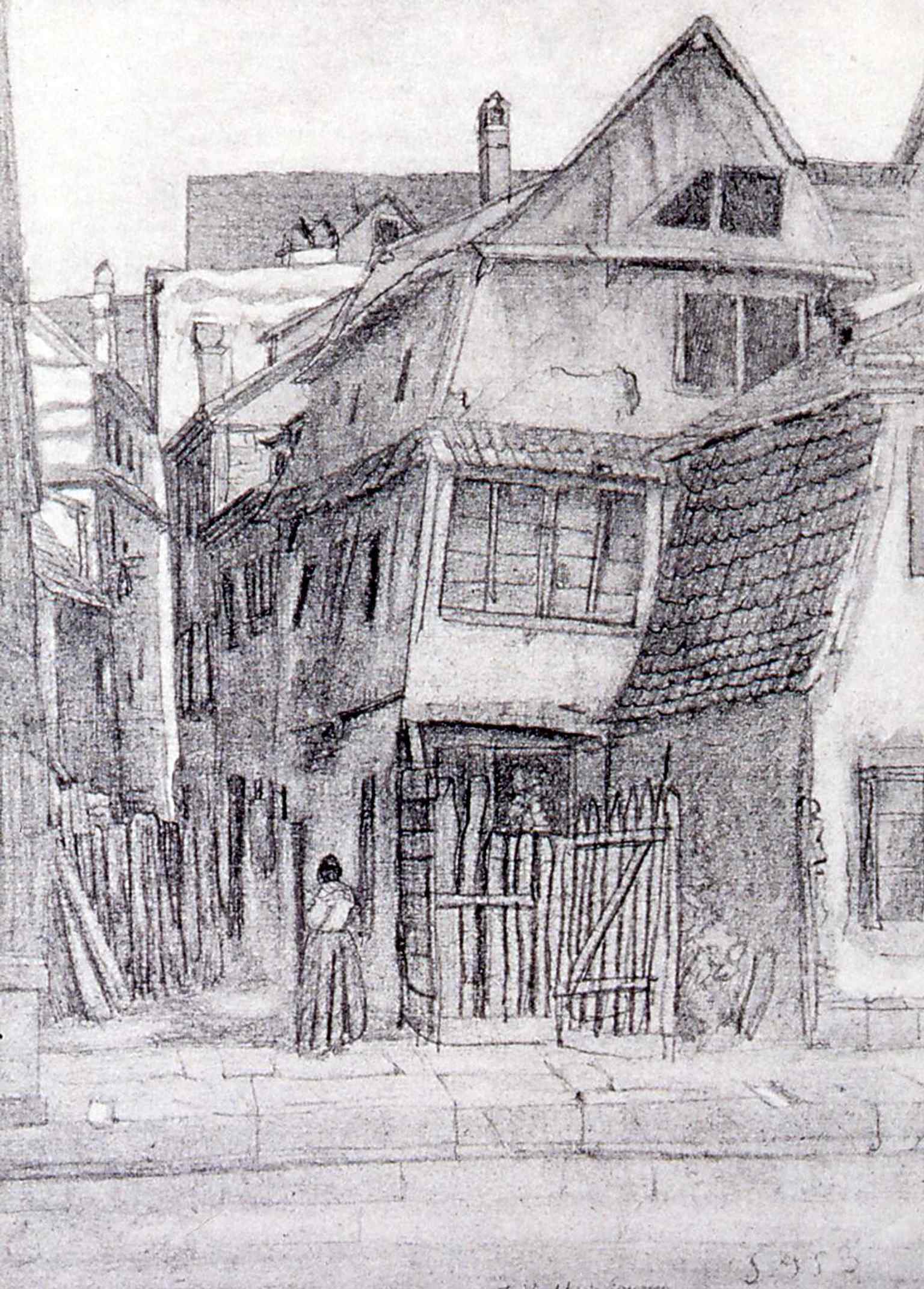
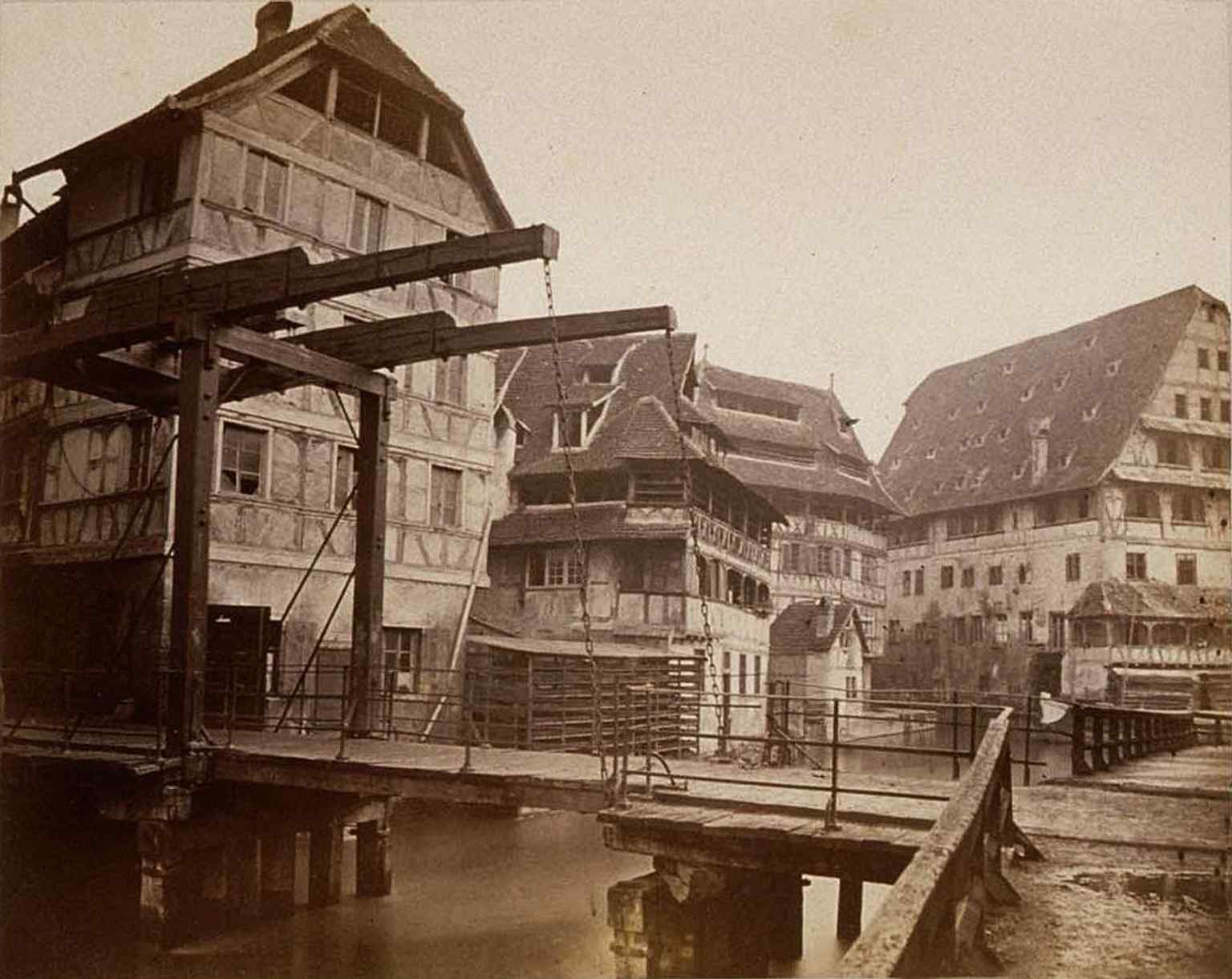
If you want, take a quick look at the before-and-after image in the app; the eighteen ninety-five view shows a riverside that still worked for a living before it became one of Strasbourg’s signature scenes.
This is also more than one pretty canal. Petite France spreads across a small delta of five channels, including the navigation canal and mill waterways like the Zornmühle and Spitzmühle. Even the little Pont du Faisan nearby turns to let boats through - a neat reminder that these waters were built to do things.
In a moment, head on toward the Vauban Dam. That stop makes the next piece of the puzzle clear: here, canals were not just decoration for postcards... they were machinery for keeping Strasbourg alive.







.jpg)
.jpg)
.jpg)
.jpg)

.jpg)
.jpg)
.jpg)