
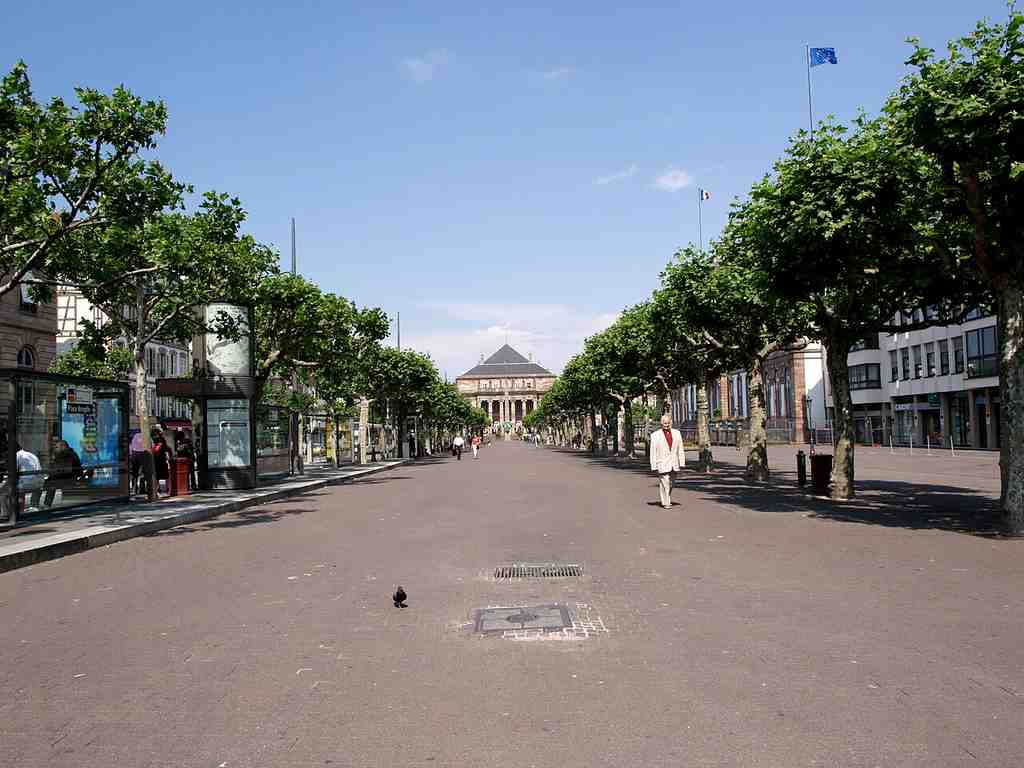
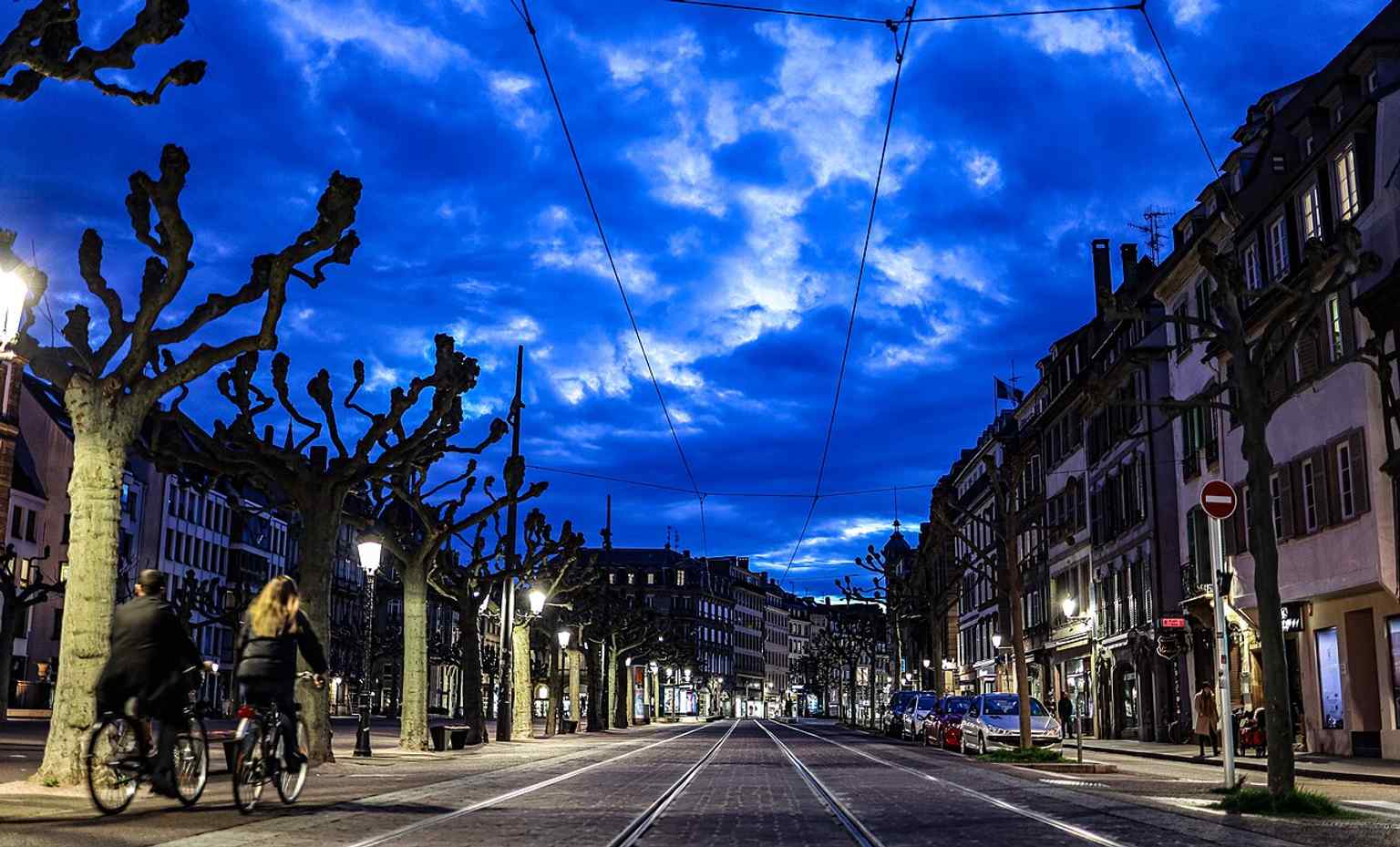
Look for the long rectangular square lined with three rows of plane trees, edged by pale stone façades, and closed at one end by the opera’s columned front like a grand backdrop.
Place Broglie is one of those Strasbourg places that seems calm at first glance... and then starts talking. Even its name performs a little trick. The family name Broglie, borrowed from Marshal François-Marie de Broglie, traditionally sounds more like “Breuil” in French, but many Strasbourgeois simply say “Broglie.” In other words, the square carries two pronunciations, just as it carries several identities.
This is a good place to notice the imperial staging of the city. Rulers do not only build walls and palaces; they arrange views, rename spaces, and decide where public life should happen. A broad square like this becomes a kind of outdoor theater, where power can appear, be heard, and be remembered.
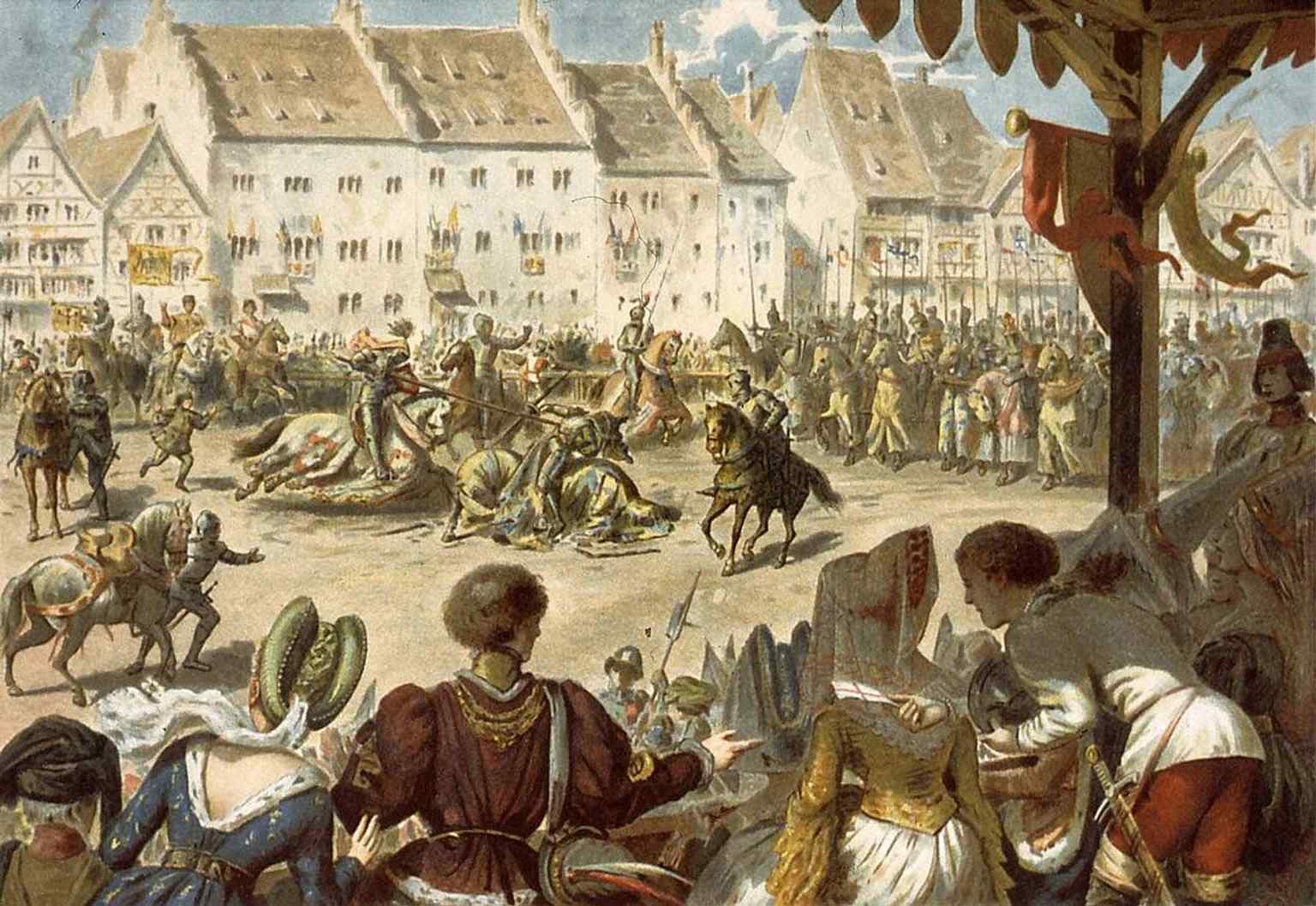
That story started early. By the early thirteenth century, this was already a fairground inside Strasbourg’s expanded walls. People once called it the horse market, Roosmarkt in the local Germanic tradition, and in fourteen eighteen the city hosted a famous imperial fair here. If you want a quick glimpse of that earlier life, the horse tournament image in the app gives the old market real muscle and motion.
Then the script changed. After the French annexation in sixteen eighty-one, the area became strategically important. The municipal arsenal here housed a royal cannon foundry, and power in Strasbourg began shifting away from Gutenberg Square toward this end of town. In seventeen forty, Marshal François-Marie de Broglie, then governor of Strasbourg, planted linden trees and turned the old horse market into a fashionable promenade. Same ground, new meaning. Strasbourg does that a lot.
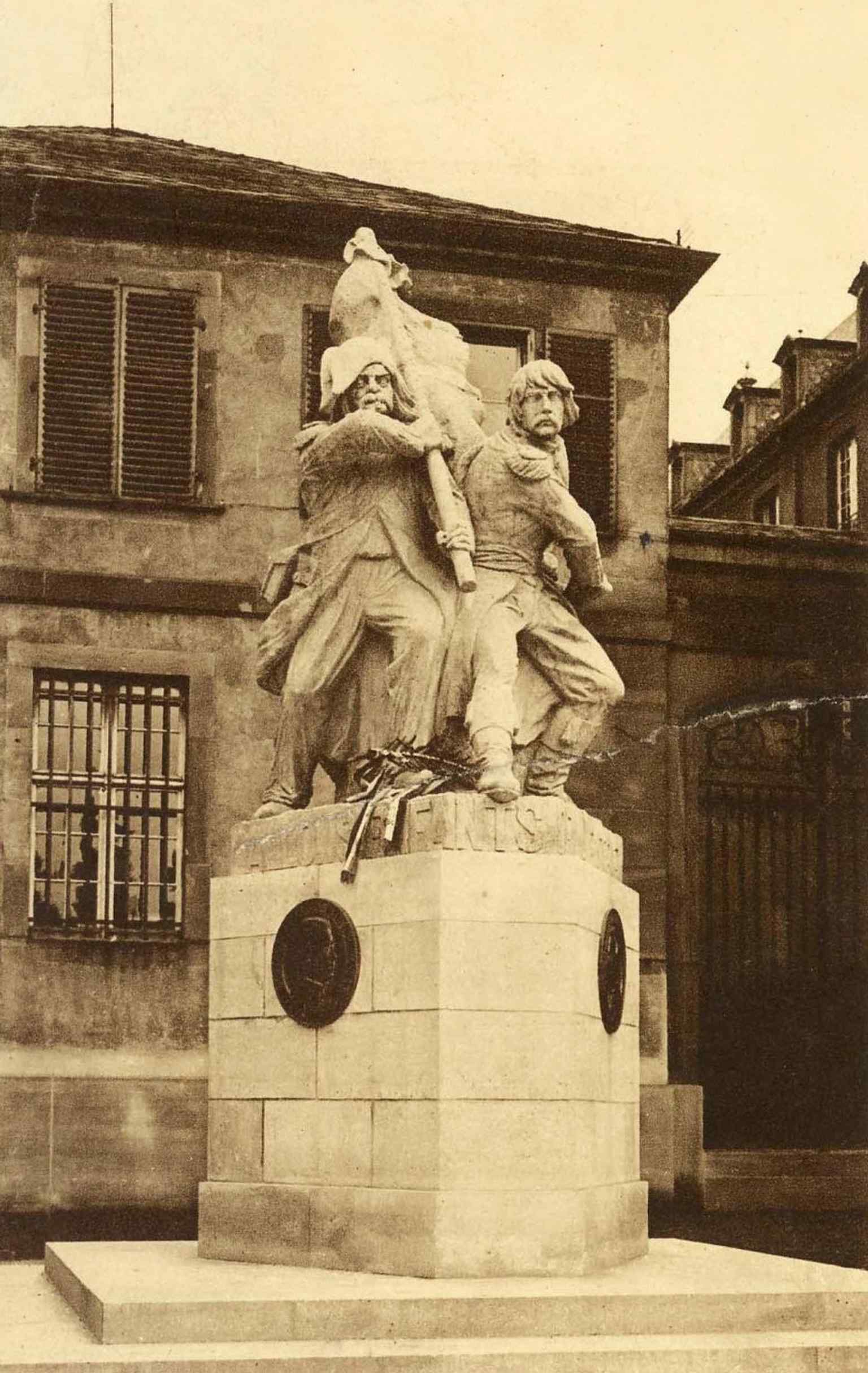
The most famous voice here belonged to Philippe-Frédéric de Dietrich, the mayor of Strasbourg. In April of seventeen ninety-two, Captain Rouget de Lisle came to Dietrich’s home on this square and sang the war song Dietrich had asked him to write after France declared war on Austria. That song became La Marseillaise. So yes... the French national anthem began not on a battlefield, but in a mayor’s home here, then rang out publicly on this very square. That is classic Strasbourg: civic space turning into national stage.
And names kept changing with whoever held the pen. During the Revolution, authorities renamed it Place de l’Égalité, Equality Square. During the second German annexation, the Nazi regime renamed it Adolf-Hitler Platz. Those changes were not cosmetic. They were claims of ownership, stamped onto daily speech.
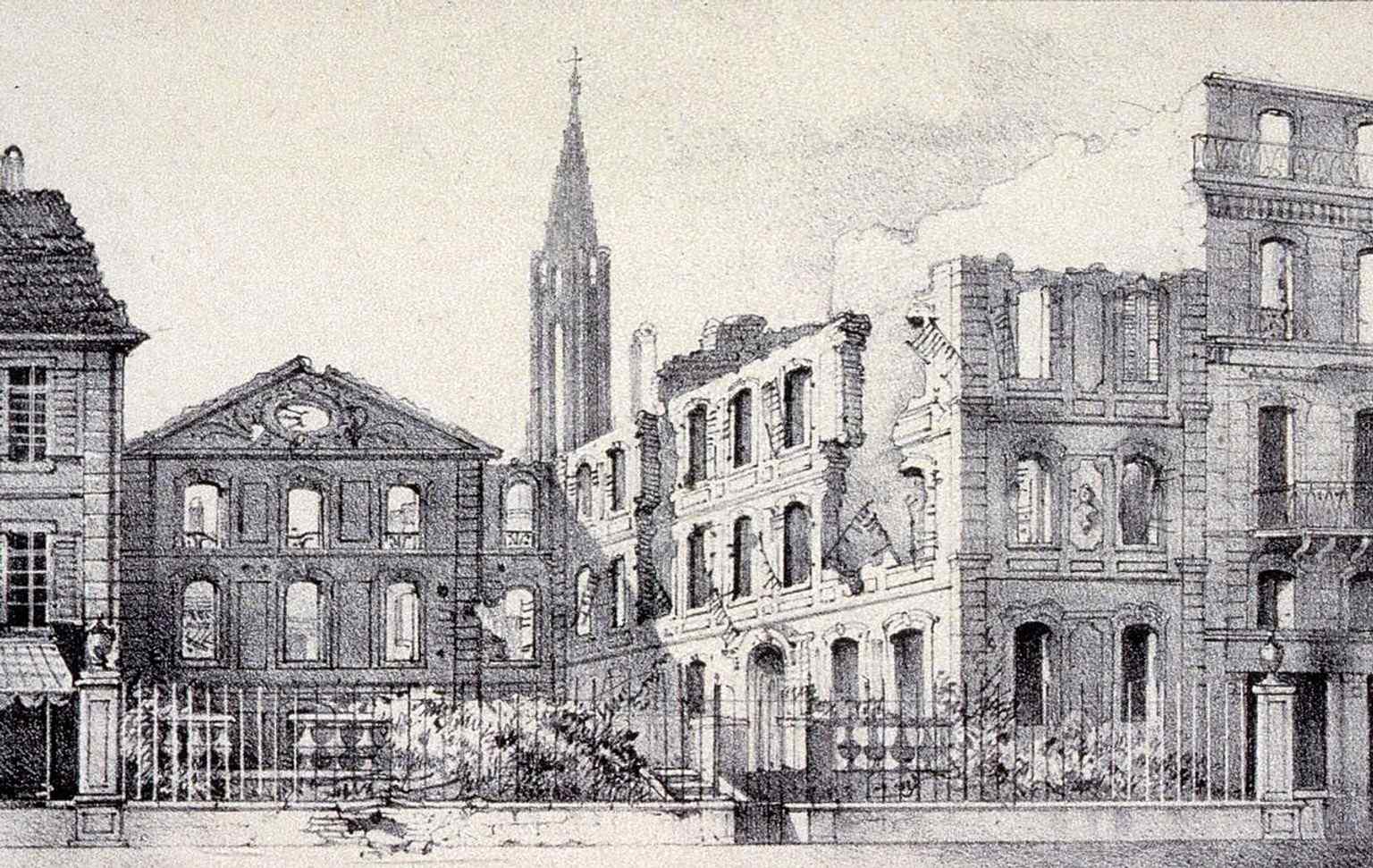
Its shape today comes mostly from the nineteenth century, when the municipal theater rose between eighteen oh four and eighteen twenty-one, and the old Tanners’ ditch was filled in by eighteen thirty-two. If you like, check the before-and-after image; it shows how the old bandstand era gave way to the traffic-lined square you see now.
Around you, the square still reads like a cast list: the Hôtel de Hanau, now City Hall; the governor’s residence; the old Kornspeicher, a medieval grain store; monuments to Kellermann, Leclerc, and La Marseillaise. Public memory here does not whisper. It takes the microphone.
Now turn your eyes across the square to the opera house, with its giant Ionic columns and six muses on top. That is where this square’s taste for performance becomes literal... and it’s our next stop, about four minutes away.





%20en%201890.jpg)
.jpg)
.jpg)
.jpg)
