
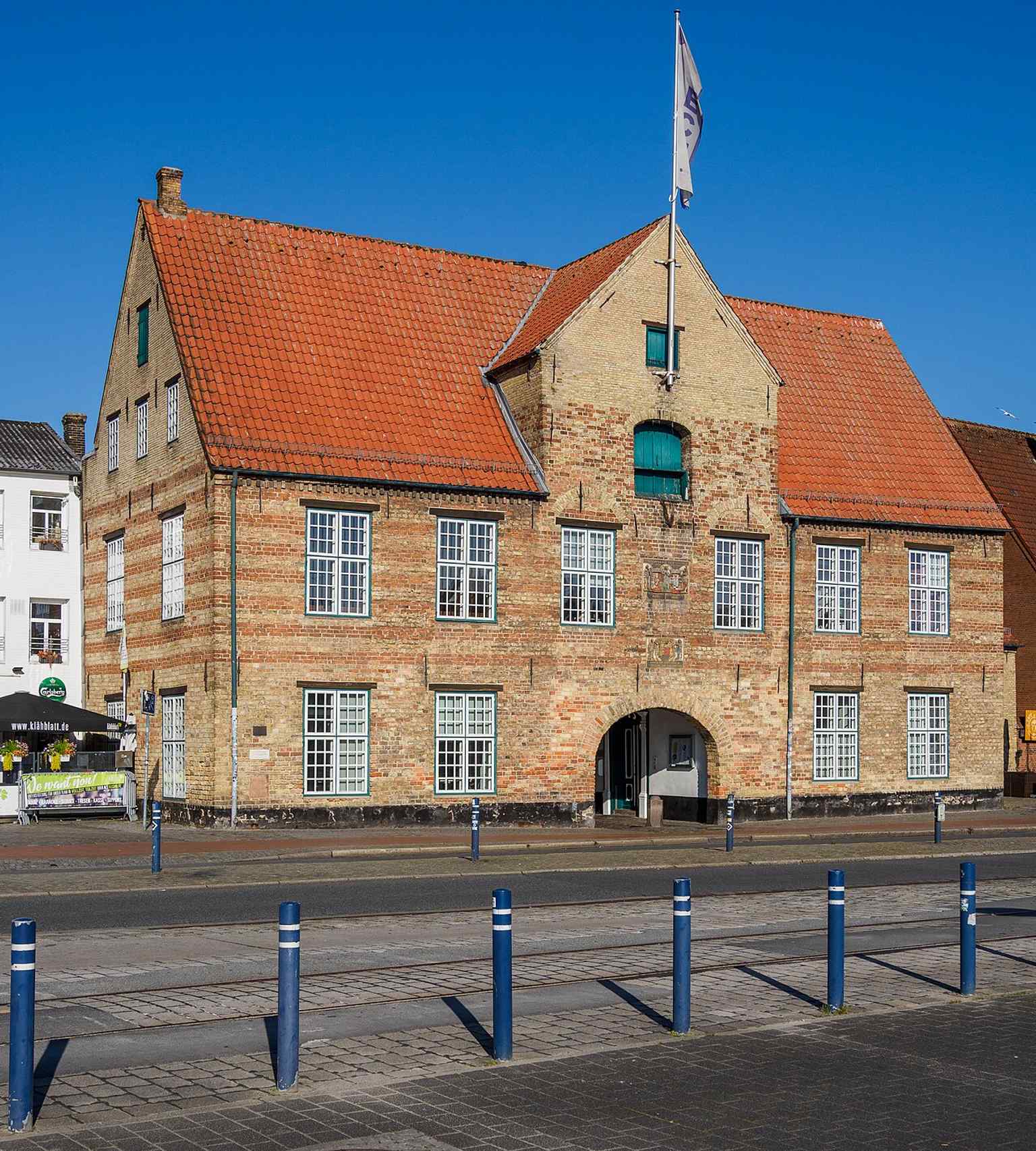
In front of you stands a solid red-brick gatehouse with a tall gabled façade, a broad central arch, and carved coats of arms set high above the opening.
This is the Kompagnietor, and despite the name, it was never just a gate. In sixteen oh two, the master builder Dirick Lindingk gave Flensburg something much more serious: a harbor control point, meeting house, weigh station, customs post, and fee office all folded into one stout building. Think of it as the port’s front desk... if the front desk also collected money, checked cargo, and told you when to behave.
Flensburg’s shippers were not loose bands of sailors chasing the next tide. They formed a maritime guild culture, the Schiffergelag, a seafaring fellowship with real status in town. They helped shape harbor life, backed major building projects, and spoke as an organized force alongside merchants and councilmen. When this new structure rose, the city, the merchants’ company, and the shippers all helped carry the cost. That tells you who held weight here.
Look at the structure as more than an archway. Picture clerks weighing goods, officials collecting harbor dues, and shipmasters gathering upstairs to settle matters before anyone unloaded a barrel.
Most visitors miss the number that tells the whole story: roughly eighty-four thousand one hundred bricks went into this building. Nobody spends that much masonry on decoration alone. Even though it looked like a gate, it was not a military fortification, yet the town still locked it at night... order mattered here, on water just as much as on land, much like the old southern gate did for traffic by road.
If you glance at the image on your screen, the façade details show that sturdy harbor presence beautifully. And on the front, look for the high-water marks. They record storm surges from sixteen ninety-four, eighteen thirty-five, and eighteen seventy-two, when the water reached about three point two seven meters above mean level.
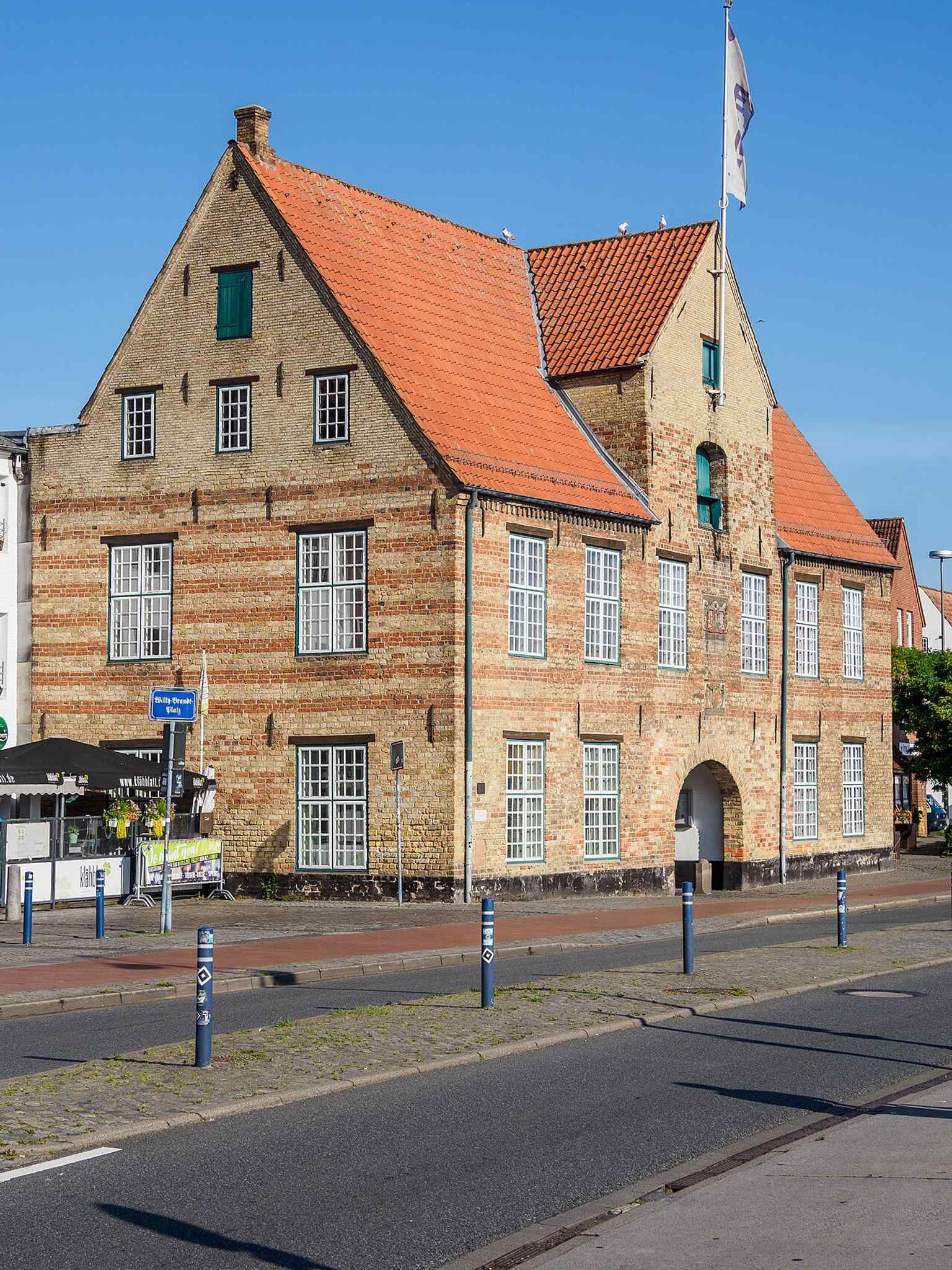
Later, this old harbor workhorse housed the Sea Court, and today it serves the European Centre for Minority Issues, a fitting next chapter in a border city used to rules, identities, and negotiation. Up ahead, the Maritime Museum will show you the ships and sailors behind all this regulation... about a five-minute walk from here.






.jpg)
.jpg)
.jpg)