AudaTours logoAudaTours

Stop 7 of 17

Bertoldsbrunnen

Bertoldsbrunnen
Bertoldsbrunnen
BertoldsbrunnenPhoto: Giftzwerg 88, Wikimedia Commons, CC BY-SA 3.0. Cropped & resized.

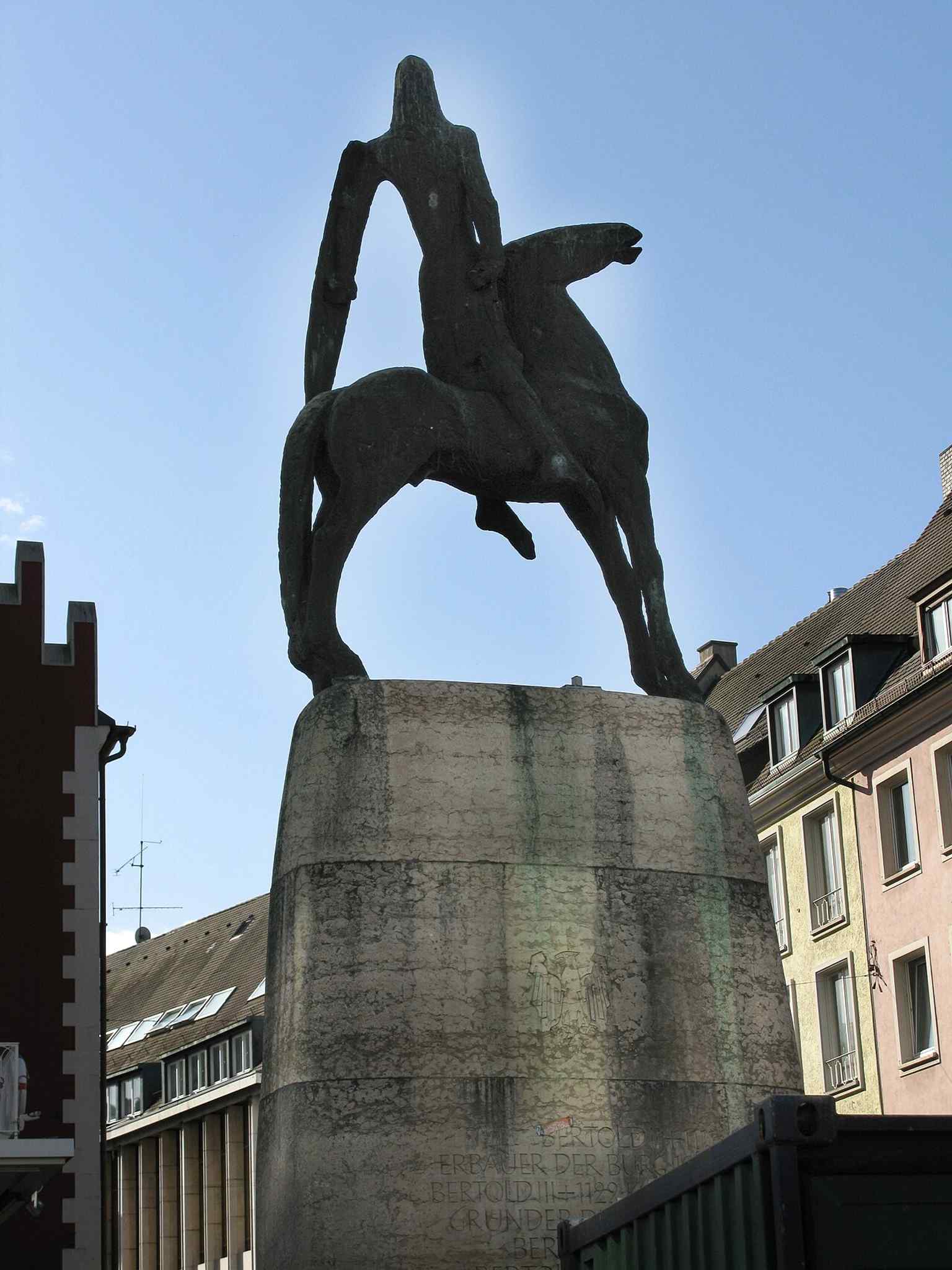
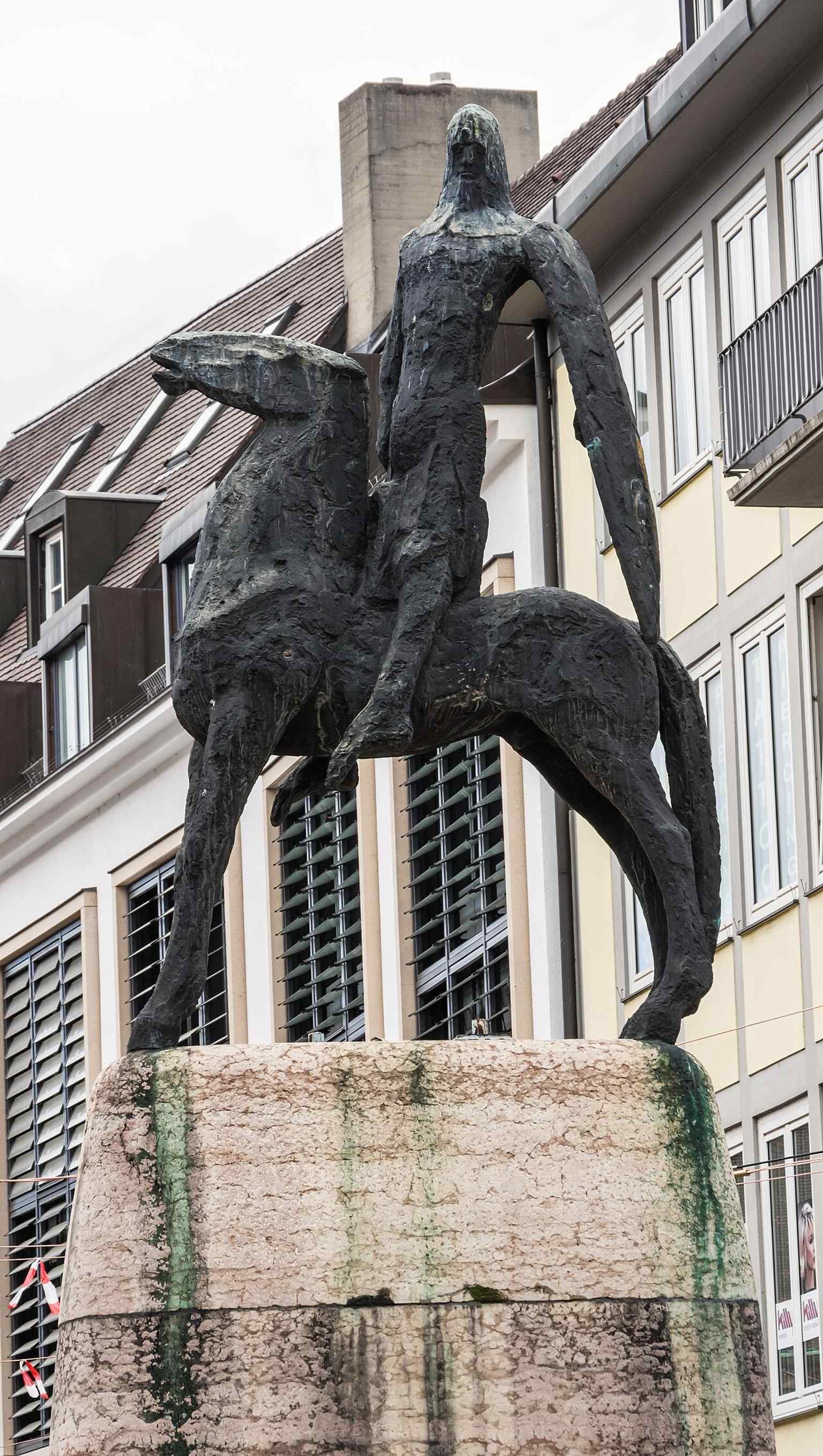
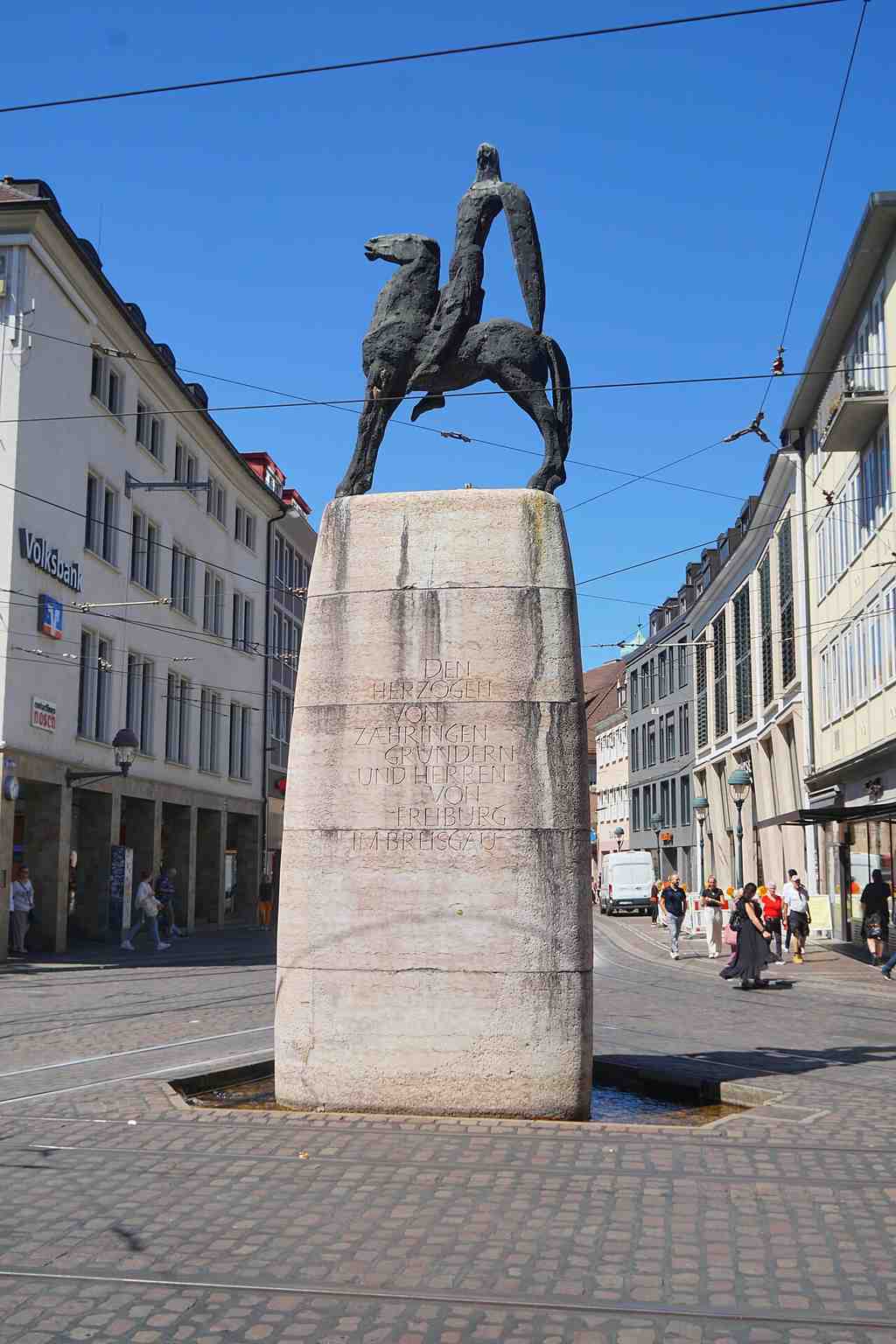
Look for a pale stone pedestal rising from a shallow basin, topped by a lean bronze rider whose whole silhouette narrows like a pointed Gothic arch.

This is Bertoldsbrunnen, but don’t let the modest fountain fool you. This is political symbolism in stone. Right here at Freiburg’s busiest crossroads, the city planted a message in plain sight about who ruled it, who founded it, and who people were now expected to salute.

Until eighteen oh six, a different fountain stood here: the Fischbrunnen. Then the Napoleonic upheavals shuffled borders, Freiburg left its long Habsburg orbit, and the city needed a new public script. So officials moved the old fish fountain north to make room for a new monument in eighteen oh seven, honoring the oath Freiburgers had sworn to Karl Friedrich of Baden. Most tourists miss the sharp little point there: even moving the old fountain was part of the statement. Urban planning, Freiburg style... not just traffic management, but political choreography.

The first Bertoldsbrunnen praised more than one figure. It nodded to Karl Friedrich, but also to Berthold the Third of Zähringen, Freiburg’s founder, to Konrad the First, linked to the Minster, and to Albert of Austria, founder of the university. At a crossroads like this, that mattered. A monument tucked in a courtyard whispers. One placed where everyone passes, shops, argues, and catches a tram makes its case out loud.

Ferdinand Weiß, a city councilman, drafted the plan, and Baden’s chief architect Friedrich Weinbrenner reworked it. Sculptor Franz Anton Xaver Hauser gave the original fountain an armored Berthold with shield and spear, facing east toward the Zähringer ancestral castle. Even the direction had meaning. Nothing neutral about that.

Then came the air raid of the twenty-seventh of November, nineteen forty-four, and the monument vanished in the destruction. A sculptor named Hugo Knittel offered to recreate the old figure for free, using prewar photographs by Annemarie Brenzinger. But Joseph Schlippe, the man steering postwar rebuilding, said no. He wanted something “timeless,” not a copy. So in nineteen sixty-five, Nikolaus Röslmeir’s new version appeared: more abstract, with a bronze rider and a Gothic-arch outline that quietly nods toward the Minster you’ll see later. Many locals hated it at first. Grief has strong opinions.

If you want to see how much this crossroads changed, check the before-and-after image in the app.

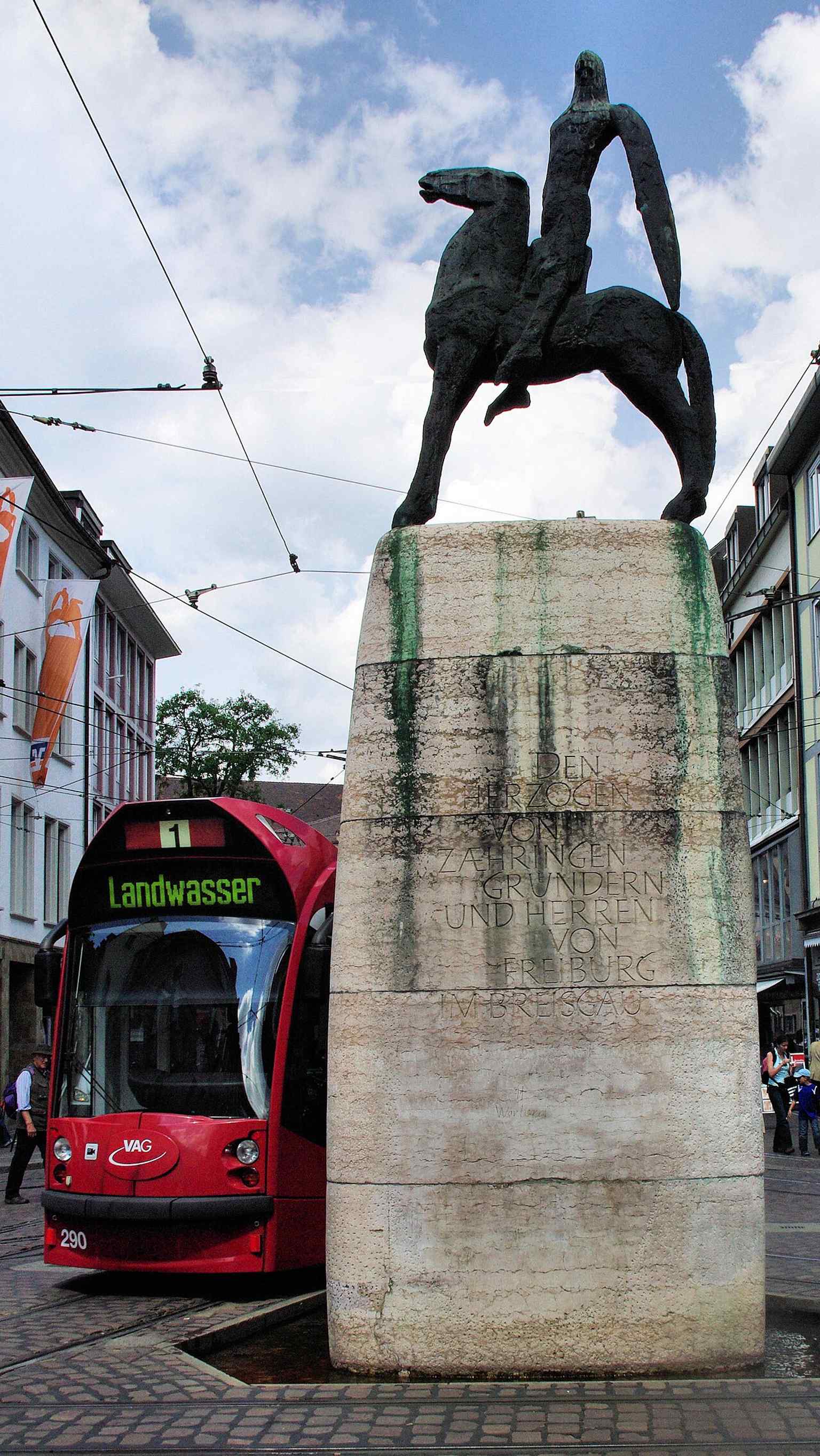
Since nineteen seventy-nine, the fountain has stood in the middle of the junction, set into a low basin fed by Dreisam water, like Freiburg’s little Bächle channels. Four of the city’s five tram lines stop here, and locals simply call the place “Berti.” That may be the best proof that a monument can become part memorial, part meeting point, part public stage.

So here’s the question to carry with you: when a monument sits in the middle of daily life, can it ever be just decoration... or does each generation turn it into a new argument?

We’ll head next to the Victory Monument, about five minutes away, where the argument gets larger and a lot more martial. And yes, Berti is here all day, every day.
A close view of the fountain fed by the city’s famous Bächle, a detail that ties the monument to Freiburg’s water system.
A close view of the fountain fed by the city’s famous Bächle, a detail that ties the monument to Freiburg’s water system.Photo: user:Joergens.mi, Wikimedia Commons, CC BY-SA 3.0. Cropped & resized.
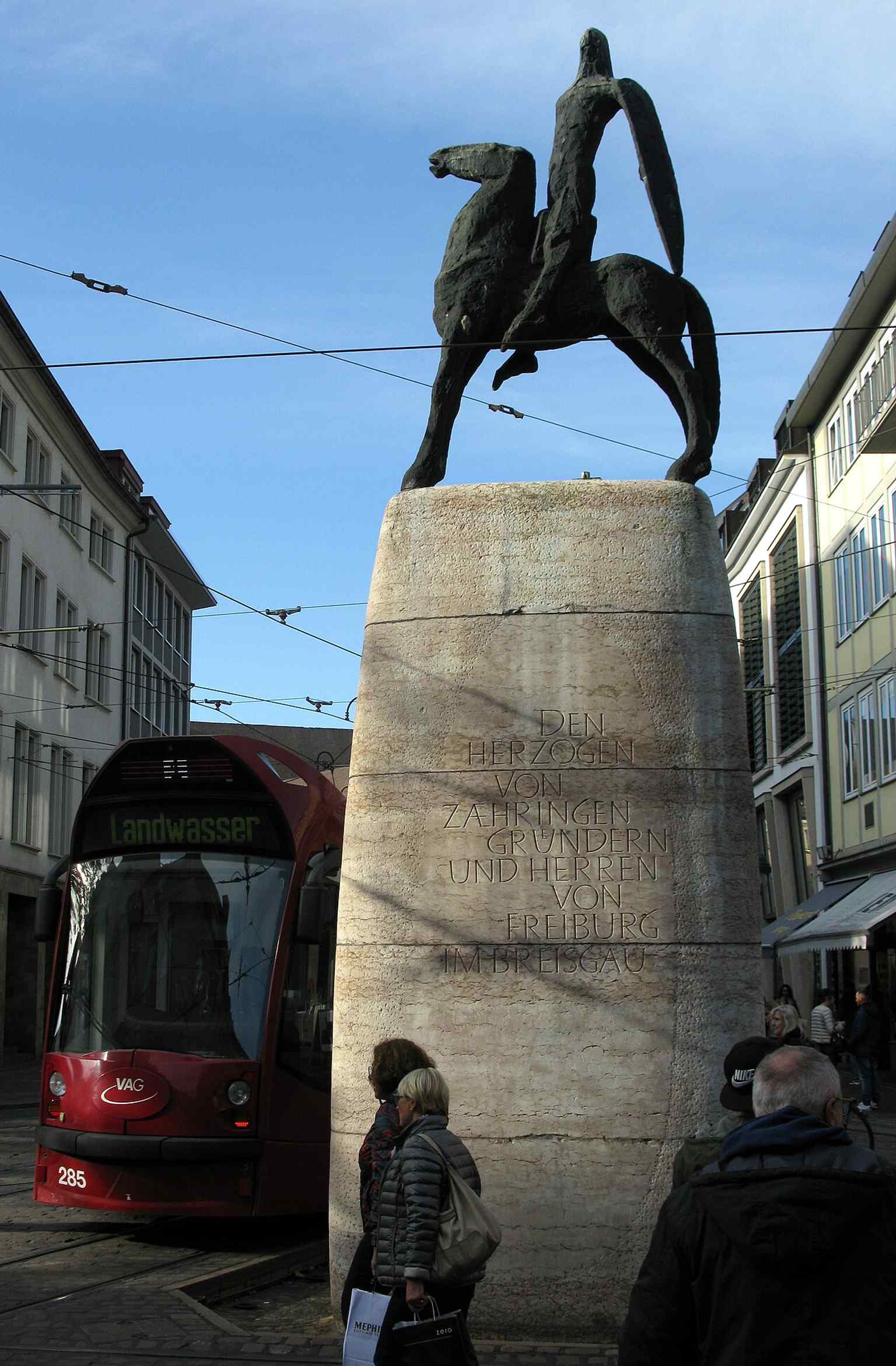
Trams passing the Bertoldsbrunnen — four of Freiburg’s five tram lines stop here, making it a true transport hub.
Trams passing the Bertoldsbrunnen — four of Freiburg’s five tram lines stop here, making it a true transport hub.Photo: Poudou99, Wikimedia Commons, CC BY 3.0. Cropped & resized.
The monument during the 2014 works, when the overhead wires were removed and the plaza was temporarily cleared for construction.
The monument during the 2014 works, when the overhead wires were removed and the plaza was temporarily cleared for construction.Photo: Andreas Schwarzkopf, Wikimedia Commons, CC BY-SA 3.0. Cropped & resized.
The bronze rider in a wire-free view, showing the abstract postwar figure that replaced the destroyed prewar statue.
The bronze rider in a wire-free view, showing the abstract postwar figure that replaced the destroyed prewar statue.Photo: joergens.mi, Wikimedia Commons, CC BY-SA 3.0. Cropped & resized.
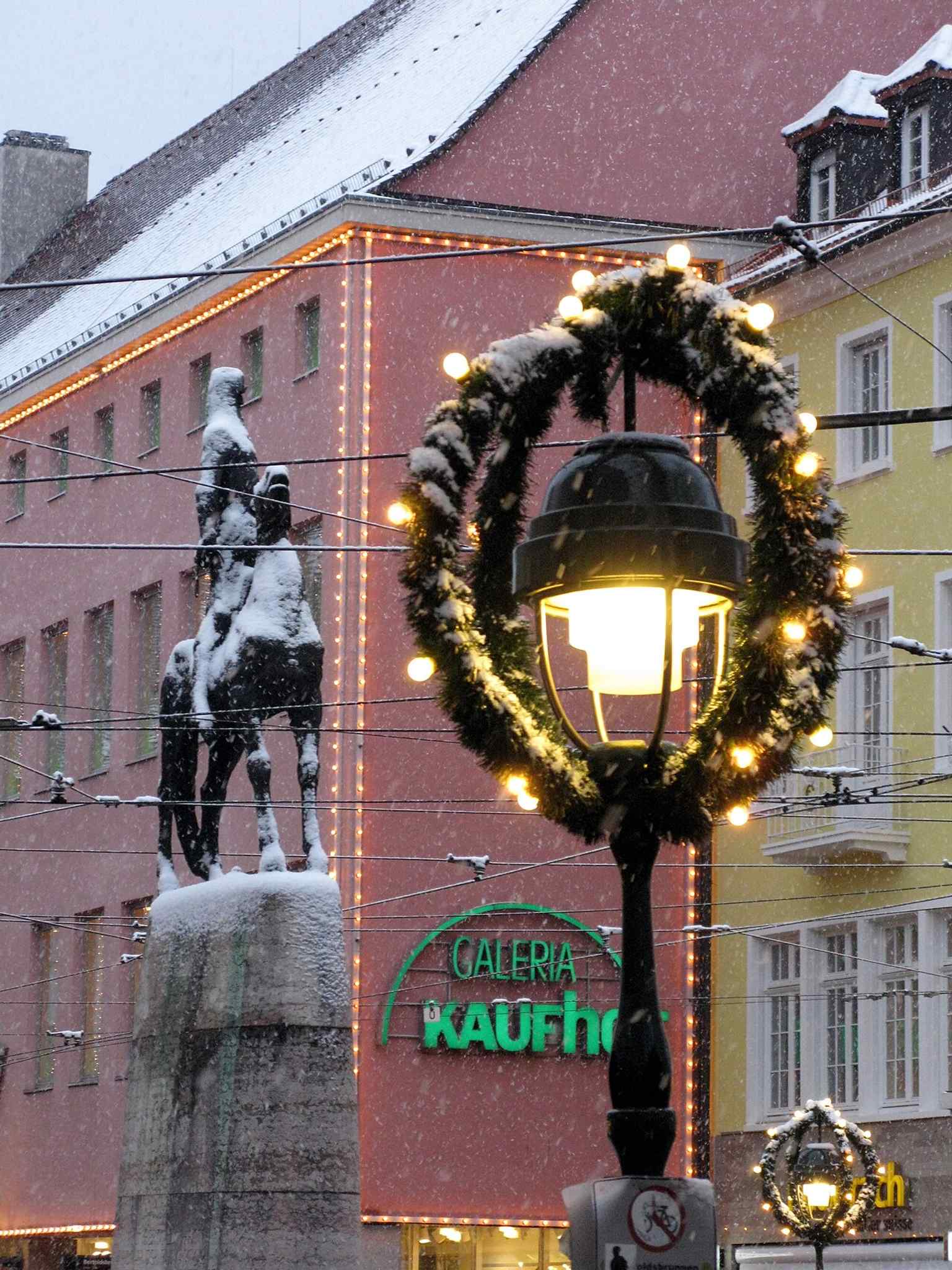
Bertoldsbrunnen in winter lights and snow, a popular city-center landmark that also becomes part of Freiburg’s seasonal decorations.
Bertoldsbrunnen in winter lights and snow, a popular city-center landmark that also becomes part of Freiburg’s seasonal decorations.Photo: Andreas Schwarzkopf, Wikimedia Commons, CC BY-SA 3.0. Cropped & resized.
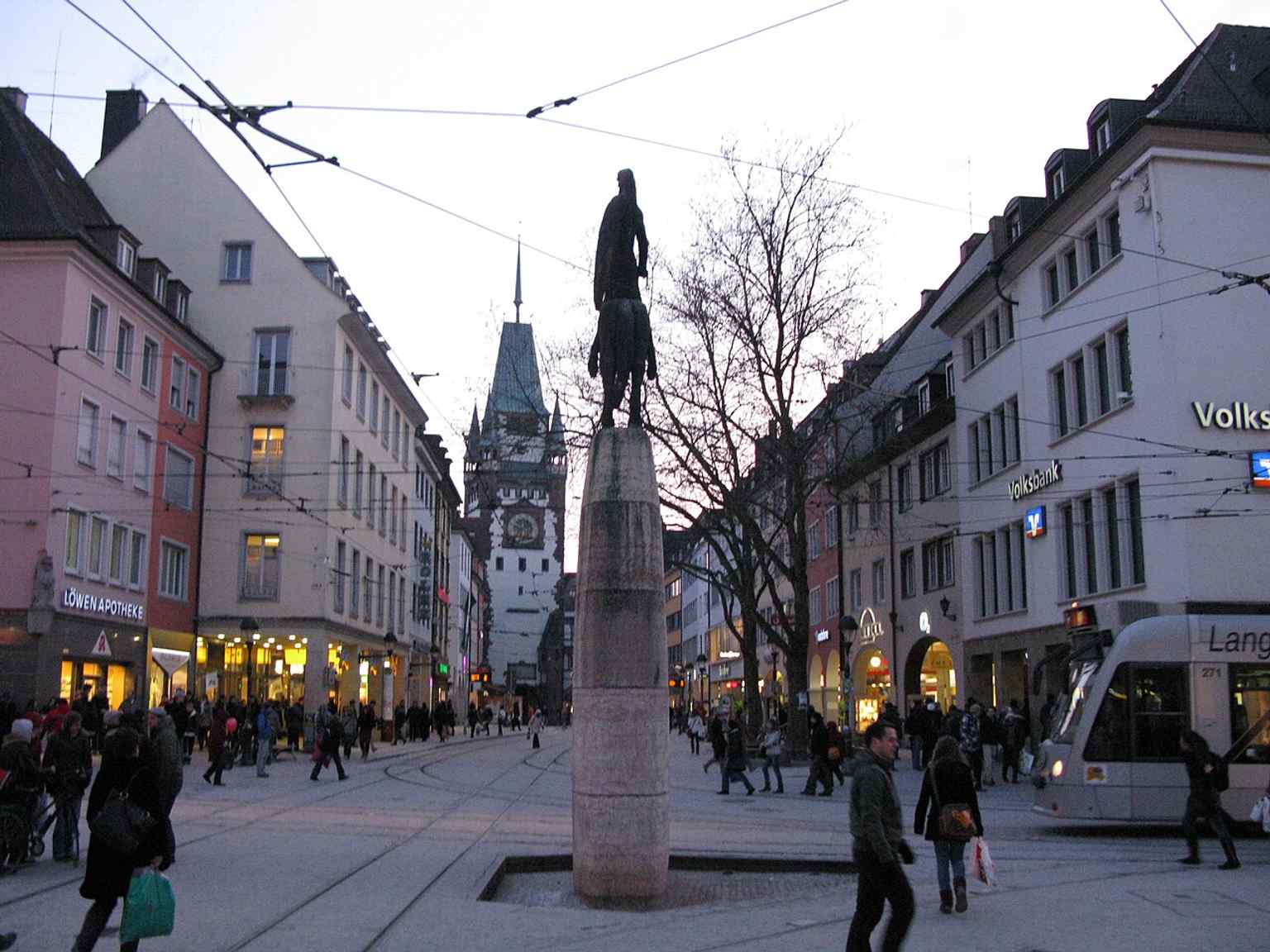
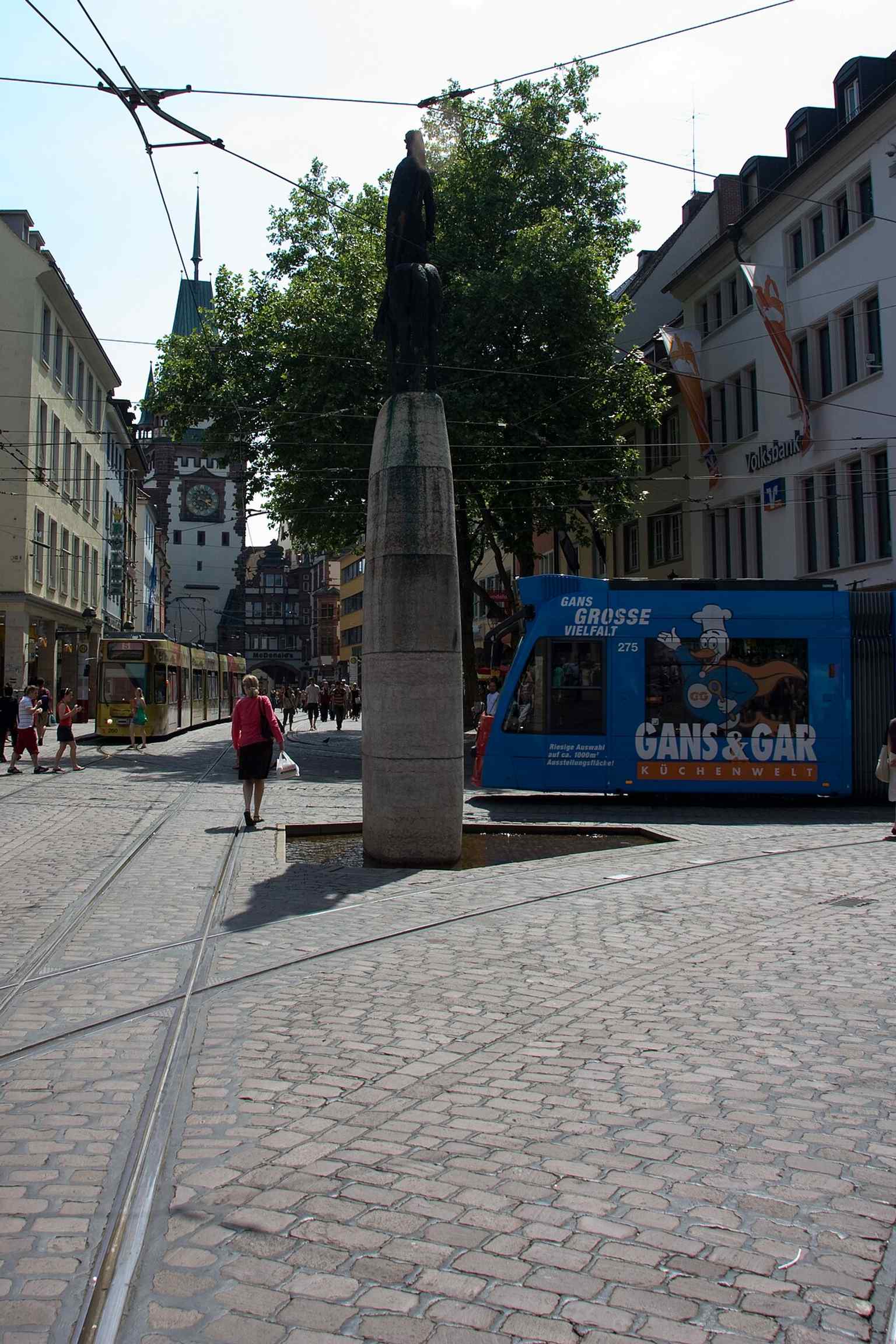
The fountain on Kaiser-Joseph-Straße with Martinstor in the background, placing Bertoldsbrunnen within Freiburg’s historic core.
The fountain on Kaiser-Joseph-Straße with Martinstor in the background, placing Bertoldsbrunnen within Freiburg’s historic core.Photo: Andreas Schwarzkopf, Wikimedia Commons, CC BY-SA 3.0. Cropped & resized.
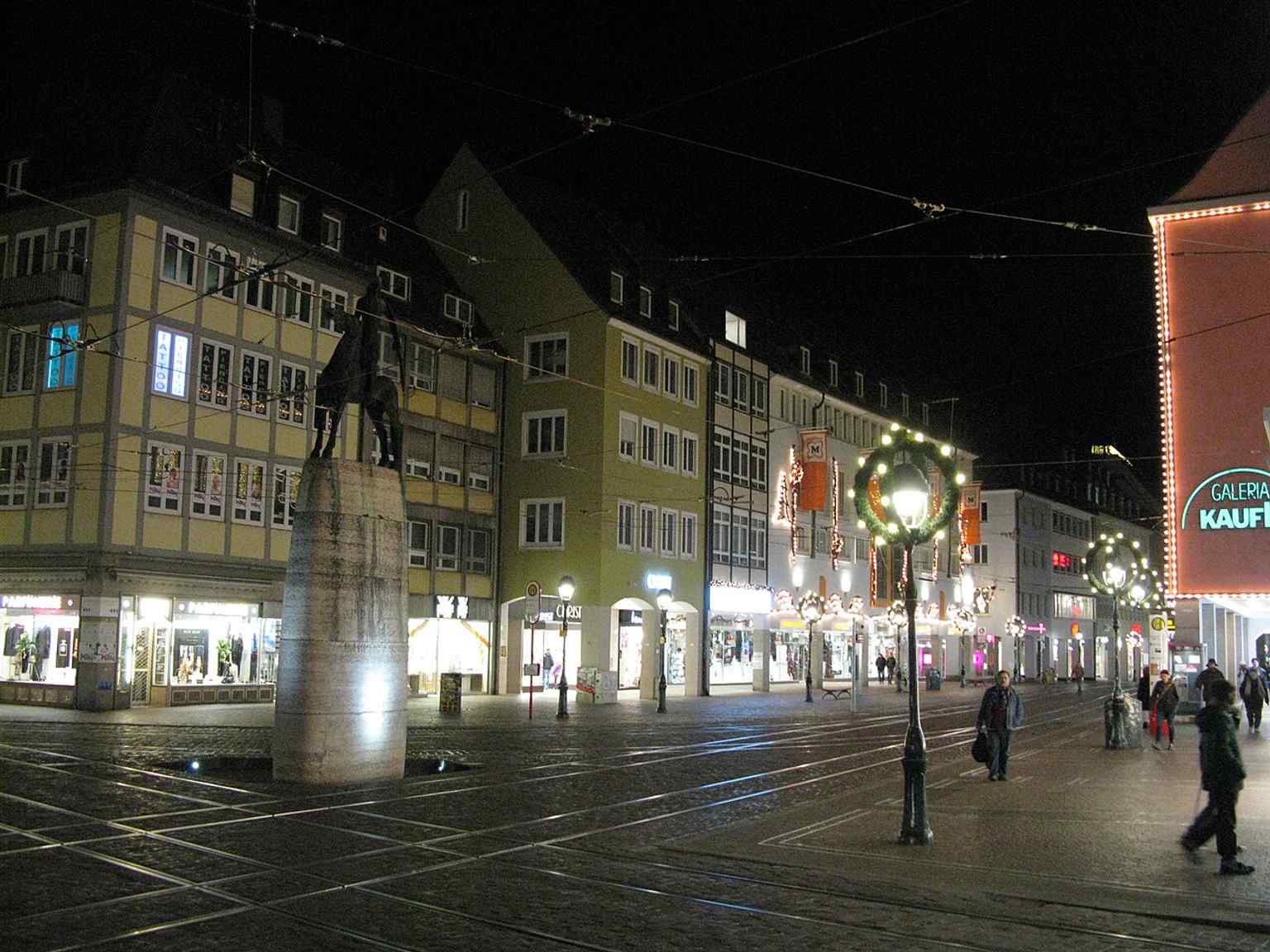
Christmas lights and the Bertoldsbrunnen on Freiburg’s main shopping street, emphasizing its role as a central meeting point.
Christmas lights and the Bertoldsbrunnen on Freiburg’s main shopping street, emphasizing its role as a central meeting point.Photo: Andreas Schwarzkopf, Wikimedia Commons, CC BY-SA 3.0. Cropped & resized.
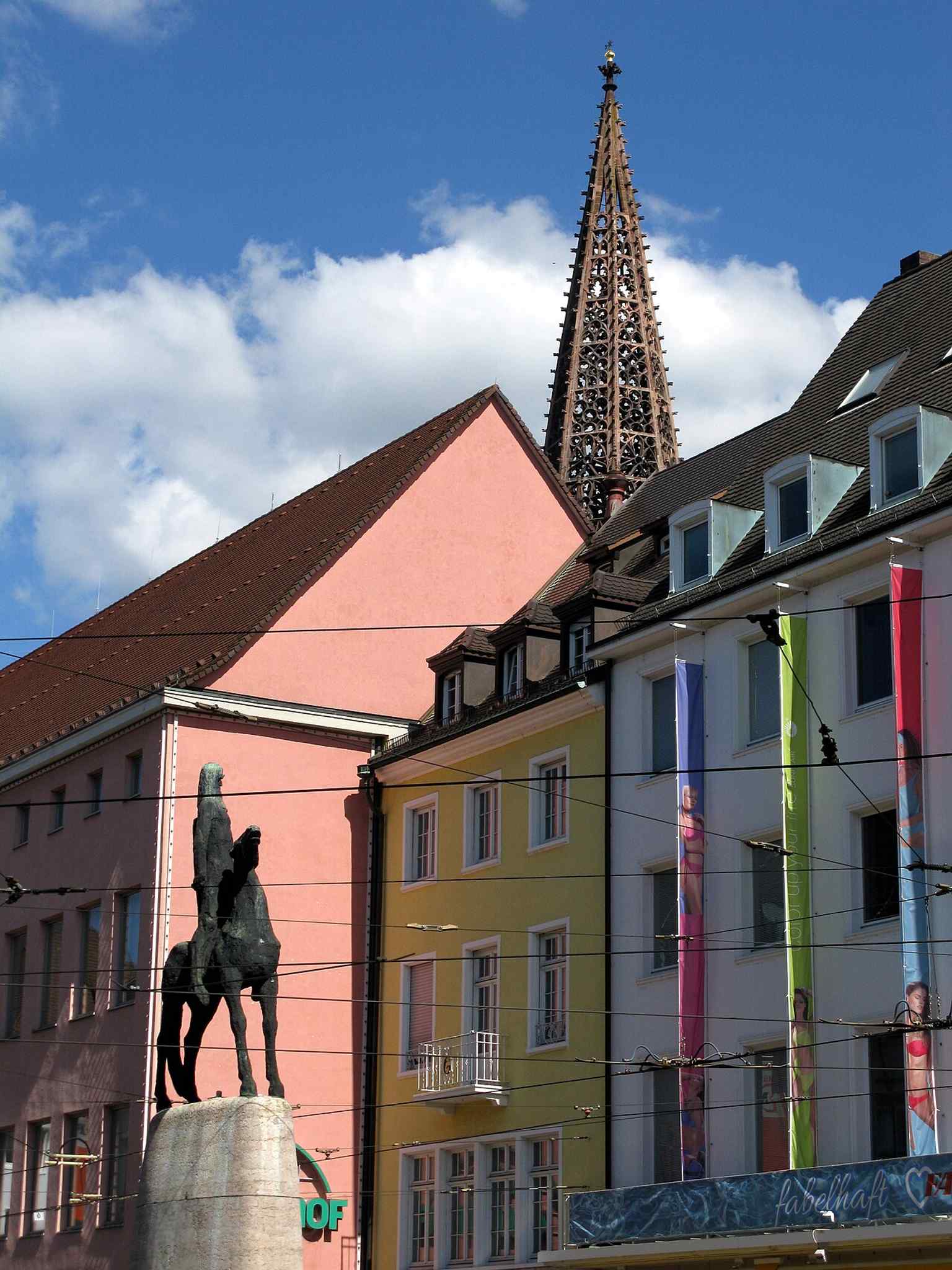
The fountain with Freiburg Minster in the background, linking the modern monument to the city’s medieval heritage.
The fountain with Freiburg Minster in the background, linking the modern monument to the city’s medieval heritage.Photo: Andreas Schwarzkopf, Wikimedia Commons, CC BY-SA 4.0. Cropped & resized.
A clear street-level view of the modern Bertoldsbrunnen, showing how the monument stands at the heart of pedestrian traffic.
A clear street-level view of the modern Bertoldsbrunnen, showing how the monument stands at the heart of pedestrian traffic.Photo: Andreas Schwarzkopf, Wikimedia Commons, CC BY-SA 4.0. Cropped & resized.
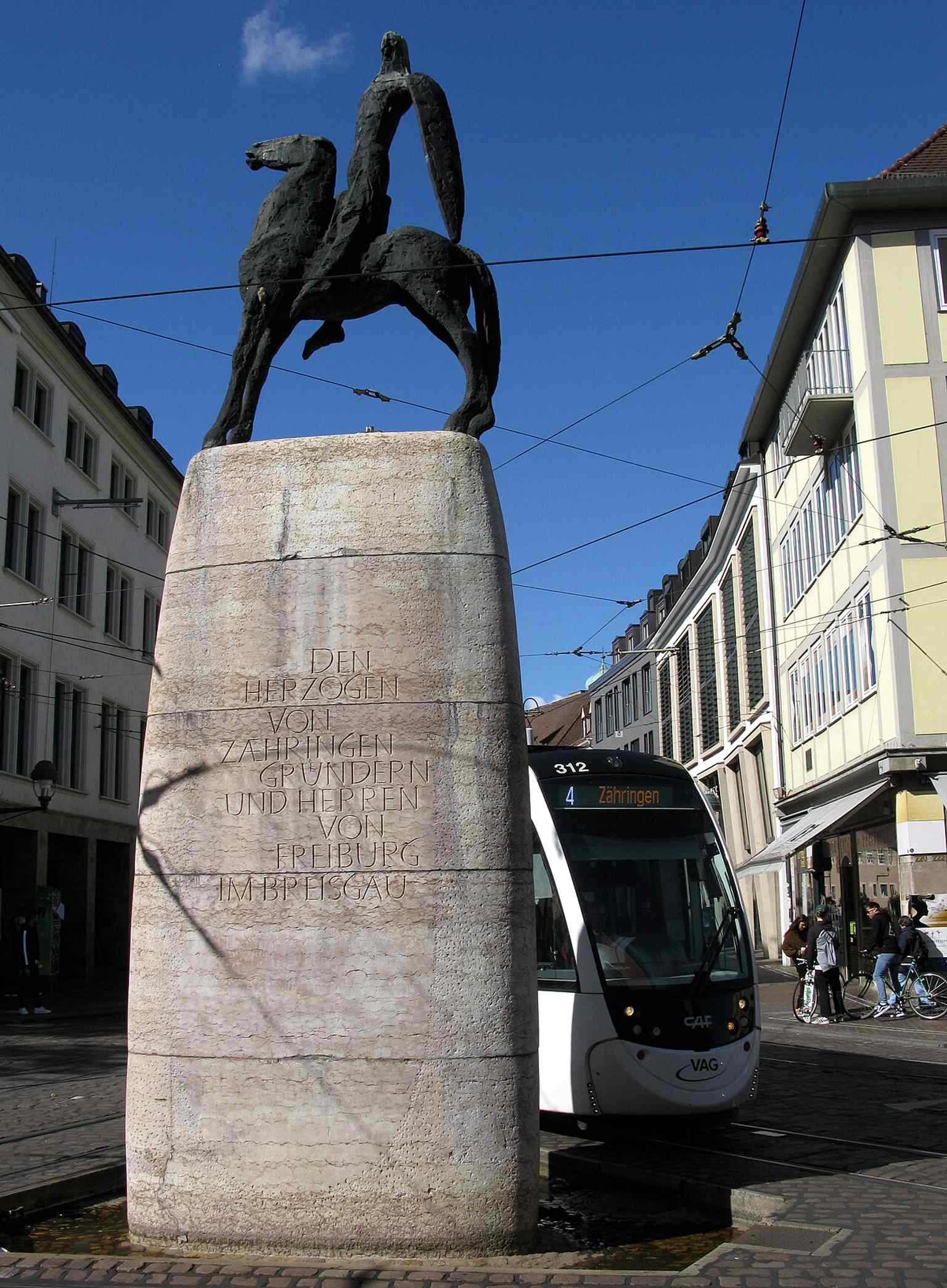
A tram gliding past the Bertoldsbrunnen, a good illustration of the square’s constant mix of public transport and city life.
A tram gliding past the Bertoldsbrunnen, a good illustration of the square’s constant mix of public transport and city life.Photo: Andreas Schwarzkopf, Wikimedia Commons, CC BY-SA 4.0. Cropped & resized.
arrow_back Back to Freiburg Highlights Audio Tour: Medieval Charm and Intellectual Heritage
Loved by travellers

Thousands of tours started.
Plenty of opinions.

4.8 across the App Store and Google Play. Here's a few we keep coming back to.

starstarstarstarstar
This was a solid way to get to know Brighton without feeling like a tourist. The narration had depth and context, but didn't overdo it.
Christoph
Christoph
Brighton Tour
starstarstarstarstar
Started this tour with a croissant in one hand and zero expectations. The app just vibes with you, no pressure, just you, your headphones, and some cool stories.
download Get the app

Pop your headphones in.
Step outside.

Free to download. Tours in every city. Start in 60 seconds — no account, no card.

Download on the App StoreGet it on Google Play
starstarstarstarstar_half
4.8
AudaTours app icon
headphones
~ 4 min until your first tour starts
public
1,000+ cities worldwide
all_inclusive
AudaTours
Unlimited

Every tour. Every city. One subscription.

3097 tours2273 cities138 countries50+ languages